


Choosing the wrong travel bag can ruin a trip before it starts. I’ve watched brand clients order 3,000 units of a "travel backpack" that turned out to be too deep for overhead bins on European budget airlines. I’ve seen beautiful leather weekenders returned in bulk because nobody tested carrying them for more than 10 minutes. And I personally ruined a business suit by stuffing it into a duffel when I should have packed a garment bag.
The truth is that no single bag type works for every trip. A weekender that’s perfect for a two-night city break is completely wrong for a three-week backpacking route. A hard-shell suitcase that glides through airports becomes a liability the moment you face a flight of stairs. In fact, while there are over 50 types of bags used across different industries and daily activities, selecting the right one specifically for travel requires looking at highly technical features.
In this guide, I break down 16 types of travel bags based on what I’ve learned manufacturing them, testing them, and listening to feedback from brands who sell thousands of each type every year. For every bag type, I’ll tell you exactly when it excels, when it doesn’t, and — where relevant — what we see go wrong in production that you should watch for as a buyer.
For context: The global travel bag market reached USD 19.2 billion in 2024 and is projected to hit USD 30.5 billion by 2033 (source: IMARC Group), driven by demand for lightweight construction, anti-theft features, and sustainable materials.
Travel Bag Types at a Glance
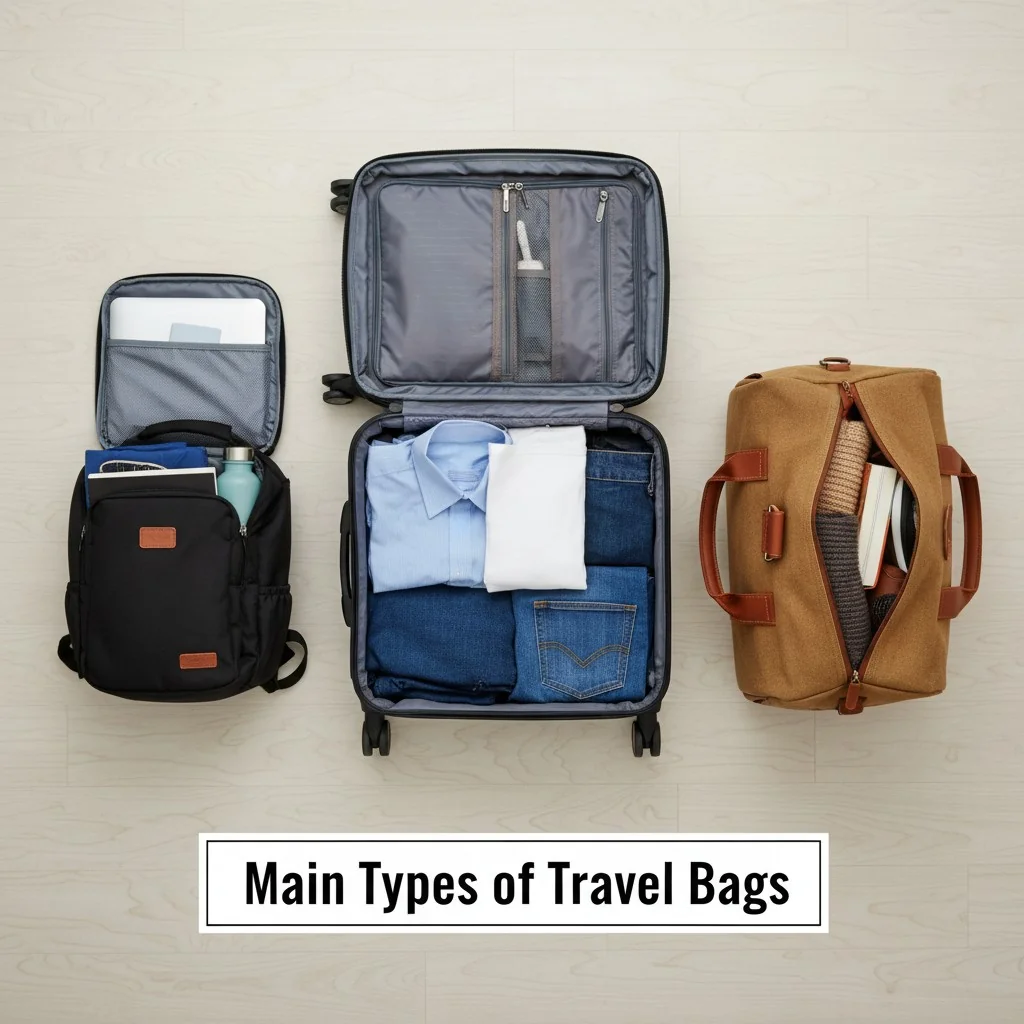
Before diving into the details, here’s a comparison table I put together based on the bag categories we manufacture most frequently:
| Bag Type | Best For | Typical Capacity | Carry-On Friendly? |
|---|---|---|---|
| Hard-shell suitcase | Long trips, fragile items | 36–100L | ✅ (20–22" models) |
| Soft-shell suitcase | Flexible packing, road trips | 36–100L | ✅ (20–22" models) |
| Travel backpack | Multi-city, adventure travel | 30–50L | ✅ (under 45L) |
| Daypack | Day trips, sightseeing | 10–25L | ✅ (as personal item) |
| Hiking backpack | Trails, camping, trekking | 30–70L+ | ❌ (usually too large) |
| Classic duffel bag | Weekend trips, gym, sports | 30–60L | ✅ (small-medium sizes) |
| Wheeled duffel bag | Heavy loads, multi-stop trips | 50–120L | Depends on size |
| Weekender bag | 1–3 night getaways | 30–45L | ✅ |
| Carry-on bag | Air travel, short business trips | 20–45L | ✅ (designed for it) |
| Tote bag | Day trips, personal item | 15–30L | ✅ (as personal item) |
| Messenger bag | Urban travel, commuting | 10–20L | ✅ (as personal item) |
| Garment bag | Business, formal events | Fits 2–3 suits | ✅ (foldable models) |
| Anti-theft bag | Crowded cities, solo travel | 15–35L | ✅ |
| Convertible bag | Multi-purpose, flexible travel | 20–40L | ✅ |
| Wheeled backpack | Airport + rough terrain | 30–50L | ✅ |
| Compression bags & packing cubes | Accessory (inside other bags) | Various | N/A |
Now let’s look at each type in detail.
Suitcases and Rolling Luggage
1. Hard-Shell Suitcases: Maximum Protection for Fragile Items
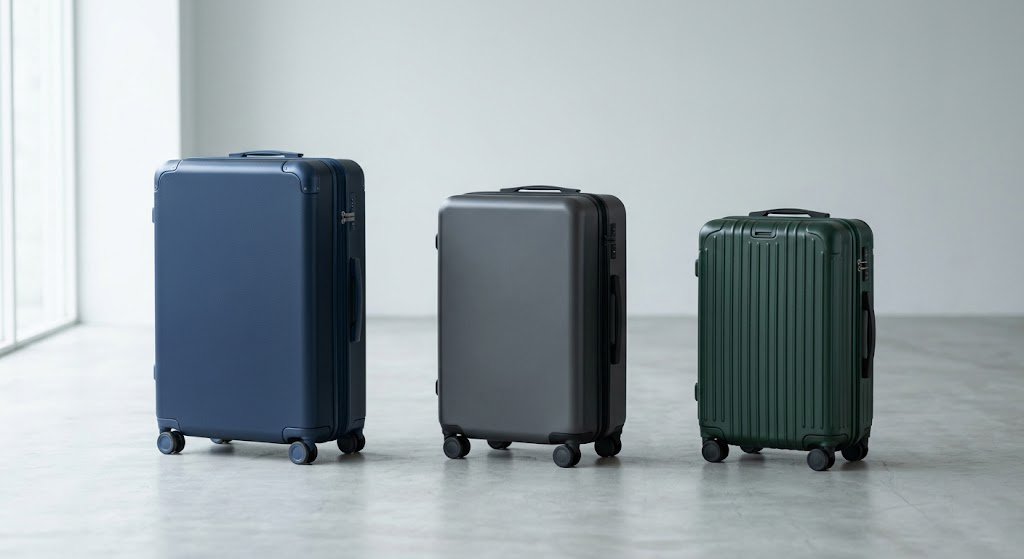
Hard-shell suitcases are built from rigid polycarbonate or ABS plastic, creating a protective shell around everything inside. In our factory, we test hard-shell samples by dropping them loaded with 15 kg from 1.2 meters onto concrete — good polycarbonate flexes on impact without cracking, while cheap ABS shatters or dents permanently.
Key features: Scratch-resistant exterior, built-in TSA-approved combination locks, split-book interior design (packing on both halves), and spinner wheels for 360-degree maneuverability.
Where they excel: International flights where bags face rough handling, trips requiring checked luggage, and travel involving fragile items like wine bottles, cameras, or gifts. The rigid shell also makes hard-shell cases more water-resistant than fabric alternatives — important during tarmac transfers in rain.
The trade-off: Heavier than soft-shell alternatives (the shell adds 1–2 kg), completely rigid (won’t compress into a tight overhead bin if overpacked), and zero exterior pockets. Need your passport? You’re opening the whole case.
What I tell our clients: If your customers primarily fly long-haul and check their bags, hard-shell is the right call. If they mostly do short domestic trips with carry-on only, soft-shell will serve them better.
Typical size: 20–22" for carry-on (36–45L), 24–28" for checked (60–100L).
2. Soft-Shell Suitcases: Lightweight and Expandable
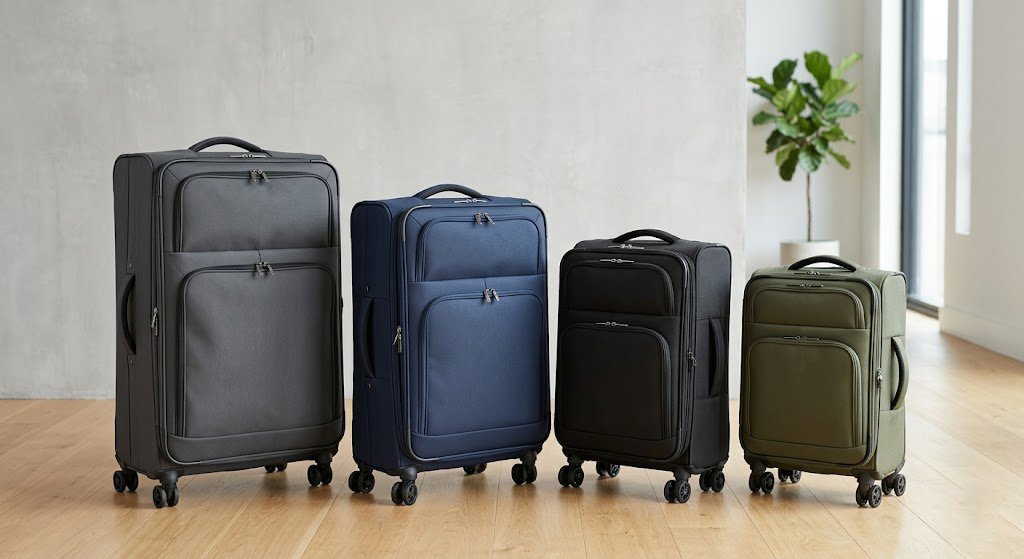
Soft-shell suitcases use woven nylon or polyester over a lightweight internal frame. Their biggest advantage is the expandable zipper — a feature we build into about 70% of the soft-shell orders we produce. Unzipping the expansion panel adds roughly 15–25% extra volume, which is genuinely useful when you buy more on a trip than you packed for.
Key features: Exterior zippered pockets for quick access without opening the main compartment, expandable sections, lighter empty weight than hard-shell, and a more forgiving shape.
Where they excel: Domestic flights, road trips, and any situation where you want to grab travel documents from an exterior pocket without opening the main case. The expandable design also makes soft-shell suitcases popular with travelers who habitually overpack.
The trade-off: Less impact protection (not ideal for fragile items), fabric can absorb moisture in heavy rain, and shows scuffs more visibly than polycarbonate.
A factory detail worth knowing: The quality of a soft-shell suitcase depends heavily on its internal frame — specifically the corner reinforcements and the area around the telescoping handle. Cheap production cuts corners (literally) by using thinner board in the frame, which causes the case to collapse inward over time. When evaluating a soft-shell suitcase, press firmly on the top panel near the handle — if it flexes more than 2 cm, the internal frame is too thin.
Backpacks
3. Travel Backpacks: The Multi-City Workhorse
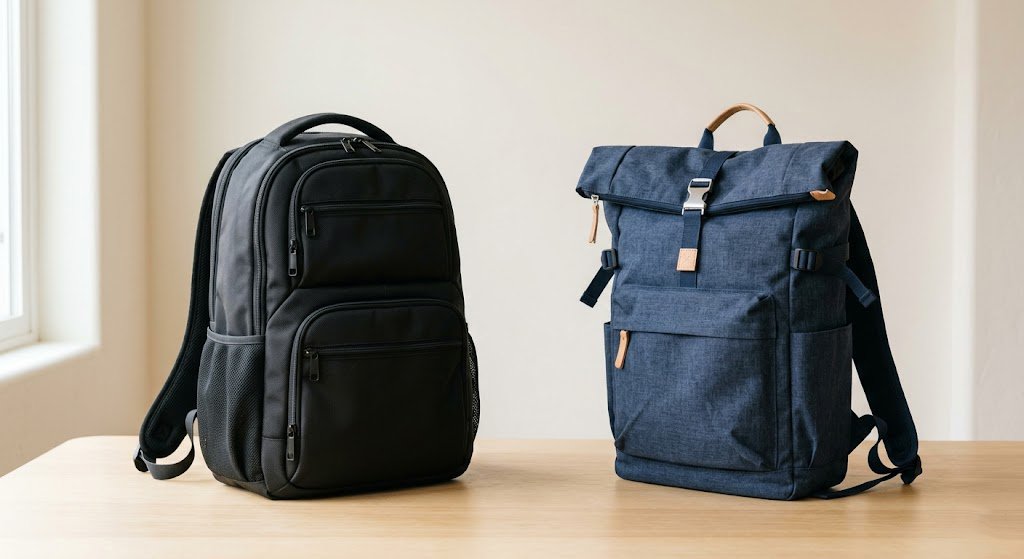
Travel backpacks are the fastest-growing category in our order book, now accounting for nearly 30% of all backpack production requests. They bridge the gap between a suitcase and a hiking pack, designed around two priorities that regular backpacks don’t address: airline carry-on compliance and suitcase-style organization.
The key difference from a standard backpack is the clamshell opening — the bag unzips completely flat, like a suitcase, rather than loading from the top. This lets you pack in layers and see everything at once, instead of stuffing items into a dark tube.
Key features: 30–50L capacity, clamshell (full zip-around) opening, padded hip belt and shoulder straps, lockable main zippers, laptop compartment, hideaway strap system (straps tuck away for checking the bag).
Where they excel: Multi-city trips combining airports and walking, digital nomad travel, any trip where you want to avoid checked luggage entirely. Based on recent industry data, backpacks now account for about 45% of travel bag purchases among travelers under 35.
The trade-off: Carrying 10+ kg on your back is inherently less comfortable than rolling it. Travel backpacks also lack the rigid protection of a suitcase.
Manufacturing insight: The most common failure point on travel backpacks is the hideaway strap system. When straps are tucked into a back panel pocket, the zipper on that pocket faces constant stress from the hip belt being pulled outward. We reinforce this zipper with bar-tack stitching on both ends — if you’re evaluating a travel backpack and the strap pocket zipper isn’t bar-tacked, expect it to blow out within 6 months of regular use.
Capacity sweet spot: 35–45L. Large enough for a week’s wardrobe with packing cubes; small enough for most overhead bins worldwide.
4. Daypacks: Your Lightweight Sightseeing Companion
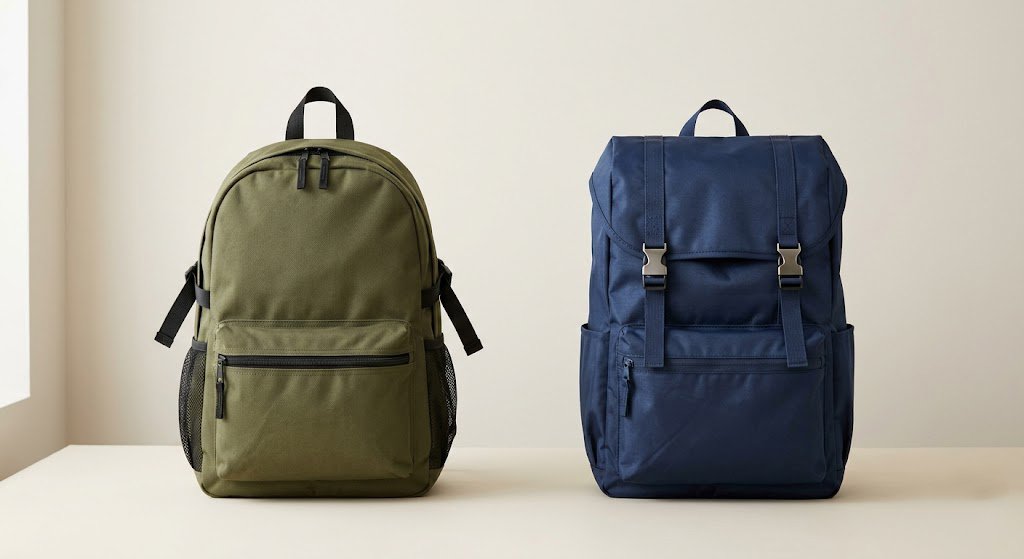
Daypacks are the sidekick bag you bring alongside your main luggage. At 10–25L, they hold exactly what you need for a day out — water bottle, sunscreen, a light jacket, camera, snacks, and a guidebook — without weighing you down.
Key features: Lightweight (often under 500g), padded shoulder straps, external water bottle pockets, zippered front pocket for quick-access items, some models include a hydration sleeve.
Where they excel: City sightseeing, day hikes, museum visits, beach days. Many daypacks are packable — they fold into their own pocket — making them easy to stow inside a larger suitcase during flights.
The trade-off: Limited capacity can’t handle overnight essentials. Lightweight materials are less durable than what you’d find on a full travel backpack.
Pro tip from experience: A packable daypack that compresses to fist-size is one of the highest-value travel accessories you can own. It weighs almost nothing in your main bag and gives you a hands-free option for every day trip. We produce thousands of these for promotional brands — they’re inexpensive to manufacture but deliver outsized practical value.
5. Hiking Backpacks: Built for Trails, Not Terminals
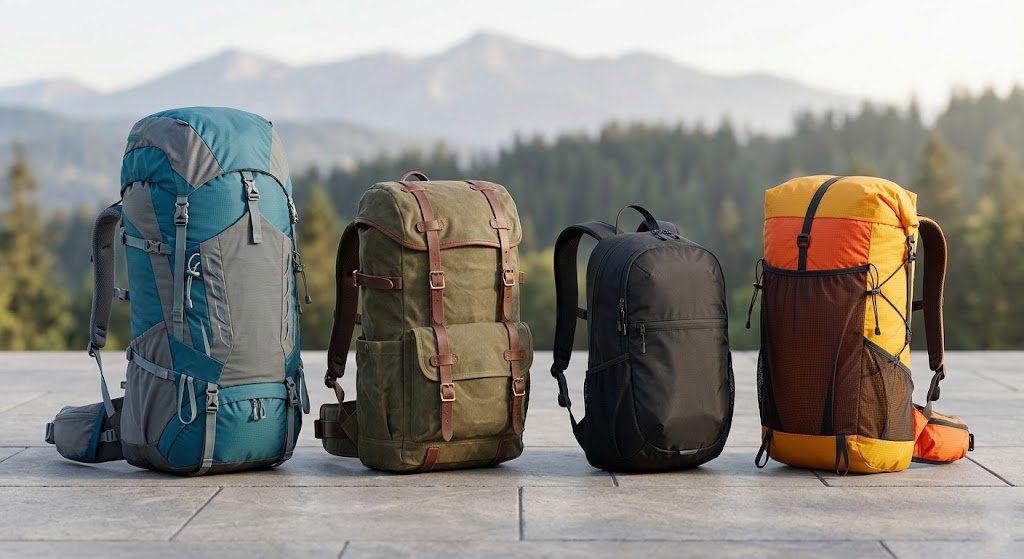
While travel backpacks prioritize organization and carry-on compliance, hiking backpacks are pure trail performance machines. They feature advanced suspension systems — internal aluminum stays or HDPE (high-density polyethylene) frame sheets — that transfer heavy loads from your shoulders to your hips. On a well-fitted hiking pack, the hip belt carries up to 80% of the total weight, which is why experienced hikers can carry 20 kg all day without significant shoulder fatigue.
Key features: Internal frame for load support, padded hip belt, load-lifter straps, hydration bladder compatibility, integrated rain cover (deploys from a hidden bottom pocket), and external attachment points for trekking poles or ice axes.
Where they excel: Day hikes (20–30L), overnight backpacking (30–50L), and multi-day wilderness expeditions (50–70L+).
The trade-off: Too bulky for airport use. Top-loading only on most models (no suitcase-style clamshell access), minimal internal organization, and the frame adds weight that’s unnecessary on smooth urban terrain.
What I see go wrong: Many buyers request hiking backpacks with too many compartments, trying to make them work as "hiking + travel" hybrids. The result is a bag that’s mediocre at both. If your trip is 80% cities and 20% trails, use a travel backpack and rent hiking gear locally. If it’s 80% trails, commit to a proper hiking pack and accept that it won’t be airport-friendly.
Duffel Bags
6. Classic Duffel Bags: Maximum Flexibility, Minimum Fuss
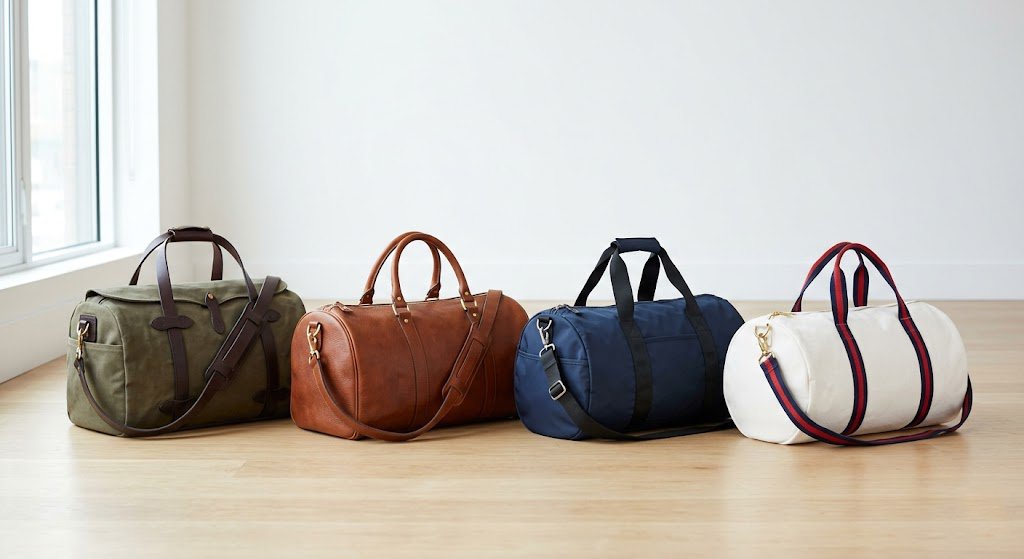
The classic duffel offers the simplest possible packing experience: one large barrel-shaped compartment with a wide opening. No rigid structure, no complex compartment systems. Just throw your stuff in and go.
That simplicity is their greatest strength. Duffels flex to fit into tight overhead bins, car trunks, and boat storage compartments where rigid suitcases can’t squeeze. They’re also the best option for packing bulky or oddly shaped items — snowboard boots, climbing helmets, rolled-up wetsuits — that won’t fit neatly in a rectangular suitcase.
Key features: Wide-mouth opening, flexible soft structure, hand straps plus adjustable shoulder strap, compresses flat when empty (stores easily), usually water-resistant nylon or polyester.
Where they excel: Weekend trips, gym use, road trips, sports travel, any situation requiring fast packing of bulky items.
The trade-off: Everything inside a duffel tends to jumble together. Finding your phone charger at the bottom of a packed 60L duffel means excavating everything else. The solution: pair it with packing cubes.
Typical capacity: 30–60L for weekender use, 60–90L for extended trips or sports gear.
For a deeper dive into duffel types and features, see our complete guide to different types of duffel bags.
7. Wheeled Duffel Bags: Heavy Load, Easy Transport
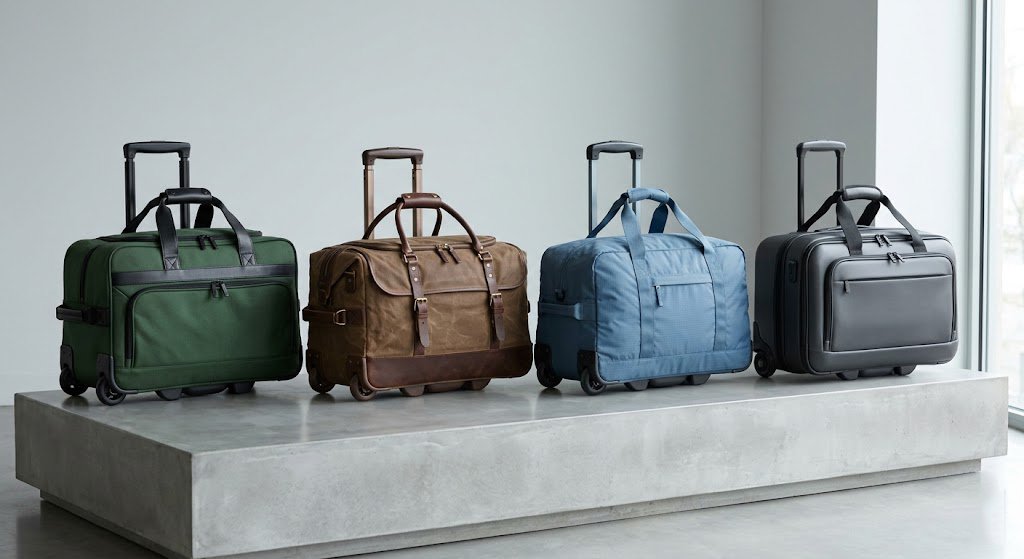
Wheeled duffels combine a duffel’s flexible packing capacity with the rolling convenience of a suitcase. A structured base, inline wheels, and a retractable handle let you roll heavy loads instead of carrying them.
Key features: All the benefits of a classic duffel plus durable wheels, retractable handle, reinforced base, and grab handles on multiple sides.
Where they excel: Long trips with heavy loads, transporting sports equipment, family travel where you need maximum volume. A 100L+ wheeled duffel can handle an entire family’s ski gear.
The trade-off: The wheel mechanism adds 1–2 kg of dead weight. The reinforced bottom also reduces total volume versus a same-size soft duffel. And wheels are useless on cobblestones, gravel, and sand — they’ll either stop rolling or break.
Quality checkpoint: The wheel attachment is the most failure-prone area on wheeled duffels. In our production, we rivet the wheel housing to a reinforced base plate and then stitch through both layers. If a wheeled duffel uses only glue or heat-welding to attach the wheels (no mechanical fasteners), the wheels will detach under load — I’ve seen it happen repeatedly with cheap imports.
Specialty Travel Bags
8. Weekender Bags: Refined Short-Trip Style
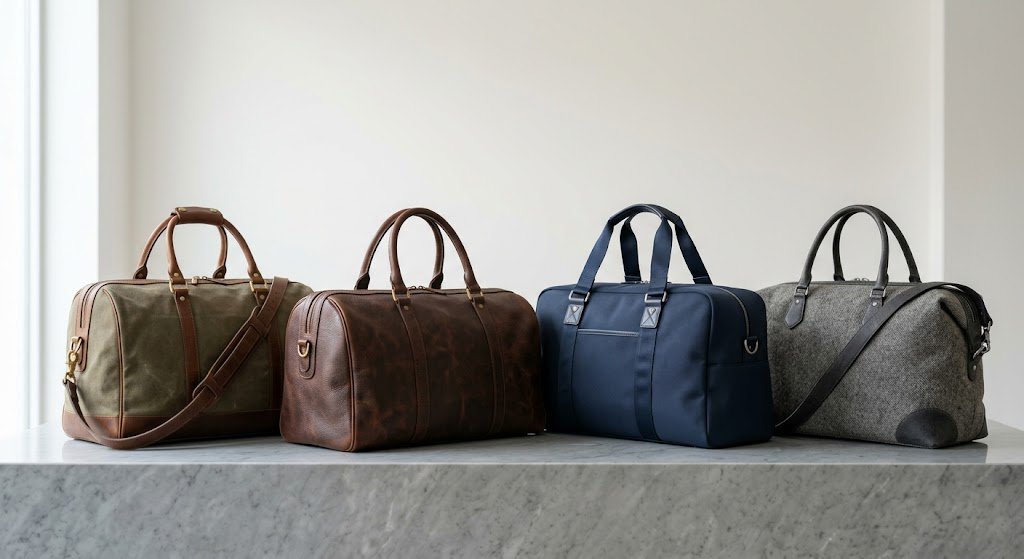
Weekender bags occupy a specific niche between duffels and suitcases. They’re more structured, with a defined rectangular shape, internal compartments, and an aesthetic that looks appropriate in a hotel lobby — something most duffels can’t claim.
Key features: Structured shape, interior organization, high-quality materials (leather, waxed canvas, or premium nylon), carry-on compliant sizing, shoe compartment on many models.
Where they excel: 1–3 night trips, business overnights, any travel where appearance matters as much as function. A well-made weekender in leather or waxed canvas actually looks better with age.
The trade-off: 30–45L capacity limits them to short trips. They’re also typically more expensive than equivalent duffels because of premium materials.
9. Carry-On Bags: Engineered Around Airline Rules
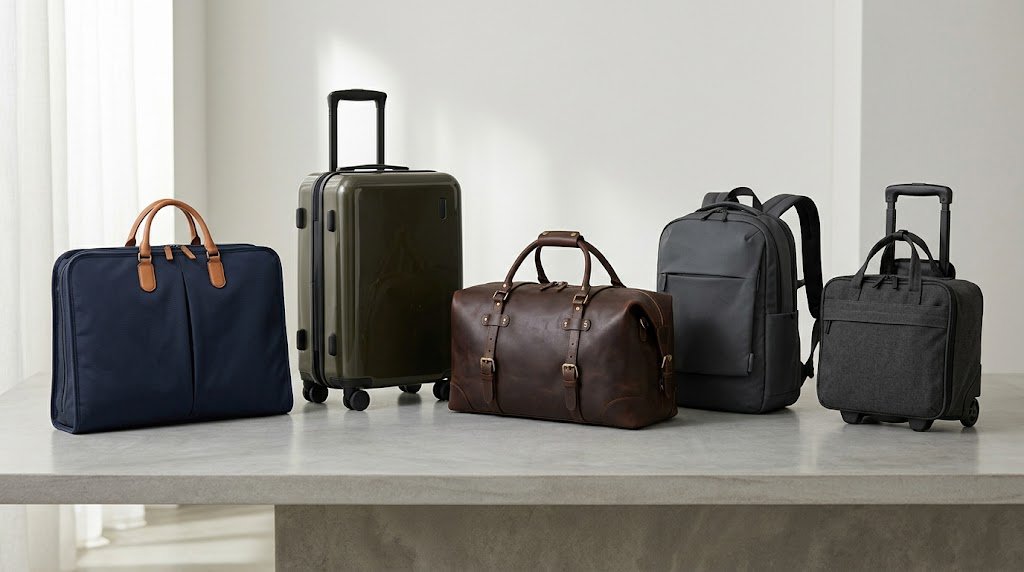
Carry-on bags are designed with a single obsession: maximizing interior space while staying within airline overhead compartment restrictions. Most airlines allow 22 × 14 × 9 inches (56 × 36 × 23 cm) including handles and wheels.
Key features: Precise airline-compliant sizing, lightweight materials, multiple compartments, padded laptop sleeve, trolley sleeve on some models (lets you stack it on checked luggage).
Where they excel: Short flights, business trips, budget travel where avoiding checked bag fees ($30–60 per round trip) matters.
The trade-off: Capacity is inherently limited. For trips beyond 5–7 days, most travelers need either checked luggage or very disciplined packing with compression cubes.
Important: Budget carriers like Ryanair, Spirit, and EasyJet enforce significantly smaller limits than full-service airlines. I cover the specific dimensions for major airlines in the carry-on rules section below.
10. Tote Bags: Fast Access, Minimal Structure
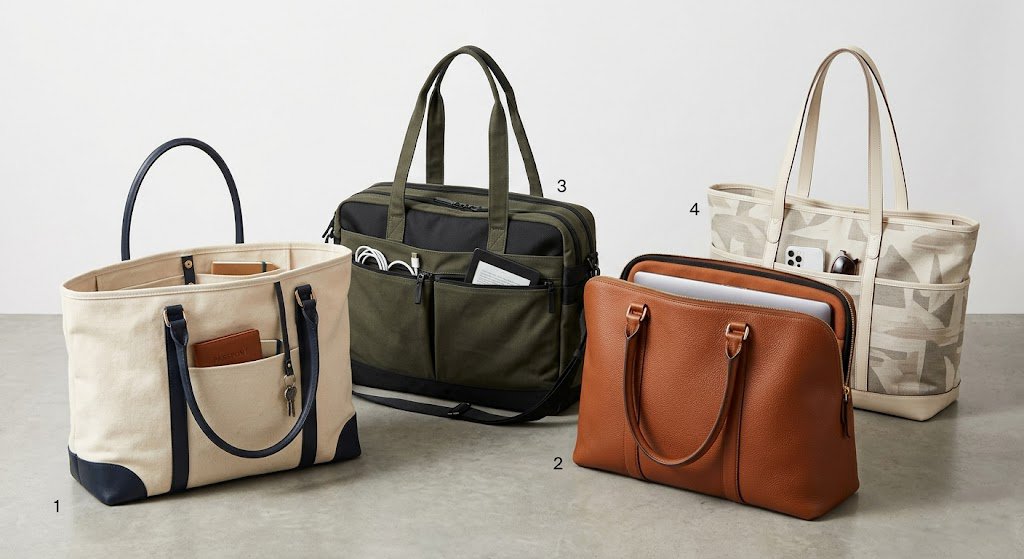
Travel totes serve as either a day bag or a personal item alongside larger luggage. Their open-top design lets you grab your boarding pass, phone, or water bottle without fighting zippers.
Key features: Lightweight, spacious main compartment, interior pockets for small items, durable canvas or leather construction, some models include padded laptop compartments.
Where they excel: Day trips, beach outings, and as a personal item on flights (fits under the seat). A tote transitions seamlessly from airport to shopping to dinner.
The trade-off: Open tops lack the security of zippered bags. Keep valuables in interior zippered pockets, not the main compartment. Also, a heavy tote on one shoulder for hours will cause discomfort — it’s not ergonomically designed for sustained carrying.
11. Messenger Bags: The Urban Traveler’s Crossbody
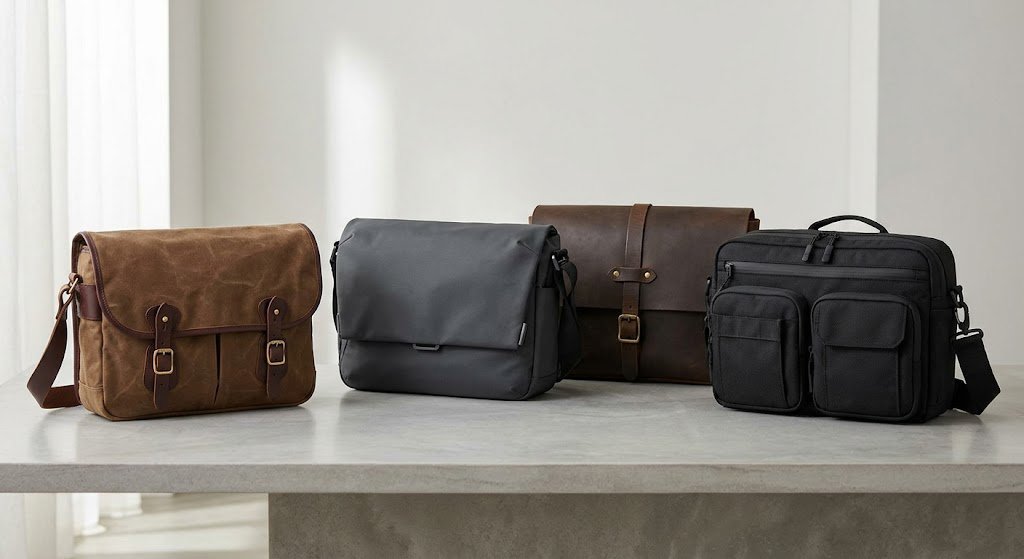
Messenger bags — single-shoulder crossbody bags with a front flap — were originally designed for bicycle couriers who needed fast access without removing their bag. That makes them excellent for urban travel: quick access, slim profile, and a look that works from street to meeting room.
Key features: Crossbody strap, front-flap closure for fast access, padded laptop compartment, slim profile that won’t catch on crowds.
Where they excel: City exploration, daily commuting, travel days heavy on public transit, and as a personal item on flights.
The trade-off: Single-strap design creates asymmetric weight distribution — uncomfortable beyond 5 kg or more than a couple of hours of continuous wear.
12. Garment Bags: Wrinkle-Free Formal Wear
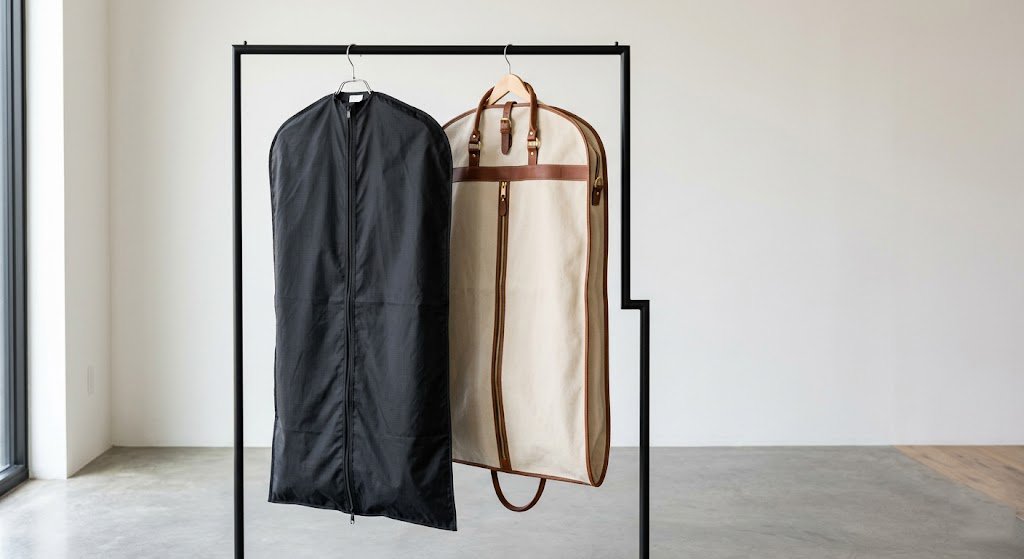
If you’ve ever unzipped your suitcase to find your suit crumpled beyond recognition, you understand garment bags. They let you lay formal clothing out full-length, then fold the bag in half — keeping garments flat rather than balled up.
Key features: Full-length hanging design, fold-over construction, separate shoe pocket, hanger clamp system.
Where they excel: Business trips requiring suits, weddings, formal events.
The trade-off: Not a standalone travel bag. You’ll still need a suitcase or backpack for everything else. Garment bags are complementary pieces, not replacements.
13. Anti-Theft Travel Bags: Security for Crowded Cities
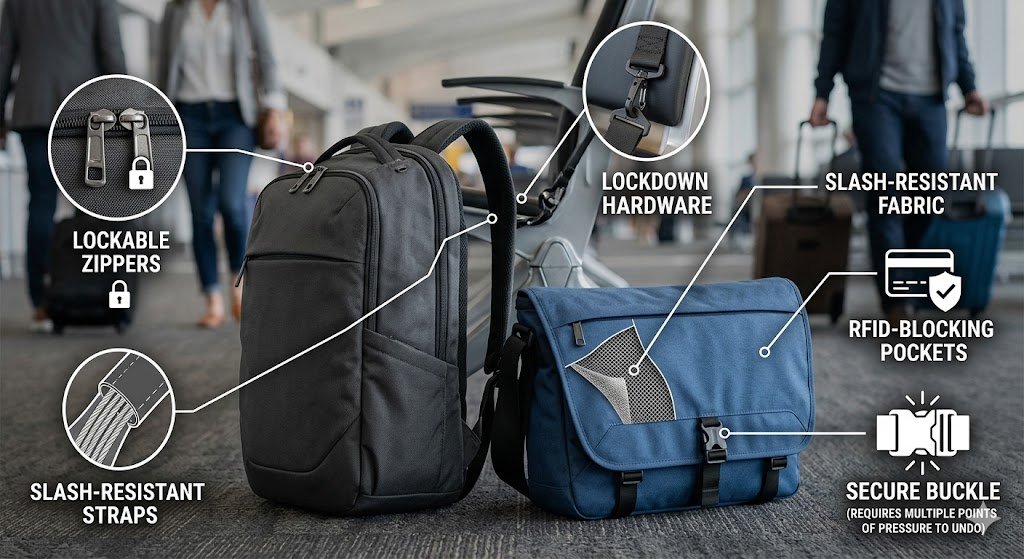
In high-traffic destinations — Rome’s metro, Bangkok’s markets, Barcelona’s Las Ramblas — standard bags leave you vulnerable. Anti-theft bags use layered security features: slash-proof fabric (embedded steel mesh), lockable zippers, RFID-blocking compartments (prevent wireless card skimming), and hidden main compartment access where zippers face your back instead of outward.
Key features: Cut-resistant fabric and straps, concealed zippered access, RFID-blocking pockets, steel cable reinforcement in strap attachment points.
Where they excel: Solo travel, crowded tourist areas, any trip where you carry expensive electronics in public.
The trade-off: Heavier than standard bags (15–35L range), and the security features can slow your own access — you’ll wrestle with your own locks at airport security.
14. Convertible Bags: Multiple Carry Modes in One
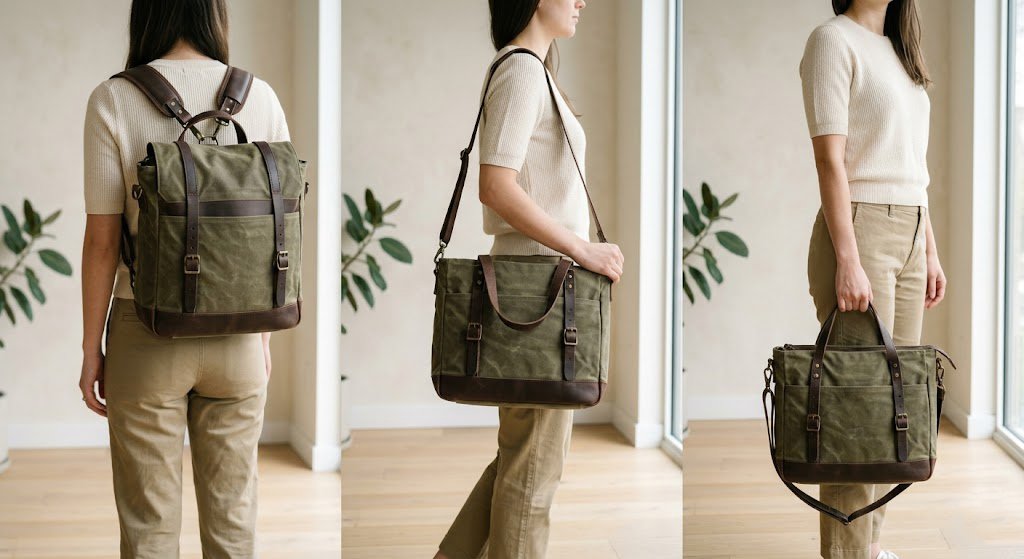
Convertible bags transform between backpack, shoulder bag, tote, or briefcase modes through removable straps and rotating handles. One bag for every context.
Key features: Detachable/stowable straps, multiple handle positions, padded laptop compartment, clean mode transitions without exposed buckles.
Where they excel: Business travelers who need a professional briefcase look in meetings but hands-free backpack comfort in airports. Digital nomads wanting one bag for coworking spaces, trains, and casual hiking.
The trade-off: Not every convertible bag works equally well in all modes. Some are great backpacks but awkward briefcases. Test both configurations under real load before committing.
15. Wheeled Backpacks: Roll or Carry, Your Choice
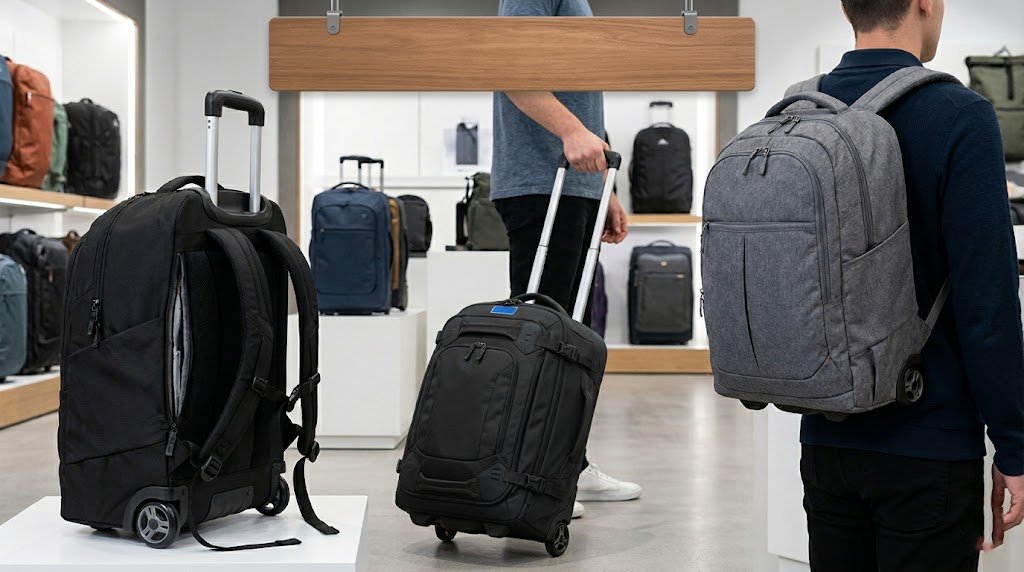
Wheeled backpacks solve a specific problem: trips that involve both smooth airport terminals and rough cobblestone streets. Roll it through the airport, strap it on for the walk to your hotel.
Key features: Retractable handle, inline wheels, hideaway padded backpack straps, carry-on sizing (30–50L).
Where they excel: Multi-city European trips, travel mixing planes and walking, and for anyone who wants rolling convenience without giving up the backpack option.
The trade-off: The wheel mechanism adds 1–2 kg to empty weight, cutting into useful packing weight under airline limits. The internal frame also makes it less comfortable as a backpack versus a purpose-built pack.
16. Compression Bags and Packing Cubes: The Space Multipliers
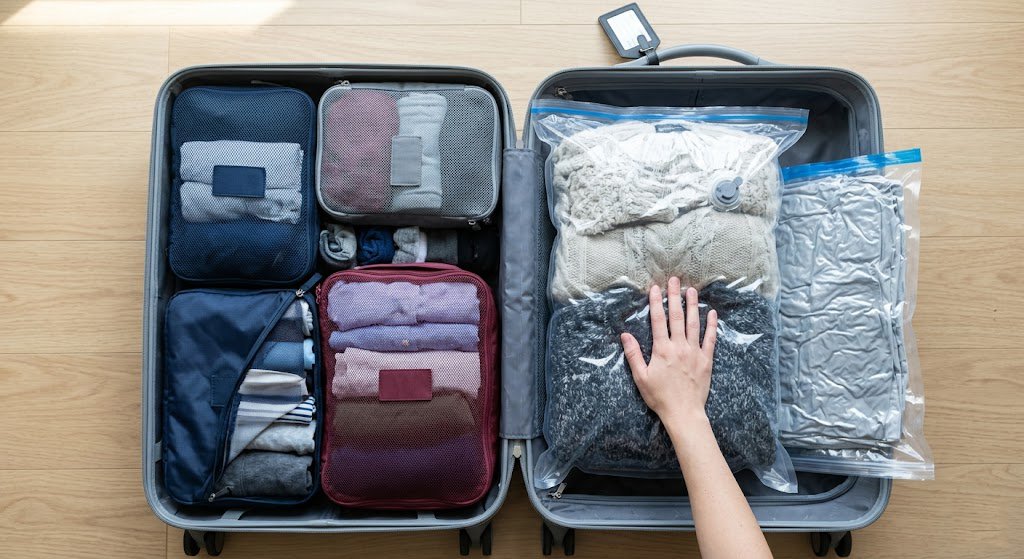
Not standalone bags, but accessories that multiply the effective capacity of whatever bag you own.
Compression bags use airtight seals to squeeze bulky items — puffy jackets, sweaters — to a fraction of their volume. A winter jacket that fills half a suitcase compresses to the size of a water bottle.
Packing cubes are lightweight rectangular pouches that organize clothes by category. They keep your bag organized throughout the trip and eliminate the "dig through everything" problem, especially in duffels.
Pro tip from our production floor: The best packing cubes use lightweight ripstop nylon with mesh tops for visibility. Avoid cubes made from heavy fabric — they defeat the purpose by adding weight. We produce packing cube sets as add-on products for several travel bag brands, and the customer satisfaction rates on these accessories consistently outperform the bags themselves.
How to Choose the Right Travel Bag: A 4-Question Framework
Instead of browsing bags by brand, start with these four questions:
Question 1: How long is your trip?
| Trip Length | Best Bag Types | Suggested Capacity |
|---|---|---|
| Day trip | Daypack, tote, sling bag | 10–20L |
| Weekend (1–3 nights) | Weekender, small duffel, carry-on backpack | 25–45L |
| 1 week | Carry-on suitcase + personal item, travel backpack | 35–50L |
| 2+ weeks | Checked suitcase, large duffel, large backpack | 60–100L |
Question 2: What’s your primary transport?
- Flying frequently? Prioritize carry-on compliant bags. Most airlines allow up to 22 × 14 × 9 inches — but budget carriers enforce smaller limits.
- Trains and buses? Backpack or compact rolling bag for overhead racks.
- Walking long distances? Backpack with hip belt. Never drag a rolling suitcase across cobblestones.
- Driving? Nearly any bag works. Choose based on organization preference.
Question 3: What are you packing?
- Formal clothing? Garment bag or quality packing cubes.
- Electronics? Padded laptop compartments, RFID-blocking pockets.
- Outdoor gear? Water-resistant materials, compression straps, external attachment points.
- Liquids/toiletries? Accessible compartment for TSA-compliant bag (3-1-1 rule: containers ≤3.4 oz / 100 ml in one quart-size clear bag).
Question 4: What’s your packing style?
- Minimalist? 35–45L travel backpack with clamshell opening.
- Organized packer? Suitcase with split-book interior + packing cubes.
- Throw-and-go? Large duffel, one compartment, no overthinking.
- Chronic over-packer? Soft-shell expandable suitcase — and an honest conversation with yourself about that fourth pair of shoes.

Travel Bag Materials: What to Look For
The material determines a bag’s lifespan, weight, and weather performance. Here’s a reference based on what I see in production:
| Material | Weight | Durability | Water Resistance | Typical Use |
|---|---|---|---|---|
| Polycarbonate | Medium | Excellent | Excellent | Hard-shell suitcases |
| ABS plastic | Light | Good | Excellent | Budget hard-shell suitcases |
| Nylon (Cordura/ballistic) | Medium | Excellent | Good (with DWR coating) | Premium backpacks, tactical bags |
| Polyester (600D+) | Light | Good | Moderate (needs PU coating) | Budget backpacks, duffels |
| Canvas / waxed canvas | Heavy | Excellent | Moderate (waxed better) | Heritage weekenders, totes |
| Leather | Heavy | Excellent | Low (needs treatment) | Luxury weekenders, business bags |
A word about zippers: Don’t just evaluate the fabric — check the hardware. YKK or SBS-branded zippers are industry standards. In our factory, I’ve seen more bags fail at the zipper than at any other point. Unbranded zippers are almost always the first component to break.
Airline Carry-On Size Rules: Quick Reference (2026)
One of the most common travel bag frustrations is discovering your bag doesn’t meet size restrictions at the gate. Here are the limits for major carriers:
| Airline | Carry-On Max Size | Weight Limit | Personal Item |
|---|---|---|---|
| American Airlines | 22 × 14 × 9 in | No strict limit | Must fit under seat |
| Delta | 22 × 14 × 9 in | No strict limit | 18 × 14 × 8 in |
| United Airlines | 22 × 14 × 9 in | No strict limit | 17 × 10 × 9 in |
| Southwest | 24 × 16 × 10 in | No strict limit | 18.5 × 8.5 × 13.5 in |
| Ryanair | 21.7 × 15.7 × 7.9 in | 10 kg | Small bag only (free) |
| EasyJet | 17.7 × 13.8 × 7.9 in | 15 kg (overhead, paid) | Small cabin bag only |
| Lufthansa | 21.7 × 15.7 × 9.1 in | 8 kg | 15.7 × 11.8 × 7.9 in |
Important: These dimensions always include handles, wheels, and external pockets. Measure your bag fully packed. Budget carriers are strict — gate agents at Ryanair regularly use sizing cages, and oversized fees can exceed the flight cost.
Pro tip: If you fly both full-service and budget carriers, size your bag for the most restrictive airline. A Ryanair-compliant bag fits everywhere.
How to Care for Your Travel Bags
A well-made bag lasts a decade with proper care:
Fabric bags (nylon, polyester, canvas): Never machine wash — agitation destroys waterproof PU coatings and degrades strap padding. Spot-clean stains with a soft brush and mild soap, rinse with cool water, and air dry upside down in the shade. Direct sunlight accelerates color fading.
Hard-shell suitcases: Wipe with damp cloth and mild soap. For scuffs on polycarbonate, a small amount of rubbing compound (same as used for car paint) restores the finish. Lubricate the telescoping handle with silicone spray if it stiffens.
Leather bags: Condition every 3–6 months with leather conditioner. Store stuffed with tissue paper in a breathable dust bag — never in plastic, which traps moisture and promotes mold.
All bags: Check zippers regularly. A zipper that starts catching is about to fail. Apply zipper wax or graphite lubricant at the first sign of resistance — this extends zipper life by years.
Common Mistakes When Choosing a Travel Bag
After 15 years of producing bags for hundreds of brands, I see these mistakes repeatedly:
Buying too big. A 50L bag for a 3-day city trip means you’ll fill the extra space with "just in case" items you never touch — then carry that dead weight everywhere. Choose the smallest bag that fits your actual needs.
Ignoring empty weight. An 80L duffel weighing 4 kg empty leaves only 19 kg of packing capacity under a typical 23 kg checked limit. For carry-on bags (often 7–10 kg limit), every gram of bag weight directly reduces what you can bring.
Choosing style over ergonomics. A leather weekender makes a great first impression — until you’re carrying it for two hours through a European city without a taxi. If your trip involves significant walking, prioritize shoulder straps and weight distribution over aesthetics.
Skipping the test pack. Before any trip, lay out everything you plan to bring, pack it, and carry the loaded bag around your house for 15 minutes. If anything feels wrong, you’ll discover it at home, not at the airport.
Assuming "waterproof" means waterproof. Most bags marketed as "waterproof" are actually water-resistant: they handle light rain but not sustained downpours. True waterproof protection (for kayaking, monsoon-season travel) requires welded seams and roll-top closures — not just "water-resistant fabric."
Looking for a Manufacturing Partner for Custom Travel Bags?
If you’re a brand, retailer, or distributor developing travel bags, the right manufacturer ensures your products meet both quality expectations and market-specific requirements — from REACH compliance for European distribution to CPSIA standards for the US market.
At Osgoodway, we manufacture custom backpacks, duffel bags, weekenders, carry-on bags, and travel accessories — all customizable in material, size, hardware, and branding. With BSCI, ISO9001, and GRS certifications, we serve over 300 brands across Europe and North America.
Contact our team for a free consultation and sample quote.

This article reflects our direct experience manufacturing travel bags for global brands since 2014. All capacity ranges, material properties, and airline size limits were verified as of April 2026. If you spot anything that needs updating, let us know.






