


A bulk bag does not need to feel identical in every tactile detail to a handmade sample, but the approved materials, construction, dimensions and functional performance should remain within the agreed specification.
When a buyer says the bulk production “feels different,” that may mean the bag feels softer, stiffer, flatter, tighter or less structured. It may also refer to a zipper that feels harder to pull, a buckle that needs more force, or shoulder straps that compress differently.
“Feels different” is a symptom, not a diagnosis.
The first step is to identify which part has changed, then compare it with the approved reference. The cause may be normal material-lot variation, coating or foam behavior, production-line construction or packing compression.
But if the difference comes from an unapproved material, component or construction change—or it affects fit, structure or function—it should be treated as a quality issue rather than normal production variation.
What Does “Feel Different” Actually Mean?

Before looking for the cause, the factory and buyer first need to make sure they are comparing the bulk production with the correct sample—and talking about the same part of the bag.
A general comment such as “the bulk feels different” is useful as a warning, but it is not specific enough to identify what has changed.
Compare the Bulk Bag with the Right Reference Sample
During development, there may be several different samples:
- first prototype
- revised sample
- approval sample
- pre-production sample
They do not necessarily represent the same material and construction stage.
The first prototype, for example, may be made with stock fabric, available foam, a similar zipper, substitute lining or temporary hardware because the final custom materials have not yet been ordered. Its main purpose may be to confirm shape, dimensions and construction before every component is finalized.
Those substitutions should be identified before approval.
Bulk production should be compared with the approved reference sample—not necessarily the first prototype.
For projects where early development samples use substitute materials, the pre-production sample is often a more useful bulk reference because it can be made with the confirmed fabric, foam, zipper, hardware, logo method and final construction.
Both sides should know exactly which physical sample represents the approved production standard.
Isolate Which Part Actually Feels Different
A comment such as:
“the bulk feels cheaper”
can describe several completely different problems.
The next question should be: Which part feels different?
For example:
- Is the shell fabric softer or stiffer?
- Does the back panel feel less structured?
- Do the shoulder straps compress differently?
- Does the zipper feel tighter?
- Does the buckle require more force?
- Does the whole bag look flatter or less rigid?
These symptoms should not automatically be treated as one material problem.
A tighter zipper may be related to the zipper itself, the opening shape or sewing tension. A flatter back panel may instead point to foam, reinforcement or packing compression.
Do not investigate “the bag feels different” as one problem. Break the bag into components and compare them one by one.
Once the affected area is identified, it becomes much easier to determine whether the difference comes from normal material variation, construction, packing or an unapproved specification change.
Material Lots and Components Can Change the Feel
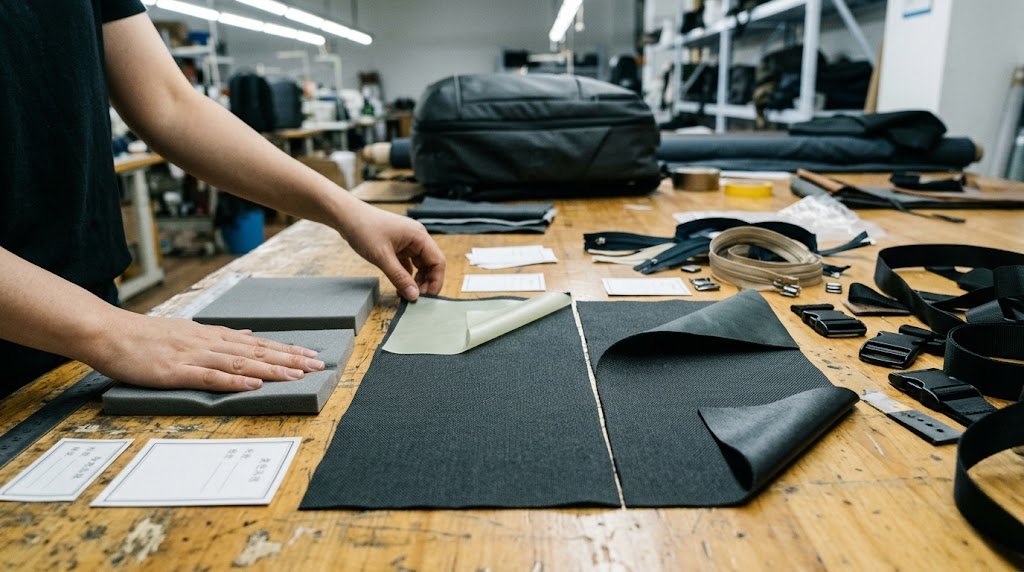
Even when the material name stays the same, bulk components may not feel perfectly identical to those used in the approved sample.
Specifications such as 600D polyester, 8 mm EVA or #5 reverse coil zipper describe only part of the component. Production lot, coating, density, finishing and component tolerance can still affect the finished feel.
Fabric, Coating and Backing Can Change Stiffness
Two fabrics can both be specified as 600D polyester with PU coating and still feel slightly different because of:
- weaving and dyeing conditions
- coating amount
- calendaring or finishing
- color
- production lot
These differences can affect stiffness, drape and surface feel.
The same nominal fabric specification does not guarantee perfectly identical hand feel across every production lot.
Coating is especially important. A lighter PU coating and a heavier PU coating can make the same face fabric feel noticeably different.
“PU coated” is not a complete tactile specification.
GSM alone is not enough either. Two fabrics with similar weight can still feel different if the weave, coating or finishing changes. Buyers comparing these variables can refer to our bag fabric knowledge guide for more background on common bag materials, coatings and finishes.
Foam Density and Compression Matter as Much as Thickness
A specification such as 8 mm EVA confirms thickness, but not how the foam behaves.
Two foams with the same thickness can differ in density, hardness, rebound and compression resistance.
A higher-density foam may feel firmer and hold its shape better, while a softer foam compresses more easily.
Two foams with the same thickness can feel very different if density and compression behavior are different.
This is especially noticeable in shoulder straps, back panels and padded dividers.
Zippers, Buckles and Webbing Also Affect Perceived Quality
Small component differences are easy for buyers to feel.
| Component | Possible Difference |
|---|---|
| Zipper | slider fit, tape stiffness, lubrication |
| Buckle | molding tolerance, resin stiffness, snap force |
| Webbing | thickness, weave density, surface friction |
A #5 reverse coil zipper can therefore feel tighter or smoother between batches even when the nominal specification is unchanged.
The same applies to buckles and webbing.
Hardware approval should include operating feel, not only appearance and dimensions.
For adjustable straps, webbing and adjuster should be approved as a system, because either component can change the final adjustment feel.
Construction and Handling Can Make the Same Materials Feel Different
The materials may be correct, but the finished bag can still feel different because of how those materials are assembled and handled.
Sample-Room Construction and Production-Line Construction Are Not Identical
A sample is usually made by one person or a small team with more time for manual adjustment and shaping.
Bulk production is divided into repeatable operations using fixed seam allowances, guides and standard procedures.
A sample may receive more manual shaping than production-line units, while bulk production should deliver better repeatability.
This is why a sample can sometimes look slightly fuller or more carefully shaped without using better materials.
Sewing, Binding and Lamination Can Change Panel Feel
Even with the same fabric and foam, assembly details can change stiffness.
| Construction Factor | Possible Effect |
|---|---|
| Stitch tension | Padded panel feels tighter or firmer |
| Binding tension | Edge becomes harder or starts to curl |
| Lamination / adhesive | Local areas feel stiffer |
| Embroidery backing / heat press | Only the decorated area becomes firmer |
| Reinforcement-board size or position | Back panel, bottom or divider feels more or less rigid |
If only the edge feels different, check binding tension before changing the material specification.
The same logic applies elsewhere: when only one area feels different, check the construction around that area first.
Packing and Storage Can Temporarily Change Shape and Loft
Bulk bags normally experience much more compression than an individually shipped sample:
- folding
- polybag packing
- carton pressure
- stacking
- transportation
Foam may look flatter, shoulder straps may lose some loft and coated fabric may show temporary creasing.
A bulk bag immediately after unpacking may not have the same loft or shape as a sample that was shipped individually.
Temperature and humidity can also affect textile conditioning and moisture equilibrium. ASTM D1776/D1776M provides a standard practice for conditioning textiles before testing. Foam and plastic components may also feel different after storage or transport.
If the bag recovers after unpacking, the difference may only be temporary. If it remains clearly different, the material, reinforcement and construction should be checked further.
Specification Misalignment Is a Common Source of Sample-to-Bulk Differences
Sometimes the bulk feels different not because of normal production variation, but because different parts of the project are no longer describing the same product.
The main documents and references should stay aligned:
Approved sample → BOM → Tech pack → Quotation → PO → Production specification
The Approved Sample, BOM and Tech Pack Must Describe the Same Product
Bag development often goes through several sample rounds.
During those revisions, the buyer may change:
- fabric
- foam
- zipper
- reinforcement
- dimensions
- pocket construction
The risk comes when the physical sample is updated but the BOM or tech pack is not—or when production still follows an older version.
The approved sample, BOM, tech pack and production specification must all describe the same final version.
A clearly marked approval sample with a version or approval date also helps prevent the factory team from using the wrong reference.
The Final Quotation Must Match the Approved Specification
Another risk appears after sample approval.
For cost reasons, a quotation may later be revised with a different lining, foam, zipper or buckle. If those changes are not technically re-approved, the commercial specification and the approved sample no longer match.
A simple check before PO confirmation is:
| Reference | Should Match |
|---|---|
| Approved sample | Final construction and components |
| Quotation | Materials and components actually priced |
| BOM / tech pack | Final approved specification |
| PO | Same agreed product version |
A quotation should be checked against the approved sample—not only against an earlier BOM.
Supplier or Material Changes Should Trigger Re-Approval
A material name alone does not always protect the approved feel.
Two suppliers may both offer “600D polyester,” but their weave, coating and finishing can still be different. The same applies to foam, buckles and other components.
If hand feel, stiffness or operating feel matters to the product, a supplier or material change should be reviewed before bulk production.
Changing supplier should trigger re-approval when the change can affect an approved visual, tactile or functional standard.
Which Differences Are Normal, and Which Are Quality Problems?
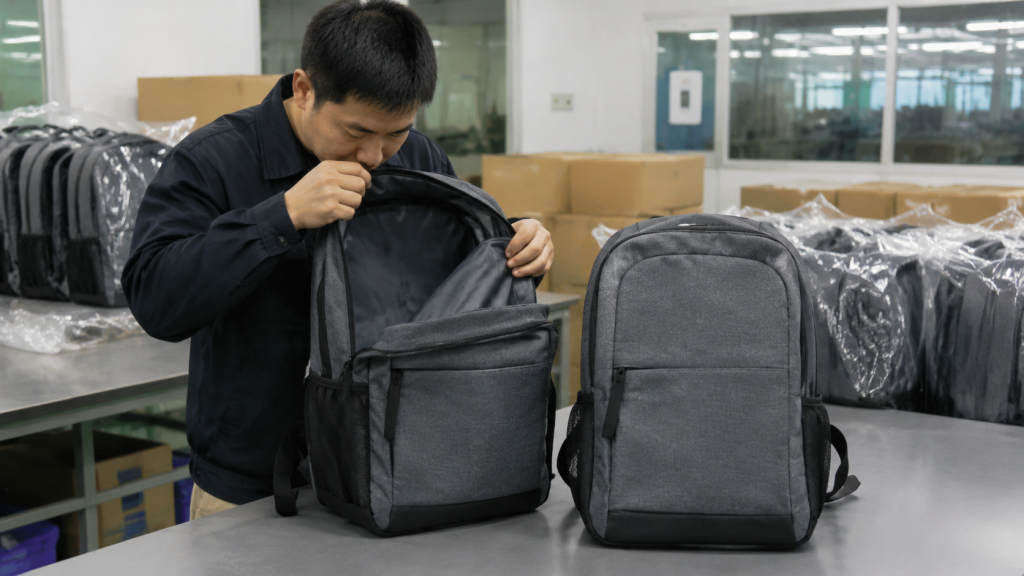
Some sample-to-bulk variation can be normal. The question is whether the difference stays within the approved specification and acceptable visual, tactile and functional range.
| Difference | Usually Acceptable? | What to Check |
|---|---|---|
| Slight fabric hand-feel difference between lots | Sometimes | Same material spec, coating and approved range |
| Minor buckle-force variation | Sometimes | Same model, resin and operating tolerance |
| Temporary flattening after packing | Often | Whether foam and bag shape recover after unpacking |
| Small shade or texture variation | Only within tolerance | Approved color / surface standard |
| Minor shaping difference within approved dimensions and appearance | Sometimes | Construction and finished shape remain within tolerance |
Normal variation should be controlled variation—not an unapproved change.
Differences become quality issues when they come from a material, component or construction change that was not approved, or when they affect the product’s fit, structure or performance. These problems often overlap with broader backpack production quality issues, including material inconsistency, zipper problems and construction defects.
Examples include:
- shell fabric substituted
- foam density clearly changed
- reinforcement board thickness changed
- zipper brand or series changed
- reinforcement missing
- bulk dimensions outside tolerance
- coating or backing visibly different
- bag structure noticeably weaker than the approved reference
Different feel becomes a quality issue when it comes from an unapproved material, construction change or performance loss.
The approved sample establishes the target, while measurable specifications and agreed tolerances define how much production variation is acceptable.
How Should Buyers and Factories Investigate and Prevent the Difference?
Once the affected area is identified, the next step is to compare it systematically rather than rely only on general impressions such as “softer” or “cheaper.”
Use Component-by-Component Troubleshooting
A quick symptom check can narrow the problem much faster:
| Symptom | First Things to Check |
|---|---|
| Bag feels stiffer | coating, lining, board, lamination |
| Shoulder straps feel harder | foam density, lamination, stitch tension |
| Zipper feels tighter | zipper batch, opening curve, seam tension |
| Buckle feels different | molding batch, resin, supplier |
| Bag looks flatter | packing compression, foam recovery, board |
| Bag feels lighter | fabric GSM, foam density, reinforcement |
Do not investigate the whole bag as one problem when the difference may come from one component.
Convert Subjective Feel into Measurable Specifications
Terms such as “soft foam,” “stiff fabric” or “smooth zipper” are useful during discussion, but they are difficult to reproduce consistently in bulk production.
Where feel matters, define as much as possible through measurable specifications. For example, fabric GSM can be checked using a defined mass-per-unit-area test method such as ASTM D3776/D3776M:
- foam thickness and density
- fabric GSM and coating
- board thickness
- zipper model or series
- buckle material
- approved material swatch or sealed sample
A physical sample shows the target. A controlled specification makes that target repeatable.
Use a Bulk-Material PP Sample and Check Early Production
If development samples were made with stock or substitute materials, a pre-production sample made with the final bulk materials is a much better production reference.
It should use the confirmed:
- fabric
- foam
- zipper and hardware
- logo method
- BOM and construction
The next control point should be incoming material inspection and first-production review, not only final inspection after thousands of bags have already been assembled.
The best time to catch a sample-to-bulk difference is often before the bag is fully assembled.
A PP sample should establish the approved standard and acceptable range—not imply that every bulk unit must feel physically identical by touch.
To reduce the risk of sample-to-bulk differences before production starts, use our Bag Sample Approval Checklist: What Must Be Locked Before Bulk Production? to review the materials, construction details, artwork, tolerances and production documents that need final approval.
Frequently Asked Questions
Can different colors of the same fabric feel slightly different?
Yes. Different colors may go through different dyeing and finishing conditions, and coating or surface feel can vary slightly between production lots.
For products where hand feel is important, each bulk color should still remain within the approved specification and acceptable range.
What if only one production lot or one color feels different?
Separate the affected lot or color first rather than treating the whole order as one problem.
Compare it with the approved material reference and check the fabric lot, coating, foam, components and incoming-material records before deciding whether production can continue.
Should large orders keep different material lots separated?
For materials where shade, coating or hand feel is sensitive, lot identification is useful.
It allows the factory to trace differences back to a specific fabric, foam or component batch instead of mixing several lots and making the cause harder to identify.
Should tactile checks be included in final inspection?
Yes, when operating feel or hand feel is important to the product.
Zipper operation, buckle force, padding feel and overall structure can be compared with the approved reference, but the acceptance standard should be defined before inspection rather than judged only by personal preference.
How should an approved sample be controlled during a long production program?
The approved reference should be clearly identified with the correct version or approval date and kept together with the final BOM and production specification.
If materials, suppliers or construction are changed later, the affected item should be reviewed and re-approved before it becomes the new production standard.
Final Thoughts
A sample and bulk production do not have to feel identical in every tactile detail, but the finished bags should remain consistent with the approved specifications, construction and functional requirements.
The key is to identify the source of any difference, compare the bulk product with the correct approved reference, and check whether the materials, construction and production documents are aligned.
If you’re developing a custom bag and want to reduce the risk of sample-to-bulk discrepancies, contact Osgoodway to discuss your project. Share your tech pack, reference sample, key material requirements and target quantity. Our team can help review the specifications and identify important details to confirm before bulk production.
A clear production specification is the foundation of consistent bulk quality.







