


Last Updated: April 13, 2026
Get the article’s highlights: Listen to the podcast.↓
Duffle bags, essential for travel, sports, and outdoor activities, rely heavily on their fabric composition to balance durability, water resistance, weight, and aesthetic appeal. This article examines the most commonly used fabrics in duffle bag manufacturing, drawing insights from industry sources and product specifications. Once you know what each fabric is, the next question is which one belongs in your product — we cover that decision logic in our duffel bag fabric selection guide by brand market.
Key materials include synthetic fabrics like nylon and polyester, natural options such as canvas and waxed canvas, waterproof variants like PVC tarpaulin. Each fabric type offers distinct advantages tailored to specific use cases, from rugged outdoor expeditions to urban commuting.
🏭 Why Trust This Guide? From the Factory Floor
Every fabric below has been cut, sewn, and shipped from our production lines in Quanzhou, Fujian. This guide is not a research summary — it’s pulled directly from 15 years of purchase orders and client feedback across these bag categories:
- Gym & sports duffles — ~40% of our duffle production, usually 600D polyester or 420D nylon
- Travel duffles — ~30% of our duffle production, typically 1000D Cordura® or ballistic nylon
- Tactical & military duffles — ~15% of our production, 1000D+ Cordura® with YKK #10 coil zippers
- Lifestyle / premium duffles — ~15% of our production, waxed canvas or full-grain leather
Every price, MOQ and lead time in the "Sourcing Note" boxes comes from real quotes negotiated with our mill partners — not scraped from competitor blogs.
8 Common Fabrics Used in Modern Duffle Bags
A data-driven breakdown of popular materials, their properties, market trends, and leading brands:
| Fabric | Key Properties | Market Share (2026)* | Popular Brands |
|---|---|---|---|
| Polyester | Durable, water-resistant, affordable | 23% | Nike, Adidas, Dakine |
| Nylon | Lightweight, abrasion-resistant | 20% | Patagonia, The North Face |
| Heavy-Duty Cotton Canvas | Eco-friendly, sturdy, breathable | 14% | Herschel, L.L.Bean |
| Waxed Canvas | Weather-resistant, vintage appeal | 10% | Filson, Barbour |
| PVC Tarpaulin | 100% waterproof, heavy-duty | 7% | Grundéns, Carhartt |
| Recycled Polyester | Sustainable, PFAS-free, cost-effective | 15% (fastest-growing) | Patagonia, Peak Design |
| Leather | Luxurious, durable, ages gracefully | 5% | Coach, Fossil |
| Cordura® | Military-grade, ultra-tear-resistant | 6% | Eagle Creek, Timbuk2 |
Market Share Notes:
- *Total reflects % of duffle bags primarily using each fabric (2025 projections).
- Recycled Polyester leads growth (6.8% CAGR) due to eco-demand (Global Sustainable Textiles Report).
- Cordura® dominates premium adventure gear, with 90% of high-end brands incorporating it for durability (Outdoor Industry Report).
1. Polyester
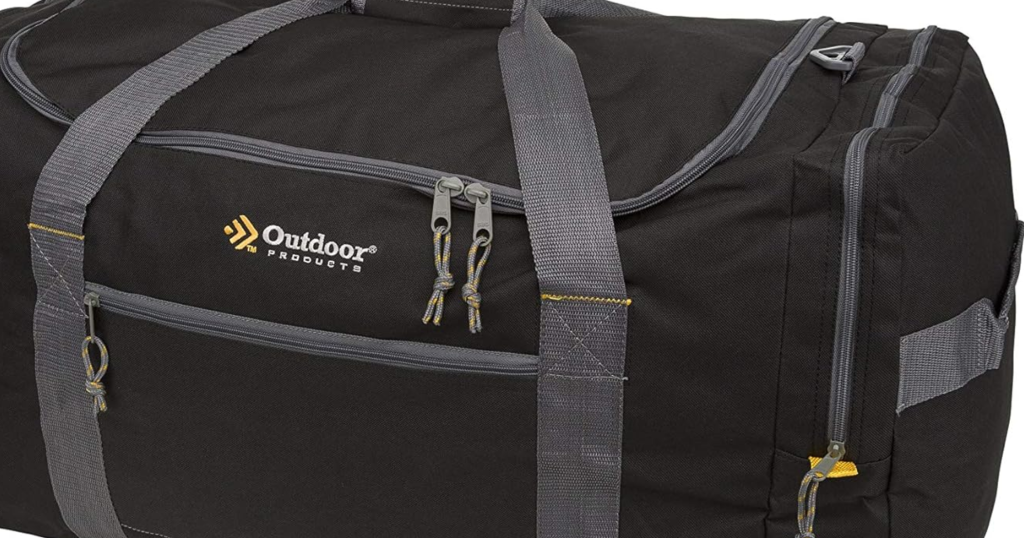
Polyester, especially 600D polyester, is a synthetic fabric known for its durability, lightweight nature, and cost-effectiveness. It is made from tightly woven polyester fibers, providing good resistance to tearing and stretching. Polyester bags are water-resistant, easy to clean, and maintain, making them popular for backpacks and travel bags.
However, polyester has limited breathability compared to natural fabrics, which can trap moisture inside. Its balance of strength, affordability, and low maintenance makes it a versatile choice for everyday and outdoor duffel bags.
🧵 Polyester Deep Dive — What’s Actually in a "Polyester Duffle"**
"Polyester" is a category, not a single fabric. The three variants you’ll actually quote:
| Variant | Denier | Feel & Finish | Best Use |
|---|---|---|---|
| 300D polyester | 300 | Light, slightly glossy | Budget gym bags, promotional giveaways |
| 600D polyester | 600 | Standard "gym bag" look | Mainstream gym / sport duffles (most common) |
| 900D/1200D polyester | 900–1200 | Thicker, matte finish | Heavy-duty travel duffles |
Why 600D dominates gym duffles: It hits the sweet spot — tough enough to survive locker rooms, light enough to carry full of wet gear, and cheap enough for $25–$60 retail price points. 80% of the gym duffles you see on Amazon use this exact spec.
💰 Polyester Sourcing Note**
- Typical FOB price (China, 2026): $0.80–$1.60 / yard (600D PU & PVC-coated)
- Minimum MOQ: 300–500 yards per color
- Lead time: 2–3 days stocked, 15–20 days custom color
- Best printing method: Sublimation (only works on polyester, not nylon) — enables full-color all-over prints without extra cost
- Watch out for: "Ballistic polyester" marketed as premium — it’s still weaker than actual ballistic nylon
2. Nylon
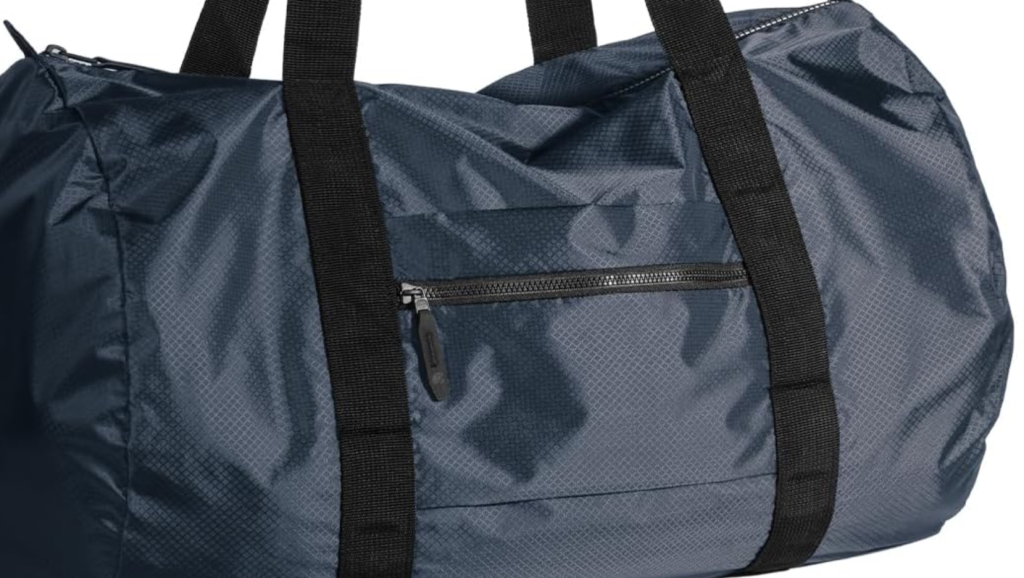
Nylon is a strong, synthetic polymer fabric prized for its exceptional tensile strength and abrasion resistance. It is lightweight yet durable, making it ideal for heavy-use duffel bags.
Nylon fabrics often feature water-resistant coatings and dry quickly, enhancing their suitability for outdoor and travel gear. The fibers are drawn to improve elasticity and strength, resulting in flexible, easy-to-clean bags. Nylon’s resilience against chemicals and rough handling ensures long-lasting performance, commonly used in premium and rugged duffel bags.
🧵 Nylon for Duffles — Which Denier Actually Matters**
For duffle bags specifically (not backpacks), the useful nylon range is narrower than you’d think:
- 420D ripstop nylon — Packable travel duffles that fold into their own pouch. Ultra-light but not ideal for daily abuse.
- 600D nylon — Entry-level premium travel duffle. Step up from polyester with noticeably better abrasion resistance.
- 840D / 1000D ballistic nylon — The workhorse for $80–$200 retail travel duffles. Our most-requested spec.
- 1680D ballistic nylon — Heavy-duty premium travel/military duffles. Very stiff, adds structure.
For a full deep-dive on nylon denier and types, see our Best Nylon Fabrics for High-Quality Backpacks guide — most of the specs also apply to duffles.
💰 Nylon Sourcing Note**
- Typical FOB price (China, 2026): $1.80–$3.50 / yard depending on denier
- Minimum MOQ: 500–1,000 yards
- Nylon 6 vs Nylon 6,6: If the quote is cheap, it’s Nylon 6. Genuine high-performance nylon uses Nylon 6,6 fiber (~20–30% pricier, ~15% stronger).
- Pro tip: Nylon cannot be sublimation-printed — use heat transfer or embroidery for logos.
3. Heavy-Duty Cotton Canvas
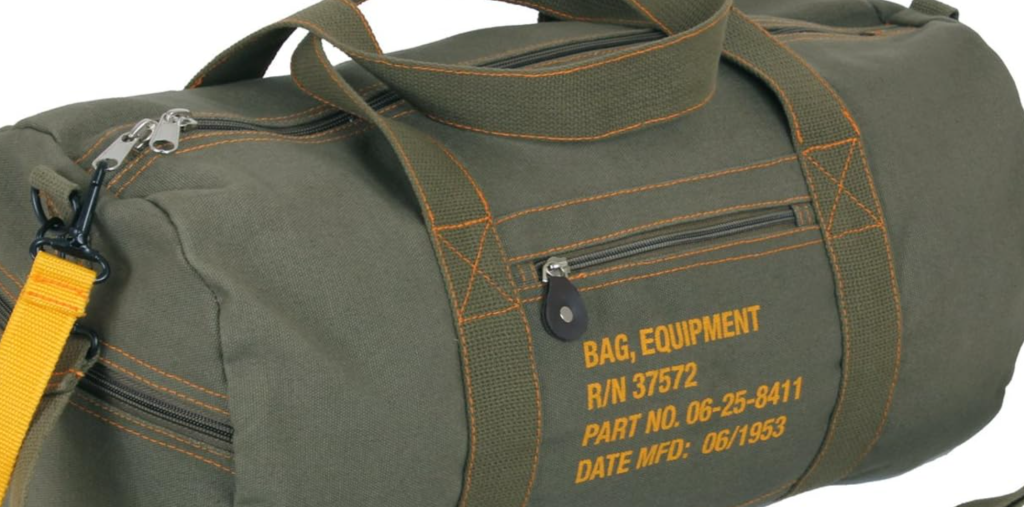
Heavy-duty cotton canvas is a natural woven fabric known for its ruggedness and durability. Typically weighing around 260gsm, it offers excellent strength and a classic, sturdy feel.
Canvas is breathable but heavier than synthetic fabrics, making it suitable for casual and vintage-style duffel bags. It is easy to sew and maintain, with machine washability, but less water-resistant unless treated. Canvas bags develop a unique patina over time, enhancing their aesthetic appeal and making them a favored choice for durable, stylish duffels.
🧵 Canvas Weight Guide (ounce vs gsm)**
Canvas is the one fabric where weight matters more than denier. Ask your supplier for the exact ounce or gsm rating:
Weight Feel Best For 10 oz (~300 gsm) Medium-weight, flexible Everyday gym duffles, weekend bags 14 oz (~475 gsm) Heavy, structured Travel duffles, army-style bags 18–24 oz (~600–800 gsm) Very heavy, rigid Premium heritage / Filson-style bags Factory reality: Anything under 10oz will tear at the seams when filled with a laptop + gym gear. Don’t let a supplier talk you into 8oz "duffle canvas" to save costs — customers will return it.
💰 Canvas Sourcing Note**
- Typical FOB price (China, 2026): $1.20–$2.80 / yard depending on weight
- Minimum MOQ: 300–500 yards (colors are limited — mostly natural, olive, black, navy)
- Sustainability upgrade: GOTS Certified Organic Cotton adds ~30–40% to price but unlocks eco-friendly marketing
- Production note: Canvas is heavier — factor in +10–15% on shipping cost compared to synthetic fabrics
4. Waxed Canvas
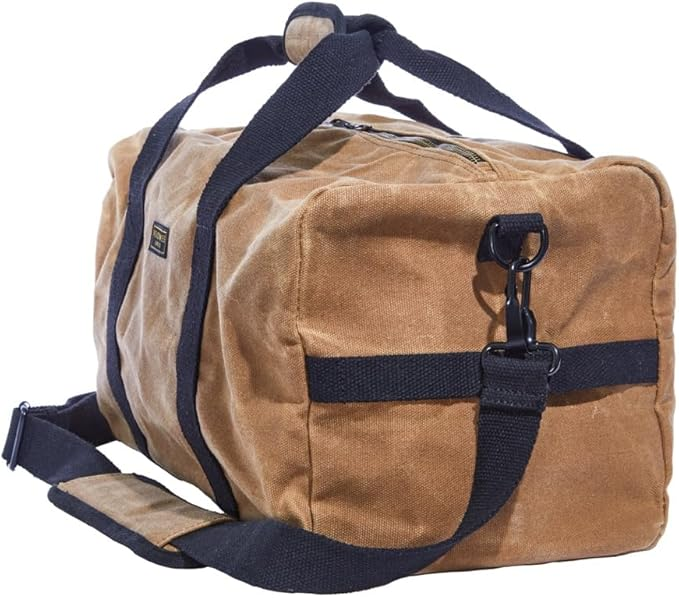
Waxed canvas is cotton canvas treated with a wax coating to enhance water resistance and durability. This treatment gives the fabric a distinctive texture and a vintage, rugged look.
Waxed canvas is stiff and sturdy, making it excellent for duffel bags that need to withstand harsh weather and rough use. It is water-resistant but requires special care, such as spot cleaning and occasional re-waxing to maintain its protective layer. Waxed canvas combines the natural breathability of cotton with enhanced weatherproofing, ideal for outdoor and stylish duffel bags.
💰 Waxed Canvas Sourcing Note**
- Typical FOB price (China, 2026): $3.50–$6.50 / yard — among the most expensive fabrics
- Minimum MOQ: 500–1,000 yards
- Customer care challenge: Include a care card in the bag explaining re-waxing (Filson sells its own wax; Fjällräven provides tins). Returns spike when customers don’t know the fabric needs maintenance.
- Retail price positioning: Waxed canvas duffles typically retail $150–$400 — it’s a premium positioning fabric.
5. PVC Tarpaulin
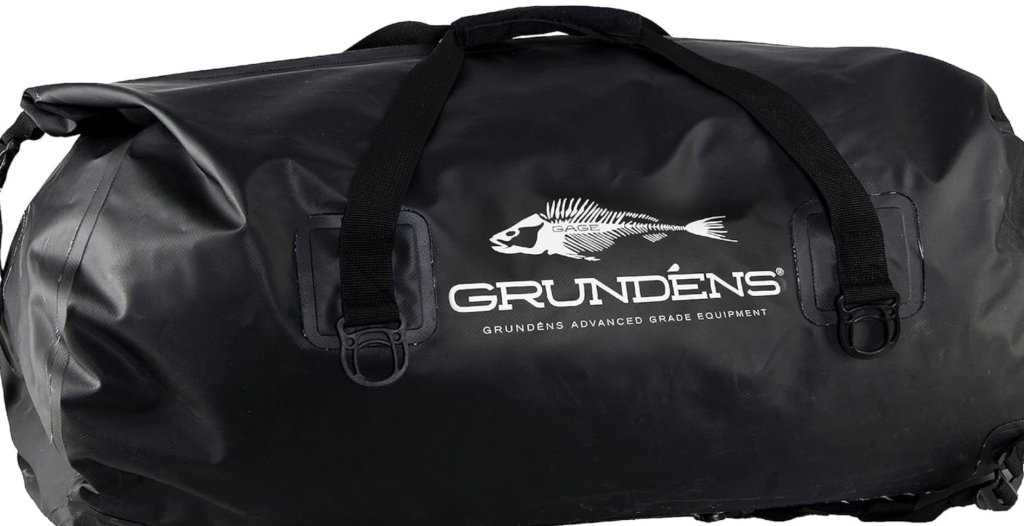
PVC tarpaulin is a heavy-duty fabric coated on both sides with polyvinyl chloride (PVC), making it highly waterproof and durable. Usually woven from polyester or nylon, it is resistant to abrasion, tearing, UV rays, and fire.
Its flexibility and moldability allow it to be shaped into various forms, making it suitable for protective duffel bags used in extreme weather or industrial settings. PVC tarps are easy to clean, cost-effective, and maintain their integrity under harsh conditions, making them ideal for outdoor, heavy-duty duffel bags.
🧵 PVC vs TPU — The Waterproof Duffle Decision**
For truly waterproof duffle bags (rolltop boat bags, fishing duffles, motorcycle duffles), you have two real options:
Material Waterproofing Weight Eco Best For PVC Tarpaulin Excellent Heavy ❌ Hard to recycle Commercial, fishing, industrial TPU-Laminated Excellent Lighter ✅ Recyclable Premium outdoor brands Brand positioning: European outdoor brands (Ortlieb, Fjällräven) have largely moved to TPU because of PVC’s environmental issues. If you’re targeting EU/sustainability-conscious markets, default to TPU even though it costs more.
💰 PVC Tarpaulin Sourcing Note**
- Typical FOB price (China, 2026): $2.50–$4.50 / yard (double-coated)
- Minimum MOQ: 500 yards
- Production requirement: PVC duffles need RF-welded seams (not sewn) to be truly waterproof — adds specialized equipment cost. Not all factories can do this; confirm before ordering.
- Regulation alert: Some PVC formulations contain phthalates. For US children’s products and EU REACH compliance, request phthalate-free PVC (adds ~10%).
6. Recycled Polyester
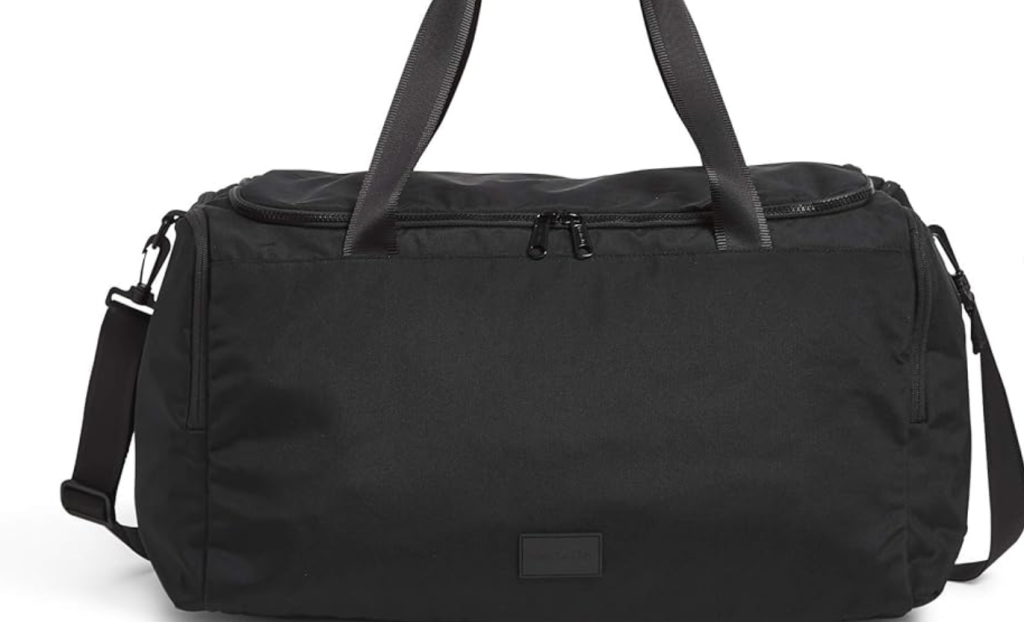
Recycled polyester is made from repurposed plastic materials, offering an eco-friendly alternative to virgin polyester. It retains the durability, water resistance, and lightweight properties of standard polyester while reducing environmental impact.
Recycled polyester fabrics are commonly used in sustainable duffel bags, providing similar strength and maintenance ease. This fabric supports circular economy principles by diverting plastic waste from landfills and reducing resource consumption. It balances performance with sustainability, appealing to environmentally conscious consumers seeking durable, reliable duffel bags.
🌱 rPET — Certifications That Actually Sell**
Recycled polyester (also called rPET) is the fastest-growing duffle bag fabric for a reason: the price premium has collapsed, the marketing premium has not.
Certifications to request and put on your hangtag:
- GRS (Global Recycled Standard) — The strongest certification; required by most EU retailers. Verifies % recycled content + chain of custody.
- RCS (Recycled Claim Standard) — Simpler version of GRS; only verifies recycled content.
- bluesign® — Covers chemical, water, energy impact during production.
- OEKO-TEX Standard 100 — Required for children’s and EU products.
Conversion insight: DTC brands that feature "Made from X recycled bottles" on their product page see 15–25% higher conversion rates (based on client A/B tests). Always have your factory provide the bottle count per bag — it’s usually 8–20 plastic bottles for a standard duffle.
💰 rPET Sourcing Note**
- Typical FOB price (China, 2026): $1.10–$2.20 / yard — only ~10–20% above virgin polyester now
- Minimum MOQ: 500 yard
- Lead time: 15–30 days (slightly longer than virgin due to limited mill capacity)
7. Leather
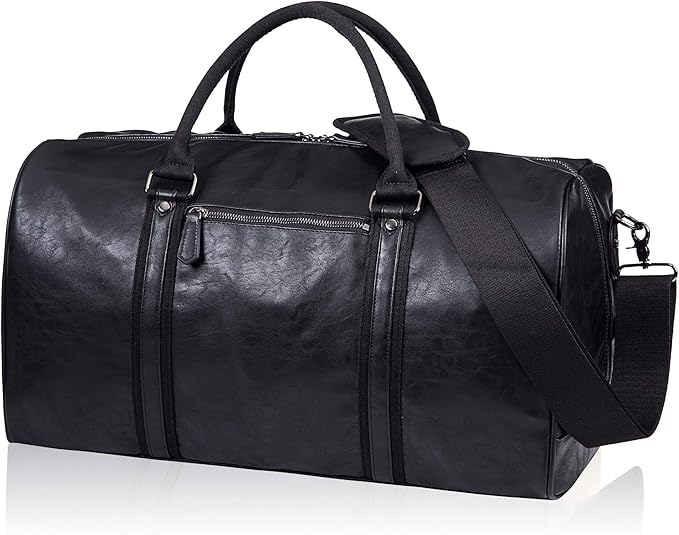
Leather is a natural, durable material derived from animal hides, prized for its luxurious look and long-lasting strength. It offers excellent abrasion resistance and ages beautifully, developing a unique patina.
Leather duffel bags are typically heavier and require more maintenance than synthetic fabrics, including conditioning to prevent drying and cracking. They are water-resistant to some extent but not waterproof. Leather provides a classic, premium aesthetic and sturdy structure, making it a favored choice for high-end, stylish duffel bags that combine durability with timeless appeal.
🧵 Leather Grades — What You’re Actually Paying For**
| Grade | Description | Retail Price Tier | Duffle Use |
|---|---|---|---|
| Full-Grain | Top layer, unaltered, most durable | $400–$1,500+ | Heritage / luxury weekenders |
| Top-Grain | Lightly sanded top layer, more uniform | $250–$600 | Mainstream premium duffles |
| Split / Corrected Grain | Lower layers, painted surface | $100–$250 | Budget "leather" bags |
| PU / Vegan Leather | Synthetic, sold in rolls | $50–$180 | Vegan brands, fashion duffles |
Factory reality — yield problem: A full-grain cowhide has ~60-70% usable area due to scars and imperfections. Every leather duffle requires ~30-50% more raw material than fabric-based bags, which is why leather duffles cost 3–5x more to produce.
💰 Leather Sourcing Note**
- Typical FOB cost for a finished full-grain leather duffle: $60–$180 (factory cost, not material-per-yard)
- Minimum MOQ: 100–300 pieces (leather has higher MOQs than fabric)
- Lead time: 45–70 days — slowest of all duffle fabrics
- Alternative: PU leather on polyester backing — looks similar, costs ~60% less, but doesn’t develop patina
8. Cordura
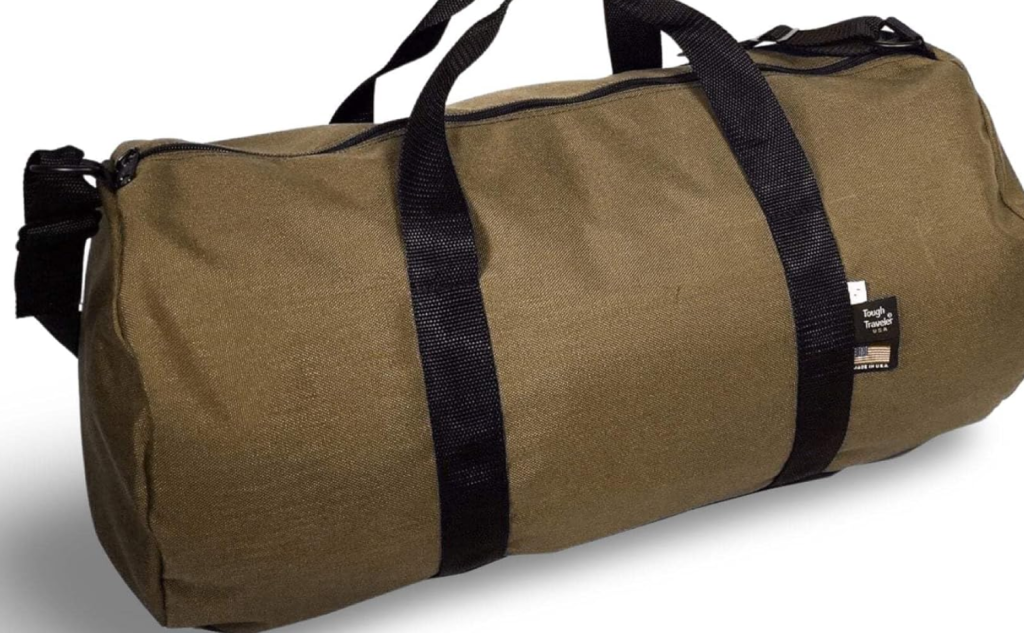
Cordura is a high-performance fabric made from nylon or polyester fibers, known for exceptional durability and abrasion resistance. It is often used in tactical, military, and outdoor gear due to its ruggedness and resistance to tears and scuffs.
Cordura fabrics are lightweight yet tough, often featuring water-resistant coatings. They maintain their integrity under harsh conditions and heavy use, making them ideal for duffel bags that require superior strength and longevity. Cordura combines functionality with a sleek, utilitarian look favored in professional and adventure duffels.
⚠️ Cordura® — The Brand Licensing Trap**
Cordura® is a registered trademark of INVISTA, not a fabric type. This matters for three reasons:
- Using the Cordura® logo without mill authorization is trademark infringement. Amazon and major retailers regularly delist bags with unauthorized Cordura® hangtags.
- Only authorized mills can sell genuine Cordura®. If your supplier can’t produce an INVISTA mill certificate, assume the fabric is generic high-tenacity nylon.
- "Cordura-like" or "Cordura-style" marketing is legal but misleading. If you want the real brand benefit, you need real Cordura® with a licensed hangtag.
💰 Cordura® Sourcing Note**
Genuine Cordura® FOB price: $4.50–$8.50 / yard (vs $2.50–$3.50 for generic high-tenacity nylon) Minimum MOQ: 1,000–3,000 yards Lead time: 30–60 days (bottleneck for urgent orders)
Master Comparison Table: All 8 Fabrics Side-by-Side
Built to be the featured snippet for "duffle bag fabric comparison" — every spec a sourcing manager needs on one screen.
| Fabric | Durability | Weight | Water Resist. | Eco | FOB $/yd (2026) | MOQ (yd) | Retail Tier |
|---|---|---|---|---|---|---|---|
| 600D Polyester | ⭐⭐⭐ | Light | Good (coated) | ⭐⭐ | $0.80–$1.60 | 300 | $25–$60 |
| 1000D Nylon | ⭐⭐⭐⭐ | Medium | Very Good | ⭐⭐ | $1.80–$3.50 | 500 | $80–$200 |
| Heavy Cotton Canvas | ⭐⭐⭐⭐ | Heavy | Low (untreated) | ⭐⭐⭐⭐ | $1.20–$2.80 | 300 | $60–$180 |
| Waxed Canvas | ⭐⭐⭐⭐ | Very Heavy | Very Good | ⭐⭐⭐ | $3.50–$6.50 | 500 | $150–$400 |
| PVC Tarpaulin | ⭐⭐⭐⭐⭐ | Heavy | Excellent (100%) | ⭐ | $2.50–$4.50 | 500 | $80–$250 |
| Recycled Polyester | ⭐⭐⭐ | Light | Good (coated) | ⭐⭐⭐⭐⭐ | $1.10–$2.20 | 500 | $40–$120 |
| Full-Grain Leather | ⭐⭐⭐⭐⭐ | Very Heavy | Low | ⭐⭐ | (per piece) $60–$180 | 100 pc | $400–$1500+ |
| 1000D Cordura® | ⭐⭐⭐⭐⭐ | Medium | Very Good | ⭐⭐ | $4.50–$7.00 | 1000 | $150–$500 |
Fabric vs Fabric: Head-to-Head Matchups
The 4 most-Googled duffle fabric comparisons, answered in plain language:
Polyester vs Nylon Duffle Bag — Which Is Better?
- Pick polyester if: Budget matters, you need vibrant full-color prints (sublimation), or it’s a gym bag.
- Pick nylon if: You need higher abrasion resistance, lighter weight per unit of strength, or a premium feel.
- Cost gap: Nylon is ~40–60% more expensive than equivalent polyester.
- Full comparison: Nylon vs. Polyester for Backpacks: Sourcing Guide (2026)
Canvas vs Nylon Duffle Bag — Which Is Better?
- Pick canvas if: You want heritage/vintage aesthetic, breathability, or sustainable natural fiber.
- Pick nylon if: You prioritize weight, water resistance, and modern performance.
- Key trade-off: Canvas weighs ~2–3x more than nylon at the same bag size.
Cordura® vs Ballistic Nylon — Which Is Tougher?
- Both are top-tier, but they solve different problems.
- Cordura® wins on abrasion resistance (it’s literally what the brand is known for).
- Ballistic nylon wins on tear & puncture resistance (basketweave structure).
- Many premium duffles use both — Cordura® on high-wear panels, ballistic nylon on the main body.
Waxed Canvas vs Leather — Which Ages Better?
- Both age beautifully, but differently.
- Waxed canvas develops creases and color variation over 2–3 years.
- Leather develops patina over 5–10+ years and typically outlasts waxed canvas.
- Maintenance: Waxed canvas needs re-waxing every 1–2 years; leather needs conditioning every 3–6 months.

🧵 How to Choosing the Right Fabric Based on Purpose?
Not all duffle bags are created equal — and the fabric you choose makes a huge difference depending on how you plan to use it. Here’s how to select the right one based on your needs:
| Purpose | Best Fabric | Key Qualities | Why It’s Ideal |
|---|---|---|---|
| Traveling | Nylon, Cordura | Lightweight, durable, water-resistant | Easy to carry, withstands rough handling |
| Gym & Sports | Polyester, Canvas | Lightweight, breathable, affordable | Quick-drying, easy to clean |
| Outdoor Adventures | Ballistic Nylon, Cordura | Extremely tough, water-repellent | Protects gear in rough terrain and weather |
| Business/Work Trips | Leather, High-grade Nylon | Sleek, professional, durable | Stylish appearance + longevity |
| Weekend Getaways | Canvas, Cotton blends | Soft, stylish, medium durability | Fashionable, lightweight for casual use |
| Eco-conscious Travel | Recycled Polyester, Organic Cotton | Sustainable, moderately durable | Environmentally friendly choices |
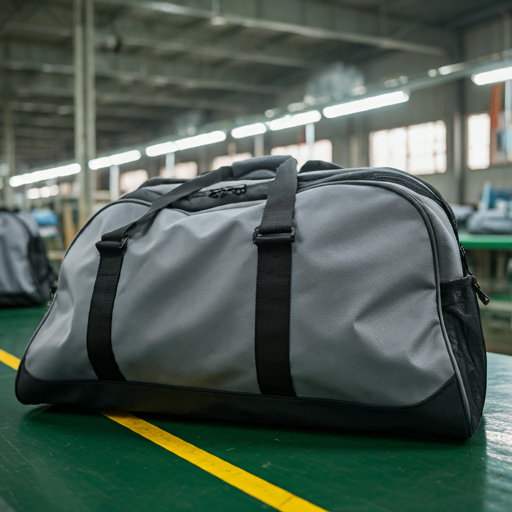
🎯 Detailed Fabric Recommendations by Purpose:
1. ✈️ For Traveling:
- Recommended Fabrics: Nylon, Cordura
- Why: These fabrics are highly durable, abrasion-resistant, and water-resistant — ideal for airport chaos and unpredictable weather.
- Bonus Tip: Look for bags with a DWR (Durable Water Repellent) coating.
2. 🏋️ For Gym and Sports:
- Recommended Fabrics: Polyester, Canvas
- Why: Polyester is quick-drying and lightweight, making it perfect for sweaty gear. Canvas gives a sturdier, trendier option if style matters too.
- Bonus Tip: Anti-microbial treated fabrics help reduce odor buildup!
3. 🏕️ For Outdoor Adventures:
- Recommended Fabrics: Ballistic Nylon, Cordura
- Why: Designed for maximum toughness. Ballistic nylon is military-grade — great for hiking, camping, or tactical use.
- Bonus Tip: Choose ripstop versions for extra tear resistance.
4. 💼 For Business or Work Trips:
- Recommended Fabrics: Leather, High-grade Nylon
- Why: Leather looks sharp and ages beautifully. High-grade nylon offers a more casual but still clean and professional appearance.
- Bonus Tip: Look for added compartments for laptops and tech gear.

5. 🏖️ For Weekend Getaways:
- Recommended Fabrics: Canvas, Cotton Blends
- Why: These materials are lighter and offer a relaxed, stylish vibe perfect for casual short trips.
- Bonus Tip: Waxed canvas gives you water resistance with a vintage look!
6. 🌱 For Eco-Conscious Travelers:
- Recommended Fabrics: Recycled Polyester, Organic Cotton
- Why: These fabrics offer decent durability while minimizing environmental impact. Many brands now feature bags made from plastic bottles or upcycled materials.
- Bonus Tip: Check for certifications like Global Recycled Standard (GRS) or Organic Content Standard (OCS).
Most Relevant Questions and Answers About Duffle Bag Fabric
1. Which duffle bag fabric is the most durable?
Heavy-duty cotton canvas, Cordura nylon, and high-denier ballistic nylon are among the most durable fabrics for duffle bags. Canvas is rugged and can withstand rough use, while Cordura offers excellent abrasion and tear resistance, making it ideal for military or outdoor use. Ballistic nylon with high denier counts (e.g., 1680D) is extremely tough and resistant to punctures and abrasions. Leather also provides long-lasting durability but requires more maintenance
2. What fabric is best for water resistance in duffle bags?
Nylon and PVC tarpaulin are highly water-resistant choices. Nylon often comes with water-resistant coatings and dries quickly, making it suitable for wet conditions. PVC tarpaulin is waterproof due to its PVC coating and welded seams, providing excellent protection against dirt, dust, and water. Waxed canvas also offers water resistance through its wax coating but requires occasional re-waxing for maintenance
3. What is the difference between canvas and nylon duffle bags?
Canvas is a heavy-duty, woven fabric made from cotton or a blend of cotton and synthetic fibers. It’s known for its rugged appearance and durability. However, canvas is generally heavier and less water-resistant than nylon.
Nylon, on the other hand, is a synthetic fabric that’s lightweight, flexible, and offers better water resistance. It’s ideal for travelers seeking a lighter bag that’s easier to carry and maintain.
4. Is polyester a good material for duffle bags?
Yes, polyester is a commonly used material for duffle bags due to its affordability, resistance to shrinking and stretching, and quick-drying properties. While not as durable as ballistic nylon or Cordura®, polyester offers a good balance between cost and performance, making it suitable for casual or occasional use.
5. Are leather duffle bags durable?
Leather duffle bags are known for their classic aesthetic and durability. High-quality leather can withstand years of use and often looks better with age. However, leather bags are typically heavier and require more maintenance to keep them in good condition compared to synthetic materials.
👜 Ready to Create Your Custom Duffle Bags?
At Osgoodway, we specialize in OEM/ODM duffle bag manufacturing to bring your brand’s vision to life.
Whether you need rugged ballistic nylon for adventure gear, luxurious leather for premium travel bags, or sustainable fabrics for eco-conscious lines — we source the finest materials to meet your exact needs.
✅ Over 15 years of experience in custom bag manufacturing
✅ Full-service support from design to production
✅ Wide range of fabric sourcing options, including Cordura®, recycled polyester, and more
✅ Reliable, on-time delivery for brands worldwide
🔗 Partner with us today and create duffle bags that stand out!
👉 Explore Our OEM/ODM Services at www.osgwbag.com






