Stop guessing which cooler bag lining works. I see buyers waste thousands on the wrong insulation simply because they don’t understand thermodynamics on the factory floor.
If we strictly look at cold retention hours under prolonged outdoor exposure, aluminum foil slightly wins out thanks to its superior ability to reflect radiant heat. However, PEVA completely dominates when it comes to waterproofing, leak-proof seams, and raw durability. Your ultimate choice depends entirely on the specific use case—packing a quick office lunch versus full-day outdoor use.
Here at Osgoodway, we’ve cut open, tested, and manufactured thousands of cooler bags. Let me show you what actually happens inside these materials.
How Does Aluminum Foil Lining Actually Work in Cooler Bags?

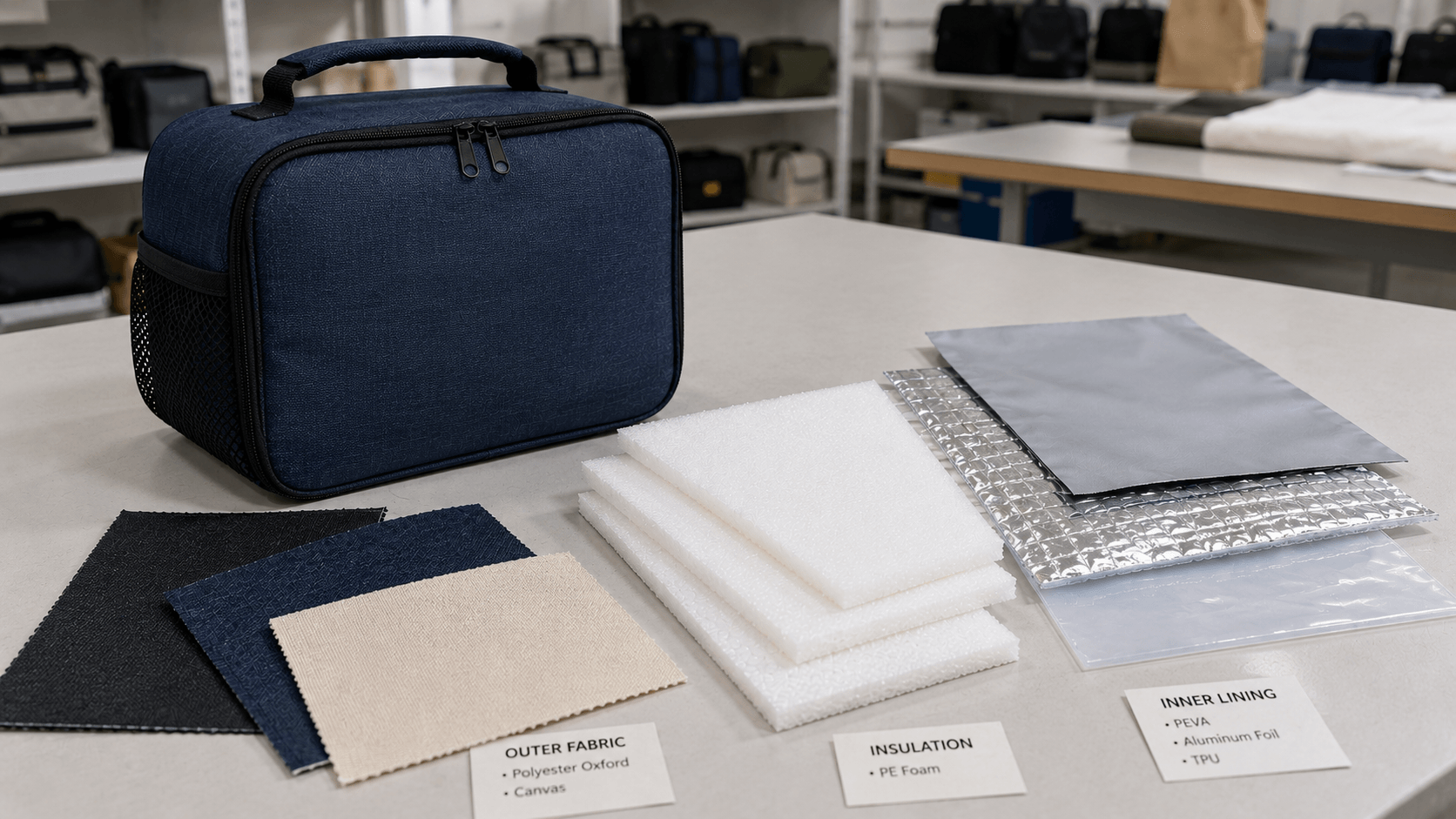
Aluminum foil acts as a radiant barrier. It literally reflects thermal radiation away from the bag’s interior, acting like a mirror to block outside heat. It relies on deflecting sunlight rather than absorbing it, making it highly effective for dry, sunny environments.
At the factory, we measure this using thermal imaging. A standard 0.15mm aluminum foil laminated with 3mm EPE foam reflects up to 95% of radiant heat, but its conductive insulation drops rapidly if the foil creases or tears during the sewing process.
What Are the True Pros and Cons of Aluminum Foil?
| Feature | Factory Data |
|---|---|
| Radiant Heat Reflection | Excellent (95% reflection) |
| Leak-proof Capability | Poor (stitched seams leak) |
| Tear Resistance | Low (creases easily) |
| Cost | Low (approx. $0.30/yard) |
When Should You Spec Aluminum Foil for Production?
Specify aluminum foil only for low-cost, promotional cooler bags or dry-use scenarios like lunch totes where users rely on gel packs, never raw ice.
- Promotional beach bags
- Dry food delivery
- Budget-friendly corporate merch
Never use standard stitching on foil if you want it waterproof. We tried taping the seams for a UK buyer; it still failed. Foil is for dry cold only.
Why is White & Silver PEVA the Industry Standard for Soft Coolers?

PEVA (Polyethylene Vinyl Acetate) replaced toxic PVC years ago. It is the flexible workhorse of modern cooler bags.
PEVA stops heat transfer through conduction. Unlike foil, it doesn’t reflect heat well, but it provides a thick, waterproof, antimicrobial barrier that can be high-frequency welded to create a 100% leak-proof, highly durable interior for melting ice.
How Does High-Frequency Welding Make PEVA Leak-Proof?
We don’t sew PEVA. We use high-frequency machines to melt the PEVA seams together at the molecular level, creating a watertight bathtub inside the bag.
- Zero needle holes
- Holds standing water for 48+ hours
- Prevents mold growth in seams
What Happens When Buyers Choose the Wrong Lining?
A German buyer switched to foil to save $0.50 per bag. Users filled them with ice, the seams leaked instantly, and 5,000 units were returned to the warehouse.
| Material | Water Resistance | Typical Failure Point |
|---|---|---|
| PEVA (Welded) | 100% Waterproof | Puncture by sharp object |
| Foil (Sewn) | Not Waterproof | Needle holes leak instantly |
Which Material Actually Wins the 12-Hour Ice Melt Test?
We ran a brutal thermal test on the factory floor using two identical 20L bags, differing only in their inner lining.
After 12 hours at 85°F, the aluminum foil bag retained 10% more solid ice due to radiant reflection, but the melted water completely soaked through the bottom seams.
How Did the Temperature Data Compare Over Time?
Both linings held steady for the first 4 hours. By hour 8, the foil bag stayed 2°F cooler, proving its superior reflective insulation against ambient heat.
- Hour 2: No noticeable difference.
- Hour 6: Foil begins to pull ahead by 1.5°F.
- Hour 12: PEVA ice melted faster, but contained 100% of the water.
Which Lining Offers the Best Overall User Experience?
While foil wins the raw temperature game, PEVA wins the usability game. Consumers hate leaky bags more than they hate ice melting 30 minutes faster.
| Test Metric | Aluminum Foil | PEVA |
|---|---|---|
| Ice Retention | Winner (+10%) | Runner-up |
| Leak Containment | Total Failure | Flawless |
| Easy to Clean | Hard (stains stick) | Easy (wipes clean) |
What Are the Key Takeaways for Brand Owners?
- Never sell an aluminum foil cooler as "ice-ready."
- If using PEVA, upgrade to a 0.15mm thickness or higher to prevent zipper punctures.
- Always pair either lining with at least 5mm to 8mm EPE foam for optimal thermal resistance.
How Should Consumers Choose Between Aluminum Foil and PEVA Cooler Bags?
Stop overthinking your cooler bag purchase. If you pack raw ice or messy lunches, choose PEVA for its leak-proof, easy-to-clean surface. If you are hitting a sun-drenched beach with sealed dry ice packs, choose aluminum foil to reflect that harsh radiant heat.
At Osgoodway, we see endless 1-star reviews on Amazon simply because users mismatch the material to the use case. Foil handles radiant heat brilliantly but fails immediately when confronted with sharp corners or melting ice water.
What Is the Ultimate If/Then Decision Tree for Cooler Bags?
- If you dump raw ice directly into the bag… Choose PEVA.
- If you go to an unshaded beach all day… Choose Aluminum Foil.
- If you pack a kid’s lunch with soup or sauce… Choose PEVA.
- If you need a cheap, lightweight promotional giveaway… Choose Aluminum Foil.
Why Does Lunch Box Cleaning Depend Entirely on the Lining?
PEVA wipes clean in seconds because it is non-porous and welded tight. Foil traps food in stitched seams, breeding bacteria almost overnight.
- PEVA resists oil and staining; a damp cloth removes 99% of spills.
- Foil creases hold onto dried liquids, making deep cleaning impossible.
- Scrubbing foil too hard strips the reflective metallic coating right off.
Factory Secret: We always recommend PEVA for lunch bags. Spilled soup ruins foil bags permanently because you can’t wash out the foam underneath the stitching!
What Are the True Sourcing Costs and Compliance Realities for B2B Brands?
Big brands don’t guess. They engineer their supply chains around material compliance and strict unit economics.
Top brands like Yeti and RTIC abandoned foil for heavy-duty PEVA and TPU. While foil costs pennies and stitches easily, PEVA requires expensive high-frequency welding machines but guarantees the FDA-compliant, BPA-free, leak-proof performance premium buyers demand.
How Do Sourcing Costs Actually Compare on the Factory Floor?
Foil saves you $0.30 to $0.50 per unit in raw materials and labor, but the 15% return rate for leaks destroys your profit margin if used wrong.
- Machinery: Foil uses standard sewing ($). PEVA needs 15kW HF welders ($$$).
- Labor Speed: Sewing 100 foil bags is 40% faster than perfectly welding 100 PEVA bags.
- Defect Control: PEVA welding requires strict voltage monitoring to prevent burn-throughs.
Why Is PEVA Mandatory for Amazon Europe and Premium Labels?
European LFGB standards are brutal. When we run manufacturing for Amazon Europe, we mandate PEVA to easily pass strict chemical migration tests.
| Compliance Metric | Aluminum Foil | White PEVA |
|---|---|---|
| BPA-Free Certified | Sometimes (depends on backing) | Yes (inherently BPA-free) |
| FDA Food Grade | Harder to verify | Industry Standard |
| Heavy Metal Test | High risk if sourced cheaply | Low risk |
| Eco-Friendly Trend | Low (composite materials) | High (chlorine-free) |
How Can You Prevent Mold and Ruined Linings in Your Cooler Bag?
The fastest way to destroy a cooler bag is trapping moisture inside. Never store a PEVA bag zipped shut after use, and never toss sharp utensils into an aluminum foil lining. One puncture instantly ruins the thermal insulation layer.
Our durability testing shows 80% of cooler bag failures happen post-purchase due to poor user maintenance. Once water breaches a puncture in foil or mold sets into a PEVA corner, the bag is trash.
How Do You Actually Stop PEVA Linings from Growing Mold?
- Always prop the zipper open for 24 hours after use to let the interior bone-dry.
- Wipe down the inside with a 50/50 mix of water and white vinegar to kill spores.
- Never throw a soft cooler in the washing machine; it destroys the internal EPE foam.
Why Are Knives and Forks the Natural Enemy of Aluminum Foil?
Aluminum foil is merely a micro-thin metallic layer over foam. A single fork prong creates an invisible tear, letting condensation rot the internal foam.
- Pack utensils in a separate dry pocket, never in the main foil compartment.
- Use hard Tupperware to prevent sharp plastic corners from rubbing the foil thin.
Factory Secret: We test puncture resistance with a 500g steel spike. PEVA stretches under pressure; foil tears instantly. Separate your forks!
Deep Dive FAQ
1. Are PEVA and EVA exactly the same for cooler bags?
False. PEVA has more polyethylene, making it softer and perfect for 100% waterproof high-frequency welding. If a shady supplier swaps it for cheaper EVA, your bag will stiffen and crack in freezing weather.
2. Does thicker EPE foam stop an aluminum foil bag from leaking?
Never. Leaks happen at the needle holes, not the foam. Stitched foil leaks instantly when raw ice melts, turning your expensive 10mm foam into a moldy sponge.
3. Can you put dry ice directly into a PEVA-lined soft cooler?
Absolutely not. At -109.3°F (-78.5°C), dry ice flash-freezes PEVA, making it brittle enough to shatter on impact. If your buyers use dry ice, you must upgrade the tooling to handle cold-crack-resistant TPU.
4. Is "food-grade" aluminum foil safe for hot food delivery?
The foil is safe, but the chemical glue backing isn’t. When heated by hot food, cheap adhesives off-gas toxic fumes into the compartment. Always demand heat-laminated layers with zero chemical glue.
5. Which lining is actually better for the environment?
Sourcing greenwash. Cooler bag foil is permanently laminated to plastic mesh—it’s 100% unrecyclable and goes straight to the landfill. PEVA is chlorine-free, and because welded seams outlast stitched foil 3-to-1, it drastically reduces long-term waste.
Conclusion: Stop Guessing, Start Testing
There is no absolute "best" cooler bag lining—there is only the right material engineered for the right environment. Aluminum foil remains the undisputed king of reflecting harsh, radiant sunlight for dry-pack scenarios. White PEVA dominates the premium market by offering unmatched waterproof, food-safe durability for heavy ice loads and messy lunches.
Choosing the wrong material doesn’t just melt your ice; it ruins your product reviews and drains your sourcing budget.
If you are a brand owner ready to upgrade your next production run, hit up our team at Osgoodway—I’ll gladly send you material swatches and a free welded PEVA sample so you can test the difference yourself.

Also read:
The Best Insulation Material for Custom Cooler Bags
Different Types of Cooler Bags
Insulated Bag vs Cooler: Which One’s For You?