


From my experience working with global buyers for over 12 years in a Chinese bag manufacturing factory, duffle bags are not outdated—but they are misunderstood.
The category itself is still strong. What is outdated is the way many buyers still develop them:
- No clear use scenario
- Weak functional design
- Over-focus on lowest price
In modern B2B sourcing, duffle bags only succeed when they are treated as a functional carrying system, not a “basic soft bag SKU”.
Quick Answer: Which Duffles Still Move?
The table below maps current demand by segment. This is what we actually see in our inquiry pipeline — not a trend report.
| Duffle Type | Market Signal | Primary Reason |
|---|---|---|
| Generic low-price cylinder | ❌ Declining | No use case, no brand value |
| Gym and training bag | ✅ Stable | Shoe zones and wet pockets drive repurchase |
| Weekender / short-trip bag | ✅ Growing | Shape and premium feel attract DTC brands |
| Team and club sports bag | ✅ Stable | Bulk orders, recurring clients, strong handles |
| Promotional and corporate duffle | ✅ High volume | Cost-controlled, logo-focused, fast delivery |
| Premium lifestyle duffle | ✅ Emerging | Cleaner silhouette, better fabric, brand story |
The generic cylinder is what buyers mean when they say "duffles are out of style." It was never a real product. It was a placeholder — and the market is finally treating it like one.
What Part of the Duffle Category Is Actually Outdated?
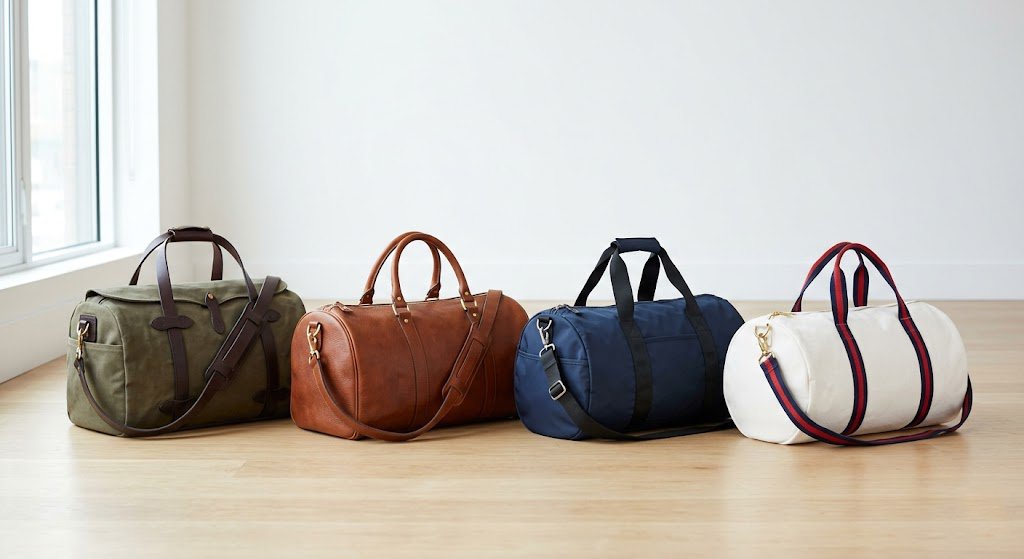
Not the format. The decisions.
Here’s what lands in my inbox at least twice a month. A buyer sends a photo of a flat, shapeless, thin-fabric cylinder. Five years old. Maybe older. Asks me to make it cheaper.
I already know how this project ends.
Old-style duffles fail for the same reasons every time:
- Body collapses. Can’t stand upright in a photo. Can’t stand on a shelf.
- Fabric is thin. Signals cheap before the zipper is touched.
- Strap is an afterthought. Thin webbing, no pad, slides off your shoulder under 4kg.
- No defined use case. Which means no reason to buy it instead of a backpack.
- Zipper fails inside 90 days of heavy daily use.
This is a product problem. Not a category problem.
Old Decisions vs. What Actually Works
| What I See Buyers Do | Why It Fails | What We Do Instead |
|---|---|---|
| Round cylinder, no structure | Looks like a laundry bag in listing photos | Shaped end caps, flat bottom, clean panel lines |
| Use case undefined at brief stage | Sample pleases no one. Second sample round costs extra. | Use case locked in writing before we cut anything |
| Thin fabric to hit a price | Feels wrong at any price point | Match the whole material package to the price tier |
| Open interior only | Users lose items, never reorder | Internal pockets, key clip, at minimum one mesh sleeve |
| Basic webbing strap | Fine for 500g. Fails under real load. | Shoulder pad spec’d from the brief — not added as an afterthought in round two |
Where Is Stable B2B Demand for Duffle Bags Right Now?
We separate five buyer segments in our inquiry pipeline. Each group asks completely different questions — treating them as one market is the first sourcing mistake.
Gym and Training
Repeat order rates are high when the bag actually solves a problem. When it doesn’t — one order, no repeat, someone else gets the next PO. Buyers ask about shoe compartments, wet pockets, ventilation, and easy-clean linings. That’s the brief. Stay inside it.
Weekender and Short-Trip
These buyers compare us to soft luggage. They ask about shape retention under load, shoulder comfort on a 2-hour walk, and exterior appearance in an unboxing video. The margin is better here. The development time is longer. Both are worth it.
Team and Club Sports
The most reliable volume buyers we have. They don’t care about silhouette. They care about three things: Will this survive a muddy pitch? Can we print the name on the side panel? Can you ship 800 pieces in 50 days? Strong handles and bar-tacked stress seams close this sale. Aesthetics do not.
Promotional and Corporate
Most cost-sensitive segment. Most straightforward brief. Clean printable surface, Pantone-matched color, 45-day lead time. My advice: don’t oversell features to this buyer. They don’t want them. They’ll pay less if the spec is bloated. Keep it clean.
Ecommerce and DTC Brands
New question I hear more often now: "Does it hold shape when it’s empty?" Flat-lay photos drive listing conversion. A bag that collapses in a product shot loses sales before the buyer reads a single bullet point. I now add a shape-holding panel spec to every ecommerce brief by default. It’s not optional anymore.
What Each Buyer Type Actually Needs the Bag to Solve
| Buyer Type | Key Question | What the Bag Must Solve |
|---|---|---|
| Gym brand | "Can we add shoe space?" | Odor separation, wet zone, quick-access top |
| Weekender retailer | "Can it look more premium?" | Shape retention, capacity, carry comfort |
| Sports team | "Can we make it last?" | Bulk gear weight, reinforced stress points |
| Promo distributor | "Can we control cost?" | Logo impact, fast lead time, carton efficiency |
| Ecommerce seller | "Will it photograph well?" | Shape-holding panels, clean silhouette |
📎 Related Reading: Custom Gym Bag Sourcing Guide — What B2B Buyers Should Ask Before Sampling
What Makes a Modern Duffle Bag Competitive in 2026?
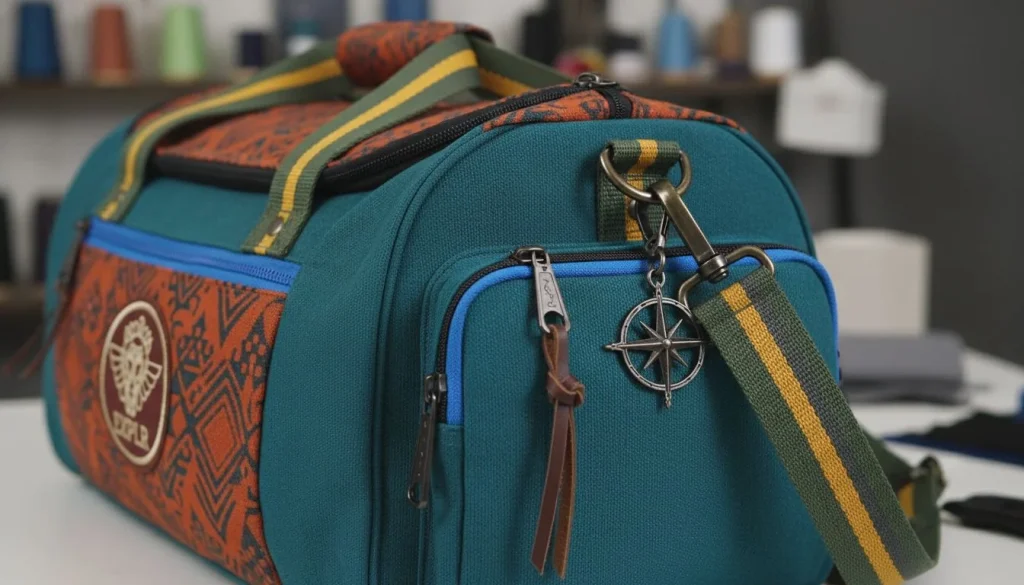
Most duffle redesign projects fail because buyers start with features and end up with a cluttered sample that costs too much and pleases no one. I’ve seen it enough times to be direct about it: start with shape. Then storage. Then branding. In that order.
Pattern First. Fabric Second. Always.
A good pattern makes average fabric look considered. A bad pattern makes expensive fabric look like a sack.
I’ve seen both. The shape of the end cap, the angle of the side panel seam, the length of the main zipper arc — these decisions cost nothing at the pattern stage. They cost everything to fix after bulk.
- Flat side panels = the bag reads as designed, not stuffed
- Semi-rigid bottom = shape without adding meaningful weight
- Longer main zipper arc = cleaner silhouette from every angle and easier to pack
The Pocket Trap — More Pockets Is Not Better
This is the one I push back on hardest. Every extra pocket means:
- More seams = more QC failure points in bulk production
- More cut pieces = longer lead time and higher labour cost per unit
- More complexity = higher defect rate on the first inspection pass
Before I spec any pocket, I ask one question: What does the user need to keep separate? Not "what looks good on a spec sheet." Not "what does the competitor have." What does the user actually need separated?
| Use Case | What Needs Separation | Pocket Solution |
|---|---|---|
| Gym | Wet clothes, shoes, keys | Wet zip pocket + ventilated shoe base + key clip |
| Travel | Toiletries, charger, passport | Front zip + internal mesh sleeve |
| Team sport | Water bottle, personal items | Side bottle sleeve + one end pocket |
| Promo / gift | Nothing specific | One clean main compartment. That’s enough. |
Branding by Product Level
| Product Level | Method That Makes Sense |
|---|---|
| Entry / promo | Screen print, heat transfer, woven label |
| Mid-range | Embroidery, rubber patch, debossed zipper pull |
| Premium | Tone-on-tone embroidery, custom jacquard label, brushed metal hardware |
The 30-Cent Hardware Problem
A buyer specs decent nylon body, solid lining, clean stitching — and then approves a plastic zipper puller to save $0.30 per bag.
That $0.30 decision is the first thing a buyer notices when they pick up the sample. It signals cheap before the bag is even opened. I push back on this every time. A matching metal puller on the main zip costs $0.30–$0.50 more. It changes the entire first impression of the product. One component. One second. That’s how fast the purchase decision shifts.
Materials: What We Actually Spec — and the Fabric Trap Nobody Tells You About?
Here’s something unpopular. I’ll say it anyway.
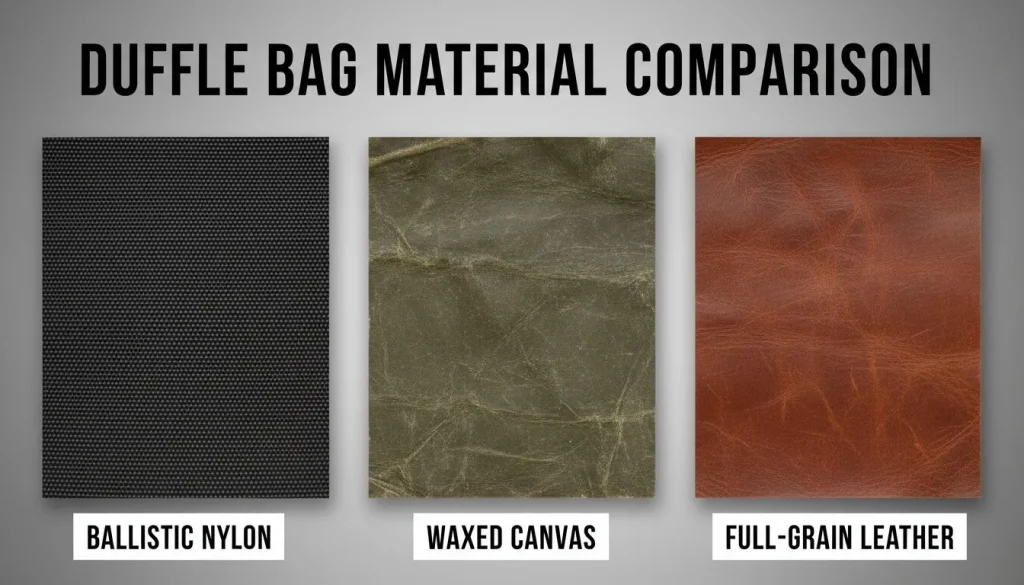
Buyers come to me asking for 840D nylon "because it looks premium." Sometimes that’s the right call. Often it’s not — and here’s the exact math why.
If your landed-cost target is $12 per bag and 840D nylon runs $3.20/m², you’ve already burned 40–50% of your material budget on the shell. What’s left for lining, zipper, webbing, foam, reinforcement, and hardware? Thin lining. Cheap zipper. No shoulder pad. Plastic puller.
Result: an expensive-feeling shell on a cheap bag. Buyers notice the mismatch. Amazon reviews say "feels cheap inside." Refund rates climb.
My rule: match the entire material package to the price tier. Don’t upgrade one component and gut everything else to compensate. That’s not a premium bag — that’s a mismatch.
What We Actually Spec by Use Case
| Scenario | What We Use | Why |
|---|---|---|
| Gym bag | 600D coated polyester | Handles sweat, friction, and daily abuse. Wipes clean. Cost-efficient. |
| Weekender | 840D nylon or waxed canvas look | Better surface. Holds shape under load. The full BOM justifies this weight here. |
| Outdoor / sports | 1000D ripstop | Abrasion resistance actually matters here. Bar-tack every stress seam. No exceptions. |
| Promotional | 210D or 300D polyester | Logo-friendly surface. Clean to produce. Doesn’t try to be what it’s not. |
| Premium custom | Better nylon, textured jacquard | Only when hardware, trims, and lining all match the shell. Not before. |
Certifications That Actually Come Up in Our Orders
Not every order needs them. But these three come up consistently for buyers selling into Europe, North America, or ESG-reporting brand channels:
- OEKO-TEX Standard 100 — tests fabric for harmful substances. Gym, kids, and wellness brands ask for this. We keep certified fabric options in stock.
- Recycled Claim Standard (RCS) — Textile Exchange — verifies recycled content through the supply chain. More DTC brands require this now.
- ISO 9001:2015 — factory quality system. Ask for the certificate number and scope. Not just a logo on a quotation PDF.
"Waterproof" vs. "Water-Resistant" — A Listing Trap That Costs Real Money
I’ve watched importers lose refund disputes over this one.
- Water-resistant: fabric repels light rain. Seams are not sealed. Zippers let water in. Standard for almost all duffles.
- Waterproof: requires sealed seams OR waterproof zippers OR dry-bag construction. Costs more. Takes longer to produce.
If your listing says "waterproof" and you shipped a standard duffle with open seams and a regular coil zipper — you will get disputes. I flag this every single development project because fixing the label is free. Fixing 500 refunds is not.
Two Inventory Mistakes I’ve Watched Importers Make
Mistake 1: Killing the Category Too Early
A buyer gets slow sell-through on a $9 generic cylinder duffle. Concludes duffles are dead. Drops the whole category. Six months later they’re watching a competitor move gym bags with shoe pockets at $34 retail.
The product was wrong. The category wasn’t.
Mistake 2: Repeating the Same Dead Product Season After Season
This one I see more. The unit price feels "comfortable." The buyer reorders the same style for three, four, five seasons. Margin erodes every year. Brand looks cheaper every year. The buyer blames the market.
The product killed its own brand value. The price never could have saved it.
What to Ask Before the Next Duffle Order
| Mistake I See | What Happens Next | Question That Should’ve Been Asked First |
|---|---|---|
| Dropping duffles too fast | Line loses its flexible carry option | Which use case still needs a duffle format? |
| Same style every season | Product looks cheaper each year | What is the single highest-impact upgrade? |
| One SKU for all markets | Bag pleases nobody well | Who is the primary buyer and what does she actually carry? |
| Cheapest possible fabric | Reviews tank, reorders stop | Which parts take the most abuse in real use? |
| Feature overload | Cost spikes, design looks confused | Which three features matter to this specific user? |

How We Actually Develop a Duffle Project — Not How You "Should"
This is not a textbook. This is what happens in our factory before we cut the first sample. Six steps. We do not skip any of them.
Our Pre-Sample Sequence
| Step | What We Lock Down | Why We Won’t Skip It |
|---|---|---|
| 1. Use case | Gym / travel / team / promo — we pick one and commit | Everything else in the brief hangs on this decision |
| 2. Load and dimensions | What goes inside. How heavy. Approximate dimensions. | A bag designed without a load spec gets the wrong shape |
| 3. Full material package | Shell, lining, zipper, webbing, hardware — confirmed together | Changing fabric after the pattern costs a full sample round |
| 4. Structure priority | Pockets ranked by importance — not by everything the buyer wants | This step stops the feature-creep that kills the BOM |
| 5. Logo method | Screen print / embroidery / heat transfer — decided before sampling | Logo method affects panel design. Decide late, pay twice. |
| 6. Quality checkpoints | Stress seams, AQL level, inspection standards in writing | Bulk production without a written QC standard is a gamble I won’t take |
The one question I ask at Step 1 that cuts development time in half: "Is this a hero SKU, an entry SKU, a gift item, or a support product in a larger line?" That tells me the cost target, design priority, and MOQ range before a single line is drawn.
📎 Related: How to Build a Custom Bag Tech Pack That Gets You the Right Sample First Time
Keep, Redesign, or Cut: How I’d Audit Your Current Duffle SKUs
I don’t assess SKUs based on whether they look dated. I assess them on whether they have a job — and whether they’re doing it.
The Decision Framework
| Decision | When to Take It | What We Do Next |
|---|---|---|
| Keep | Selling steadily. Clear buyer. Clear use case. | Tighten QC. Improve small details. Hold the price. |
| Redesign | Demand still exists but the product looks dated | New shape, new storage structure, new branding execution |
| Split | One SKU trying to serve two different buyer types | Separate gym version and weekender version |
| Simplify | Spec is bloated, cost is too high, buyer doesn’t need all of it | Remove features nobody uses. Clean the design. Lower the BOM. |
| Cut | No role. No margin. No brand value. | Stop reordering. Replace it with something that has a job. |
Three Gut-Check Questions I Ask Before Any SKU Decision
1. Can you describe the buyer in one sentence?
"Active millennial woman buying a gym bag online" is a buyer. "Anyone who needs a bag" is not. If you can’t describe the buyer, the product has a positioning problem — not a design problem.
2. Does this bag make the products next to it look better or worse?
A low-margin, race-to-the-bottom SKU pulls down the price perception of everything in the same catalog. One bad SKU poisons the row.
3. Is a redesign worth it, or is a fresh brief cheaper?
Sometimes starting over is faster and cheaper than fixing an old design. I’ve told buyers this when it was true. I’ll tell you too.
FAQ
Are duffle bags still popular in 2026?
Yes. Gym duffles, weekender duffles, team sport bags, and promotional duffles all have active B2B demand. The generic cylinder is losing market share. Purpose-built duffles with a defined use case are not.
What MOQ can I expect for custom duffle bags?
Standard polyester duffles: 300–500 pieces per style. Premium nylon or heavily customized designs: 500–1,000 pieces. Custom hardware or jacquard labels push the number higher. Ask us directly — MOQ depends on your specific brief, not a price list.
What certifications should I request from the factory?
Fabric safety: OEKO-TEX Standard 100. Recycled content: RCS from Textile Exchange. Factory quality system: ISO 9001. Ask for the certificate number and expiry date. Not just a logo on the quotation.
How are duffle bags classified for US import tariffs?
Most fabric duffle bags fall under HTS Heading 4202. The specific subheading depends on the outer surface material — polyester, nylon, and coated fabric each carry different duty rates. Check current live rates at the USITC Harmonized Tariff Schedule before you build your landed cost estimate.
What is a realistic lead time for a custom duffle order?
45–60 days from approved sample, standard polyester. 60–75 days for premium nylon, custom hardware, or jacquard labels. First sample: 10–15 working days after tech pack is confirmed. First sample that needs two revision rounds: add 20–25 days. That’s why we lock the brief before we cut.
Why does my bulk production look different from the approved sample?
Three causes. I see all three regularly.
- Fabric roll variation: swatch color and bulk roll color diverge after mass dyeing. We spec Pantone references and demand a bulk fabric approval before cutting starts.
- Operator consistency: the skilled sample maker and the production line operator are not the same person. We include a seam spec and an AQL level in every bulk order — not just "same as sample."
- Pattern drift: cuts that are 2–3mm off per piece compound across 500 bags. We check cutting accuracy at the start of every production run. Not mid-run. Start.
Bottom Line
Duffle bags work when they have a job. They fail when they’re a placeholder.
I’ve seen buyers build strong, repeatable businesses around gym bags with proper shoe pockets and weekender duffles with real shape. I’ve also seen buyers reorder the same outdated cylinder for four years and wonder why margins keep falling.
The question is not "are duffle bags in style?" The question is: Does this bag solve a real problem for a specific person at a price that makes sense? If yes — we can build it, and we can build it consistently at volume.
→ Request a Sample Quote or Factory Consultation
📎 See our duffle bag capabilities: Custom Duffle Bags — Factory Direct from Osgoodway Bag

Written by the development and sourcing team at Osgoodway — a custom bag factory with 12 years of export experience serving gym brands, travel retailers, and B2B buyers worldwide. We sit on the factory floor. We see what survives bulk production and what doesn’t.






