Last Updated: April 13, 2026
Sourcing the right backpack fabric is tough. A poor choice leads to unhappy customers and returns. Let’s explore the best nylon options to build a durable, high-quality product line.
The best nylon fabrics for high-quality backpacks depend on the intended use. For maximum durability in rugged conditions, 1000D Cordura® and 1680D Ballistic Nylon1 are top choices. For lightweight daily use, 420D or 600D nylon offers an excellent balance of strength and weight.
Choosing the right fabric can feel overwhelming, right? I’ve been there. When I first started in the custom bag industry, I was amazed by the sheer number of material options. It’s easy to get lost in technical terms like “denier” and “ballistic.” But don’t worry, I’m here to break it all down for you.
Every recommendation in this article is based on real orders I’ve personally overseen at Osgoodway’s production lines in Quanzhou, Fujian. Over the past 15 years, our factory has sourced and cut:
Top Nylon Variations for Backpack Production
- 420D / 600D nylon — used in ~60% of our commuter and school backpack orders
- Ripstop Nylon (e.g., 210D / 420D) — the standard requirement for our outdoor clients’ lightweight daypacks, packable bags, and custom raincovers due to its high tear resistance
- Cordura® Nylon — used in our tactical and military-spec production runs (authorized Cordura® mill partnership required)
- Ballistic Nylon (typically 840D to 1680D) — our go-to for premium luggage brand clients
- Econyl® recycled nylon — adopted by 3 of our European lifestyle-brand clients since 2023
When you see a price, MOQ, or sourcing tip in the “B2B Sourcing Note” boxes below, it comes from quotes I’ve actually negotiated — not scraped from competitor blogs.
What Makes Nylon the Backbone of Backpack Fabrics?

Ever wonder why so many top-quality backpacks use nylon? Choosing a material without understanding its core strengths is a risk. Let’s explore why this synthetic polymer is so trusted.
Nylon is a synthetic polymer prized for its exceptional strength, elasticity, and resistance to abrasion, tearing, and even mildew. These properties make it incredibly durable and versatile for high-performance gear like backpacks, ensuring they last through daily use and rugged adventures.
What is Nylon?
At its core, nylon is a type of plastic, a synthetic polymer known as a polyamide. It’s created through a chemical process that results in long, strong, and resilient fibers. These fibers are then woven into the fabrics we see in countless products, from clothing to car parts and, of course, backpacks.
Why is it Great for Backpacks?
Nylon’s popularity isn’t an accident. It has a unique combination of benefits that make it almost perfect for bags.
- Durability and Strength: It has a high tensile strength, meaning it can withstand a lot of pulling force without breaking. This is critical for a backpack that will be filled with heavy items.
- Abrasion Resistance: The material holds up incredibly well against scuffs and scrapes. This is a huge plus for both an urban commuter bag rubbing against walls and a hiking pack brushing against rocks.
- Environmental Resistance: One of my favorite features, especially for outdoor gear, is its natural resistance to fungi, insects, and mold. I once helped a client develop a line of bags for humid, tropical climates, and this property was a non-negotiable selling point.
Nylon 6 vs. Nylon 6,6 — What Your Factory Won’t Always Tell You
There are two common types of nylon fiber used in backpack fabric, and the difference directly impacts quality:
| Fiber Type | Strength | Heat Tolerance | Cost | Used In |
|---|---|---|---|---|
| Nylon 6 | Good | Lower (melts at ~220°C) | Cheaper | Most generic 420D/600D fabrics |
| Nylon 6,6 | ~10–15% stronger | Higher (melts at ~260°C) | ~20–30% more | Cordura®, high-end tactical gear |
Factory tip: If a supplier quotes “1000D nylon” at a suspiciously low price, they’re almost certainly quoting Nylon 6 — not the Nylon 6,6 used in genuine Cordura®. Always ask for the fiber spec in writing.
How Do You Decode Fabric Strength with Denier Rating?

Confused by fabric ratings like “1000D”? Choosing the wrong one can compromise your backpack’s quality. Let’s break down what denier (D) really means for fabric strength.
Denier (D) is a unit of measurement for the thickness and weight of a single fiber. A higher denier number, like 1000D, indicates a thicker, heavier, and generally stronger, more durable fiber compared to a lower denier like 420D.
The term “denier” used to throw me for a loop. It sounds technical, but the concept is actually quite simple. Think of it as a quick reference for a fabric’s toughness. Understanding this helps you balance durability, weight, and cost for your specific product.
What is Denier, Really?
Technically, denier is the mass in grams of a single 9,000-meter-long strand of fiber. So, a 9,000-meter strand of 420D Nylon2 weighs 420 grams. A 9,000-meter strand of 1000D nylon weighs 1000 grams. Simply put, a higher denier means a thicker, heavier thread. This generally translates to a stronger, more abrasion-resistant fabric. However, it’s important to remember that weave and coatings also play a huge role in overall durability.
Nylon Denier Comparison
To make it easier, I’ve put together a table that I often share with my clients. It breaks down the common denier ratings and their typical applications. This helps visualize where your product might fit.
| Fabric Type | Denier (D) | Common Use | Key Characteristics |
|---|---|---|---|
| 420D Nylon | 420 | Daypacks, lightweight bags | Lightweight, flexible, cost-effective |
| 600D Ballistic | 600 | Everyday backpacks, school bags | Good balance of durability and weight, abrasion-resistant |
| 1000D Cordura® | 1000 | Heavy-duty backpacks, outdoor gear | Extremely durable, high tear and abrasion resistance |
| 1680D Ballistic | 1680 | Premium luggage, tactical gear | Maximum durability, excellent abrasion resistance, heavy |
Denier Alone Is Misleading — Here’s What Else Matters
Over the years I’ve seen countless brand owners pick a fabric based on denier number alone, then get disappointed by the finished sample. Denier is only ~40% of the story. The other 60%:
- Yarn tenacity (g/denier): A 500D high-tenacity yarn can out-perform a 1000D low-tenacity yarn in tear tests.
- Weave density (threads per inch): A tight ballistic weave at 600D often feels tougher than a loose plain weave at 900D.
- Coating & lamination: A PU-coated 420D will out-water-resist an uncoated 1000D every time.
- Filament count: More filaments per yarn = softer hand feel but slightly lower abrasion resistance.
My rule of thumb for clients: Always request a fabric swatch with a Martindale abrasion test report (look for 20,000+ rubs for daily-use bags, 50,000+ for tactical) before committing to production.
What Are the Top Nylon Fabrics Used for Backpacks?

Faced with options like Cordura® and Ballistic nylon? Making the wrong choice can disappoint your customers. Let’s compare the top nylon fabrics to find your perfect match.
The top nylon fabrics include 420D for lightweight packs, 600D Ballistic for everyday durability, 1000D Cordura® for superior tear resistance, and 1680D Ballistic for maximum toughness. Ripstop Nylon3, Robic Nylon are another great option that prevents small tears from spreading.
Beyond just the Denier Rating4, the specific type of nylon fabric makes a huge difference. Some are brand names with a reputation for quality, while others describe a specific weave. Let’s dive into the most common ones you’ll encounter when sourcing materials.
420D Nylon: The Lightweight Choice
420D nylon is one of the most common nylon types used for everyday backpacks. It is relatively lightweight and affordable, making it a good option for casual and daily use. Compared to higher denier fabrics, 420D nylon offers a good balance of weight and durability at a lower price point.
-
Ideal Use: Perfect for daily commuters, student backpacks, and light travel bags.
-
Advantages:
- Lightweight and flexible, making it easy to carry.
- Affordable and budget-friendly.
- Decent abrasion resistance for regular use.
-
Considerations:
- Less abrasion-resistant compared to higher denier fabrics.
- May not withstand extreme wear and tear in rugged environments.
💰 B2B Sourcing Note — 420D Nylon
- Typical FOB price (China, 2026): $1.20–$1.80 / yard
- Minimum MOQ from most mills: 500–1,000 yards per color
- Lead time: 7–15 days if stocked, 25–35 days for custom color
- Best for: First-time brand owners testing a SKU with orders under 2,000 units
600D Nylon (e.g., 600D Gucci Nylon): The Stylish & Structured Performer
600D nylon strikes a perfect middle ground between the lightweight flexibility of 420D and the heavy-duty ruggedness of ballistic nylon. A highly sought-after variant in this category is “600D Gucci Nylon,” which features a distinct, slightly lustrous weave pattern that significantly elevates the perceived value of the product. It offers a premium hand-feel, excellent structural integrity, and a sophisticated aesthetic without adding excessive weight.
- Ideal Use: Urban lifestyle backpacks, fashion-forward commuter bags, premium diaper bags, and high-end corporate gifts.
- Advantages:
- An excellent balance of moderate weight and high abrasion resistance.
- Upgraded aesthetic appeal; the “Gucci” weave provides a subtle sheen and premium texture.
- Holds its shape well, giving backpacks a crisp, structured look even when half-empty.
- Considerations:
- Noticeably more expensive than standard 420D nylon or the ubiquitous 600D polyester.
- The textured weave can make highly detailed, fine-line silk-screen printing slightly more challenging compared to perfectly flat fabrics (heat transfer or embroidery is often recommended).
💰 B2B Sourcing Note — 600D Nylon & Gucci Weave
- Typical FOB price (China, 2026): $2.20–$3.20 / yard (Gucci weave variants usually sit at the higher end of this spectrum)
- Minimum MOQ from most mills: 800–1,000 yards per custom color (Standard black or navy is often available from 500 yards)
- Lead time: 10–15 days for stocked colors, 25–35 days for custom dyeing and specific PU/PVC backing
- Best for: Mid-to-high-end lifestyle brands looking to upgrade their product line’s perceived value without jumping to the cost and weight of ballistic nylon.
1000D Cordura® Nylon: The Gold Standard
Cordura® is a brand name, not just a material type, and it has built a powerful reputation for toughness. It’s known for its exceptional resistance to tears, scuffs, and abrasions. When a customer sees the Cordura® tag, they associate it with high quality and longevity. It’s a top pick for outdoor, military, and high-end travel gear.
-
Ideal Use: Perfect for tactical backpacks, military gear, and heavy-duty outdoor packs.
-
Advantages:
- Superior abrasion, tear, and stretch resistance.
- Designed for rugged and demanding conditions, making it ideal for extreme use.
- Long-lasting with high resistance to wear and tear.
-
Considerations:
- Heavier than other fabrics, making it less comfortable for long-term use if weight is a concern.
- Higher cost due to its high-performance qualities.
💰 B2B Sourcing Note — 1000D Cordura®
- Typical FOB price (China, 2026): $7.00–$10.00 / yard (roughly 3× generic 1000D nylon)
- Minimum MOQ: 1,000–3,000 yards (only authorized Cordura® mills can sell genuine material)
- Lead time: 30–60 days — this is the bottleneck for most urgent orders
- Hang-tag rights: To legally use the Cordura® logo on your bag, you must purchase genuine Cordura® fabric and register with INVISTA. Fake Cordura® labels are a common compliance issue on Amazon.
840D-1680D Ballistic Nylon: The Ultimate in Durability
Originally developed for military applications, ballistic nylon features a dense, basket-weave structure that provides exceptional tear and abrasion resistance. Ranging from 840D to 1680D, this material is significantly heavier and stiffer than standard nylons, making it the premier choice for premium bags that must withstand extreme wear and tear while maintaining a structured, high-end appearance.
- Ideal Use: Premium laptop backpacks, heavy-duty travel luggage, professional tool bags, and tactical gear.
- Advantages:
- Unmatched abrasion and tear resistance for maximum longevity.
- Maintains a structured, premium aesthetic even when the bag is empty.
- Highly water-resistant and durable when paired with a heavy PU or PVC backing.
- Considerations:
- Heavier and stiffer, adding to the overall weight of the finished product.
- Higher material cost compared to standard and ripstop nylons.
- Requires specialized heavy-duty sewing machines, which can slightly increase factory labor costs and production time.
💰 B2B Sourcing Note — 1680D Ballistic
- Typical FOB price (China, 2026): $3.00–$4.50 / yard
- Minimum MOQ: 500–1,000 yards
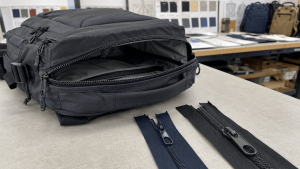
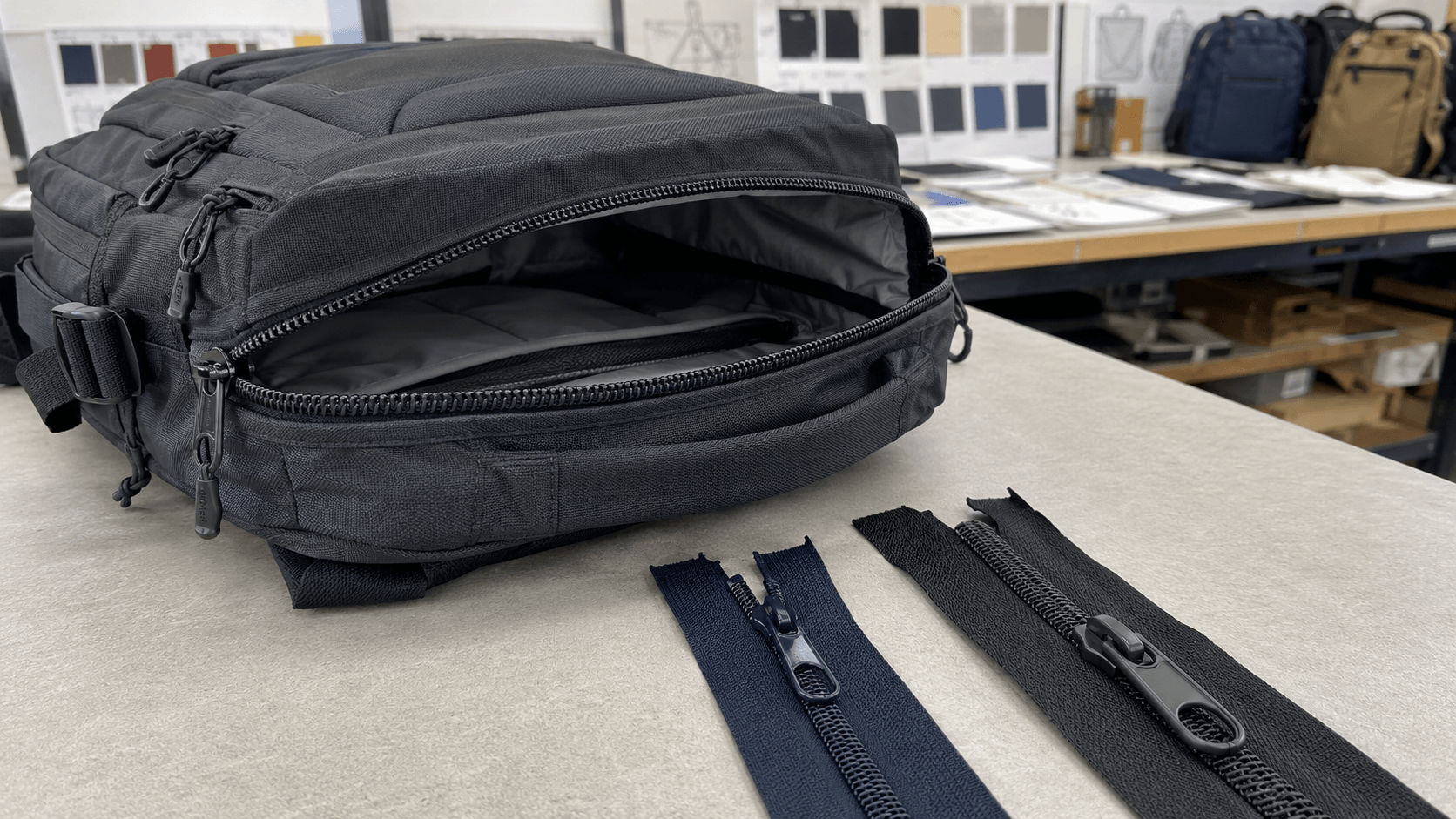
- Production consideration: Requires #5 YKK coil zippers minimum (smaller zippers fail under the fabric’s weight). Budget for heavier-duty stitching (92 thread instead of 69).
- Best for: Premium brands targeting the corporate, tech, or heavy-duty travel markets with high retail margins
Ripstop Nylon: The Safety Net
Ripstop nylon features a grid pattern that reinforces the fabric, preventing tears from spreading. It is typically used in lightweight gear that still requires durability.
-
Ideal Use: Excellent for ultralight backpacks, outdoor gear, and emergency kits.
-
Advantages:
- Very lightweight, making it ideal for backpackers and travelers who need to minimize pack weight.
- Tears in the fabric are less likely to spread, increasing durability.
-
Considerations:
- May not offer the same level of abrasion resistance as higher-denier fabrics.
- Not as durable under heavy-duty use.
Robic Nylon:The High-Performance Powerhouse
Robic nylon is an enhanced nylon material that offers greater strength and abrasion resistance than standard nylon. It is particularly suited for high-performance backpacks and gear used in extreme conditions.
-
Ideal Use: High-performance backpacks and outdoor gear.
-
Advantages:
- Extremely strong and durable with enhanced tear and abrasion resistance.
- Lightweight yet robust, making it suitable for those requiring durability without added weight.
-
Considerations:
- May be more expensive due to its specialized manufacturing.
- Less widely available than other nylon fabrics.
Comparison Table:
| Fabric Type | Denier | Strength & Durability | Weight | Ideal Use Case |
|---|---|---|---|---|
| 420D Nylon | 420 | Moderate | Light | Daily use, casual travel |
| 600D Nylon | 600 | Good | Medium | School bags, general-purpose use |
| 1000D Cordura® Nylon | 1000 | Excellent | Heavy | Tactical, military, heavy-duty gear |
| 1680D Ballistic Nylon | 1680 | Superior | Very Heavy | Premium backpacks, protective gear |
| Ripstop Nylon | Varies | Moderate | Light | Ultralight gear, emergency kits |
| Robic Nylon | Varies | High | Medium | High-performance backpacks |
How Can You Ensure Your Nylon Backpack Keeps Gear Dry?

Think nylon is automatically waterproof? A surprise rain shower can damage contents and your brand’s image. Let’s explore how coatings make nylon backpacks water-resistant and reliable.
While nylon has some natural water resistance, it’s not fully waterproof. To keep gear dry, manufacturers apply coatings like Polyurethane (PU) or Silicone. A DWR (Durable Water Repellent) finish is also often added to make water bead up and roll off the surface.
One of the most common questions I get from clients is about water resistance. It’s a critical feature for almost any bag. No one wants their laptop or documents soaked in a sudden downpour. While nylon fiber itself doesn’t absorb much water, the fabric can still get saturated. The secret to keeping the contents dry lies in special coatings and finishes.
The Role of Coatings
Coatings are applied to the backside of the fabric to create a waterproof barrier.
- PU (Polyurethane) Coating: This is the most common method. A thin layer of PU is applied to the fabric, effectively sealing it. Manufacturers can apply multiple layers for increased water resistance, but this adds weight and can make the fabric stiffer.
- Silicone Coating: Often found in high-end, ultralight gear, a silicone coating impregnates the fabric fibers themselves. This makes it very water-resistant without adding much weight, but it’s typically more expensive than PU.
DWR (Durable Water Repellent) Finish
This is a chemical treatment applied to the exterior of the fabric. It’s the bag’s first line of defense against rain. A good DWR finish causes water to bead up and roll right off the surface instead of soaking in. I always tell my clients that this is a must-have feature for any bag marketed for travel or outdoor use. It’s a small detail that makes a huge difference in the user’s experience, though it does wear off over time and may need to be reapplied.
💧 Coating Specs Cheat-Sheet (What to Ask Your Factory)
| Coating Spec | Water Resistance | Typical Use | Cost Impact |
|---|---|---|---|
| PU 600mm | Light rain, splash-resistant | School / commuter bags | Baseline |
| PU 1000mm | Moderate rain, short exposure | Travel backpacks | +5–8% |
| PU 3000mm+ | Heavy rain, sustained exposure | Outdoor / hiking packs | +15–20% |
| TPU lamination | Fully waterproof + abrasion-proof | Rolltop dry bags | +30–50% |
| Silicone impregnation | Waterproof, very light | Ultralight hiking | +40–60% |
Always specify the mm rating (hydrostatic head) in your PO — “PU-coated” alone is meaningless.
Are There Sustainable Nylon Options for Eco-Conscious Brands?

Your customers want sustainable options. Sticking to virgin materials can hurt your brand’s appeal. Discover Recycled Nylon5, a durable and eco-friendly alternative that modern consumers love.
Yes, there are excellent sustainable options. Recycled nylon, made from post-industrial waste or post-consumer items like fishing nets and carpets, offers comparable performance to virgin nylon. Brands like Econyl® are leading the way in creating high-quality, eco-friendly fabrics for bags.
Sustainability is no longer a niche interest; it’s a core value for many consumers, especially for people like Madison who are building modern lifestyle brands. The good news is that you don’t have to choose between performance and sustainability. The world of recycled nylon is expanding rapidly.
The Rise of Recycled Nylon
Instead of creating nylon from new petroleum, recycled nylon is made from waste materials. This can be pre-consumer waste, like scraps from a factory floor, or post-consumer waste, like discarded fishing nets, carpets, and industrial plastic. Using these materials reduces our reliance on fossil fuels and helps clean up our oceans and landfills. For a brand, this is a powerful story to tell.
Econyl®: A Leader in Regeneration
One of the most exciting innovations in this space is Econyl®. It’s a brand of regenerated nylon made entirely from waste. What’s amazing is that through their process, the nylon can be recycled and regenerated again and again without ever losing its quality. I’ve seen a huge increase in requests for materials like this from brand owners. It allows them to market a premium, durable product that is also part of a circular economy.
Performance of Recycled Nylon
A common concern is whether recycled material is as strong as virgin material. In the case of high-quality recycled nylon, the answer is a resounding yes. The performance is virtually identical. You get the same strength, durability, and abrasion resistance your customers expect, but with a much smaller environmental footprint. It’s a true win-win.
🌱 Certifications to Request (and Why They Matter for Your Listing)**
- GRS (Global Recycled Standard) — Verifies recycled content %; required by most EU retailers and big-box buyers.
- Bluesign® — Certifies that the fabric was produced with reduced chemical, water, and energy impact.
- OEKO-TEX Standard 100 — Confirms no harmful substances; mandatory for products sold to children or in the EU.
- Econyl® branding license — Lets you use the Econyl® name on your hang-tag and marketing, a proven conversion booster for DTC brands.
Sourcing reality: Recycled nylon currently runs 15–25% more than equivalent virgin nylon, but the marketing premium on Amazon and DTC often justifies it 2–3x over.

How Do You Choose the Right Nylon for Your Backpack?
Choosing the final fabric can be paralyzing. A mismatch between material and use case can kill your product’s success. Let’s simplify the decision with clear, use-based recommendations.
To choose the right nylon, match the fabric to the backpack’s intended use. For daily commuters, 420D Nylon or 600D Ballistic nylon provides a good balance. For rugged outdoor or travel bags, opt for 1000D Cordura® or 1680D ballistic nylon.

We’ve covered a lot of ground, from denier to coatings to sustainability. Now, let’s bring it all together. The key is to match the material to the specific purpose of your backpack. Over-engineering a simple daypack is wasteful, and under-engineering a heavy-duty travel bag is a recipe for failure.
For Daily Use and Commuter Bags
- Recommendation: 420D or 600D Ballistic Nylon.
- Why: For a bag carried every day to the office, campus, or coffee shop, weight is a major factor. These fabrics are light but still offer plenty of durability for daily wear and tear. They provide the perfect balance of performance and cost. I often guide new e-commerce sellers toward 600D as a safe, versatile starting point for their first product line.
For Outdoor Adventures and Travel
- Recommendation: 1000D Cordura® or 1680D Ballistic Nylon.
- Why: These bags are going to face much tougher conditions. Think abrasion from rocks, rough handling by airport baggage staff, and heavy loads. The superior tear and abrasion resistance of these heavy-duty fabrics is essential for building a product that customers can trust on their adventures. Adding a ripstop weave is also a fantastic feature for this category.
For the Eco-Conscious Brand
- Recommendation: Recycled Nylon (like Econyl®).
- Why: If your brand targets environmentally aware consumers, this is your best choice. You can offer a high-performance, durable product that also aligns with your customers’ values. It’s more than just a material; it’s a story and a statement that can set your brand apart in a crowded market.
Master Comparison Table: All 6 Nylon Fabrics Side-by-Side
This table pulls together every spec a sourcing manager needs on one screen — optimized to be the featured snippet for queries like “420D vs 1000D nylon” and “Cordura vs ballistic nylon comparison”.
| Fabric | Denier | Weight (oz/yd²) | Abrasion (Martindale) | Water Resist. (w/ PU) | FOB Price/yd (2026) | Typical MOQ | Best For |
|---|---|---|---|---|---|---|---|
| 420D Nylon | 420 | ~4.5 | ~10k rubs | 600–1000mm | $1.20–$1.80 | 500 yd | Commuter, student bags |
| 600D Ballistic | 600 | ~7 | ~25k rubs | 1000–2000mm | $1.80–$2.50 | 500 yd | School, everyday |
| 1000D Cordura® | 1000 | ~10 | 50k+ rubs | 1500–3000mm | $4.50–$7.00 | 1,000 yd | Tactical, military |
| 1680D Ballistic | 1680 | ~15 | 60k+ rubs | 2000–3000mm | $3.00–$4.50 | 500 yd | Premium luggage |
| Ripstop Nylon | 70–210 | ~2–3 | ~8k rubs | 1500mm+ | $2.00–$4.00 | 500 yd | Ultralight, packable |
| Econyl® Recycled | 420–1000 | Varies | Matches virgin | Matches virgin | +15–25% premium | 1,000 yd | Eco-conscious brands |
B2B Sourcing Reality: MOQ, Lead Time & Common Pitfalls
Most articles on this topic read like they were written by someone who has never placed a real fabric order. Here’s what actually matters once you move from research to purchase order.
Realistic Timelines from Quote to Finished Bag
- Fabric quote & swatch: 3–7 days
- Custom color dyeing (if needed): 15–30 days
- Fabric production: 15–45 days depending on mill backlog
- Bag sample making: 10–20 days after fabric arrives
- Mass production: 30–60 days
- Sea freight to US/EU: 25–40 days
Total realistic timeline: 90–180 days from quote to delivered goods. Anyone promising 30 days is likely using grey-market inventory — which is fine for testing, risky for production.
What to Always Include in Your Fabric PO
- ✅ Denier number and fiber type (Nylon 6 vs 6,6)
- ✅ Weave type (plain, ballistic, ripstop)
- ✅ Coating type and hydrostatic head in mm
- ✅ DWR treatment (yes/no)
- ✅ Color reference (Pantone TPX or TCX)
- ✅ Width and weight/yard tolerance (±3%)
- ✅ Required certifications (OEKO-TEX, GRS, Bluesign, etc.)
Common Sourcing Mistakes I See Brand Owners Make
After 15 years and hundreds of client projects, these are the five most expensive mistakes I see repeat:
- Buying fabric based on denier alone. A cheap 1000D generic nylon will perform worse than a premium 500D Cordura®. Always test the actual swatch.
- Assuming “nylon” means waterproof. It doesn’t. Without coating + DWR + taped seams, your bag will leak.
- Accepting “ballistic” without checking fiber. “Ballistic” describes a weave pattern, not a fiber. Polyester ballistic exists and is much weaker than nylon ballistic.
- Paying for Cordura® without the license. Some factories source real Cordura® fabric but can’t sell you the right to use the Cordura® logo on your hang-tag. Confirm mill authorization in writing.
- Skipping the abrasion test report. A $50 Martindale test report can save you $50,000 in returns. Always ask for it.
Related reading: Nylon vs Polyester for Backpacks — Which Is Better?*
Final Words and Your Next Steps
Selecting the right nylon — from denier to sustainability — is key to creating a successful backpack. Match the fabric to the use case to ensure quality, durability, and customer satisfaction.
Ready to source your custom nylon backpack?
With 15+ years of experience and 200+ active B2B clients, Osgoodway offers authorized access to Cordura®, Econyl®, and all major nylon fabrics with transparent MOQs and certified quality control.
👉 Request a free fabric swatch pack and quotation
Frequently Asked Questions
No, 1000D nylon itself is not waterproof — it’s only water-resistant. To achieve true waterproofing, the fabric needs a PU coating (ideally 3000mm+ hydrostatic head), a DWR surface treatment, and sealed/taped seams. Without these, water will penetrate through the weave.
Cordura® is a brand name for a family of high-tenacity nylon 6,6 fabrics made by INVISTA, known for superior abrasion resistance. Ballistic nylon describes a specific basketweave pattern originally developed for military flak jackets. They overlap — some Cordura® fabrics use a ballistic weave — but “ballistic” on its own can also mean cheaper polyester versions. If durability is critical, pay for Cordura®.
For a laptop backpack, I recommend 1680D ballistic nylon with PU coating. It’s durable enough to protect expensive electronics, light enough for daily carry, and affordable enough to hit mainstream price points. For premium laptop bags ($150+ retail), upgrade to 1000D Cordura®.
Genuine Cordura® comes with a mill certificate from INVISTA (the brand owner) and carries the Cordura® trademark on the fabric selvage. If your supplier can’t produce the mill certificate or connect you to the authorized distributor, assume it’s generic nylon being marketed as Cordura®.
Yes. Modern regenerated nylon like Econyl® uses a depolymerization process that breaks the waste nylon back down to its original molecular building blocks, then rebuilds it. The resulting fiber has the same tensile strength, abrasion resistance, and durability as virgin nylon.
290T Nylon Twill is the most cost-effective choice for achieving a high-end, luxury aesthetic due to its elegant sheen and sophisticated diagonal weave. While standard 210D or 420D Oxford nylons can look industrial or “cheap” due to their flat, grainy weave, Twill and Crinkle finishes offer a high-end look at a low price point.
Yes, but you’ll need TPU-laminated nylon (not just PU-coated) plus RF-welded seams instead of sewn seams. Standard PU-coated nylon will leak at needle holes. TPU lamination adds 30–50% to fabric cost but is mandatory for a truly waterproof rolltop.
Fabric typically accounts for 25–35% of a backpack’s factory cost. For a $20 FOB bag, that’s $5–$7 in fabric. Upgrading from 600D generic nylon to 1000D Cordura® usually adds $3–$5 per bag — a cost most premium brands easily recover at retail.
References
- Find out how 1680D Ballistic Nylon provides maximum toughness for premium luggage and tactical gear. ↩
- Discover why 420D Nylon is a popular choice for lightweight and flexible backpack designs. ↩
- Understand how Ripstop Nylon prevents tears and enhances the durability of outdoor and travel bags. ↩
- Get insights into how denier ratings influence the strength and durability of backpack fabrics. ↩
- Explore how recycled nylon offers eco-friendly options without compromising on performance. ↩