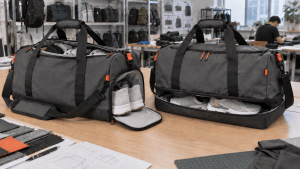
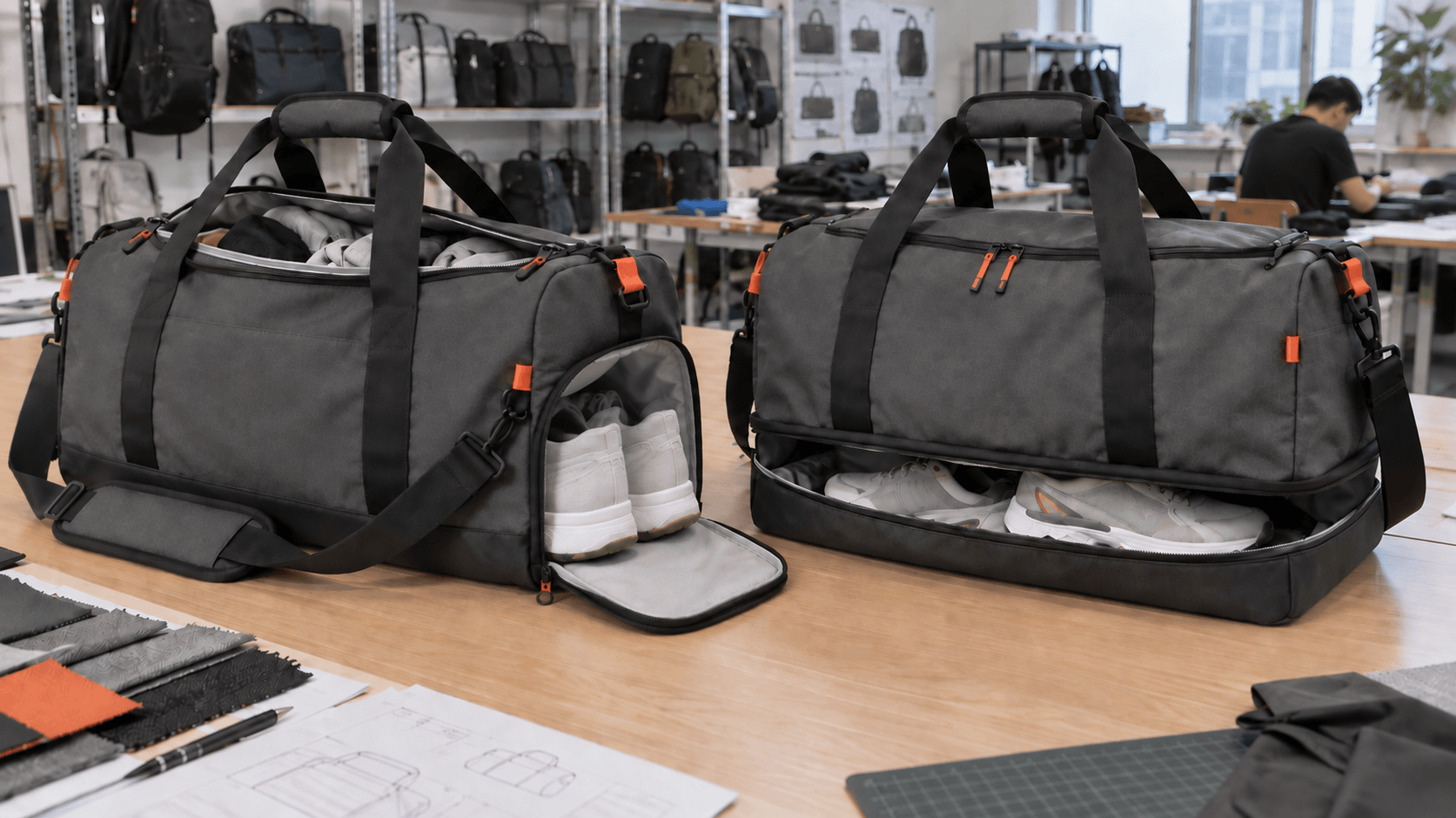
A side shoe compartment is usually more convenient for quick access, which makes it common in gym and sports duffels. A bottom shoe compartment creates cleaner vertical separation and can provide a more regular packing space above the shoes, which often suits travel and weekender bags.
Neither layout is automatically better. The result depends on the bag size, shoe type, compartment construction and how much space the footwear takes from the main compartment. A side-entry tunnel may still extend deep into the bag, while a bottom compartment may reduce the usable height of the upper section.
During development, we look at the layout together with shoe dimensions, zipper opening, divider support, ventilation and the loaded shape of the bag. These details usually matter more than simply specifying “side shoe compartment” or “bottom shoe compartment.”
| Design Factor | Side Shoe Compartment | Bottom Shoe Compartment |
|---|---|---|
| Shoe access | Usually faster and easier during gym or sports use | May require more handling depending on the opening position |
| Main-compartment space | A tunnel can create irregular intrusion into one side | Usually removes a more predictable layer of vertical space |
| Packing shape | Can make folded clothing or packing cubes harder to arrange | Often leaves a more regular upper compartment |
| Bag proportions | Usually keeps a conventional duffel profile | May increase overall height or reduce upper storage height |
| Loaded appearance | One side may bulge when shoes are inserted | Often keeps a more symmetrical loaded profile |
| Structural support | Depends on tunnel shape and attachment | Divider and base often need more support |
| Often works well for | Daily gym, sports and frequent shoe changes | Travel, weekender and organized layered packing |
The comparison changes significantly depending on the actual construction. A “side shoe compartment” may be an internal tunnel or a true external pocket, while a “bottom compartment” may be a structured separate section or simply a soft pocket that expands upward into the main compartment.
What Is the Real Difference Between Bottom and Side Shoe Compartments?

A side shoe compartment describes where the user accesses the shoes, but the storage may still extend into the main compartment. A bottom compartment may be a fully separated lower section or simply a soft pocket that expands upward. The real difference is where the shoe volume sits once the bag is loaded.
The terms “side” and “bottom” describe the access position, but they do not always explain where the footwear actually occupies space.
That distinction matters because two bags with similar-looking shoe zippers can affect the main compartment very differently.
Side-Entry Tunnel vs External Side Pocket
A side shoe compartment is usually built in one of two ways:
| Layout | What Happens When Loaded |
|---|---|
| Side-entry tunnel | The shoe pocket extends into the main compartment |
| External side pocket | Most shoe volume sits outside the main compartment |
A side-entry tunnel keeps the exterior more compact, but the shoes may push into the packing area and create an irregular shape.
An external pocket preserves more internal space, but it can make one side of the bag wider or bulkier. A commercial example is the adidas Studio Duffel, which uses a separate external zip shoe compartment together with a ventilated exterior section.
Side access does not always mean external storage.
Bottom Compartment vs Bottom-Entry Soft Pocket
Bottom shoe storage can also use two different structures:
- Structured bottom compartment: creates a defined lower section below the main compartment.
- Bottom-entry soft pocket: opens near the base but expands upward when shoes are inserted.
The structured version gives more predictable separation, while the soft version can still reduce usable main-compartment space. Bottom shoe storage is also used in mainstream training duffels; for example, the Nike Brasilia Training Duffel Bag uses a bottom zip compartment to keep footwear separate from other gear.
When reviewing the design, buyers should confirm whether the shoe compartment creates additional volume or takes space from the main compartment. This usually affects usable capacity more than the zipper position itself.
How Does Each Layout Change Usable Duffel Space?

A side shoe tunnel usually keeps the bag’s outside dimensions more compact, but it can create an irregular bulge inside the main compartment. A structured bottom compartment removes a more predictable layer of vertical space.
For buyers, the important question is not only how many liters are lost.
It is What shape of usable packing space remains after the shoes are loaded?
Volume Loss vs Packing Shape
A loaded side-entry tunnel often pushes into one side of the main compartment. The lost space is uneven, which can make folded clothes, packing cubes or toiletry bags harder to arrange.
A structured bottom compartment usually removes a fixed layer of height instead. The remaining upper compartment is more regular and easier to understand when planning the layout.
| Layout | Typical Effect on Main Storage |
|---|---|
| Side-entry tunnel | Irregular intrusion from one side |
| Structured bottom compartment | More regular loss of vertical space |
| External shoe pocket | Preserves more internal volume but increases the outer profile |
This is why advertised capacity alone does not always explain how usable the bag feels once shoes are packed.
Bag Proportions and Main-Compartment Height
A true bottom compartment is not free space.
If the outside dimensions stay the same, the upper compartment loses height. If the original main-compartment capacity must be preserved, the complete duffel usually needs to become taller.
For projects with fixed external dimensions, it is important to measure the finished bag consistently. Our duffle bag size and dimensions guide explains the main measurements to confirm during development.
That can affect:
- Side-panel proportions
- Zipper position
- Handle and shoulder-strap placement
- Finished bag appearance
- Carton volume
These changes are worth reviewing before the pattern is approved, especially when the buyer wants to keep a specific exterior size.
Shoe Shape Also Changes the Layout
Running shoes, football cleats, basketball shoes and large trainers can require very different compartment shapes.
Wide footwear may work well in a broad bottom section, while high-top shoes may need more vertical clearance. A deeper side tunnel can accommodate taller footwear, but the width and opening may become the limitation instead.
The compartment should therefore be developed around the actual shoe geometry, not only the shoe size.
Which Layout Works Better for Different Duffel Bags?
The intended use usually makes the choice clearer. A gym duffel and a weekender may have similar exterior dimensions, but different duffel bag types and features lead to different packing and access requirements.
Daily Gym and Sports Duffels
Side or end access is often more practical for gym use because shoes can be removed without opening the main compartment.
This works well for bags used for:
- Gym training
- Sports practice
- Frequent shoe changes
- Locker-room use
The trade-off is that the loaded tunnel may push into the main storage area.
Travel and Weekender Bags
A structured bottom compartment often works well when the user wants clearer separation between footwear and clothing.
It can also leave a more regular upper section for folded clothes, packing cubes and travel accessories.
Separate footwear storage is also common in weekender designs. The Herschel Novel Duffle, for example, combines a dedicated shoe compartment with a reinforced base.
The divider and base need enough support, otherwise the upper compartment can sag onto the footwear.
Team and Equipment Bags
For team or equipment bags, footwear is often larger and the total load is heavier.
Here, compartment dimensions and opening size can matter more than whether the zipper is positioned on the side or bottom.
A side compartment may provide faster access, while a bottom layout can organize equipment more predictably. The sample should be checked with the expected footwear and normal load before approval.
Compact Duffels
Built-in shoe compartments become harder to justify as the bag gets smaller because the compartment takes a larger share of usable space.
For compact designs, buyers should compare the convenience of permanent shoe storage against the capacity it removes from the main compartment.
In some cases, a removable pouch is a more flexible solution.
What Factory Issues Should Buyers Check During Development?

A shoe compartment should be reviewed with the actual footwear and a realistically packed sample.
Many problems are difficult to judge from a drawing because the pocket changes shape once shoes, clothing and other contents are added.
Fit, Opening and Internal Space
“Fits one pair of shoes” is not enough for a factory specification.
We normally develop the compartment around the target shoe type and maximum dimensions rather than only a general shoe-size label.
The access opening also needs to be checked with the actual footwear. A compartment can have enough internal volume but still be difficult to use if the zipper opening is too short, too narrow or positioned at an awkward insertion angle.
Structure, Ventilation and Cleaning
Bottom compartments often need more support because the divider carries pressure from both directions: footwear pushes upward while clothing and other contents press down from above.
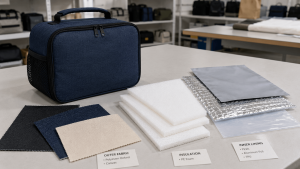
Depending on the bag construction, the divider may use:
- Foam
- Reinforced fabric
- Thin PE or PP sheet
- A layered construction
A single soft lining layer may sag or transfer the shoe shape into the upper compartment.
Ventilation depends on airflow rather than whether the compartment is on the side or bottom. Mesh or vent holes only help when air can actually move through the space.
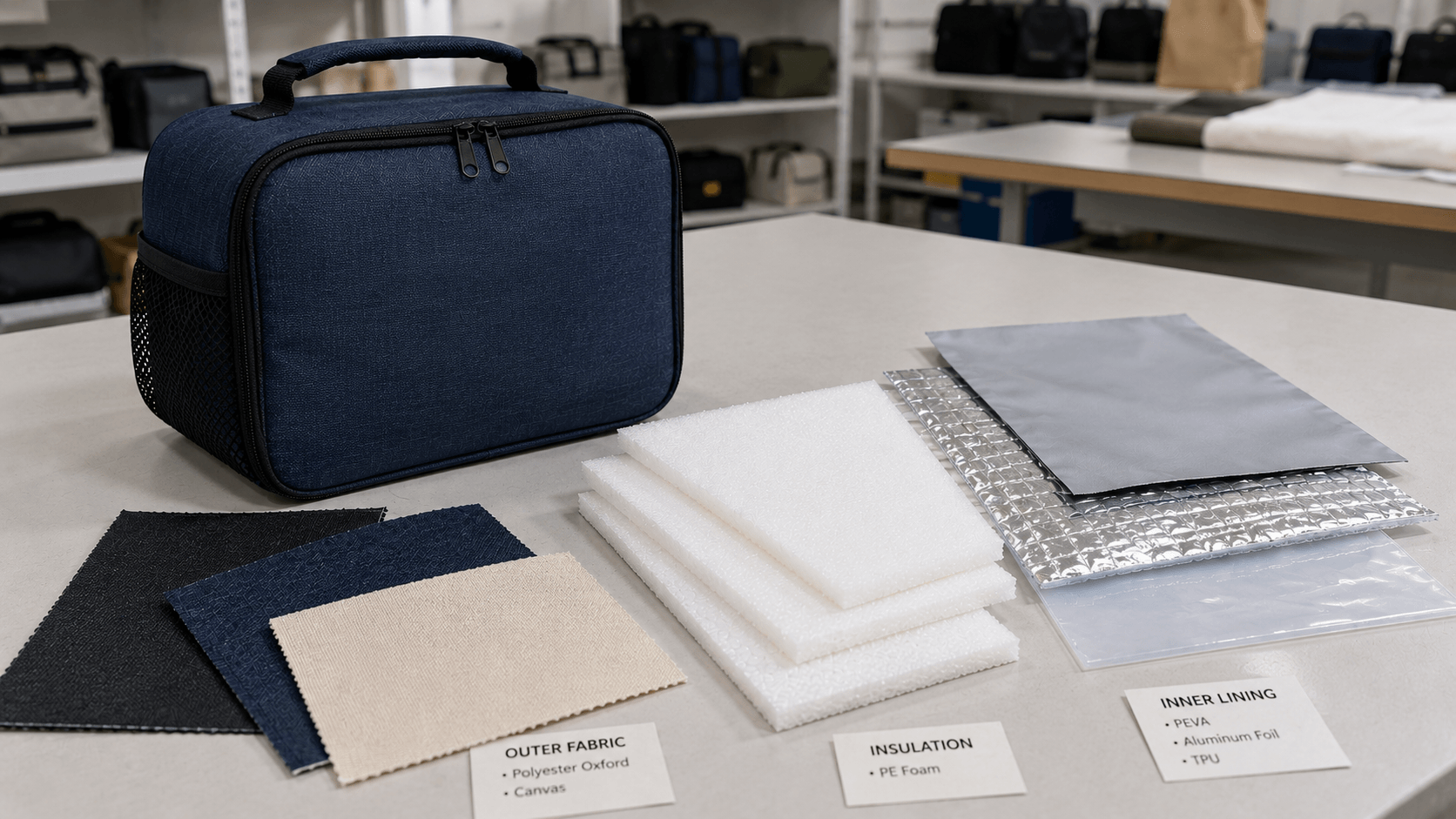
The lining should also match the intended use. For gym or sports bags, a wipe-clean coated material may be more practical than a soft lining that easily holds dirt and moisture.
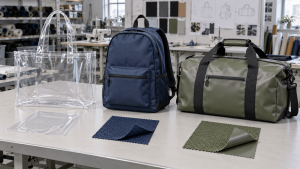
For a broader comparison of shell and lining material options, see our guide to 8 commonly used duffle bag fabrics.
Check the Bag Fully Loaded
The final sample should be reviewed with shoes and normal contents inside.
A side shoe tunnel may make one end of the duffel bulge. A bottom compartment may keep footwear lower, but the bag can still lean or sag if the divider and base are too soft.
Bottom-compartment zippers also sit closer to the floor, so their position, base reinforcement and exposure to dirt or moisture should be considered.
These details are much easier to correct during sampling than after the shoe-compartment layout has already been locked into the pattern.
When Is a Removable Shoe Pouch a Better Option?

A built-in shoe compartment is not always necessary.
If the duffel is compact, or if preserving main-compartment space is more important than permanent separation, a removable shoe pouch can offer more flexibility.
The user can carry it only when needed, remove it for cleaning, or use the full bag volume when no shoes are packed.
This approach can work well for:
- Compact gym or travel duffels
- Premium weekender bags
- Flexible packing layouts
- Products where easy cleaning is important
A separate pouch also avoids locking the bag pattern into one fixed shoe-storage shape, which can be useful when different users carry very different footwear.
A similar flexible approach appears in removable drop-bottom designs. Travel + Leisure tested a weekender with a shoe section that can be removed completely or opened into the main packing area when extra space is needed.
The trade-off is that a separate pouch becomes another loose component to manage and does not provide the same built-in separation as a dedicated compartment.
If a side or bottom shoe section makes the duffel too bulky, removes too much main storage or complicates the structure, a removable pouch may be the cleaner design solution.
How Should Buyers Specify a Shoe Compartment in an RFQ?
A shoe compartment is much easier to develop when the RFQ describes the footwear and intended construction rather than only stating “one shoe compartment required.”
For factory review, the specification should normally include:
| Item to Confirm | Useful Information |
|---|---|
| Shoe type | Running shoes, trainers, football cleats, basketball shoes, work shoes, etc. |
| Target size | Largest shoe size the compartment needs to accommodate |
| Outsole length | Maximum length of the packed shoe |
| Shoe height and width | Important for high-top or bulky footwear |
| Packing orientation | Side-by-side, stacked or heel-to-toe |
| Compartment construction | Side-entry tunnel, external pocket, structured bottom section or soft pocket |
| Opening | Zipper position, opening length and insertion direction |
| Main bag dimensions | Target external size and required usable capacity |
| Interior finish | Standard lining, coated fabric or wipe-clean material |
| Ventilation | Mesh, vent holes or other airflow requirements |
| Structural support | Divider stiffness, base reinforcement or board requirements |
A reference shoe, product photo or actual shoe dimensions can save considerable time during sampling.
The compartment should also be shown clearly in the bag tech pack when it extends into the main body. The factory needs to understand where the shoe volume sits after loading, not only where the zipper is positioned.
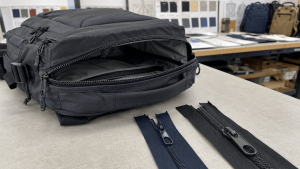
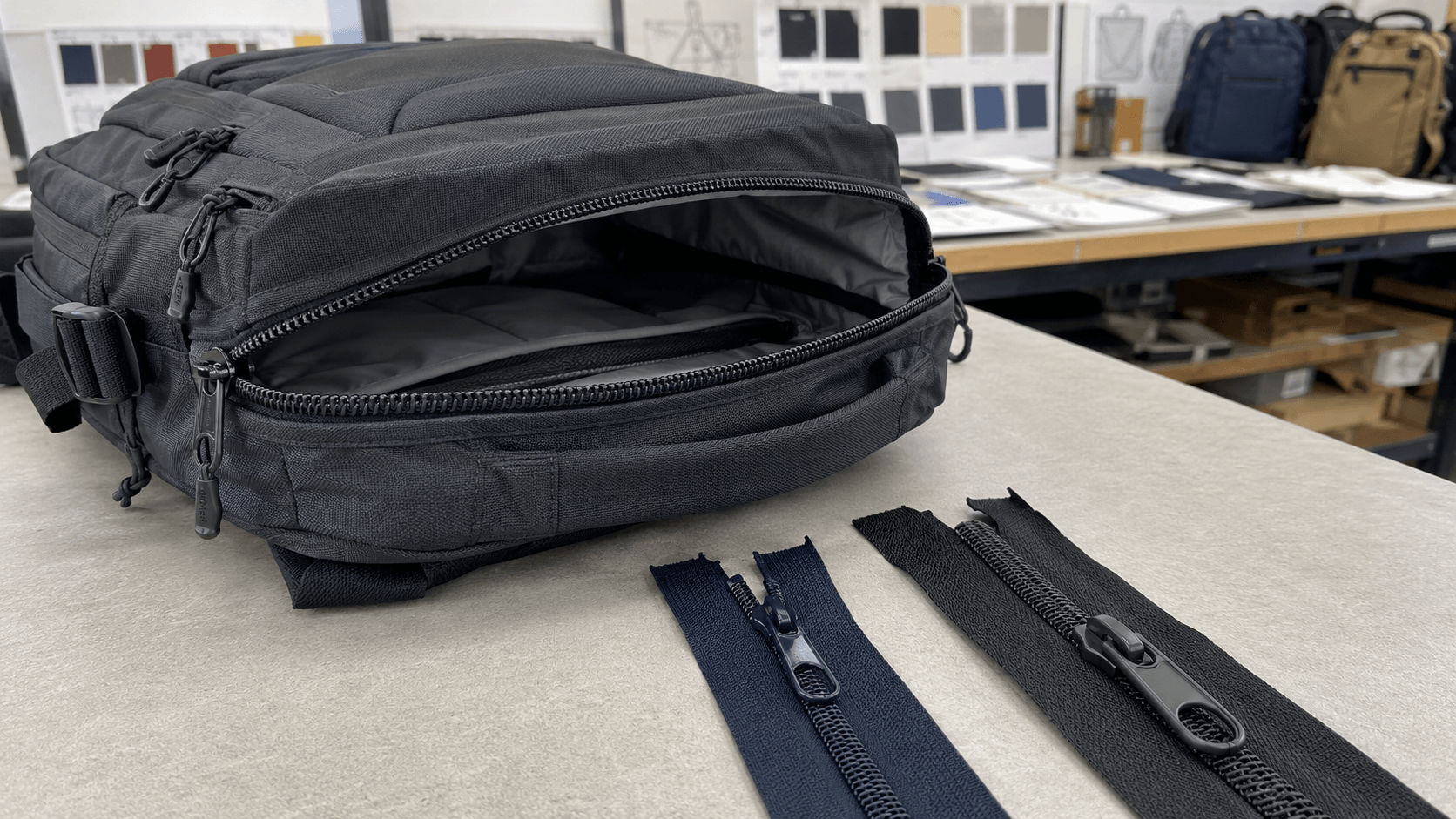
If the opening uses a heavier zipper, the chain size should still be selected according to the opening geometry and expected load rather than simply choosing the largest option. Our guide to #5 vs #10 zippers for bags and backpacks explains this in more detail.
For projects with strict external dimensions, confirm both the finished bag size and the usable main-compartment space before approving the pattern.
Frequently Asked Questions
Can the shoe compartment use a different lining from the main bag?
Yes. In many designs, the shoe area uses a more wipeable or moisture-resistant lining while the main compartment uses a lighter standard lining.
The two materials still need to be compatible with the sewing construction, seam finish and cleaning requirements.
Should wet shoes be sealed completely from the main compartment?
Not necessarily.
A separate compartment reduces direct contact with clothing, but ordinary textile dividers do not create complete vapor or odor isolation.
If the product is expected to carry wet footwear regularly, moisture management, lining material, seams and possible drainage should be considered as part of the compartment design.
Should a shoe compartment be waterproof?
For most gym and travel duffels, easy cleaning and separation are usually more important than making the shoe compartment fully waterproof.
A coated lining may improve wipeability or moisture resistance, but it does not automatically make the complete compartment waterproof. Water can still move through seams, zipper areas and other openings.
Final Words
Bottom and side shoe compartments solve different packing problems.
Side-entry designs usually provide quicker access, while structured bottom compartments create cleaner vertical separation and a more predictable packing shape. The better layout depends on the footwear, bag size, usable capacity and how the duffel will be used.
During development, we recommend checking the compartment with the actual footwear and the bag fully loaded. This quickly reveals problems with opening size, lost packing space, bulging, divider support and balance.
If neither fixed layout works without compromising the bag, a removable shoe pouch may be the more practical solution.
For a custom duffel bag project, Contact Osgoodway Today share your target dimensions, intended use, shoe type, expected capacity, reference design and quantity. We can review the shoe-compartment layout and construction before sampling.