


Your favorite backpack is looking a little grimy. You want to toss it in the wash, but you’re worried about ruining it. This guide gives you the definitive answer.
No, it is not considered safe to wash most backpacks in a washing machine. The vast majority of manufacturers, especially for technical or high-quality packs, state that machine washing voids the warranty. The process can irreversibly damage coatings, foam, and seams, compromising the bag’s function.
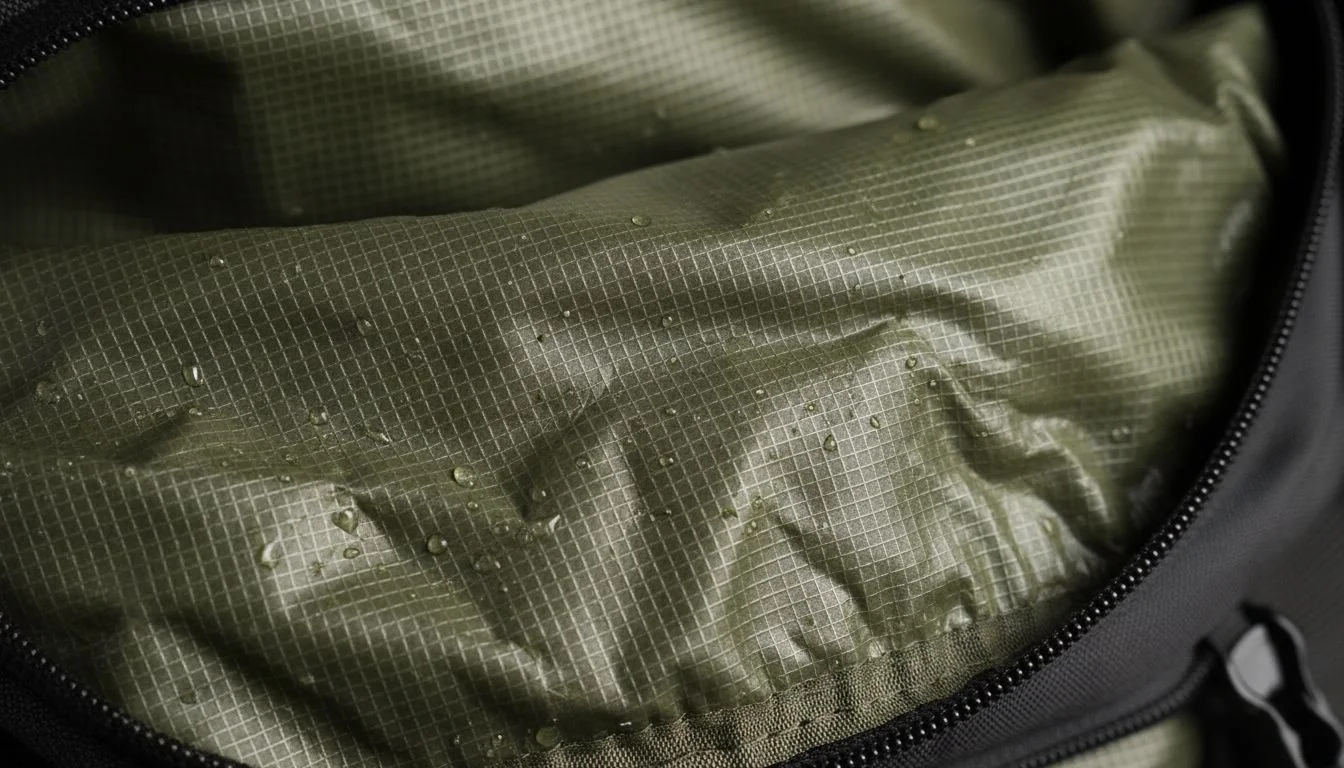
So, the quick answer is a hard "no." But as someone who works with products, you know the devil is in the details. You’re probably wondering why it’s so risky and if there are any exceptions to the rule.
As a bag manufacturing expert, I’ve seen the unfortunate results of a wash cycle gone wrong. Let’s dive into the specifics so you can make informed decisions about product care for your brand and your customers.
[claim claim=”The spin cycle of a washing machine can exert enough force to deform the foam in a backpack’s shoulder straps.” istrue=”true” explanation=”The G-forces and compression can permanently crush the closed-cell foam, reducing its cushioning ability and altering the pack’s fit.”]
[claim claim=”All backpack warranties are voided if you machine wash them.” istrue=”false” explanation=”While most major technical pack brands (like Osprey and The North Face) do void the warranty, some very basic school bag brands might not have this specific clause. It’s a very common rule, but not universal.”]
Is It Safe to Wash Your Backpack in the Washing Machine?
You want a clean backpack without the hassle. But is the washing machine a safe shortcut? The answer might surprise you and save you from making a costly mistake.
It is generally not safe. The intense agitation, prolonged water submersion, and harsh detergents in a washing machine can cause irreversible damage. This includes stripping waterproof coatings1, deforming structural foam, and weakening seams, which is why most quality manufacturers explicitly forbid it.
In my experience working with brands,the integrity of the materials is everything. We choose specific fabrics, foams, and coatings to achieve a certain level of performance and durability.
A washing machine is a brute-force environment that undoes all that careful engineering. The main reason manufacturers like Osprey, The North Face, and Fjällräven state that machine washing voids the warranty is because they know the process compromises the product’s core features.
Why a Washing Machine is So Damaging
The combination of factors inside a washer is a perfect storm for destroying a backpack. The mechanical tumbling puts immense stress on stitching, while the prolonged soaking and chemical detergents attack the materials themselves.
| Damage Factor | Effect on Backpack |
|---|---|
| Mechanical Agitation | Stresses and breaks seams, tears mesh pockets, snags and rips straps. |
| Spin Cycle | Compresses and deforms structural foam in straps and back panels. |
| Harsh Detergents | Strip away water-resistant coatings (DWR and PU), causing delamination2. |
| Prolonged Submersion | Can cause leather parts to discolor and warp; weakens some glues. |
Essentially, you’re trading a bit of dirt for a backpack that no longer performs as designed.
[claim claim=”The term ‘delamination’ refers to the separation of the waterproof polyurethane (PU) coating from the backpack’s inner fabric.” istrue=”true” explanation=”This is the technical term for the peeling and flaking that occurs when the adhesive bond fails due to heat, agitation, or harsh chemicals, ruining the bag’s water resistance.”]
[claim claim=”Using a washing machine on a backpack will only cause cosmetic damage.” istrue=”false” explanation=”The damage is often functional, not just cosmetic. Losing water resistance and padded support compromises the core purpose and comfort of the backpack.”]
What Types of Backpacks Can Be Machine Washed?
You have a simple bag that needs cleaning and think it might survive the wash. But how can you be sure? Here’s a checklist to help you decide without guessing.
Only the most basic, frameless backpacks made of simple fabrics like cotton canvas or basic polyester should even be considered. If your bag has a frame, structured foam padding, special water-resistant coatings, or any leather/suede parts, you must not machine wash it.
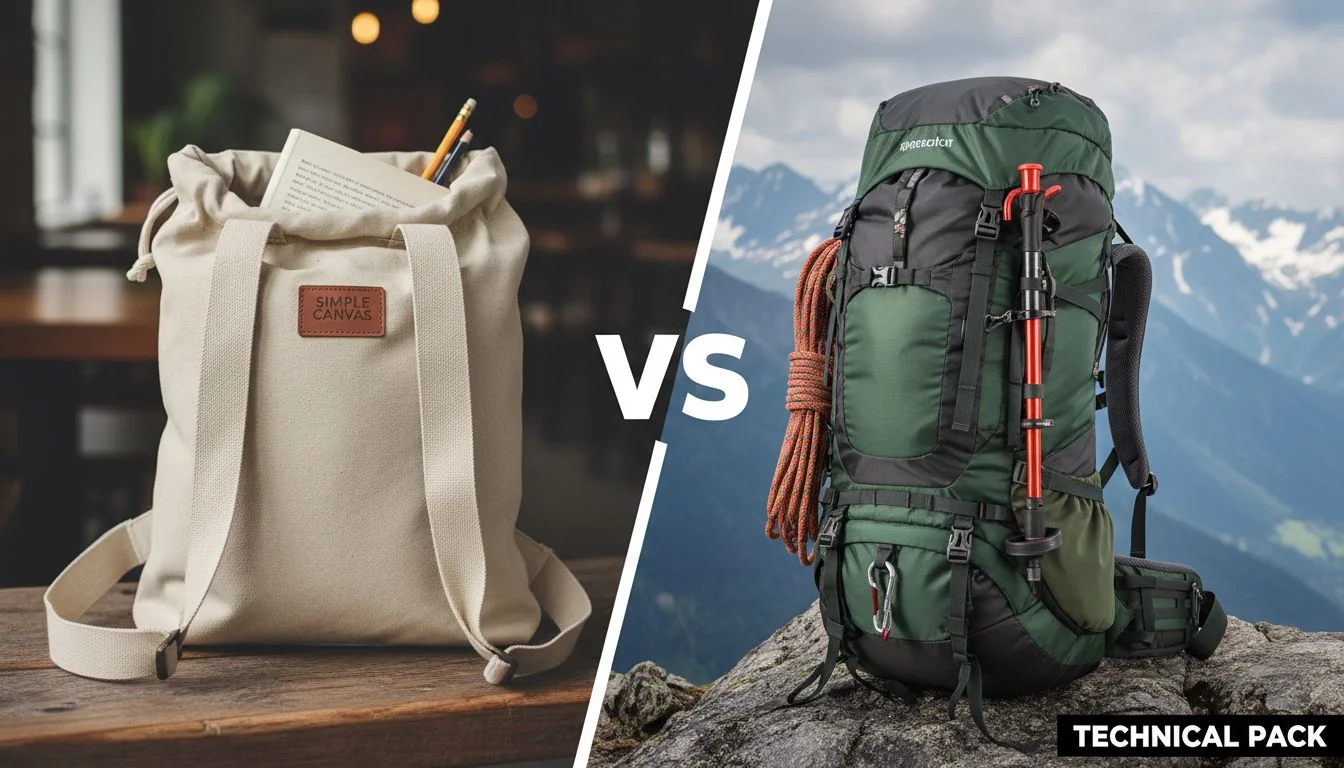
Think of it this way: the more features a backpack has, the less suitable it is for a machine. In the custom bags we develop, features like molded back panels and PU coatings are key selling points that add value and function.
Tossing a bag with these elements into a washer is like driving a luxury car through an automatic car wash with harsh brushes—it just strips away the finish. A backpack is a candidate for machine washing only if it’s essentially a simple sack.
Machine Washing Candidacy Checklist
A backpack MIGHT be a candidate for machine washing only if it meets all the following criteria:
| Feature | Requirement for Machine Washing |
|---|---|
| Frame | Must have no internal or external frame (metal or plastic). |
| Padding | Must have no structured or molded foam in the back panel or straps. |
| Coatings | Must have no shiny inner PU coating or water-repellent exterior finish. |
| Materials | Must have no leather, suede, or other delicate trim. |
Essentially, only a very basic bookbag or drawstring sack should be considered, and even then, hand-washing remains the safer option.
[claim claim=”A simple cotton canvas drawstring bag is a potential candidate for machine washing.” istrue=”true” explanation=”Canvas is a durable fabric, and a simple drawstring bag typically lacks the complex coatings, frames, or structured foam that would be damaged in a wash.”]
[claim claim=”If a backpack is made of polyester, it’s always safe to machine wash.” istrue=”false” explanation=”Many high-performance polyester packs have DWR finishes and PU coatings that will be destroyed by machine washing. The fabric type alone isn’t enough to determine safety.”]
What Are the Risks of Washing Your Backpack in the Washing Machine?
You’re thinking of taking the risk and machine washing your pack anyway. What’s the worst that could happen? The potential damage is significant, often permanent, and can ruin your investment.
The risks are substantial. Machine washing can cause the waterproof inner lining to peel and flake off, a process called delamination. It can also deform the foam padding in straps, break plastic buckles, bend zippers, and put immense stress on the seams, leading to tears.
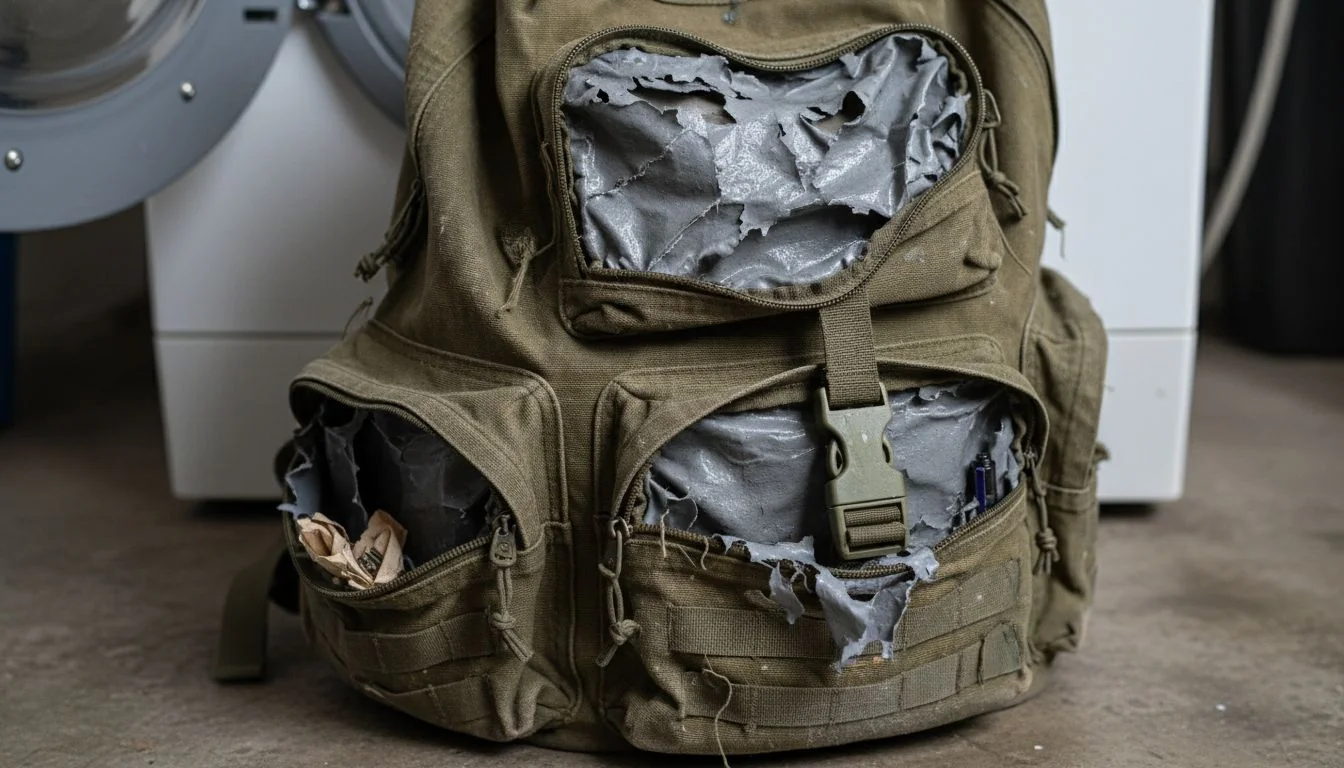
I’ve seen this firsthand. A client once sent back a prototype that had been machine washed, and the inside was a sticky, flaky mess. The PU coating we had carefully applied for water resistance was completely ruined. This is the most common and devastating type of damage.
A Breakdown of the Primary Risks
Let’s look closer at what can go wrong inside the machine.
Coating Delamination:
The tumbling and harsh soap strip the interior polyurethane (PU) lining. This is the shiny layer inside most quality packs that keeps your gear dry. Once it starts peeling, the pack’s weather resistance is gone forever.
Structural Damage:
The high-speed spin cycle compresses the closed-cell foam in your shoulder straps and hip belt. This makes the pack uncomfortable, as the padding loses its ability to cushion and support weight properly.
Fabric and Seam Failure:
The violent motion pulls at the seams, which can weaken or break the stitching. Nylon fabrics can also stretch or abrade, compromising the overall strength of the bag.
*Hardware Damage:
Plastic buckles can crack, and zippers can get bent out of shape. Worse, loose straps can get tangled and torn, and metal parts can even damage the inside of your washing machine.
[claim claim=”Specialized ‘tech wash’ soaps are designed to clean technical fabrics without stripping their water-repellent finishes.” istrue=”true” explanation=”Brands like Nikwax and Grangers create pH-neutral, non-detergent cleaners specifically for outdoor gear that are much safer than standard laundry detergents, which can damage coatings.”]
[claim claim=”It’s safe to use a top-loading washing machine as long as you use the gentle cycle.” istrue=”false” explanation=”The central agitator in most top-loaders poses a severe risk of snagging and tearing straps and fabric, regardless of the cycle speed. A front-loader is the only option if you must use a machine.”]
How to Properly Wash Your Backpack in the Washing Machine?
You’ve checked your very basic bag and decided to risk it. To have any chance of success, you must follow a strict procedure to minimize damage.
If you absolutely must, use a front-loading machine on a gentle, cold water cycle. Place the empty backpack inside a large mesh laundry bag or a zipped pillowcase. Use a tiny amount of non-detergent soap, like a tech wash. Never use a top-loader with an agitator.
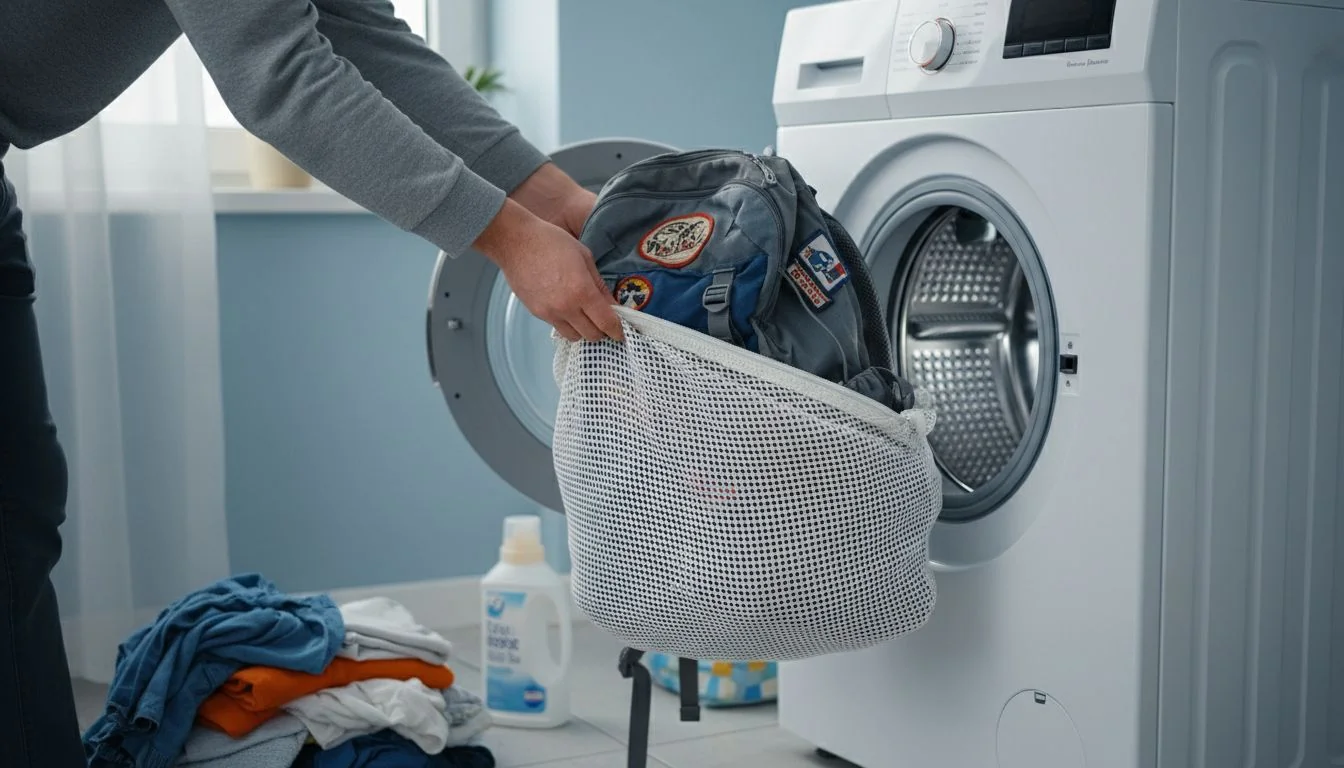
If you have a very basic backpack that meets the criteria from question #2 and you absolutely must use a machine, you must take extensive precautions to minimize damage.
Step 1:Check the Care Label
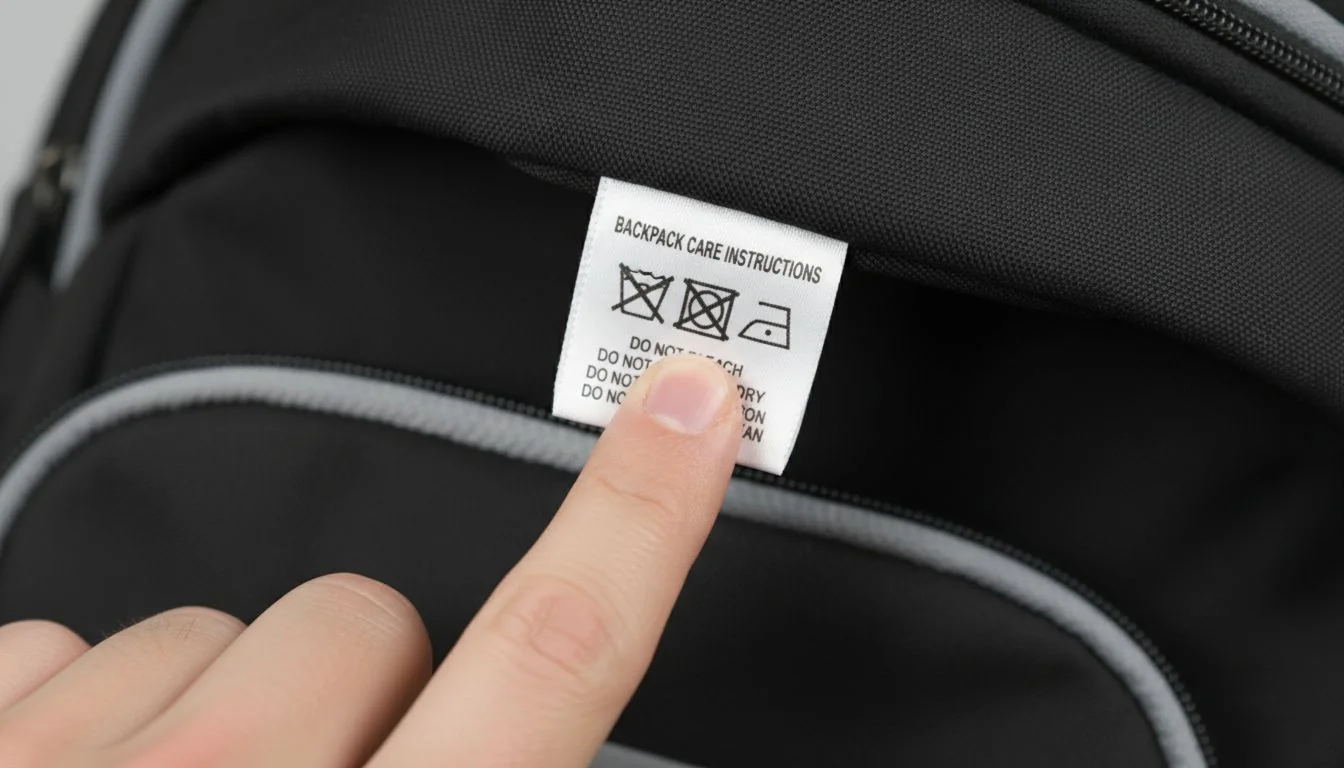
Always read the manufacturer’s care instructions to determine if your backpack can be machine-washed. Some materials like leather or waterproof fabrics should not be machine-washed.
Step 2:Empty the Backpack
Remove all items and check every pocket. Detach straps, buckles, and any removable components to avoid damage during the wash cycle.
Step 3: Pre-Treat Stains (If Necessary)
Use a gentle stain remover or mild soap to treat any visible stains. Apply it to the stained area and allow it to sit for a few minutes.
Step 4: Use a Laundry Bag or Pillowcase
Place the backpack inside a mesh laundry bag or an old pillowcase to protect it from excessive friction during the wash.
Step 5: Use a Front-Loading Machine
Never use a top-loading machine with a central agitator, as it will almost certainly tear the backpack.
Step 6: Wash on a Gentle Cycle with Cold Water
Set your washing machine to a gentle or delicate cycle with cold water, using a mild detergent. Avoid hot water and fabric softeners to protect the fabric and any coatings.
Step 7: Air Dry
Never place your backpack in the dryer. Instead, hang it up or lay it flat to air dry. Make sure to reshape the backpack while it’s drying to maintain its structure.
[claim claim=”Hand-washing gives you precise control over which areas to scrub, protecting delicate parts like mesh pockets.” istrue=”true” explanation=”Unlike the indiscriminate tumbling of a machine, hand-washing allows you to spot-clean dirty areas while being gentle on more fragile components like elastic pockets or decorative elements.”]
[claim claim=”Hand-washing is not effective for removing strong odors from a backpack.” istrue=”false” explanation=”Soaking the backpack in a tub with a proper cleaning solution, like a mild soap or specialized gear wash, is very effective at removing odors without the damaging effects of a machine.”]
When Should You Hand-Wash Your Backpack Instead of Machine Washing?
Your backpack has some special features, and you’re unsure if the machine is too risky. When is hand-washing the only real option? Let’s clarify the hard-and-fast rules.
You should hand-wash your backpack in almost every situation. It is mandatory if the pack has an internal frame, structured foam panels, any water-resistant coating, or leather details. Hand-washing is the only method approved by technical pack manufacturers and the only way to preserve your warranty.
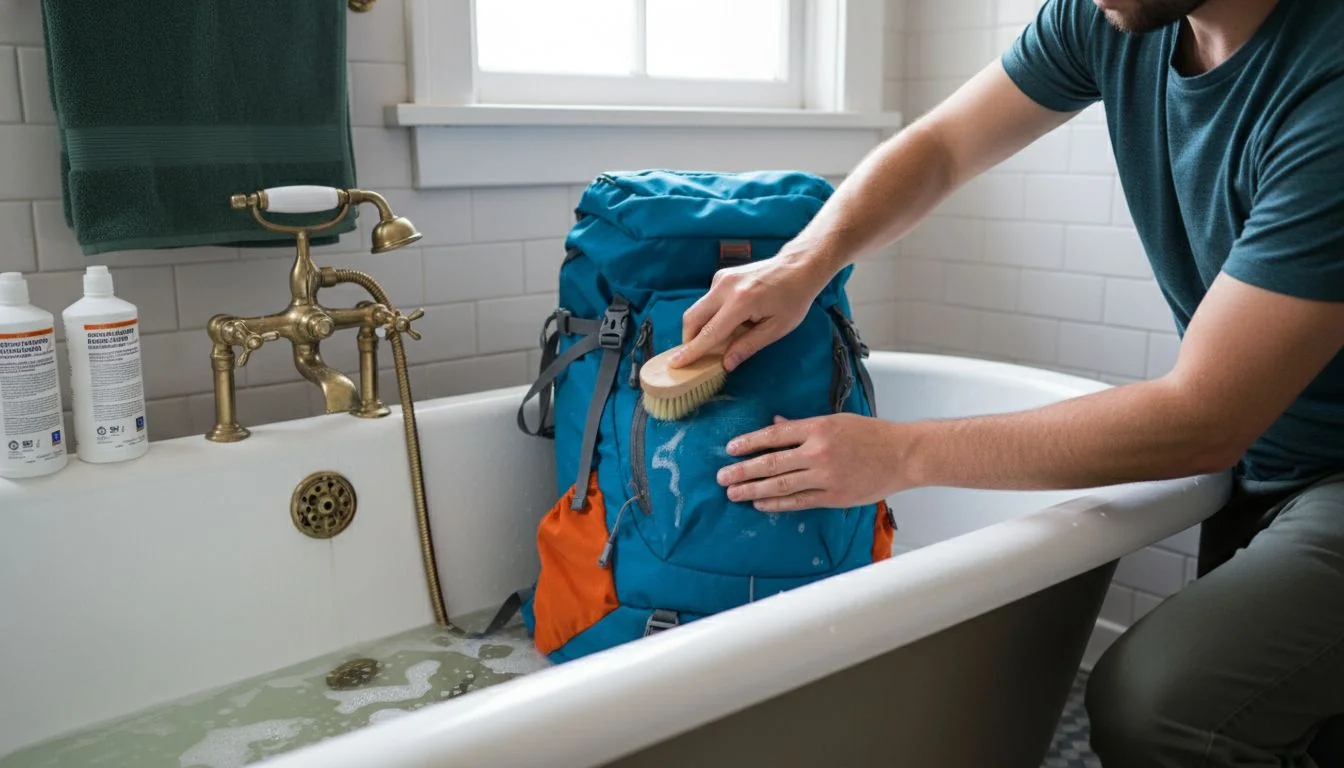
Honestly, hand-washing should be your default method for any backpack you care about. For the custom bags we design for premium brands, we assume they will be cared for properly.
The Hand-Wash Decision Tree
If your backpack has any of the following, hand-washing is the only correct choice.
| If Your Pack Has… | Then You Must… | Reason |
|---|---|---|
| An Internal/External Frame | Hand-Wash | The frame can be bent or broken, and it can damage the machine. |
| Structured/Molded Foam | Hand-Wash | The machine’s spin cycle will compress and deform the ergonomic padding. |
| Water-Resistant Coatings | Hand-Wash | Detergents and agitation will strip the PU/DWR coatings, ruining water resistance. |
| Leather or Suede Parts | Hand-Wash | Water and agitation will cause discoloration, stiffening, and cracking. |
| A Valid Warranty | Hand-Wash | Machine washing almost always voids the warranty on quality packs. |
In short, if your backpack is anything more than a simple sack, hand-washing is the way to go.
[claim claim=”Hanging a backpack in direct, hot sunlight is the fastest way to dry it safely.” istrue=”false” explanation=”While it’s fast, the prolonged exposure to intense UV radiation will degrade and fade the fabric (especially nylon), weakening its integrity over time. Shade is much safer.”]
[claim claim=”Leaving pockets zipped while drying can trap moisture and lead to the growth of mold or mildew.” istrue=”true” explanation=”Trapped moisture in an enclosed space creates the perfect breeding ground for mildew, which can cause permanent stains and odors. Maximum airflow is essential.”]
How to Dry Your Backpack After Washing?
Your backpack is clean but soaking wet. Drying it wrong can cause just as much damage as washing it wrong. Here’s the only safe way to do it properly.
Never put a backpack in a machine dryer.The intense heat will melt synthetic fabrics, warp plastic buckles, and completely destroy sensitive coatings. Instead, hang it upside down in a well-ventilated, shady area. Open all pockets to maximize airflow and prevent mildew.
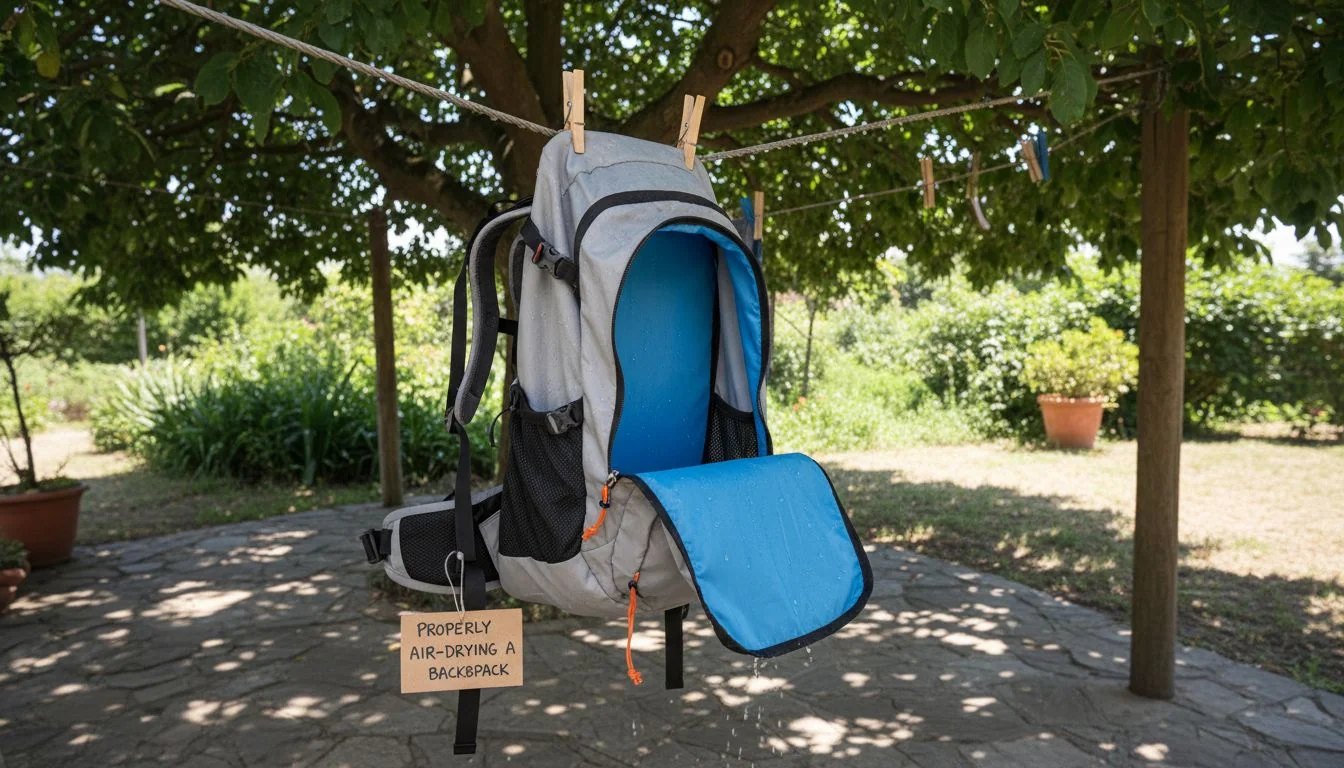
The drying stage is just as critical as the washing stage. I can’t stress this enough: a machine dryer is the fastest way to turn a functional backpack into a useless, melted piece of plastic and fabric. The heat is the ultimate enemy of the synthetic materials and coatings that make a modern backpack work. As someone who sources these materials, I know how sensitive they are to high temperatures. The only safe method is patient air-drying.
The Correct Drying Method
Follow these steps to ensure your pack dries safely and thoroughly.
| Do’s | Don’ts |
|---|---|
| Do gently squeeze out excess water. | Don’t wring or twist the pack, as this damages foam and seams. |
| Do hang the backpack upside down. | Don’t put the backpack in a machine dryer. Ever. |
| Do open every single pocket and compartment. | Don’t hang it in direct sunlight, as UV rays degrade fabric. |
| Do hang it in a shady, well-ventilated spot. | Don’t store it until it is 100% dry, which can take 24-48 hours. |
Patience is key here. Rushing the drying process by using heat will only lead to regret. A fully dry pack is essential to prevent mildew from growing in damp corners before you store it.
Conclusion
To protect your investment, always hand-wash your backpack. Machine washing is a high-risk gamble that can ruin your bag’s materials, structure, and warranty. Always air-dry it completely in the shade.






