


Ten years ago, if a client walked into my factory and asked for a "bombproof" bag, I’d automatically reach for the 1000D Cordura swatch book. It was the gold standard. But today? If you spec 1000D for a city commuter pack, I’m going to push back.
High-end brands choose 500D Cordura1 over 1000D Cordura2 because it offers a superior strength-to-weight ratio.500D offers 80% of the abrasion resistance of 1000D but weighs 35-40% less and is significantly less abrasive on user clothing.This shift allows for lighter load-outs, tighter sewing tolerances, and a superior hand-feel without sacrificing the real-world durability needed for tactical or outdoor use.
I see this shift on my production line every day. Brands like Goruck (who famously moved some lines to 500D), Evergoods, and Mystery Ranch aren’t cutting costs—they are upgrading the user experience. Here is the technical breakdown of why 500D is the new king of carry.
Is 1000D Cordura actually overkill for daily carry backpacks?
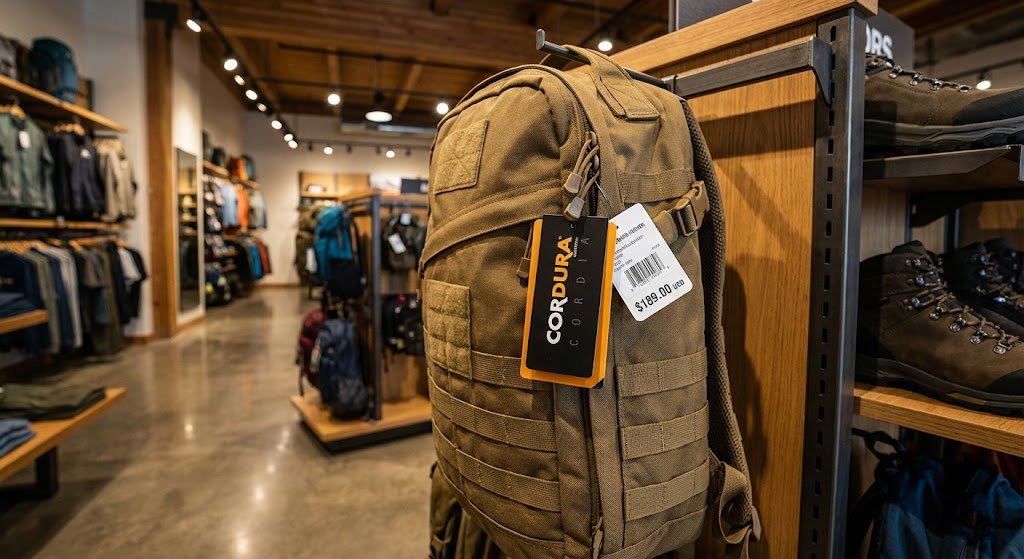
Yes, 1000D Cordura is functionally overkill for daily carry because its tensile strength far exceeds the load capacity of a standard backpack, offering diminishing returns on durability while adding unnecessary bulk and stiffness.
Let’s look at the physics. 1000D was originally designed for military rucksacks intended to be dragged across concrete and rocks. For a laptop backpack or travel bag, the fabric is almost never the failure point. The zippers (usually #8 or #10 YKK) or the stitching at the shoulder strap insertion points will fail long before you wear a hole through 500D Nylon 6.6.
In our internal factory testing, 500D Cordura survives over 2,000 cycles on the Taber Abrasion Test. Unless your customer plans to drag their bag behind a motorcycle, 1000D provides "theoretical durability" that they will never actually use, at the cost of practical comfort.
Durability vs. Usability Trade-off
| Feature | 500D Cordura | 1000D Cordura | Practical Impact |
|---|---|---|---|
| Tensile Strength | High | Extreme | Both exceed standard carry loads (20kg+). |
| Abrasion Resistance | Excellent | Superior | 1000D is only necessary for dragging/tactical use. |
| Flexibility | High | Low | 500D conforms to the back; 1000D feels like a box. |
Manager’s Tip: Assess your failure rates. If your returns are due to blown zippers, upgrading to 1000D fabric won’t fix it. Stick to 500D and invest the money in better zipper sliders.
How does the "hand feel" and drape differ between 500D and 1000D?
When buyers look at digital swatches, they forget about tactile feedback. But when I hand a prototype to a client, the first thing they do is run their hand over the fabric.
500D Cordura has a softer hand and better drape, allowing it to contour around bag corners without bunching, whereas 1000D is stiff, coarse, and—most importantly—acts like sandpaper against delicate clothing fabrics like Merino wool.
Visual & Haptic Differences
- The "Crinkle" Factor: 1000D often has a noisy, crinkly coating sound. 500D is quieter.
- Matte Finish: 500D tends to take dye with a slightly smoother, more matte finish, which looks more modern than the coarse sheen of 1000D.
- Seam Puckering: 500D allows for tighter, cleaner seams around curves.
Manufacturing and Construction Impact
500D allows for tighter seam allowances and more complex 3D patterning because the fabric layers are thinner, reducing needle deflection and skipped stitches during production.
| Construction Aspect | 500D Cordura | 1000D Cordura |
|---|---|---|
| Corner Seams | Clean, tight radius possible | Bulky, difficult to turn inside out |
| Binding Tape | Easy to bind | Requires wider, heavier binding |
| Layering | Can layer 4+ sheets easily | 4+ layers create "humps" in sewing |
Does switching to 500D Cordura actually save money on manufacturing costs?
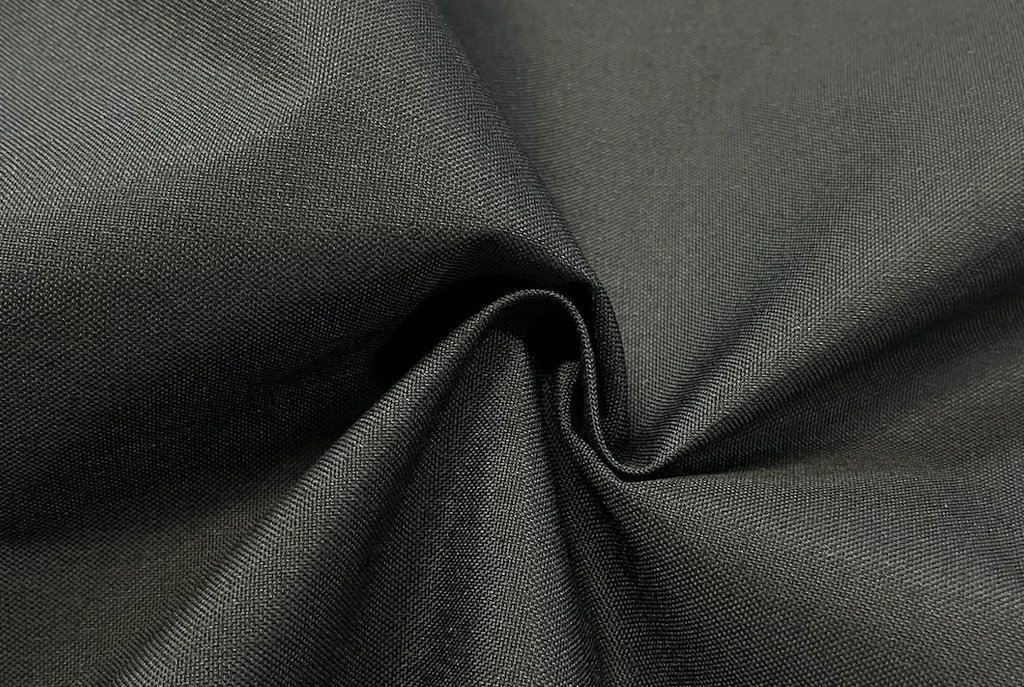
No, switching to 500D Cordura does not significantly lower material costs compared to 1000D, as the price difference per yard is often negligible (usually less than $0.50/yard difference) and depends heavily on the volume purchased.
Many of my clients assume 500D is the "cheap" option. It isn’t. You are paying for the licensed INVISTA Cordura3 brand and the Nylon 6.6 polymer chemistry, not just the physical weight of the yarn. The weaving cost is similar. In fact, if you want a custom color in 500D, it might cost more if 1000D is the factory standard stock.
However, there is a hidden cost saving: Shipping logistics.
Where do the real savings come from?
- Inbound Freight: We can fit roughly 30% more yards of 500D on a roll than 1000D. This reduces inbound shipping costs to the factory.
- Finished Goods Shipping: A lighter bag means lower air freight costs for you when shipping finished goods from Asia to the US/EU.
Manager’s Tip: Don’t pitch 500D to your boss as a Cost of Goods Sold (COGS) reduction. Pitch it as a shipping reduction and a quality upgrade.
How do water resistance coatings perform on 500D vs 1000D?
Both 500D and 1000D Cordura utilize the exact same DWR (Durable Water Repellent)4 coatings and PU backings, resulting in identical waterproof ratings (usually 1000mm+ PU coating) despite the difference in yarn thickness.
Actually, 500D often performs slightly better in real-world weather scenarios. Because the weave is tighter (smaller yarns packed closer together), the surface is smoother, which allows the DWR treatment to bead water more effectively than the deep, coarse valleys of the 1000D weave where water can get trapped.
I recently tested this with a client. We sprayed both fabrics. The water beaded off both instantly. But after 10 minutes of standing water? The 1000D started to "wet out" (darken) slightly faster in the weave crevices.
Coating Specs Breakdown
| Layer | Standard 500D Spec | Standard 1000D Spec |
|---|---|---|
| Face | C0 (PFC-Free) DWR | C0 (PFC-Free) DWR |
| Backing | 2x PU Coating | 2x PU Coating |
| Hydrostatic Head | ~1000mm – 1200mm | ~1000mm – 1200mm |
Manager’s Tip: If you want true waterproofing, the denier doesn’t matter. You need to ask us to apply a TPU laminate or switch to a tarpaulin material. Cordura is water resistant, not waterproof.

What is the impact of 500D on the bag’s total weight?
Using 500D Cordura reduces the base fabric weight by approximately 35% compared to 1000D, which translates to shedding 0.5 to 1.0 lbs off a fully constructed 30L travel backpack.
This is the number one reason brands like Aer and Bellroy dominate the tech-carry space. A 1000D bag often weighs 3.5 lbs (1.6kg) empty. Add a laptop, charger, and water bottle, and the user is carrying 10 lbs before they even pack clothes.
I worked on a project last year where we cloned a bag from 1000D to 500D. We changed nothing else—same hardware, same lining.
Real-World Weight Test (30L Backpack)
- 1000D Version: 1.58 kg (3.48 lbs)
- 500D Version: 1.25 kg (2.75 lbs)
- Difference: 0.33 kg (0.73 lbs)
That 0.73 lbs is massive when you are running to a gate at the airport.
Manager’s Tip: Weigh your current sample. If your "Everyday Carry" bag is over 1.5kg empty, you are losing sales. Switch to 500D immediately.
Can you mix 500D and 1000D in the same product?
This is the pro move. Use 1000D strictly for the bottom panel (high abrasion) and 500D for the main body to balance durability with weight.
We call this "Hybrid Construction." It is the hallmark of a brand that actually understands utility. There is no reason for the top flap of a backpack (which touches nothing but air) to be 1000D. However, the bottom panel that gets thrown onto concrete? That needs armor.
- Base Panel: 1000D (or 1680D Ballistic) for impact protection.
- Main Body: 500D for weight reduction and water resistance.
- Liner: 210D or 420D Pack Cloth (Never use 500D as a liner, it adds too much weight).
Action: Redline your tech pack today. Change the "Main Body" fabric code to 500D and keep "Base Reinforcement" as 1000D.
Also read: Do I Need a License/Hangtag to Label My Bags as "Cordura"?
Conclusion
The era of "heavier is better" is dead. 1000D Cordura still has a place in military rucks and haul bags that will see jagged rocks and combat zones. But for the modern B2B buyer creating high-end travel gear and EDC packs, 500D Cordura is the superior choice. It balances credible durability with the comfort and weight savings that modern users demand.
Next Step: Are you debating the fabric for your next collection? Send me your tech pack. I’ll have my team stitch up a raw comparison swatch of your main pocket in both 500D and 1000D so you can feel the difference yourself.

Expert FAQ: The Questions You Should Be Asking
1. Is 1050D Ballistic Nylon better than 500D Cordura?
They are different animals. 1050D Ballistic is a filament nylon (smoother, shinier) while Cordura is air-jet textured (matte, fuzzy). Ballistic tears easier but abrades less. 500D Cordura looks more "tactical/outdoor," while Ballistic looks more "corporate luggage."
2. Does 500D Cordura look "cheap" compared to 1000D?
No, in fact, the tighter weave of 500D often looks cleaner and more uniform. 1000D can look very grainy. However, 500D reflects light differently—it’s slightly more matte.
3. Is "Kodra" the same as Cordura?
No. Kodra is a generic Korean copy. It’s decent, but it’s not Nylon 6.6 INVISTA Cordura. If you spec 500D Kodra, expect lower tear strength and faster color fading. High-end brands pay for the Cordura hangtag.
4. Can I tell the difference between 500D and 1000D just by looking?
If you are a rookie, maybe not from a distance. But touch it. 1000D feels like a heavy canvas tarp; 500D feels like a heavy-duty jacket material. Also, look at the grain size—1000D has very distinct, large "squares" in the weave.
5. Are there fake 500D fabrics out there?
Everywhere. If a factory quotes you a price that seems too good to be true, it’s generic "Kodra" or Oxford nylon, not branded Cordura®. Real Cordura® is Invista nylon 6.6. Generic is usually Nylon 6. Nylon 6 melts faster and abrades 3x quicker. Ask for the Invista hangtags. If they can’t provide them, run.
Footnotes
-
Explore how 500D Cordura enhances durability and comfort in backpacks, making it a preferred choice for modern designs. ↩
-
Learn 500D Cordura and 1000D Cordura, What’s the Diff? ↩
-
Learn about the history and heritage of Invista’s Cordura brand and its role in textile innovation. ↩
-
An in-depth explanation of how Durable Water Repellent treatments protect fabrics from moisture and saturation. ↩






