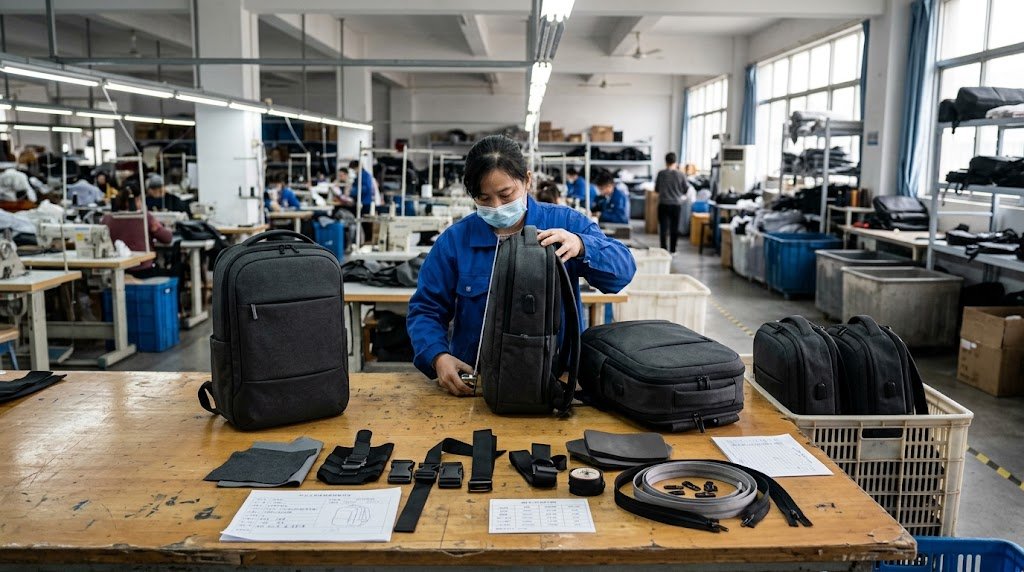
The customized hiking backpack market represents a significant opportunity for brands, wholesalers, and distributors looking to capitalize on growing consumer demand for personalized outdoor gear. With the hiking backpack market projected to reach $8.4 billion by 2030 at a CAGR of 7.2%, customization has emerged as a key differentiator in this competitive space. This guide explores the essential aspects of customized hiking backpacks, providing valuable insights for businesses seeking to partner with OEM/ODM manufacturers like OSGW Bag.
Why Customized Hiking Backpacks Are in High Demand
Market Growth and Industry Insights
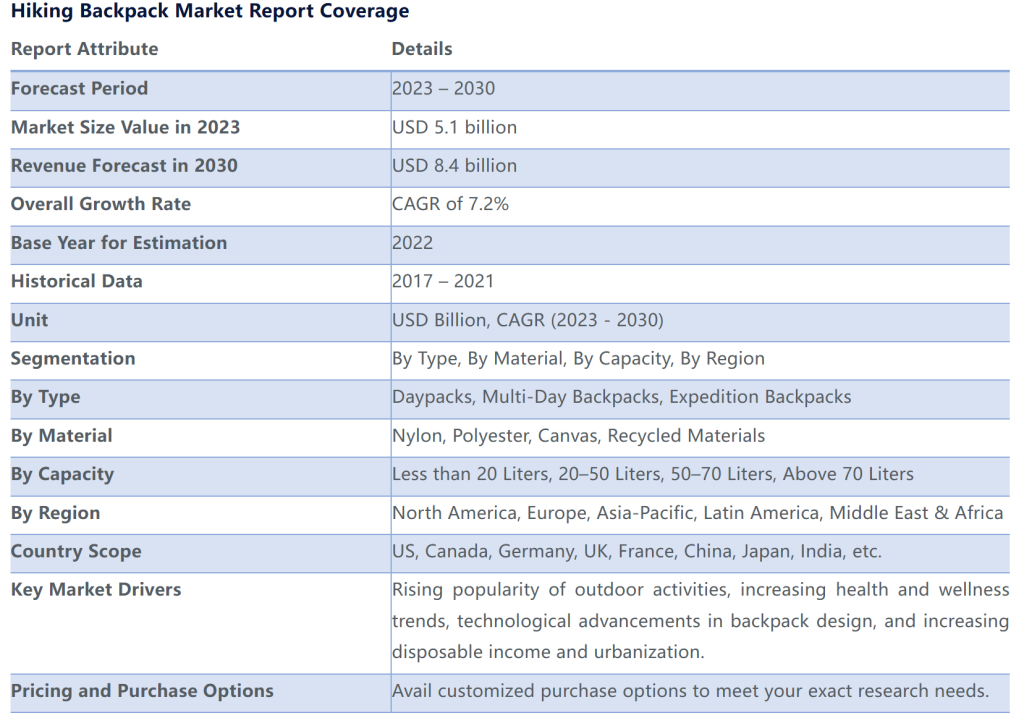
The hiking backpack industry is experiencing significant growth, driven by increasing consumer interest in outdoor activities and the rising demand for personalized gear. According to market research, the global hiking backpack market was valued at $5.1 billion in 2023 and is projected to reach $8.4 billion by 2030, growing at a CAGR of 7.2% 2. This rapid expansion presents lucrative opportunities for brands, wholesalers, and distributors looking to differentiate themselves through customization.
Consumer Trends Favoring Customization
Today’s consumers are looking for products that align with their personal preferences, lifestyles, and specific needs. The trend of customized outdoor gear has gained traction, with customers prioritizing functionality, aesthetics, and personalized features. Key factors driving this shift include:
- Unique Branding: Custom backpacks help brands stand out in a competitive market by offering exclusive designs and logo placements.
- Enhanced Functionality: Consumers demand specialized features like hydration pack compatibility, extra storage compartments, and ergonomic designs tailored to their activities.
- Personal Expression: Outdoor enthusiasts prefer backpacks in custom colors, materials, and designs that reflect their style.
Regional Demand and Market Opportunities
The demand for customized hiking backpacks varies by region, presenting different growth opportunities:
- North America: The largest market for hiking backpacks, driven by a strong culture of outdoor recreation and an emphasis on high-performance gear.
- Europe: Increasing eco-conscious consumer behavior has led to a rise in demand for sustainable and customized backpacks made from recycled materials.
- Asia-Pacific & Emerging Markets: Rapid economic growth, rising disposable incomes, and a growing adventure tourism industry are fueling demand for high-quality and personalized outdoor gear.
Why Brands Should Invest in Custom Hiking Backpacks
Customization is no longer just a trend—it’s a powerful strategy for brands to gain a competitive edge. By offering custom-designed hiking backpacks, brands can:
- Increase brand loyalty through exclusive designs and high-quality offerings.
- Capture niche markets by catering to specific outdoor activities (e.g., ultralight hiking, mountaineering, or urban trekking).
- Command higher price points with premium customization features.
As the outdoor gear industry continues to evolve, brands that prioritize customization will be well-positioned to meet consumer expectations and drive business growth.
Key Features Brands Look for in High-Quality Custom Hiking Backpacks
When selecting an OEM/ODM partner for hiking backpacks, brands prioritize several key features that enhance product functionality and market appeal.
To build a high-quality hiking backpack, brands must focus on durability, waterproofing, ergonomic design, storage efficiency, and lightweight construction. Custom branding, smart integrations, and material selection also play a crucial role in standing out in the market.
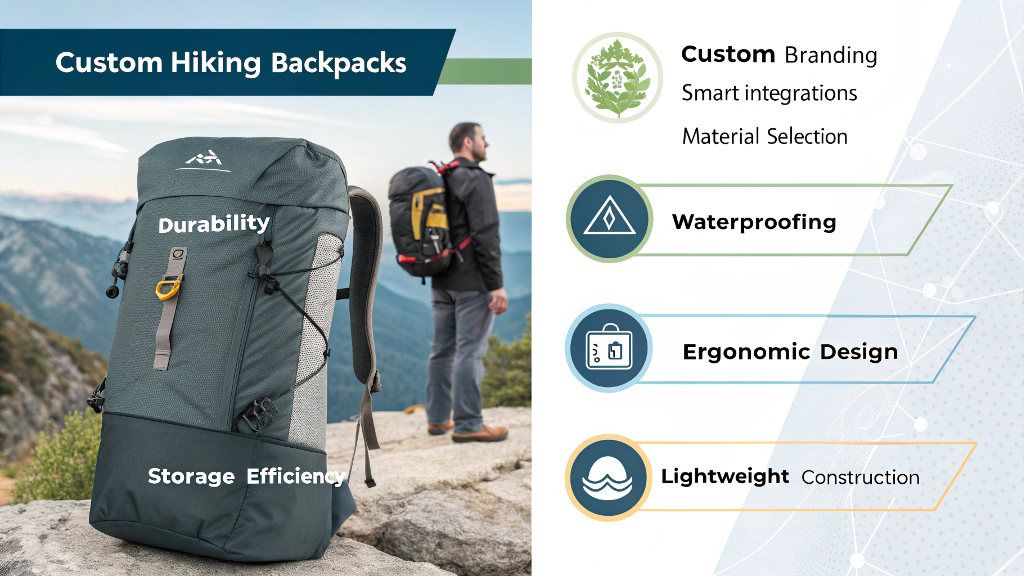
Choosing the right features ensures your product not only meets but exceeds consumer expectations, leading to higher sales and brand loyalty.
1. Durability: The Foundation of a Reliable Backpack
A hiking backpack must withstand rugged terrain, varying weather conditions, and heavy loads. The most durable backpacks incorporate:
- High-grade materials: Nylon, polyester, and ripstop fabrics provide abrasion resistance and long-term reliability.
- Reinforced stitching: Double or triple stitching at stress points prevents wear and tear.
- Heavy-duty zippers and buckles: Using premium YKK zippers and Duraflex buckles enhances longevity.
2. Waterproofing: Protection Against the Elements
Unexpected rain, river crossings, and humid climates make waterproofing essential. Brands should prioritize:
- Water-resistant fabrics: TPU (Thermoplastic Polyurethane), PVC, and RPET (Recycled Polyethylene Terephthalate) offer different levels of water protection.
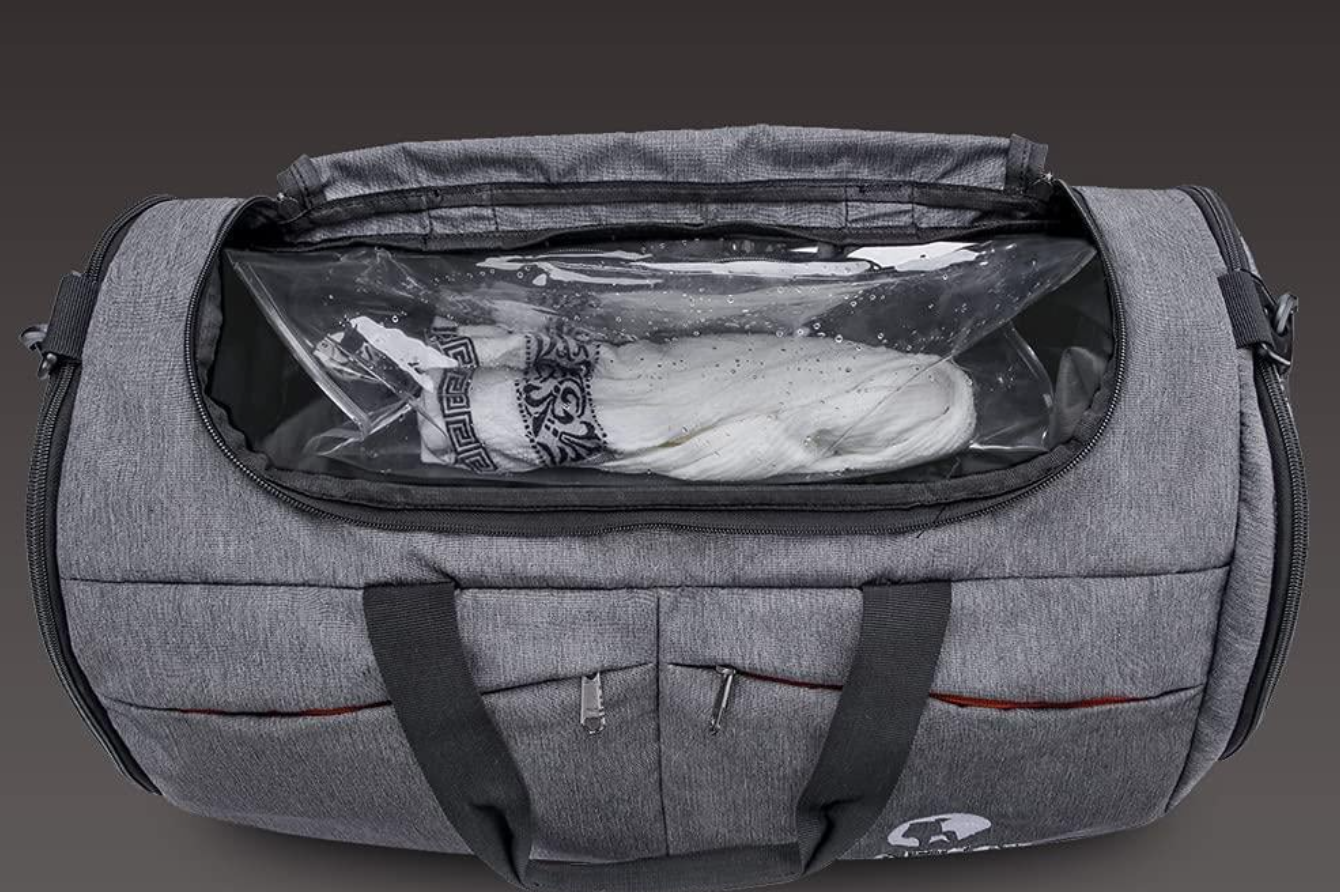
- Sealed zippers and waterproof linings: Keep moisture from seeping into critical compartments.
- Integrated rain covers: Additional protection for extreme weather conditions.
3. Ergonomic Design: Comfort for Long Treks
Hiking backpacks must distribute weight evenly to reduce strain on the user. Essential ergonomic features include:
- Padded, adjustable shoulder straps: Improves comfort and reduces pressure.
- Ventilated back panels: Enhances airflow to minimize sweat buildup.
- Adjustable torso lengths and waist belts: Ensures a customized fit for different body types.
4. Storage & Organization: Maximizing Efficiency
A well-designed hiking backpack offers convenient storage solutions. Key features include:
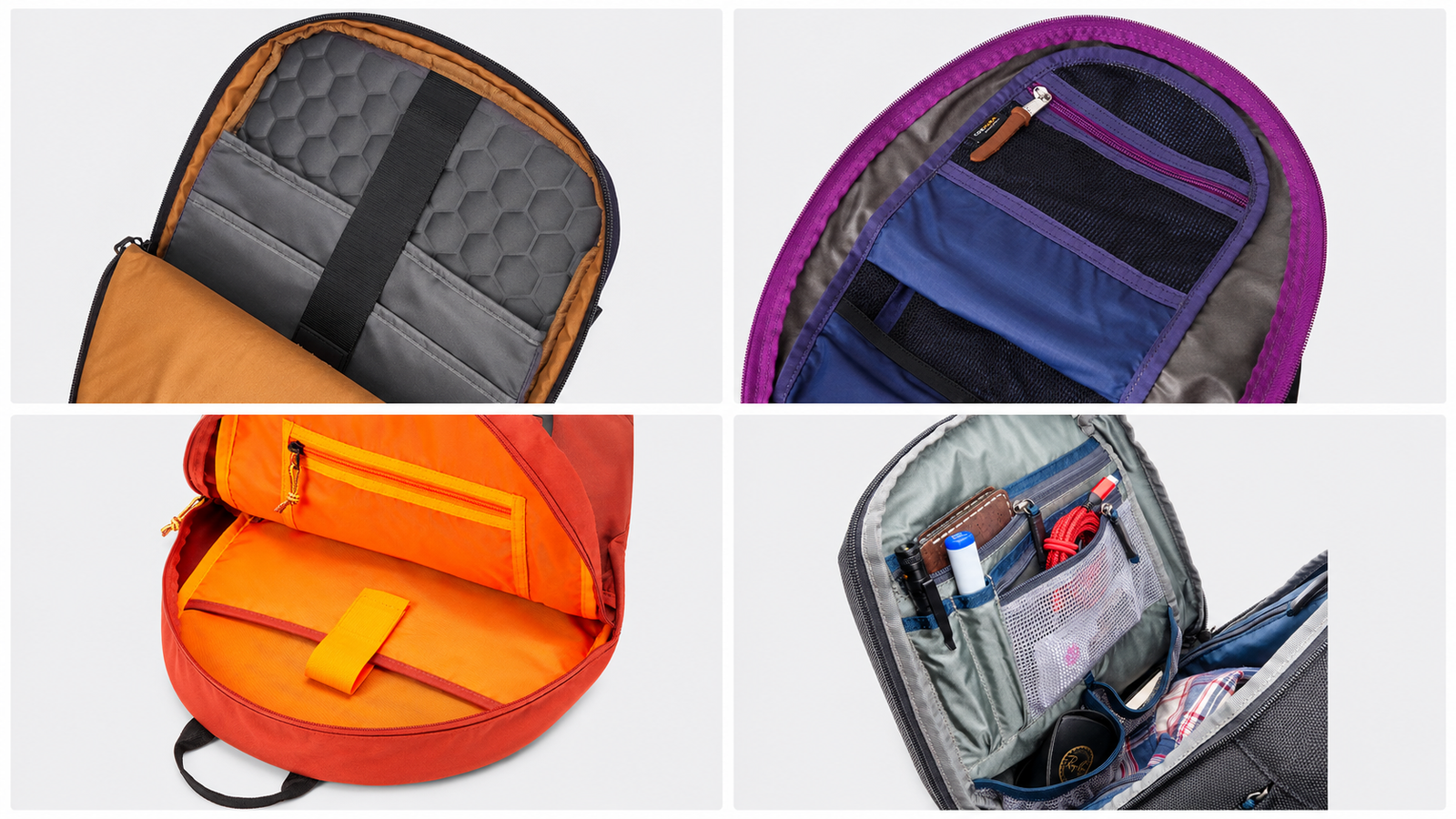
- Multiple compartments: Separate sections for hydration packs, electronics, and clothing.
- External gear attachment points: Loops and hooks for trekking poles, carabiners, and sleeping bags.
- Hidden security pockets: Safeguard valuables like passports and wallets.
5. Lightweight Construction: Balancing Strength & Weight
Hikers prefer backpacks that are lightweight yet strong. Customization options include:
- Ultra-light materials: Dyneema® and Cordura® fabrics maintain durability while reducing weight.
- Minimalist design choices: Optimizing features to keep the weight manageable.
6. Customization Features That Enhance Brand Value
To differentiate in the market, brands should offer customized elements such as:
- Custom branding: Logo placements, unique colors, and exclusive design patterns.
- Personalized storage configurations: Adaptable to different hiking needs (e.g., urban trekking vs. backcountry expeditions).
- Smart integrations: Solar panels, RFID-blocking pockets, and hydration system compatibility.
By incorporating these key features, brands can develop hiking backpacks that appeal to both casual hikers and serious adventurers, ensuring their products remain competitive in the evolving outdoor gear market.
Materials and Technologies Driving Innovation in Customized Outdoor Backpacks
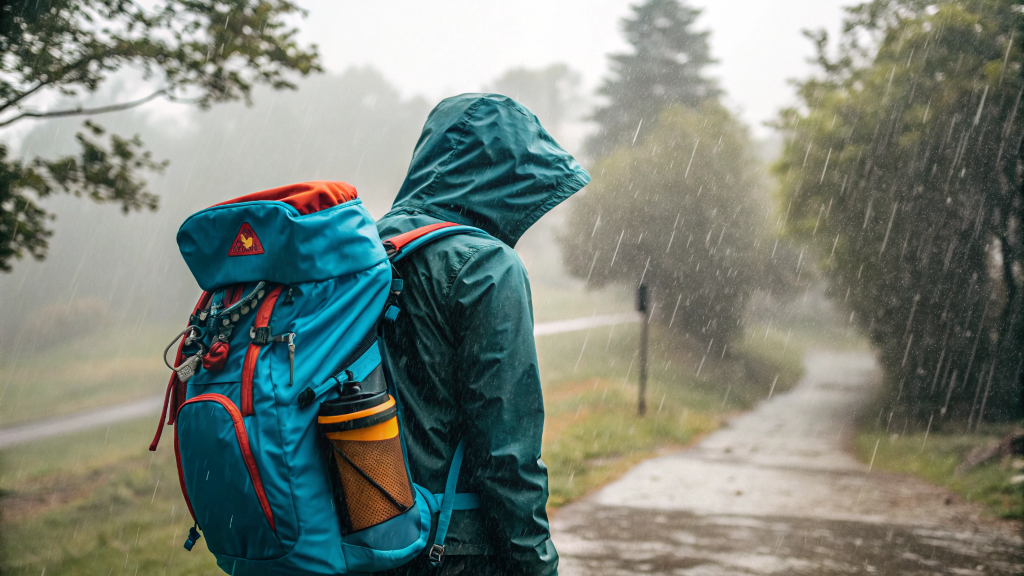
Hikers demand gear that is strong, lightweight, and environmentally responsible. Advancements in material science and manufacturing technology are redefining what’s possible for custom hiking backpacks.
Cutting-edge innovations in backpack materials include lightweight synthetic fabrics, eco-friendly materials, advanced harness systems for comfort, and enhanced waterproofing technologies. Brands that integrate these features can create superior products that stand out in a competitive market.
1. Lightweight, Durable Synthetic Fabrics
The evolution of materials and manufacturing technologies continues to expand customization possibilities for hiking backpacks. Lightweight, durable fabrics represent a significant area of innovation, with advanced synthetic materials offering superior strength-to-weight ratios. These materials enable the creation of backpacks that minimize burden while maximizing durability—a key selling point for brands targeting serious hikers and backpackers.
- Dyneema® and Cordura®: Ultra-lightweight yet highly abrasion-resistant materials.
- Ripstop nylon blends: Reinforced for superior tear resistance.
- Carbon fiber frames: Providing structural integrity while keeping weight minimal.
2. Sustainable Materials for Eco-Conscious Consumers
Sustainable materials have gained particular prominence in recent years, reflecting growing environmental awareness among consumers. According to market analyses, eco-friendly trends constitute a significant driver in the hiking backpacks market. Manufacturers offering options like recycled polyester from plastic bottles or recycled nylon from discarded fishing nets enable brands to align with consumer values while maintaining performance standards. The integration of bluesign® certifications or Fair Trade practices provides additional differentiation for environmentally conscious brands.
- Recycled polyester (RPET): Made from plastic bottles, reducing environmental impact.
- Reclaimed nylon (Econyl®): Sourced from discarded fishing nets and industrial waste.
- bluesign®-certified textiles: Ensuring responsible production processes.
3. Advanced Harness Systems for Comfort & Load Balance
Advanced harness systems and load distribution technologies represent another area where customization adds significant value. Innovations in back panel ventilation, adjustable torso lengths, and load-bearing systems enhance comfort during extended wear, addressing specific user needs based on activity type and duration.
- Ergonomic shoulder straps: Designed for even weight distribution.
- Adjustable torso lengths: Enhancing fit for different body types.
- Ventilated back panels: Improving airflow and reducing heat buildup.
4. Waterproofing Technologies for All-Weather Protection
Waterproofing technologies have advanced considerably, with TPU (thermoplastic polyurethane), PVC (polyvinyl chloride), and RPET (recycled polyethylene terephthalate) offering varying levels of water resistance and environmental impact. These materials allow for customization based on specific use cases, from light water resistance for casual hiking to complete waterproofing for extreme conditions.
- TPU & PVC coatings: Offering varying levels of water resistance.
- Seam-sealed construction: Preventing leaks and water infiltration.
- Hybrid waterproof-breathable membranes: Keeping gear dry while allowing airflow.
By leveraging these innovations, brands can develop premium, high-performance hiking backpacks that appeal to both casual and professional outdoor enthusiasts.
How OEM/ODM Partnerships Benefit Your Brand?
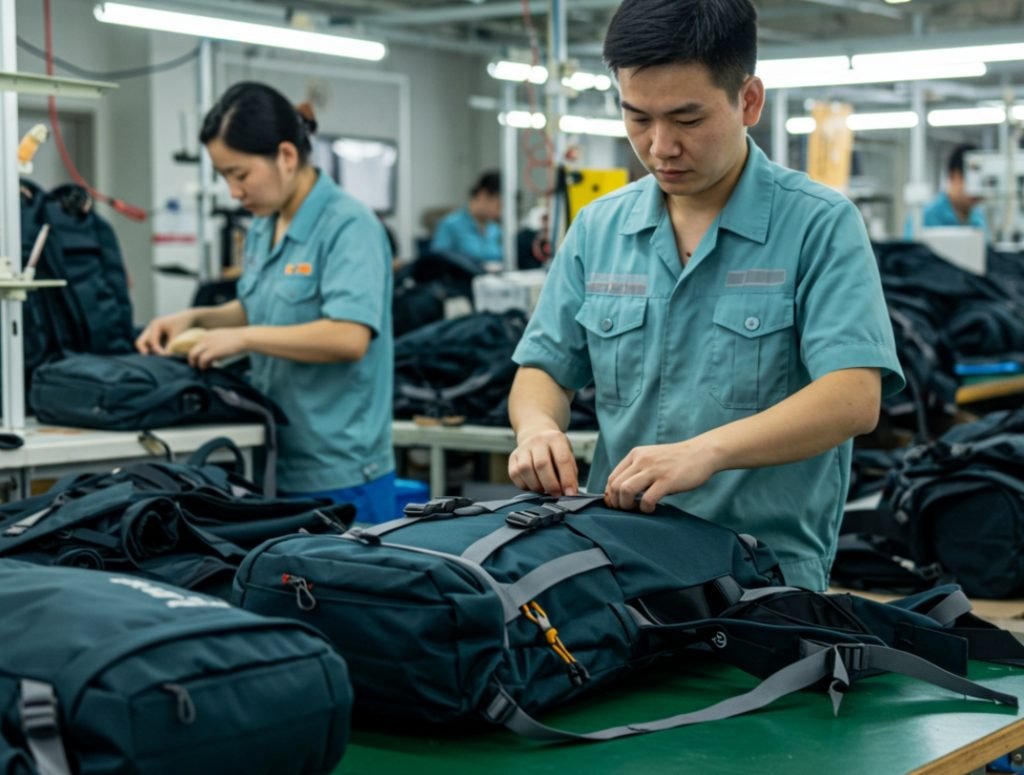
Partnering with an experienced OEM/ODM manufacturer is a game-changer for brands looking to produce high-quality customized hiking backpacks efficiently and cost-effectively.
OEM/ODM manufacturers provide cost-effective production, faster time-to-market, and streamlined logistics, allowing brands to focus on design, marketing, and distribution while leaving manufacturing complexities to industry experts.
1. Cost Savings & Scalability
- Economies of scale: Bulk production significantly reduces per-unit costs.
- Access to supply chains: Manufacturers leverage existing networks to minimize material costs.
- Lower overhead: No need to invest in expensive production infrastructure.
2. Faster Production Cycles
- Quick turnaround: Most manufacturers offer 20-25 day production timelines.
- Prototype and sampling services: Ensuring quality before mass production.
- Agility: Faster response to market trends and seasonal demands.
3. Streamlined Logistics & Quality Control
- Sourcing and procurement: Manufacturers handle material selection and purchasing.
- Quality assurance: Rigorous inspections to maintain product standards.
- Regulatory compliance: Ensuring products meet industry safety and performance requirements.
By leveraging OEM/ODM partnerships, brands can achieve high efficiency, superior quality, and competitive pricing in the hiking backpack market, positioning themselves for sustained success.
Customization Options That Add Value to Hiking Backpacks
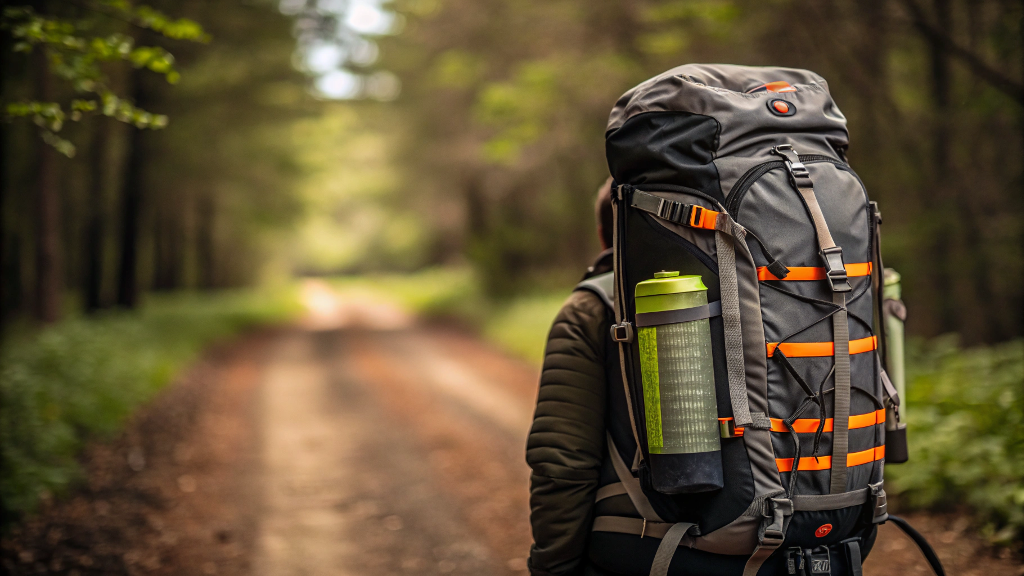
Customization is key to differentiation in the hiking backpack market. Brands that tailor their products to specific audiences stand out and drive customer loyalty.
Customization elements include branding, functional enhancements, material selection, size variations, and tech integrations. These options help brands cater to unique market segments and boost product appeal.
1. Branding Elements
- Logos, color variations, and custom prints allow brands to create a recognizable identity on the trail and in retail settings.
- Hardware customization (branded buckles, zipper pulls, and straps) adds a unique touch that reinforces brand consistency.
2. Functional Enhancements
- Specialized compartments for hydration packs, laptops, and trekking gear improve user convenience and usability.
- Compression straps and gear loops add versatility, allowing users to attach extra equipment like sleeping bags or trekking poles.
- Ventilated back panels and adjustable shoulder straps enhance comfort and ergonomics for long hikes.
3. Material & Size Variations
- Multiple fabric options (nylon, polyester, ripstop, recycled materials) offer different levels of durability and weight.
- Adjustable sizes for different user needs, such as lightweight daypacks for casual hikers and large expedition packs for extended adventures.
- Weather-resistant finishes, including water-repellent coatings, ensure longevity and resilience in extreme conditions.
4. Tech Integrations
- Solar charging panels for outdoor enthusiasts who rely on GPS devices or smartphones.
- RFID-blocking pockets for security-conscious travelers, protecting personal data from electronic theft.
- Smart compartments with USB ports for easy device charging on the go.
By incorporating these elements, brands can design hiking backpacks that not only look great but also meet the functional needs of different target consumers.
The Step-by-Step OEM/ODM Process for Custom Hiking Backpacks
Partnering with an OEM/ODM manufacturer simplifies the production of high-quality custom hiking backpacks. Understanding the step-by-step process helps brands maximize efficiency and product quality.
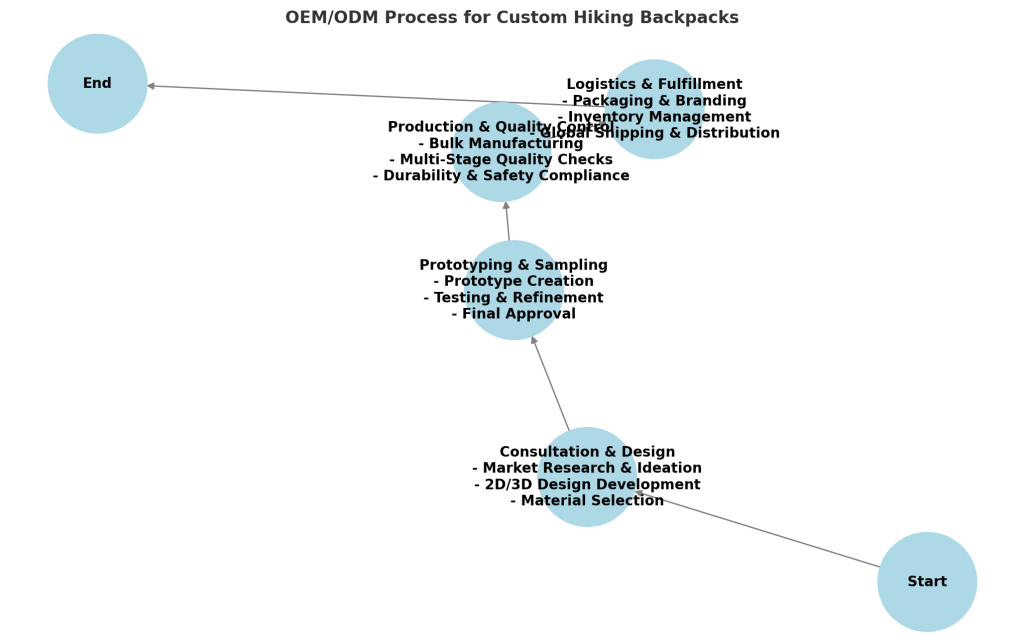
1. Consultation & Design
- Market Research & Ideation: Brands work with manufacturers to define product specifications based on market demand and consumer trends.
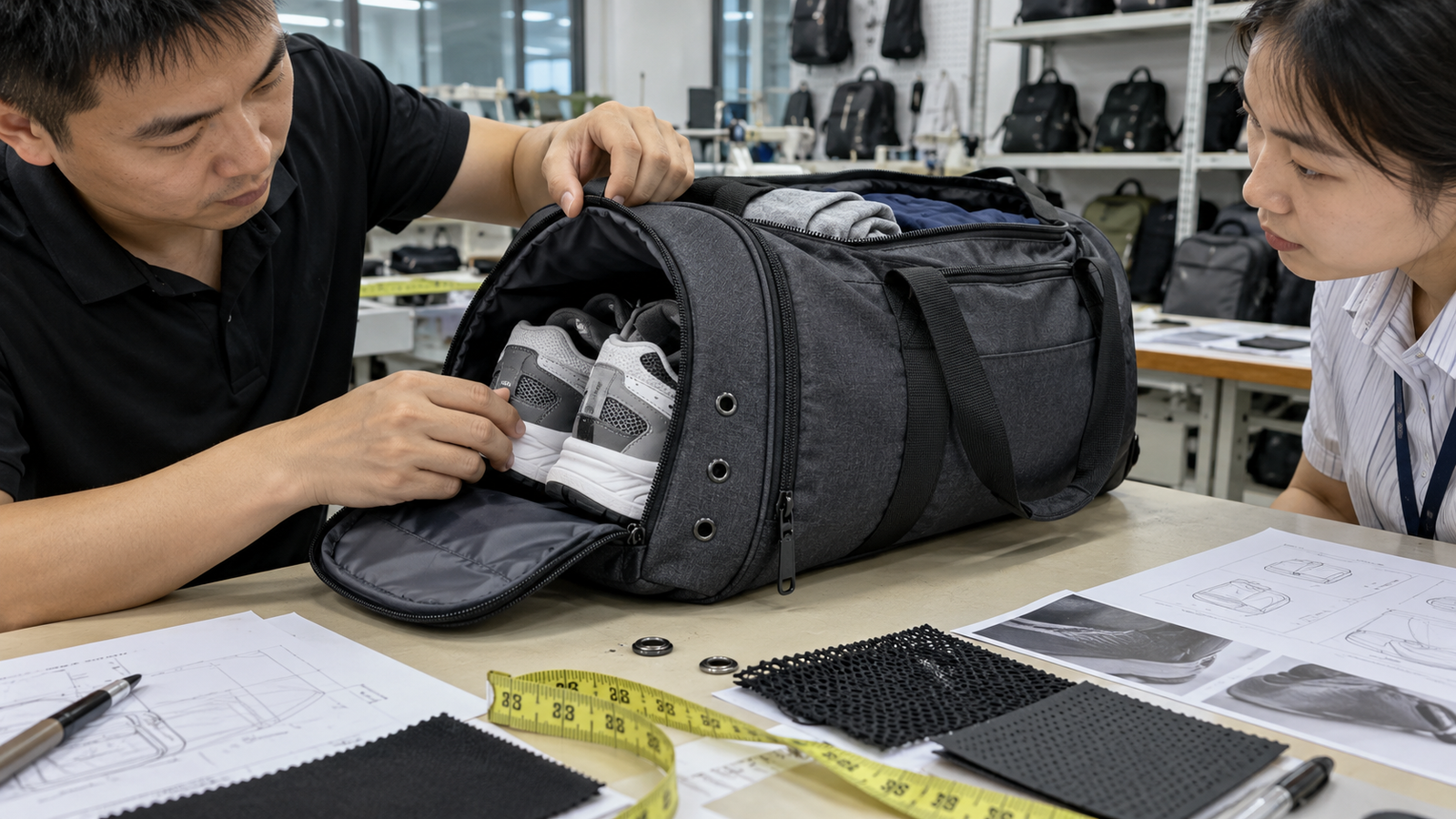
- 2D/3D Design Development: Detailed blueprints and digital prototypes are created to align with brand identity and functionality requirements.
- Material Selection: Choosing fabrics, zippers, buckles, and reinforcements that balance durability, aesthetics, and sustainability.
2. Prototyping & Sampling
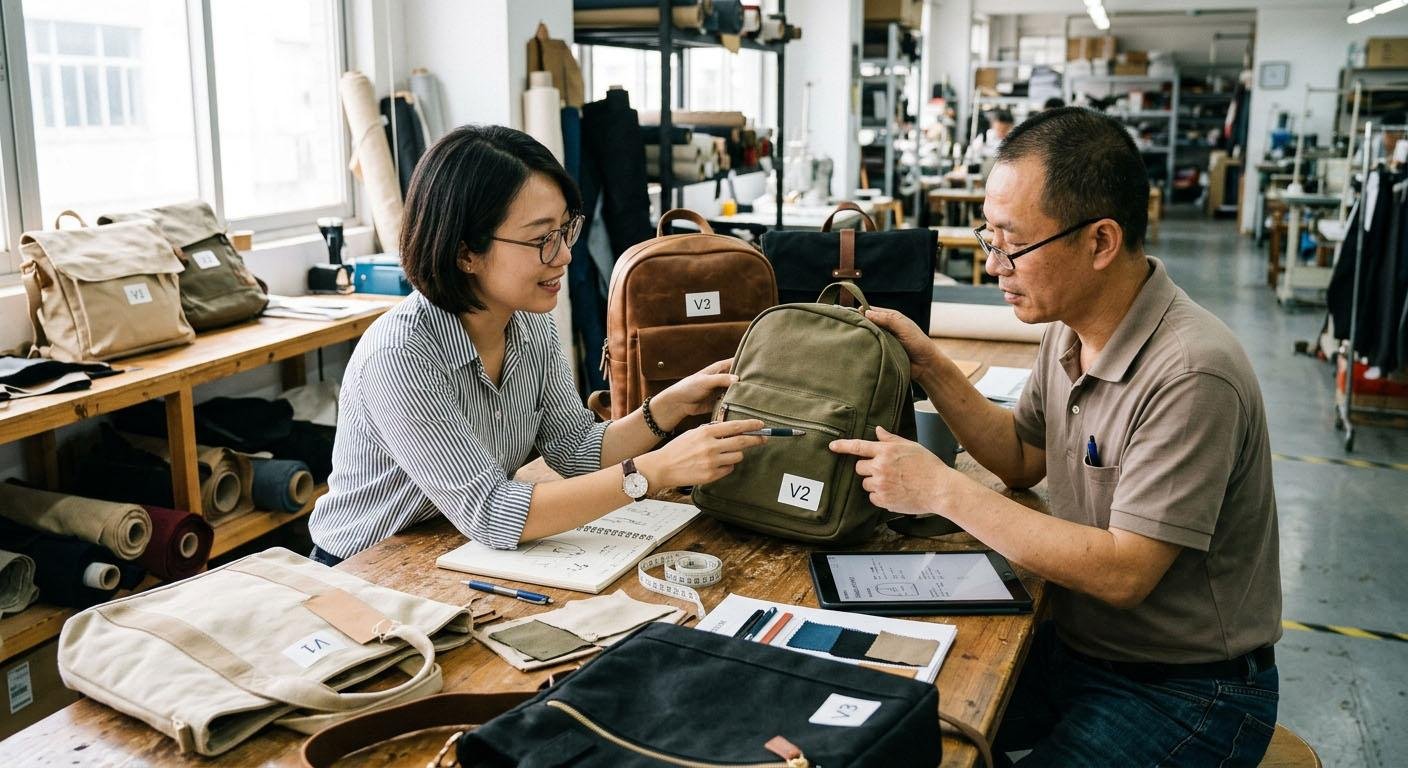
- Prototype Creation: A small batch of samples is manufactured to assess quality, fit, and functionality.
- Testing & Refinement: Adjustments are made based on performance testing and brand feedback before moving to mass production.
- Final Approval: The brand signs off on the final sample before full-scale manufacturing begins.
3. Production & Quality Control
- Bulk Manufacturing: Mass production is carried out with strict quality assurance protocols.
- Multi-Stage Quality Checks: Inspections at every stage—fabric cutting, stitching, assembly, and final packing—to ensure consistency.
- Durability & Safety Compliance: Backpacks undergo stress testing to verify strength, weight capacity, and resistance to wear and tear.
4. Logistics & Fulfillment
- Packaging & Branding: Custom packaging and labeling options help maintain brand identity.
- Inventory Management: Efficient warehousing and stock control systems ensure brands receive their products on time.
- Global Shipping & Distribution: Manufacturers handle freight forwarding, customs clearance, and last-mile delivery to multiple markets.
By following these steps, brands can streamline production, minimize costs, and bring their customized hiking backpacks to market faster.
People Also Ask: Additional Questions

What are the most popular customization options for hiking backpacks?
Logos, custom colors, unique hardware, specialized compartments, and tech integrations like solar charging and RFID-blocking pockets are among the most sought-after customization options.
How does customization impact the pricing of hiking backpacks?
Customization typically increases the price of hiking backpacks due to the additional design, material, and production costs involved. However, premium pricing can be justified by the unique features and enhanced performance that customization provides. Brands often balance these costs by targeting niche markets willing to pay for specialized products.
What are the benefits of using sustainable materials in customized hiking backpacks?
The benefits include reduced environmental impact, alignment with consumer values, and enhanced brand reputation. Sustainable materials like recycled polyester and nylon conserve resources, reduce waste, and support a circular economy. These eco-friendly options also appeal to environmentally conscious consumers, potentially increasing brand loyalty and market share.
Can customized hiking backpacks be made with specific safety features?
Yes, customized hiking backpacks can incorporate specific safety features such as anti-theft designs, reflective materials for visibility, and reinforced stitching for added durability. Manufacturers can also integrate safety-focused components like emergency whistle attachments or built-in first aid kits to enhance user safety during outdoor activities.
How long does it typically take to produce a customized hiking backpack?
Production times for customized hiking backpacks vary depending on the complexity of the design and the manufacturer’s capacity. Generally, production timelines range from 20 to 60 days, with some manufacturers offering expedited services for urgent orders. The design and prototyping phase typically precedes production, adding an additional 1-3 weeks to the overall timeline.
Conclusion & Next Steps for Your Brand

The demand for customized hiking backpacks continues to grow, offering brands significant opportunities for market expansion.
Investing in customization, leveraging innovative materials, and partnering with OEM/ODM manufacturers ensure long-term success.
By prioritizing durable materials, ergonomic design, and smart technology integration, brands can create hiking backpacks that stand out in a competitive market. Customization is not just a trend—it’s a key strategy to elevate brand value, increase customer engagement, and drive higher sales.
For brands seeking expert manufacturing solutions, OSGOODWAY Bag offers premium customization services to help bring your vision to life.
📩 Contact us today to start designing your custom hiking backpack line and gain a competitive edge in the outdoor gear market!