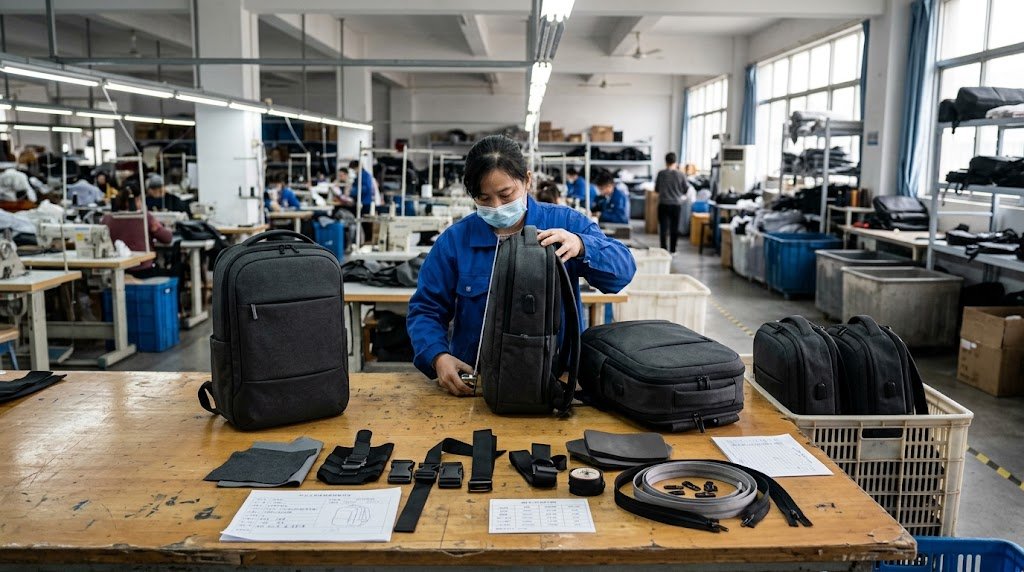
The core difference between a hiking backpack and a daypack comes down to load management, capacity, and intended trip duration. A daypack is a lightweight, typically frameless bag (usually 15L to 30L) built for single-day excursions with minimal gear. In contrast, a hiking backpack is a heavy-duty, high-capacity pack (30L to 65L+) engineered with rigid internal frames, advanced suspension systems, and padded hip belts to comfortably distribute heavy loads over multiple days on the trail.
Whether you are an outdoor enthusiast gearing up for a weekend trek or a brand founder planning to expand your technical bag product line, understanding these structural differences is critical.
Most guides only scratch the surface of pocket placements and liters. In this comprehensive guide, we take you deeper. Drawing from years of hands-on manufacturing experience, we break down the exact differences between these two packs—from trail-ready consumer features right down to the Bill of Materials (BOM), fabric durability, and tooling costs on the factory floor.
What Are Core Differences Between a Hiking Backpack and a Daypack?
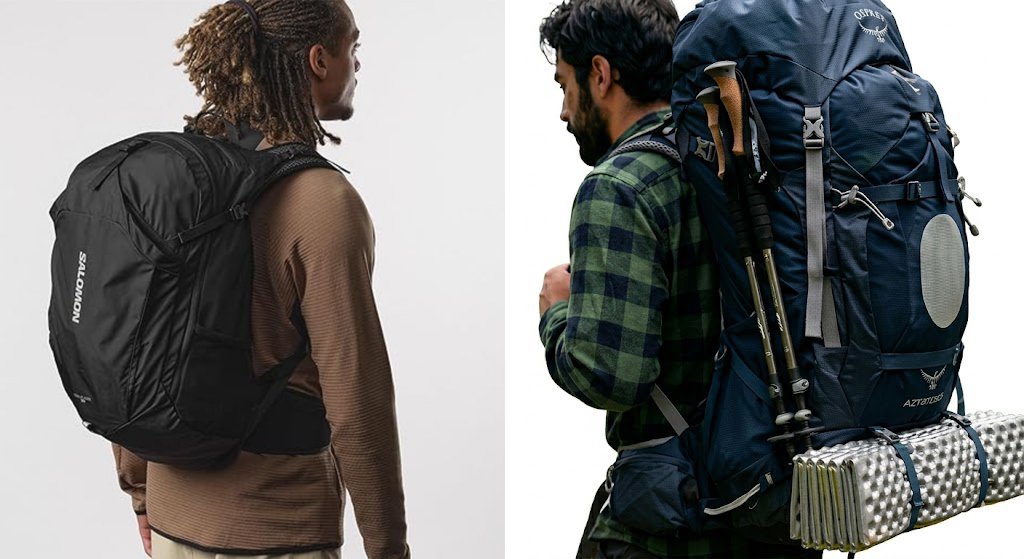
The primary difference is that daypacks are frameless, low-capacity bags (15L-30L) designed for carrying under 15 lbs on single-day trips, while hiking backpacks feature rigid internal frames, 30L-65L+ capacities, and load-bearing hip belts engineered for multi-day treks carrying over 30 lbs.
At a Glance: Hiking Backpack vs. Daypack Specifications
| Feature / Specification | Daypack (Everyday & Short Trail) | Hiking Backpack (Multi-Day & Technical) |
|---|---|---|
| Capacity (Volume) | 15L – 30L | 35L – 65L+ |
| Base Weight (Empty) | 0.5 lbs – 2 lbs (0.2kg – 0.9kg) | 3 lbs – 6 lbs+ (1.3kg – 2.7kg+) |
| Load Capacity | Under 15 lbs (approx. 7 kg) | 30 lbs to 50+ lbs (13 kg to 22+ kg) |
| Frame & Suspension | Frameless or simple padded mesh / EVA foam back panel. Minimal to no hip belt. | Internal aluminum stays/frame, load lifters, and heavily padded 3D EVA hip belts for weight transfer. |
| Core Materials | 210D – 400D Polyester or Nylon, standard zippers, basic nylon webbing. | 210D – 420D Ripstop Nylon, high-tensile Cordura, heavy-duty YKK zippers (e.g., #8 or #10), reinforced bartack stitching. |
| Hardware | Standard zippers and plastic buckles. | Heavy-duty YKK zippers (#8 or #10), reinforced buckles. |
| Best For | Daily commutes, school, single-day trail hikes, travel personal items. | Multi-day trekking, backcountry camping, carrying heavy gear (tents, sleeping bags, stoves). |
The 4 Core Structural Differences Explained
While basic comparisons outline the parameters, the true distinction between these bags lies in how they are engineered to manage weight and survive harsh environments.
1. Capacity and Volume: How Much Gear Can You Carry?
The fundamental difference is that daypacks offer 15L to 30L of volume for single-day lightweight essentials, whereas hiking backpacks provide 30L to 65L+ to safely accommodate multi-day survival gear and heavy equipment.
- The Trail Experience: A daypack holds your water and jacket for an 8-hour hike. A 60L hiking pack is essentially a mobile campsite on your back, fitting tents, sleeping bags, and multi-day food rations.
- The Factory Reality: Scaling a bag from 25L to 60L is not just about using more fabric. From a pattern-making perspective, expanding capacity requires recalculating the center of gravity and heavily reinforcing the bottom gussets. A poorly patterned 60L bag will sag, shifting the weight away from the wearer and causing severe spinal strain, which is why structural engineering at the factory level is critical.
2. Suspension Systems and Frames: How Is Weight Managed?
Daypacks are generally frameless bags utilizing simple foam back panels for light loads under 15 lbs. Hiking backpacks integrate internal aluminum frames, load lifters, and padded hip belts to transfer heavy loads directly to the pelvis.
- The Trail Experience: Because daypacks carry minimal weight, your shoulders bear the brunt of the load. In contrast, a technical hiking pack actively shifts up to 80% of the physical weight off your shoulders, preventing fatigue on rough terrain.
- The Factory Reality: This is where manufacturing complexity peaks. While a daypack relies on a basic EVA foam sheet, a technical hiking pack requires an Internal Frame (aluminum stays or molded PE boards) and thick, 3D-molded hip belts. For bag brands, integrating this advanced suspension system significantly increases the Bill of Materials (BOM) length, assembly time, and the initial tooling costs required for molded components.
3. Materials and Durability: What Fabrics Survive the Trail?
Daypacks utilize standard 210D nylon or polyester for urban and light trail use. Hiking backpacks require high-tensile 420D+ Ripstop Nylon or Cordura, paired with heavy-duty hardware like YKK #8 or #10 zippers to withstand extreme load tension.
- The Trail Experience: Hiking backpacks feel noticeably stiffer and more rugged. They are built to survive being dragged across granite boulders or snagged by pine branches without tearing.
- The Factory Reality: Standard 210D polyester easily passes QC for daypacks. However, technical packs demand high-denier fabrics to prevent puncture propagation. Furthermore, the extreme lateral tension caused by carrying 40+ lbs means manufacturers must abandon standard zippers. Proper weight capacity testing on the factory floor will quickly expose standard zippers, which burst under heavy trail loads, making the upgrade to YKK #8 or #10 a non-negotiable cost.
Deep Read:
What Is the Best Material for a Hiking Backpack? (Data Comparison)
Are Hiking Backpacks Waterproof? Find Out the Truth

4. Features and Accessibility: What Are the Functional Designs?
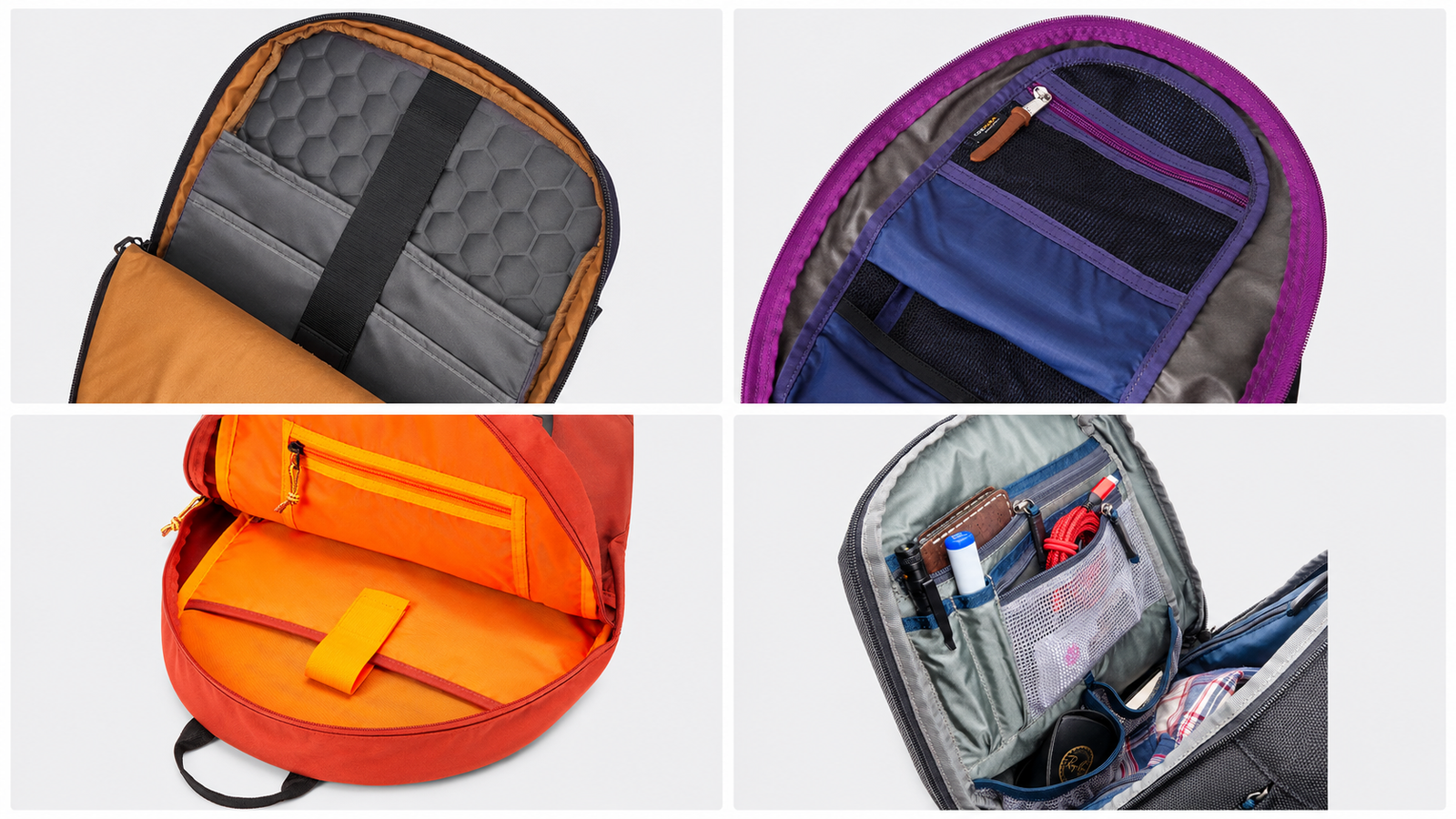
Daypacks prioritize convenience with padded laptop sleeves and basic organizers, whereas hiking backpacks act as outdoor toolkits featuring internal hydration sleeves, ice axe loops, and dedicated sleeping bag compartments.
- The Trail Experience: Daypacks are designed for hybrid use (commuting and hiking). Hiking backpacks strip away office features, offering a separate bottom compartment specifically designed to store and compress a sleeping bag without unpacking the entire bag.
- The Factory Reality: The sewing construction differs drastically based on these features. A hiking backpack requires complex internal routing for a hydration sleeve and precise seam binding for isolated, load-bearing compartments. Adding a separate bottom sleeping bag compartment requires reinforced bartack stitching at all stress points. Without a detailed Tech Pack specifying these reinforcements, the structural integrity will fail when the compartment is fully stuffed.
A Quick Note on Manufacturing: For outdoor brands developing new product lines, the shift from a standard daypack to a technical hiking backpack involves a significantly more complex Bill of Materials (BOM). The addition of internal aluminum frames, adjustable torso lengths, and heavy-duty hardware directly impacts tooling costs and factory assembly time.
Which Backpack Should You Source for Your Target Market?
As a brand founder, picking the wrong pack to develop will kill your budget. Let’s break down the exact scenarios.
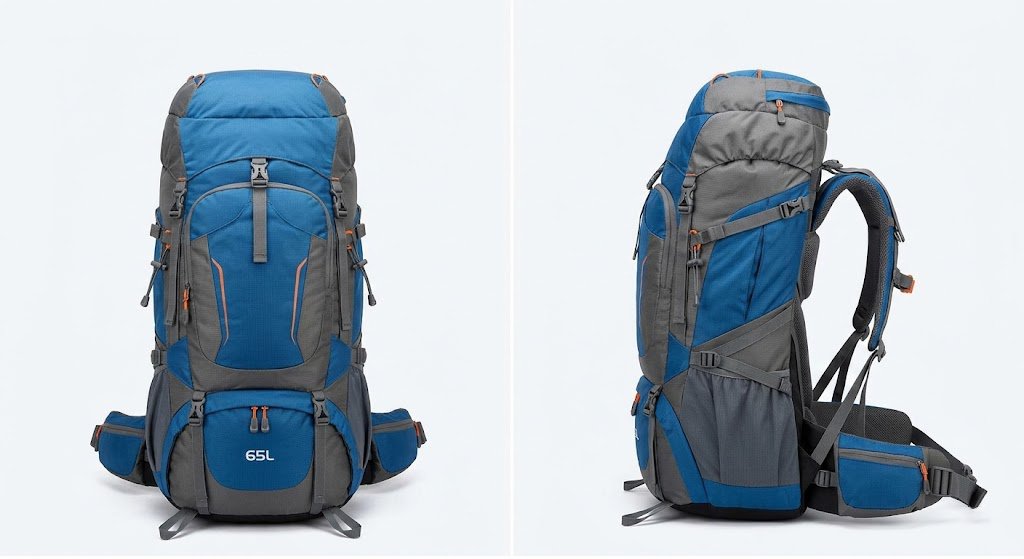
Source a 15L-25L daypack for urban commuters needing lightweight daily carry. If your target audience requires multi-day outdoor survival gear, you must invest in developing a 45L-65L+ hiking backpack with a rigid internal frame and padded hip belt.
What is the ideal use case for a frameless daypack?
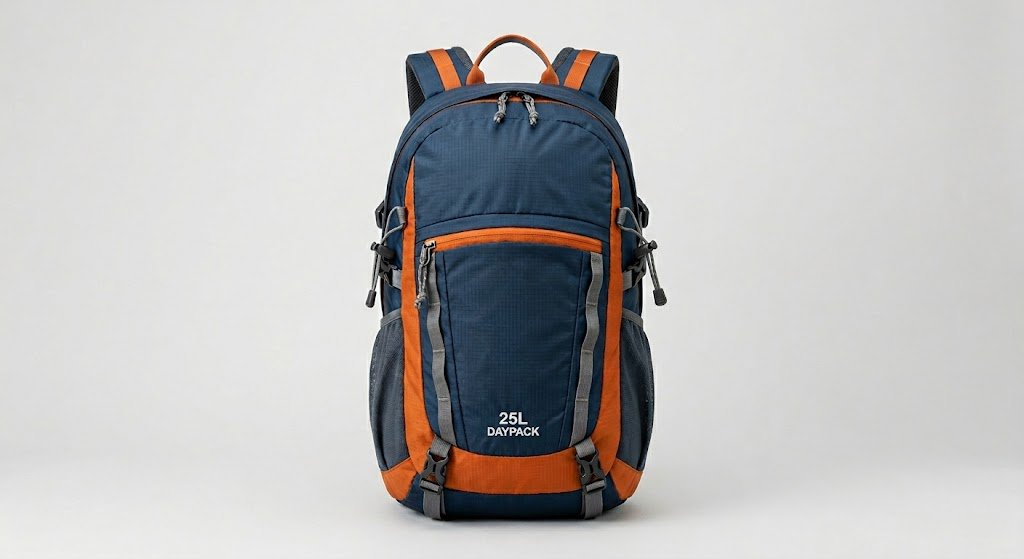
A frameless 25L daypack is ideal for light weekend trails. We stitch these with 210D nylon, supporting exactly 15 lbs before shoulder seams start stressing.
- Target Audience: Urban commuters, students, and 4-hour trail hikers.
- Factory Setup: Extremely fast to assemble. No internal frames mean we can run these through standard sewing lines without specialized heavy-duty machines.
- Cost Efficiency: No custom molds required. You can launch a brand using open-market hardware and standard EVA foam back panels.
When must you upgrade to a full-size hiking backpack?
For overnight trekking lines, you must build a 45L+ pack. Our factory reinforces these with 420D Ripstop and YKK #10 zippers to handle 40lb loads safely.
| Market Scenario | Recommended Pack Type | Factory Build Requirement |
|---|---|---|
| City to Trail Hybrid | Technical Daypack (30L) | Hydration sleeve routing, sternum strap, basic webbing waist belt. |
| Multi-Day Backcountry | Hiking Backpack (55L+) | Internal aluminum stays, 3D molded hip belts, bottom sleeping bag zip. |
What Are the Hidden Manufacturing Differences Between a Daypack and a Technical Hiking Backpack?
For B2B buyers scaling their outdoor lines, skipping the manufacturing reality check will destroy your margins.
The core difference lies in structural engineering. Daypacks require minimal tooling and a basic 15-item BOM. Hiking backpacks demand 3D EVA molds, heavy-duty YKK #10 zippers, and strict 20kg drop tests, tripling your supply chain complexity and initial development costs.
Why Is the Bill of Materials (BOM) for a Hiking Pack Double the Size?
A 25L daypack uses about 15 raw materials. A 60L technical pack exceeds 50, requiring specialized POM buckles, load lifters, and composite frames.
- The Webbing and Hardware Trap: Standard daypacks use basic nylon webbing. A true hiking pack needs high-tensile, custom-dyed webbing and proprietary tension hooks to manage heavy loads.
- The Sourcing Reality Check: I remember a German buyer who tried to save $0.50 by ignoring our factory advice and swapping out Duraflex buckles for open-market plastic on a 55L pack. Half the batch snapped during their winter field testing because cheap plastic turns brittle below freezing.
- Multi-Layer Harness Systems: We don’t just stuff foam into the back panel. We have to source and laminate air-mesh, high-density EVA, and rigid PE boards to create a functional weight-bearing harness.
What Hidden Tooling Costs and Mold Fees Should Brand Founders Expect?
You cannot build a premium hiking line using open-market parts. You must budget for metal molds to create ergonomic 3D EVA back panels and custom hardware.
| Component | Standard Daypack Factory Reality | Technical Hiking Pack Tooling Cost |
|---|---|---|
| Back Panel | Flat-cut standard EVA foam ($0 tooling) | 3D heat-pressed ergonomic EVA ($800 – $1,500 mold fee) |
| Zippers | Generic #5 nylon coil ($0 tooling) | Custom YKK pullers for thick gloves ($200 – $400 mold fee) |
| Plastic Hardware | Stock buckles from the open market ($0 tooling) | Injection-molded POM load lifters ($1,000+ mold fee) |
How Does Our Factory Execute Weight Capacity and QC Drop Tests?
A blown seam in the wilderness is a liability. At Osgoodway, we subject every 60L pack to a 20kg dynamic drop test and machine-pull the bartack joints.
- Tensile Testing: A frameless daypack passes our QC at a 7kg load. For a hiking pack, we enforce 3-4 SPI (stitches per inch) and heavy bartack stitching at the shoulder strap roots. We clamp these joints into a machine and pull them to withstand 50kg of sheer force. If the thread snaps, the batch is rejected.
- The 20kg Drop Test: We load the prototype with 20kg of dead weight and repeatedly drop it from a 1-meter height. If you try to use standard zippers instead of heavy-duty YKK #8 or #10 on the bottom sleeping bag compartment, the sheer lateral tension upon impact will blow the zipper teeth right off the tape.
Also read: How Much Does a Good Hiking Backpack Cost? (2025 Price Guide)
What Are the Most Common Sourcing Questions for Hiking and Daypacks?
Buyers often ask us to merge urban and trail features. Here is the reality of what actually works on the sewing line.
Most sourcing questions focus on waterproof limitations, airline carry-on dimensions, and multi-day volume sizing. At Osgoodway, we resolve these by matching factory PU coatings, rigid frame measurements, and exact BOM configurations to your target market’s demands.
Can a technical hiking backpack be used as an airline carry-on?
A 30L daypack easily passes as a carry-on, but a 50L pack fails because its rigid internal aluminum stays exceed the 22-inch airline height limit.
- The Daypack Reality: A frameless 15L-30L pack easily compresses to fit under a budget airline seat as a "personal item" (typically under 18 x 14 x 8 inches).
- The Hiking Pack Reality: You cannot squeeze a 55L pack into an overhead bin. The internal aluminum frame is fixed. Bending it to fit will permanently ruin the load-bearing ergonomics.
- Our Factory Solution: If your brand wants to market a hybrid "Travel & Trail" bag, I will advise you to drop the aluminum stays and use a removable high-density PE board instead.
Should I source a 100% waterproof hiking backpack?
Never build a fully waterproof 60L hiking pack. High-frequency welding ruins breathability and traps sweat. Stick to DWR coatings and include a rain cover.
| Feature | Urban Daypack Standard | Technical Hiking Pack Factory Spec |
|---|---|---|
| Water Resistance | PU coated 210D Nylon (survives 20 mins of light city rain). | DWR (Durable Water Repellent) treated 420D+ Ripstop Nylon. |
| Seam Construction | Standard stitched seams. Water will eventually seep through. | Standard stitched seams with a reinforced bottom drain hole. |
| Heavy Rain Solution | None required for typical urban commutes. | We design a dedicated bottom zip pocket containing a tethered 190T nylon rain cover. |
Final Verdict: Stop Guessing on Structural Engineering
The gap between a daypack and a technical hiking pack isn’t aesthetics—it’s structural engineering. You cannot fake a 60L load-bearing harness with cheap foam. At Osgoodway, we don’t just sew bags; we engineer reliability.
Stop guessing on mold fees, BOM complexities, and drop tests. Send your Tech Pack to us today), and let’s manufacture gear that actually survives the trail and protects your brand’s reputation.
Deep FAQ: The Sourcing Reality Check
1. Can I use a regular daypack for an overnight hiking trip?
Absolute nonsense. A standard 25L daypack is structurally engineered for a 15lb max load. If you stuff a tent, stove, and water bladder into it, the shoulder strap roots—which only have basic single-stitching—will tear out. We run tensile tests daily; a frameless daypack cannot redistribute 25lbs of dead weight. Your shoulders will be bruised by noon.
2. Does a higher fabric Denier (like 1000D) make a hiking backpack better?
Rookie mistake. Slapping 1000D Cordura all over a 60L pack makes it unnecessarily heavy and stiff as cardboard. In our sample room, we rely on 420D Ripstop Nylon for the main body of premium hiking lines. The woven grid stops puncture propagation (tears) without adding 2 lbs of dead weight to your BOM. Durability is about the weave pattern, not just raw thickness.
3. Are technical hiking backpacks just overpriced daypacks?
You are paying for the hardware and tooling. A cheap daypack uses open-market plastic buckles and standard #5 coil zippers. A technical hiking pack requires custom injection-molded POM load lifters, 3D EVA back panel molds, and YKK #10 zippers that won’t burst under a 40lb lateral tension. The factory BOM cost is literally triple. It is not marketing; it is physics.
4. Do frameless daypacks prevent a sweaty back better than large hiking packs?
Completely backwards. A frameless daypack collapses under weight and sticks flat against your sweaty spine. High-end hiking backpacks use a suspended tension mesh stretched over a curved internal aluminum frame. This creates a literal 2-inch air gap between your back and the bag. It adds about $4-$6 to the manufacturing cost, but it is the only genuine ventilation solution.
5. What makes a hiking backpack truly waterproof compared to a daypack?
、If a factory tells you their stitched 60L pack is 100% waterproof, they are lying. Water will always find its way through the thousands of needle holes in the seams during a downpour. Instead of wasting your budget seam-taping 50 internal joints, we use a DWR coating on the fabric and design a dedicated bottom zip pocket with a tethered nylon rain cover. It’s cheaper to manufacture and actually saves your gear on the trail.