


Spills, pets, and daily wear are ruining your car’s interior. You want to protect your investment, but cheap covers don’t last. Here’s how to choose a durable protector.
To choose a long-lasting seat protector, focus on durable materials1 like heavy-duty polyester or neoprene. Ensure it has a custom or semi-custom fit for your vehicle and features like water resistance and reinforced stitching. This guarantees maximum protection and longevity for your car’s seats.
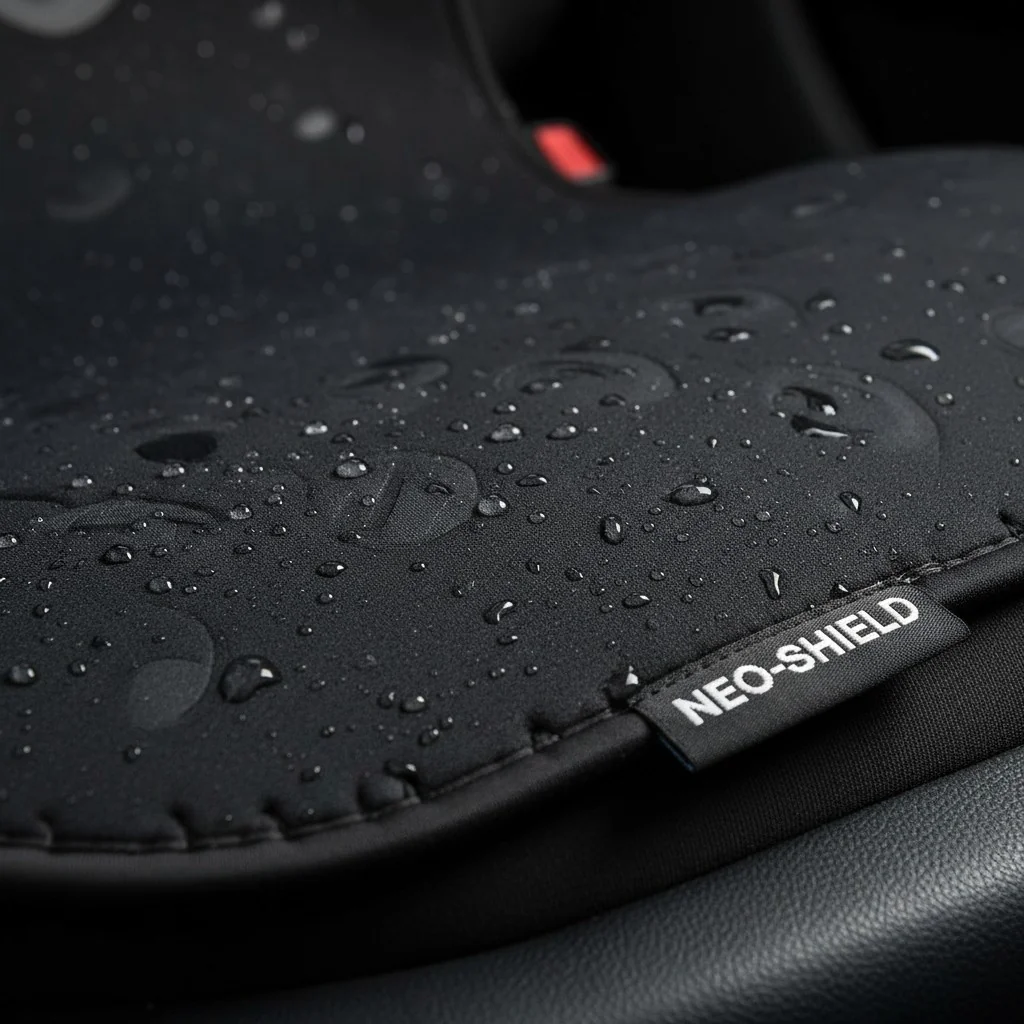
Choosing the right seat protector can feel overwhelming, but it’s a crucial decision for maintaining your vehicle’s value and appearance. As a bag manufacturer, I’ve spent years working with durable fabrics and custom designs, and the same principles apply here. A good seat protector isn’t just a piece of fabric; it’s an investment in your car’s future. Let’s break down what you need to look for to make a smart choice that will protect your seats for years to come.
[claim claim=”All car seat protectors are waterproof.” istrue=”false” explanation=”Many seat protectors are water-resistant, but not all are fully waterproof. Materials like neoprene offer high water resistance, while basic polyester might only handle minor spills.”]
[claim claim=”A durable seat protector can increase a car’s resale value.” istrue=”true” explanation=”By protecting the original upholstery from stains, fading, and wear, a high-quality seat protector helps maintain the car’s interior in pristine condition, which is a key factor for resale value.”]
Why Do You Need a Durable Seat Protector for Your Car?
Your car’s resale value is dropping with every stain and scuff. Cheap covers tear easily, costing you more in the long run. A durable protector is a smart investment.
You need a durable seat protector to maintain your car’s interior and resale value. It protects against wear, tear, spills, and pet damage, saving you from costly cleaning or repairs and preserving the original upholstery for years to come.
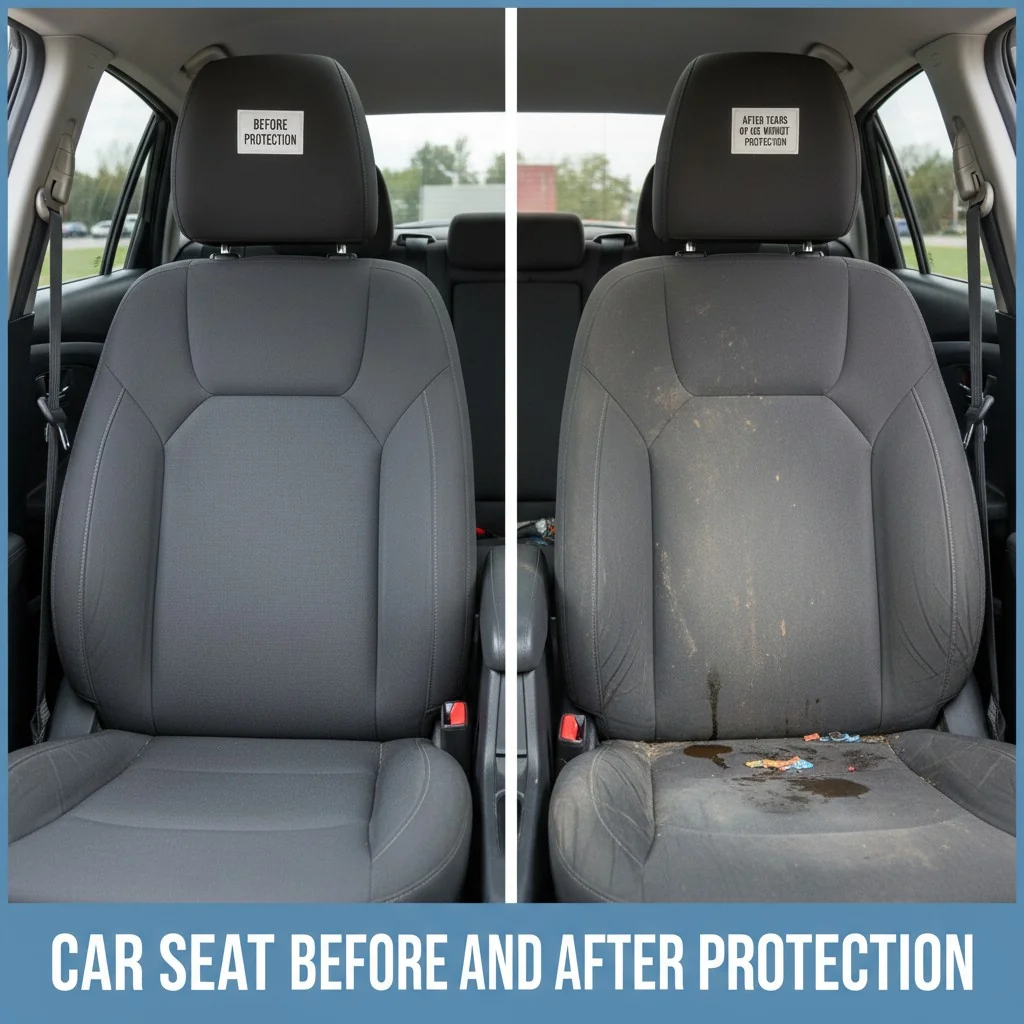
I’ve seen a growing trend among my clients who are expanding into automotive accessories. They realize that consumers are no longer just buying cars; they are investing in them. This shift means people are paying more attention to preserving their vehicle’s condition, especially the interior. A durable seat protector is a frontline defense.
The True Cost of Protection
It’s tempting to grab the cheapest option, but in my experience, that’s a costly mistake. Low-cost protectors often use thin materials that tear, fade, and lose their shape quickly. This means you’ll be buying a replacement in just a few months. A high-quality protector, on the other hand, is a one-time purchase that offers better value over time. It’s made from stronger materials and includes features that provide real, long-lasting protection.
Preserving Your Investment
Think about the long-term benefits. A clean, damage-free interior is one of the biggest factors in a car’s resale value. Here’s how a good protector pays for itself:
| Feature of a Durable Protector | Long-Term Value |
|---|---|
| Stain & Spill Resistance | Prevents permanent marks on upholstery. |
| UV protection2 | Stops fabric or leather from fading and cracking. |
| Tear & abrasion resistance3 | Protects from pet claws, keys, and daily wear. |
| Maintained Appearance | Keeps the interior looking new and well-cared-for. |
[claim claim=”Seat protectors are only for people with pets or children.” istrue=”false” explanation=”While great for families and pet owners, seat protectors also protect against daily wear and tear from commuting, spills from coffee or food, and sun damage, making them useful for any car owner.”]
[claim claim=”The automotive accessory market is experiencing significant growth.” istrue=”true” explanation=”The market is expanding as more vehicle owners focus on maintenance, customization, and preserving their car’s longevity and resale value, driving demand for products like seat protectors.”]
What Key Features Should You Look for in a Long-Lasting Seat Protector?
Overwhelmed by options for seat protectors? Many promise durability but fail quickly. I’ll show you the exact features that truly matter for a long-lasting product.
Look for key features like water-resistant coatings, UV protection to prevent fading, non-slip backing to keep it in place, and reinforced stitching4 on seams and straps. These elements ensure the protector withstands daily use and provides reliable, long-term protection.
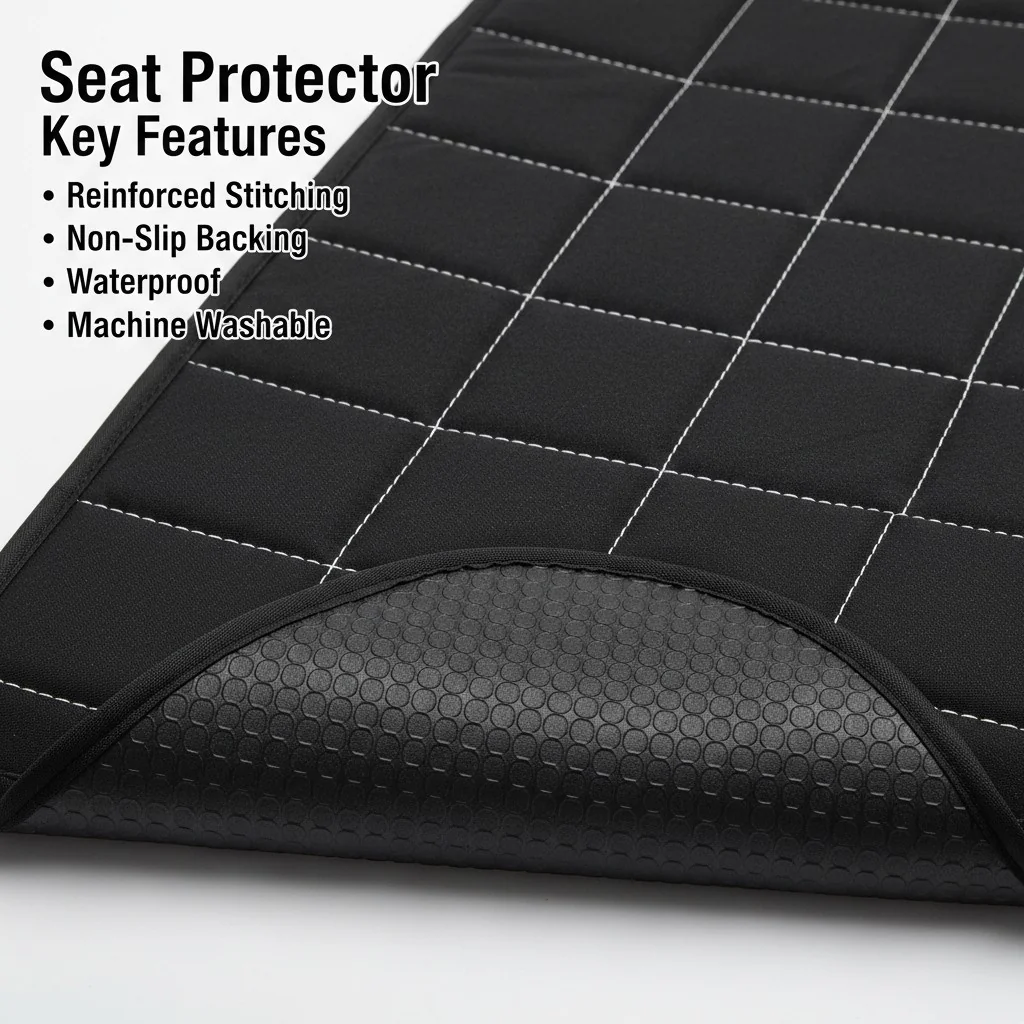
When I design a custom bag for a client, we focus on the small details that make a big difference in durability. The same logic applies to seat protectors. It’s not just about the main fabric; it’s about how the product is constructed and the functional features it includes. A well-made protector is a system where every part works together to provide maximum longevity.
Beyond the Fabric: Construction Details
A protector is only as strong as its weakest point. That’s why you need to look closely at its construction.
- Reinforced Stitching: Seams, especially around straps and buckles, are high-stress areas. I always look for double-stitching or bar-tack stitching in these spots. This prevents straps from ripping off under pressure.
- Non-Slip Backing: A protector that slides around is not only annoying but also ineffective. A good non-slip backing, often made of rubber dots or a textured material, grips the seat to keep the cover securely in place.
- Sturdy Fasteners: Flimsy plastic buckles will crack and break. Look for protectors with robust buckles and wide, adjustable straps that can be tightened for a snug fit.
Essential Protective Features
These features are non-negotiable for a truly durable and effective seat protector.
| Feature | Why It’s Important |
|---|---|
| water resistance5 | Protects against spills from coffee, water, or kids’ drinks. |
| UV Protection | Prevents the sun from fading and degrading the protector and the seat underneath. |
| Abrasion Resistance | Withstands friction from getting in and out of the car, as well as from pet claws. |
| easy to clean6 | A machine-washable or wipe-clean surface makes maintenance simple. |
[claim claim=”A non-slip backing is a luxury feature, not a necessary one.” istrue=”false” explanation=”A non-slip backing is essential for safety and effectiveness. It prevents the protector from shifting during driving, which could be distracting and leave parts of the seat exposed.”]
[claim claim=”Reinforced stitching significantly increases the lifespan of a seat protector.” istrue=”true” explanation=”Stress points like strap attachments are prone to tearing. Reinforced stitching distributes the load and prevents the seams from failing, which is a common issue in cheaper products.”]
What Are the Different Types of Seat Protectors, and Which One is Right for You?
A universal cover might not fit your needs. Choosing the wrong type means poor protection and a messy look. Let’s find the perfect style for your customers’ lifestyles.
The right type depends on your needs. Universal protectors offer basic coverage, while semi-custom and custom-fit options provide a snug, tailored look. Hammock-style protectors are great for pets, and single-seat covers are perfect for protecting just the driver’s seat.
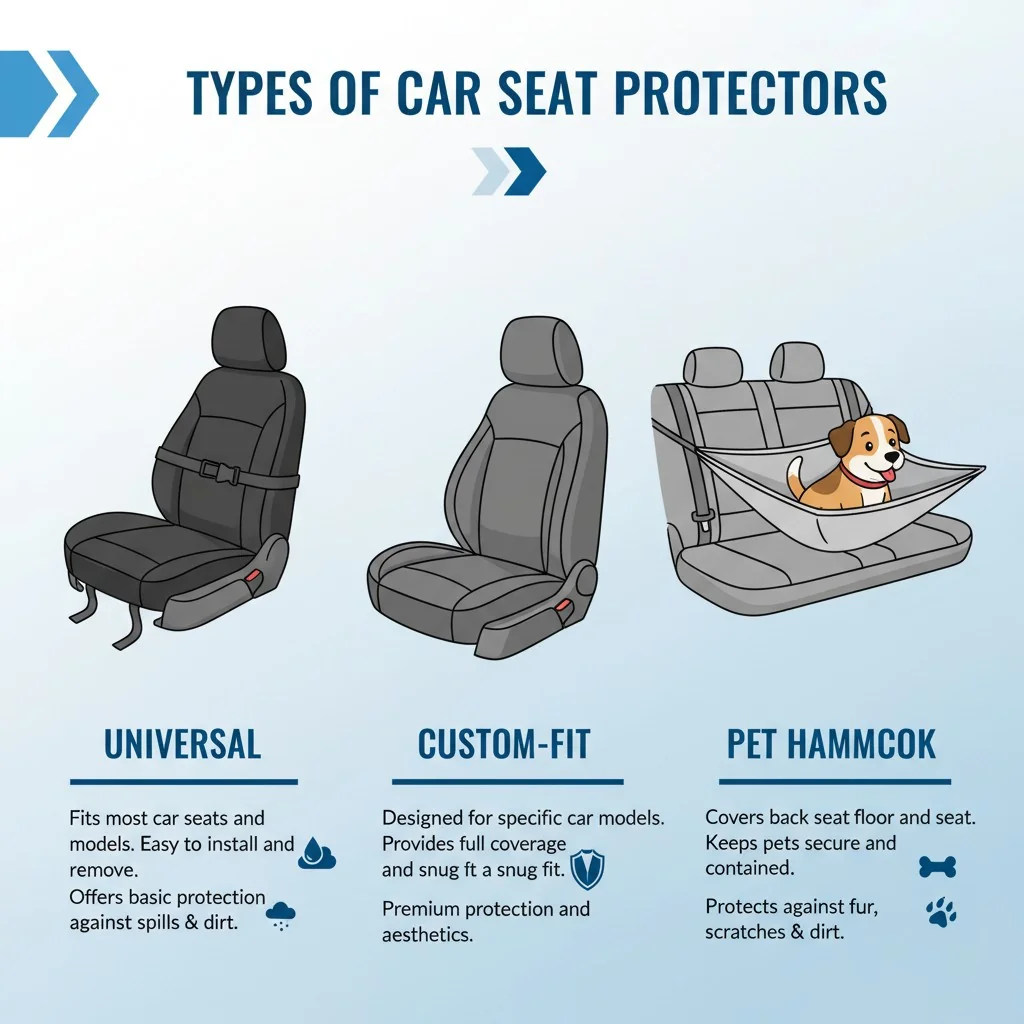
As a product developer, I know that one size rarely fits all. The best product is one that is tailored to a specific need. The same is true for seat protectors. The choice depends entirely on the user’s lifestyle, vehicle, and what they are trying to protect against. For your e-commerce store, offering a variety of types can help you cater to a wider audience.
Matching the Protector to the Lifestyle
Understanding your customer is key. A daily commuter has different needs than a family with three kids or an outdoor adventurer.
- For the Daily Commuter: A simple, single front seat cover might be enough. It protects the most-used seat from wear and tear without the need for a full set.
- For Families: A full set of protectors for front and back seats is ideal. Look for easy-to-clean materials and full coverage to handle spills, crumbs, and scuff marks from kids’ shoes.
- For Pet Owners: A hammock-style protector for the back seat is a must-have. It not only protects the seat but also creates a barrier to keep pets from jumping into the front.
A Quick Guide to Protector Types
| Protector Type | Best For | Key Advantage |
|---|---|---|
| Universal Fit | Budget-conscious buyers, temporary use | Inexpensive and widely available. |
| Semi-custom fit7 | Most users seeking a good balance | Offers a much better fit than universal without the high cost of full custom. |
| Custom Fit | Perfectionists, luxury car owners | A perfect, factory-like fit that offers maximum protection and aesthetics. |
| pet hammock8 | Dog owners | Contains fur, dirt, and scratches while keeping pets secure in the back. |
[claim claim=”Custom-fit seat protectors are made with 3D mapping technology.” istrue=”true” explanation=”Many manufacturers now use advanced 3D scanning and mapping technology to create patterns that perfectly match the contours of a specific vehicle’s seats, ensuring a flawless fit.”]
[claim claim=”Universal seat protectors fit all car models perfectly.” istrue=”false” explanation=”Universal protectors are designed to fit a wide range of vehicles, but this one-size-fits-all approach often results in a loose, baggy fit that offers incomplete protection.”]
Does Material Matter When Choosing the Best Fabric for Durability?
Your seat protector’s fabric is failing, cracking, and looking worn out. The material is everything. I’ll guide you through the best fabrics that actually last.
Yes, material is crucial. For durability, choose fabrics like heavy-duty polyester9 (e.g., 600D or higher), neoprene for its water resistance and comfort, or high-quality faux leather for a premium look and easy cleaning. These offer the best balance of strength and protection.
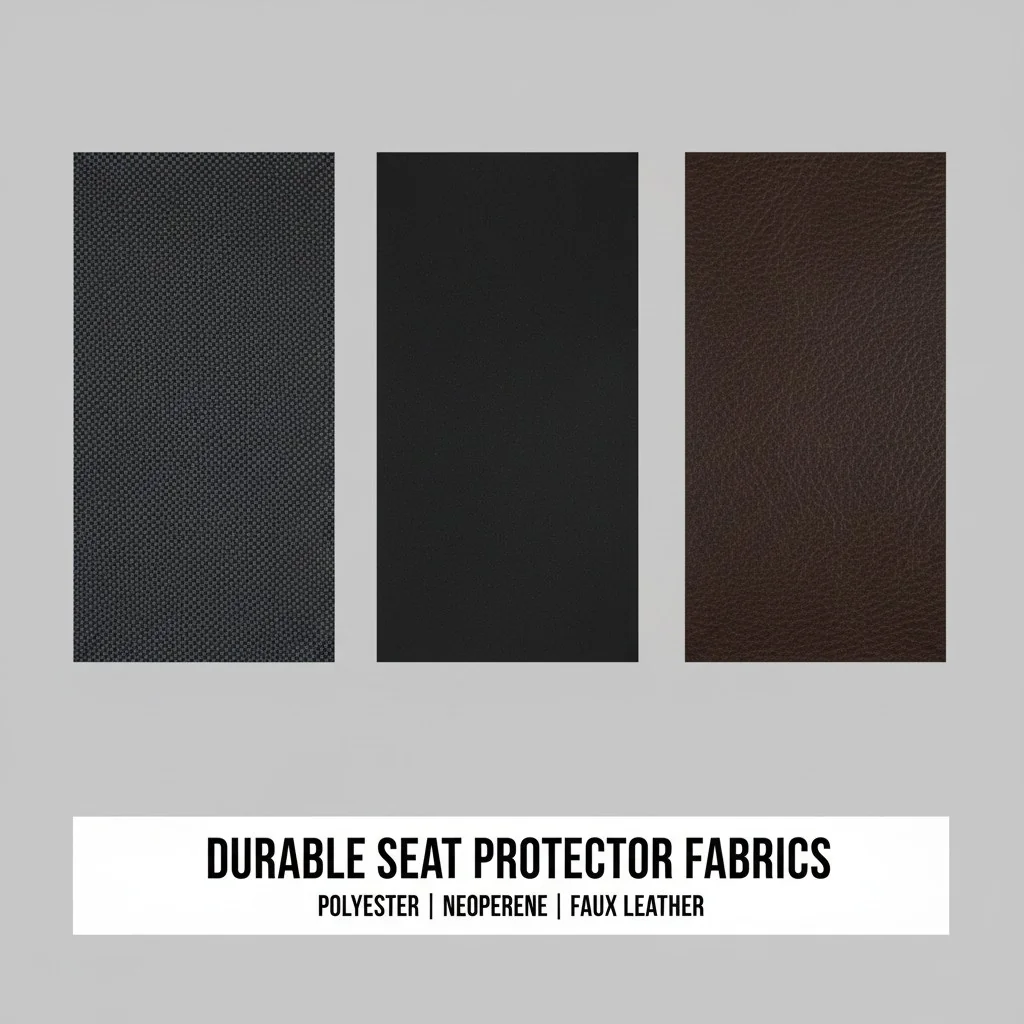
In my world of bag manufacturing, fabric selection is the most critical step. The same material that makes a backpack withstand a mountain trek is what you should look for in a seat protector. The fabric determines the protector’s strength, longevity, and ability to resist damage. Let’s look at the top contenders.
The Most Durable Fabric Choices
- Heavy-Duty Polyester: This is the workhorse of durable fabrics. Look for a high denier count, like 600D or 900D. It has excellent resistance to abrasion and tearing. Many are coated with PVC or PU for water resistance.
- Neoprene: This is the same material used in wetsuits. It’s fantastic because it’s naturally water-resistant, cushioned, and has a bit of stretch for a snug fit. It offers great comfort and protection.
- Canvas: A traditional, tough material. It’s extremely durable but can be stiff. It’s a great choice for heavy-duty use, like in work trucks.
- Faux Leather (PU Leather): For those who want a premium look, high-quality faux leather is a great option. It’s easy to wipe clean and resistant to spills, but cheaper versions can crack over time.
Comparing the Top Materials
| Material | Durability | Water Resistance | Ease of Cleaning |
|---|---|---|---|
| Polyester (600D+) | Excellent | Good (with coating) | Easy |
| Neoprene | Very Good | Excellent | Moderate |
| Canvas | Excellent | Moderate | Moderate |
| Faux Leather | Good | Excellent | Excellent |
I’m also seeing a rise in demand for sustainable materials. Some brands are now using recycled polyester, which offers similar durability while being more eco-conscious. This is a great selling point for a brand like Madison’s.
[claim claim=”Neoprene is the same material used to make wetsuits.” istrue=”true” explanation=”Neoprene is a synthetic rubber that is waterproof, flexible, and durable, making it an ideal material for both wetsuits and high-quality, form-fitting car seat protectors.”]
[claim claim=”A higher denier (D) count in polyester fabric means it is less durable.” istrue=”false” explanation=”Denier is a measure of fiber thickness. A higher denier count, such as 600D or 900D, indicates a thicker, stronger, and more durable fabric compared to a lower count like 300D.”]
How Can You Ensure a Perfect Fit for Your Car Seats?
Your seat protector bunches up and slides around, leaving seats exposed. A poor fit is frustrating and ineffective. Here’s how to get that perfect, secure fit.
To ensure a perfect fit, choose a custom or semi-custom protector designed for your car’s make and model. Look for features like adjustable straps, buckles, and seat anchors. Measuring your seats beforehand also helps you select the right size for a snug, no-slip result.
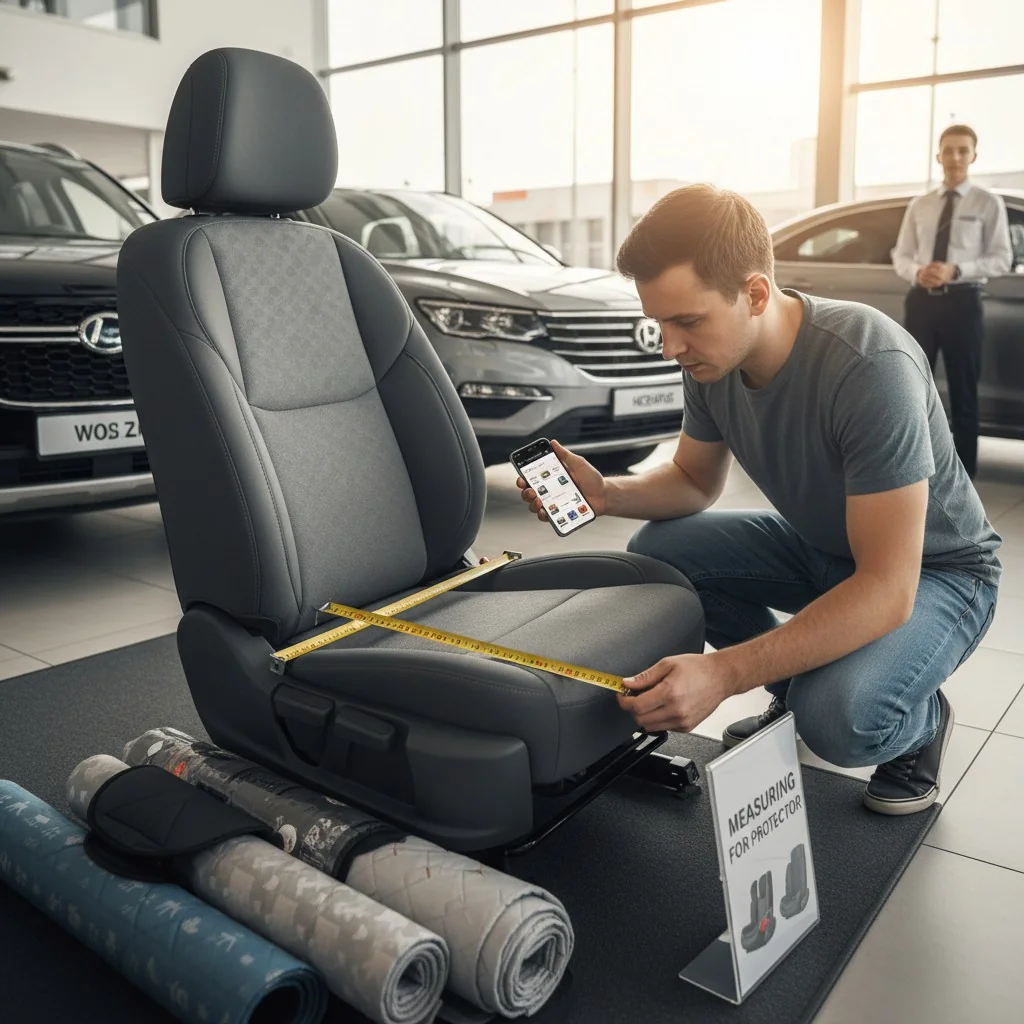
A perfect fit is non-negotiable. I’ve seen beautifully made products fail simply because they didn’t fit correctly. A loose seat protector not only looks sloppy but also fails at its main job: protection. It can shift and expose the upholstery underneath to spills and damage. For e-commerce sellers, ensuring a good fit for your customers is key to reducing returns and building a good reputation.
The Three Tiers of Fit
- Universal Fit: These are designed to be generic. They use elastic straps and a general shape to fit a wide range of seats. While affordable, the fit is often compromised. They are best for temporary or very casual use.
- Semi-Custom Fit: This is the sweet spot for most consumers. These protectors are designed for a vehicle type (e.g., SUV, sedan, truck) and often come in different sizes. They include better attachment systems like adjustable straps and anchors that tuck into the seat, providing a much snugger fit.
- Custom Fit: This is the premium option. These protectors are made for a specific vehicle make, model, and year. Manufacturers use 3D mapping to create a pattern that hugs every curve of the seat, including cutouts for levers and airbags. The result is a seamless, integrated look.
Securing Your Protector
| Attachment Method | Purpose |
|---|---|
| Headrest Straps | Secures the top of the protector. Look for adjustable buckles. |
| Seat Anchors | Discs or tubes that you push between the seat back and bottom to stop sliding. |
| Elastic Skirting | A "skirt" that wraps around the seat bottom for a snug fit. |
| Back Straps | Straps that go around the back of the seat to pull it tight. |
[claim claim=”A loose-fitting seat protector can interfere with side-impact airbag deployment.” istrue=”true” explanation=”Many modern car seats have airbags built into the side bolsters. A poorly fitting or improperly installed universal cover can block the airbag’s deployment path, creating a serious safety hazard.”]
[claim claim=”All seat protectors use the same simple elastic straps to stay in place.” istrue=”false” explanation=”Quality seat protectors use a combination of adjustable straps with buckles, seat anchors, and non-slip backing to ensure a secure, tight fit that doesn’t shift during use.”]
What Are Some Maintenance Tips for Prolonging the Life of Your Seat Protector?
Even durable protectors can wear out if not cared for. You want your investment to last as long as possible. I’ll share simple maintenance tips to do just that.
To prolong its life, regularly vacuum or wipe down your seat protector. Follow the manufacturer’s washing instructions—some are machine washable, while others require spot cleaning. Avoid harsh chemicals and always air dry it completely to maintain its integrity.
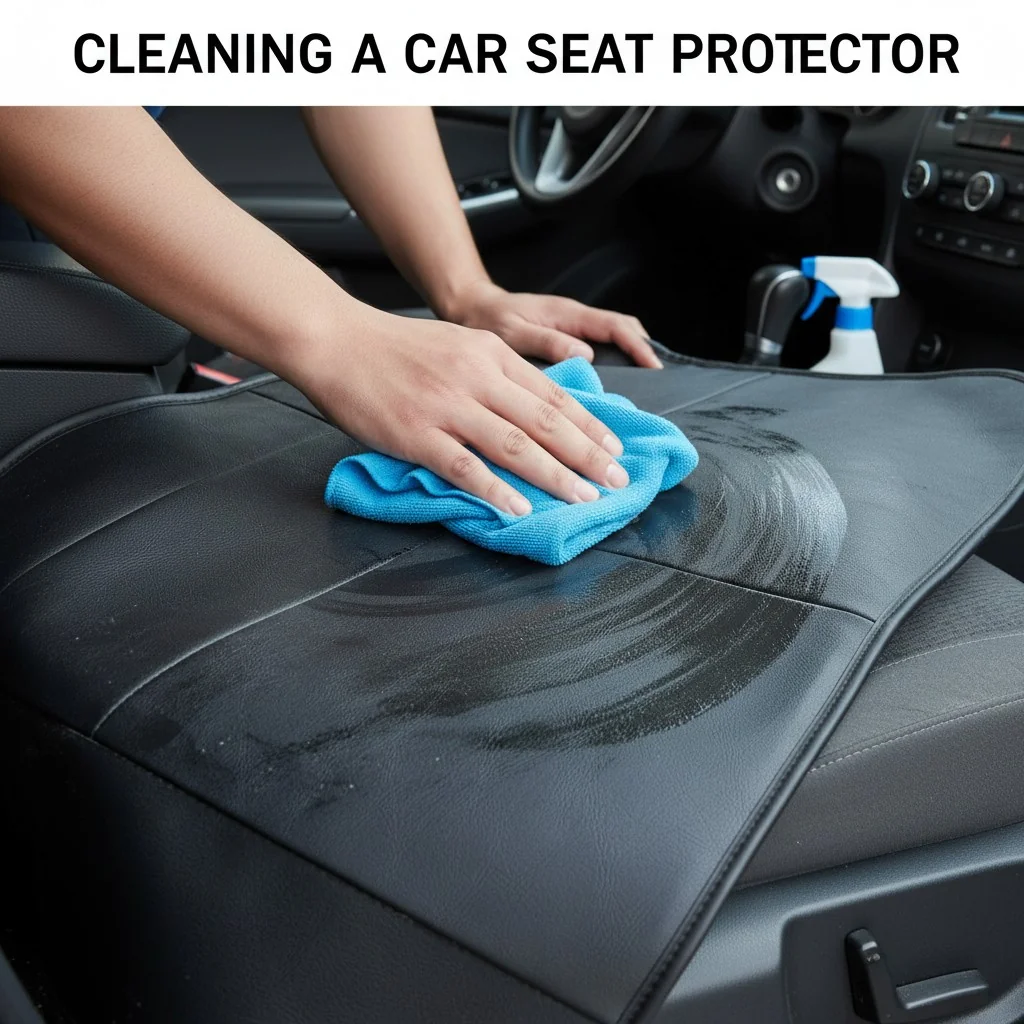
Just like a high-quality bag, a durable seat protector needs a little care to perform its best for years. Proper maintenance prevents the buildup of dirt that can break down fibers and ensures the protective features, like water resistance, remain effective. It’s simple to do and makes a huge difference in how long your protector lasts.
Routine Cleaning and Care
The key is consistency. Don’t let dirt and grime sit for weeks.
- Regular Vacuuming: Once a week, use a brush attachment to vacuum up crumbs, pet hair, and dust. This prevents small particles from working their way into the fabric weave.
- Spot Cleaning: For small spills, act quickly. Blot the spill with a cloth (don’t rub!). Use a gentle mixture of mild soap and water to clean the spot, then wipe with a clean, damp cloth.
Deep Cleaning Guide
Always check the manufacturer’s label first! Different materials require different care.
| Cleaning Method | Best For | Instructions |
|---|---|---|
| Machine Washing | Polyester, Canvas | Use a gentle cycle with cold water and mild detergent. Never use bleach. |
| Hand Washing | Neoprene, Delicate Fabrics | Submerge in a tub of cool water with mild soap. Gently agitate, then rinse thoroughly. |
| Wipe Down | Faux Leather, Coated Fabrics | Use a damp microfiber cloth. For tougher spots, use a specialized cleaner for that material. |
Crucial Tip: Always air dry your seat protector. High heat from a machine dryer can damage the non-slip backing, shrink the fabric, and ruin the water-resistant coating. Hang it in a shaded, well-ventilated area until it’s completely dry.
[claim claim=”Using a machine dryer on a seat protector can damage its water-resistant coating.” istrue=”true” explanation=”High heat can melt or degrade the PU or PVC coating that provides water resistance, and it can also damage the non-slip backing, making the protector less effective.”]
[claim claim=”You should use strong chemical cleaners to remove tough stains.” istrue=”false” explanation=”Harsh chemicals and bleach can break down fabric fibers, cause discoloration, and strip away protective coatings. Always use a mild, pH-neutral soap or a cleaner specifically designed for the material.”]
How Do You Find Top Brands for Durable Seat Protectors?
With so many brands, how do you know who to trust? Choosing the wrong supplier can lead to poor quality and unhappy customers. I’ll show you what makes a brand reliable.
Instead of specific brands, focus on what makes a brand trustworthy: positive customer reviews, clear warranty policies, detailed product specifications, and responsive customer service. A reliable brand is transparent about its materials and manufacturing process.
As someone who partners with brands to manufacture products, I can tell you that brand reputation is everything. It’s built on trust, quality, and consistency. For an e-commerce seller like Madison, choosing a manufacturing partner or supplier with these qualities is more important than chasing a famous brand name. You are looking for a partner, not just a product.
How to Vet a Brand or Supplier
Instead of giving you a list of brands, I want to empower you to find your own great partners. Use this checklist when you evaluate a potential supplier.
- Transparency: Do they clearly state the materials used (e.g., "600D Polyester with PU coating")? Vague descriptions like "heavy-duty fabric" are a red flag.
- Customer Reviews: Look for detailed reviews that talk about longevity. How does the product hold up after 6 months or a year? Are there patterns of complaints about tearing or fading?
- Warranty and Support: A confident brand stands behind its product with a solid warranty. Check their return policy and see how easy it is to contact their customer support.
- Detailed Fit Guides: A good brand will provide extensive fit information, including vehicle compatibility charts and measurements, to help customers make the right choice.
Supplier Evaluation Checklist
| Quality Indicator | What to Look For |
|---|---|
| Product Specifications | Detailed info on materials, denier, coatings, and stitching. |
| Social Proof | Genuine customer photos and long-term reviews on multiple platforms. |
| Customer Service | Responsive, helpful, and easy to contact. |
| Warranty | A clear, fair warranty policy that covers manufacturing defects. |
Finding a supplier with these qualities ensures you’re sourcing a product that will satisfy your customers and build your own brand’s reputation for quality.
[claim claim=”Brand reputation is heavily influenced by customer reviews and word-of-mouth.” istrue=”true” explanation=”In today’s market, online reviews and social proof are powerful drivers of consumer trust. Positive feedback on product quality and durability is crucial for a brand’s success.”]
[claim claim=”A brand that offers no warranty is likely very confident in its product quality.” istrue=”false” explanation=”A lack of warranty is a major red flag. It usually indicates the brand is not willing to stand behind its product’s quality and durability, shifting all the risk to the consumer.”]
Ready to bring your custom car seat protector ideas to life? Contact Osgoodway today for expert OEM/ODM support, free design consultation, and top-tier manufacturing services. Let’s work together to transform your unique product vision into a market-ready success with quality, precision, and creativity.
Conclusion
Choosing a durable seat protector comes down to three things: tough materials, a perfect fit, and quality construction. Investing in the right one protects your car and provides long-term value.
References
-
Understanding durable materials helps you choose a seat protector that lasts longer and offers better protection. ↩
-
UV protection prevents fading and cracking, maintaining the aesthetic appeal of your car’s interior. ↩
-
Abrasion resistance is vital for protecting against daily wear and tear, especially from pets and frequent use. ↩
-
Reinforced stitching enhances durability and prevents wear and tear, ensuring your protector lasts longer. ↩
-
Water resistance is crucial for protecting your seats from spills and stains, making it a key feature to consider. ↩
-
Easy-to-clean materials save time and effort, ensuring your seat protector remains in good condition. ↩
-
A custom fit ensures maximum protection and a neat appearance, tailored to your vehicle’s specifications. ↩
-
A pet hammock protects your back seat while keeping pets secure, making it ideal for pet owners. ↩
-
Heavy-duty polyester offers excellent durability and resistance to wear, making it a top choice for protectors. ↩






