


Struggling to pick a toiletry bag design1 that will actually sell? A poor choice can lead to unsold inventory and unhappy customers. Let’s find the perfect bag for your brand.
Choosing the right toiletry kit means balancing type, size, material, and features with your target customer’s travel style. For brand owners, it’s also about aligning these choices with your brand identity and price point to create a product that stands out in the market.
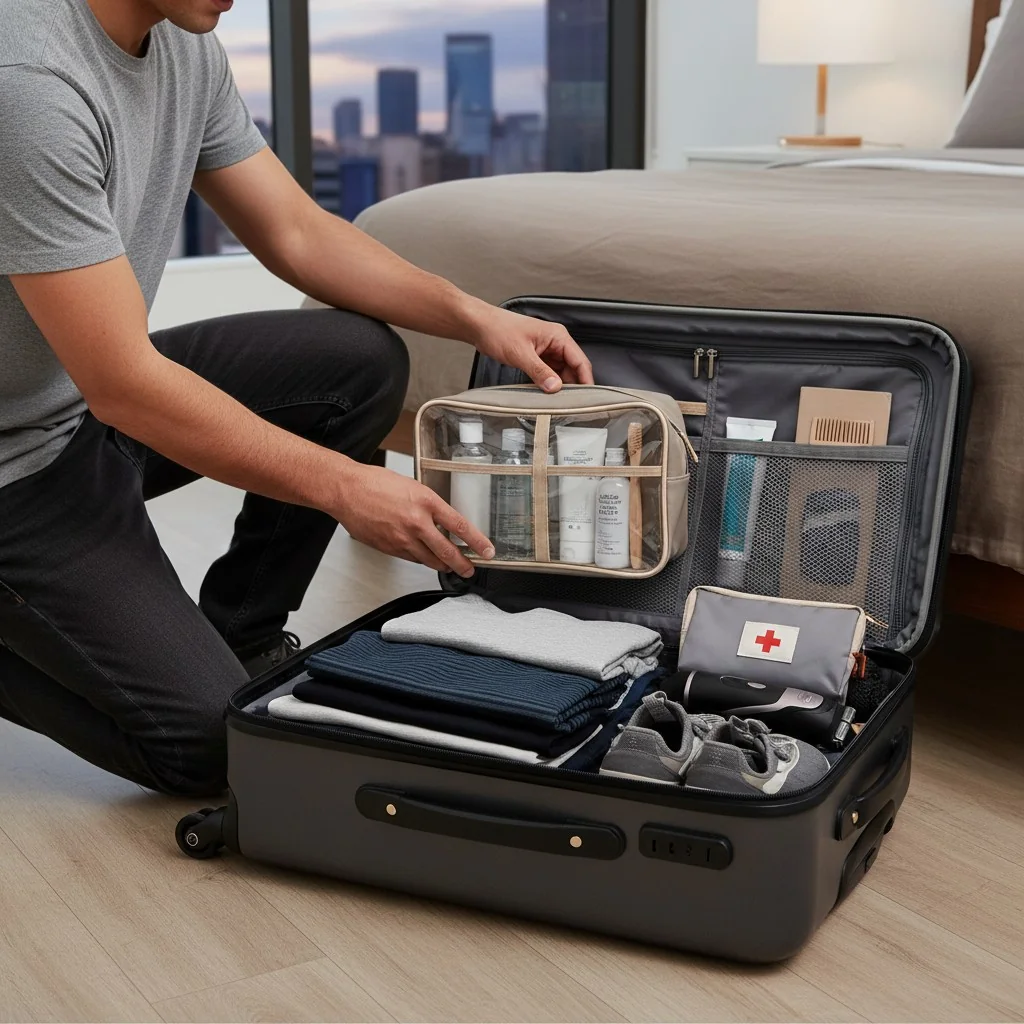
As someone who has spent years in the bag industry, I’ve seen countless brands try to launch new products. The ones that succeed don’t just create a bag; they create a solution for a specific type of customer. A toiletry kit isn’t just an accessory; it’s a crucial piece of travel gear that can make or break a trip. Getting it right is essential for building customer loyalty2. In this guide, I’ll walk you through everything I’ve learned, from understanding different styles to finding a manufacturing partner you can trust. Let’s get your next bestseller designed.
[claim claim=”Over 60% of travelers consider a good toiletry bag an essential item for any trip.” istrue=”true” explanation=”While the exact statistic varies, market research consistently shows that organizational travel accessories, including toiletry bags, are a high priority for a majority of travelers.”]
[claim claim=”All toiletry bags are waterproof.” istrue=”false” explanation=”Many toiletry bags are made from water-resistant materials, but not all are fully waterproof. A waterproof or water-resistant lining is a key feature to look for, but the exterior material may vary.”]
What Are the Different Types of Toiletry Kits?
You see dozens of toiletry kit styles online, and it’s hard to know which one your customers will love. If you choose a style that doesn’t fit their needs, it will just sit on your virtual shelf. Let’s break down the most popular types.
The most common options are hanging toiletry kits3, traditional dopp kits, and minimalist travel pouches. Hanging kits are for hyper-organized travelers, traditional bags are durable all-rounders, and pouches are for light packers. Each type serves a different customer and market segment.
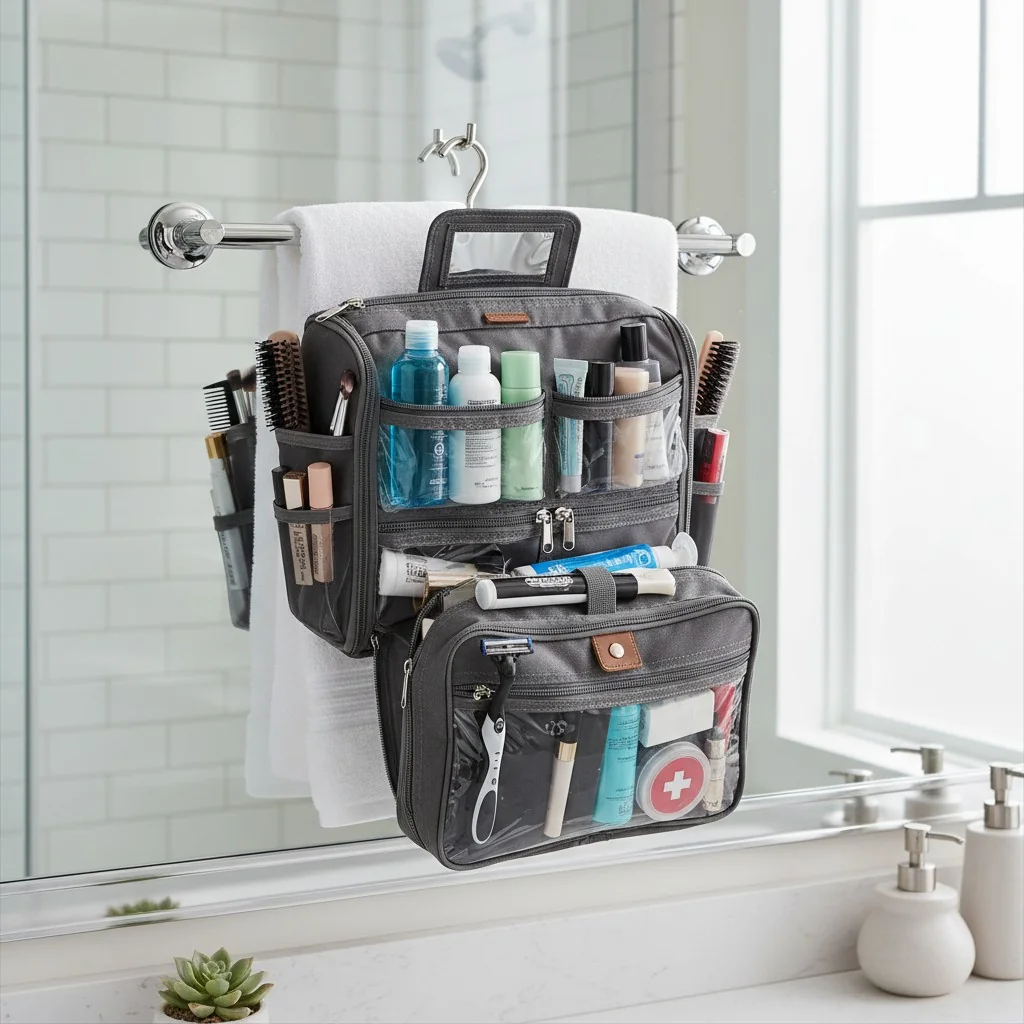
When I work with e-commerce sellers like Madison, the first question I ask is, "Who are you selling to?" The answer determines which bag type we should focus on. A brand targeting business travelers might lean towards a sleek, traditional dopp kit. A brand for family vacationers or makeup artists would find more success with a large, multi-pocket hanging kit. It’s all about matching the product to the person. Understanding these core types is the first step in developing a product that resonates.
The Organizer: Hanging Toiletry Kits
These are my personal favorite for longer trips. They unfold to reveal multiple compartments and can be hung from a hook, saving precious counter space in small hotel bathrooms. They are perfect for customers who carry a full range of products and value organization above all else.
The Classic: Traditional Dopp Kits
This is the timeless, single-compartment bag. It’s sturdy, compact, and straightforward. While it offers less organization, its simplicity and durability appeal to many, especially those who prefer a more rugged or classic aesthetic.
The Minimalist: Travel Pouches
These are simple, often flat, zippered pouches. They are best for weekend getaways, gym bags, or for customers who only carry the bare essentials. They are also great as part of a larger collection, offering a lower-priced entry point for your brand.
| Bag Type | Best For | Key Feature | Target Customer Profile |
|---|---|---|---|
| Hanging Kit | Extended travel, cruises | Multiple compartments, hanging hook | The organized traveler, makeup lovers |
| Traditional Kit | All-purpose travel, durability | Large single compartment, sturdy build | The classic traveler, business professionals |
| Travel Pouch | Weekend trips, gym bag | Lightweight, compact, simple | The minimalist, light packer |
[claim claim=”Hanging toiletry bags were invented in the 1990s.” istrue=”false” explanation=”While they gained significant popularity in recent decades, the concept of portable, compartmentalized kits for toiletries has existed in various forms for over a century, evolving with travel habits.”]
[claim claim=”The term ‘Dopp kit’ is named after its inventor, Charles Doppelt.” istrue=”true” explanation=”Charles Doppelt, a German leather goods designer in Chicago, invented the bag in 1919. The term became generic after his company’s bags were issued to American GIs during WWII.”]
How Do You Choose the Right Size for Your Toiletry Kit?
Choosing a size feels like a guessing game. Go too big, and the bag is too bulky for carry-on luggage. Go too small, and your customers will complain it’s useless. Let’s find the perfect balance for your product line.
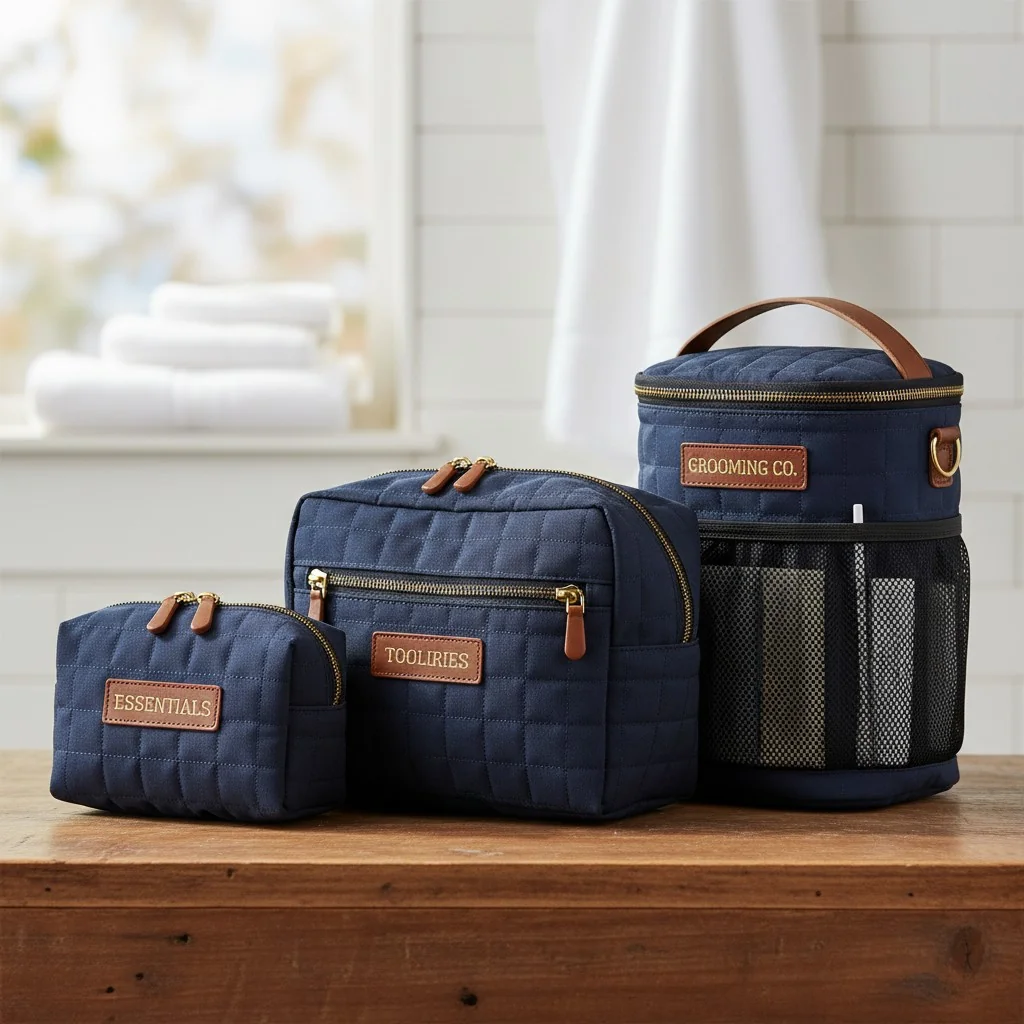
The right size directly relates to the length of the trip and the user’s packing habits. I advise clients to offer a small range—perhaps a compact size for weekenders and a larger one for long-haul travelers—to capture a wider market.
I once worked with a brand that only launched one, very large toiletry bag. They thought "bigger is better." But their sales were slow. We looked at their customer data and realized their audience was mostly young professionals taking short business trips.
The bag was just too big. We quickly developed a smaller, more compact version, and it became an instant hit. This experience taught me that you can’t have a one-size-fits-all approach. You need to provide options that reflect the diverse needs of modern travelers.
Sizing for Your Market
Think about who you are selling to. Are they minimalists who only use carry-on luggage, or are they families who pack for a week?
- Small (Weekend Warrior): Perfect for 1-3 day trips. Holds travel-sized bottles and the absolute essentials. This is a great option for gift sets or as an add-on product.
- Medium (All-Rounder): The most versatile size. It’s suitable for trips up to a week and can hold a mix of travel-size and some full-size items. This is often the bestseller.
- Large (Extended Traveler): Designed for trips longer than a week or for users with extensive grooming or makeup routines. It should have enough room for multiple full-sized products.
| Size | Typical Trip Length | Capacity Guide | Ideal Customer Profile |
|---|---|---|---|
| Small | 1-3 Days | Travel-sized items only | The minimalist, business traveler |
| Medium | 3-7 Days | Mix of travel and full-sized items | The vacationer, versatile traveler |
| Large | 7+ Days | Multiple full-sized items | The long-term traveler, makeup artist |
[claim claim=”TSA requires all toiletry bags to be clear.” istrue=”false” explanation=”TSA requires liquids, gels, and aerosols in your carry-on to be in containers of 3.4 ounces (100ml) or less, and these containers must fit in one quart-sized, clear, zip-top bag. The toiletry bag itself does not have to be clear.”]
[claim claim=”Offering multiple sizes of the same product can increase overall sales by over 30%.” istrue=”true” explanation=”This is a common retail strategy known as ‘product line extension.’ By catering to different needs and price points, brands can attract a wider range of customers, significantly boosting sales.”]
What Is the Best Material for a Toiletry Kit Bag?
The material you choose says everything about your brand. Pick a cheap fabric, and you risk leaks and tears, leading to bad reviews. But premium materials can drive your price up. Let’s look at the best options for quality and brand appeal.
For most brands, nylon and polyester are the go-to choices for their durability, light weight, and water resistance. Leather offers a luxury feel, while recycled fabrics are perfect for eco-conscious brands. No matter the exterior, a water-resistant lining is a must-have.
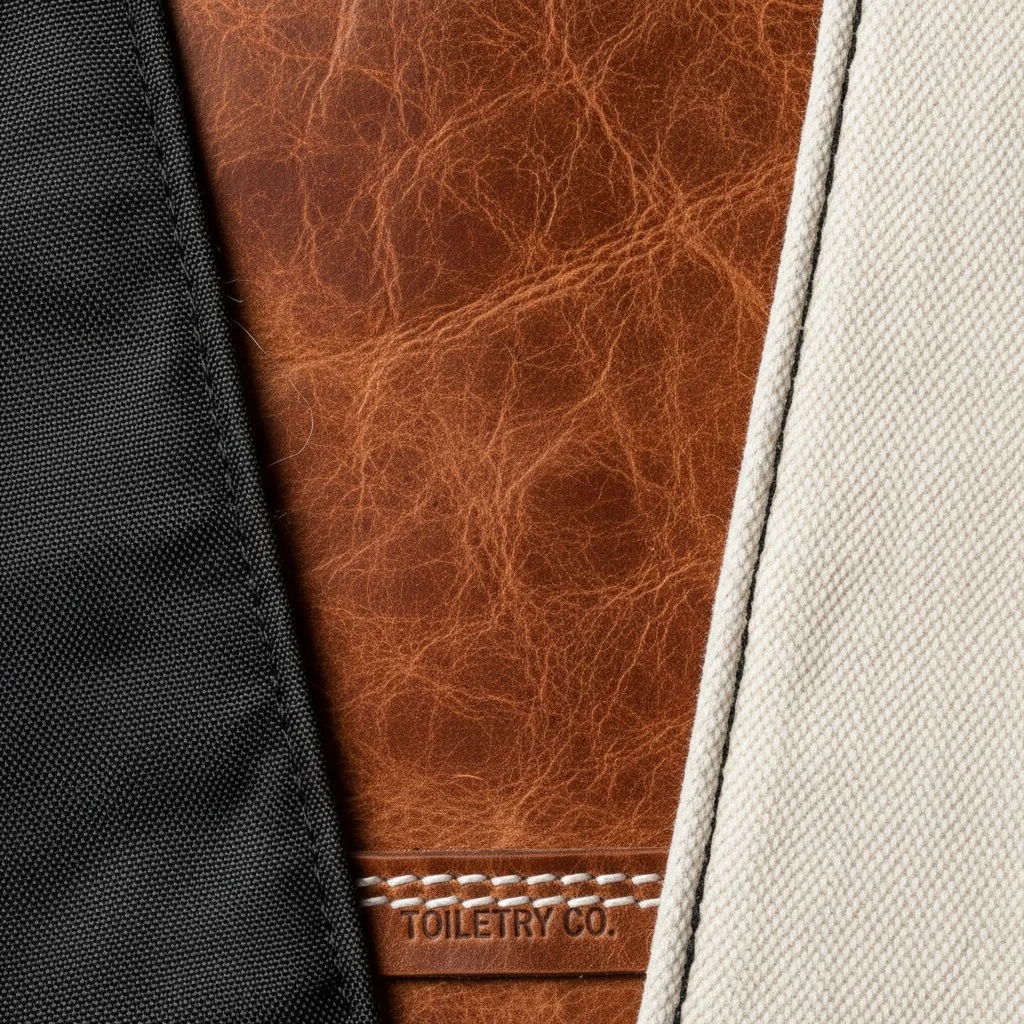
I always tell my clients that the material is a sensory experience. It’s the first thing a customer touches. For Madison, who is building a brand around quality and sustainability, this is a critical decision.
Choosing a high-quality recycled polyester, for example, tells a story. It says the brand is modern, responsible, and doesn’t compromise on performance. The interior lining is just as important. I’ve seen a single spilled shampoo bottle ruin a customer’s entire suitcase. A protective, easy-to-clean lining isn’t a bonus feature; it’s a fundamental requirement for a good toiletry bag.
Common Material Choices
- Nylon/Polyester: The workhorses of the bag world. They are strong, lightweight, and easy to clean. Ripstop nylon is an excellent choice for added tear resistance.
- Leather: Offers a timeless, premium look and feel. It’s very durable but can be heavy and requires more care. It’s best for high-end, luxury brands.
- Canvas: A classic, rugged material. Waxed canvas provides excellent water resistance and develops a unique patina over time, which can be a great selling point.
- Recycled Fabrics (rPET): Made from recycled plastic bottles, these materials are a fantastic choice for sustainable brands. They offer similar performance to virgin polyester.
| Material | Durability | Water Resistance | Aesthetic Appeal | Price Point (USD) | Example Products |
|---|---|---|---|---|---|
| Nylon | High | Excellent | Functional | $20–$60 | MONYKER Ballistic Nylon Toiletry Kit, Tumi Alpha 3 Hanging Travel Kit |
| Polyester | Moderate | Good | Practical | $15–$50 | Aer Travel Kit, Staples Faux Leather Organizer |
| Leather | Very High | Low | Premium | $50–$300+ | Bellroy Men’s Nylon Plus Toiletry Kit, Prada Re-Nylon & Saffiano Leather Toiletry Bag |
| PU Leather | Moderate | Moderate | Stylish | $20–$70 | Pierre LaCroix Vegan Leather Dopp Kit, Lencca Stowaway Faux Leather Organizer |
Consider your travel needs and budget when selecting the material for your toiletry kit.
[claim claim=”Nylon is stronger than polyester.” istrue=”true” explanation=”Generally, nylon has a higher strength-to-weight ratio and better abrasion resistance than polyester, which is why it’s often used for high-performance gear like parachutes and backpacks.”]
[claim claim=”Recycled PET fabric is not as durable as virgin polyester.” istrue=”false” explanation=”Modern manufacturing techniques ensure that rPET fabric has comparable strength, durability, and performance characteristics to its virgin polyester counterpart, making it a viable and sustainable alternative.”]
What Essential Features Should You Look for in a Toiletry Kit Bag?
You think you’ve designed the perfect bag, but then customers complain it’s hard to use. Small details can make or break the user experience. Let’s focus on the features that add real value and earn five-star reviews.
Look for multiple compartments, a waterproof lining, a wide-mouth opening for easy access, and high-quality, durable zippers. Extra features like a hanging hook, elastic loops for holding bottles, and external pockets add significant functional value.
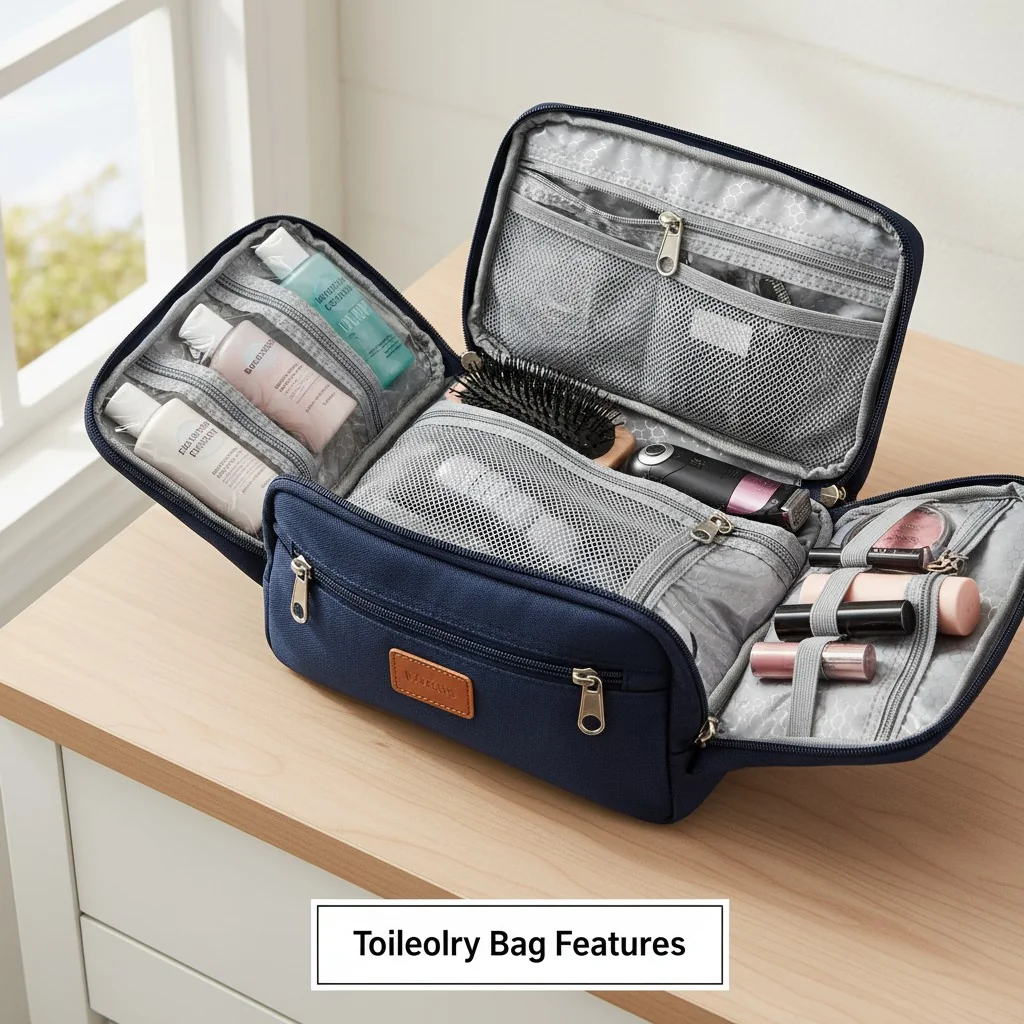
Functionality is king. A beautiful bag that doesn’t work well won’t get you repeat customers. I always push my clients to think about the "moment of use." Imagine your customer in a cramped hotel bathroom. Can they find their toothbrush easily? If they spill something, is it contained? Does the zipper snag? These are the moments that define a product’s quality. A wide, structured opening (like a doctor’s bag) allows users to see everything at once. A waterproof lining provides peace of mind. These aren’t just bullet points on a product page; they are solutions to real-world travel frustrations.
Must-Have Functional Details
- Waterproof Lining: This is non-negotiable. It contains spills and protects everything else in the luggage. Easy-to-clean materials like PVC or PEVA are ideal.
- Smart Compartmentalization: Don’t just add pockets; add purposeful pockets. Think mesh pockets for visibility, zippered sections for security, and elastic loops to hold bottles upright.
- Quality Hardware: Zippers are the most common point of failure. Using reliable brands like YKK can be a major selling point that signals quality and durability.
- Easy Access: A bag that opens wide makes it easy to see and retrieve items without digging around.
| Feature | Benefit to the User | Impact on Brand |
|---|---|---|
| Waterproof Lining | Prevents leaks, easy to clean | Seen as reliable and thoughtful |
| Multiple Pockets | Keeps items organized and accessible | Perceived as high-value and functional |
| Hanging Hook | Saves counter space, convenient | Adds a key feature for travelers |
| Durable Zippers | Prevents snags and breakage | Builds trust in product quality |
[claim claim=”YKK zippers are used in over half of all apparel and bags worldwide.” istrue=”true” explanation=”YKK, a Japanese company, is the world’s largest zipper manufacturer and is estimated to make around half of all zippers on earth. Their reputation for quality makes them a benchmark in the industry.”]
[claim claim=”Mesh pockets can tear easily and should be avoided.” istrue=”false” explanation=”While very cheap mesh can be flimsy, high-quality nylon or polyester mesh is both durable and lightweight. Its transparency is a major benefit for organization, allowing users to see contents at a glance.”]
Who Makes the Best Toiletry Kit Bags?
Want to create a standout product? First, you need to know what the best brands are doing. Studying the market leaders is not about copying; it’s about learning. Let’s see who is setting the trends in the toiletry bag space.
Top-tier brands like Nomatic and Away are known for innovative, feature-rich designs for the modern traveler. Herschel Supply Co. excels at style and branding, while budget-friendly options from AmazonBasics and Samsonite cover the mass market.
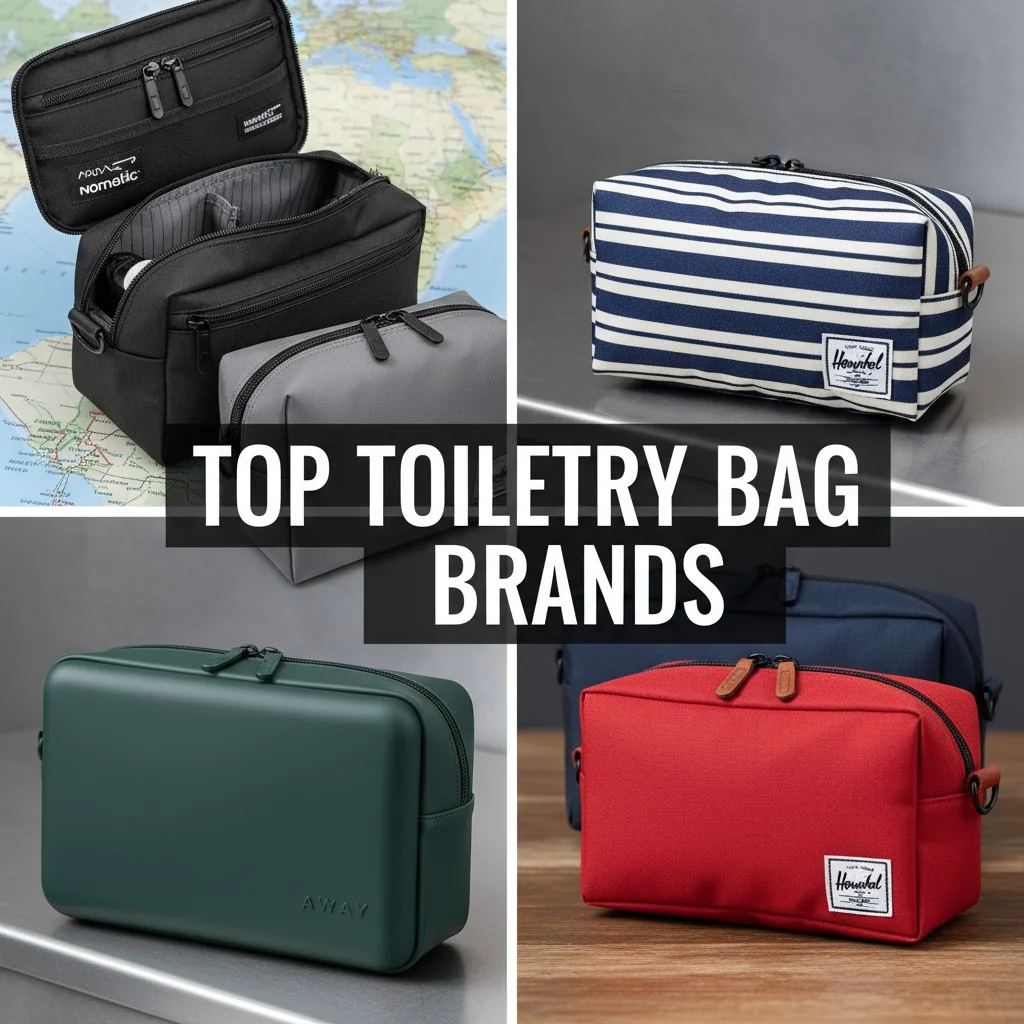
When I consult with brand owners, we always do a competitive analysis. It’s a crucial step. We look at what makes a Nomatic bag worth its premium price. It’s the thoughtful features and durable, tech-focused materials. We look at why people love Herschel. It’s the distinctive style, colorways, and brand story.
For a seller like Madison, this research is gold. It helps her identify gaps in the market. Maybe there’s a need for a stylish bag with Nomatic’s functionality but at a more accessible price point. Or a sustainable bag with Herschel’s aesthetic. Understanding the competition is the key to finding your unique position.
Learning from the Leaders
- Nomatic/Away (The Innovators): These direct-to-consumer brands focus on solving traveler problems with smart features, sleek designs, and high-performance materials. They target tech-savvy professionals and frequent flyers.
- Herschel Supply Co. (The Stylists): Herschel built an empire on a foundation of retro-modern style, strong branding, and consistent quality. They appeal to a younger, style-conscious demographic.
- Samsonite/AmazonBasics (The Value Players): These brands focus on providing reliable, no-frills functionality at a competitive price. They target budget-conscious consumers and families.
| Brand | Price Tier | Notable Features | Example Product |
|---|---|---|---|
| Herschel | Mid-Range | Stylish designs with durable materials; includes options like the Chapter Travel Kit. | Chapter Travel Kit – 5L |
| Nomatic | High-End | Innovative, water-resistant designs with multiple compartments; ideal for tech-savvy travelers. | Toiletry Bag 2.0 |
| Away | Mid-Range | Minimalist aesthetics with functional layouts; options like the Large Toiletry Bag. | The Large Toiletry Bag |
| AmazonBasics | Budget-Friendly | Practical designs with essential features; great for cost-conscious travelers. | Hanging Toiletry Kit |
| Samsonite | Mid-Range | Renowned for durable luggage; toiletry kits like the Detour Toiletry Kit offer reliable organization. | Detour Toiletry Kit |
Each brand offers unique features catering to different travel needs. Consider your personal preferences and requirements when choosing the right toiletry kit.
[claim claim=”Away was valued at $1.4 billion in 2019.” istrue=”true” explanation=”In a 2019 funding round, the direct-to-consumer luggage brand Away achieved a valuation of $1.4 billion, highlighting the massive market for well-branded travel goods.”]
[claim claim=”Herschel Supply Co. is a historic brand founded in the early 1900s.” istrue=”false” explanation=”Despite its vintage, heritage-inspired branding, Herschel Supply Co. was founded in 2009 by brothers Jamie and Lyndon Cormack in Vancouver, Canada.”]
Where Can You Find the Right Manufacturer for Your Toiletry Bags?
You have a great design, but an unreliable manufacturer can destroy your brand before it even starts. Finding a partner you can trust is the most critical step. So, where do you look?
The world’s leading bag manufacturers are primarily located in China, Vietnam, and India, offering a strong balance of quality, cost, and production capacity. Platforms like Alibaba connect you with suppliers, but careful vetting is essential.
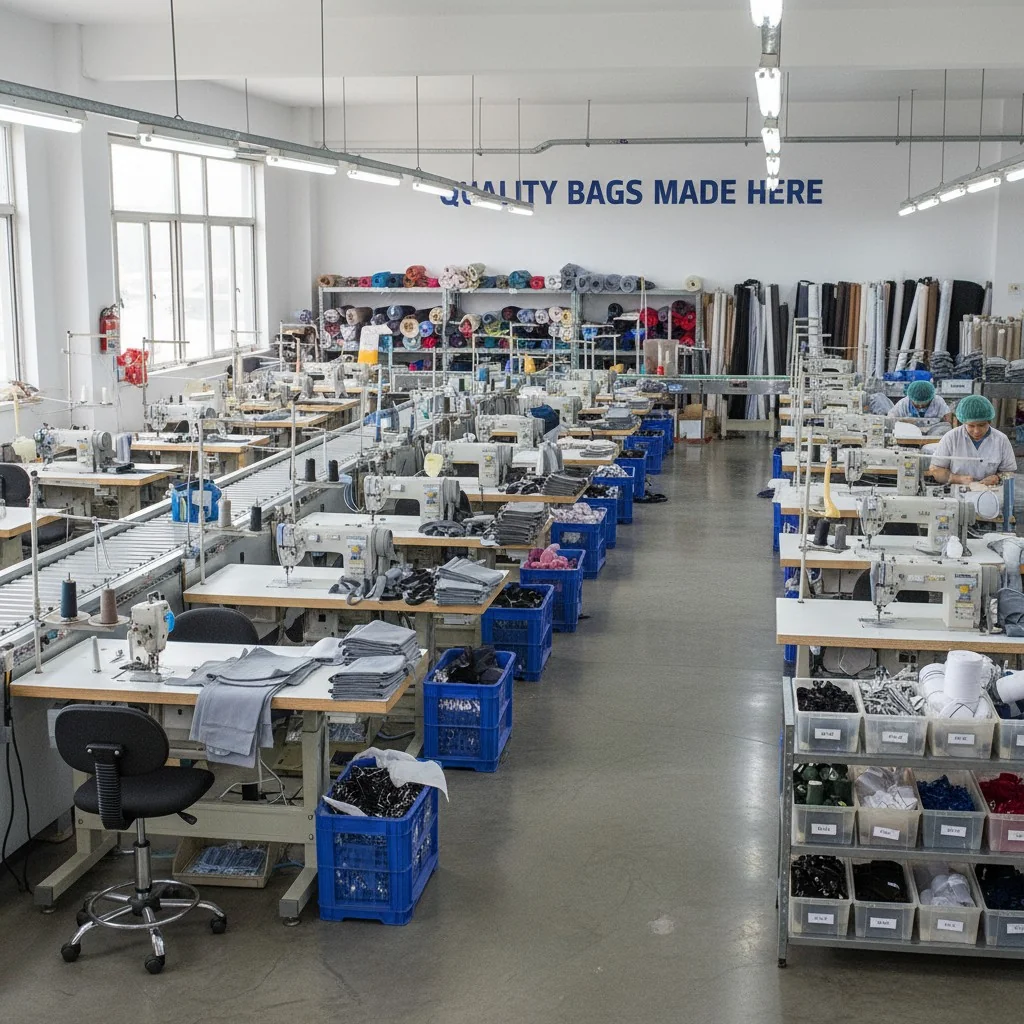
This is where my passion lies. I’ve spent my career building relationships between brands and manufacturers. It’s about more than just placing an order. It’s about finding a partner who understands your vision. For Madison, who values sustainability and clear communication, the choice of manufacturer is paramount. She needs a factory that not only has the right certifications (like GRS for recycled materials) but also has a team that is responsive and transparent.
At Osgoodway, we pride ourselves on being that partner. We guide our clients through every step, from material sourcing to quality control, ensuring their ideas are brought to life exactly as they imagined.
How to Vet a Manufacturer
Finding a factory on a B2B platform is easy. Finding the right one takes work.
- Request Samples: Never commit to a bulk order without first reviewing a physical sample. Pay close attention to stitching, material quality, and hardware.
- Ask for Certifications: If sustainability or ethical production is key to your brand, ask for proof, such as GRS, bluesign®, or BSCI audits.
- Evaluate Communication: Are they responsive? Do they understand your questions? Clear communication is vital to avoiding costly mistakes.
- Discuss Timelines and MOQs: Make sure their Minimum Order Quantity (MOQ) and production lead times align with your business plan.
| Vetting Criteria | What to Look For | Why It’s Important |
|---|---|---|
| Sample Quality | Stitching, material feel, zipper function | The sample is the best indicator of final production quality. |
| Communication | Clarity, responsiveness, English proficiency | Prevents misunderstandings and production errors. |
| Certifications | GRS, BSCI, ISO 9001 | Verifies claims about sustainability, ethics, and quality control. |
| MOQ & Lead Time | Alignment with your business needs | Ensures the partnership is financially and logistically viable. |
[claim claim=”Vietnam is now the second-largest supplier of bags and luggage to the U.S. after China.” istrue=”true” explanation=”Due to shifting supply chains and trade policies, Vietnam has seen a massive increase in manufacturing and has become a major global player in the production of bags, backpacks, and luggage.”]
[claim claim=”All factories on Alibaba are Gold Suppliers, which guarantees their quality.” istrue=”false” explanation=”The ‘Gold Supplier’ status on Alibaba is a paid membership for suppliers to promote their products. While it requires a basic business verification, it is not a guarantee of product quality or ethical practices. Independent vetting is still crucial.”]
FAQ
1. What is the most popular type of toiletry bag to sell?
The medium-sized, traditional dopp kit or a small hanging kit are often the most popular. They offer a great balance of versatility, functionality, and a price point that appeals to a broad audience.
2. Is a leather toiletry bag a good product to sell?
A leather toiletry bag can be a fantastic product for a brand targeting the luxury or premium gift market. While the cost is higher, the perceived value and durability can command a higher retail price and attract a discerning customer.
3. How do I ensure the quality of my bags when working with an overseas manufacturer?
The best way is to have a clear quality control plan. This includes: approving a high-quality pre-production sample, providing a detailed "tech pack" with all specifications, and arranging for a third-party inspection of the goods before they ship. A good manufacturing partner4 like Osgoodway will have these processes built-in.
4. What’s the most important feature for a modern toiletry bag?
While a waterproof lining is essential, I’d say smart organization is the most important feature for a modern bag. Customers expect thoughtful compartments, mesh pockets, and elastic loops that make their travel experience easier and more organized.
Conclusion
Choosing the right toiletry bag and manufacturer is crucial for your brand’s success. Focus on quality, function, and a strong partnership to build a product your customers will love.
References
-
Explore innovative design ideas that can help your toiletry bag stand out in a competitive market. ↩
-
Understanding the connection between product quality and customer loyalty can enhance your brand’s success. ↩
-
Discover why hanging toiletry kits are favored by organized travelers and how they can improve user experience. ↩
-
Learn how to vet manufacturers to ensure quality and reliability for your toiletry bag production. ↩






