


Tired of switching bags between work and travel? A bulky travel bag looks out of place in the office, while your work bag can’t handle a weekend trip.
The perfect laptop backpack blends professional style with travel-ready features. Look for a dedicated laptop compartment1, comfortable straps, smart organization, a trolley sleeve, and durable, weather-resistant materials to cover all your bases.
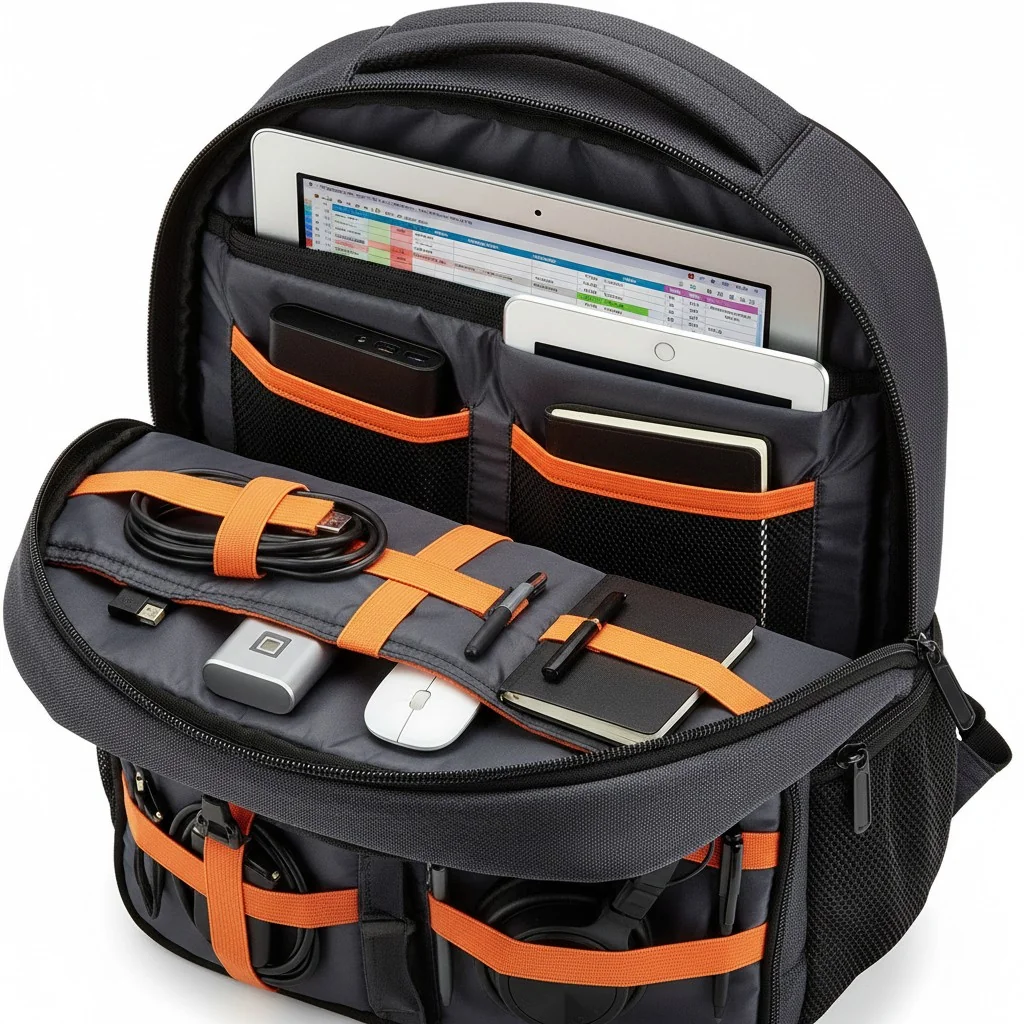
In my years in the bag industry, I’ve seen the demand for versatile gear skyrocket. It’s no surprise the laptop backpack market is projected to hit USD 9.4 billion by 2033. This growth shows a clear shift in how people live and work—they need one bag that can do it all. But what exactly makes a backpack great for both the office and the airport? As a brand owner or designer, understanding these details is key to creating a product that customers will love. Let’s break down the key features you need to know.
[claim claim=”The laptop backpack market is projected to reach USD 9.4 billion by 2033.” istrue=”true” explanation=”According to market analysis from Everki, the market is growing at a CAGR of approximately 6.1% from its 2024 valuation of USD 5.6 billion.”]
[claim claim=”Any backpack with a laptop sleeve is suitable for travel.” istrue=”false” explanation=”A true travel backpack needs more, like a TSA-friendly design, a trolley sleeve for luggage, and enough capacity for a short trip.”]
What Is a Dual-Use Laptop Backpack — and Why It’s Different?
Is a "laptop backpack" just any bag that fits a computer? Using the wrong one can look unprofessional or leave your tech unprotected. A true dual-use backpack is different.
A dual-use laptop backpack2 is a hybrid. It merges the clean, professional look of an office bag with the durability, capacity, and travel-friendly features of a carry-on. It’s designed for someone who moves between their desk, a flight, and a client meeting.
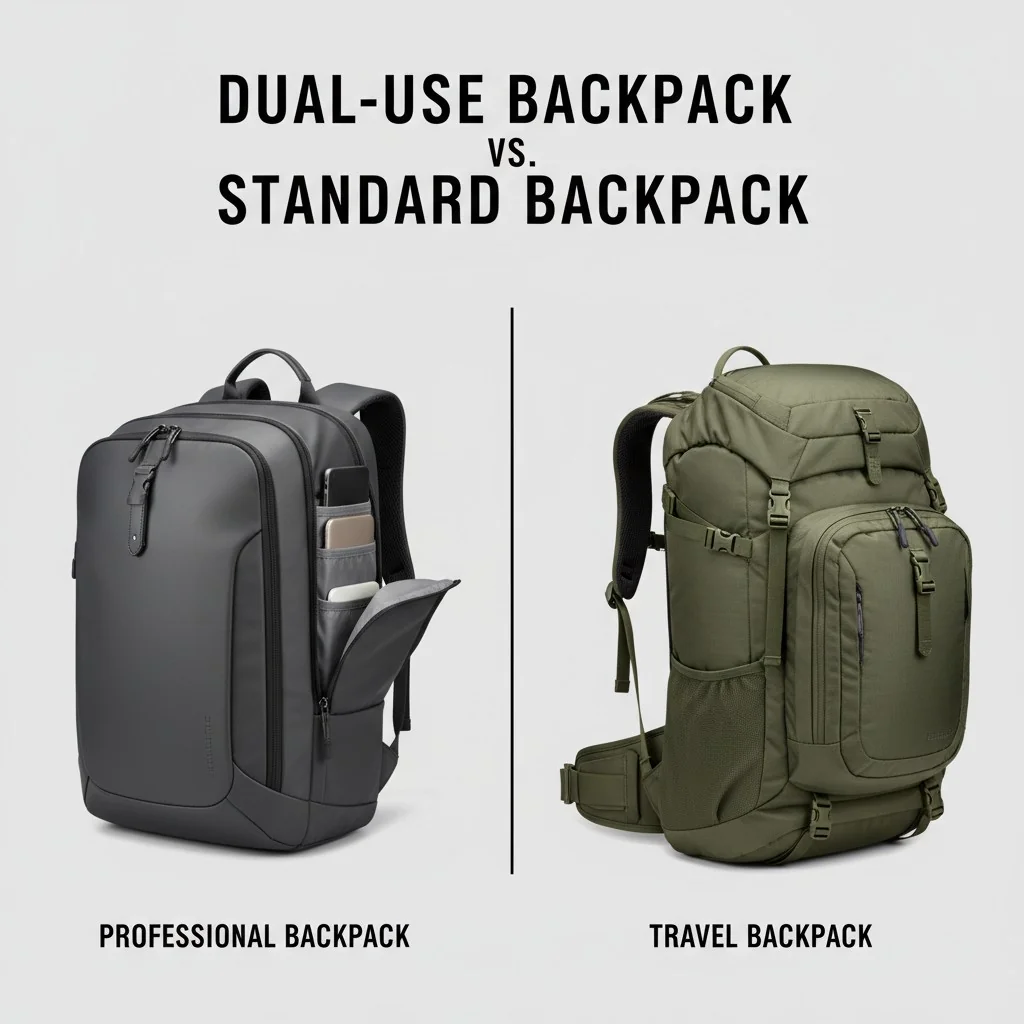
When I work with brands like Emily’s, we often discuss this exact distinction. It’s not just about adding a laptop sleeve to any bag. A true dual-use design requires a careful balance of features that serve two very different environments. It’s about creating a single, seamless experience for the user.
Office-First Features
A bag designed purely for the office is usually slim, lightweight, and has a very professional appearance. It might use materials like leather or clean, minimalist nylon. Organization is key, but it’s focused on documents, pens, and daily tech—not clothes. The goal is to look sharp and stay organized during the 9-to-5.
Travel-First Features
On the other hand, a travel-focused backpack prioritizes capacity and accessibility. Think clamshell openings that let you pack like a suitcase, compression straps, and hidden pockets for passports. The look is often more rugged and functional, built to withstand the rigors of transit.
The Hybrid Advantage
A dual-use backpack cherry-picks the best of both. It keeps the padded laptop sleeve and professional look but adds travel features like a trolley sleeve3, a slightly larger capacity, and materials that can handle being stuffed in an overhead bin. It’s the one bag that doesn’t look out of place anywhere.
[claim claim=”A dual-use backpack is just a larger office backpack.” istrue=”false” explanation=”It’s a purpose-built hybrid with specific travel features like trolley sleeves, clamshell openings, and enhanced durability, not just more space.”]
[claim claim=”The broader backpack market is expected to reach USD 37.5 billion by 2032.” istrue=”true” explanation=”This growth, reported by Fortune Business Insights, reflects the increasing demand for specialized and versatile bags, including dual-use models.”]
What size laptop backpack is best for both office and travel?
Picking a backpack size feels like a gamble. Go too big, and it’s overkill for the office. Go too small, and your weekend trip is a no-go.
For most people, a backpack between 25 and 35 liters is the perfect size. This capacity comfortably holds a 15- or 16-inch laptop, daily work items, and enough clothing for a short trip, while remaining manageable for your daily commute.
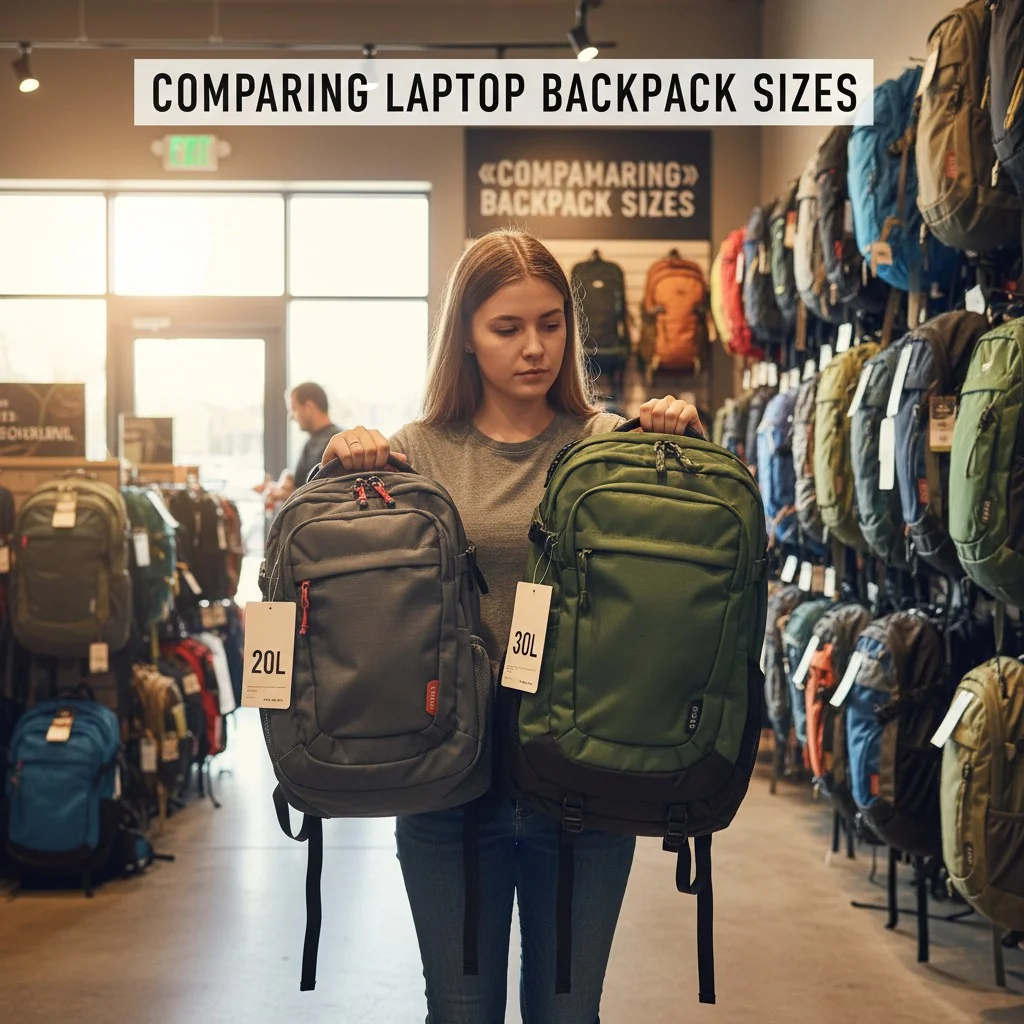
Capacity, measured in liters, is the most important factor here. I always advise my clients to think about the primary use case. Is it 90% office and 10% travel, or a 50/50 split? The answer will guide you to the perfect size. For a brand owner, offering a product in this "sweet spot" range targets the largest possible audience of hybrid professionals.
The Daily Commuter (Under 25L)
These are slim and professional. They’re perfect for your laptop, a notebook, a charger, and maybe a light jacket. They excel at being unobtrusive on a crowded train but won’t cut it for an overnight trip.
The Versatile Hybrid (25-35L)
This is the sweet spot. A 30L pack, for example, has room for your work gear plus a packing cube with a change of clothes, a toiletry bag, and an extra pair of shoes. It’s the go-to size for carry-on compliance and daily comfort.
The Extended Traveler (Over 35L)
Once you go over 35L, you’re in travel-first territory. These are great for longer trips but can feel bulky and out of place in a corporate setting.
Here’s a quick guide to help you decide:
| Capacity (Liters) | Best For | What It Fits |
|---|---|---|
| < 25L | Daily Commute, Minimalist | Laptop, charger, notebook, water bottle, light jacket. |
| 25-35L | Hybrid Office/Travel (1-3 days) | All daily items + packing cube, toiletries, shoes. |
| > 35L | Travel-Focused, Extended Trips | Gear for 3+ days. Often too large for daily office use. |
[claim claim=”A 40L backpack is ideal for daily office use.” istrue=”false” explanation=”A 40L backpack is generally considered a travel pack and is too large and cumbersome for a typical daily commute and office environment.”]
[claim claim=”Most airlines accept backpacks up to 45 linear inches as carry-on.” istrue=”true” explanation=”This is a common dimension limit (e.g., 22 x 14 x 9 inches). Backpacks in the 30-40L range usually fit within these requirements, but it’s always best to check with the specific airline.”]
What core features should I look for when buying a laptop backpack?
"TSA-friendly," "clamshell opening4," "trolley sleeve"—the jargon is endless. How do you know which features are essential and which are just marketing fluff? Let’s clarify.
Focus on five core features: a separate, padded laptop compartment (preferably suspended); a trolley sleeve to slide over luggage handles; comfortable, ergonomic shoulder straps; smart organization5 with multiple pockets; and at least one quick-access pocket for your phone or passport.
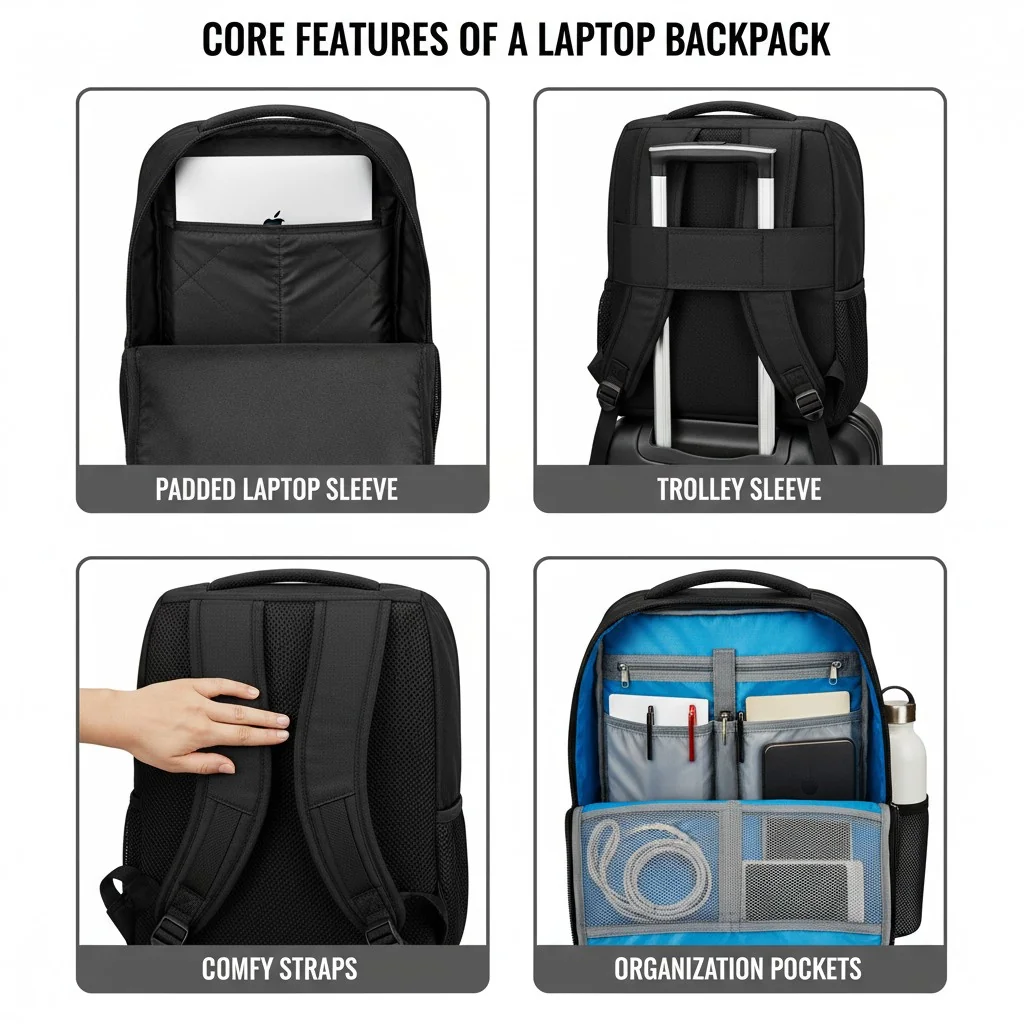
When I’m developing a new bag with a client, we build it around the user’s journey. For the office-to-travel user, that journey demands specific, practical features that make life easier. These aren’t just nice-to-haves; they are the foundation of a truly great dual-use backpack.
1. Laptop Protection is Non-Negotiable
Look for a compartment that is separate from the main section. The best ones have a "suspended" or "false bottom" design, meaning the sleeve doesn’t touch the bottom of the bag. This protects your laptop if you drop the backpack. Extra padding on all sides is a must.
2. Travel-Ready Mobility
A trolley sleeve (or pass-through strap) is a simple band of fabric on the back that slides over your rolling luggage handle. This is my number one must-have for travel. It frees up your hands and saves your back. A TSA-friendly design, which lets the laptop compartment lay flat, is another huge time-saver at airport security.
3. All-Day Comfort
Don’t underestimate this. Look for padded, contoured shoulder straps and a breathable, padded back panel. A sternum strap helps distribute weight, making a heavy bag feel much lighter during a long commute or a dash through the airport.
4. Smart Organization
This isn’t just about having lots of pockets. It’s about having the right pockets. Think dedicated spots for a power bank, cables, pens, a water bottle, and a secure, quick-access pocket for your wallet and phone.
[claim claim=”A trolley sleeve is an unnecessary luxury feature.” istrue=”false” explanation=”For anyone who travels with rolling luggage, a trolley sleeve is a critical feature for convenience and ergonomics, making airport navigation significantly easier.”]
[claim claim=”A suspended laptop sleeve provides superior drop protection.” istrue=”true” explanation=”By keeping the laptop from touching the bottom of the bag, a suspended design absorbs impact from drops and bumps far more effectively than a simple padded sleeve.”]
Which materials and hardware last longest (ballistic nylon vs. Cordura, YKK zippers)?
Nothing is worse than a backpack failing you mid-trip. A ripped strap or a busted zipper can be a disaster. Investing in quality materials from the start prevents this.
For fabrics, high-denier Ballistic Nylon6 and CORDURA® are top-tier for abrasion and tear resistance. For hardware, YKK zippers are the gold standard for reliability. These materials ensure your backpack will withstand years of daily use and frequent travel.
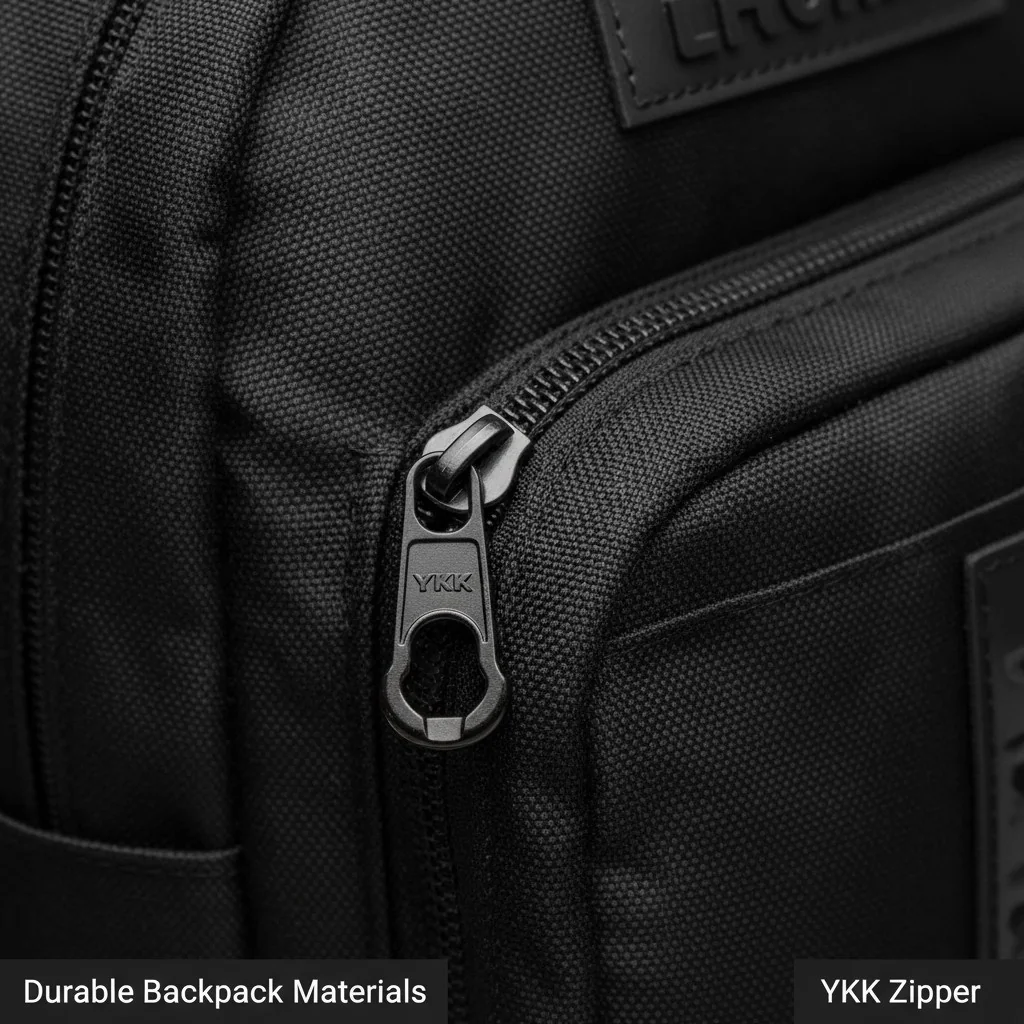
As a manufacturer, I live and breathe materials. For a brand owner, understanding them is crucial for communicating quality to your customers. Let’s talk about the best of the best, because the materials you choose define the lifespan and feel of your product.
Fabric Face-Off: Ballistic Nylon vs. CORDURA®
Both are fantastic choices, but they have slight differences. "Denier" (D) refers to the thickness of the fiber—higher numbers generally mean stronger fabric. Look for 840D or higher for great durability.
| Material | Key Strengths | Best For |
|---|---|---|
| Ballistic Nylon | Extremely high tear & abrasion resistance, smooth finish. | Professional, high-wear bags (e.g., pilot bags). |
| CORDURA® | Excellent abrasion resistance, matte/canvas-like texture. | Rugged, outdoor-hybrid, and military-style bags. |
Ballistic nylon was originally developed for flak jackets. It’s incredibly tough. CORDURA® is a brand name for a range of durable fabrics, also known for their longevity. You can’t go wrong with either, but I often recommend Ballistic Nylon for a sleeker, more professional look.
Why Zippers Matter: The YKK Standard
A bag is only as strong as its weakest point, which is often the zipper. YKK is a Japanese company that dominates the high-quality zipper market. Their zippers are smooth, self-lubricating, and rarely snag or break. If a brand invests in YKK zippers, it’s a strong signal they care about quality. SBS is another reliable alternative.
[claim claim=”All nylon fabrics are equally durable.” istrue=”false” explanation=”Durability depends on the type of nylon (e.g., Ballistic, Ripstop) and its denier count. A 1050D Ballistic Nylon is significantly stronger than a 200D standard nylon.”]
[claim claim=”YKK zippers are widely recognized as a benchmark for quality and durability in the bag industry.” istrue=”true” explanation=”YKK’s reputation for precision engineering and reliability has made them the preferred choice for premium and high-performance bags and apparel.”]
Market Trends & Smart Bag Features in 2025?
Worried about choosing a backpack that will feel dated in a year? The market is moving fast, with new tech and materials emerging. Let’s look at what’s next.
Key trends for 2025 include sustainability (recycled fabrics), enhanced anti-theft features (RFID pockets, hidden zippers), and smarter tech integration. USB charging ports7 are now a common feature, with Bluetooth tracking gaining popularity for added security.
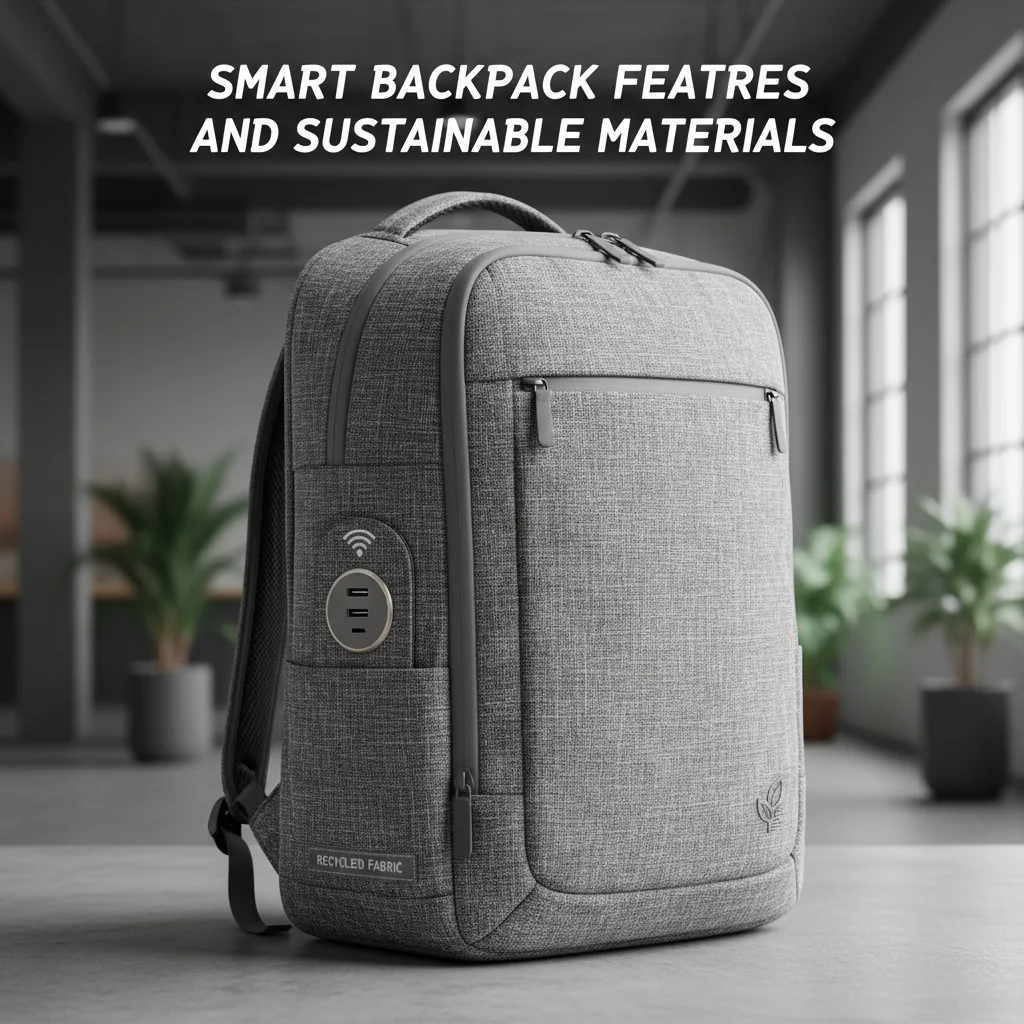
For brand owners like Emily, spotting trends early is key to success. The data shows exactly where the market is headed. The smart backpack segment alone is projected to hit USD 1.5 billion by 2035, and laptop bags are a huge piece of that pie.
The Rise of the Smart Backpack
This is more than just a gimmick. These are practical features customers now expect.
- USB Charging Ports: A simple pass-through that lets you connect a power bank inside to charge your phone outside. It’s a must-have for travelers and commuters.
- RFID-blocking pockets8: These protect your credit cards and passport from electronic pickpocketing. A small but valuable security feature.
- Bluetooth Tracking: Integrated trackers (or dedicated pockets for them like an AirTag) are becoming more common, giving users peace of mind.
Sustainability is No Longer Optional
Consumers, especially younger ones, demand eco-friendly options. I’m seeing a huge increase in requests for materials like:
- RPET: Fabric made from recycled plastic bottles.
- Recycled Nylon/Polyester: Using pre- and post-consumer waste to create durable fabrics.
- Vegan Leather: High-quality polyurethane (PU) that mimics the look and feel of leather without using animal products.
This isn’t just good for the planet; it’s a powerful marketing story for your brand.
[claim claim=”Smart backpacks with features like USB charging and RFID protection are a small, niche market.” istrue=”false” explanation=”The smart backpack market is projected to reach USD 1.5 billion by 2035, with laptop bags accounting for about 39% of this growing segment, according to Future Market Insights.”]
[claim claim=”RPET fabric is made from recycled plastic bottles.” istrue=”true” explanation=”RPET (Recycled Polyethylene Terephthalate) is a sustainable textile created by melting down post-consumer plastic bottles and spinning the material into polyester fiber.”]
Best Backpack Picks for Different Needs?
Even with all this knowledge, the sheer number of options is daunting. How do you find the perfect model? I’ve analyzed the market and picked top contenders for you.
The best pick depends on your priority. For pure travel convenience, the BAGSMART Blast is excellent. For a professional daily driver, the Thule Subterra is hard to beat. For a stylish hybrid, the BÉIS backpack is a top choice.
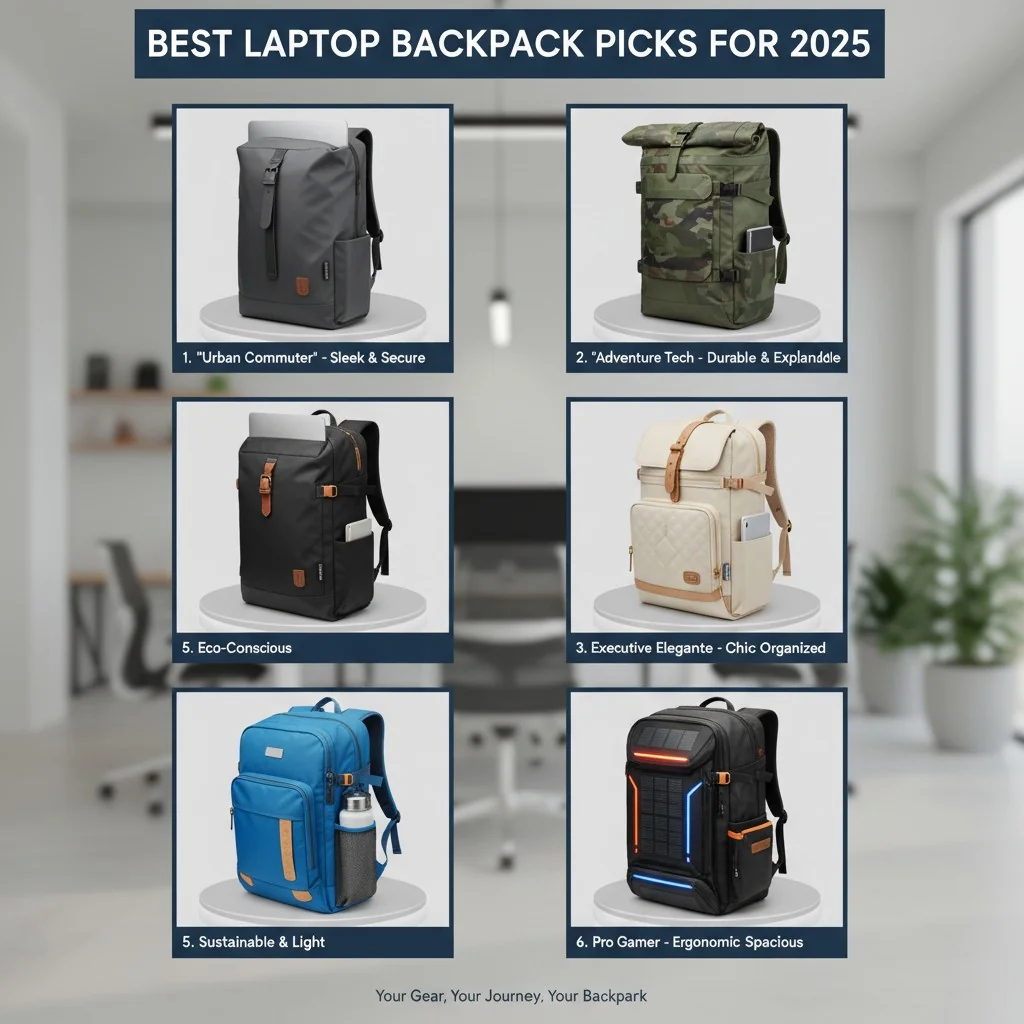
To help you narrow it down, I’ve grouped some of the best backpacks on the market by their primary strength. This is the kind of analysis I do when helping brands identify gaps and opportunities in the market. Understanding these successful examples can inspire your own designs.
Top Picks Compared
| Backpack | Best For | Key Features | Price Tier |
|---|---|---|---|
| BAGSMART Blast Travel Backpack | Ultralight Travel | 180° opening, shoe compartment, lightweight (~2 lb) | $66.99 |
| SWISSGEAR ScanSmart Backpack | Business Travel | TSA-friendly, USB port, heavy organization | $90.00 |
| Thule Subterra 2 Backpack | Daily Commuting | Sleek, professional look, durable build, low-profile | $149.95 |
| BÉIS The Travel Backpack | Stylish Hybrid Work | Full-zip opening, trolley sleeve, chic design | $118.00 |
| Patagonia Refugio Day Pack 26L | Rugged All-Rounder | Versatile for city/outdoors, made with recycled materials | $109.00 |
| Samsonite Mobile Solution Deluxe | All-Weather Commuting | Water-resistant nylon, SmartStrap | $69.99 |
| Handmade Full Grain Leather Backpack | Premium / Executive | Ages beautifully, premium aesthetic, durable leather | $134.99 |
Each of these bags targets a slightly different user. The BAGSMART and SWISSGEAR are built for airport efficiency. The Thule is for someone who wants a bag that looks at home in the boardroom. The BÉIS backpack proves you don’t have to sacrifice style for function, a key trend for modern brands.
[claim claim=”All high-quality backpacks cost over $200.” istrue=”false” explanation=”Excellent, durable backpacks like the Samsonite Better Than Basic or SWISSGEAR ScanSmart offer great value and features for a mid-range price, often under $100.”]
[claim claim=”A 180° flat-lay or ‘clamshell’ opening makes a backpack much easier to pack and unpack for travel.” istrue=”true” explanation=”This design allows the main compartment to open like a suitcase, giving you full visibility and access to your belongings without having to dig from the top.”]
Common Questions People Ask
What features make a laptop backpack suitable for both travel and office use?
The key is a blend of features: a professional aesthetic, a dedicated and padded laptop compartment, a trolley sleeve to slide over luggage, comfortable straps for all-day wear, and a versatile capacity between 25-35 liters.
What backpack size is ideal for a 15- or 16-inch laptop?
You should choose a backpack that is specifically designed to hold a 15- or 16-inch laptop to ensure a proper fit. For overall versatility, an ideal bag capacity is between 25 and 35 liters.
Is a built-in USB charging port worth having?
Yes, for most people it’s a very practical feature. It allows you to easily charge your phone or other devices from a power bank stored inside the bag, which is incredibly convenient for commuting and travel.
What is a TSA-friendly laptop backpack?
A TSA-friendly backpack has a special laptop compartment that can unzip and lie completely flat on the conveyor belt. This design means you don’t have to take your laptop out of the bag during airport security screenings, saving you time and hassle.
Conclusion
Choosing the right laptop backpack means balancing professional style with travel-ready function. Focus on durability, comfort, and smart organization to find or create the perfect bag for any journey.
References
-
Understanding the importance of a dedicated laptop compartment can enhance your backpack’s functionality and protect your device. ↩
-
A dual-use laptop backpack combines professional and travel features, making it ideal for hybrid lifestyles. ↩
-
A trolley sleeve is essential for travelers, allowing easy attachment to rolling luggage for convenience and comfort. ↩
-
A clamshell opening allows for easy packing and unpacking, enhancing the travel experience with better accessibility. ↩
-
Smart organization features in a backpack can significantly improve your daily efficiency and ease of access to essentials. ↩
-
Ballistic Nylon is known for its durability; understanding its benefits can help you choose a long-lasting backpack. ↩
-
USB charging ports provide convenience for on-the-go charging, making them a valuable feature for modern backpacks. ↩
-
RFID-blocking pockets protect your personal information, adding a layer of security to your travel gear. ↩






