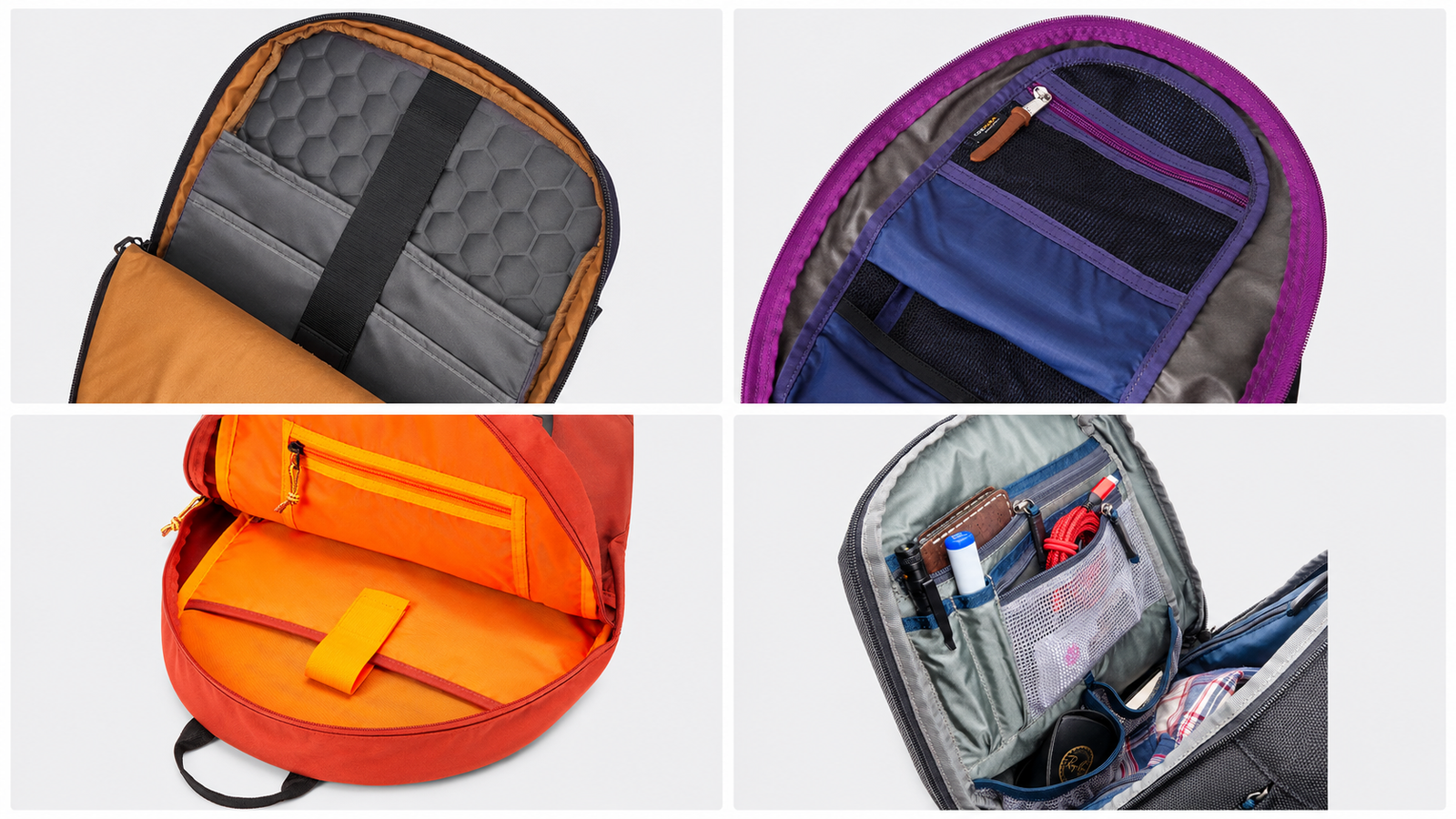
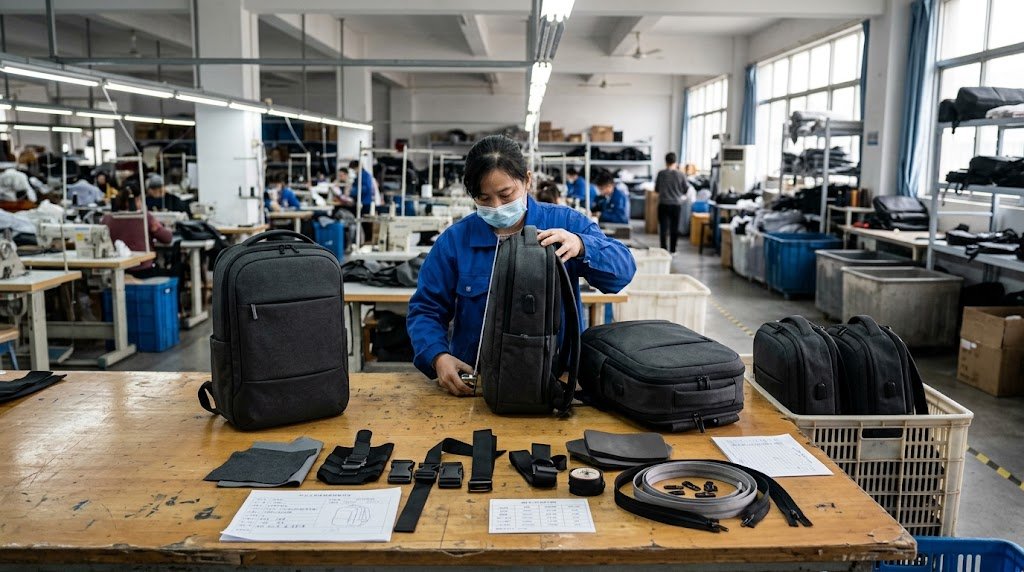
You’ve found a supplier on Alibaba. The samples look decent. The price is low. You place a 500-unit order.
Then the production units arrive — and they’re not the same bag you approved.
I’ve seen this happen to hundreds of buyers across 15 years on the factory floor. The hiking backpack category is one of the worst offenders, because the complexity is high (frames, padding systems, load-bearing straps, multiple fabrics) and the margin for substitution is massive if a buyer doesn’t know what to check.
This guide is not a "7-step framework." It’s what I actually know from running a backpack factory — the specs, the friction points, the numbers, and the questions you should be asking before you wire a single dollar.
What Makes Hiking Backpacks a High-Margin Category (If You Source Right)?
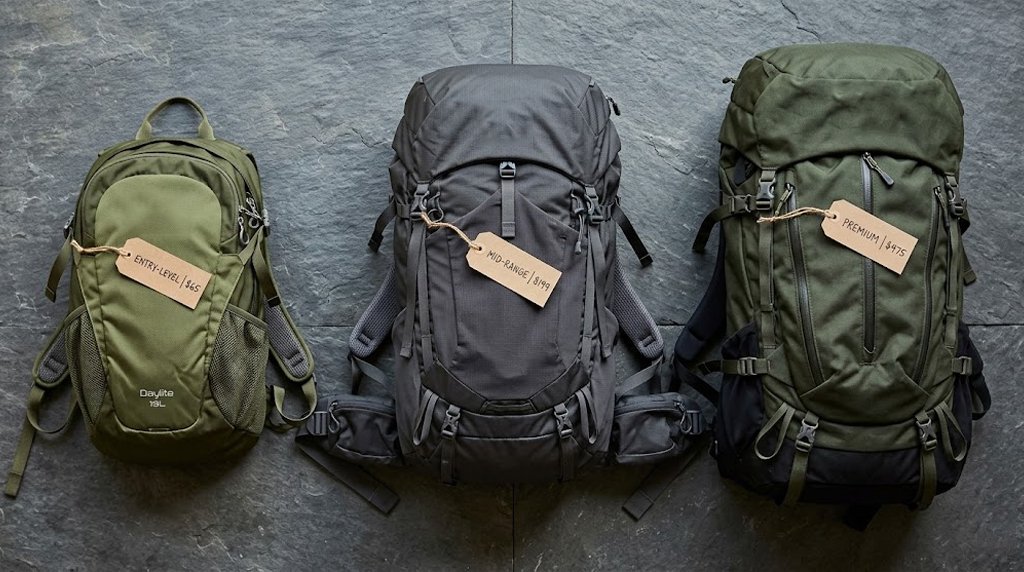
Hiking backpacks carry 40–70% gross margins for well-positioned brands — but only when sourced with the right specs, MOQ structure, and supplier relationship. Most importers leave 15–20 margin points on the table through poor spec control and wrong factory selection.
The outdoor gear market is not like fashion bags. Buyers are technical. They read reviews. They compare suspension systems. That means a well-built, properly certified hiking pack can hold its retail price — and that pricing power starts at the sourcing stage.
Here’s the margin math I see most often from our B2B clients:
| Segment | Ex-Factory Cost (USD) | Typical Retail (USD) | Gross Margin |
|---|---|---|---|
| Entry-level (20–30L, basic nylon) | $8–$14 | $39–$69 | 65–80% |
| Mid-range (30–50L, ripstop + frame) | $18–$32 | $89–$149 | 65–75% |
| Premium (50–75L, Dyneema or recycled) | $45–$80 | $249–$499 | 68–82% |
| Private label (custom branding + cert) | $22–$55 | $99–$299 | 60–75% |
The margin is there. The risk is in sourcing execution — which is what the rest of this guide covers.
What Type of Hiking Backpack Buyer Are You?
Before you contact a single factory, know your sourcing model. There are four distinct buyer types, and each needs a different factory relationship, MOQ structure, and product spec approach.
The Reseller
You’re buying an existing product and selling it under your brand or on marketplaces. You want low MOQ, fast turnaround, and clean specs. Start with 200–500 units per SKU. Watch for hidden branding marks from the manufacturer on zippers and labels.
The Private Label Brand
You have a brand. You want your logo, colors, and maybe minor design tweaks on a proven base bag. MOQ is typically 300–500 units.You need a well-experienced factory that has the ability to run repeat orders consistently.This is our core business model at Osgoodway.
The OEM Product Developer
You’re designing a new bag from scratch — your own suspension, your own panel layout, your own materials. MOQ is 500–1,000 units for the first run. Tooling and development costs apply. This path has the highest margin ceiling and the highest risk if you pick the wrong factory.
The Retailer / Distributor
You’re buying at volume (2,000+ units) and need consistent quality across production runs, plus documentation for customs and retail buyers. Certifications matter here — REACH, OEKO-TEX, bluesign. Don’t skip this.
How Do You Evaluate a Hiking Backpack Factory Honestly?
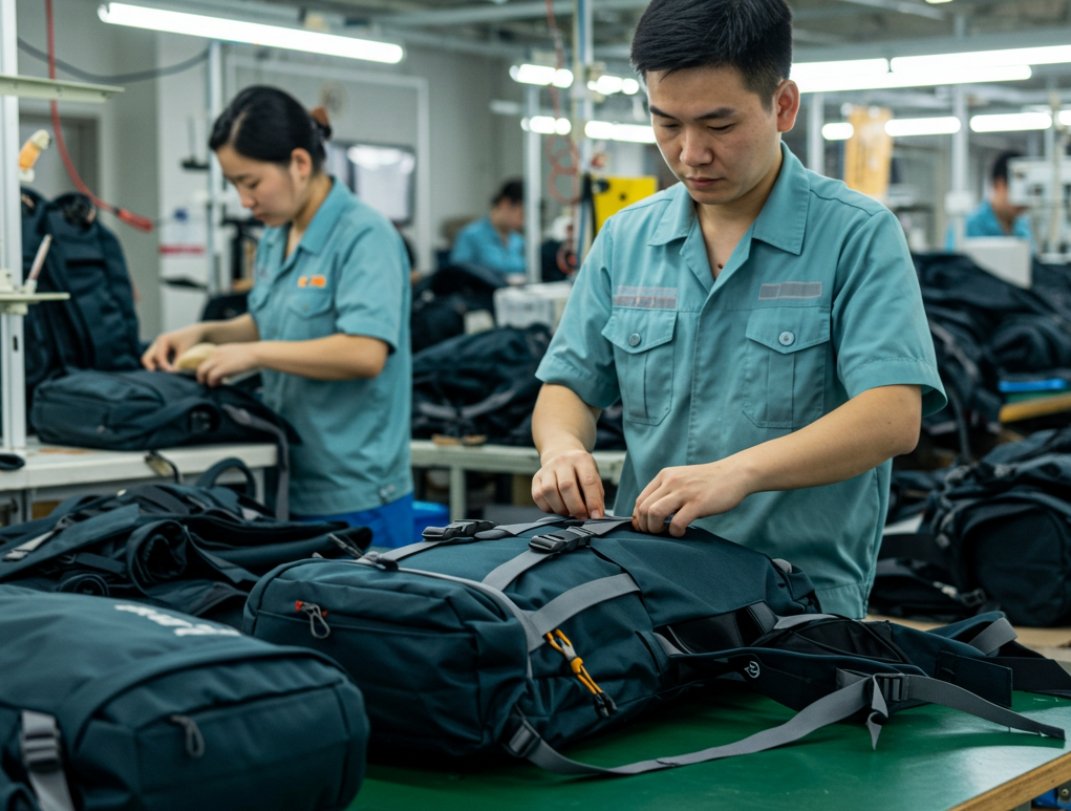
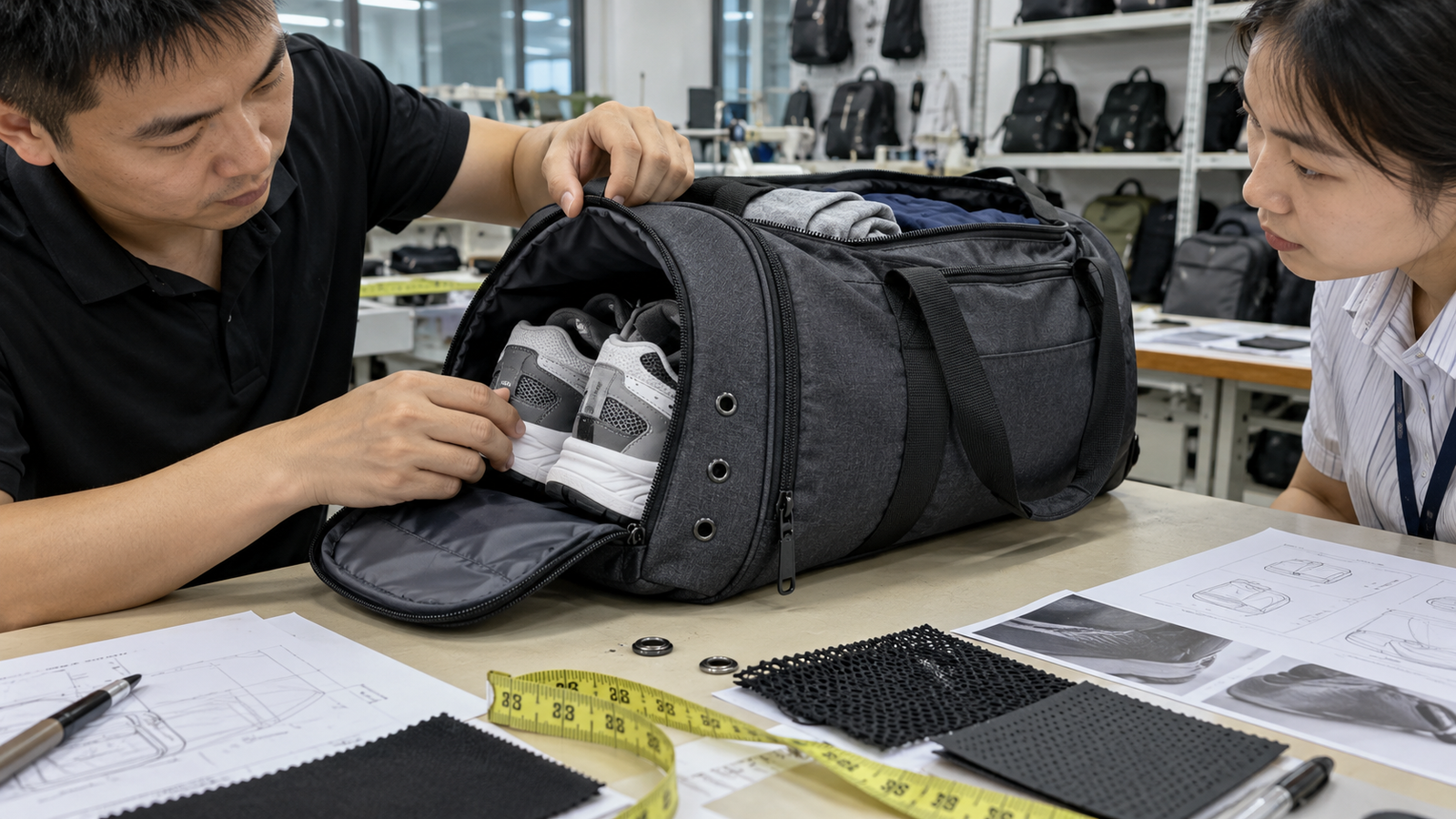
The only way to evaluate a factory for hiking backpacks is to audit three things: their suspension system capability, their quality control documentation, and whether their sample matches their production. Everything else is marketing.
I’m going to say something that gets me in trouble with other factories: most "hiking backpack factories" in China are actually bag factories that happen to make hiking packs. There’s a big difference.
A real hiking backpack factory has:
- In-house injection molding or dedicated tooling for frame stays, buckles, and hipbelt hardware
- Pattern engineers who understand load distribution (not just aesthetics)
- Internal tension and abrasion testing equipment
- Workers specialized in foam die-cutting for back panels and hipbelts
A generic bag factory stamps "hiking backpack" on their catalog and substitutes materials the moment your order is big enough to make it worth it.
Red Flags in Factory Audits
- No photos of their own production line — only finished product shots
- Can’t show you their material test reports (not just certifications, but actual test data)
- Sample delivery takes more than 25 days for a standard pack
- They can’t name their zipper supplier (YKK, SBS, or RiRi — anything else at premium price points is a lie)
- Their "factory" WhatsApp has a trading company address on Google Maps
Green Flags Worth Paying For
- They send you unsolicited photos of your specific production run during manufacturing
- They have a dedicated QC staff member (not the salesperson doing QC)
- They can provide a Bill of Materials (BOM) before sampling begins
- They’ve worked with at least one brand you can verify with a quick Google search
What Are the Real MOQ and Pricing Benchmarks for Bulk Hiking Backpacks?
Industry MOQ for custom hiking backpacks in China ranges from 200 to 1,000 units per SKU depending on complexity. For standard designs with minor logo changes, 300 units is realistic. For full OEM with custom frames and materials, expect 500–1,000 minimum.
Here’s what the numbers actually look like from our factory pricing sheet:
| Customization Level | MOQ | Sample Cost | Lead Time |
|---|---|---|---|
| Logo + label change only | 200–300 pcs | $80–$150/sample | 30–45 days |
| Color + fabric change | 300–500 pcs | $120–$200/sample | 35–50 days |
| Design modification (pockets, straps) | 500–800 pcs | $150–$300/sample | 45–60 days |
| Full OEM (new pattern, frame, hardware) | 800–1,200 pcs | $300–$600/sample | 60–90 days |
One thing buyers always underestimate: sample cost is not included in your unit price. And if you’re getting "free samples," the cost is baked into your production quote — usually inflated by 8–12%.
I always tell buyers: pay for your sample. It’s the only way to get a factory to take your spec seriously.
Which Materials Actually Drive Margin in Hiking Backpacks?
The three materials that command premium retail prices are 210D–420D ripstop nylon, Dyneema Composite Fabric (DCF), and recycled rPET. Each has a different cost-to-retail leverage ratio, and choosing wrong will destroy your positioning.
Read more: Hiking Backpack Materials Compared: Ripstop Nylon, Dyneema & Recycled Fabrics for B2B Buyers
Here’s my quick take from the factory floor:
Ripstop Nylon (210D–420D)
The workhorse. Best cost-to-performance ratio. A 420D ripstop nylon main body costs us roughly $2.80–$4.50/meter, and the finished bag holds $89–$149 retail easily. The problem? Every factory uses it, so differentiation is harder. You need great construction details and branding to stand out.
Dyneema Composite Fabric (DCF)
The premium play. We use Dyneema’s verified DCF for ultralight builds. Material cost alone runs $18–$35/meter. Finished bag ex-factory: $65–$120. Retail: $299–$599. The margin is exceptional — but the market is narrow and technical. Don’t go here unless your brand can speak fluently to the UL hiking community.
Recycled rPET Fabric
The sustainability angle. We source certified rPET from verified mills — not the fake "recycled" labels you’ll find on unverified Chinese platforms. Global Recycled Standard (GRS) certification is what you need. Cost premium over virgin nylon: 12–20%. Retail premium it commands: 30–60%. Do the math. It works.
⚠️ Factory Secret: I’ve seen buyers pay "recycled fabric" prices for virgin fabric with a GRS-looking logo on the hang tag. If your factory can’t show you the mill’s GRS transaction certificate (TC), that fabric is not certified. Full stop.
What Certifications Do You Actually Need for Your Target Market?
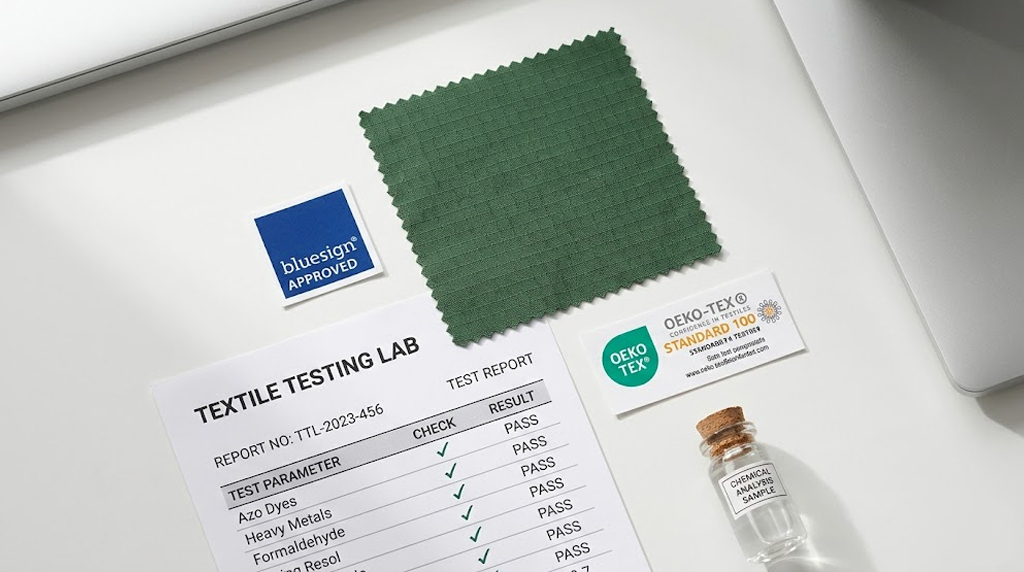
For North America: CPSC compliance and REACH substance restrictions are baseline. For Europe: EN ISO and REACH are mandatory, and bluesign or OEKO-TEX dramatically increase wholesale buyer acceptance. For premium retail: bluesign is increasingly becoming a de facto requirement.
Here’s the fast version from a factory perspective:
| Certification | Who Needs It | What It Covers | Cost to You |
|---|---|---|---|
| OEKO-TEX Standard 100 | Anyone selling in EU or premium US retail | Harmful substances in fabric | $800–$2,000/test |
| bluesign | Brands targeting outdoor specialty retailers | Full supply chain sustainability | Factory-level cert; ask your supplier |
| REACH (EU) | EU market mandatory | Chemical safety in materials | Covered by OEKO-TEX or separate lab test |
| CPSC (US) | US retail, especially kids’ products | Safety standards compliance | $500–$1,500/product |
| GRS | Anyone claiming "recycled" materials | Chain of custody for recycled content | Mill-level cert + transaction certificate |
My honest take: if you’re building a hiking backpack brand for specialty outdoor retail (REI, Backcountry, etc.), you need bluesign or OEKO-TEX. No serious buyer will onboard you without it. If you’re selling D2C or on Amazon, REACH + OEKO-TEX is your floor, not your ceiling.
How Do You Verify Fabric Compliance Without Losing Money?
Verifying fabric compliance requires sourcing certified raw materials directly from GRS and REACH-compliant mills, requesting valid scope certificates, and performing independent lab testing for banned substances like PFOA and PFCA — before a single meter gets cut.
I’ll tell you exactly how costly getting this wrong can be.
A European client came to us with a pre-developed fabric spec. They had already done their sampling elsewhere. The waterproof coating looked fine on paper. Our chemical screening team flagged it in the first material review: the DWR coating contained restricted Perfluorooctanoic acid (PFOA) — a substance explicitly banned under EU REACH Regulations. Had we run production, the entire container would have been seized at Hamburg port. No appeal. No refund. Just a destroyed shipment and a ruined season.
That is not a hypothetical. That is a real order we stopped before it became a disaster.
Here is our internal compliance checklist — the same one we run on every new fabric before bulk cutting begins:
- Validate Scope Certificates (SC) and Transaction Certificates (TC): Do not accept a GRS logo on a PDF. We cross-check the specific Transaction Certificate for every batch of recycled yarn directly on the GRS database. Batch-level validation only — no exceptions.
- Enforce PFC-free DWR coatings: All water-repellent treatments must be 100% PFOA and PFCA-free to pass REACH. We reject any coating where the supplier cannot provide an independent chemical test report — not just a self-declaration.
- Run third-party pre-production testing: Before bulk cutting, we submit random fabric samples to SGS or TÜV for restricted substance screening. This costs $200–$400 per fabric type. It has saved clients far more than that, repeatedly.
⚠️ Factory Secret: Most factories do not run chemical screening before cutting. They rely on the mill’s self-certification and hope for the best. That is your problem at customs, not theirs. Ask any factory you’re evaluating: "Can you show me your last third-party pre-production chemical test report?" If they can’t, you’re carrying the compliance risk alone.
How Does the Sampling and Pre-Production Process Actually Work?
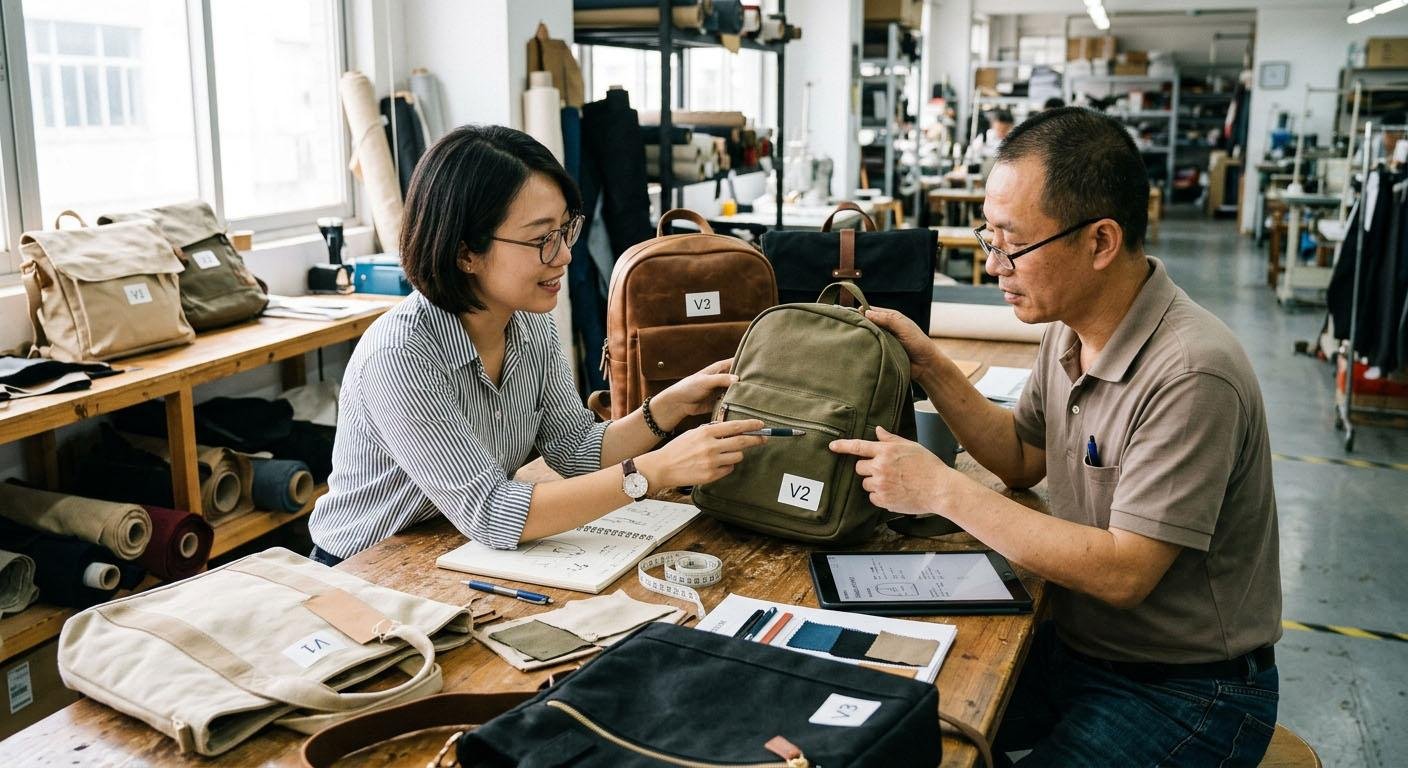
The sampling process for a custom hiking backpack runs 3–5 rounds over 45–90 days. Buyers who try to compress this timeline are the ones who end up with production units that don’t match their approval.
Here’s our actual factory sampling process:
Stage 1: Tech Pack Review (Days 1–7)
We review your tech pack or reference sample. If you don’t have a tech pack, we build one from your reference. This is where we flag spec conflicts — things like a hipbelt foam density that doesn’t match the load rating you’ve specified.
If a factory skips this step and goes straight to sampling, that’s a problem. They’re guessing at your specs.
Stage 2: First Proto (Days 8–25)
We cut a first prototype in the closest available materials. The goal is shape, fit, and construction logic — not final materials. We photograph every seam, every attachment point, and send you a full proto report before shipping.
Stage 3: Fit Corrections (Days 26–40)
You send back comments. We revise. For complex packs, this takes 2–3 rounds. For simple private label jobs, often 1.
Stage 4: Pre-Production Sample (Days 41–60)
This is the critical one. The PP sample must be made in final materials, final hardware, and final construction. This is the sample that should be signed off and physically retained by both parties. Any production unit that deviates from the PP sample is a quality failure.
Stage 5: Production Approval
We send inline QC photos at 30%, 60%, and 100% of production. We don’t ship until the buyer has reviewed and approved the final inspection report.
⚠️ Factory Secret: Always request that the factory keeps a sealed, signed PP sample in their facility. If there’s a dispute later, this is your evidence. A factory that refuses this is a factory that plans to deviate.

How Do You Structure the Supplier Negotiation Without Burning the Relationship?
The best price negotiation tactic in B2B bag sourcing is not haggling — it’s specification bundling. Consolidate SKUs, fix your annual volume, and ask for a tiered pricing structure. Factories respond to predictability, not pressure.
I’ll be blunt: buyers who open with "can you do better on the price?" without any context get the worst deals. Factories price risk. If you’re unpredictable, the price reflects that.
Here’s what actually gets you factory-level pricing:
- Commit to annual volume in writing. Even a non-binding forecast letter moves you from "spot buyer" to "account."
- Reduce colorway complexity. Every additional colorway adds 8–15% to your unit cost through material minimums and changeover time.
- Fix your payment terms early. 30% deposit, 70% against Bill of Lading is standard. Asking for 30/70 with net-30 after delivery is not standard — and you’ll pay for it in price.
- Bundle sampling costs into year-one pricing. We do this for accounts with committed volume. The sample cost amortizes over the order.
What not to do: ask for price matching against a competitor quote you received from a factory you’ve never visited. We can see a low-ball quote from 100 miles away, and we know what it means for quality.
What Should Your Quality Control Checklist Cover?
A proper QC inspection for hiking backpacks must cover 14 functional checkpoints beyond cosmetic appearance — including seam strength, buckle load rating, zipper pull tension, and suspension system alignment. Cosmetic-only inspection misses 60–70% of functional failures.
Here’s the checklist we use internally and recommend to buyers running third-party inspections:
Structural / Functional
- Main seam tensile strength (minimum 150N per EN ISO 13934-1)
- Frame stay alignment (within 3mm of spec)
- Hipbelt attachment load test (minimum 80kg static load)
- Shoulder strap bartack count and thread spec
- Compression strap buckle load rating verified against spec
Materials
- Fabric weight measurement (g/m²) against BOM
- Zipper brand and grade verification (pull-by-pull)
- Lining material confirmed vs. approved PP sample
- Hardware finish vs. approved standard
Branding / Labeling
- Logo placement and size vs. artwork file
- Care label language and country of origin correct
- Hang tag content accurate and attached correctly
Pack / Dimensions
- Loaded capacity measurement (liter volume)
- Weight within ±5% of spec sheet
- All pockets and access points functional
Cosmetic
- No stitch skips, raw edges, or uncut threads
- Color consistency across units in same shipment
- No adhesive residue, dust, or factory marks
I recommend using a third-party inspection agency like Bureau Veritas or SGS for your first three production runs with any new factory. The cost is $300–$500 per inspection. It’s the cheapest insurance you’ll ever buy.
How Do You Build a Private Label Hiking Backpack Brand From Scratch?
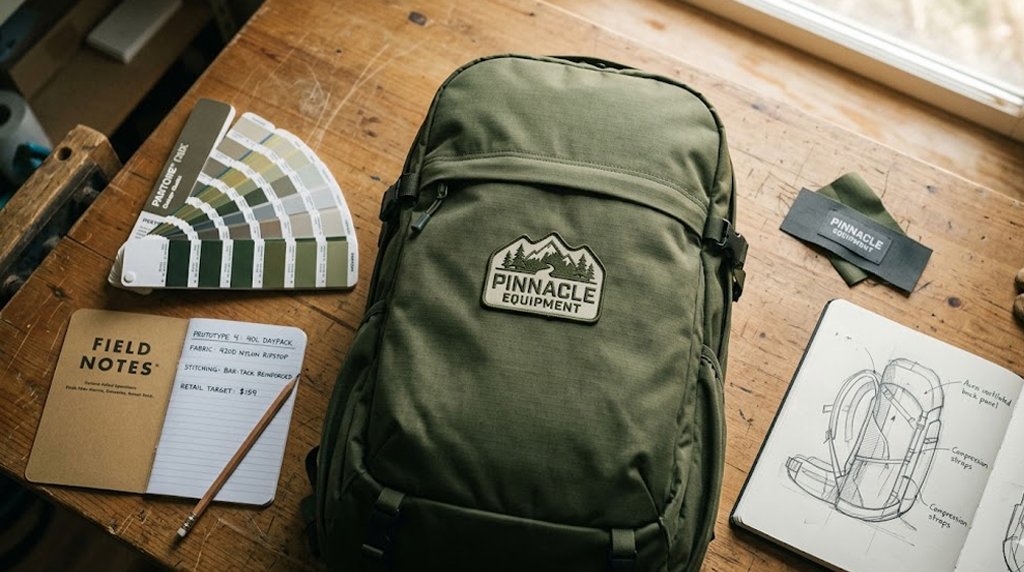
Building a private label hiking backpack brand requires three things: a differentiated product spec, a consistent factory relationship, and a certification stack that your target retail channel accepts. Brands that skip any of these three are gone within two years.
Read more: How to Build a Private Label Hiking Backpack Brand: OEM to Own Label
Here’s the condensed version from our factory experience:
The brands we’ve seen succeed in 3–5 years share one pattern: they started with one bag done exceptionally well before expanding their line. They nailed the fit, the materials, and the story of that one product, got into one retail channel, and used that proof to expand.
The brands that fail try to launch 8 SKUs in year one. The MOQ math alone kills them — $45,000–$80,000 tied up in inventory before they’ve proven a single product.
Our recommendation for a first private label order:
- One hero SKU (typically a 35–45L all-around hiking pack)
- Two colorways maximum
- 300–500 units
- OEKO-TEX certified materials minimum
- Budget $2,000–$4,000 for sampling and development
- Plan for a 90-day development + production cycle
What Does a Realistic Landed Cost Calculation Look Like?
Landed cost for hiking backpacks from China to the US or EU typically runs 35–55% above ex-factory price when you add freight, duties, customs clearance, and quality inspection. Build this into your margin model before you negotiate with factories.
Here’s a real-world landed cost example (35L mid-range hiking pack, 500 units, USA):
| Cost Component | USD |
|---|---|
| Ex-factory unit cost | $24.00 |
| Ocean freight (LCL, China→LA) per unit | $3.20 |
| US import duty (HS 4202.92, 17.6%) | $4.22 |
| Customs brokerage (amortized) | $0.60 |
| Port/drayage (amortized) | $0.45 |
| 3PL receiving (amortized) | $0.80 |
| QC inspection (amortized) | $0.60 |
| Total Landed Cost Per Unit | $33.87 |
| Retail price target | $109.00 |
| Gross Margin | 69% |
Check your HS code. Most hiking backpacks fall under HS 4202.92 (backpacks with outer surface of textile materials). The US duty rate is currently 17.6% + potential Section 301 tariffs depending on material composition. Always verify with your customs broker before finalizing your landed cost model.
Frequently Asked Questions
Q1: What is the minimum order quantity for custom hiking backpacks from a Chinese factory?
For private label hiking backpacks with logo and minor customization, the realistic MOQ is 300–500 units per SKU from a reputable factory. Full OEM orders with custom frames or proprietary suspension systems typically require 500–1,000 units minimum. Factories offering 50–100 unit MOQs on complex hiking packs are either trading companies or cutting corners on materials.
Q2: How do I know if a Chinese backpack factory is legitimate and not a trading company?
Ask for three things: the factory’s business license (营业执照) with manufacturing scope, photos of their cutting room and sewing floor with your specific inquiry date written on a whiteboard, and at least two verifiable brand references you can contact directly. Trading companies cannot provide real-time factory floor documentation for your inquiry.
Q3: What is a fair ex-factory price for a 40L hiking backpack with ripstop nylon and aluminum frame stays?
A well-built 40L hiking backpack with 420D ripstop nylon body, aluminum frame stays, padded hipbelt, and YKK zippers should cost $22–$38 ex-factory depending on construction complexity and order volume. If you’re being quoted under $18 for this spec, the factory is substituting materials — most likely on the frame stays, zipper grade, or fabric weight.
Q4: How long does it take from first contact to receiving my first bulk order of hiking backpacks?
The realistic timeline for a new private label client is 90–120 days from first spec discussion to goods delivered at your warehouse. This breaks down as: 7–14 days for tech pack and quote, 30–45 days for sampling (2 rounds), 45–60 days for production, 20–30 days for ocean freight. Factories that promise 60-day total timelines are skipping the sampling process or holding existing stock.
Q5: Do I need bluesign certification for my hiking backpack fabric, and how do I get it?
bluesign certification is held at the mill level, not the brand level. You cannot apply for bluesign yourself — you need to source fabric from a bluesign-approved mill. Ask your factory to provide a list of their bluesign-approved fabric suppliers and confirm each mill’s status on the bluesign official member database. If you’re targeting REI, Backcountry, or European outdoor specialty retailers, bluesign or OEKO-TEX Standard 100 fabric certification is increasingly non-negotiable.
Ready to Talk Factory Specs?
If you’ve read this far, you’re not a casual browser. You’re building something real.
At Osgoodway, we’ve spent 12 years manufacturing hiking and outdoor backpacks for brands in North America, Europe, and Australia. We run our own production, keep our own QC team, and build in OEKO-TEX and GRS certification from the ground up — not as an afterthought.
We don’t take every inquiry. We take the ones where the buyer knows their specs, understands their market, and wants a long-term factory partner — not a one-time order mill.
If that’s you:
→ Tell us your specs and get a factory quote — turnaround within 24 hours, no middlemen.
Related reading: