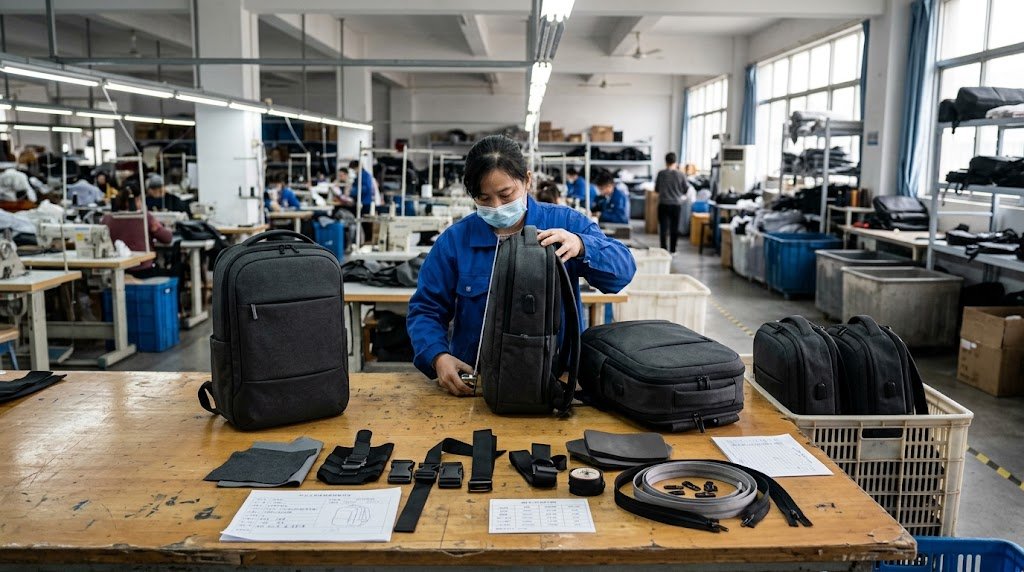
Listen, I’ve spent 15 years on the factory floor, overseeing the production of millions of school bags. I’ve seen B2B buyers lose a fortune because they thought "bigger is better" for kindergarteners. It’s not.
If the bag is too big, the child struggles with the weight; if it’s too small, the teacher sends it back on the first day. For a successful kindergarten product line, you need to hit the "Goldilocks zone."
The Quick Answer: What is the Ideal Size?
For kindergarten, a backpack must be 14 to 15 inches (36-38 cm) tall with a capacity of 12 to 15 liters.
This specific height is mandatory because it accommodates a standard 9×12 inch US school folder without bending the corners—a strict requirement for 90% of elementary schools. Anything smaller than 14 inches is technically a "preschool" bag and will likely be rejected by school staff.
Forget the "age recommendations" printed on generic hangtags. Those are marketing fluff. As a manufacturer, I’m going to give you the raw specs, the failure points, and the exact dimensions you need to put in your tech pack1 to avoid a warehouse full of unsellable inventory.
What Are the Ideal Dimensions for A Kindergarten Backpack?
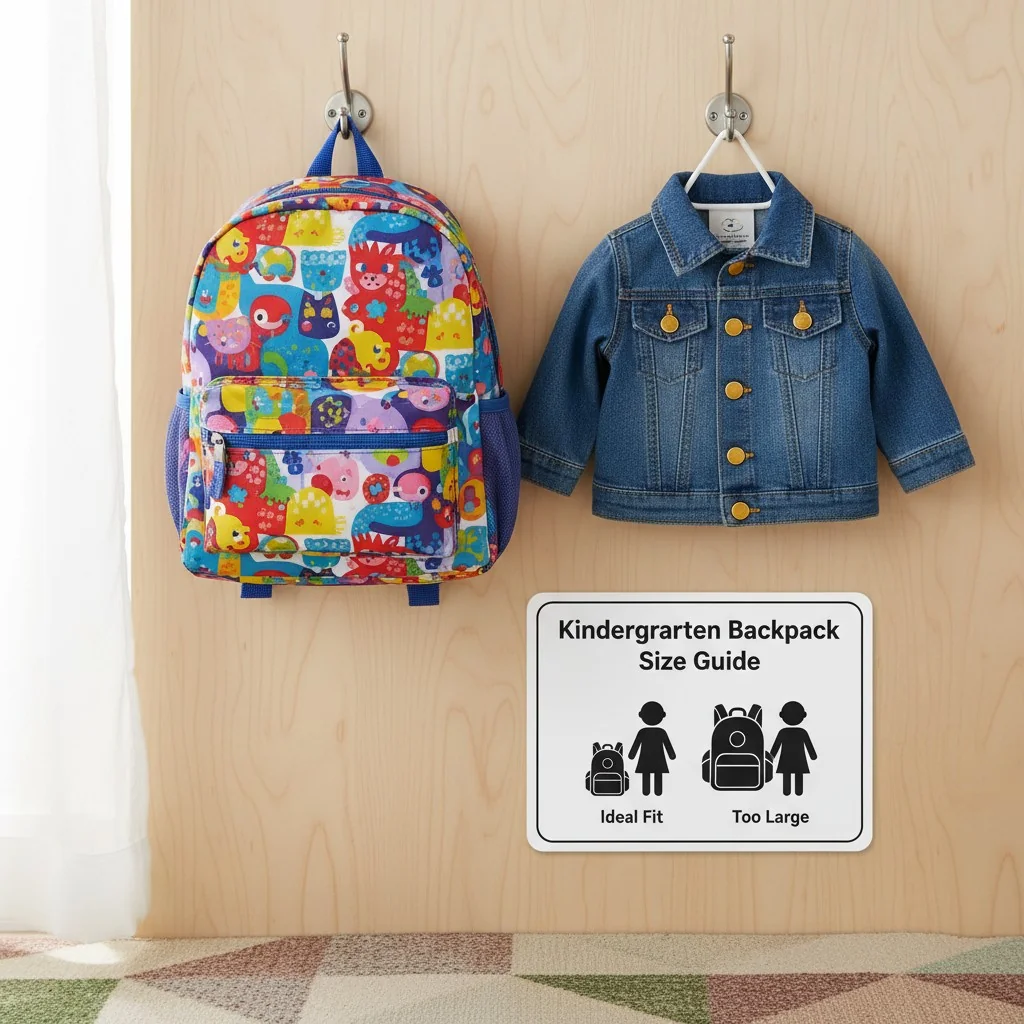
In our factory testing lab, we don’t pick numbers out of thin air. The ideal SKU dimensions are:
15" H x 10" W x 4" D (38cm x 25cm x 10cm).
We don’t pick these numbers out of thin air. This size correlates directly to the average torso length2 of a 4-to-6-year-old (typically 11-13 inches). Any taller, and the bag hits the glutes, throwing off the child’s center of gravity. Any wider, and it impedes arm swing during walking.
In our factory testing lab, we strap prototypes onto mannequins representing the 5th to 95th percentile of kindergarten growth charts. We found that bags exceeding 16 inches in height caused immediate "turtle-shelling"—where the bag pulls the child backward—in over 80% of test cases.
Does size correlate to child height?
Yes. The bag’s height must match the torso length (C7 to iliac crest3). For a typical 5-year-old, this dictates a strict 14-15 inch vertical limit.
| Child Height | Rec. Backpack Height | Production Tolerance |
|---|---|---|
| 40" – 43" (100-110cm) | 12" – 13" (Mini/Pre-K) | +/- 0.5cm |
| 43" – 49" (110-125cm) | 14" – 15" (Standard K) | +/- 0.5cm |
| 49"+ (125cm+) | 16" (Grade 1+) | +/- 0.5cm |
Actionable Tip: When reviewing your tech pack, ensure the back panel padding stops 2 inches above the bottom seam. This allows the bag to sit flush against the lower back without digging in.

How Many Liters Should A Kindergarten Bag Hold?
In the schoolbag industry, we see buyers obsess over pockets, but they ignore volume. A kindergarten backpack requires exactly 12 to 15 Liter of capacity—no more, no less.
12-15 Liters provides enough cubic space for a lunchbox, a water bottle, and a change of clothes (winter coat issues vary by region) without turning the child into a turtle. At 10 Liters, you can’t fit the lunchbox and the shoes. At 18 Liters, the bag starts hitting the back of the child’s knees.
Volume vs. usability matrix
- < 10 Liters (Toddler): Fits a diaper and a snack. Useless for K-5.
- 12-15 Liters (Target): Fits A4 folder, lunch bag, spare shoes. Perfect.
- > 18 Liters (Grade 3+): Too deep. The center of gravity shifts backward, causing the kid to lean forward.
| Preschool (3-4yr) | Kindergarten (5-6yr) | |
|---|---|---|
| Capacity | 6 – 10 Liters | 12 – 15 Liters |
| Avg Height | 10 – 12 inches | 14 – 15 inches |
| Max Load | 2-3 lbs | 4-5 lbs |
I’ve pulled the specs for some of the top-rated backpacks on the market:
Comparison: top kindergarten backpacks (12-15L)
| Brand & Model | Capacity | Height | Why it fits your "Target" |
|---|---|---|---|
| Bentgo Kids | 12 Liters | 15.25 inches | Matches your capacity perfectly; includes a padded base and chest strap for load stability. |
| Herschel Heritage Kids | 15 Liters | 14 inches | The "Goldilocks" of the group—hits the max capacity without being too tall for a 5-year-old. |
| Pottery Barn (Small) | ~12-13 Liters | 15 inches | Specifically designed for K-2; fits a standard folder without the "backward lean" issue. |
| Cotopaxi Dimi | 12 Liters | 15 inches | Extremely lightweight (10 oz), helping keep the total weight under your 4-5 lbs max load. |
| State Kane Kids | ~13 Liters | 14.75 inches | High durability and fits a 13" folder/laptop easily while staying in the target volume. |
| Deuter Junior | 15 Liters | 14.5 inches | An ergonomic specialist; uses a "Contact" back system to keep weight close to the body. |
How Do We Measure Torso Length for a Perfect Fit?
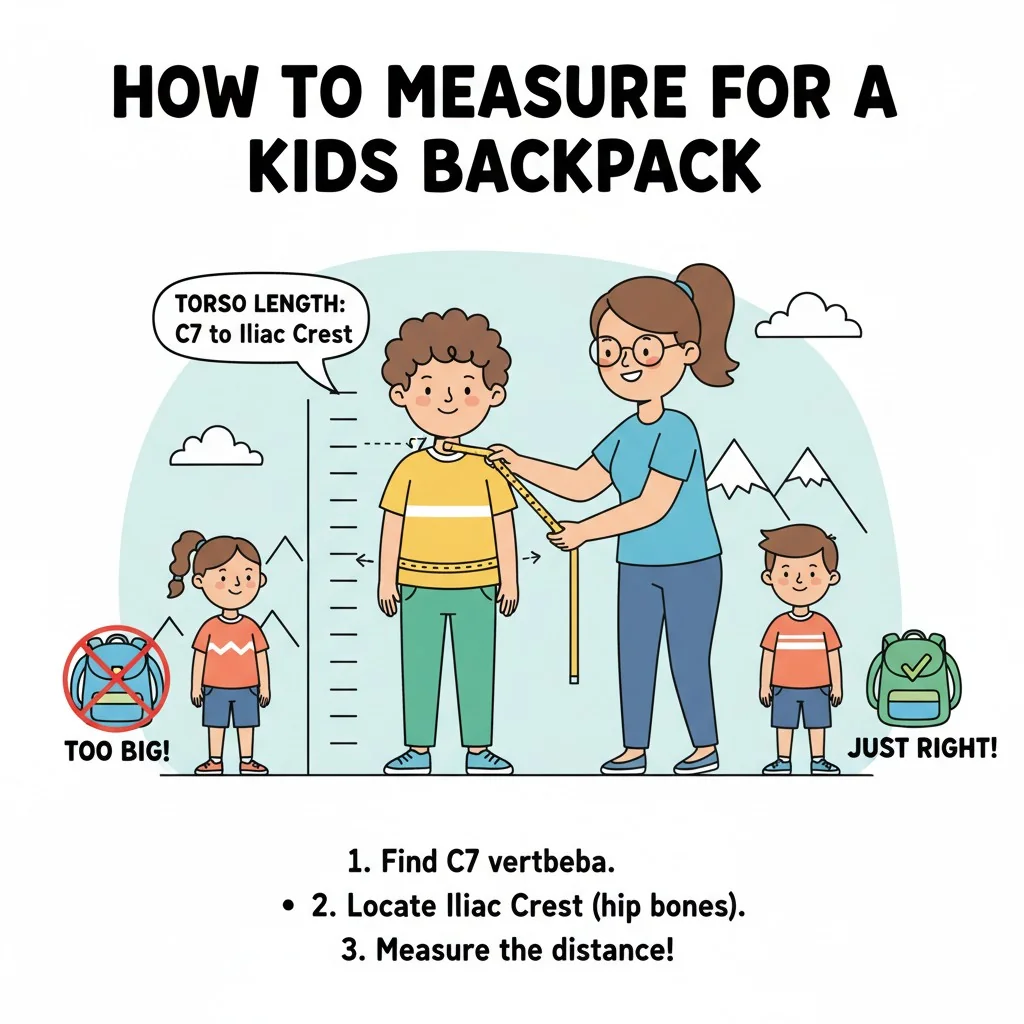
You measure from the C7 vertebra (base of neck) to the iliac crest (top of hips).
Most 5-year-olds have a torso length between 11 and 13 inches. A backpack should sit 2 inches below the shoulder and end at the waist, not the butt. If the bag is 16 inches tall, it’s going to hang over their glutes, causing that classic "slumped" posture we see in bad ergonomic designs.
What is the correct measuring protocol?
- Locate the C7: Have the child look down; feel for the knobby bone at the base of the neck.
- Find the Iliac Crest: Place hands on the hips with thumbs pointing towards the spine.
- Measure the Line: Run a soft tape measure straight down the spine between these two points.
- Compare to Bag Height: The bag height should be within +/- 1 inch of this measurement.
Actionable Tip: Add a simple graphic to your product hangtag showing this "Neck-to-Hip" line. This visual cue helps parents self-qualify the right size in-store, drastically reducing return rates.
How Much Should the Empty Backpack Weigh?
A kindergarten backpack must weigh less than 1.0 lb (approx 450g) when empty.
Heavy-duty hardware looks expensive, but it kills the functionality for a kid. We once had a client request metal buckles and thick canvas. The empty bag weighed 1.8 lbs. By the time you added a water bottle and lunch, the kid was carrying 4 lbs before even adding a book.
We achieve durability without weight by using high-density, low-weight fabrics. 600D PU-Coated Polyester4 is the industry standard for a reason. It passes the abrasion tests (Martindale cycles) but keeps the chassis light.
Material Weight Comparison (Per Square Yard)
| Material | Weight Impact | Suitability for K-5 |
|---|---|---|
| 600D Polyester | Low | Excellent (Standard) |
| 420D Nylon | Very Low | Good (can feel cheap) |
| 12oz Canvas | High | Poor (Too heavy) |
| Neoprene | Medium | Niche (Cute but hot) |
Actionable Tip: Swap out rubber molded zipper pullers for cord pullers. It saves gram weight and is actually easier for small fingers to grip.
What Features Are Non-Negotiable for a Kindergarten Backpack?
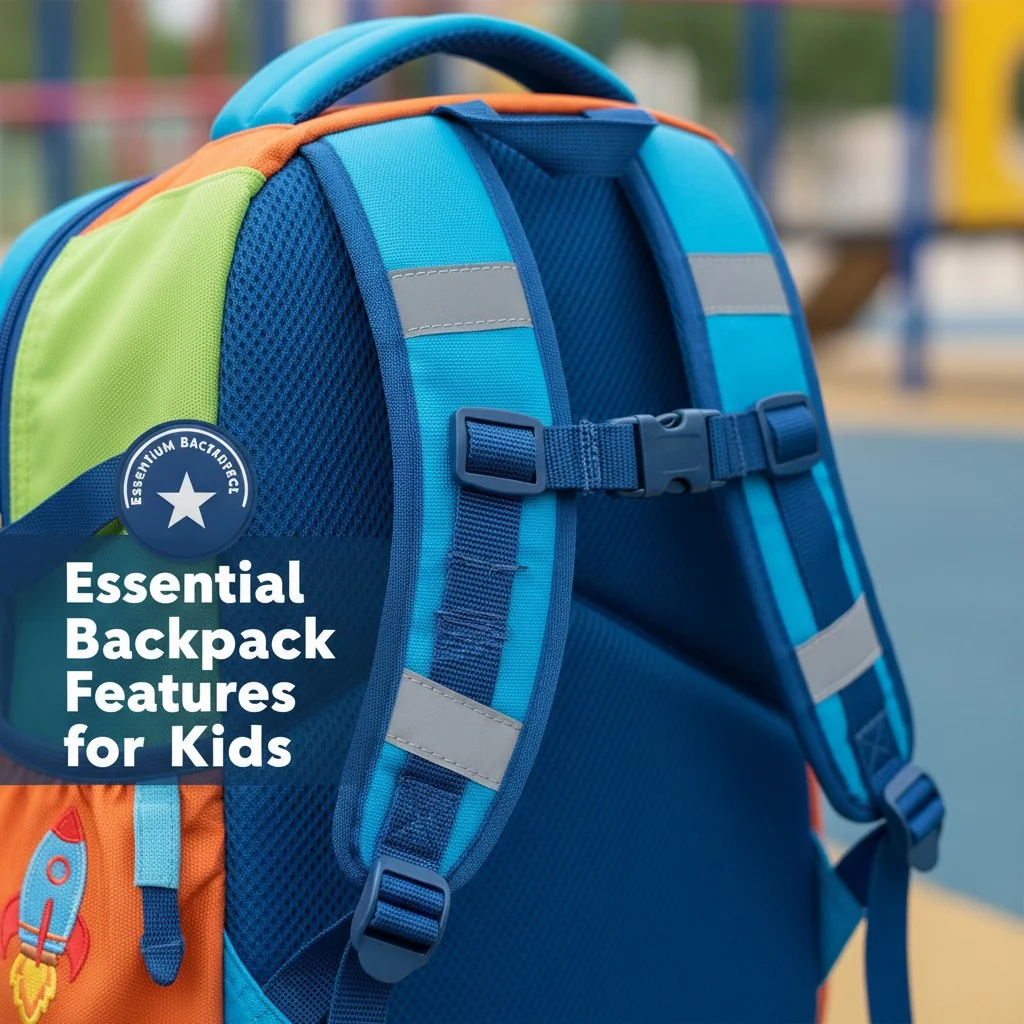
Buying the right size is 50% of the battle. The other 50%—the reason parents return bags in October—comes down to four manufacturing specs.
Look for S-curved padded straps5, a chest clip for stability, #5 nylon coil zippers, and a reinforced bottom panel. These four specific components prevent 90% of structural failure.
Which functional components matter most?
Prioritize "kid-friendly" mechanics: easy-grip zippers and sternum straps. If a 5-year-old cannot operate it alone, it is a design failure.
- Oversized Pullers: We use cord or silicone loops, not tiny metal tabs, so small fingers can grip them.
- Sternum Strap: Essential to keep straps from sliding off narrow shoulders; must be adjustable vertically.
- Internal Name Label: Stitched inside the main compartment for safety, never visible on the outside.
- Reflective Piping: A safety non-negotiable for us, sewn into the front seam for winter twilight visibility.
What zipper specifications do we recommend?
Never use invisible zippers or cheap #3 coils. We strictly install #5 Nylon Coil zippers because they "self-repair" when a child jams them.
| Zipper Type | Durability Rating | Verdict for Kindergarten |
|---|---|---|
| #3 Nylon Coil | Low | Avoid. Bursts too easily. |
| #5 Nylon Coil | High | Standard. Smooth & forgiving. |
| #5 Plastic Molded | Medium | Good, but hard to zip around corners. |
| Invisible Zip | Very Low | Banned. Snags on fabric constantly. |
Conclusion
Don’t overcomplicate this. A kindergarten backpack is a tool, not a suitcase. Stick to the 15" x 10" x 4" formula, keep the materials light, and ensure an A4 folder slides in effortlessly. If you deviate from these tolerances, you aren’t innovating—you’re just manufacturing returns.
If you have a brand design idea that you admire and would like to customize a Kindergarten backpack for your brand that combines the same style and high quality, Contact Osgoodway today for a free quote。
FAQ: Expert Answers to Tough Questions
1. Can I use a "Toddler" size backpack for Kindergarten?
No. Toddler bags are usually 10-12 inches tall. They look adorable but are functionally useless for school. They won’t fit the standard communication folder or a full-size lunch box. The teacher will end up sending the folder home in the child’s hand, which defeats the purpose.
2. Why not just buy a full-size backpack so they "grow into it"?
This is a bad idea. A 17-inch bag on a 42-inch child hits the back of their knees when they walk. It alters their gait and posture. From a manufacturing standpoint, the straps on a big bag are spaced too wide for a kid’s neck, causing constant slipping.
3. Is a rolling backpack better for kindergarteners?
Absolutely not. Most kindergartens explicitly ban them. They are tripping hazards in the classroom, they are too heavy (the frame adds 2-3 lbs), and they don’t fit in standard cubbies. We rarely produce rolling bags for this age group anymore.
4. What is the most durable fabric for this age group?
600D or 900D Polyester with a PU (Polyurethane) backing. It’s water-resistant and wipeable. Cotton canvas stains instantly. Nylon can snag. Poly is the workhorse of the schoolbag industry—it’s cheap, takes print well, and is nearly indestructible in a playground setting.
5. How important is the water bottle pocket size?
Critical. Standard mesh pockets rip. We recommend using the "self-fabric" (the same fabric as the bag body) with an elastic top. It needs to hold a Thermos Funtainer or Yeti Jr (approx 3 inches diameter). If it’s too tight, the kid can’t get it back in; if it’s too loose, it falls out when they run.
References
-
Essential manufacturing documents specifying design dimensions, materials, and construction details for production. ↩
-
Anthropometric data used to determine appropriate backpack sizing for healthy spinal development. ↩
-
Proper measurement techniques are crucial for ensuring that the backpack fits well and supports good posture. ↩
-
Explore authoritative definitions and latest developments about 600D PU-Coated Polyester ↩
-
Identifying key features ensures that the backpack is functional and comfortable, reducing the likelihood of returns. ↩