


Choosing the right fabric for your bag line can feel overwhelming. You want quality and style, but the technical details are confusing. This choice directly impacts your brand’s reputation and costs.
For most brands, nylon is better for its superior durability1, water resistance, and lightweight properties. Canvas offers a classic, natural aesthetic and is easily repairable, making it ideal for heritage or eco-conscious brands that prioritize feel over technical performance.
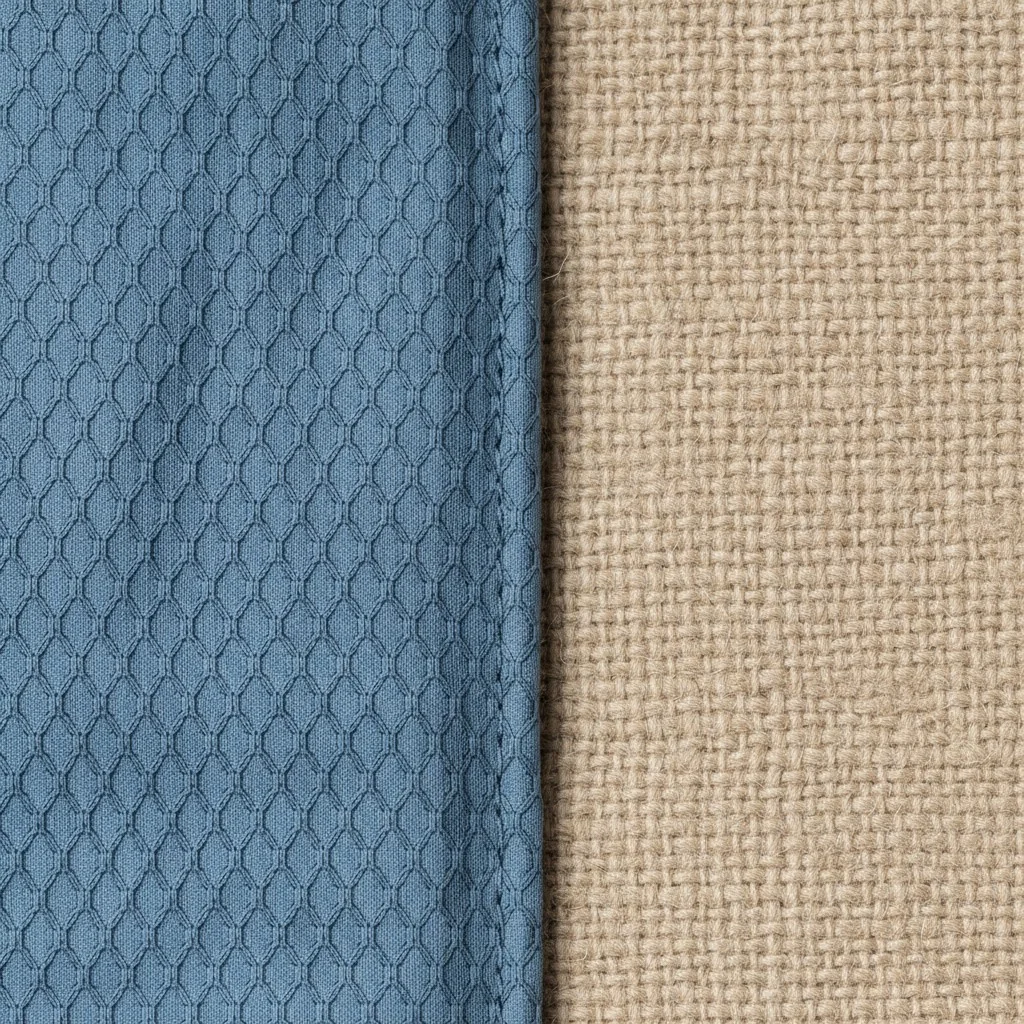
As a bag enthusiast and manufacturer, I’ve worked with both materials extensively. I’ve seen brand owners like you struggle with this exact decision. It’s not just about looks; it’s about performance, cost2, and the story you want your brand to tell. Let’s break down the real differences so you can choose with confidence. This guide will walk you through everything you need to know.
[claim claim=”All canvas is made from 100% cotton.” istrue=”false” explanation=”While traditionally made from cotton or linen, modern canvas can be blended with synthetic fibers like polyester to enhance strength and water resistance.”]
[claim claim=”Nylon was first commercially used to make toothbrush bristles.” istrue=”true” explanation=”Nylon’s first commercial application was for toothbrush bristles in 1938, followed by women’s stockings in 1940, showcasing its fine yet strong properties early on.”]
What are nylon and canvas bags actually made of?
Stuck on the basic definitions of nylon and canvas? It’s confusing when suppliers throw around terms. Understanding the core materials is the first step to making a smart choice.
Nylon is a synthetic, man-made polymer, essentially a type of plastic. Canvas is a fabric made from natural fibers, usually cotton, woven in a tight plain-weave pattern. Nylon is engineered for performance, while canvas is valued for its natural, traditional feel.
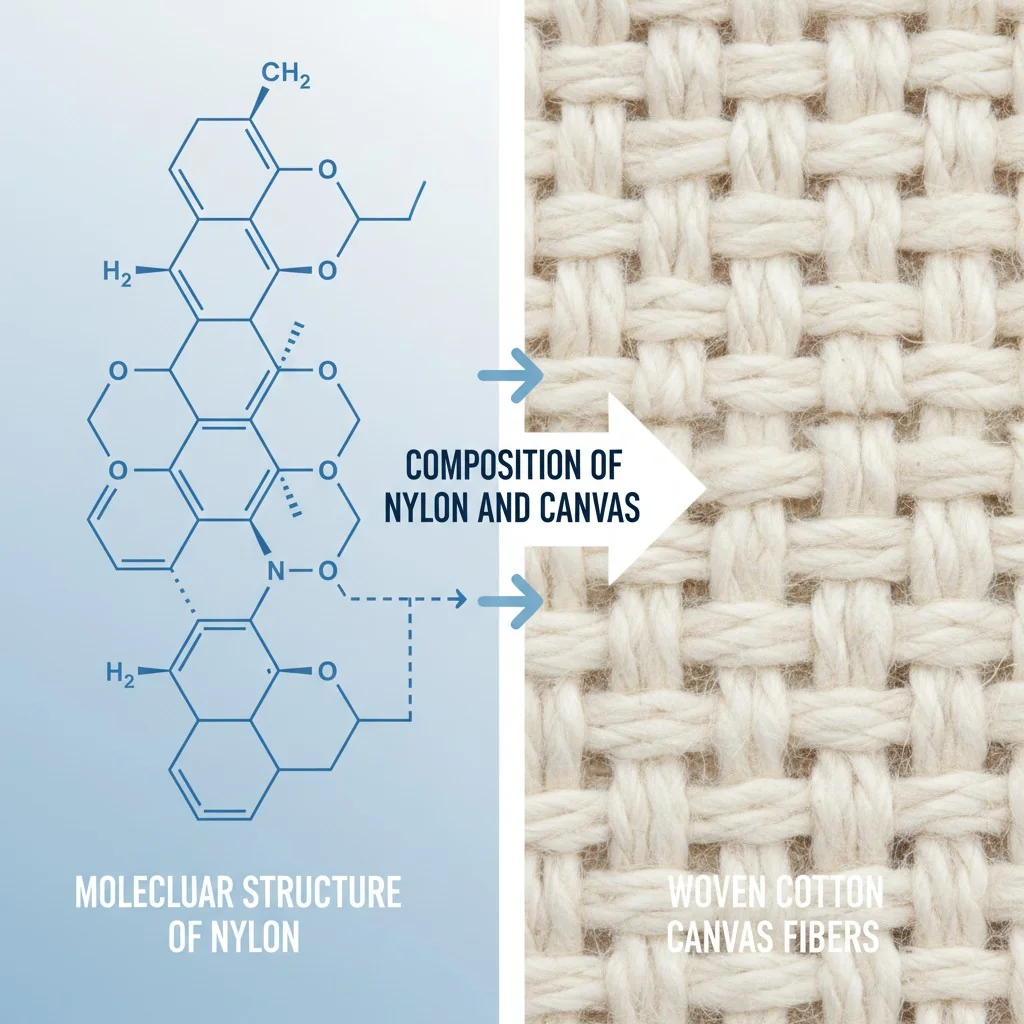
When I first started in this industry, I thought all fabrics were more or less the same. I quickly learned that the raw material defines everything. A client wanted a "strong, natural-feeling" bag. We explored heavy canvas, but their use case involved frequent rain. The canvas would have become heavy and prone to mildew. We switched to a matte-finish, coated nylon that gave a similar aesthetic but with the weather-proof performance they needed. It’s crucial to know what you’re working with from the ground up.
Nylon: The Synthetic Powerhouse
Nylon is a family of synthetic polymers called polyamides. Think of it as a very strong and versatile plastic fiber. It’s created through a chemical process, which allows for a lot of control over its final properties. You’ll often see numbers like "nylon-6" or "nylon-6,6," which refer to its specific chemical structure. For bag making, we often use high-denier versions like Cordura, which are engineered for extreme toughness.
Canvas: The Natural Classic
Canvas is all about the weave. It’s a plain-weave fabric, which means the threads run in a simple over-and-under pattern. This creates a very strong and durable fabric. Traditionally, it was made from hemp or linen, but today, most canvas is made from cotton. The "weight3" of canvas is measured in ounces per square yard. A heavier weight, like 18oz, means a thicker, more durable fabric.
| Feature | Nylon | Canvas |
|---|---|---|
| Origin | Synthetic (Petroleum-based) | Natural (Cotton, Linen, Hemp) |
| Structure | Polymer Fiber | Woven Fabric |
| Key Trait | strength-to-weight ratio4 | Durability from weave |
| Feel | Smooth, slick | Textured, soft |
[claim claim=”Nylon is a completely natural material found in plants.” istrue=”false” explanation=”Nylon is a fully synthetic polymer derived from petroleum. It does not occur in nature.”]
[claim claim=”The word ‘canvas’ is derived from the word ‘cannabis’.” istrue=”true” explanation=”The word comes from the 13th-century Anglo-French ‘canevaz’ and the Old French ‘canevas’, which likely derives from the Latin ‘cannapaceus’ for ‘made of hemp’, as early canvas was woven from hemp.”]
What are the Advantages and Disadvantages of them?
You love the look of canvas but need the performance of nylon. Every material has trade-offs. Choosing one means you might have to sacrifice something else, impacting your product’s final appeal.
Nylon’s advantages are its light weight, high strength, and water resistance5. Its main disadvantage is its synthetic feel and look. Canvas boasts a natural aesthetic, great breathability, and repairability, but it’s heavy, absorbs moisture unless treated, and can stain more easily.
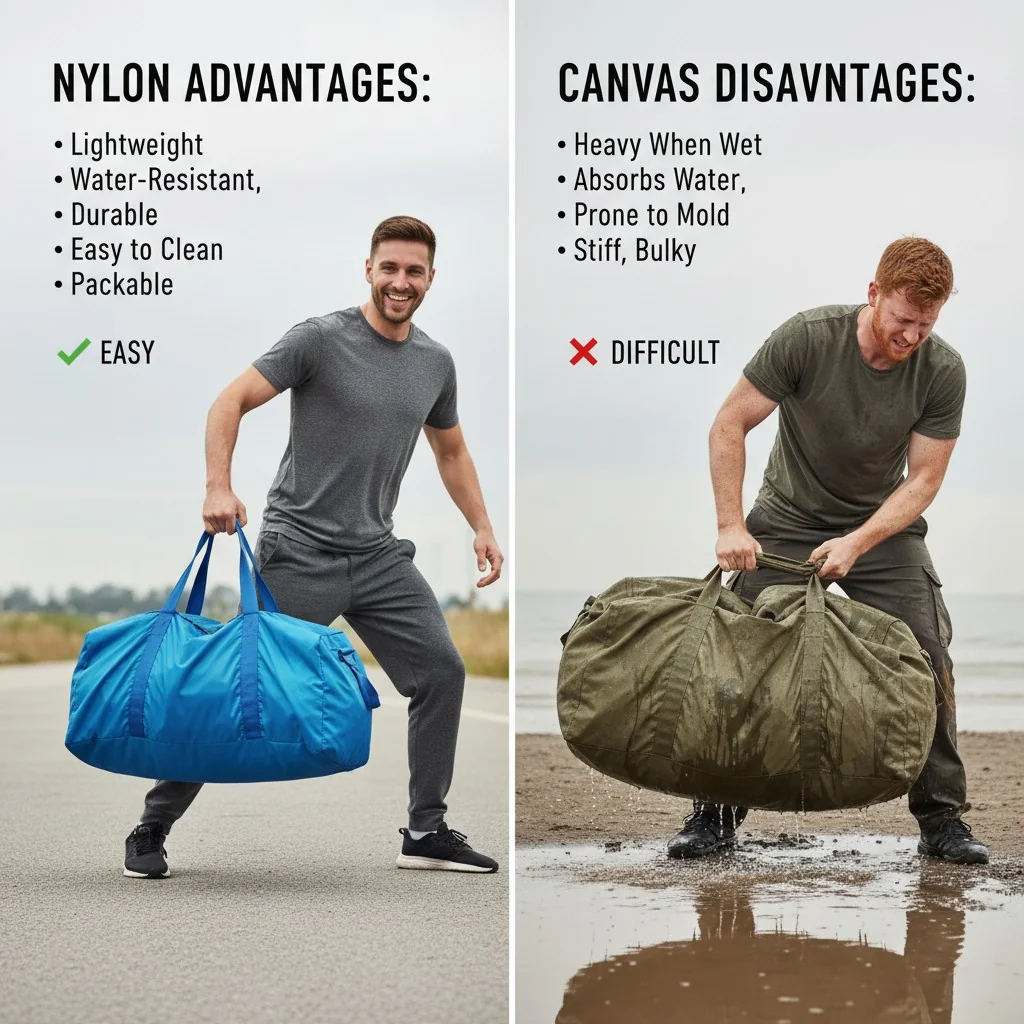
I once worked with a startup creating high-end totes. They were set on waxed canvas for its heritage vibe. The samples looked beautiful. But when they tested them, they found the bags were much heavier than competitors’ nylon versions. They also realized the wax could transfer to clothes in hot weather. We ended up developing a custom nylon fabric with a matte, canvas-like texture to get the best of both worlds. This experience taught me to always present the full picture of pros and cons to my clients.
The Nylon Breakdown
Nylon is the go-to for performance gear for a reason. It has an incredible strength-to-weight ratio, meaning you get a lot of toughness without the bulk. It also has great elasticity, so it can stretch without breaking and return to its shape. Because it’s a non-absorbent fiber, it dries quickly and naturally resists mold and mildew. The main downside is that it can feel "plasticky" and doesn’t have the same warm, organic feel as a natural fiber.
The Canvas Case
Canvas is loved for its classic, rugged look. Think of old-school military duffels or artist’s bags. Because it’s made from cotton, it’s breathable, which is a plus if you’re carrying anything that needs ventilation. It’s also relatively easy to repair; a simple patch can add character and extend the bag’s life. However, untreated canvas is like a sponge. It soaks up water, making it very heavy and slow to dry. It’s also heavier than nylon from the start.
| Aspect | Nylon | Canvas |
|---|---|---|
| Pros | Lightweight, Strong, Water-Resistant, Dries Fast, Resists Mildew | Natural Look, Breathable, Repairable, Develops Patina |
| Cons | Synthetic Feel, Can be Shiny, Harder to Repair Seamlessly | Heavy, Absorbs Water, Slow to Dry, Can Mildew, Needs Treatment |
[claim claim=”Canvas bags are always lighter than nylon bags.” istrue=”false” explanation=”Nylon has a much higher strength-to-weight ratio, meaning a nylon bag will almost always be significantly lighter than a canvas bag of the same size and carrying capacity.”]
[claim claim=”Nylon has a higher tensile strength than steel by weight.” istrue=”true” explanation=”Certain types of nylon fibers, when compared by weight, are stronger than steel. This is why it’s used in ropes, parachutes, and other high-stress applications.”]
Which material is more durable under real-world use?
Your customers expect their bags to last. Choosing a material that fails or wears out quickly can lead to returns and damage your brand’s reputation for quality. So, which one holds up better?
Nylon, especially high-denier ballistic or Cordura fabric, generally offers superior durability in terms of abrasion and tear resistance. However, a thick, high-quality waxed canvas is extremely tough and can outlast nylon in situations with less movement, and it’s much easier to patch and repair.
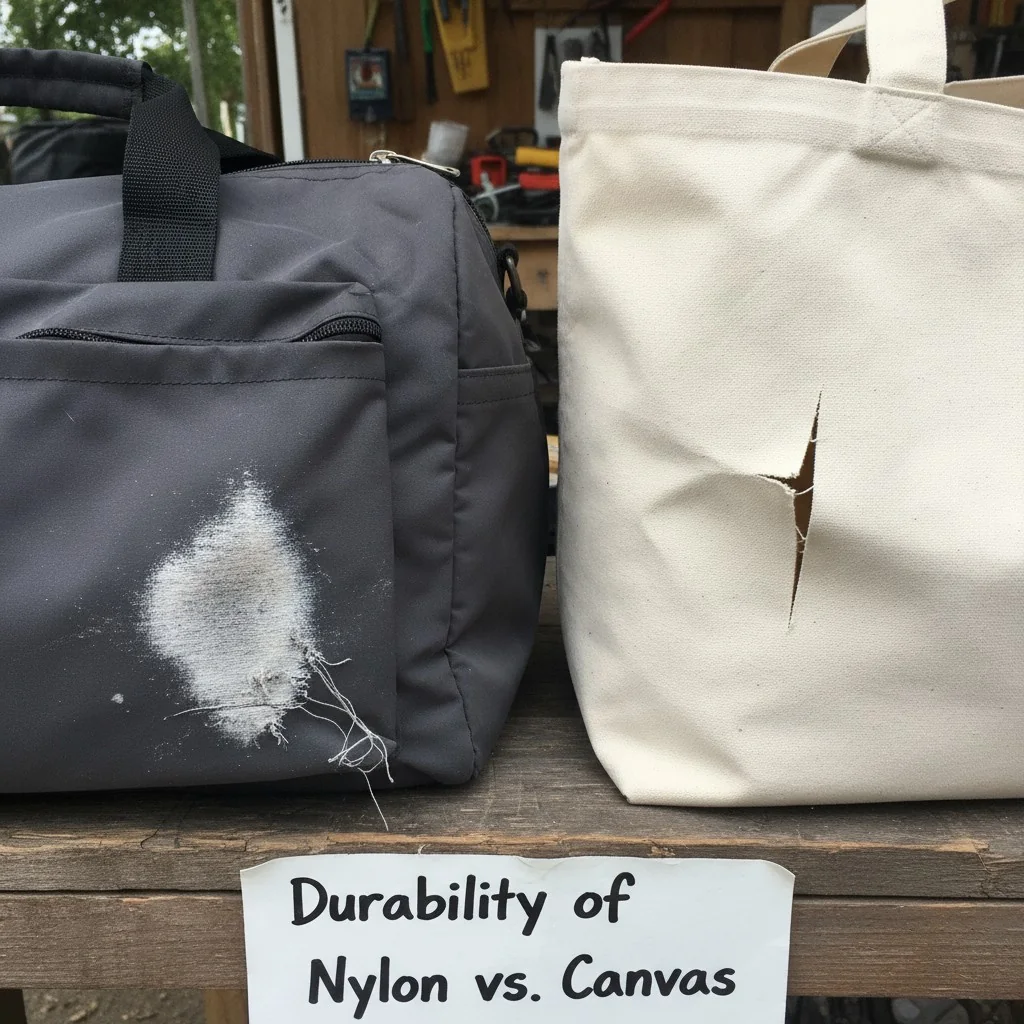
Durability is a complex topic. I’ve seen it all. For a brand making cycling messenger bags, we used 1000D Cordura nylon. Those bags are subjected to constant rubbing and stress, and the nylon holds up incredibly well. For another client creating artisanal tool rolls, we chose a heavy 24oz waxed canvas. The tools are heavy but static. The canvas prevents punctures and wears beautifully over time, developing a unique patina. The "more durable" material really depends on how the bag will be used.
Abrasion and Tear Resistance
This is where nylon really shines. Its synthetic fibers are incredibly resistant to friction and rubbing. If you’re designing a backpack that will be scraped against rocks or a travel bag that will be thrown around by baggage handlers, nylon is your safest bet. High-denier nylons are specifically designed to resist tearing. Once a small cut starts, it’s less likely to spread. Canvas, being a woven cotton fabric, can fray and tear more easily if it catches on a sharp object.
Longevity and Aging
This is where canvas has a unique advantage. While nylon might resist damage better, it doesn’t always age gracefully. It can fade in the sun or the coating can peel over time. Canvas, on the other hand, is known for developing a ‘patina’—it tells a story as it ages. Scuffs and marks become part of its character. And because it’s a simple fabric, you can easily sew a patch over a hole, which can even add to its aesthetic. Repairing a tear in nylon is much more difficult and often looks messy.
| Durability Factor | Nylon | Canvas |
|---|---|---|
| Abrasion Resistance | Excellent | Good to Very Good (if waxed) |
| Tear Resistance | Excellent (especially ballistic) | Fair to Good |
| Ease of Repair | Difficult | Easy |
| Aging Style | Can fade or peel | Develops a patina |
[claim claim=”Ballistic nylon was developed for World War II pilots to protect them from shrapnel.” istrue=”true” explanation=”It was originally created by DuPont as a material for flak jackets worn by airmen, designed to protect against flying debris and fragmentation, hence the name ‘ballistic’.”]
[claim claim=”A hole in a canvas bag cannot be repaired.” istrue=”false” explanation=”Canvas is one of the easiest bag materials to repair. Holes can be easily patched with another piece of fabric and simple sewing, often adding to the bag’s character.”]
How do nylon and canvas compare on water resistance, cleaning, and weather resilience?
Your bag needs to protect its contents. A bag that soaks through in the rain, is impossible to clean, or mildews in the closet is a product failure. How do these two materials handle the elements?
Nylon is naturally water-resistant and can be made virtually waterproof with coatings. It’s easy to wipe clean and resists mildew. Canvas is naturally absorbent and requires a wax or polymer coating for water resistance, which needs reapplication. It can stain and is prone to mildew if stored wet.
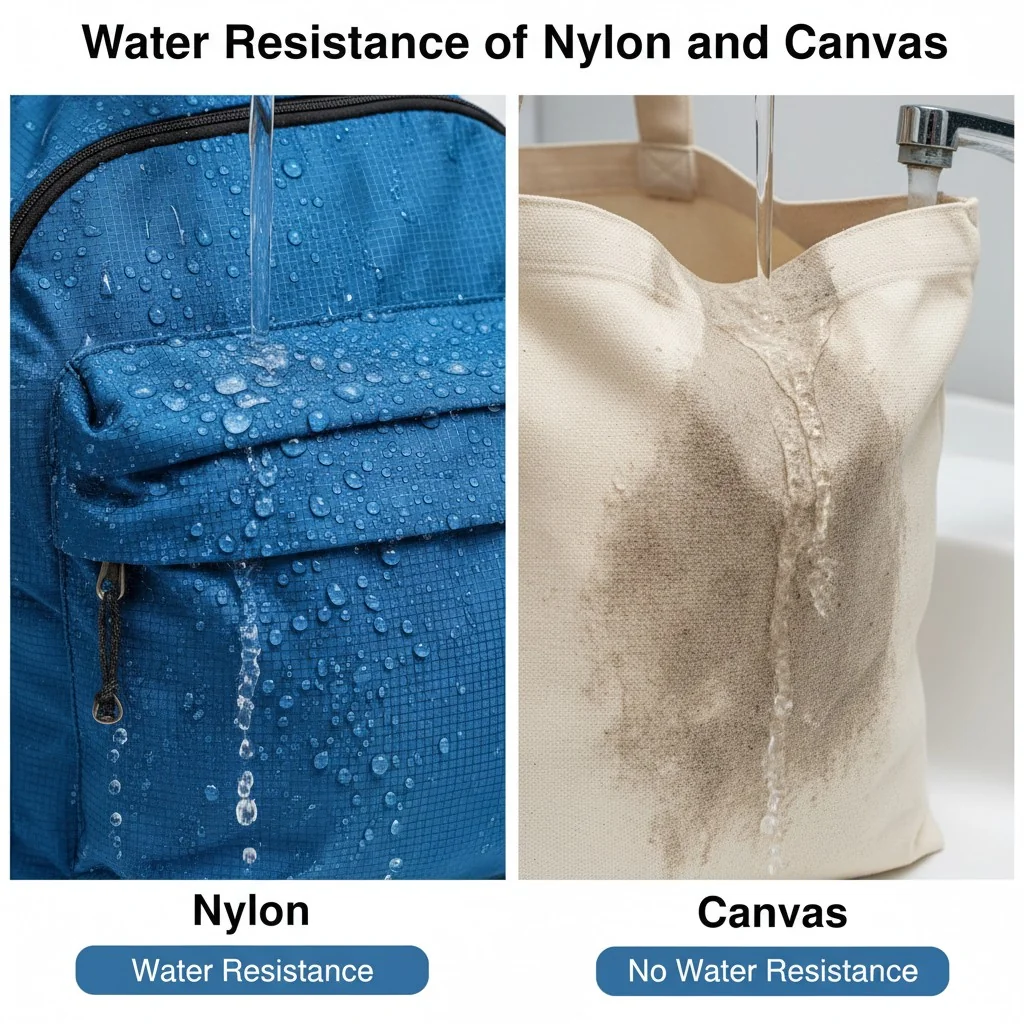
I always ask my clients, "Imagine your customer gets caught in a downpour. What happens to their laptop inside the bag?" This question immediately clarifies the importance of weather resilience. For tech bags or travel gear, I almost always recommend coated nylon. For a simple beach tote or grocery bag, canvas is fine. But if you choose canvas for an everyday bag, you must consider treating it. An unhappy customer with a water-damaged phone is a brand’s worst nightmare.
Water Resistance
This is a clear win for nylon. The synthetic fibers themselves don’t absorb water. Most nylon fabrics used for bags also have a polyurethane (PU) or similar coating on the back and a Durable Water Repellent (DWR) finish on the front. This causes water to bead up and roll right off. Canvas is the opposite. Untreated cotton fibers act like a sponge. To make it water-resistant, canvas must be saturated with wax or treated with a synthetic spray. This is effective, but the treatment wears off over time and needs to be reapplied.
Cleaning and Maintenance
Nylon is low-maintenance6. Since it doesn’t absorb stains easily, most dirt can be wiped off with a damp cloth and a little soap. It also dries very quickly. Canvas can be more difficult. Stains can set into the cotton fibers. While you can scrub it, aggressive cleaning can wear out the fabric or any wax coating. A waxed canvas bag also requires special care; you can’t just throw it in the washing machine.
| Performance Metric | Nylon | Canvas |
|---|---|---|
| Water Resistance | High (especially when coated) | Low (unless waxed/treated) |
| Cleaning | Easy to wipe clean | Can stain; requires careful cleaning |
| Drying Speed | Very Fast | Very Slow |
| Mildew Resistance | High | Low (if stored while damp) |
| Maintenance | Low | Moderate (rewaxing may be needed) |
[claim claim=”You can make a canvas bag 100% waterproof by applying a single coat of wax.” istrue=”false” explanation=”Waxing significantly improves water resistance, but it rarely makes the fabric completely waterproof, especially at the seams. Heavy, prolonged rain can still saturate the fabric.”]
[claim claim=”Nylon is oleophilic, meaning it readily absorbs oil.” istrue=”true” explanation=”While nylon repels water, its chemical structure makes it attract and absorb oils. This is why oil-based stains can be particularly difficult to remove from nylon fabrics.”]
What are hybrid options—nylon and canvas together?
What if you don’t want to choose? You want the classic look of canvas but the rugged base of nylon. Combining materials seems like a great idea, but it can also create new manufacturing challenges.
hybrid bags7 use both materials to leverage their respective strengths. A common approach is to use durable nylon for the base and high-wear areas, while using canvas for the main body to achieve a specific aesthetic. This creates a best-of-both-worlds product.
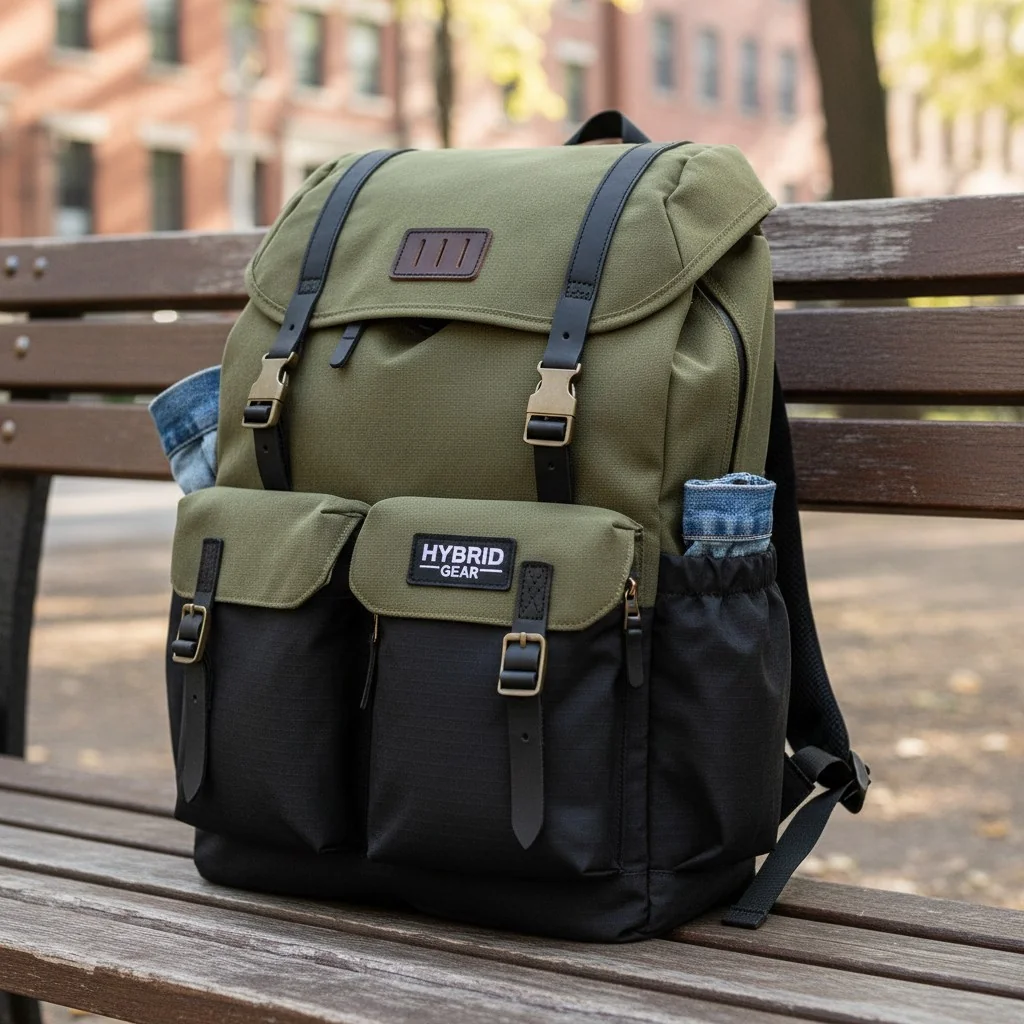
Some of my favorite designs have been hybrids. I worked with a brand that wanted to create a premium commuter backpack. They loved the tactile, vintage feel of waxed canvas but knew the bottom of the bag would get scraped on concrete and soaked in puddles. The solution was simple but effective: we designed the bag with a waxed canvas body and a "boot" made of 1000D ballistic nylon. It looked fantastic and performed perfectly. The nylon base handled all the abuse, while the canvas body gave the bag the sophisticated, urban look they wanted.
The "Best of Both Worlds" Approach
This is the core idea behind hybrid designs. You strategically place each material where it can perform best.
- Nylon for High-Wear Zones: The bottom of a bag, shoulder strap attachments, and corners are areas that see the most friction and stress. Using a tough, abrasion-resistant nylon here dramatically increases the bag’s lifespan.
- Canvas for Aesthetics and Touch: The main body panels, front pockets, and lid are the parts of the bag that people see and touch the most. Using canvas here allows you to achieve a specific look, whether it’s rustic, heritage, or artisanal. It provides the visual and tactile appeal that nylon often lacks.
Manufacturing Considerations
Creating a hybrid bag isn’t as simple as just sewing two fabrics together. As a manufacturer, I can tell you that joining materials with different properties requires skill. Nylon and canvas have different stretch, thickness, and fraying characteristics. The seam construction has to be robust to handle the transition between the two. It can also increase production costs slightly due to the need for multiple material rolls and more complex cutting and sewing patterns. However, for a brand looking to create a standout, premium product, the result is often well worth the investment.
| Hybrid Application | Material Choice | Reason |
|---|---|---|
| Bag Bottom | Ballistic Nylon | Maximum abrasion and water resistance |
| Main Body | Waxed Canvas | aesthetic appeal8, classic look, patina |
| Laptop Sleeve | Padded Nylon | Smooth, non-abrasive surface to protect electronics |
| Grab Handle | Rolled Canvas or Leather | Comfortable and classic hand-feel |
[claim claim=”Combining nylon and canvas in one bag is impossible due to different shrinkage rates.” istrue=”false” explanation=”While different materials require careful handling, it is very common to combine them. Experienced manufacturers use specific sewing techniques to create durable seams between nylon and canvas.”]
[claim claim=”Many premium outdoor and heritage brands use hybrid construction.” istrue=”true” explanation=”Brands like Filson, Topo Designs, and Fjällräven often combine rugged nylon or synthetic reinforcements with traditional fabrics like canvas or their proprietary G-1000 (a polyester/cotton blend) to optimize for both durability and aesthetics.”]
Conclusion
Choosing between nylon and canvas depends entirely on your brand’s goals. Nylon offers modern performance, while canvas provides a timeless, natural feel. Understanding their differences is key to your success.
References
-
Explore the durability of nylon vs canvas to make informed choices for your bag designs. ↩
-
Cost is a key factor in production; understand the financial implications of each material. ↩
-
Weight impacts usability; find out which material offers a lighter option for your bags. ↩
-
The strength-to-weight ratio is crucial for performance; learn how each material stacks up. ↩
-
Understanding water resistance is crucial for selecting the right material for your bags. ↩
-
Maintenance affects customer satisfaction; discover how to care for each material. ↩
-
Hybrid bags combine the best of both worlds; learn how to leverage this in your designs. ↩
-
Aesthetic appeal is vital for branding; explore how each material influences design. ↩






