


Get the article’s highlights: Listen to the podcast.↓
Choosing between industry giants like Osprey1 and The North Face is tough. This decision directly impacts your brand’s identity and market position. Let’s break down their differences to help you choose.
Osprey is a specialist brand focused on technical, ergonomic packs for serious outdoor use. The North Face2 is a broader lifestyle brand that balances outdoor performance with urban style and fashion appeal.
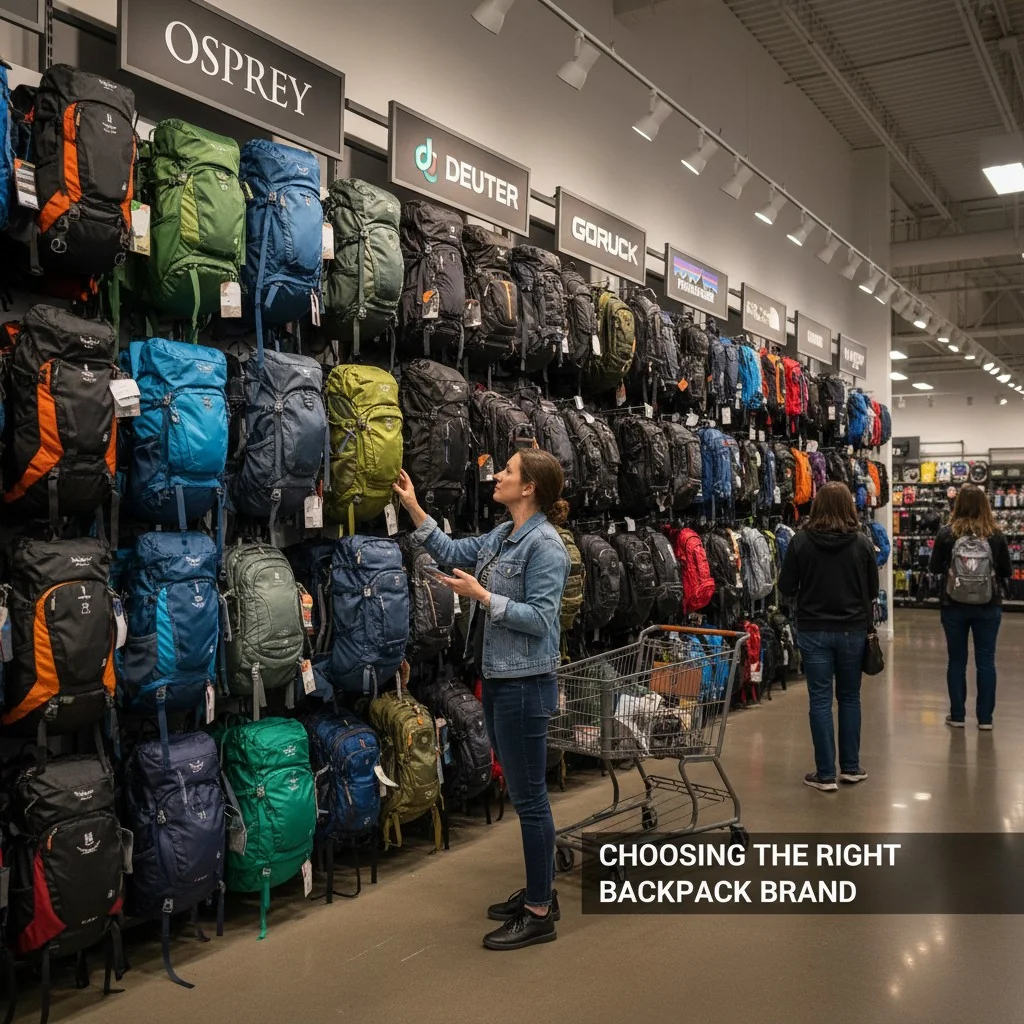
As someone who has worked with countless brands in the bag industry, I see this question all the time. It’s not about which backpack is simply "better." It’s about which brand’s philosophy and product design align with your business goals.
For an e-commerce seller like Madison, understanding this distinction is the first step to building a successful product line that resonates with a target audience. This comparison will give you the clarity you need to make a strategic choice for your own brand. Let’s dive into the specifics, starting with how each brand positions itself.
[claim claim=”Osprey and The North Face were both founded in California in the 1970s.” istrue=”false” explanation=”Osprey was founded in Santa Cruz, California, in 1974. The North Face was founded in San Francisco, California, in 1966.”]
[claim claim=”Both Osprey and The North Face are now owned by larger parent corporations.” istrue=”true” explanation=”Osprey is owned by Helen of Troy Limited, and The North Face is owned by the VF Corporation.”]
What Are the Brand Positioning and Market Focus of Osprey vs. The North Face?
Not sure which brand’s identity matches your customers? A mismatch can lead to lost sales and a confused brand message. Let’s look at who Osprey and The North Face target.
Osprey is a specialist focusing on serious outdoor enthusiasts who need technical performance3 and a perfect fit. The North Face is a broad lifestyle brand, appealing to everyone from climbers to city commuters, blending performance with fashion.
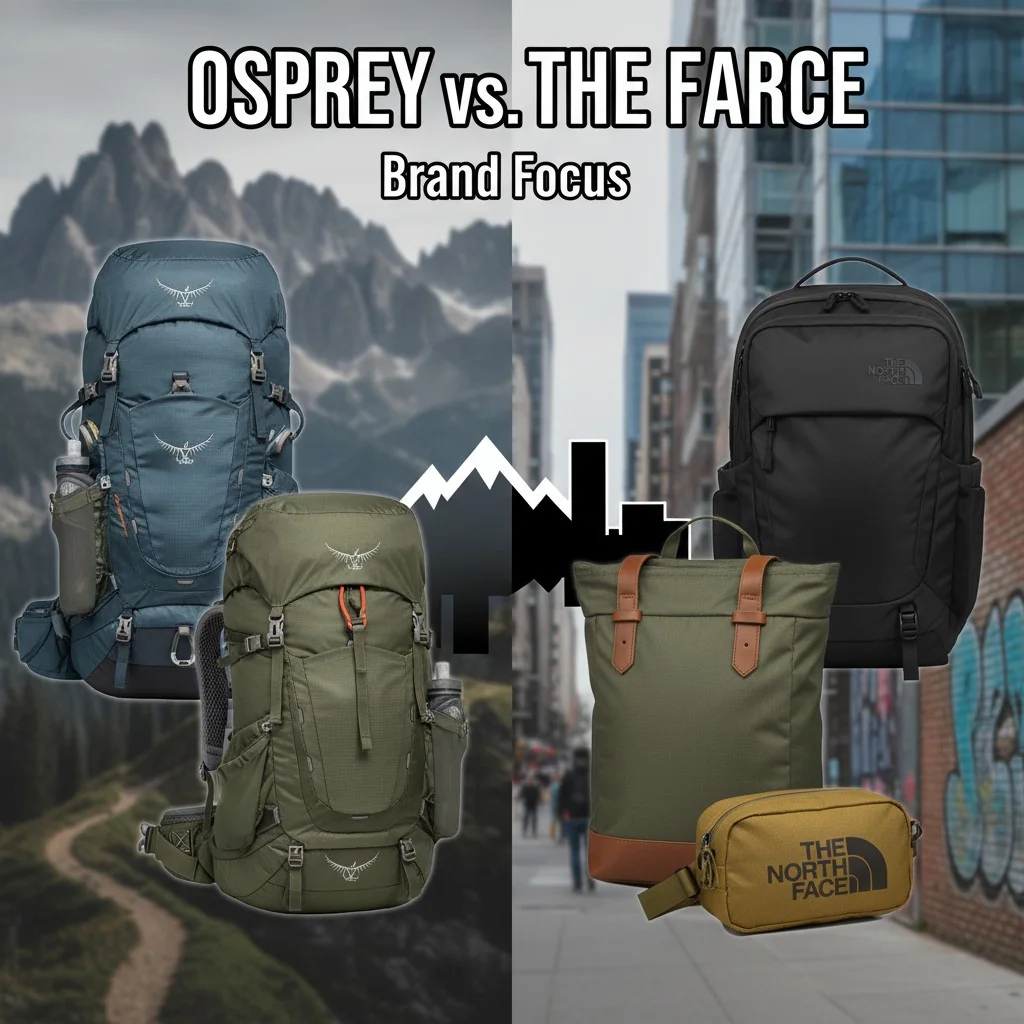
When I help brands develop their product lines, the first thing we discuss is focus. These two brands offer a perfect lesson in strategy. One goes deep and narrow, the other goes wide and broad.
Osprey: The Performance Specialist
Osprey is a specialist brand with a laser focus on packs and bags. Their reputation is built on creating technically advanced, ergonomic, and highly functional backpacks for specific outdoor activities like hiking, backpacking, mountaineering, and trail running.
Their market is primarily comprised of serious outdoor enthusiasts who prioritize performance, fit, and features above all else. While they have expanded into travel and everyday carry, their design DNA remains rooted in trail performance.
The North Face: The Lifestyle Icon
The North Face has a much broader identity. It started as a serious climbing brand, and its high-end "Summit Series" gear is still world-class. However, today, it’s also a global fashion and lifestyle symbol. You’re just as likely to see a North Face backpack on a college campus as on a mountain trail.
Their market is huge and diverse. They successfully bridged the gap between outdoor gear and streetwear. For many customers, owning a TNF product is a statement. This is the "brand as a cultural icon" strategy, appealing to a wide audience.
[claim claim=”Osprey’s brand name comes from the bird of prey, reflecting a focus on nature and performance.” istrue=”true” explanation=”The founder, Mike Pfotenhauer, chose the name to symbolize the grace and power of the osprey.”]
[claim claim=”The North Face is named after the coldest, most forgiving side of a mountain in the northern hemisphere.” istrue=”false” explanation=”The North Face is named after the coldest, most formidable and challenging side of a mountain, not the most forgiving.”]
What Are the Key Differences Between Osprey and The North Face Backpacks?
The packs can look similar, making it hard to choose. But the small details matter for customer satisfaction4. Let’s compare their features and design philosophies directly.
Osprey prioritizes highly adjustable, gender-specific harnesses and trail-specific features. The North Face balances function with a cleaner aesthetic, often including urban-friendly features5 like advanced laptop protection and internal organization in their popular daypacks.
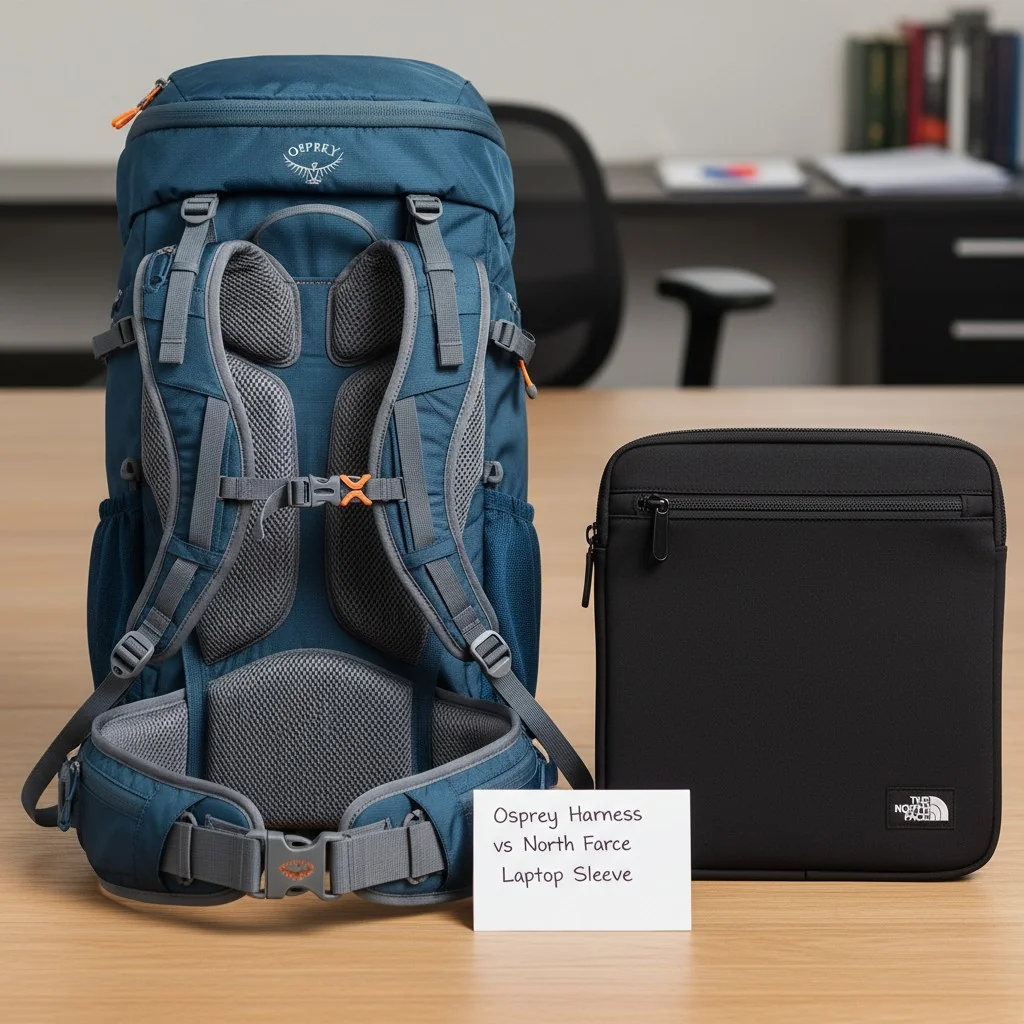
From a manufacturing perspective, every feature is a deliberate choice that serves a target user. Understanding these choices helps you design products for your own customers. I’ve summarized the core differences in this table, based on what I’ve seen in the industry.
| Feature | Osprey | The North Face |
|---|---|---|
| Harness & Fit | Primary focus. Known for highly adjustable, gender-specific harnesses and advanced suspension systems (like Anti-Gravity™) for a custom-like fit. | Good, but generally simpler. Popular daypacks use well-padded but less complex systems like the FlexVent™ suspension. |
| Design Philosophy | Function over form. Designs are driven by utility, with many pockets, straps, and access points for specific gear. The look is very technical. | Balance of function and form. Often features a cleaner, more streamlined look that works well from the trail to the city. |
| Key Features | Trail-specific features are common: Stow-on-the-Go™ trekking pole attachments, integrated raincovers, large hip belt pockets. | Urban-friendly features are prominent: Padded and fleece-lined laptop sleeves, extensive internal organization, and self-standing designs. |
| product range6 | Deeply specialized within packs: specific lines for backpacking, day hiking, climbing, biking, skiing, and travel. | Extremely broad range of products including clothing and footwear. Their backpack line includes iconic daypacks and technical packs. |
[claim claim=”Osprey’s Stow-on-the-Go feature allows you to attach trekking poles without taking your pack off.” istrue=”true” explanation=”This feature consists of a loop on the side of the pack and a cord on the shoulder strap, designed for quick stowing and access.”]
[claim claim=”The North Face’s FlexVent suspension system is primarily designed for carrying heavy mountaineering gear.” istrue=”false” explanation=”The FlexVent system is designed for everyday comfort and ventilation, primarily used in their daypacks for school and work, not heavy expedition loads.”]
How Do Their Durability and Build Quality Compare?
You need durable products for your brand. A pack that fails can damage your reputation and lead to costly returns. Let’s compare their build quality and, most importantly, their warranties.
Both brands offer excellent durability with high-quality materials. The main difference is the warranty. Osprey’s All Mighty Guarantee7 covers any damage for any reason, for life. The North Face’s warranty covers manufacturing defects but not accidental damage.
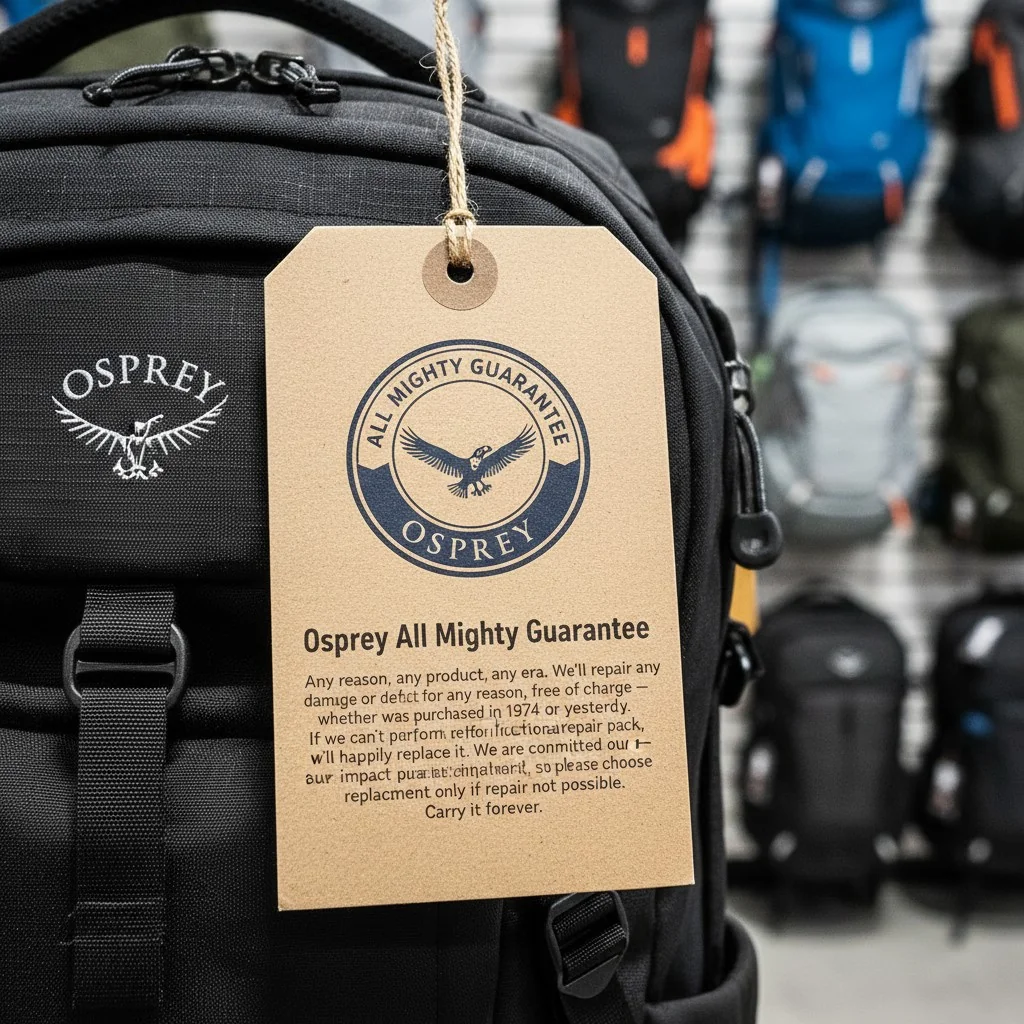
In my years working with manufacturers, I’ve learned that a warranty is a direct reflection of a brand’s confidence in its product. Both Osprey and TNF build tough bags, but their promises to the customer are very different.

Osprey: The All Mighty Guarantee
Osprey is famous for using robust, high-denier nylon fabrics and strong hardware. But their real differentiator is the All Mighty Guarantee. This is one of the best warranties in any industry. They will repair any damage or defect, for any reason, free of charge.
It doesn’t matter if you bought it yesterday or 20 years ago. If they can’t fix it, they will replace it. As a brand builder, this is an incredibly powerful tool. It tells the customer, "This is the last pack you’ll ever need to buy," which builds immense trust and loyalty.
The North Face: The Limited Lifetime Warranty
The North Face also makes exceptionally durable gear. Their Base Camp Duffels are legendary for their toughness, and daypacks like the Borealis can handle years of daily abuse. They use quality materials and solid construction.
TNF offers a Limited Lifetime Warranty, which is the industry standard. It covers manufacturing defects in materials and workmanship for the life of the product. However, it does not cover damage from accidents, improper care, or normal wear and tear. This is a key difference from Osprey’s no-questions-asked policy.
[claim claim=”Osprey’s All Mighty Guarantee was introduced in 2009.” istrue=”true” explanation=”Osprey formalized its long-standing commitment to quality and repair with the official launch of the All Mighty Guarantee in 2009.”]
[claim claim=”The North Face’s warranty covers damage caused by airline baggage handlers.” istrue=”false” explanation=”Damage caused by third parties like airlines is considered accidental damage and is not covered under TNF’s Limited Lifetime Warranty.”]
Which Brand is More Sustainable?
sustainability8 is key for your brand, especially when targeting modern consumers. But it’s hard to know what’s real. Let’s look at the real sustainability efforts of both Osprey and The North Face.
Both are leaders. Osprey focuses on longevity and repair through its warranty, plus PFC-free and bluesign® materials. The North Face focuses on circularity with its "Renewed" program and is a massive user of recycled materials, driving large-scale change.
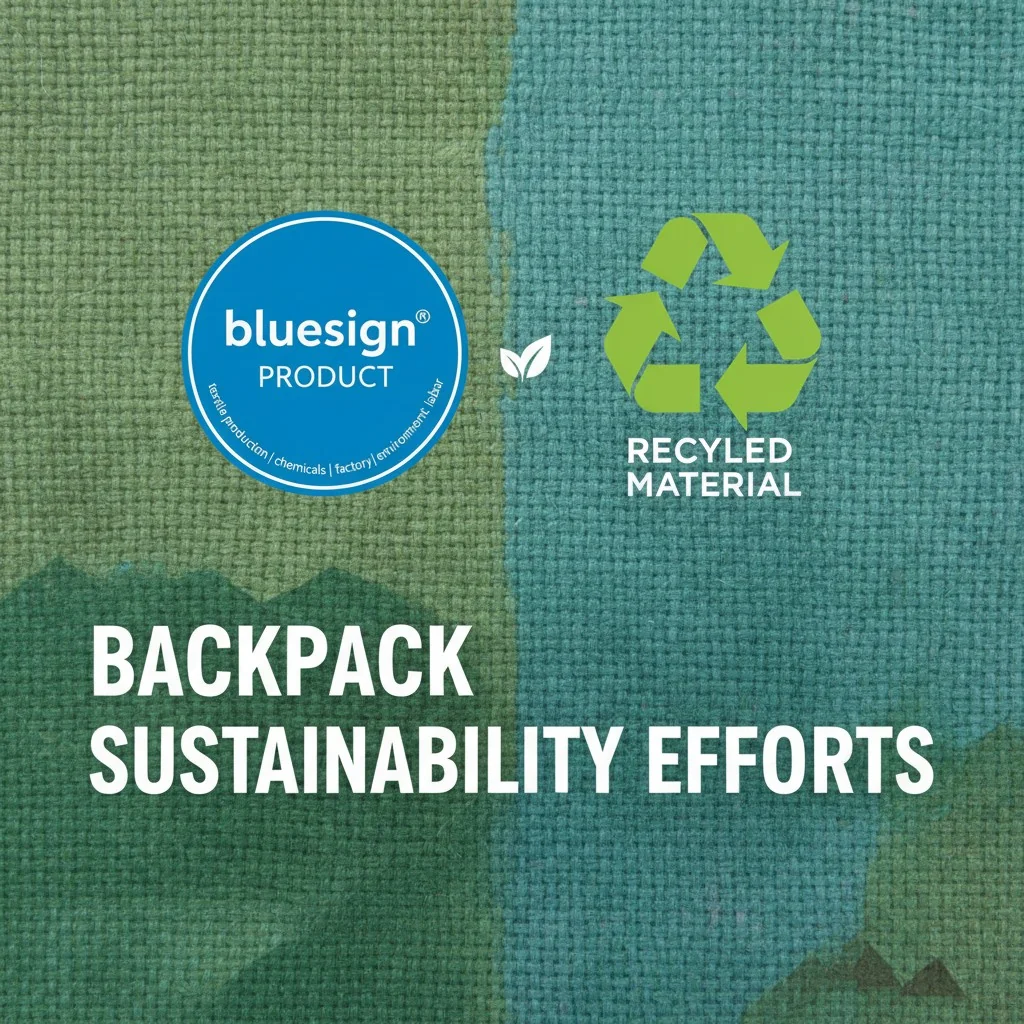
For a brand owner like Madison, sustainability isn’t just a buzzword; it’s a core business principle. Both Osprey and TNF are making serious commitments, but they approach it from different angles. Understanding these approaches can help you shape your own brand’s sustainable story.
Osprey: Sustainability Through Longevity
Osprey’s sustainability approach centers on longevity, with key features like:
- All Mighty Guarantee: Encourages repair over replacement, reducing waste.
- High-Quality Recycled Fabrics: Actively used to minimize environmental impact.
- Bluesign®-Approved Materials: Ensures a safe production process for the environment, workers, and consumers.
- PFC-Free DWR Coatings: Reduces harmful chemicals in water-repellent treatments.
The North Face: Sustainability Through Scale and Circularity
The North Face leverages its size to make a difference, focusing on:
- Recycled Polyester: One of the world’s largest users, diverting millions of plastic bottles from landfills.
- Circularity Initiatives: The “Renewed” program cleans, repairs, and resells used gear, creating a closed-loop system.
- Responsible Down Standard (RDS): Promotes ethical sourcing of down for apparel.
Verdict: If your priority is a product’s lifetime and repairability, Osprey has a slight edge due to its warranty. If your focus is on recycled materials and circular economy programs, The North Face is a formidable leader.
[claim claim=”A bluesign® approved fabric means it was made with the lowest possible impact on people and the environment.” istrue=”true” explanation=”The bluesign® system audits the entire textile supply chain to manage chemical inputs and ensure safety and environmental responsibility.”]
[claim claim=”PFC-free DWR coatings are less effective at repelling water than traditional C8 coatings.” istrue=”false” explanation=”Modern PFC-free DWRs have become highly effective and are a much more environmentally friendly alternative to older, long-chain PFCs (like C8) which are persistent pollutants.”]
How Do Prices and Value Proposition Compare?
Price is always a concern for your business. But the cheapest pack isn’t always the best value. Let’s break down what you’re really paying for with each brand.
Osprey is a mid-to-premium brand. Its value is in the long-term investment: superior ergonomics and a lifetime guarantee. The North Face has a wider price range, offering great value in versatility, durability, and brand recognition.
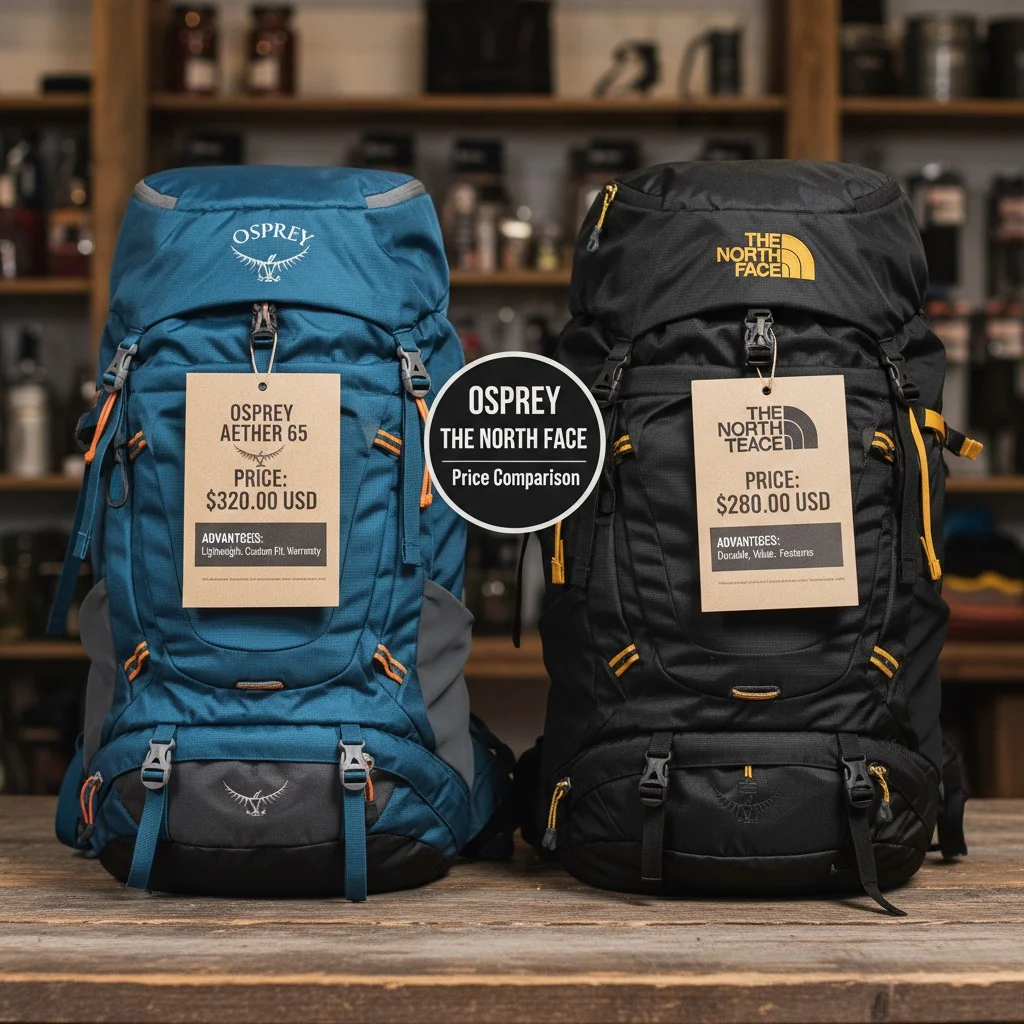
When sourcing products, you’re not just looking at the factory cost; you’re evaluating the entire value proposition for your customer. Osprey and TNF offer different kinds of value.
Osprey: The Long-Term Investment
Osprey packs are positioned as a long-term investment, offering:
- Higher Starting Price: Ranges from $100 to over $350, rarely the cheapest option.
- Value Beyond Initial Price: You’re paying for:
- Extensive research and development.
- Ergonomic designs and technical features.
- All Mighty Guarantee for lifetime support.
- "Buy it for life" Product: Designed for long-term ownership with superior performance and lifetime support.
- Premium Pricing Justified: The higher price is supported by superior performance and the peace of mind of lifetime warranty.

The North Face: Versatility and Accessibility
The North Face offers a broader range of prices, with key points like:
- Wide Price Spectrum: Includes options ranging from under $100 for popular models to high-end technical packs priced similarly to Osprey.
- Popular Affordable Models: The Jester and Borealis are well-known for being high-value models under $100.
- Value Proposition:
- Focuses on versatility and brand power.
- Offers durable, multi-purpose backpacks from a globally respected brand.
- Market Reach: The affordable pricing strategy helps capture a large market segment, including students and casual users.
| Brand | Pricing & Value Proposition | Target Market |
|---|---|---|
| Osprey | – Higher starting price ($100 to over $350). – Pay for R&D, ergonomic designs, and technical features. – All Mighty Guarantee offers lifetime support. |
Serious outdoor enthusiasts, long-term users |
| The North Face | – Wide price range, from under $100 for popular models (Jester, Borealis) to premium packs. – Focus on versatility and brand power. – Affordable, durable backpacks. |
Students, casual users, and broader market |
[claim claim=”The North Face’s best-selling Borealis backpack typically retails for over $200.” istrue=”false” explanation=”The North Face Borealis backpack typically retails for around $99, making it a very accessible and popular choice.”]
[claim claim=”Osprey’s premium Aether/Ariel backpacking series can cost upwards of $350.” istrue=”true” explanation=”These flagship models are packed with Osprey’s most advanced features and suspension technology, placing them at the premium end of the market.”]
Which Backpack Is Best for Specific Use Cases?
You need to match the right pack to the right customer. A bad recommendation can hurt your business with returns and bad reviews. Here’s a simple breakdown for common use cases.
Choose Osprey for multi-day hiking due to its superior comfort with heavy loads. Choose The North Face for everyday carry because of its urban-friendly design and laptop protection. For other uses, it depends on specific features.
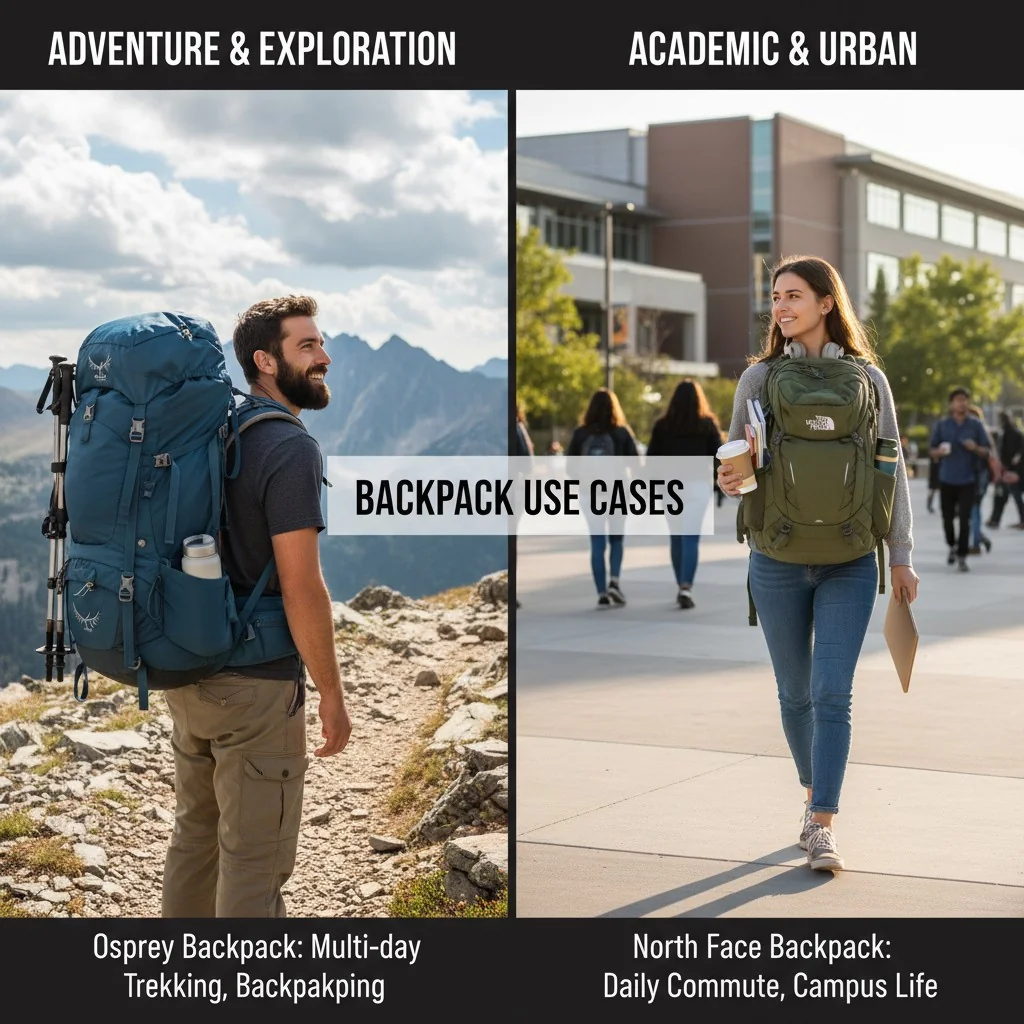
Knowing which pack excels in which scenario is critical for marketing and sales. Here’s how I break it down for the brands I work with.
Use Case 1: Multi-Day Hiking & Thru-Hiking (30–70 Liters)
For carrying significant weight over long distances, comfort is paramount. The fit, suspension system, and load distribution of the backpack are the most critical factors.
Winner: Osprey
Why: This is Osprey’s core competency. Their entire brand reputation is built on creating the most comfortable, technically advanced load-hauling systems in the industry. Features like their Anti-Gravity™ (AG) and AirScape™ backpanels, combined with their highly customizable and gender-specific Fit-on-the-Fly™ hipbelts, provide a near-custom fit that is unmatched for long-term comfort. Their packs are also loaded with trail-smart features like external hydration sleeves and the Stow-on-the-Go™ trekking pole attachment.
Osprey Recommendations:
The North Face Recommendations:
Bottom Line: If you are embarking on an overnight hike or a multi-month thru-hike, an Osprey pack is the best investment you can make for the health of your back and shoulders.
Use Case 2: Everyday Carry (School, Work, Commuting)
The priorities here shift from load-bearing to organization, electronics protection, and aesthetics suitable for an urban or professional environment.
Winner: The North Face
Why: The North Face dominates this category because their most popular daypacks are purpose-built for the daily grind. They excel at protecting electronics with heavily padded and often fleece-lined laptop and tablet sleeves. Their internal organization is geared towards pens, chargers, and books, and many of their designs are engineered to stand up on their own for easy access. The FlexVent™ suspension is more than comfortable enough for daily loads.
The North Face Recommendations:
Osprey Recommendations:
Bottom Line: For safely carrying a laptop and organizing your daily essentials, The North Face offers superior, purpose-built designs.
Use Case 3: Day Hiking (15–30 Liters)
For day hiking, the ideal pack is lightweight, breathable, and has just enough capacity for water, snacks, layers, and the ten essentials.
Winner: Toss-up / Slight Edge to Osprey
Why: Both brands make phenomenal daypacks, and the best choice often comes down to personal preference. Osprey gets a slight edge for purely technical hiking due to its body-hugging fit, which is more stable for scrambling and fast-paced movement. Their AirScape™ backpanels provide some of the best ventilation available. However, The North Face’s daypacks are incredibly versatile, performing well on the trail and being perfectly suitable for travel or daily use.
Osprey Recommendations:
The North Face Recommendations:
Bottom Line: For a dedicated, high-performance hiking pack that feels like an extension of your body, choose the Osprey Talon/Tempest. For a durable, do-it-all pack that is great on the trail and in town, choose a model from The North Face.
Use Case 4: Travel (Duffels & Backpacks)
Travel bags need to be durable enough to survive baggage handlers, easy to pack, and comfortable enough to carry through airports and city streets.
Winner: Toss-up (They Dominate Different Travel Styles)
Why: This category has two distinct sub-genres, and each brand is the king of one.
- Travel Backpacks (Suitcase-style): Osprey is the undisputed leader here. Their designs combine the comfort of a backpacking harness with the easy packing of a clamshell-opening suitcase. Critically, the harness can be zipped away for safe checking.
- Gear Duffels: The North Face created the modern gear duffel. The Base Camp Duffel is a legendary, bombproof bag designed to be thrown in the back of a truck, strapped to a yak, or tossed on a luggage carousel without a second thought.
Osprey Recommendations:
The North Face Recommendations:
Bottom Line: For city-hopping or backpacking-style travel where the bag is on your back, get the Osprey Farpoint/Fairview. For expeditions or adventures where you need to haul a massive amount of rugged gear, get The North Face Base Camp Duffel.
[claim claim=”The Osprey Farpoint/Fairview series is a top choice for backpacker-style travel.” istrue=”true” explanation=”Its combination of a comfortable harness, panel-loading access like a suitcase, and a stowable harness system makes it a favorite among world travelers.”]
[claim claim=”The North Face Base Camp Duffel is made from a delicate, lightweight material.” istrue=”false” explanation=”It is famous for its incredibly durable and water-resistant Ballistic Nylon and TPE fabric laminate, designed to withstand extreme abuse.”]
Conclusion
Osprey is the technical specialist for pure performance. The North Face is the versatile lifestyle icon. The best choice depends on the specific market your brand wants to serve.
References
-
Explore Osprey’s commitment to technical performance and ergonomic design, which sets them apart in the backpack industry. ↩
-
Discover the evolution of The North Face from a climbing brand to a cultural icon, appealing to diverse audiences. ↩
-
Delve into the characteristics that make a backpack suitable for serious outdoor activities. ↩
-
Discover the strategies both brands use to meet customer expectations and enhance loyalty. ↩
-
Explore how The North Face integrates functionality and style for everyday urban use. ↩
-
Examine the variety of products offered by both brands and how they cater to different customer needs. ↩
-
Learn about Osprey’s industry-leading warranty that emphasizes durability and customer trust. ↩
-
Understand how both brands approach sustainability and their initiatives to reduce environmental impact. ↩






