


Struggling to design the right-sized school backpacks for your brand? The wrong capacity can lead to unhappy customers and returned products. Let’s explore the ideal backpack sizes for every age.
The recommended school backpack capacity1 varies by age: 6-10 liters for preschoolers, 12-18 for elementary, 18-22 for middle school, and 22-30+ for high school. This ensures kids carry essentials comfortably without overburdening their developing spines, a key factor for any successful bag brand.
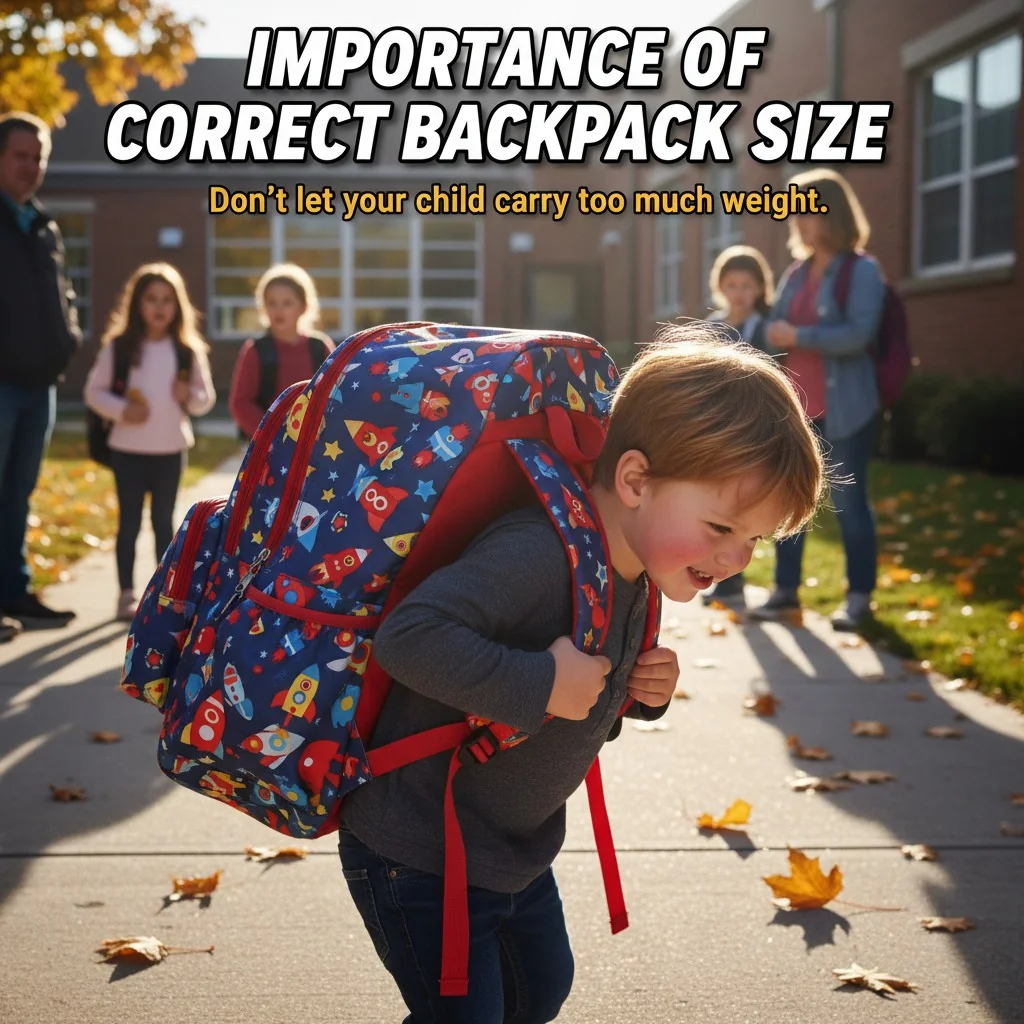
As a brand owner, you know that details make or break a product. The capacity of a school bag isn’t just a number on a spec sheet; it’s a critical feature that directly impacts a child’s health, comfort, and daily routine. I’ve seen firsthand how getting this right can set a brand apart from the competition. A well-sized bag is a silent promise of quality and care to your customers. Let’s dive into why this is so important and how you can perfect your product line for every age group.
[claim claim=”A backpack should weigh no more than 5% of a child’s body weight.” istrue=”false” explanation=”Most pediatric and orthopedic associations recommend a backpack weigh no more than 10-15% of a child’s body weight.”]
[claim claim=”Using a backpack with two shoulder straps is better for posture than a single-strap bag.” istrue=”true” explanation=”Distributing weight evenly across both shoulders helps prevent muscle strain and potential spinal alignment issues, which is a major selling point for parents.”]
Why Does the Capacity Size of a School Bag Matter?
Ever wonder why some backpack designs flop while others become best-sellers? The answer might be as simple as size. A bag that’s too big causes health issues, while one that’s too small is useless.
The right capacity ensures a child carries only what’s necessary, promoting good posture and preventing back pain. It perfectly balances functionality with health, making the bag a comfortable and practical tool for daily use, which translates directly into customer satisfaction2 and brand loyalty.
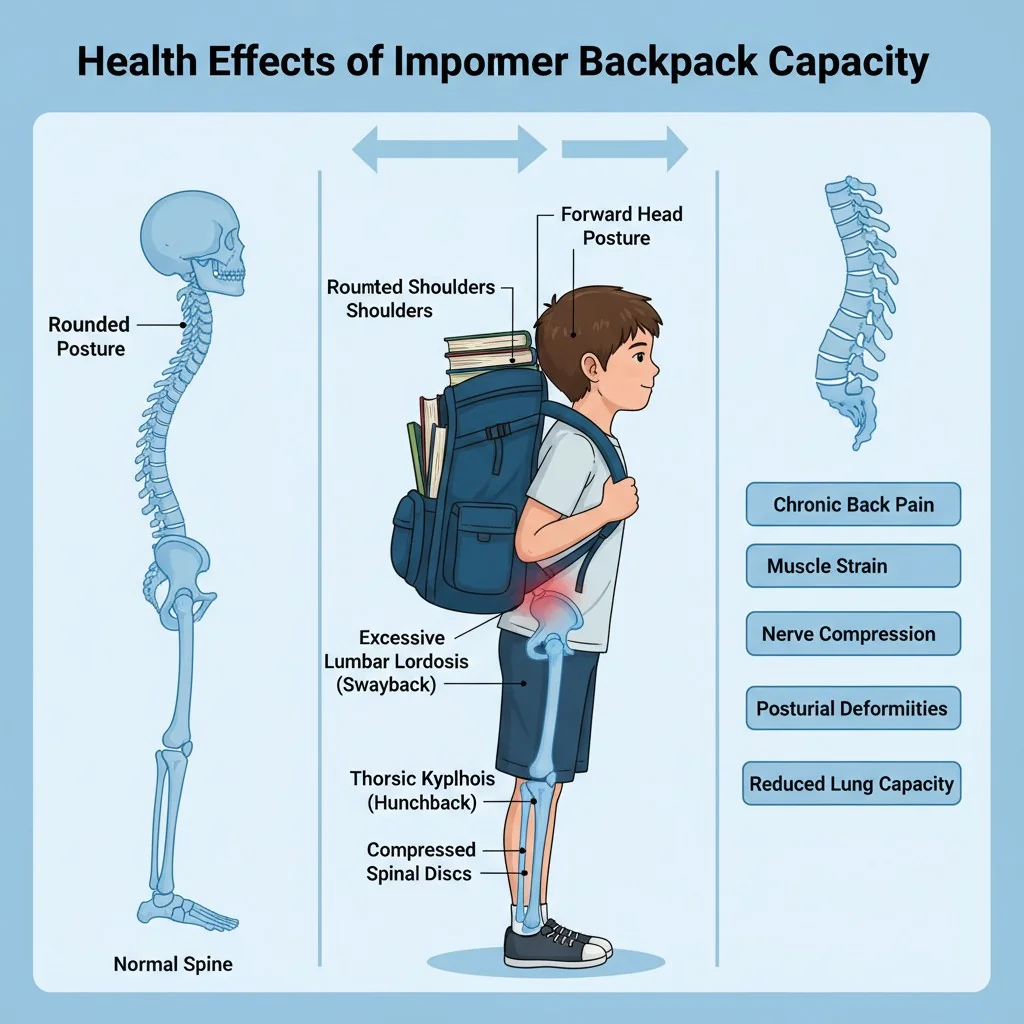
In my years of working with bag brands, I’ve learned that capacity is about more than just holding things. It’s about creating a positive user experience. When you get the size right, you are addressing core customer needs, even ones they haven’t articulated.
The Health Impact of the Wrong Size
A bag that is too large is a common mistake. Parents might think it’s a good value, but it encourages kids to overpack. This extra weight puts a huge strain on a child’s developing spine, shoulders, and neck, leading to poor posture and chronic pain. As a brand, you don’t want to be associated with products that cause discomfort or health problems.
The User Experience Factor
On the other hand, a bag that’s too small is a daily frustration. If a student can’t fit their lunchbox, a binder, or a jacket, the bag has failed its primary purpose. This leads to negative reviews and returns. The right capacity means everything has a place, items are easy to find, and the child can go through their day without a struggle.
Brand Reputation and Returns
Ultimately, the right capacity builds trust. It shows your customers that you’ve thought through the real-world needs of a child. This attention to detail reduces returns, boosts positive reviews, and establishes your brand as a thoughtful, reliable choice in a crowded market.
[claim claim=”A backpack that is too large is always better than one that is too small.” istrue=”false” explanation=”A backpack that is too large encourages overpacking, which can lead to excessive weight and strain on a child’s back, neck, and shoulders.”]
[claim claim=”Proper backpack capacity can improve a child’s organization skills.” istrue=”true” explanation=”A well-sized bag with appropriate compartments encourages children to pack efficiently and keep their belongings organized, making items easier to find.”]
How to Select the Right School Bag for Children?
Choosing the right features for your backpack line can feel overwhelming. If you get it wrong, you’re stuck with inventory that doesn’t sell. Let’s focus on the key features that parents and kids actually want.
To select the right bag, focus on ergonomic designs3 with adjustable, padded shoulder straps and a padded back panel. Multiple compartments are a must for distributing weight evenly. Always choose durable, lightweight materials to ensure the bag lasts without adding unnecessary bulk.
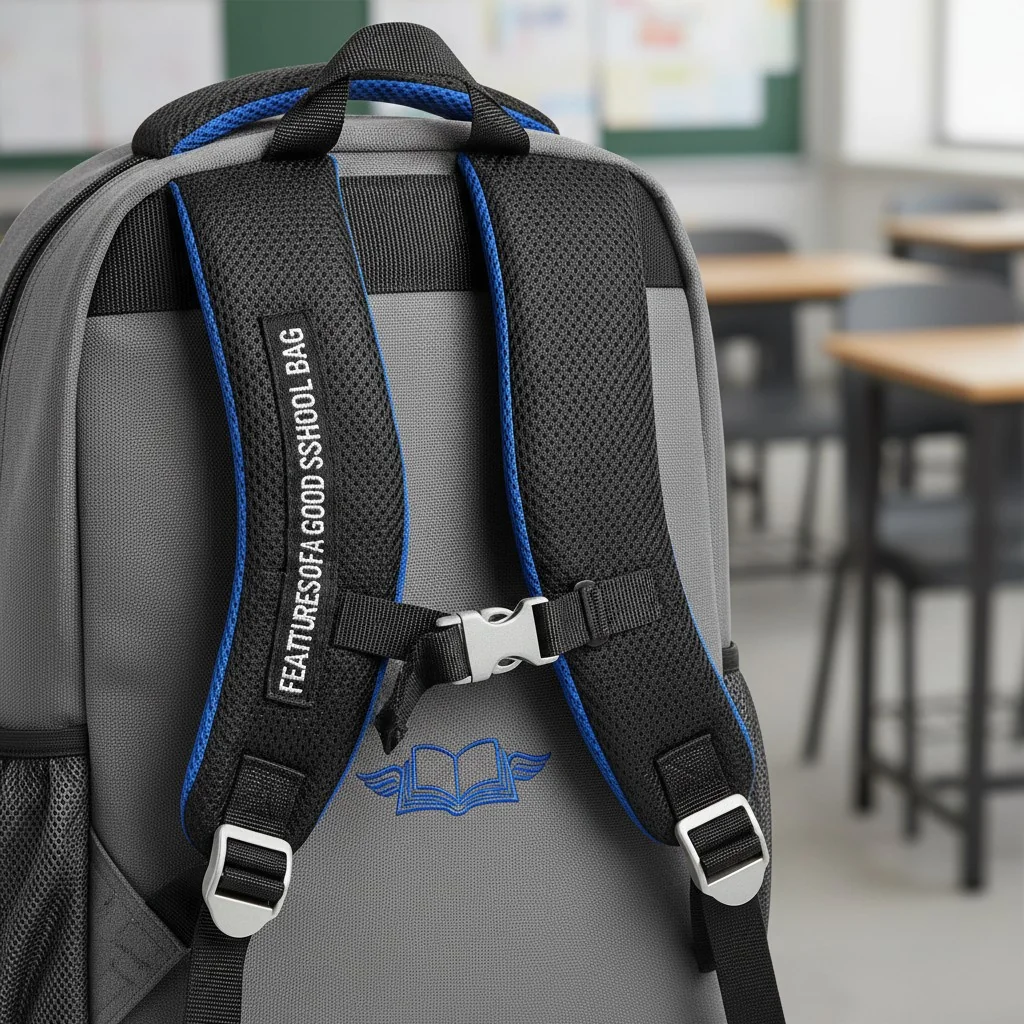
When I work with brand owners like you, we don’t just talk about colors and logos. We break down the anatomy of a great bag. The features you choose are your brand’s way of showing you care about the person carrying it.
Ergonomics and Comfort
This is non-negotiable. Wide, padded shoulder straps prevent the straps from digging into a child’s shoulders. An adjustable chest strap (or sternum strap) is a fantastic feature that keeps the shoulder straps in place and distributes the load. For larger bags, a padded waist belt can transfer some of the weight to the hips, which is a huge relief for the back.
Material and Durability
Parents expect a school bag to last at least the full school year, if not longer. Materials like 600D polyester or ripstop nylon offer a great balance of durability, water resistance, and light weight. This is also a branding opportunity. For your brand, you could choose sustainable options like recycled PET fabric to appeal to eco-conscious consumers.
Functional Compartments
Compartments are not just for organization; they are crucial for proper weight distribution4. The design should include a main compartment that places heavy items like textbooks or a laptop closest to the child’s back. This keeps the center of gravity stable and reduces strain. Smaller pockets for pens, keys, and snacks make the bag more user-friendly.
[claim claim=”The wider the shoulder straps, the better the weight distribution.” istrue=”true” explanation=”Wide, padded shoulder straps help to distribute the load over a larger area of the shoulders, reducing pressure points and increasing comfort.”]
[claim claim=”Backpacks made from canvas are the most lightweight option.” istrue=”false” explanation=”While durable, canvas is generally heavier than modern synthetic materials like nylon or polyester, which offer a better strength-to-weight ratio.”]
What Are the Age-Based Guidelines for School Bag Capacity for Kids?
Designing a one-size-fits-all backpack for the school market is impossible. Targeting the wrong age group with the wrong size leads to poor sales and a disconnect with your customers. Here is a clear guide.
Preschoolers (3-5 years) need 6-10 liters. Early elementary (6-8 years) requires 12-18 liters. Late elementary (9-12) needs 18-22 liters. Middle schoolers use 22-28 liters, and high schoolers often need 28-35+ liters for their heavier workloads.
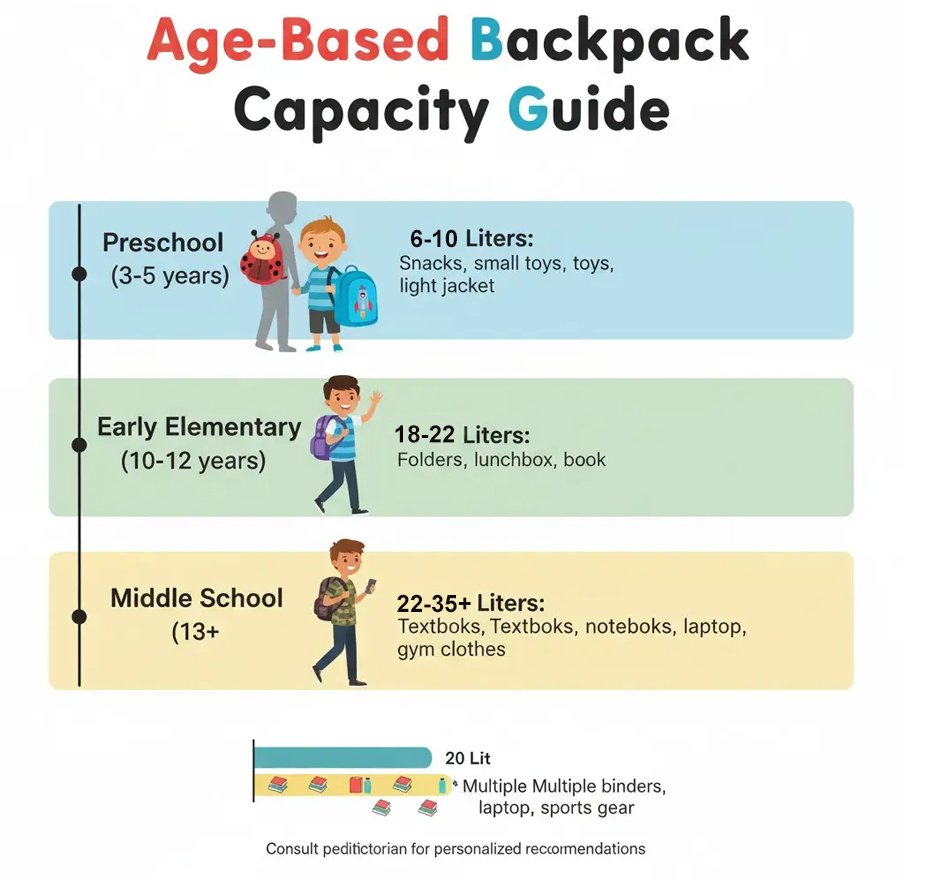
I always advise my clients to think in terms of developmental stages. A bag for a first-grader has completely different requirements than one for a high school senior. Offering a range of sizes tailored to these specific groups shows that your brand understands the customer’s journey.
From Toddlers to Teens: A Sizing Breakdown
Here is a simple breakdown I use to help brands plan their collections. This table is a great starting point for your design and marketing teams.
| Age Group | Recommended Capacity | Typical Contents | Ideal Backpack Dimensions | Ideal Backpack Weight |
|---|---|---|---|---|
| Preschool (3-5) | 6-10 Liters | A change of clothes, snack, small folder, art project. | 16-18 inches (L) x 13-15 inches (W) x 2-4 inches (D) | Max 10% of child’s body weight (approx. 0.5-0.7 kg) |
| Early Elementary (6-8) | 12-18 Liters | Folders, a few notebooks, lunch box, water bottle. | 17-19 inches (L) x 14-16 inches (W) x 3-5 inches (D) | Max 10% of child’s body weight (approx. 0.9-1.2 kg) |
| Late Elementary (9-12) | 18-22 Liters | Binders, a few textbooks, lunch box, water bottle. | 18-20 inches (L) x 15-17 inches (W) x 4-6 inches (D) | Max 10-15% of child’s body weight (approx. 1.2-1.5 kg) |
| Middle School (13-15) | 22-28 Liters | Multiple binders, textbooks, laptop, gym clothes. | 19-21 inches (L) x 16-18 inches (W) x 5-7 inches (D) | Max 10-15% of child’s body weight (approx. 1.5-2.3 kg) |
| High School (16-18) | 28-35+ Liters | Heavy textbooks, laptop, sports gear, project materials. | 20-22 inches (L) x 17-19 inches (W) x 6-8 inches (D) | Max 15% of child’s body weight (approx. 2.5-3.5 kg) |
Backpack Features for Each Age Group
1. Preschool (3-5)
Dimensions: Backpacks for preschoolers should be small and compact, around 6-10 liters. The ideal size ensures the bag is lightweight, allowing for essential items like snacks and small projects. Weight: The backpack should weigh no more than 0.5-0.7 kg (10% of the child’s body weight).
2. Early Elementary (6-8)
Dimensions: Backpacks ranging from 12-18 liters provide more space to carry items such as notebooks and lunch boxes. The ideal dimensions are 17-19 inches (L) x 14-16 inches (W) x 3-5 inches (D). Weight: Should be kept within 0.9-1.2 kg to avoid straining the child.
3. Late Elementary (9-12)
Dimensions: For children in this age range, 18-22 liters is the recommended capacity to fit binders, textbooks, and lunch boxes. Weight: The bag should weigh around 1.2-1.5 kg (10-15% of body weight) to ensure it doesn’t affect posture.
4. Middle School (13-15)
Dimensions: Middle schoolers need backpacks between 22-28 liters for multiple binders, textbooks, laptops, and gym clothes. Weight: The ideal weight for this age group is 1.5-2.3 kg, still within the 10-15% range of their body weight.
5. High School (16-18)
Dimensions: High school students require backpacks with a 28-35+ liter capacity to carry heavy textbooks, laptops, sports gear, and project materials. Weight: The weight should not exceed 2.5-3.5 kg, or 15% of their body weight.
Ideal Backpack Dimensions and Weight: Key Considerations
Choosing the correct backpack size and weight for each age group is crucial for ensuring comfort, health, and practicality. As children grow, their backpack needs expand, and it’s essential to choose bags that balance capacity with weight distribution to avoid strain and encourage healthy posture.
Remember, these are guidelines. Factors like whether a school uses lockers can change a student’s needs. A student without a locker has to carry everything all day, so they might need a bag at the higher end of their age range’s capacity.
[claim claim=”A 30-liter backpack is suitable for a first-grader.” istrue=”false” explanation=”A 30-liter backpack is far too large for a 6-8 year old. It would be disproportionate to their body size and encourage overpacking. A 12-18 liter bag is more appropriate.”]
[claim claim=”High school students may need a backpack with over 30 liters of capacity.” istrue=”true” explanation=”With multiple heavy textbooks, a laptop, sports equipment, and other supplies, high school students often require larger backpacks to accommodate their academic and extracurricular needs.”]
How Much Weight Should a School Bag Carry?
Parents are more concerned than ever about the health effects of heavy backpacks. Ignoring the established weight guidelines can damage your brand’s reputation and show a lack of care for child wellness.
A child’s backpack should weigh no more than 10-15% of their body weight. For a 50-pound child, the bag and its contents should not exceed 5 to 7.5 pounds. This simple rule helps prevent chronic back pain and posture problems.
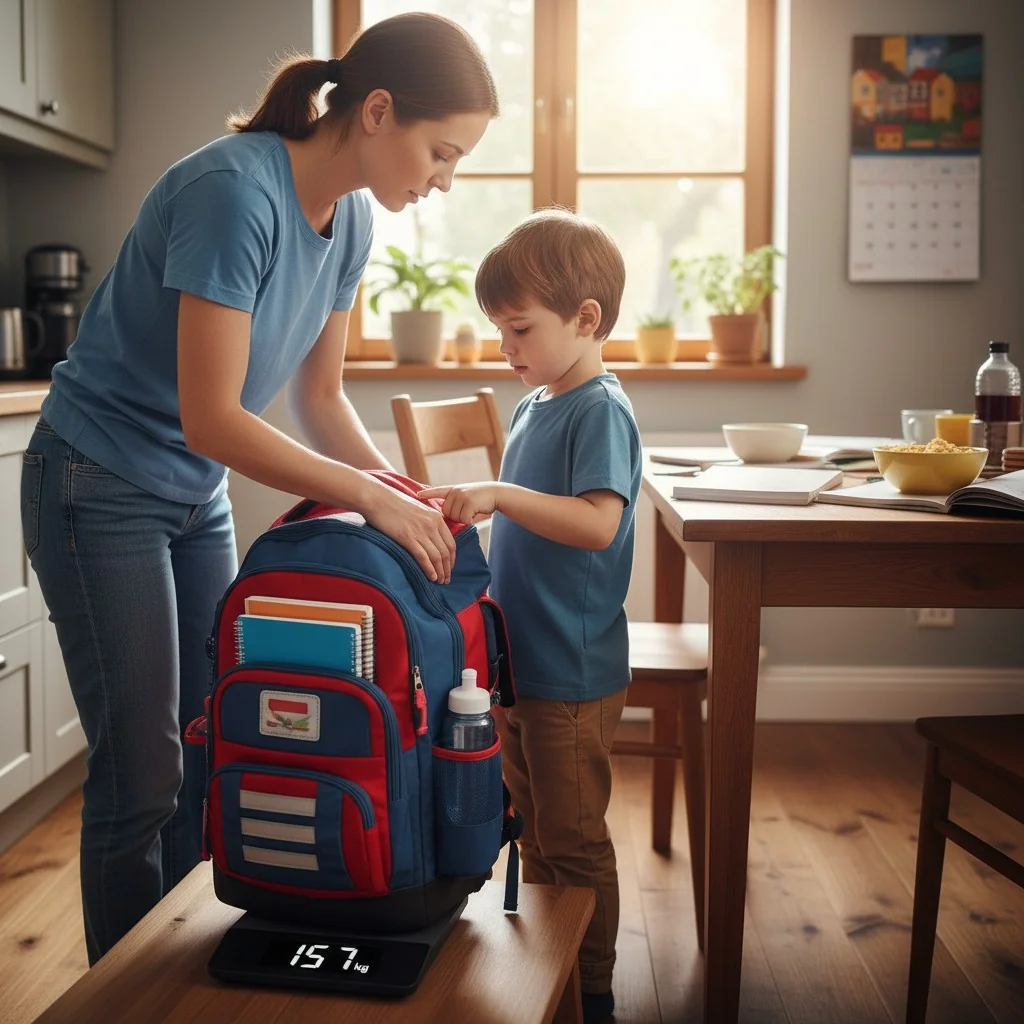
This 10-15% rule is a powerful piece of information. As a brand owner, you can use it in your marketing to educate parents and position your products as a responsible choice. It’s not just about selling a bag; it’s about providing a safe solution.
The 10-15% Rule Explained
This guideline comes from organizations like the American Academy of Pediatrics. It’s based on research into how much weight a child’s developing musculoskeletal system can safely handle. Here’s a quick reference:
| Child’s Weight | Max Backpack Weight (10-15%) |
|---|---|
| 40 lbs (18 kg) | 4-6 lbs (1.8-2.7 kg) |
| 60 lbs (27 kg) | 6-9 lbs (2.7-4.1 kg) |
| 80 lbs (36 kg) | 8-12 lbs (3.6-5.4 kg) |
| 100 lbs (45 kg) | 10-15 lbs (4.5-6.8 kg) |
How Bag Design Influences Perceived Weight
A well-designed bag can make a load feel lighter. The key is to keep the weight close to the body and stable. This is where features like a padded back panel, a sternum strap, and compression straps come in. These design elements prevent the bag from sagging and pulling a child backward, reducing muscle strain.
Communicating This to Your Customers
Use your product descriptions, hang tags, and social media to talk about this. Create a graphic that explains the 10-15% rule. Highlight the ergonomic features of your bags that help manage weight. This builds incredible trust with parents who are looking for the best and safest products for their kids.
[claim claim=”The 10-15% weight rule applies to adults as well.” istrue=”false” explanation=”While a good guideline for general comfort, this specific percentage is recommended by pediatric and orthopedic groups primarily for children and adolescents whose spines are still developing.”]
[claim claim=”Packing heavier items closer to the back makes the load easier to carry.” istrue=”true” explanation=”Placing heavy items like textbooks close to the spine and center of gravity helps maintain balance and reduces the strain on back and shoulder muscles.”]
Which Factors Affect Capacity Needs When Selecting a Right School Bag?
Age is a great starting point, but it isn’t the only factor in choosing a backpack size. Overlooking other key needs can make your product line feel incomplete and out of touch with your customers.
Beyond age, you must consider the academic workload (textbooks vs. tablets), extracurriculars like sports or music, the school’s locker policy, and even the local climate, which might require extra space for winter gear.
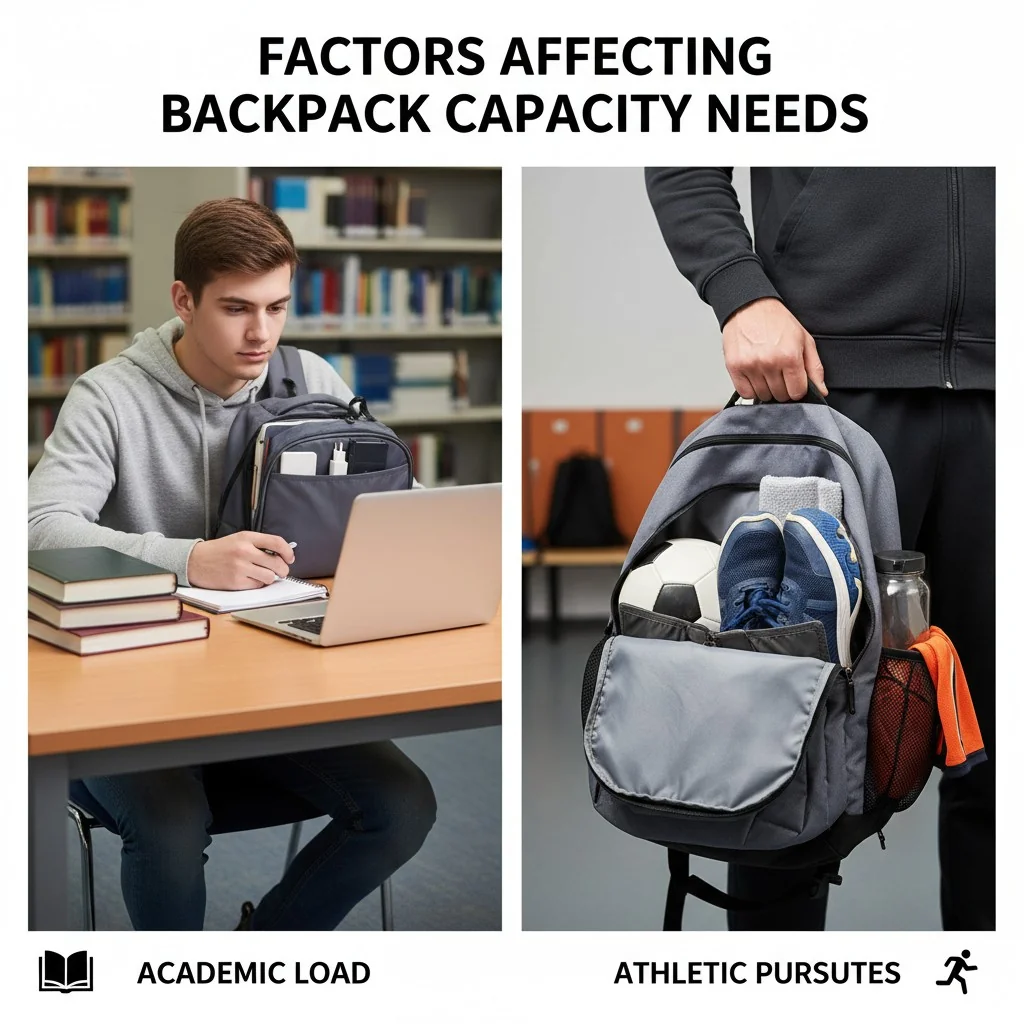
To create a truly successful product line, you need to think like your end customer. A child’s daily life is varied, and their bag needs to adapt. I encourage brands to think about creating "personas" for their target users. Is your customer a tech-savvy student, an athlete, or an artist?
Academic Workload: Digital vs. Traditional
The rise of technology in schools has changed backpack needs. A school that provides every student with a tablet may mean students carry fewer heavy textbooks. For your brand, this means designing bags with secure, padded laptop or tablet sleeves becomes a priority. The overall capacity might be smaller, but the internal organization is more specialized.
Extracurricular Activities
A huge number of students participate in after-school activities. A soccer player needs space for cleats and a ball. A musician might need a bag with external straps to hold an instrument case. Designing a slightly larger "sport" or "activity" version of your standard backpack can capture this significant market segment.
School Environment and Climate
Simple logistics play a big role. Does the school have lockers? If not, students need larger bags to carry everything all day. What’s the climate like? In colder regions, a student needs a bag big enough to stuff a bulky winter coat into during the day. These practical considerations are often overlooked but are critical for customer satisfaction.
[claim claim=”A student with a school-issued laptop always needs a smaller backpack.” istrue=”false” explanation=”While they may carry fewer textbooks, they still need a bag with a well-padded compartment for the device, plus room for a charger and other essentials, so the overall capacity may not decrease significantly.”]
[claim claim=”Schools with no lockers generally lead to students needing larger capacity backpacks.” istrue=”true” explanation=”Without a locker to store books or gym clothes, students must carry all their supplies for the entire day, increasing the required backpack capacity.”]
What Are the Best Backpack Types for Kids at Different Educational Stages?
A standard two-strap backpack isn’t always the best or only solution. Missing out on alternative bag types means you could be leaving a whole segment of the market to your competitors.
Preschoolers do well with simple mini backpacks. Elementary students benefit from standard backpacks with side pockets. Middle and high schoolers may prefer multi-compartment tech backpacks, or even rolling backpacks if they carry very heavy loads.
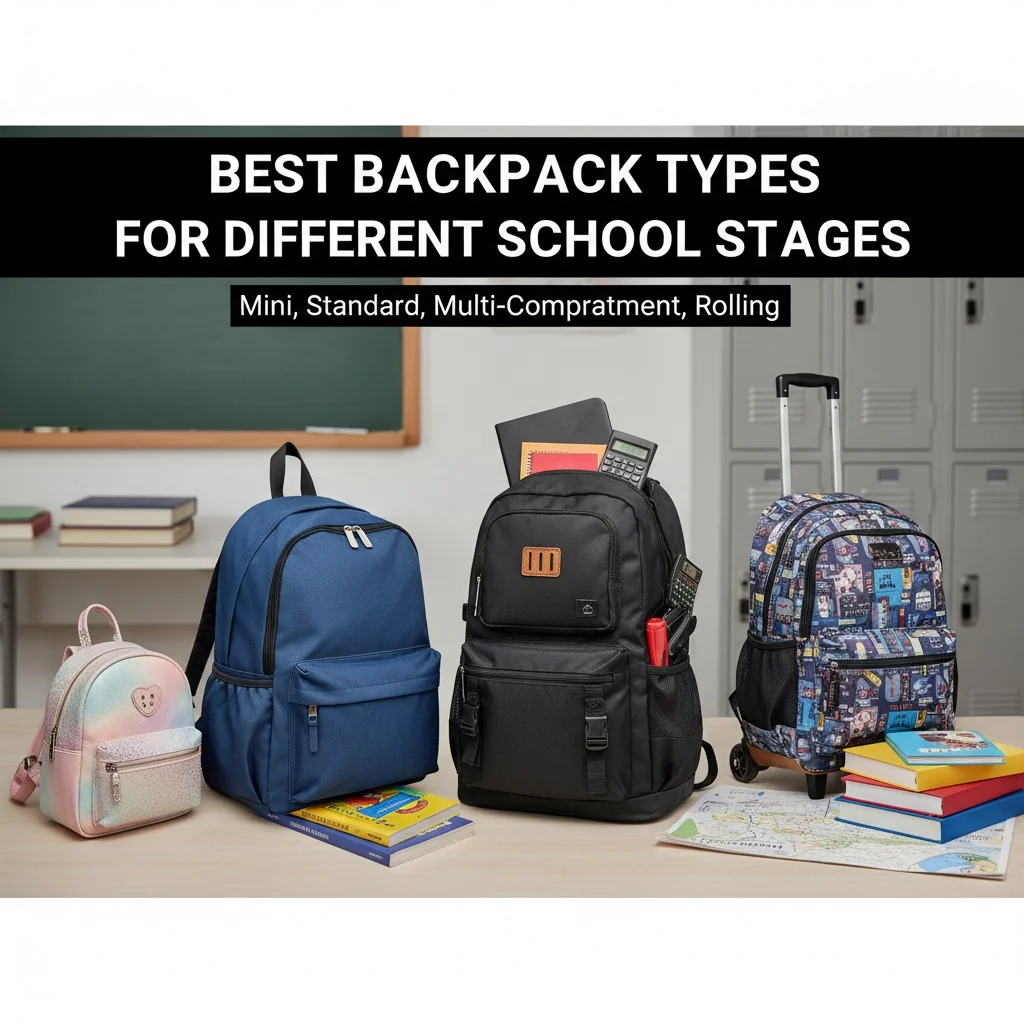
Diversifying your product offering with different bag types allows you to meet more specific customer needs. It shows that your brand is versatile and has a solution for every situation. From my experience, having a few specialized options can really make your collection stand out.
Matching Style to Stage
Let’s look at which types work best for each stage. This can help you plan a more comprehensive and strategic product range.
| Stage | Best Type | Key Features to Include |
|---|---|---|
| Preschool (3-5) | Mini Backpack | Single compartment, easy-pull zippers, chest strap, fun patterns. |
| Elementary (6-12) | Standard Backpack | 2-3 compartments, side water bottle pockets, padded straps, reflective safety patches. |
| Middle/High (13-18) | Tech/Multi-Compartment | Padded laptop sleeve, organizer panel, durable fabric, sternum strap. |
| Heavy Loads (Any Age) | Rolling Backpack | Sturdy wheels, telescoping handle, option to wear as a backpack. |
Offering a rolling backpack, for example, can be a game-changer. It’s a problem-solver for students in schools with long hallways or for those who have to carry an exceptionally heavy load. It’s a niche, but a very valuable one.
[claim claim=”Rolling backpacks are always the healthiest option for children.” istrue=”false” explanation=”While they reduce back strain, rolling backpacks can be cumbersome on stairs or in crowded hallways and can be a tripping hazard. The best choice depends on the school environment.”]
[claim claim=”A chest strap (sternum strap) helps stabilize the backpack and distribute weight more effectively.” istrue=”true” explanation=”A chest strap connects the two shoulder straps, preventing them from slipping and keeping the load closer to the body’s center of gravity, which improves stability and comfort.”]
What Are the Design Considerations When Choosing a School Bag?
Function is crucial, but let’s be honest—style is what often closes the sale. A highly functional but unattractive bag will just sit on the shelves, whether physical or digital.
Key design considerations include material choice (balancing durability and weight), zipper quality, reflective safety elements, and aesthetics like color and patterns. For you as a brand owner, customization options are also a major factor.
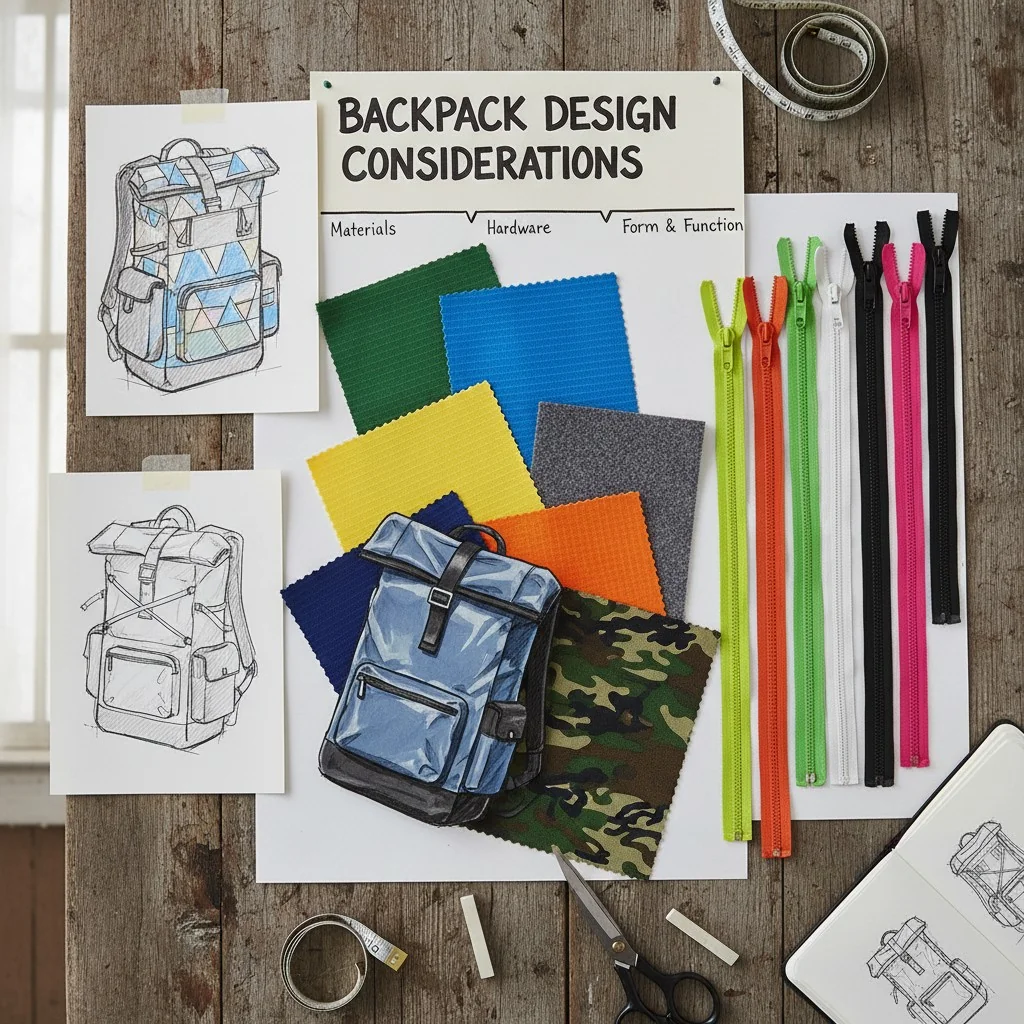
This is where your brand’s personality truly shines. The design choices you make communicate your brand’s values. Are you focused on safety, sustainability, or cutting-edge trends? This is where I love to collaborate with brands to bring their vision to life.
Material and Hardware Choices
The feel of the fabric and the quality of the hardware speak volumes. Using premium, durable zippers from a brand like YKK is a small detail that signals high quality. A broken zipper is one of the top reasons bags get thrown away, so investing here is smart. Similarly, choosing interesting materials, like recycled polyester or water-resistant nylon, can be a key selling point.
Safety as a Design Feature
Parents prioritize safety above all else. Integrating safety features into the design is a brilliant move. Adding small, reflective patches or piping to the front and sides of the bag is a low-cost feature that dramatically increases a child’s visibility to cars in the early morning or late afternoon. Bright colors also enhance visibility.
Aesthetics and Customization
Finally, the bag has to look good. Research the color and pattern trends for your target age groups. What a 7-year-old finds cool (dinosaurs, unicorns) is very different from what a 17-year-old wants (sleek, minimalist designs). This is where working with a manufacturer like Osgoodway is so valuable. We can help you source the right materials and apply custom graphics to create a product that is uniquely yours and perfectly on-trend.
[claim claim=”The color of a backpack has no impact on its safety.” istrue=”false” explanation=”Brightly colored backpacks are more visible to drivers, especially during dawn, dusk, or on overcast days, which can enhance a child’s safety when walking to or from school.”]
[claim claim=”YKK is a brand of zipper widely recognized for its quality and durability.” istrue=”true” explanation=”YKK zippers are known for their reliability and are often used in high-quality bags and garments as a mark of good construction.”]
Conclusion
Choosing the right backpack capacity and design is vital for a child’s health and your brand’s success. Focus on age-appropriate size, ergonomic features, and quality materials to create winning products.
References
-
Understanding the right capacity for school backpacks is crucial for ensuring children’s comfort and health. ↩
-
Good design directly correlates with customer satisfaction, impacting brand loyalty and sales. ↩
-
Ergonomic designs can significantly enhance comfort and reduce strain on children’s backs. ↩
-
Proper weight distribution in backpacks is essential to prevent back pain and promote good posture. ↩






