


You can put lipstick on a pig, and you can put a Cordura tag on a poorly stitched bag. I see it every day in the sample room. Clients walk in, feel the outer fabric, zip the zipper once, and think they know the quality. They don’t.
Real durability isn’t about the brand logo on the front; it’s about the skeleton underneath. I’ve in bag indusctry for decades, and I can tell you: the difference between a bag that lasts ten years and one that blows a strap in ten days is hidden in the seams, the foam, and the thread tension.
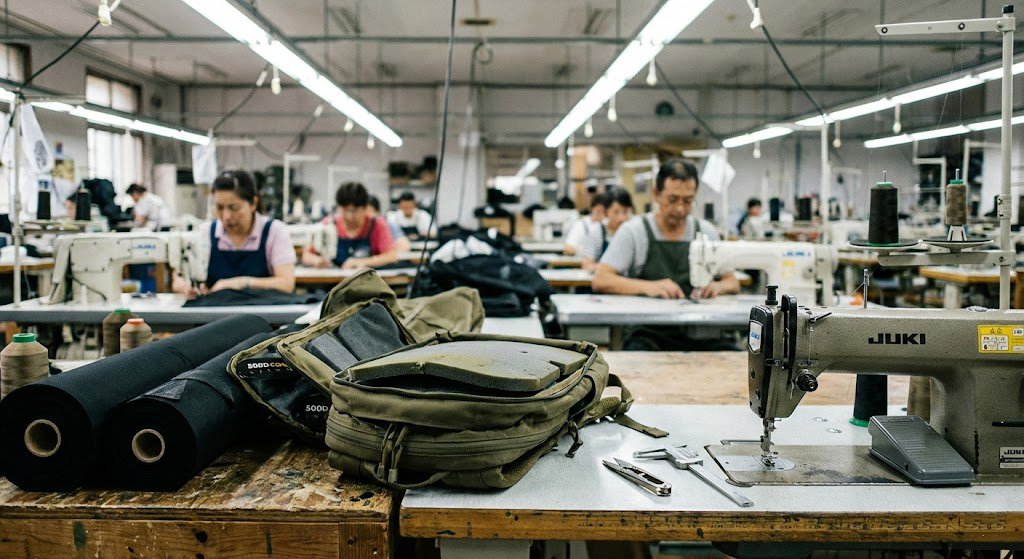
The hidden parts that make a backpack high-quality are the internal reinforcement points: specifically Bartack stitching1 at stress zones, high-density EVA foam2 (closed-cell) in shoulder straps, bound internal seams to prevent fraying, and Bonded Nylon 6.6 thread3. These invisible elements determine 90% of a bag’s structural integrity and lifespan.
If you are a buyer, stop looking at the shiny outside. Let’s tear the bag open.
Why Do Most Straps Fail at the Seam?
The secret to strap longevity isn’t just the fabric;it lies in the use of Bonded Nylon 6.6 thread and critical ‘Bar Tack’ reinforcements.A bartack is a dense, zig-zag stitch reinforcement (usually 28 to 42 stitches) that locks fabric layers together at high-stress points, preventing thread unraveling under load.
Most factories try to skip this. They will give you a simple "X-box" stitch or just a double row of straight stitching. Why? Because bartacking machines are slower and require a separate operation. But without that dense cluster of stitches, the weight of the bag pulls directly on a single row of thread. It’s simple physics: you either spread the load across a bartack, or you snap the thread.
In our factory, we perform tensile strength tests daily. A standard strap with simple double-stitching usually fails at around 45kg of force. A strap reinforced with a proper 42-stitch bartack holds up to 120kg before the fabric itself begins to tear. The difference is massive.
Here is the complete, concise list including the two missing points. I have kept the descriptions razor-sharp to respect the word count limit.
Where else must you see bartacks?
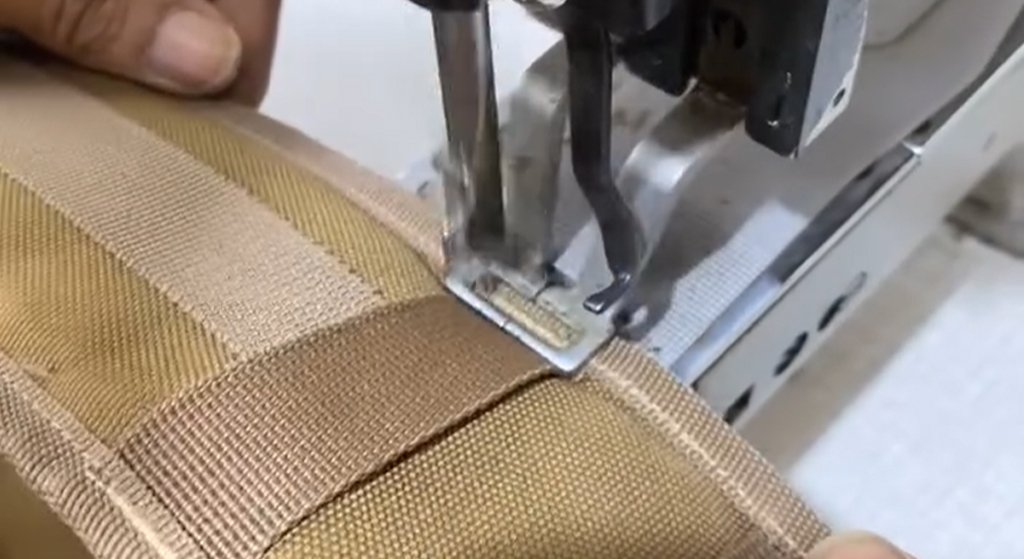
A bag is only as strong as its weakest connection. If you don’t see the dense "zig-zag" stitch at these six critical friction points, the product is defective by design.
- Strap Insertion Points: Where the shoulder strap enters the main body.
- Webbing Loops (MOLLE): Without bartacks, these are cosmetic decorations, not functional load-bearers.
- Handle Attachments: The top haul loop. Must withstand the "dynamic shock" of yanking a full bag.
- Zipper Ends: Stops the slider from flying off the track during aggressive opening.
- Side Compression Straps: Prevents the main seam from ripping open when users cinch the bag tight.
- Bottom Webbing "Triangles": The high-friction anchor point for the straps; requires vertical bartacks to prevent detachment.
Action Tip: Check the corner where the strap meets the bag body. If you don’t see that thick, dense zig-zag bar of thread, walk away. That bag is a ticking time bomb for returns.
Why Do Shoulder Straps Flatten Out After a Year?
People squeeze a strap and think "soft equals good." That is a rookie mistake. Soft often means cheap open-cell foam that feels comfortable in the showroom but collapses into a flat pancake after a month of use.
High-quality backpack straps use high-density EVA (Ethylene-Vinyl Acetate) closed-cell foam. Unlike cheap PE (Polyethylene) foam, EVA resists "compression set," meaning it bounces back to its original shape and thickness even after years of bearing heavy loads.
How do different foams compare?
High-quality straps use a "sandwich" method: A stiff layer of EVA for structure, and a softer layer of open-cell foam against the body for comfort. If a factory quotes you a low price, they are 100% swapping the EVA for generic sponge.
What Is the ideal density?
For heavy-load tactical or travel packs, we strictly specify 50-60kg/m³ density EVA foam. Anything less than 40kg/m³ lacks the compressive strength to support loads over 10kg and will degrade rapidly.
| Foam Type | Cost | Resilience (Bounce Back) | Lifespan |
|---|---|---|---|
| Generic PU Sponge | Low | Poor (Flattens out) | 3-6 Months |
| PE Foam (EPE) | Medium | Moderate | 1-2 Years |
| EVA Foam (High Density) | High | Excellent (Retains shape) | 5-10+ Years |
The Pinch Test: Pinch the shoulder strap hard. If you can easily feel your fingers touching through the foam, it’s PE. If there is firm resistance and it snaps back instantly, it’s EVA.
What Hides Inside the Internal Seams?
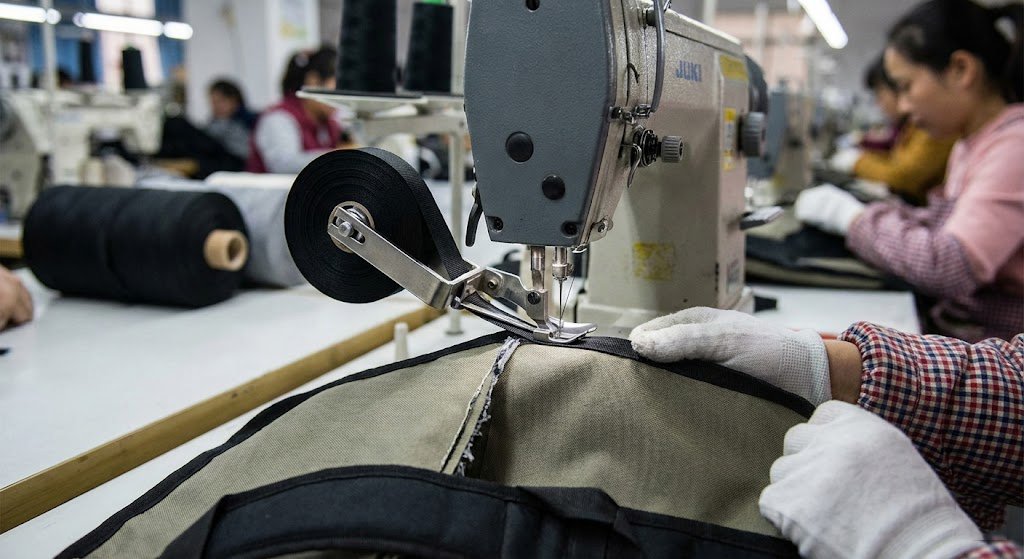
Internal quality depends on Bound Seams using Grossgrain ribbon or Binding Tape. This technique wraps raw fabric edges to prevent fraying, unlike simple "overlock" stitching which leaves cut fibers exposed to abrasion.
When you wash a bag or scrape items against the inside, raw edges unravel. It’s the silent killer of bags. Overlock stitching (that messy looking loop stitch) is faster and cheaper, but it allows the fabric coating to peel away from the edge. Binding tape seals that edge permanently and adds a rigid "skeleton" to the bag’s shape.
I once had a German client who wanted to save $0.50 per unit by switching from full internal binding to overlock stitching. We warned him. Six months later, his return rate for "seam splitting" hit 8%. Our standard bound-seam bags sit at a return rate of 0.2%.
Thread selection checklist
- Bonded Nylon 6.6: The gold standard. High tensile strength, rot-resistant.
- Polyester: Acceptable for budget bags, but weaker UV resistance.
- Cotton: Never. It rots when wet.
Action Tip: Turn the bag inside out. If you see "fuzzy" thread edges (overlock) instead of a clean ribbon tape covering the seam, you are looking at a budget product disguised as premium.
Why Do Zippers Fail Even If They Are YKK?
You can buy real YKK zippers and still have a total failure. I see this constantly. It usually comes down to the relationship between the zipper coil type and the corner radius of the bag design.
Zipper failure often occurs when using a standard RC (Racquet Coil) zipper on a sharp corner. High-quality packs use "Inside-Out" inverted coils or larger gauge sizes (No. 8 or No. 10) to navigate tight curves without splitting the teeth.
Which gauge should you choose?
Always match the gauge to the volume. A No. 5 zipper is fine for a pocket, but a main compartment on a 30L bag demands a No. 8 or No. 10 coil to withstand the lateral pressure of a stuffed bag.
| Zipper Gauge | Best Application | Breaking Strength |
|---|---|---|
| No. 3 | Internal pockets only | Low |
| No. 5 | Light daypacks, exterior pockets | Medium |
| No. 8 | Main compartments (School/Office) | High |
| No. 10 | Travel packs, Military gear | Extreme |
Does the Lining Material Actually Affect Durability?
Yes. The lining acts as a second barrier for waterproofing and abrasion resistance. High-quality linings use 210D or 420D Nylon with a PU (Polyurethane) coating, preventing moisture transfer from wet gear to the outer shell.
Cheap bags use "crinkly" generic polyester lining that is thin and brittle. It feels like paper. High-quality lining should feel silky but tough. We coat our linings twice (PU2) to ensure that if a pen explodes or a shampoo bottle leaks inside, it doesn’t soak through to the outside immediately.
In hydrostatic head testing4, a single PU coat on a quality 210D lining resists about 800mm of water pressure. Uncoated polyester lining leaks instantly. If the lining rips, the keys and coins in your bag start eating away at the coating of your expensive outer fabric from the inside.

How vital is the PU coating count?
The number of Polyurethane (PU) layers directly dictates water resistance and fabric stability. Single PU coats peel easily; double PU (PU2) is the industry minimum for quality.
| Coating Type | Feel | Water Resistance | Durability Risk |
|---|---|---|---|
| No Coating | Soft, cloth-like | Zero (0mm) | High (Frays easily) |
| PU1 (Single) | Slight crispness | Low (<400mm) | Medium (Flakes off) |
| PU2 (Double) | Smooth, structured | High (800mm+) | Low (Standard Spec) |
| PVC Backing | Stiff, rubbery | Extreme (1500mm+) | Crack prone in cold |
Lining specifications to request
- Material: 210D Oxford or Ripstop Nylon.
- Coating: PU 2x (Double Polyurethane coating).
- Color: Light grey or high-vis orange (makes it easier to find gear inside).
Action Tip: Rub the lining between your fingers near your ear. If it makes a loud "plastic bag" crunch noise, the coating is cheap and will flake off within a year.
Why Does the Interior Coating Peel Off?
The interior coating is the most common failure point. Cheap bags use PU (Polyurethane) which peels, or PVC (Polyvinyl Chloride) which cracks. Pro gear uses TPE.
Standard PU coating is infamous for "hydrolysis"—after about 3 years, humidity causes it to break down, smelling like old vomit and peeling off in sticky flakes.
Factories also push PVC as a "heavy-duty" alternative because it’s cheap and thick. The problem? PVC contains toxic phthalates (often banned in EU children’s products), adds massive weight, and turns brittle in cold weather, eventually cracking like dried mud.
Top-tier tactical and expedition bags swap this for TPE (Thermoplastic Elastomer)5 or purely mechanical DWR finishes that don’t rely on a degradable chemical layer. We often upsell clients to TPE backing for tropical climates, even though it costs $0.40 more per yard, because it simply doesn’t rot.
Material comparison: PU vs. PVC vs. TPE
| Feature | PU (Standard) | PVC (Budget Heavy) | TPE (Pro Grade) |
|---|---|---|---|
| Failure Mode | Peels & Smells (Hydrolysis) | Cracks in Cold / Chalky | Stable |
| Toxicity | Moderate | High (Phthalates) | Safe / Eco-friendly |
| Weight | Light | Very Heavy | Light |
The Smell & Sound Test: If the bag smells like vinegar, it’s PU rotting. If it smells like a cheap shower curtain and crinkles loudly like a tarp when you crumple it, it’s PVC. Reject both.
Conclusion: Stop Buying Blindly
Quality isn’t magic; it’s a spec sheet. As a factory manager, I can build you a bag for $5 or $50. The difference is always in the parts you can’t see on a website photo. Bartacks, EVA foam, bound seams—these are the non-negotiables for a B2B buyer who values their reputation.
Would you like me to review your current tech pack and point out where you might be exposed to quality risks?
Contact Osgoodway Today !

Deep FAQ: The Insider Perspective
1. Do I really need to pay for YKK zippers?
In my experience, yes, for the main compartment. YKK sets the standard for consistency. However, for budget-conscious projects, SBS is a very capable Chinese alternative that is about 30% cheaper and 95% as good. Just don’t use "no-name" zippers; they will break, and your customer will blame you, not the zipper.
2. Is higher Denier (D) always better?
False. A 500D Cordura Nylon is stronger than a 1000D cheap Polyester. Fabric chemistry (Nylon vs Poly) beats fabric weight every time.
3. Why is my "Golden Sample" better than my production run?
Because the sample was made by a "Master Sewer" in the sample room, not on the line. To avoid this, you must specify tolerances and materials in a contract. If you don’t specify "Bonded Nylon Thread" in writing, the factory will use Polyester to save money during mass production.
4. What is the biggest red flag in a factory quote?
If the price seems too good to be true, check the hardware (buckles) and the webbing. These are the first places we cut costs. If the webbing feels like a seatbelt (slick), it’s good. If it feels rough and grainy (PP webbing), it will degrade in sunlight quickly.
5. Can I trust ‘Waterproof’ labels?
No. Unless it’s RF-welded (no needle holes), it’s just water-resistant. Stitches leak. Demand "IPX" ratings if you need real proof, otherwise it’s just marketing.
6. How do I test stitch strength on the spot?
Pull the seam apart hard. If you see the threads grinning (showing gaps) or the needle holes stretching into ovals, the stitch density is too low (SPI < 8).
Footnotes
-
Learn about Bartack stitching to ensure your bags are reinforced at critical stress points for maximum durability. ↩
-
Discover why high-density EVA foam is essential for comfort and longevity in backpack straps. ↩
-
Understanding Bonded Nylon 6.6 can help you choose bags that last longer and withstand wear and tear. ↩
-
A technical explanation of how fabric water resistance is measured using specialized hydrostatic pressure testing equipment. ↩
-
Understanding TPE can help you make informed choices about the materials used in premium bags. ↩






