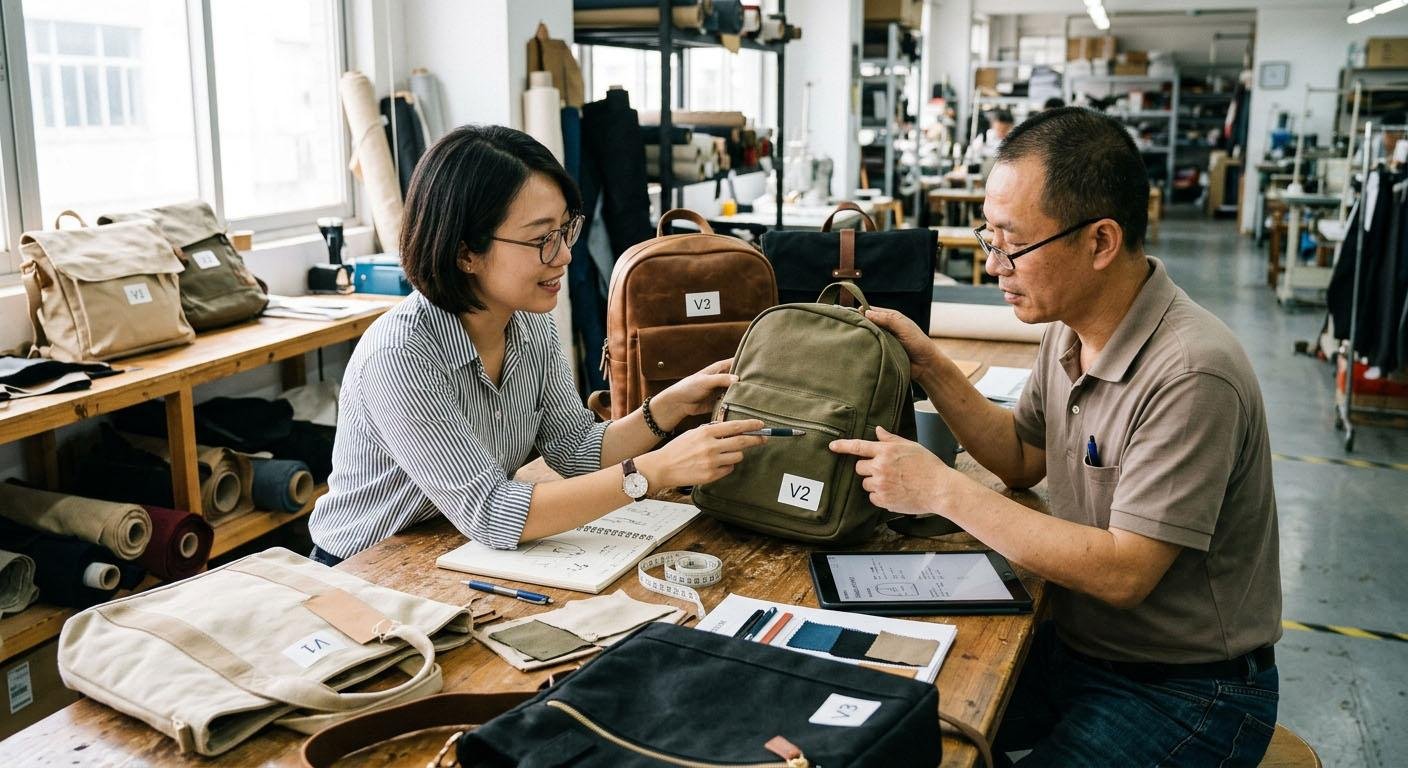
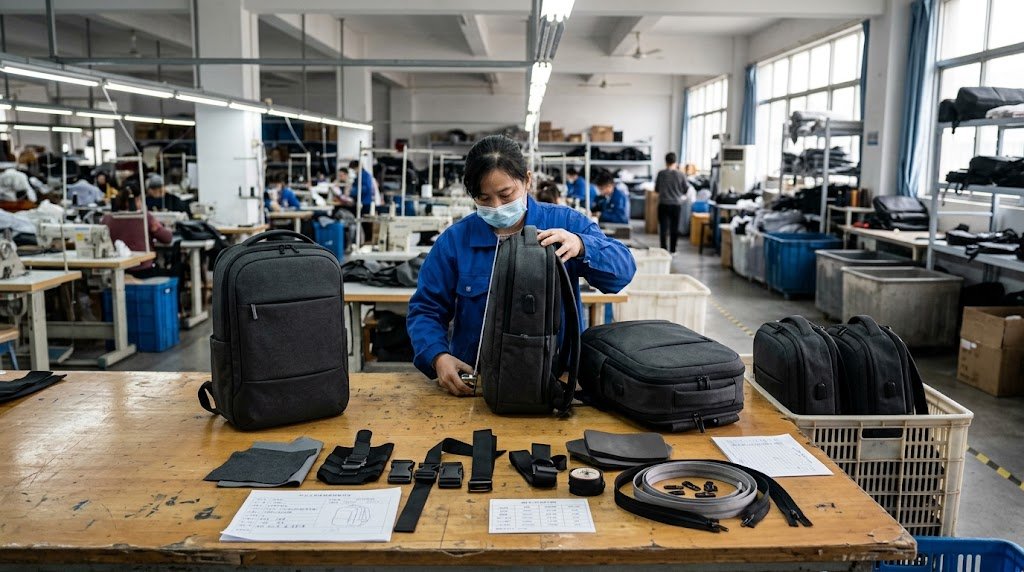
In my inbox at least twice a week, I see the same mistake: a brand sends a brief titled ‘Cosmetic Bag,’ but the spec sheet describes a ‘Toiletry Bag.’
We catch it. Most factories don’t—they just build to the drawing and leave you to deal with the returns.
The core difference is this: a toiletry bag is built for a wet, high-humidity bathroom environment — waterproof lining, corrosion-resistant hardware, high-abrasion fabric. A cosmetic bag is built for a dry vanity or handbag — structured form, premium finish, lighter-duty materials. Same size, same zipper on the outside. Completely different specs underneath. Mixing them up adds $0.80–$1.50 per unit in unnecessary cost, or causes field failures that kill your reviews.
I run product development at Osgoodway, a B2B bag factory that’s shipped to over 30 countries. Below is what we actually see on the production floor — not what a Wikipedia article says.
What These Two Bags Actually Mean — Depending on Who You Ask
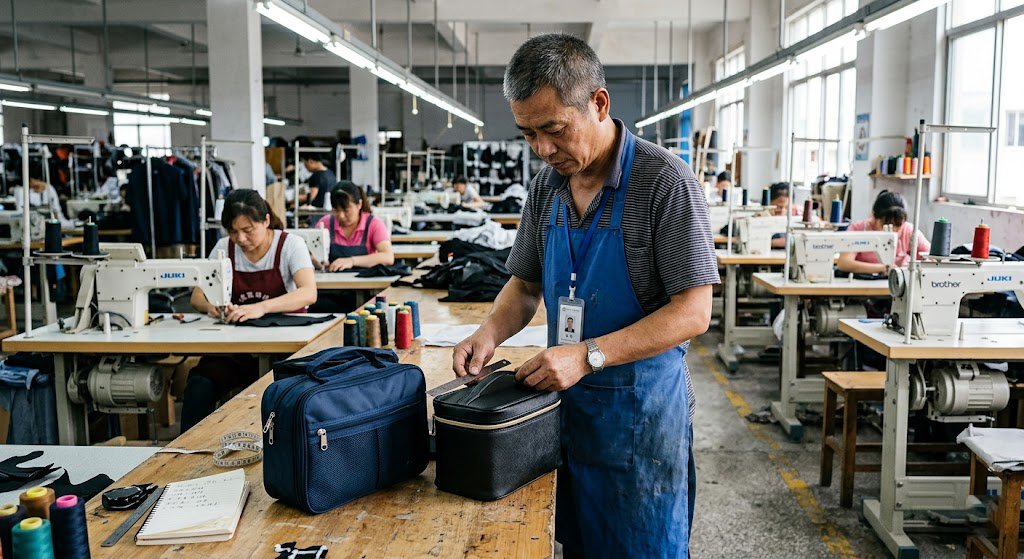
Most articles give you one definition and call it done. That’s not how it works. I deal with brands, retailers, customs brokers, and factory supervisors on every project — and every one of them uses these terms differently. That gap is exactly where sourcing mistakes live.
How Customs and Retailers Define Them (And Why It Affects Your Money)
From a trade classification standpoint, both bags fall under HS Chapter 42 — specifically 4202.12 (textile outer surface) or 4202.92 (PU/PVC outer surface). Neither heading distinguishes "toiletry" from "cosmetic." Customs cares about material composition, not end use.
| HS Code | Outer Surface | US MFN Duty |
|---|---|---|
| 4202.12 | Textile (nylon, polyester) | 17.6% |
| 4202.92 | PU, PVC, other | 20% |
I’ve had clients ship a PU cosmetic bag declared under 4202.12 because the supplier defaulted to their usual code. Reclassification penalty on arrival. The factory wasn’t cheating — just sloppy. Verify the code against your actual shell material before the container leaves port.
On the retail side, Amazon splits them across two entirely different browse nodes: toiletry bags live under Luggage & Travel Gear, cosmetic bags under Beauty & Makeup Organizers. Different algorithms, different competitor sets. A cosmetic-looking toiletry bag listed in the wrong node will quietly underperform for months before anyone figures out why.
How Our Factory Actually Classifies a Project
Forget what the brief says. At Osgoodway, we classify every incoming project against three engineering criteria before we touch the spec sheet:
- Wet environment tolerance — does this bag live on a bathroom counter or gym locker? If yes, it’s a toiletry build. Full stop.
- Hardware corrosion resistance — decorative brass pulls are fine for a dry vanity bag. They will corrode in a humid bathroom within months. We use nickel-free or coated hardware on anything that gets wet.
- Base load-bearing — a full shampoo bottle runs 400–500g. If the bag needs to stand upright under that load repeatedly, the base needs structural reinforcement a cosmetic bag spec doesn’t include.
When a brief comes in labeled "cosmetic bag" but the end-use description says "bathroom travel storage," I flag it on day one. Nine times out of ten the client genuinely doesn’t know these require different specs. The tenth time, they’ve already had a bad run somewhere else and came to us to fix it.
The Hidden Truth About Factory Catalog Labels
Here’s what first-time importers don’t realize: "cosmetic bag" on Alibaba is an SEO label, not an engineering category. A supplier listing 200 "cosmetic bags" may be mixing genuine cosmetic pouches, toiletry bags, pencil cases, and cable organizers under the same heading.
We do the same on our own catalog pages at Osgoodway. I’m not ashamed of it — that’s how product discovery works online.
But it means one thing: never use a supplier’s category label as a proxy for the actual spec. Go to the tech sheet. Every time.
The Specs That Actually Drive the Price Gap
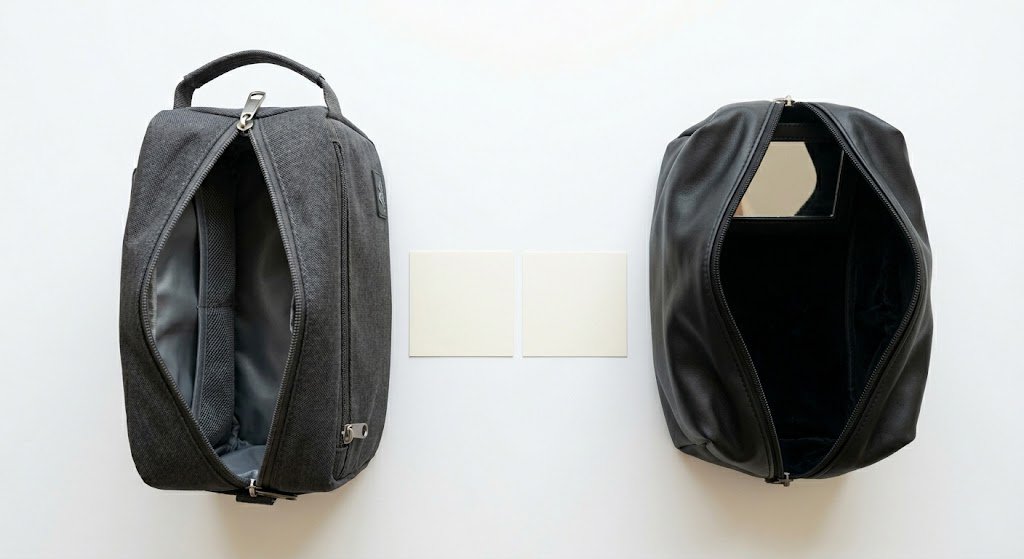
Clients ask me all the time why two bags that look almost identical on a sample photo have a 30–40% FOB price difference. The answer is never the outer fabric. It’s always what’s underneath.
Lining, Hardware, and Base Construction — Where the Cost Lives
The lining is the single biggest cost differentiator. Not the outer fabric. Not the zipper. The lining.
The short version:
- Toiletry bag → EVA foam lining (1.5–2mm). Waterproof, heat-stable to ~80°C. Survives sea freight in summer. BASF EVA material data.
- Cosmetic bag → PVC or thin PU lining. Fine for dry carry. Will crack under thermal stress. Don’t use it in a toiletry bag.
I know this from a painful 2019 project. A client insisted on PVC lining for their toiletry bag. We pushed back. They pushed harder. We built it their way. The July container hit 60°C+ inside during the South China Sea leg — standard summer conditions — and arrived with a 22% lining crack rate. We ate part of the cost. They switched to EVA on the next run.
Hardware and base construction follow the same logic:
| Component | Toiletry Bag | Cosmetic Bag |
|---|---|---|
| Zipper | YKK AquaGuard or water-resistant equivalent | Standard YKK #5 |
| Hardware finish | Nickel-free, matte — oxidation risk in humidity | Brass or gold-tone acceptable |
| Base board | 3–4mm PE board — handles liquid bottle load | Soft base or light cardboard |
Skipping the PE base board saves $0.15 per unit. It costs you your product rating. I’ve seen it happen enough times that I now flag it as a non-negotiable on every toiletry bag brief.
The Spec Sheet Comparison I Give Every New Client
Before any project kicks off at Osgoodway, I walk clients through this side-by-side. Not as a sales exercise — as a mistake-prevention exercise.
| Spec | Toiletry Bag | Cosmetic Bag |
|---|---|---|
| Outer fabric | 600D–1680D polyester or nylon | PU, canvas, or lightweight nylon |
| Lining | EVA foam, 1.5–2mm | PVC or thin PU |
| Zipper | YKK AquaGuard or water-resistant equivalent | Standard YKK #5 or decorative |
| Hardware finish | Nickel-free, matte | Brass, gold-tone acceptable |
| Base construction | 3–4mm PE board reinforcement | Soft base or light cardboard |
| Typical FOB range (500 pcs) | $4.00–$7.50 | $5.50–$12.00 |
Two things on that table worth calling out. First, cosmetic bags run higher on the top end — premium surface materials, structured panels, and finish quality push cost up fast. Second, the FOB floor on toiletry bags is lower, but clients who cut corners on lining or hardware to hit a $3.50 target almost always come back after their first field complaints.
The spec is the margin. Get it right before you get the quote.
Cost Structure and Margin — Which Category Is Actually Worth Building?

I get this question from new clients constantly. My answer is always the same: wrong question. The right question is which category matches your channel, your volume, and your brand positioning. The margin math looks very different depending on where you’re selling.
Here’s what the numbers actually look like from where I sit.
The Real FOB Cost Breakdown
Most people think the price gap between these two categories comes from the outer material. It doesn’t. It comes from finish quality on cosmetic bags and functional engineering on toiletry bags — two completely different cost drivers.
| Cost Component | Toiletry Bag | Cosmetic Bag |
|---|---|---|
| Outer fabric | $0.80–$1.20 (600D–1680D polyester) | $1.20–$2.80 (PU, canvas) |
| Lining | $0.60–$0.90 (EVA foam) | $0.30–$0.60 (PVC/thin PU) |
| Zipper & hardware | $0.40–$0.70 (water-resistant spec) | $0.50–$1.20 (decorative finish) |
| Base board | $0.15–$0.25 (PE reinforcement) | $0.05–$0.10 |
| Labor & overhead | $1.20–$1.80 | $1.40–$2.20 |
| Typical FOB (500 pcs) | $4.00–$7.50 | $5.50–$12.00 |
The cosmetic bag ceiling is higher because premium surface finishing — debossed logos, woven labels, structured panels — compounds fast. A basic cosmetic pouch at $5.50 FOB and a boutique branded version at $11.00 FOB can share the same core construction. You’re paying for the surface, not the engineering.
Channel Fit Matters More Than the Margin Percentage
Here’s the part most sourcing guides skip. Raw FOB margin means nothing without knowing your channel. These two categories behave very differently at retail.
Toiletry bags:
- High volume, competitive price points. Amazon BSR top 20 in this category is dominated by $15–$28 retail price points.
- White-label market is saturated. Differentiation through material upgrades (rPET fabric, YKK hardware) or niche targeting (gym bag toiletry kits, TSA-specific sizing) is the only real play left.
- Return rate driver: lining failures and zipper corrosion. Fix the spec, fix the returns.
Cosmetic bags:
- Lower volume per SKU, higher brand premium potential. The $35–$80 retail range is underpopulated relative to consumer demand.
- DTC and specialty beauty retail (Sephora, Anthropologie, boutique gift shops) reward brand story and finish quality. A well-positioned cosmetic bag with a credible brand behind it can hold $55 retail on $8.50 FOB without blinking.
- Return rate driver: structure collapse and zipper pull breakage. Both are spec issues, not design issues.
My honest take: if you’re a new brand with limited capital, toiletry bags are a harder entry point than they look. The white-label competition on Amazon is brutal and margin-destructive. Cosmetic bags have more room to build a brand at a defensible price point — if you’re willing to invest in surface quality and not race to the bottom on FOB.
That’s not a popular opinion in a factory sales context. But I’d rather tell you upfront than watch you burn through a 500-unit MOQ on a product that competes on price alone.
Compliance — The One Detail That Gets Shipments Held at Customs
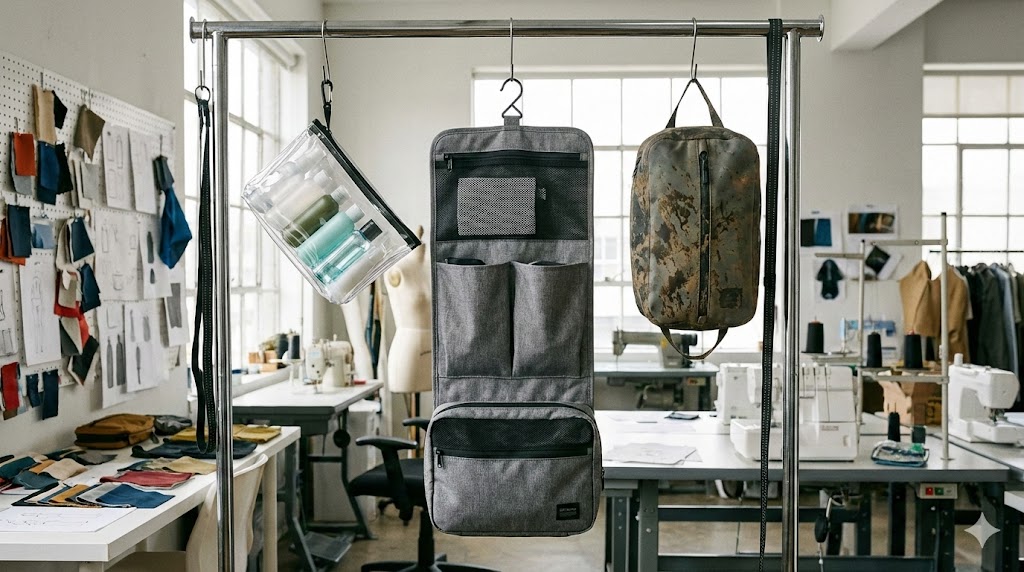
I’ll be direct: compliance is the area where brands most consistently underinvest, and where the consequences are most expensive. A failed shipment at Long Beach or Rotterdam doesn’t just cost you the duties. It costs you the inventory, the launch window, and sometimes the retail relationship.
Here’s what actually applies to these two categories in the markets I ship to most.
The Regulations That Catch People Off Guard
Most clients come to us knowing they need "some kind of testing." What they don’t know is which regulations apply to which product — and the toiletry/cosmetic split matters here more than people expect.
REACH (EU) — Regulation EC 1907/2006
REACH restricts certain chemicals in consumer articles sold in the EU. For bags, the two that come up most often:
| Substance | Limit | Where It Shows Up |
|---|---|---|
| DEHP and other phthalates | ≤ 0.1% by weight | PVC lining, PVC coating |
| Nickel release | ≤ 0.5 μg/cm²/week | Metal zippers, hardware |
Cosmetic bags with PVC lining are the most frequent offenders. The phthalate issue is not theoretical — we had a EU-bound cosmetic bag order flagged in 2021 because the PVC the lining supplier used hadn’t been updated to REACH-compliant formulation. The client had to arrange re-lining in-country. Expensive and avoidable.
California Proposition 65 (US) — OEHHA Chemical List
Prop 65 requires a warning label if a product exposes consumers to listed chemicals above safe harbor levels. For bags, the relevant ones are:
- DEHP (phthalate in PVC): safe harbor at 1,300 μg/day
- Lead in surface coatings or hardware: safe harbor at 0.5 μg/day
- Cadmium in metal hardware: safe harbor at 4.1 μg/day
Toiletry bags with metal hardware and cosmetic bags with PVC components are both exposure points. If you’re selling on Amazon US and your product is flagged by a Prop 65 plaintiff firm — and they do actively monitor Amazon listings — the demand letter arrives before you even know there’s a problem. Third-party testing before you list is not optional.
EU Textile Labeling — Regulation EU 1007/2011
Any textile component above 80% of total product weight requires fiber composition labeling. This catches people on cosmetic bags with canvas or nylon exteriors. The label must state fiber type and percentage in the official language of the destination country. We see this missed most often on smaller cosmetic pouches where the client treats them as "accessories" and assumes textile labeling doesn’t apply. It does.
What to Put in Your Supplier Contract
Testing certificates are not enough. By the time you have a certificate, the goods are made. What you need is compliance built into the production spec — before the first sample is cut.
Every compliance-sensitive project gets these four clauses in the production agreement:
- Material pre-approval — all lining, coating, and hardware materials must be submitted with REACH-compliant data sheets before bulk production begins. No substitutions without written sign-off.
- Third-party testing scope — specify which standards apply (EN 71 if any children’s adjacent use, REACH SVHC screening, Prop 65 for US-bound goods) and which accredited lab will run them. We recommend SGS or Intertek for US and EU markets. Budget $180–$350 per test report depending on scope.
- Hardware corrosion spec — nickel release testing per EN 1811:2011+A1:2015 for any metal component with prolonged skin contact. Relevant for cosmetic bags with decorative clasps more than toiletry bags, but both can be caught.
- Defect liability clause — if a shipment fails customs inspection due to a material non-compliance that traces back to an unapproved supplier substitution, the factory bears the re-testing and re-work cost. Without this clause in writing, the conversation gets ugly fast.
One more thing. If your product is destined for both the US and EU markets, run both sets of tests on the same production batch. The standards don’t always overlap. A product that clears Prop 65 can still fail REACH phthalate limits, and vice versa. We test both as standard on any dual-market order. It adds one to two weeks to the timeline. It saves a lot more than that if something fails.
Supply Chain Map — Finding the Right Factory for Each Product Type
Knowing what to build is half the job. Knowing where to build it is the other half. Location in this category is not just a logistics decision — it’s a quality decision.
China’s Production Geography: Know Which Cluster Builds What
These three clusters are not interchangeable. Wrong factory location for your product type is one of the most common and avoidable sourcing mistakes I see.
| Cluster | Strength | Best For |
|---|---|---|
| Guangzhou (Baiyun) | PU cutting, surface finishing, decorative hardware | Premium cosmetic bags |
| Yiwu / Ningbo | Functional construction, EVA lining, base reinforcement | Volume toiletry bags |
| Quanzhou, Fujian | Textile-based functional bags, strong nylon and polyester supply chain | Mid-to-high spec toiletry bags, sports-adjacent travel bags |
Guangzhou (Baiyun District)
- Optimized for visual finish: PU surface precision, color consistency, decorative hardware
- Wrong choice for toiletry bags — bonding process calibrated for PVC, not EVA
- I’ve seen bulk EVA lining delamination come directly from this mismatch. Beautiful samples. Failed bulk production.
Yiwu / Ningbo
- Evolved from luggage manufacturing — strong on functional construction, EVA lining, base reinforcement
- Weaker on premium surface finishing
- Right for volume toiletry bag programs where spec reliability matters more than aesthetics
Quanzhou, Fujian — where Osgoodway operates
- Deep roots in textile manufacturing: strong nylon, polyester, and rPET supply chain
- More vertically integrated than pure trading hubs — tighter material QC as a result
- Underused by international buyers who default to Guangzhou or Yiwu without shopping the full map
- Best fit for mid-to-high spec toiletry bags, compliance-heavy projects, and rPET programs with verified GRS certification.
Vietnam in 2026:
| Capability | Status |
|---|---|
| Basic toiletry bags (polyester, simple EVA) | Production-ready, competitive FOB |
| Structured cosmetic bags (PU, decorative hardware) | Improving, hardware sourcing still adds lead time |
| Complex multi-compartment designs | Still send to China |
| REACH / Prop 65 compliant materials | Dependent on Chinese material supply chain |
Vietnam works for straightforward toiletry specs if you’re diversifying for tariff reasons. For compliance-heavy or finishing-sensitive projects, the infrastructure isn’t fully there yet.

How to Audit a Factory Before You Commit
Most buyers run the same generic checklist for both product types. That’s a mistake. Here’s what actually matters for each.
For toiletry bags, focus on:
- Lining bonding process — heat press vs. adhesive. Ask to see the machine and the temperature calibration log.
- Zipper sourcing — confirm water-resistant zipper stock on site. Mid-production substitutions are a known problem.
- Base board insertion — watch how the PE board is installed. Sloppy insertion leads to visible base deformation after minimal use.
- Waterproof testing protocol — do they submerge samples or run a spray test? Ask to see the written procedure. A reputable factory has one.
For cosmetic bags, focus on:
- PU/PVC cutting precision — poor cutting discipline creates color and texture variation across bulk runs.
- Hardware fitting — jig-fitted hardware is consistent. Hand-fitted decorative clasps lead to misalignment complaints in reviews.
- REACH documentation — ask for material safety data sheets on every lining and coating before you leave. Can’t produce them on the spot? That’s your answer.
The Middleman Problem — How to Spot It Fast
A significant percentage of Alibaba "factories" are trading companies. Not automatically a problem — but for spec-sensitive categories, the extra layer creates risk.
Two quick tells:
- Ask for a live video walkthrough of the production line. A real factory says yes immediately. A trading company delays, offers photos, or shows a facility they don’t own.
- Ask which district the factory is in. A genuine Quanzhou or Guangzhou factory knows their neighborhood cold. A vague answer about "Fujian province" or "Guangdong province" usually means they’re sourcing from multiple factories and marking up the price.
When a trading company is acceptable:
- Trial orders under 500 units on simple specs
- Consolidated shipments across multiple product categories
When you need a direct factory:
- Orders above 1,000 units with custom tooling
- Any project with REACH or Prop 65 compliance requirements
- Products where spec precision directly affects field performance
The spec control a compliance-heavy project requires simply isn’t possible through an intermediary. I’ve tried to make it work for clients who preferred the convenience. It doesn’t hold.
2026 Market Signals — Where Each Category Is Heading
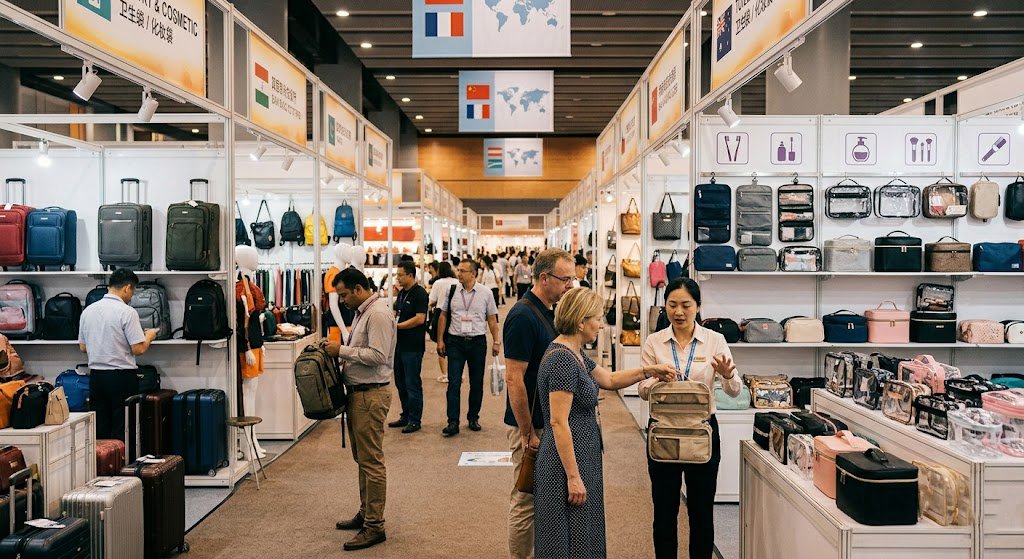
I’m not a trend forecaster. I’m a factory guy. But after 12 years of watching order patterns, trade show floors, and Amazon BSR shifts, I know what early demand signals look like. Here’s what I’m seeing heading into 2026.
Search Trends and Platform Data
Google Trends over the past 24 months tells a clear story:
| Signal | Toiletry Bag | Cosmetic Bag |
|---|---|---|
| Search volume trend | Stable, slight decline | Gradual growth |
| Peak season | Oct–Dec (gifting) | Feb–Apr, Oct–Dec |
| Fastest growing modifier | "mens toiletry bag" | "aesthetic cosmetic bag" |
| Emerging sub-category | Gym-to-office hybrid | Refillable / sustainable |
On TikTok and Instagram, "aesthetic cosmetic bag" content is compounding. The visual-first nature of beauty content favors cosmetic bags over toiletry bags in social commerce. If your channel includes influencer marketing or social-driven DTC, cosmetic bags have more organic amplification potential right now.
Amazon BSR observations from the past 12 months:
- Top 20 toiletry bags: almost entirely dominated by $18–$32 price points, heavy discounting, thin margins. The white-label race to the bottom is well advanced.
- Top 20 cosmetic bags: more fragmented. Branded players at $35–$65 holding position alongside white-label at $15–$22. The premium gap is real and not yet closed.
What I’m Seeing at Trade Shows and in Our Order Book
2025 Canton Fair observations:
- Significant increase in rPET fabric sampling requests for toiletry bags — driven by EU brands with sustainability mandates
- Cosmetic bag briefs increasingly specifying "clean beauty" aesthetics: neutral colorways, minimal hardware, linen or canvas exteriors
- Hybrid formats gaining traction — bags engineered to function as both toiletry and cosmetic carry, with removable inner pouches
Our own order book at Osgoodway in the past 12 months:
- rPET toiletry bag inquiries up roughly 40% year-on-year
- Cosmetic bag orders with custom packaging (branded boxes, tissue wrap) up significantly — brands investing more in unboxing experience
- First-time clients asking about MOQ flexibility more than ever — 300-unit trial orders are becoming the norm before committing to 1,000+
Where I see the opportunity in 2026:
- Toiletry bags: Niche targeting beats generic. Men’s grooming kits, TSA-specific sizing, gym-to-travel crossover. rPET material with verifiable sustainability credentials for EU retail.
- Cosmetic bags: The $35–$60 retail band is the most defensible position. Invest in surface quality and branded packaging. Don’t compete on FOB price — you won’t win.
- Hybrid formats: Still early, but the removable-pouch concept is getting real traction. Worth prototyping in 2026 if you’re building a line rather than a single SKU.
The brands I see struggling are the ones treating this as a commodity play. The ones growing are investing in spec quality, brand finish, and channel fit. That’s not a new insight — but in 2026 it’s more true than ever.
FAQ: What Sourcing Managers Actually Ask
Q1: Can I use the same factory for both toiletry bags and cosmetic bags?
Technically yes. Strategically, probably not. Most factories are optimized for one or the other — different bonding equipment, different QC priorities, different material supply chains. Using a cosmetic bag factory for toiletry bags is the most common mistake I see. The samples look fine. Bulk production fails at the lining or base. Use specialists.
Q2: What’s the minimum order quantity I should expect in 2026?
The industry standard is 500 units per SKU for stock designs, 1,000 units for custom. But honest answer: if a factory won’t negotiate a 300-unit trial run on a first order, they’re not set up for brand partnerships — they want volume buyers. We do 300-unit trials at Osgoodway specifically because we’d rather earn a long-term client than win a one-time PO.
Q3: Do I really need third-party testing if my supplier provides certificates?
Yes. Always. Supplier-provided certificates test their standard materials. The moment there’s a mid-production material substitution — and it happens more than the industry admits — that certificate is worthless. Commission your own test through SGS or Intertek on a bulk production sample, not a pre-production sample. That’s the only result that protects you.
Q4: Is rPET fabric worth the premium for toiletry bags?
For EU retail in 2026, yes. For Amazon US, not yet — consumers aren’t paying extra for it at the $20–$30 price point. For DTC brands with a sustainability story, absolutely — but only if you can verify the recycled content percentage through a credible certification like GRS (Global Recycled Standard). Unverified "eco-friendly" claims are a liability, not a selling point.
Q5: How do I stop my supplier from substituting materials in bulk production?
Three things in writing before production starts:
- Material pre-approval clause — every lining, coating, and hardware component approved by data sheet before cutting begins
- No-substitution clause — any material change requires written sign-off, no exceptions
- Bulk sample inspection — pull and test 3–5 units from the first production run before the full batch is completed
Without these clauses, you’re relying on goodwill. That’s not a quality control system.
Final Verdict
Toiletry bag or cosmetic bag — the decision is not about preference. It’s about engineering, channel fit, and compliance. Get the spec right before you get the quote. Everything else follows from that.
If you’re developing either product and want a factory team that catches spec problems before production — not after — contact us at Osgoodway. Custom development from brief to bulk, with compliance built in from day one.