Choosing the wrong backpack can ruin a trip. You end up with a bag that’s bulky in the city or one that causes serious pain on the trail. Understanding the key differences is the only way to pick the perfect pack for your needs.
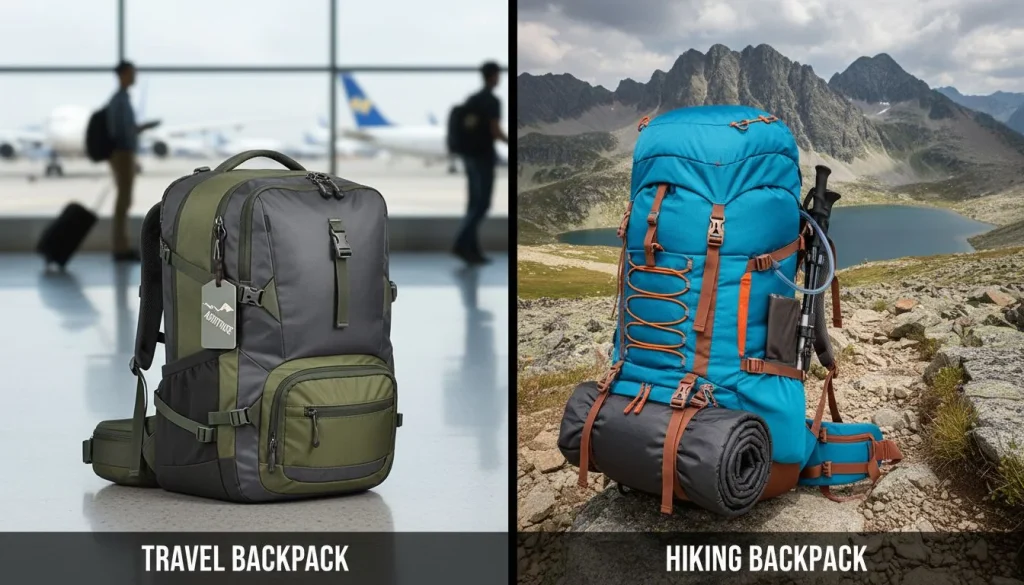
The biggest difference is their core design. Travel backpacks1 are built for easy access and smooth transit through airports and cities. Hiking backpacks are built for carrying heavy loads comfortably over long distances on uneven terrain. Your main activity dictates the right choice.
As someone who has designed and manufactured bags for years, I’ve seen firsthand how a small design choice can make a huge difference. A client might want the rugged look of a hiking pack for a city line, but we have to talk about the practical trade-offs.
It’s a classic debate, and the answer isn’t always simple. It really depends on the kind of journey you’re planning. Let’s break down the details so you can make an informed decision for your brand or your own travels.
[claim claim=”Over 60% of long-term travelers prefer panel-loading travel backpacks over top-loading hiking packs for ease of access.” istrue=”true” explanation=”Multiple travel surveys and forums indicate a strong preference for clamshell or panel-loading designs because they allow travelers to access items without unpacking the entire bag, a major pain point with traditional hiking packs.”]
[claim claim=”All hiking backpacks are fully waterproof.” istrue=”false” explanation=”Most hiking backpacks are highly water-resistant, using DWR-coated fabrics. However, they are not fully waterproof without a separate rain cover, as water can still penetrate zippers and seams during prolonged exposure.”]
What’s the Primary Purpose of Travel Backpacks vs. Hiking Backpacks?
They might look similar from a distance, but using the wrong one is a recipe for frustration. Buying a pack that isn’t designed for your trip means you’ll be fighting your gear instead of enjoying the journey.
A travel backpack’s purpose is to be your mobile wardrobe for urban and transit environments. A hiking backpack’s purpose is to be your life support system in the great outdoors. Their functions are fundamentally different.
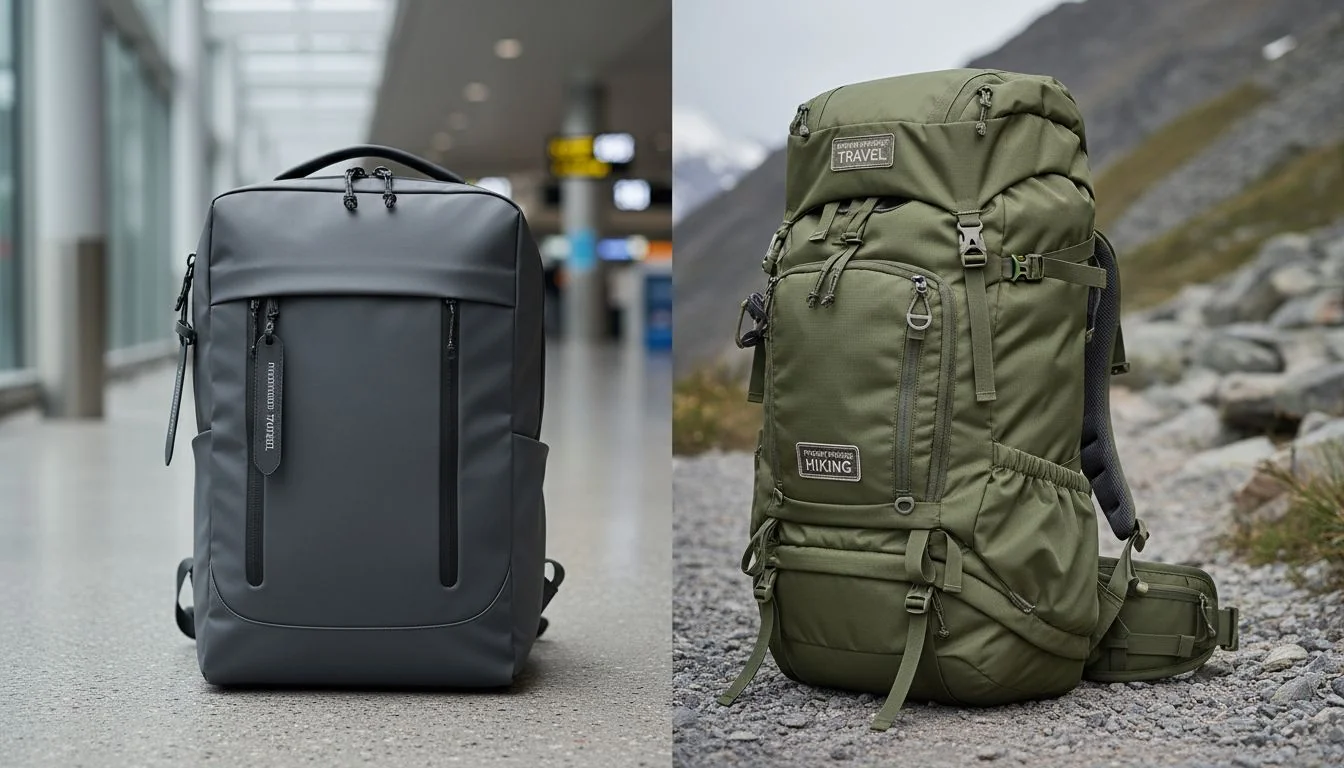
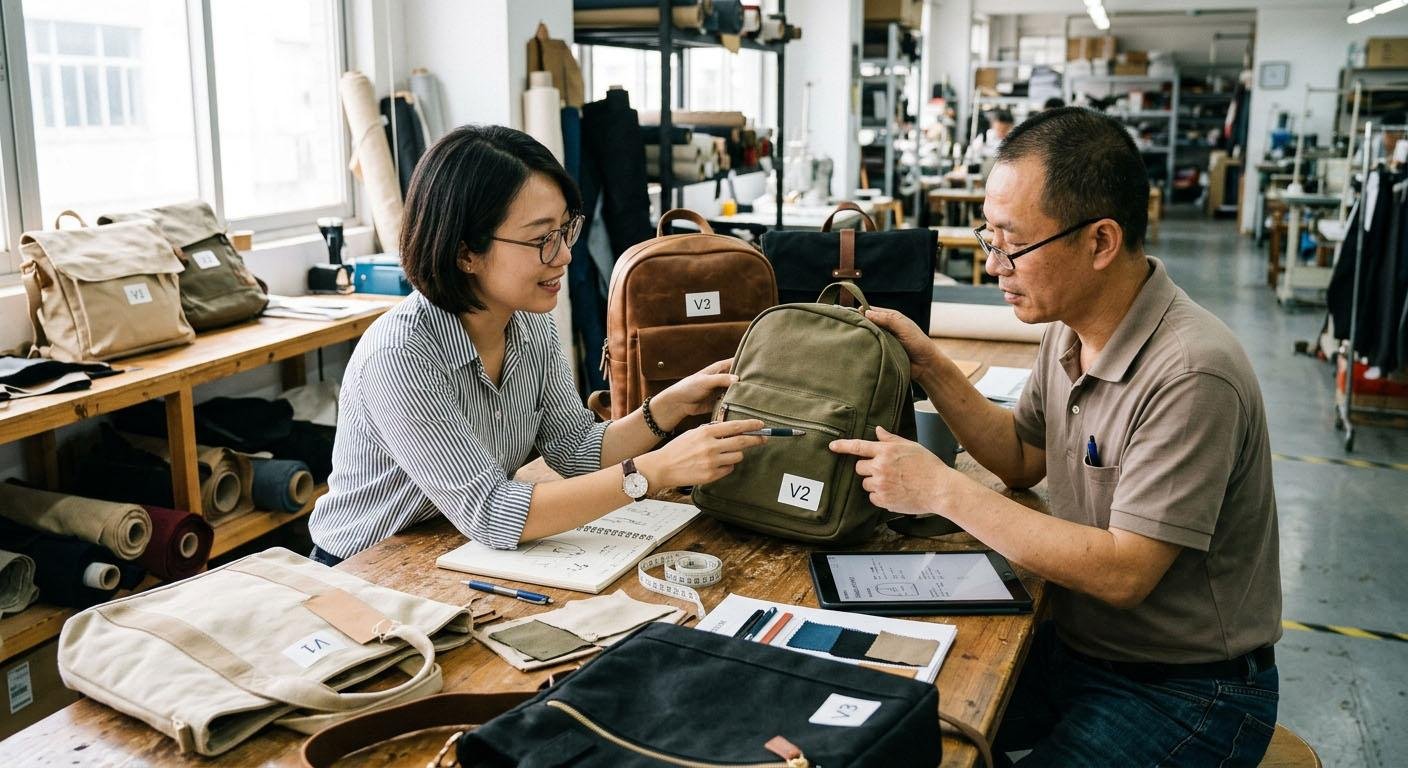
When I work with a brand manager like Olivia, the first question is always "Who is this for and what will they be doing?" The answer shapes every single design choice. A bag for a weekend trip to Paris has completely different priorities than one for a trek in the Alps.
The Urban Explorer: Travel Backpacks
- Purpose: Designed for modern travelers, offering easy mobility and organization for city travel, air travel, and short-term trips.
- Design: Soft-sided, similar to a suitcase that can be worn on your back.
- Opening: Clamshell or panel-loading opening, allowing easy access to all contents.
- Key Features:
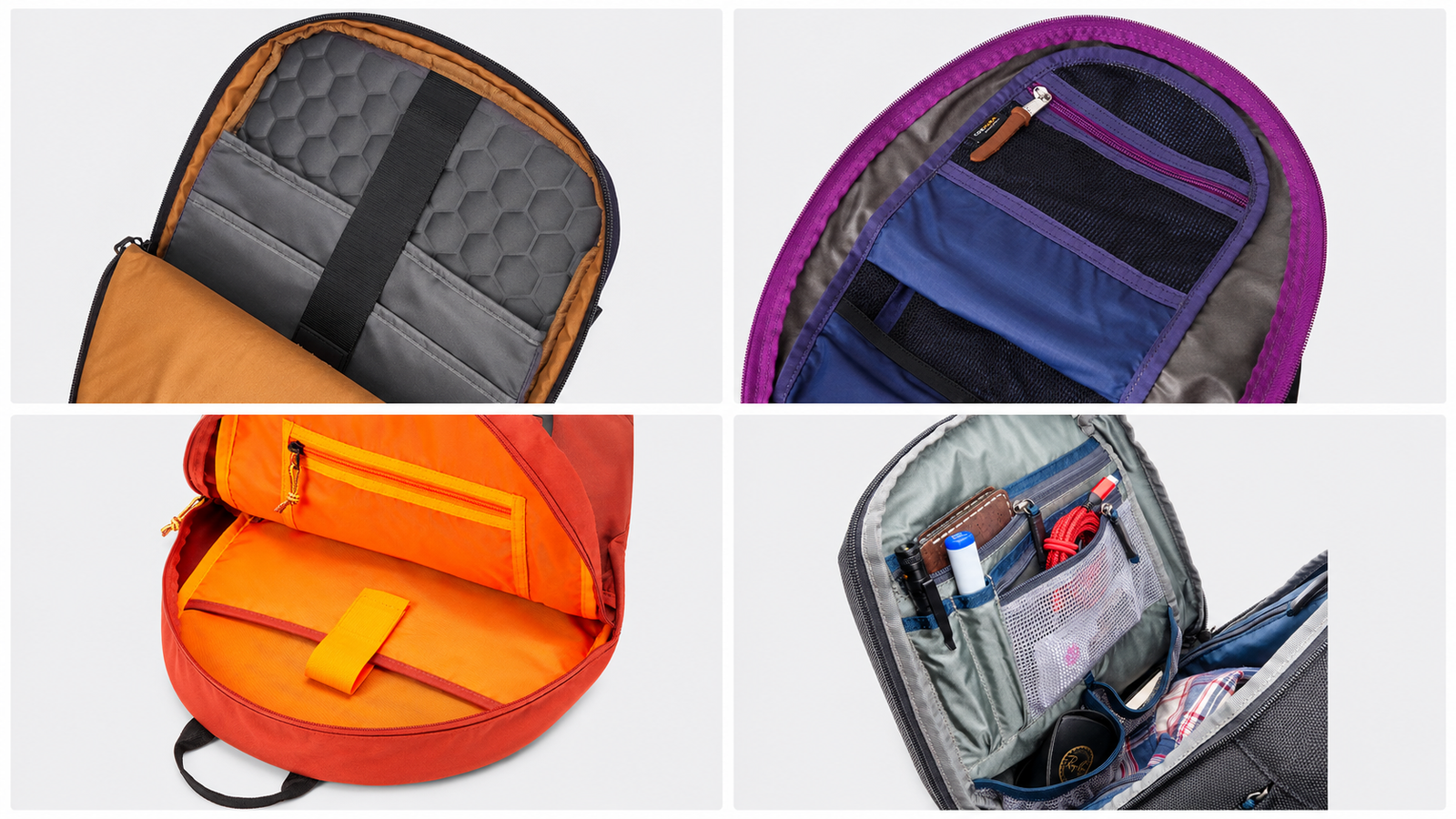
- Dedicated pockets for laptops, passports, and essentials.
- Lockable zippers for added security.
- Stowable shoulder straps and hip belts for airport convenience, and multiple compartments for organization.
- Aesthetic: Designed to blend into city environments, not stand out in rugged conditions.
The Trail Conqueror: Hiking Backpacks
-
Purpose: Built for outdoor adventures, including day hikes and multi-day treks. A technical piece of equipment designed for carrying heavy loads over long distances.
-
Load Distribution: Primarily transfers weight to the hips, allowing you to carry 30-50 pounds comfortably.
-
Design:
- Top-loading for a stable, tube-like shape that sits close to your back.
- Advanced suspension system2 to ensure comfort and durability.
-
Key Features:
- External loops for trekking poles, ice axes, and other gear.
- Slot for hydration reservoir.
-
Aesthetic: Built for function and durability in harsh conditions, not for style in urban settings.
What is a good backpack for hiking?
- A good hiking backpack should have an ergonomic design with a comfortable suspension system, adequate load distribution, durability for rough conditions, and versatile storage (including hydration reservoir compatibility and external gear loops). Brands like Osprey, Gregory, and Deuter are known for making high-quality hiking backpacks tailored to various hiking needs.
- For a more detailed guide on what to look for, check out our article on What is a good backpack for hiking? to explore the best features and top recommendations for hiking backpacks.
[claim claim=”The design of a travel backpack is primarily focused on accessibility and organization.” istrue=”true” explanation=”Features like clamshell openings, multiple compartments, and dedicated tech sleeves are hallmarks of travel backpacks, designed to make finding items quick and easy during transit.”]
[claim claim=”Hiking backpacks are designed to carry most of the weight on your shoulders.” istrue=”false” explanation=”A properly fitted hiking backpack is designed to transfer 80% or more of the load’s weight onto the hips via a structured hip belt. The shoulder straps are mainly for stability.”]
How Do Size and Capacity Differ Between the Two?
Picking the wrong size is a classic travel mistake. If it’s too small, you’re forced to leave essentials behind. If it’s too big, you’re stuck hauling around a heavy, half-empty bag.
Travel backpacks typically range from 30 to 50 liters, perfect for carry-on compliance and shorter trips. Hiking backpacks3 are larger, from 40 to over 80 liters, to accommodate camping gear, food, and clothing for multiple days on the trail.
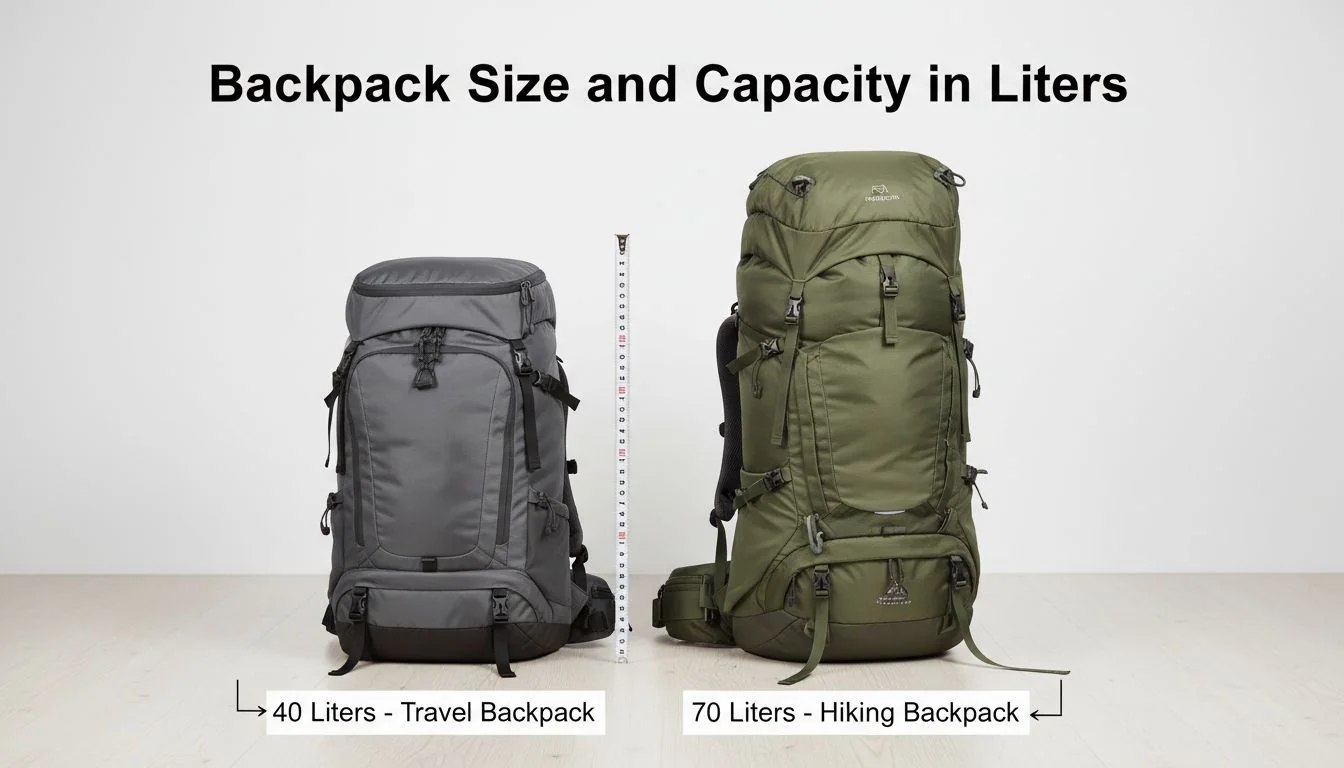
Backpack capacity4 is measured in liters, which tells you the total volume of all the pockets and the main compartment. Understanding this number is key to matching the pack to your trip. For a product manager, offering a range of sizes, like a 35L "Weekender" and a 50L "Adventurer," can cater to different customer needs.
Finding the Right Volume
The right size really depends on the length of your trip and what you need to carry. A 40-liter pack is often the sweet spot for many travelers. It’s big enough for a week or more if you pack smart, and it usually qualifies as a carry-on for most airlines. Once you get into the 50-60 liter range, you’re looking at a checked bag. For hiking, the size depends on whether you’re going for a day, a weekend, or a full week.
Capacity Comparison Guide
| Backpack Type | Typical Capacity | Best For | Carry-On Friendly? |
|---|---|---|---|
| Travel Backpack | 30–45 Liters | Weekend trips, minimalist travel, city breaks | Yes, usually |
| Travel Backpack | 45–55 Liters | One week or more, trips requiring more gear | Sometimes, check airline |
| Hiking Backpack | 40–50 Liters | Overnight hikes, weekend backpacking | No, too tall |
| Hiking Backpack | 50–80+ Liters | Multi-day treks, cold-weather camping | No, definitely not |
[claim claim=”Most major airlines limit carry-on luggage to a maximum of 45 linear inches (L+W+H).” istrue=”true” explanation=”While specific dimensions vary, this is a common guideline. Many travel backpacks in the 35-45L range are specifically designed to meet these restrictions.”]
[claim claim=”A 70-liter backpack is suitable for a simple day hike.” istrue=”false” explanation=”A 70-liter pack is designed for multi-day expeditions and would be excessively large and cumbersome for a day hike, where a 15-30 liter pack is more appropriate.”]
Which Offers Better Weather Resistance?
A sudden downpour can be a disaster. Wet clothes are bad enough, but a soaked passport or a fried laptop is a trip-ruining event. You need to know your bag can handle the weather.
Hiking backpacks almost always have better Weather resistance5. They are made with durable, water-repellent fabrics and often include a built-in rain cover because they are designed to face unpredictable weather for hours at a time.
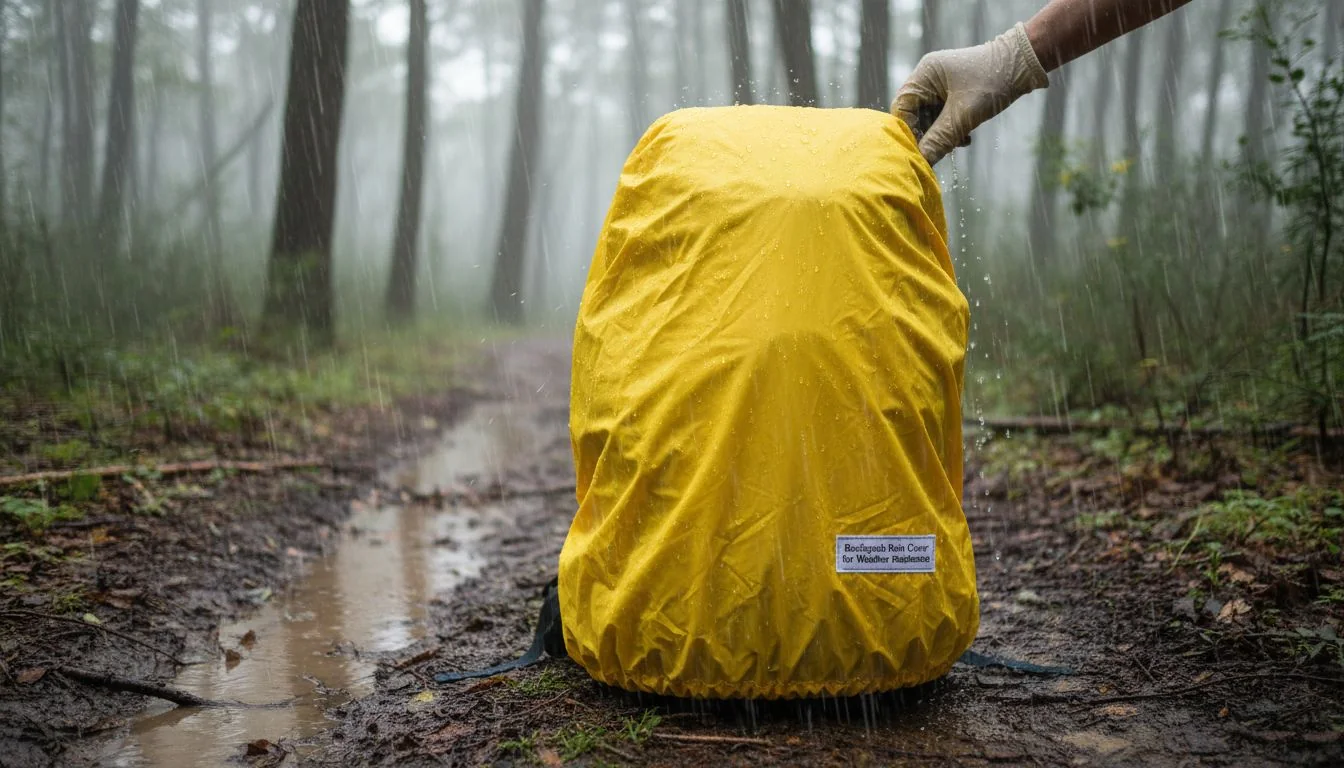
When we source materials for a new bag line, weather resistance is a huge factor. The choice between a PU-coated nylon and a laminated X-Pac fabric can dramatically change the bag’s performance and cost.
Built for the Downpour: Hiking Packs
- Designed for rain: Hiking backpacks are built to withstand getting rained on.
- Materials: Made from tough fabrics like ripstop nylon or Cordura, often with a Durable Water Repellent (DWR) coating.
- Water resistance: The DWR coating makes water bead up and roll off.
- Rain cover: Most quality hiking packs come with an integrated rain cover stored in a dedicated pocket for serious downpours.
- Sealed seams: Higher-end packs may have taped or sealed seams to prevent water infiltration.

Built for the Dash: Travel Packs
- Water resistance: Travel backpacks are water-resistant, not waterproof.
- Handling light rain: Suitable for quick dashes in light drizzle, such as from a taxi to the hotel, but not for prolonged exposure.
- Materials: Fabrics often have a DWR coating, but the zippers are usually a weak point.
- Rain protection: Travel packs rarely come with an included rain cover.
- Recommendation: For rainy seasons, consider buying a separate rain cover or using dry sacks inside the pack to protect electronics and important documents.
[claim claim=”DWR (Durable Water Repellent) coatings make fabric permanently waterproof.” istrue=”false” explanation=”DWR is a chemical coating that adds water-resistance, but it wears off over time with abrasion and dirt. It needs to be periodically reapplied to maintain its effectiveness.”]
[claim claim=”Cordura fabric is known for its high resistance to abrasion and tearing.” istrue=”true” explanation=”Cordura is a brand of synthetic fiber-based fabrics widely used in high-performance gear, including military equipment and backpacks, due to its exceptional durability.”]
What Are the Key Functional Differences Between a Travel Backpack and a Hiking Backpack?
The real differences are hidden in the functional details. Ignoring them is what leads to an aching back on the trail or a frustrating mess at the hostel. You have to look at how you access your gear and how the pack carries weight.
The most important functional difference is access versus support. Travel packs open like a suitcase for easy packing and organization. Hiking packs have advanced suspension systems designed to make heavy loads comfortable to carry for hours.)
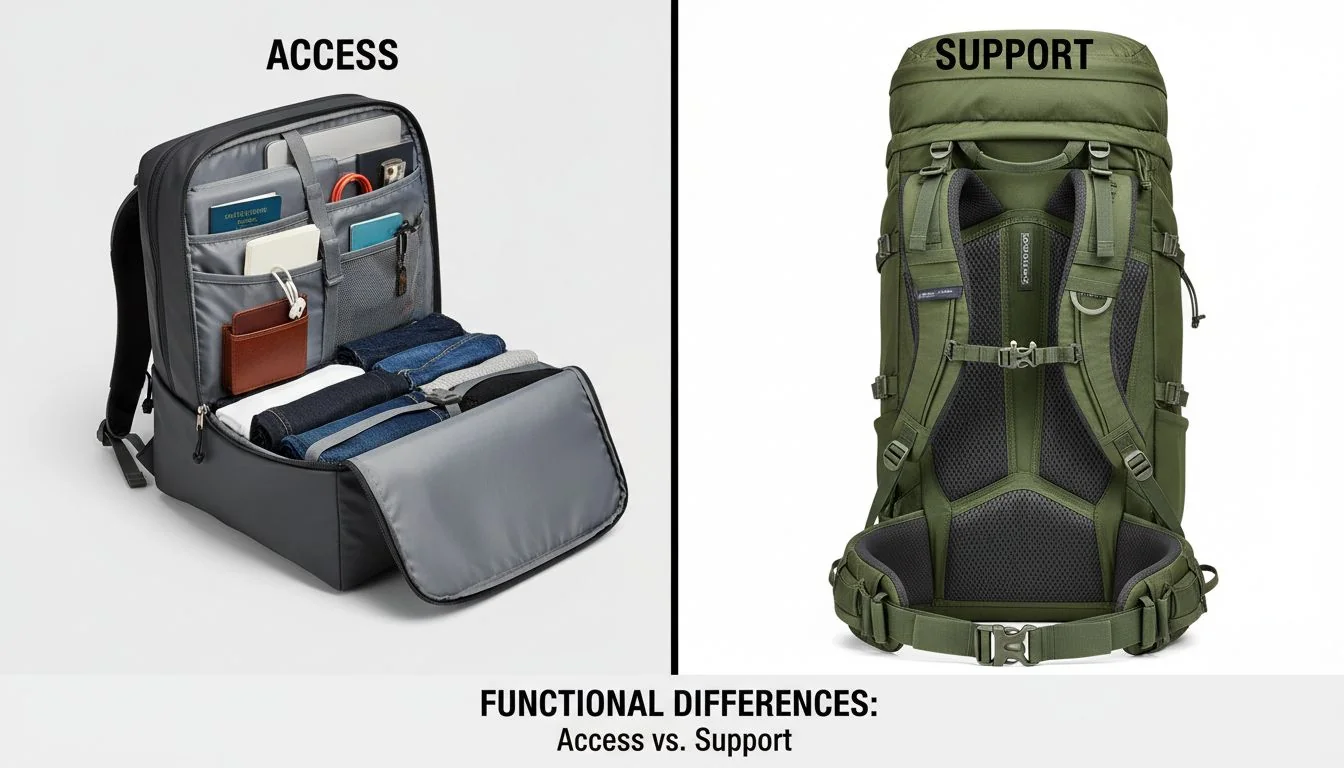
I love the quote from travel expert Rick Steves: "A travel pack’s harness is good enough for an hour’s walk from the train station. A hiking pack’s harness is built to be a part of your body for a week." This perfectly captures the difference in comfort philosophy.
Access and Organization: The Travel Pack’s Domain
- Priority: Easy access to your belongings.
- Clamshell or panel-loading design: Allows you to unzip the entire front of the bag and open it like a book, preventing the need to dig from the top.
- Smart organization:
- Padded laptop sleeves.
- Quick-access top pockets for items like keys and sunglasses.
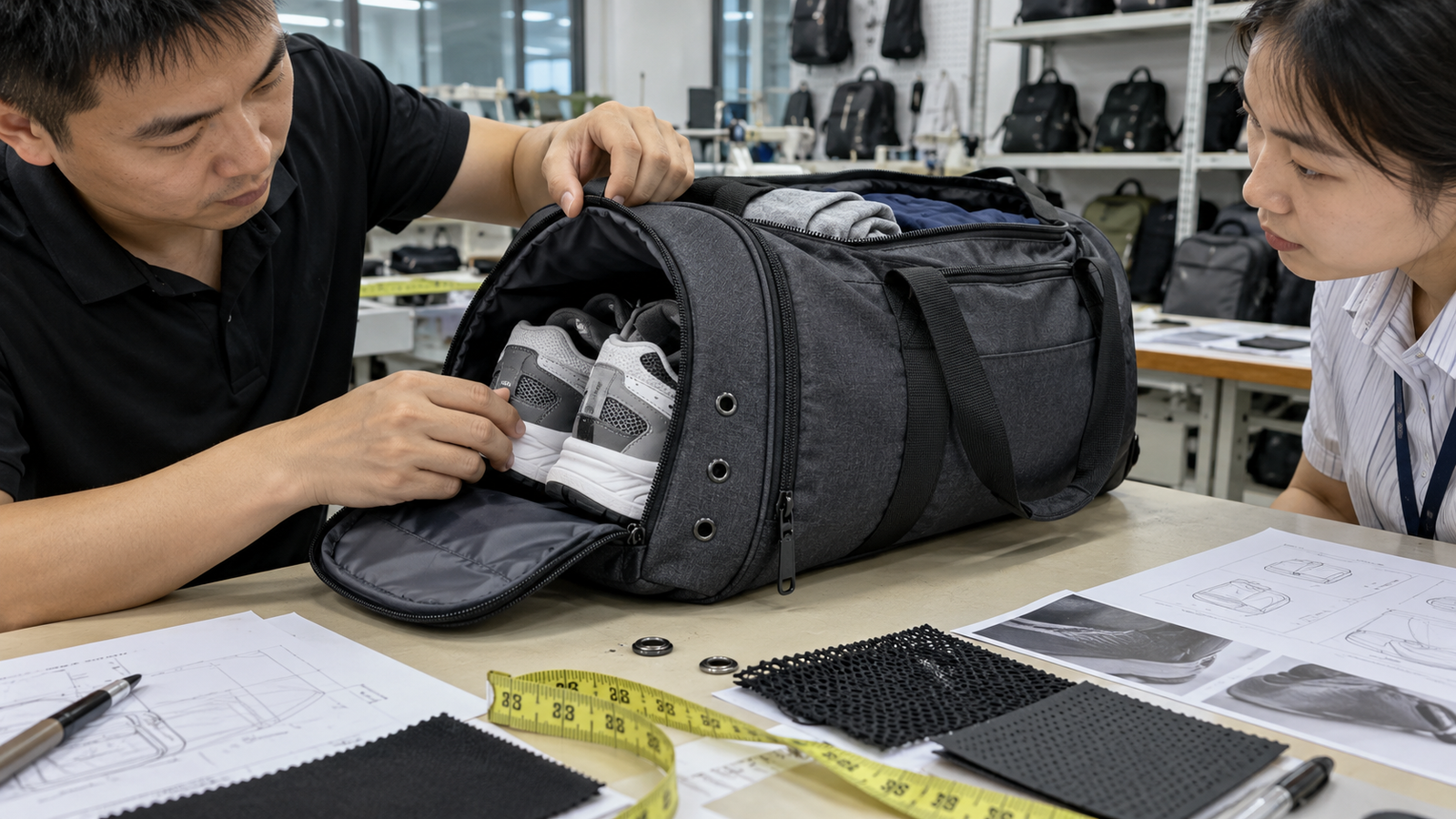
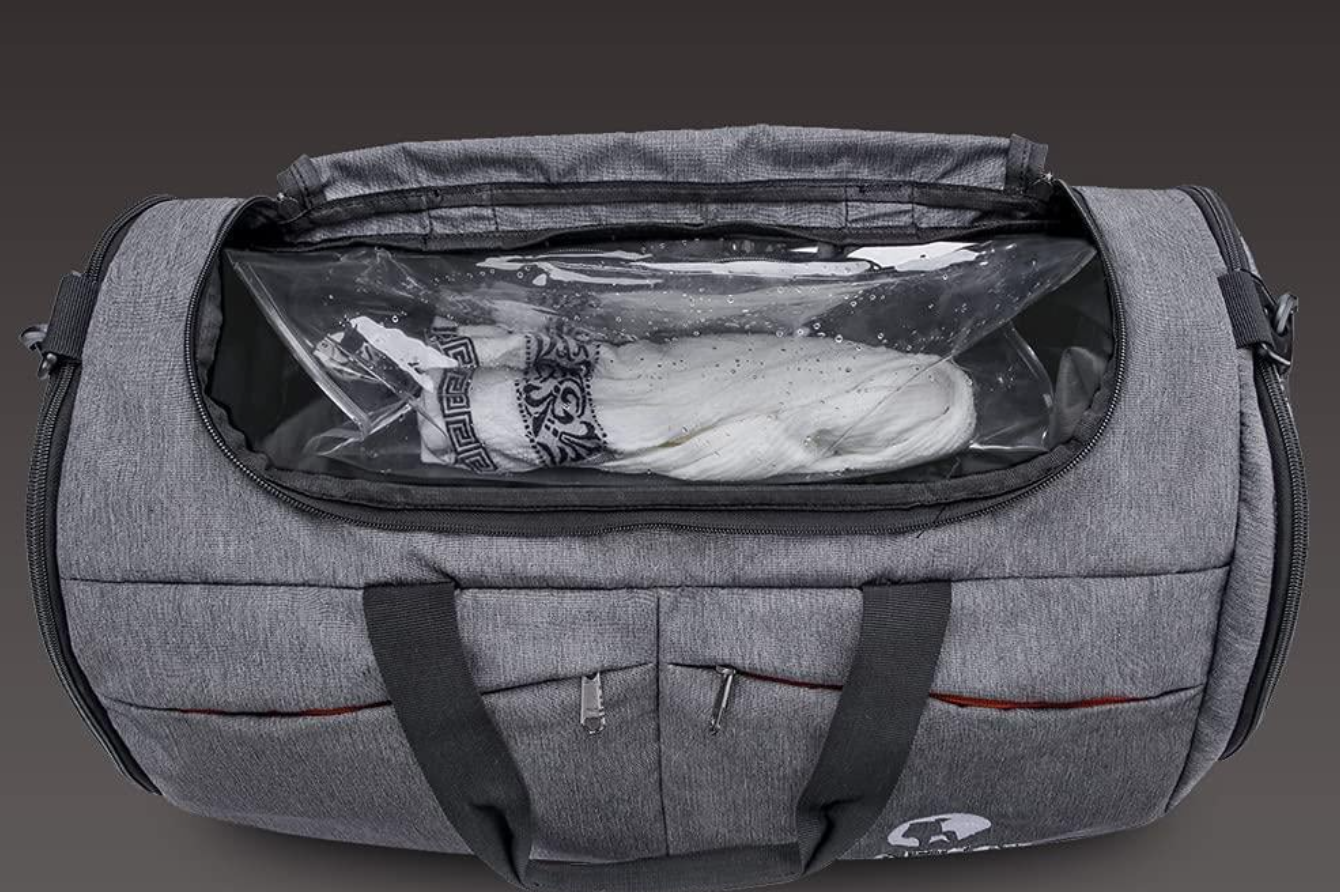
- Separate compartments for shoes or dirty laundry.
- Stowable harness: Zips away the shoulder straps and hip belt to turn the pack into a sleek duffel, preventing straps from snagging on airport conveyor belts.
Comfort and Support: The Hiking Pack’s Core
- Priority: Carrying comfort is the main focus.
- Suspension system: The heart of the hiking pack, typically featuring an internal frame (usually aluminum stays) for rigidity.
- Key features for comfort:
- Heavily padded, supportive hip belt: Transfers 80% of the weight from your shoulders to your hips.
- Load lifter straps, sternum strap, and a ventilated back panel: Work together to make a 40-pound load feel manageable.
- Function: These features are essential and cannot be stowed away, as they are the pack’s core purpose.
[claim claim=”A stowable harness system adds significant weight and is rarely found on quality travel backpacks.” istrue=”false” explanation=”While it adds some weight, the stowable harness is a premium feature on many top-rated travel backpacks because it dramatically improves convenience for air travel and storage.”]
[claim claim=”A well-designed hip belt is the most critical component for carrying heavy loads comfortably.” istrue=”true” explanation=”Ergonomic studies and backpacking principles confirm that the hips are capable of bearing heavy weight for long periods. A good hip belt effectively transfers the load from the weaker shoulder and back muscles.”]
Can a Hiking Backpack Double as a Travel Backpack? And Can You Use A Travel Backpack For Hiking?
This is the ultimate question for many people. We all want to save money and space by having one bag that does it all. The short answer is yes, you can, but you need to be very aware of the significant compromises you’ll be making.
You can use one for the other, but it’s not ideal. A hiking pack is clumsy and insecure for city travel because of its straps and top-loading design. A travel pack is uncomfortable and potentially unsafe for serious hiking because it lacks the necessary support system.
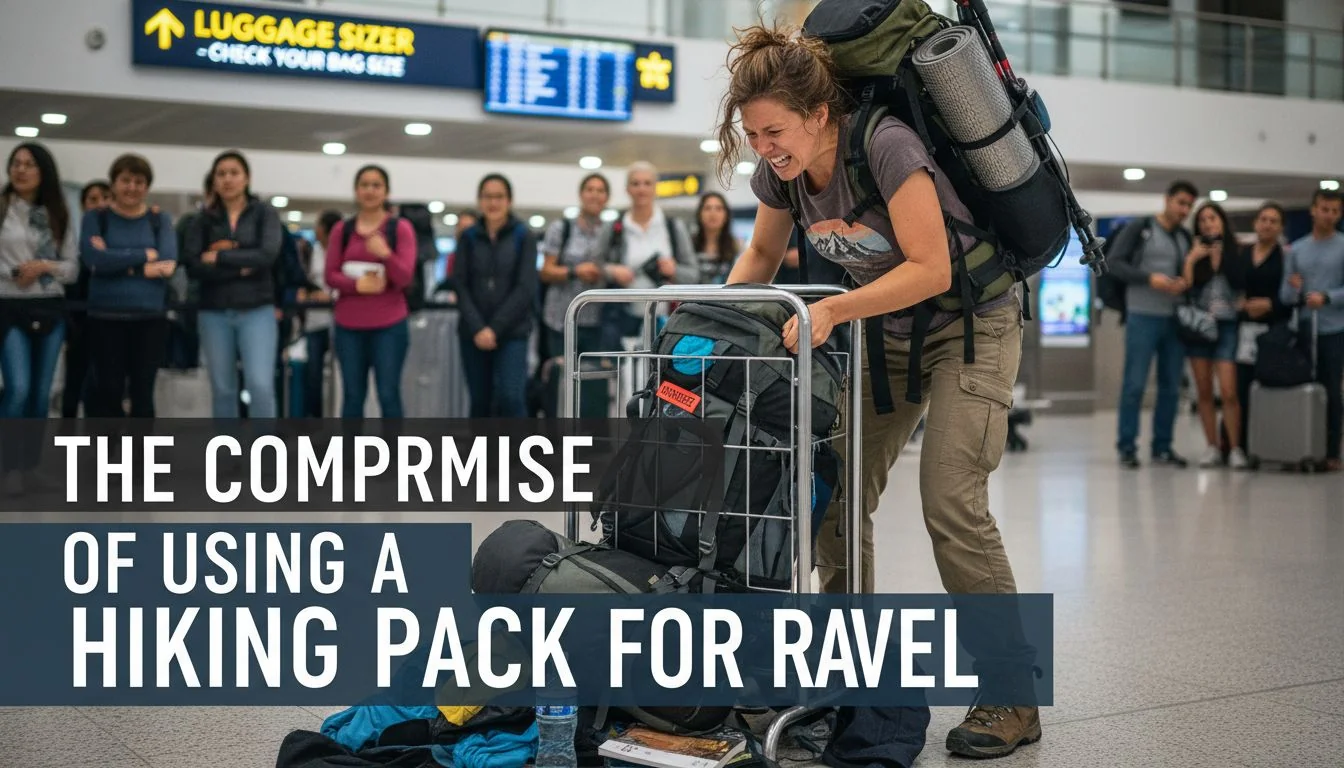
Thinking about this from a design perspective, when you try to make one product do two very different jobs, it usually ends up doing both of them poorly. It’s a challenge we face with clients who want a "do-everything" bag. It’s possible, but you have to be honest about what you’re giving up.
Using a Hiking Pack for Travel
- The Good: It will be incredibly comfortable to carry, even for long walks across a city. The suspension system is second to none.
- The Bad: It’s a huge pain to live out of. The top-loading design means your stuff at the bottom is in a black hole. You have to unpack everything to get to it. At the airport, it’s a nightmare. The dozens of straps (what I call the "strap monster") can get caught on conveyor belts and get damaged. It also lacks the security features of a travel pack and instantly marks you as a tourist, which can make you a target.

Using a Travel Pack for Hiking
- The Good: Your gear will be very well-organized.
- The Bad: I generally do not recommend this for anything more than a short, easy walk. The suspension system is simply not built to carry weight for hours on a trail. It will lead to sore shoulders, a strained back, and an all-around miserable experience. The boxy shape can feel unstable on uneven ground, and it lacks essential trail features like trekking pole loops, easy-access water bottle pockets, and a proper port for a hydration bladder. It’s not just uncomfortable; it can be unsafe if the discomfort distracts you or the instability causes a fall.
[claim claim=”Using a travel backpack for a multi-day trek can lead to back and shoulder injuries.” istrue=”true” explanation=”The minimal suspension and lack of a proper load-bearing hip belt on most travel packs forces the full weight onto the shoulders and spine, which can cause significant strain and injury over long distances.”]
[claim claim=”All hiking backpacks are too large to be used as a carry-on.” istrue=”false” explanation=”While most are, some smaller hiking packs in the 30-40L range, especially those with compressible designs and less rigid frames, can sometimes fit within carry-on size limits if not overpacked.”]
Which One Should You Choose?
You’re standing at a crossroads, ready to invest in a new bag. Making the wrong choice is an expensive mistake that you’ll have to live with on your trip. The good news is, you can find the right answer by looking at your travel style.
It’s simple: choose a travel backpack if your trips are focused on cities, flights, and hotels, where organization is key. Choose a hiking backpack if your trips involve significant time on trails, camping, or carrying heavy outdoor gear.
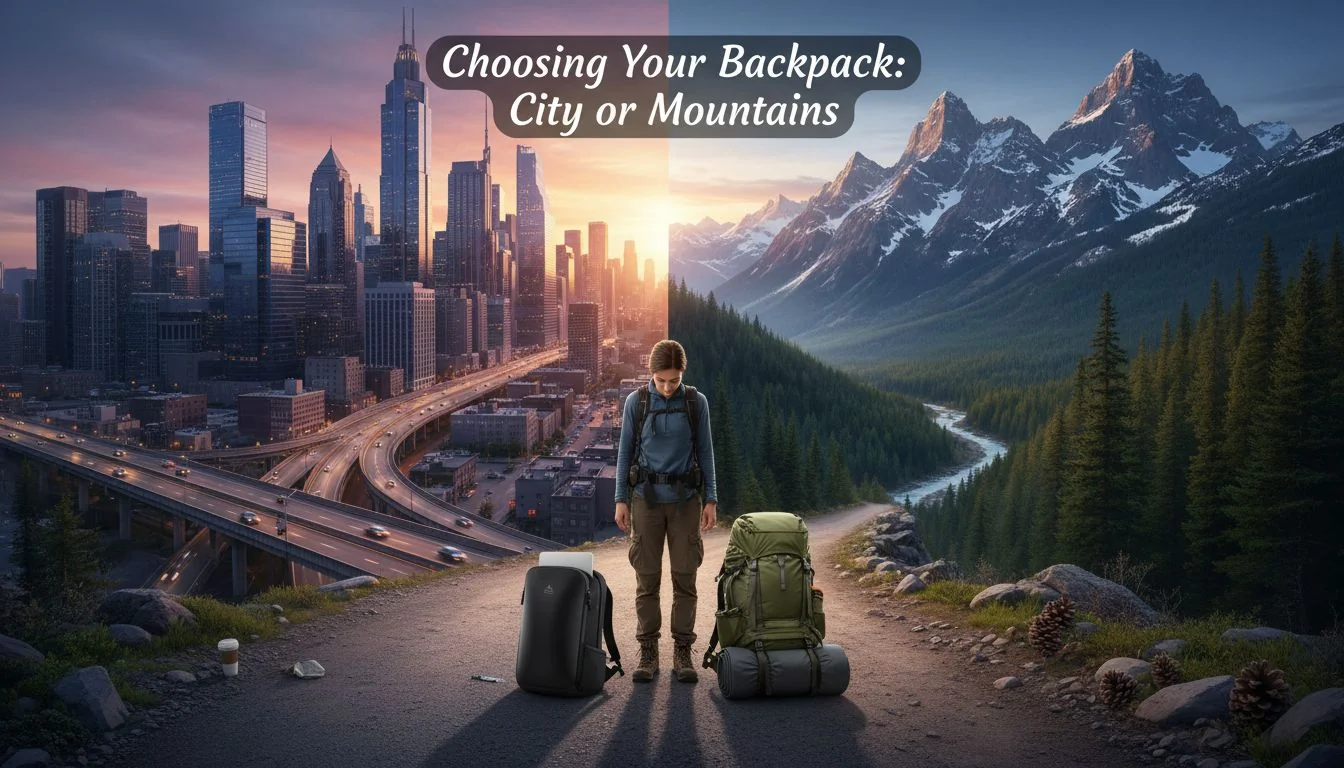
I have both types of packs, and I choose based on the primary goal of my trip. For me, it really comes down to how much I care about the hike and how technical it is.
If I’m going to Europe and know I’ll only do a couple of short, 2-3 hour hikes, I’ll take my travel backpack. I’ll just pack a very small, pocketable daypack to use on the trail. But if the trip is a proper long-distance hike or involves any kind of backcountry camping, I’m definitely choosing my hiking backpack. There’s no substitute for the comfort it provides.
You’re a "Travel Backpack" Person If…
- You travel by plane and want a carry-on compliant bag.
- You stay in hostels, hotels, or Airbnbs.
- You value being able to find your clothes without unpacking everything.
- Your "walking" is mostly on paved city streets.
- You need to carry a laptop and want it to be secure and accessible.
You’re a "Hiking Backpack" Person If…
- Your trip’s main purpose is hiking or trekking.
- You will be carrying a tent, sleeping bag, and cooking gear.
- Comfort while carrying 30+ pounds for many hours is your top priority.
- You need external attachment points for trekking poles, an ice axe, or a sleeping pad.
- You’ll be in remote areas where durability and weather resistance are critical.
[claim claim=”Hybrid backpacks that combine features of both travel and hiking packs offer the best of both worlds with no compromises.” istrue=”false” explanation=”Hybrid packs exist, but they always involve compromises. They are typically not as comfortable as a dedicated hiking pack and not as convenient as a dedicated travel pack. They are a ‘jack of all trades, master of none’.”]
[claim claim=”For city travel, a backpack’s appearance can be a factor in not standing out as a tourist.” istrue=”true” explanation=”Travel safety experts often advise blending in. A sleek, urban-style travel backpack is less conspicuous than a large, brightly-colored hiking pack covered in straps, which can mark you as a tourist.”]
Conclusion
Ultimately, choosing between a travel and hiking backpack depends on your primary activity. Prioritize easy access and organization for travel, and prioritize comfort and support for hiking. Investing in the right bag makes any journey better.
At Osgoodway, we specialize in providing high-quality, customizable backpacks for both travel and hiking needs. Whether you’re looking to offer your customers sleek, efficient travel backpacks or durable, ergonomic hiking packs, we can help.
Our B2B solutions include OEM/ODM services, allowing you to create bespoke designs that align with your brand and meet your customers’ specific needs. Let’s collaborate to elevate your product offerings and enhance your customers’ experience on every adventure.
Frequently Asked Questions (FAQ)
What are the key differences between travel and hiking backpacks?
Travel backpacks focus on easy access, organization, and urban aesthetics, while hiking backpacks prioritize comfort, durability, and support for carrying heavy loads over long distances.
Can I use my travel backpack for a multi-day hike?
Travel backpacks are not ideal for multi-day hikes. Hiking backpacks offer better comfort, load distribution, and storage for longer trips.
Are hiking backpacks worth the extra cost?
Yes, hiking backpacks are worth the extra cost for long treks as they provide superior comfort, support, and durability, reducing the risk of injury.
How do I choose the right capacity for my trip?
15-30 liters for day trips, 30-50 liters for weekend trips, and 50-70 liters for multi-day hikes to accommodate additional gear.
What features should I look for in a backpack for air travel?
Look for a compact size, easy access (clamshell design), laptop compartment, stowable straps, and lockable zippers for security.
Which brands lead in travel and hiking backpack design?
Travel backpacks: Osprey, Nomatic, Tortuga.
Hiking backpacks: Osprey, Gregory, Deuter.
How do I pack efficiently for both travel and hiking?*
For travel, use packing cubes and roll clothes. For hiking, pack heavy items close to your back, use compression sacks, and store essentials in easy-access pockets.
References
-
Explore the advantages of travel backpacks for urban and transit environments, ensuring a smooth travel experience. ↩
-
Learn how a well-designed suspension system enhances comfort and weight distribution in hiking backpacks. ↩
-
Discover essential features of hiking backpacks that enhance comfort and support during outdoor adventures. ↩
-
Understand how to choose the right backpack capacity based on your travel needs and duration. ↩
-
Learn about the importance of weather resistance in backpacks to protect your gear from the elements. ↩