Get the article’s highlights: Listen to the podcast.↓
Struggling to source durable, premium materials for your bag line? Lululemon sets a high bar, making material choice feel overwhelming. Let’s break down their core fabrics for your brand.
Lululemon backpacks primarily use Nylon1 and Polyester for their main body and lining. They are increasingly using Recycled Nylon and Recycled Polyester. These materials are chosen for their durability, lightweight feel, and water-repellent properties, which are key to their performance and premium appeal.
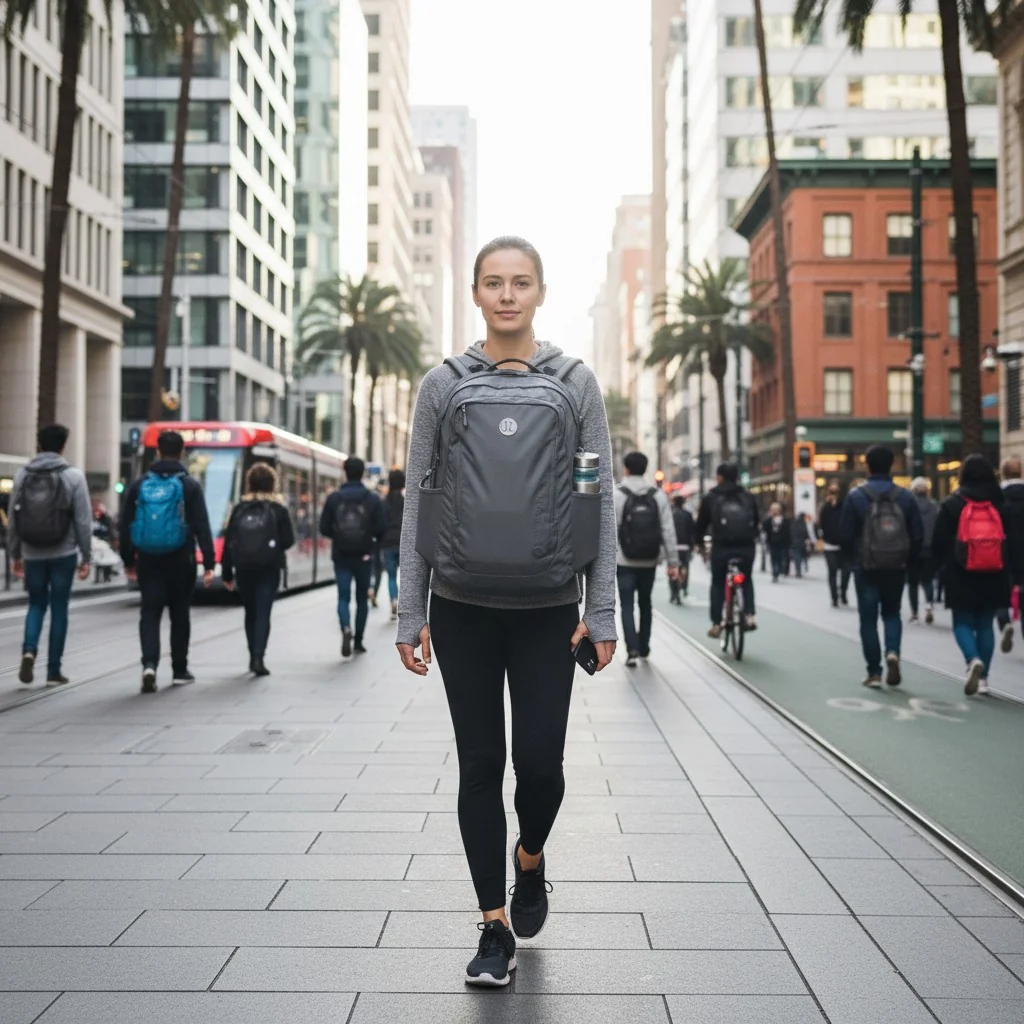
Ever wondered what makes those backpacks feel so light yet so tough? It’s not just one thing, but a careful selection of materials working together. As someone who has worked with countless fabric suppliers, I’ve seen firsthand how these choices define a bag’s quality. It’s a combination of the main body fabric, the lining, the hardware, and even the thread that holds it all together. Understanding this formula is key to developing a product that can compete in the premium space. Let’s dive into the specifics of what Lululemon uses and why it matters for your brand.
[claim claim=”Lululemon exclusively uses natural fibers like cotton for its backpacks.” istrue=”false” explanation=”Lululemon primarily uses synthetic materials like Nylon and Polyester for their performance characteristics, though some lifestyle bags may incorporate cotton canvas.”]
[claim claim=”Most Lululemon backpacks feature a water-repellent finish.” istrue=”true” explanation=”A key performance feature of their bags is a water-repellent treatment, often a DWR finish, applied to the main body fabric to protect contents from light rain.”]
What are Lululemon’s Core Backpack Materials?
Confused by fabric names like "Tech Canvas2"? It’s hard to know what’s just marketing and what’s a real material difference. Let’s demystify the main fabrics they rely on.
Lululemon backpacks are primarily constructed from durable, lightweight, and water-repellent synthetic materials, most notably Nylon and Polyester. A core focus is on sustainability, with many models now featuring 100% Recycled Nylon and Recycled Polyester for the body and liner. Secondary materials include high-quality components like YKK zippers and breathable mesh panels, all chosen to optimize for daily use, comfort, and weather resistance.
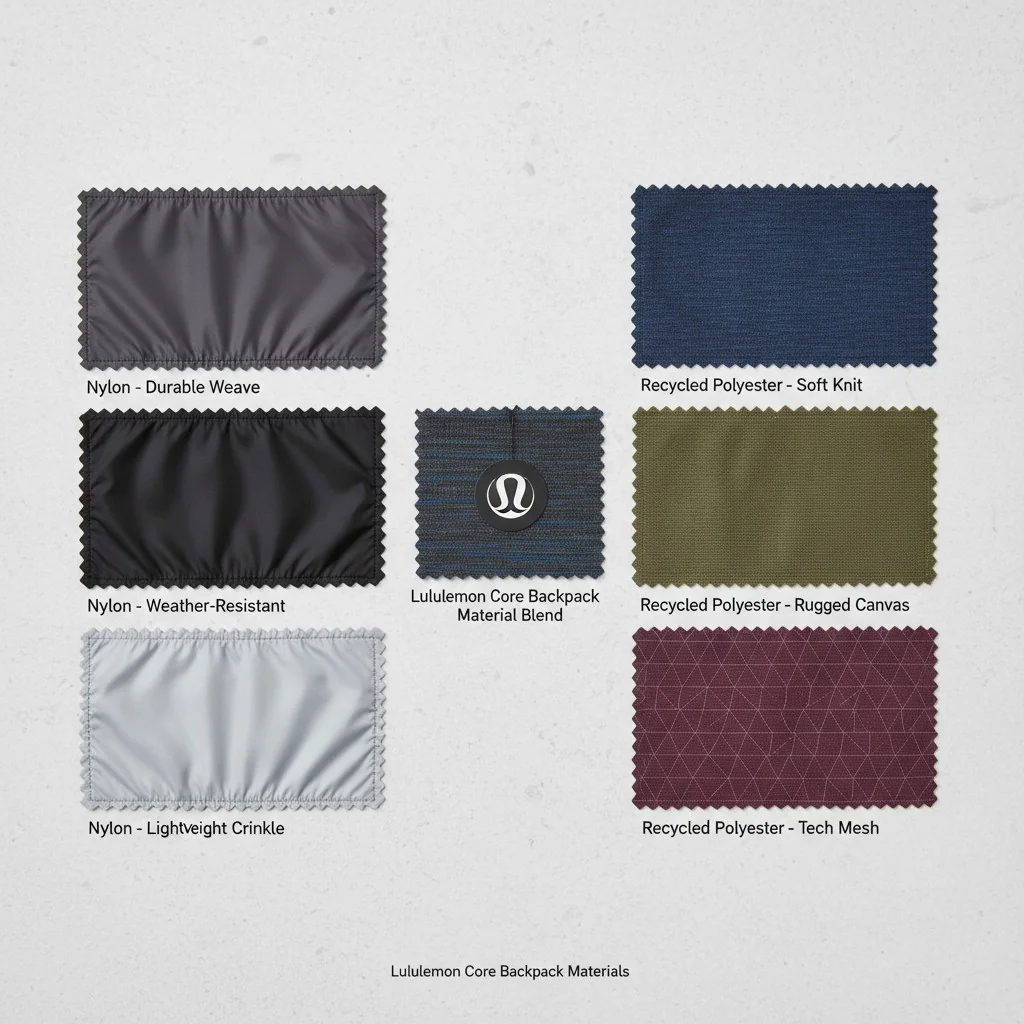
When I work with brands to develop a new bag, the first conversation is always about the main fabric. It sets the tone for everything else. For a brand like Lululemon, the choice of Nylon and Polyester is a deliberate one, focused entirely on performance.
The Workhorse Synthetics
Nylon and Polyester are the foundation of almost every Lululemon backpack. They provide the lightweight strength and resilience needed for a bag that goes from the office to the gym. These aren’t just any synthetics; the brand specifies particular weaves and deniers (a measure of fiber thickness) to achieve a specific look and feel.
The Sustainable Shift
More recently, you’ll see "Recycled Nylon3" and "Recycled Polyester" listed on their product pages. This is a huge move. From my experience in sourcing, the quality of recycled synthetics has become indistinguishable from virgin materials. This allows brands to meet sustainability goals without any compromise on quality.
Lululemon Backpack Material and Features Breakdown
| Backpack Model | Main Body Fabric | Lining Fabric | Key Features | Product Link |
|---|---|---|---|---|
| Everywhere Backpack 22L *Tech Canvas | 100% Recycled Polyester (Tech Canvas) | 100% Polyester | Water-Repellent, Adjustable Straps, Front Zip Pocket | Product Page |
| Cruiser Backpack 23L | Water-Repellent Fabric | Unspecified | Internal Small Pockets, 23L Capacity | Product Page |
| Everyday Backpack 2.0 23L | 53% Recycled Polyester, 47% Polyester | 100% Polyester | Water-Repellent, Internal Laptop Sleeve, Water Bottle Pocket | Product Page |
Decoding Brand-Specific Names
Sometimes you’ll see a name like "Tech Canvas." This isn’t a new fiber. It’s a marketing term for a material design, usually a robust, textured polyester weave that feels more like a traditional canvas but with all the benefits of a synthetic.
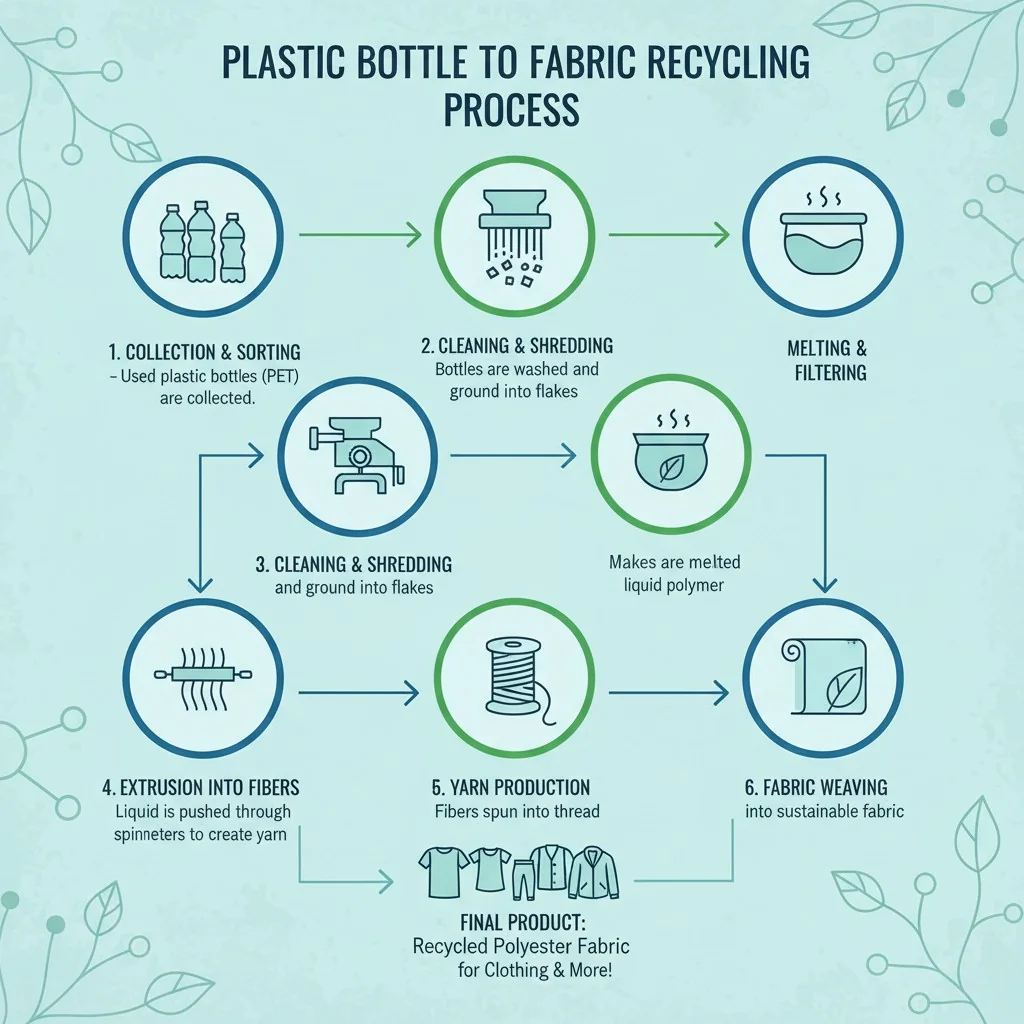
[claim claim=”Recycled Polyester (rPET) is made from post-consumer plastic bottles.” istrue=”true” explanation=”rPET is a common form of recycled polyester, created by melting down used plastic, like PET bottles, and re-spinning it into new polyester fiber.”]
[claim claim=”Tech Canvas is a proprietary natural fiber developed by Lululemon.” istrue=”false” explanation=”Tech Canvas is a marketing term for a material design, typically a durable, woven polyester fabric that offers a different texture and aesthetic from standard nylon.”]
Why are They Chosen for Durability?
Worried your bags won’t stand up to daily wear and tear? Choosing the wrong fabric can lead to customer complaints and returns. Understand why Nylon and Polyester are the go-to for durability.
Nylon and Polyester are chosen for their exceptional strength-to-weight ratio, high abrasion resistance, and resistance to stretching and shrinking. This means the backpacks can handle heavy loads and daily use without losing their shape or tearing easily, ensuring long-term durability.
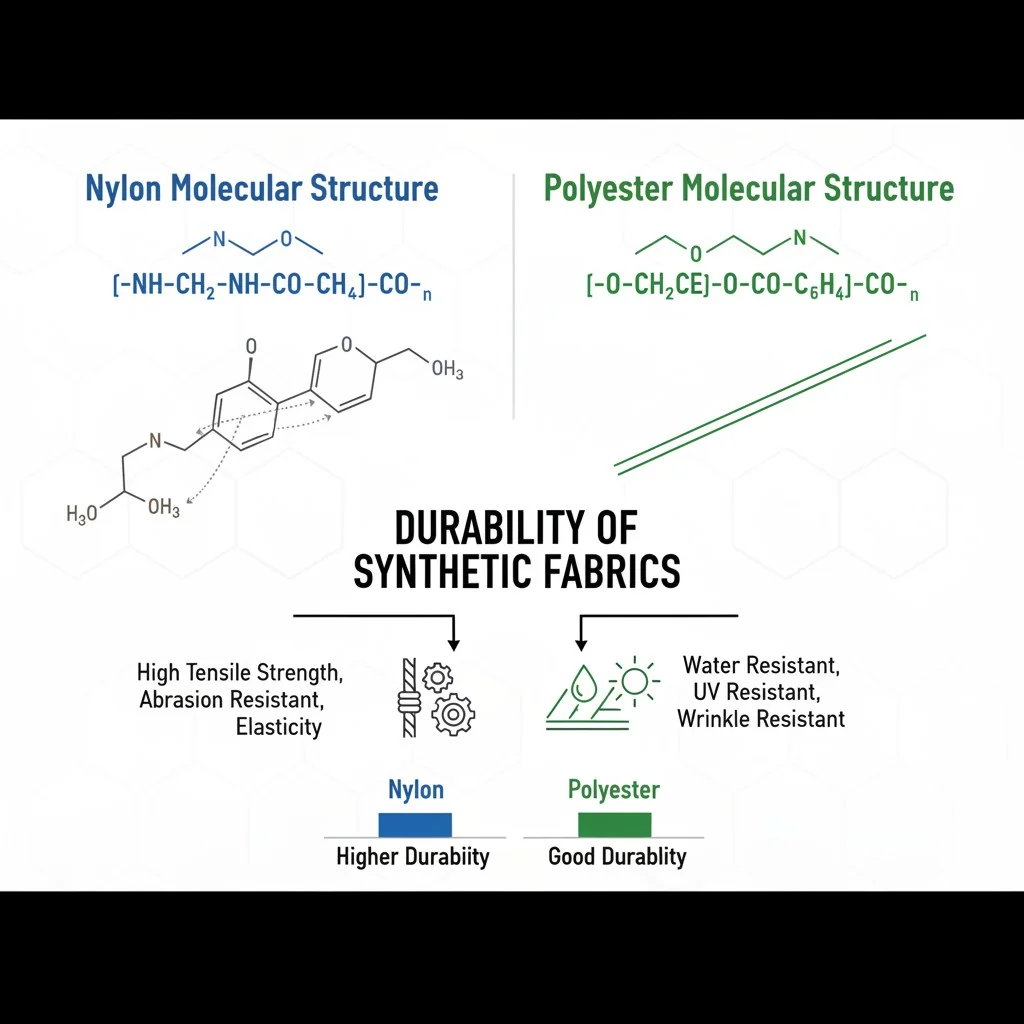
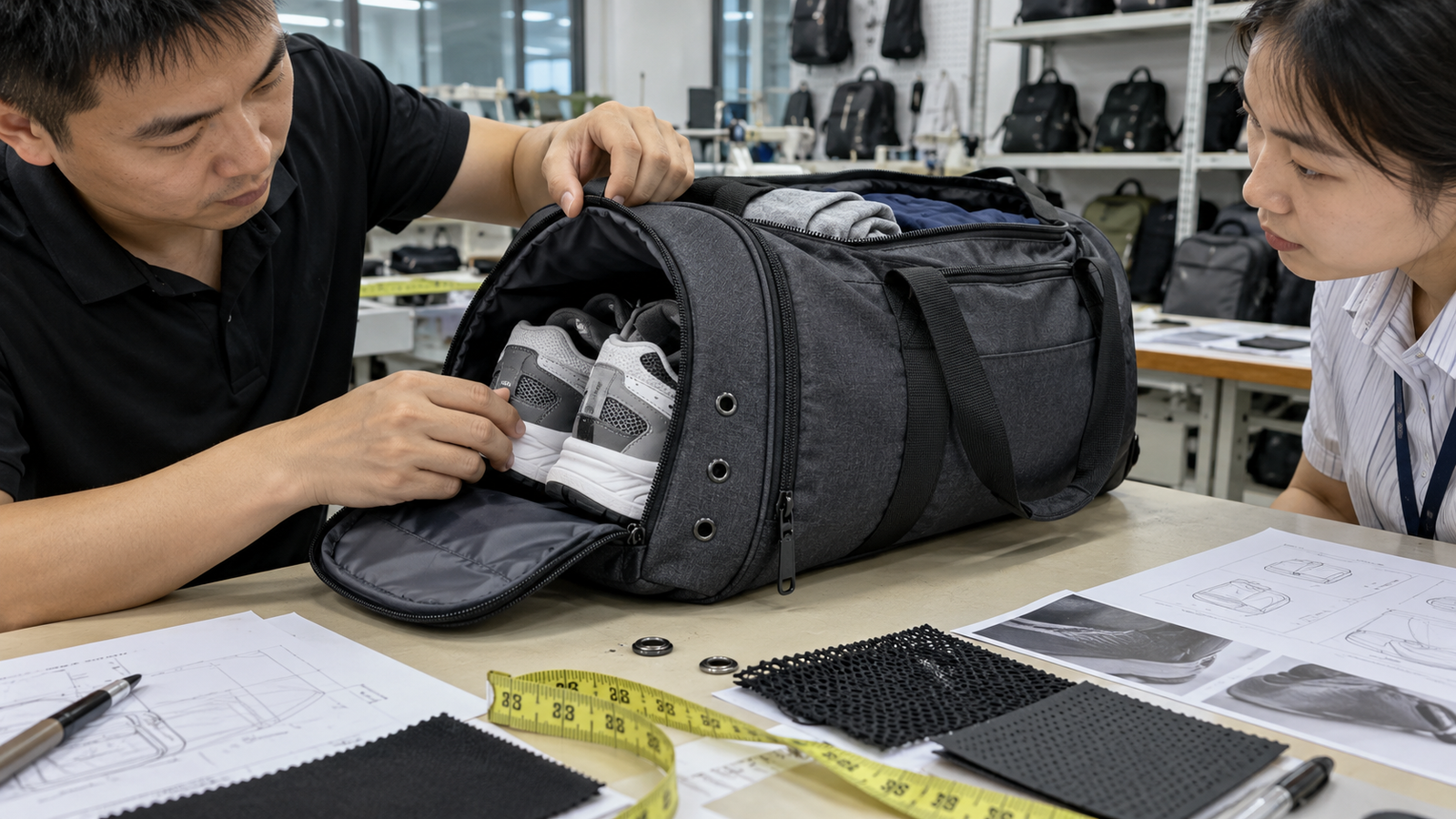
Durability isn’t just about a bag not falling apart. It’s about how it looks and feels after months of use. When I’m helping a client like Madison select fabrics, we’re not just looking at spec sheets; we’re simulating real-world use. Lululemon’s material choices excel in this area for a few key reasons.
High Tensile Strength
Both Nylon and Polyester have fantastic tensile strength. This means they can withstand being pulled and stretched under heavy loads. Think of a student carrying heavy textbooks or someone packing for a weekend trip. The fabric itself is doing a lot of work to prevent seams from bursting and straps from failing. This strength, combined with a low weight, is the holy grail for backpack materials.
Resisting Daily Scuffs
Abrasion resistance is critical. A backpack is constantly rubbing against your back, being placed on rough floors, and brushing against walls. Nylon, in particular, is known for its excellent resistance to scuffing and pilling. This ensures the bag continues to look clean and new, which is essential for a premium product.
Holding its Shape
These synthetic materials have low elasticity and good dimensional stability. This means they don’t easily sag or stretch out of shape when loaded. The bag maintains its intended silhouette, which is important for both aesthetics and carrying comfort, as it keeps the weight distributed as designed. This is a detail that customers may not notice consciously, but it heavily impacts their satisfaction.
[claim claim=”Nylon has a higher abrasion resistance than Polyester.” istrue=”true” explanation=”Generally, nylon fibers are tougher and more resistant to abrasion, rubbing, and scuffing than polyester fibers of a similar denier, making it ideal for high-wear areas.”]
[claim claim=”Polyester absorbs more water than Nylon.” istrue=”false” explanation=”Polyester is more hydrophobic than nylon, meaning it absorbs less water and dries faster. Nylon can absorb some moisture, which can slightly reduce its strength when wet.”]

What Are the Key Secondary Materials That Define a Lululemon Backpack’s Function?
A great bag is more than just its main fabric. Overlooking small components like zippers and mesh can ruin the user experience. Let’s look at the crucial secondary materials Lululemon uses.
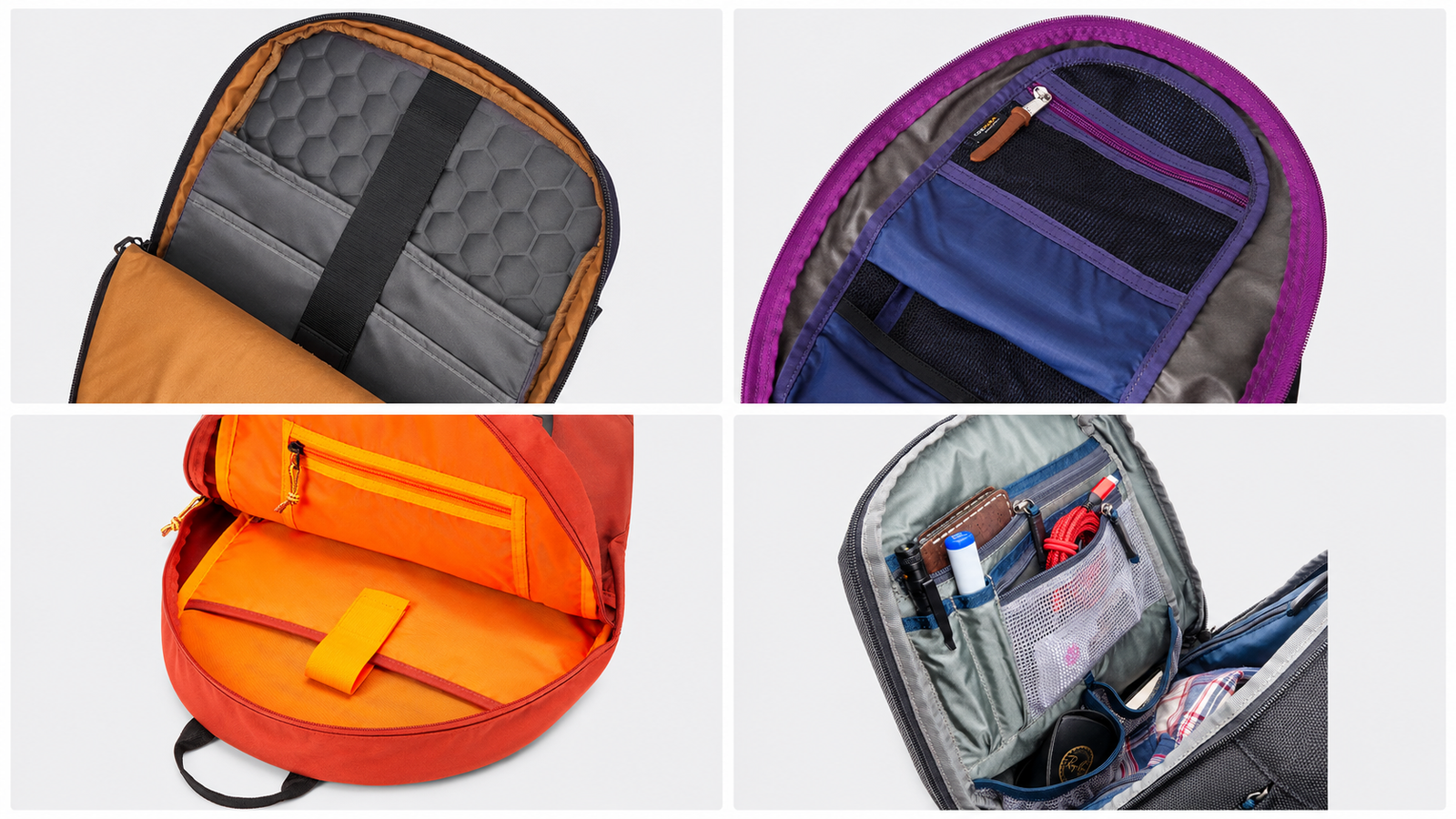
Key secondary materials include high-quality YKK zippers4 for reliability, durable Duraflex buckles and hardware for security, and Elastane-blended mesh for stretchy, breathable pockets. Internal padding, often EVA foam, adds structure and comfort for carrying laptops and other items.
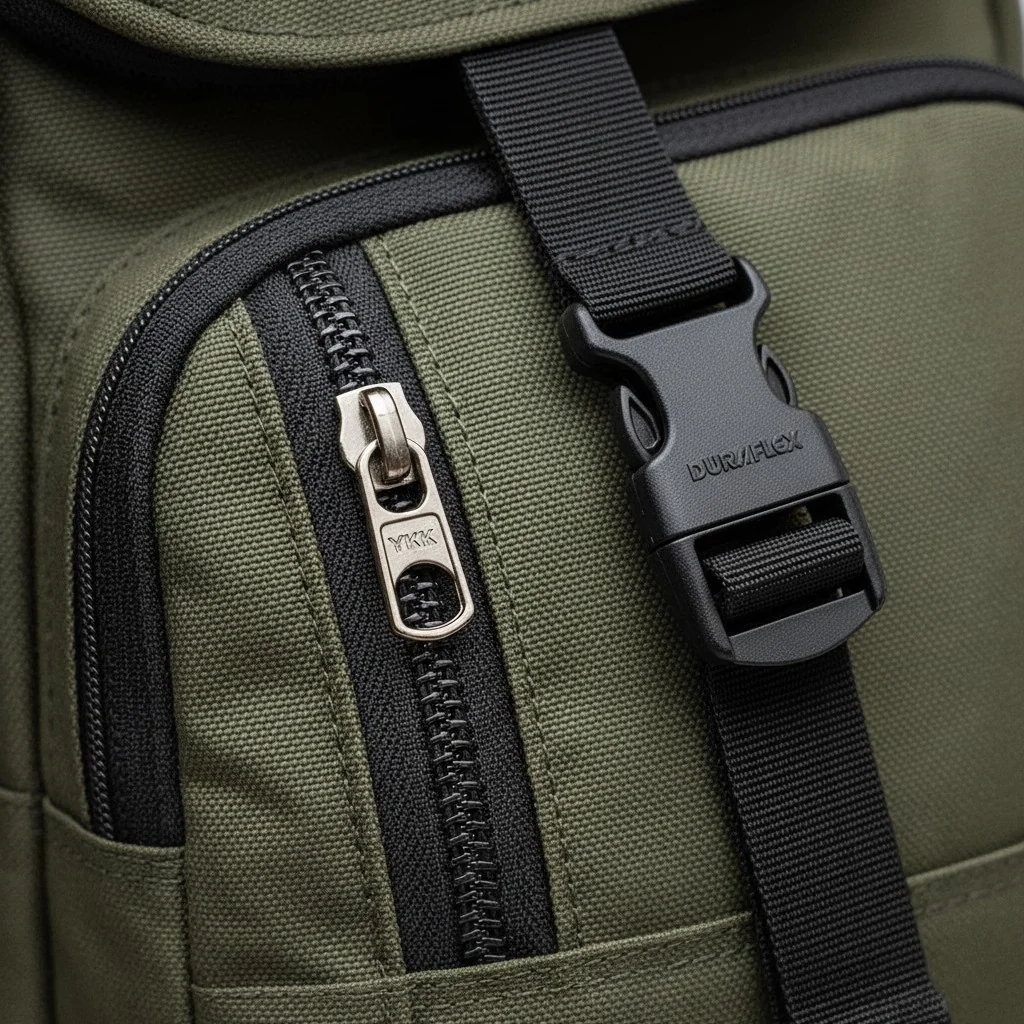
I always tell my clients that the small details, or "trims," are what separate a good bag from a great one. A customer interacts with the zippers, buckles, and pockets every single day. A failure in any of these small parts can render the entire bag useless. Lululemon understands this and invests in high-quality components.
The Unsung Heroes: Zippers and Buckles
You will almost always find YKK zippers on a Lululemon bag. In the manufacturing world, YKK is the gold standard for reliability and smoothness. For hardware like buckles and strap adjusters, they use durable plastics from brands like Duraflex. These components are engineered to be lightweight, strong, and resistant to becoming brittle in the cold. It’s a small cost increase that pays huge dividends in customer trust.
Flexible Storage: Mesh and Elastane
Those stretchy water bottle pockets on the side of the backpack? They are typically a nylon or polyester mesh blended with a small amount of Elastane5 (also known as Spandex or Lycra). The Elastane is what gives the mesh its four-way stretch and allows it to snap back into shape. This ensures it can hold a variety of bottle sizes securely without becoming loose and saggy over time.
Comfort and Protection: Internal Foams
The padding in the laptop sleeve and the back panel is crucial for function. This is usually a closed-cell foam like EVA (Ethylene-vinyl acetate). It provides excellent shock absorption to protect electronics while also adding structure to the bag. In the back panel and shoulder straps, this foam distributes weight evenly, making the bag much more comfortable to carry.
[claim claim=”YKK is a budget zipper brand used for fast fashion.” istrue=”false” explanation=”YKK is a Japanese company renowned for producing high-quality, reliable, and durable zippers, making them an industry standard for premium and performance-oriented goods.”]
[claim claim=”Elastane is added to mesh to provide stretch and shape retention.” istrue=”true” explanation=”Elastane (also known as Spandex or Lycra) is a synthetic fiber known for its exceptional elasticity. It’s blended with materials like nylon or polyester to create stretchable mesh for pockets.”]
Nylon vs. Polyester: Which Material is Right for Your Commute or Workout?
Choosing between Nylon and Polyester feels like a technical decision. Picking the wrong one could affect your product’s performance and aesthetic. Here’s a clear comparison to help you decide.
Choose Nylon for maximum durability and a sleek, often shinier look, ideal for high-performance or everyday carry bags. Opt for Polyester for better UV resistance, faster drying, and excellent color vibrancy, making it great for bags with printed designs.
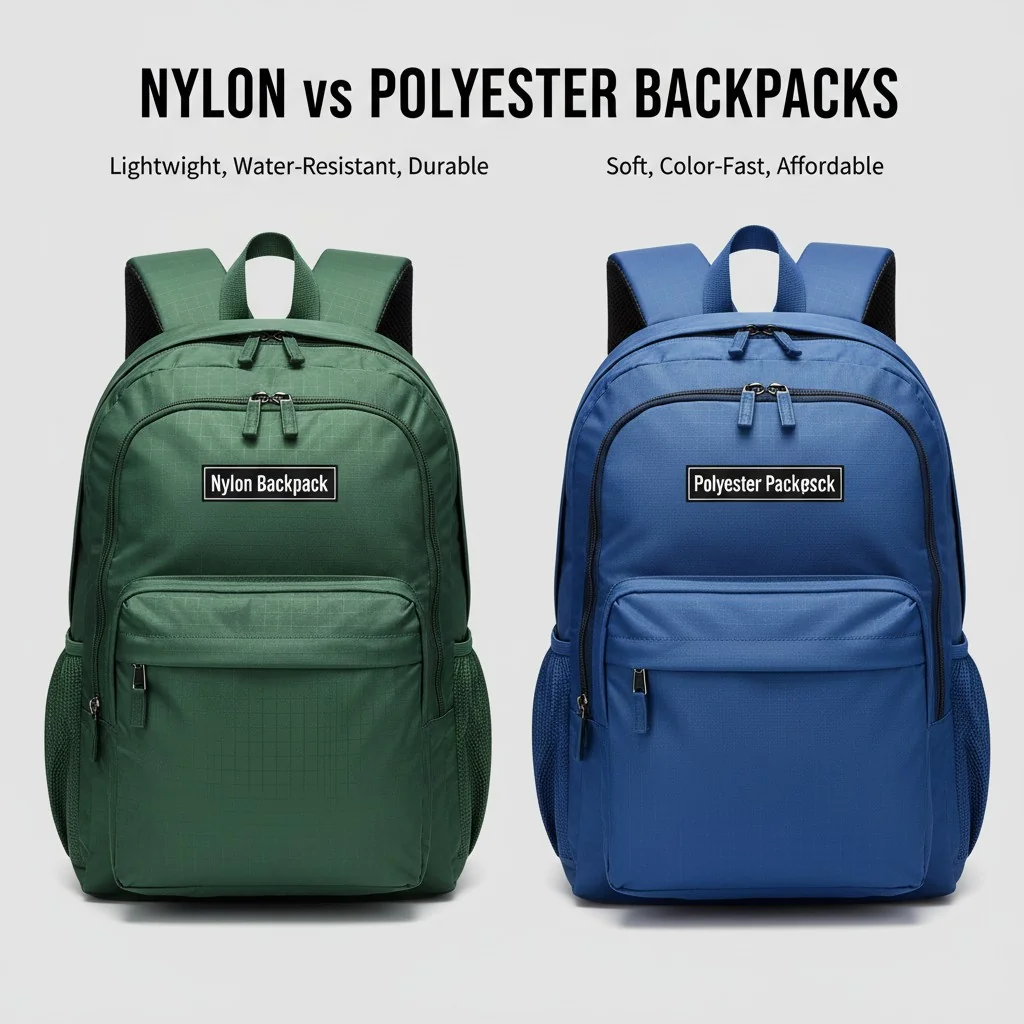
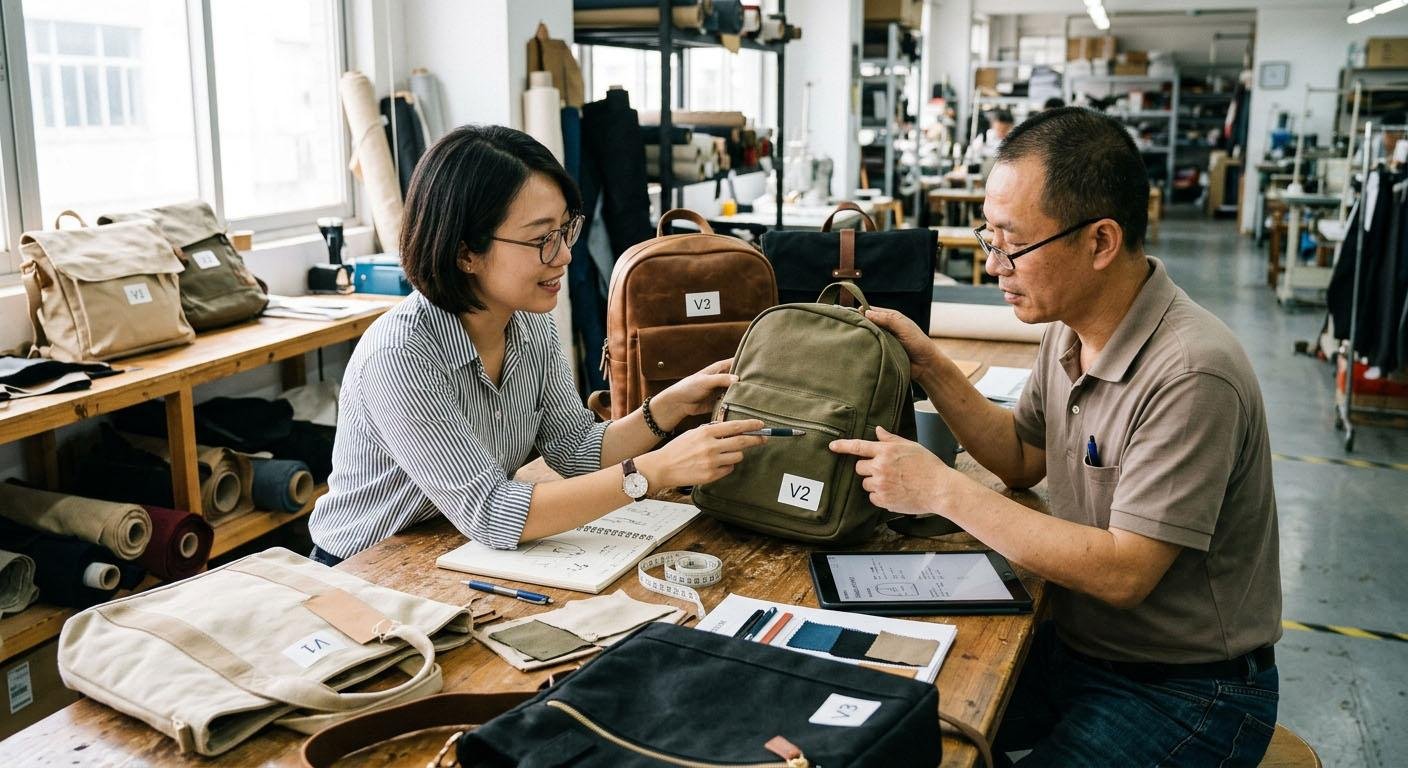
When I consult with brand owners, the Nylon versus Polyester question comes up constantly. They are very similar, but their subtle differences can have a big impact on the final product. It’s not about which is "better" overall, but which is better for a specific application. For a brand like yours, Madison, understanding this is key to aligning your product with your brand identity.
| Feature | Nylon | Polyester | Best For Your Brand If… |
|---|---|---|---|
| Strength & Durability | Excellent (Higher) | Very Good | You are creating rugged, high-endurance travel or commuter bags. |
| Water Resistance | Good (absorbs some water) | Excellent (hydrophobic) | Your bags need to dry quickly or will be used in damp environments. |
| UV Resistance (Fading) | Fair | Excellent | You plan to offer bright colors or sell in sunny climates. |
| Look & Feel | Smooth, often has a sheen | Can be matte or shiny, versatile | You want a sleek, technical look (Nylon) or a softer, canvas-like feel (Polyester). |
| Color & Prints | Good | Excellent | Your designs rely heavily on vibrant, crisp prints and a wide color palette. |
For a product like Lululemon’s "Everyday Backpack," which needs to withstand daily abuse, Nylon is a logical choice for its superior abrasion resistance. For their "Everywhere Belt Bag," which comes in a huge array of colors and is more of a style item, Polyester’s excellent color retention and versatility make it a strong contender. Your choice depends on whether you want to lead with technical performance or aesthetic variety.
[claim claim=”Polyester holds dye better and is more resistant to fading from sunlight than nylon.” istrue=”true” explanation=”Polyester has superior colorfastness and UV resistance compared to nylon, which can fade and weaken with prolonged sun exposure.”]
[claim claim=”Nylon is a weaker material than polyester.” istrue=”false” explanation=”Nylon generally has a higher tensile strength and better abrasion resistance than polyester, making it technically the stronger and more durable fiber of the two.”]
Do Lululemon Backpacks Have Advanced Fabric Technology?
See terms like "Water-Repellent Fabric" and wonder what they mean? It’s easy to get lost in marketing jargon without understanding the tech. Let’s uncover the real technology behind these features.
Yes, Lululemon utilizes advanced fabric technology, most notably a Durable Water Repellent (DWR) finish applied to their nylon and polyester fabrics. This coating causes water to bead up and roll off, protecting the contents from light rain and spills.
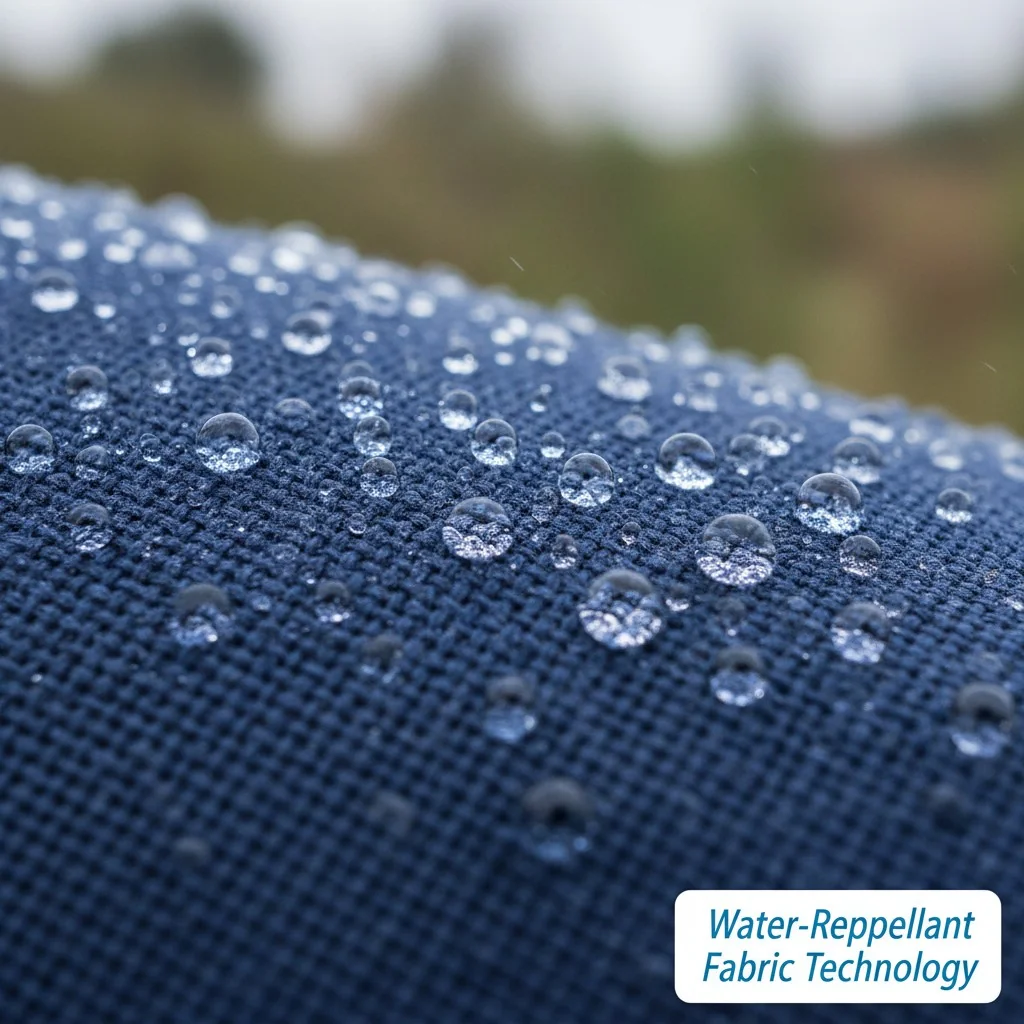
"Technology" is a word thrown around a lot in the apparel and bag industry. As a manufacturer, I see it as my job to separate true innovation from clever marketing. In Lululemon’s case, the technology is less about inventing a new miracle fiber and more about applying proven treatments to enhance their chosen materials.
The Science of Staying Dry: DWR Finishes
The "Water-Repellent Fabric" feature is almost always a DWR, or Durable Water Repellent, finish. This is a chemical treatment applied to the surface of the fabric that lowers its surface tension. Instead of soaking in, water droplets bead up and roll right off. It’s not waterproof—it won’t survive a dunk in a pool—but it’s highly effective for protecting your gear during a rainy commute. This is a standard and expected feature in the premium active-lifestyle market.
The Eco-Conscious Shift in Coatings
A critical point for any brand focused on sustainability is the type of DWR used. For years, the industry used "C8" chemistry, which contained PFOA/PFCs that are harmful to the environment. Now, the standard is shifting to shorter-chain "C6" or, even better, "C0" (PFC-free) finishes. This is a conversation I have with every client. Adopting PFC-free DWR is a major step in building a responsible brand.
"Tech Canvas": Technology or Texture?
As I mentioned before, "Tech Canvas" is a great example of material branding. It’s not a new technology. It’s a design choice to use a specific polyester weave that is thick, durable, and has a matte, canvas-like texture. It offers a different aesthetic from the slick feel of typical nylon. This shows how you can use existing materials in innovative ways to create a unique product identity.
[claim claim=”DWR makes a fabric completely waterproof.” istrue=”false” explanation=”DWR (Durable Water Repellent) makes a fabric water-repellent, not waterproof. It handles light rain and spills, but will eventually soak through in a downpour. True waterproofing requires sealed seams and a membrane.”]
[claim claim=”Many brands are moving towards PFC-free DWR treatments for environmental reasons.” istrue=”true” explanation=”Per- and poly-fluorinated chemicals (PFCs) used in older DWRs are persistent environmental pollutants. The industry is shifting to less harmful alternatives like C6 or PFC-free (C0) chemistries.”]
Why is the Premium Backpack Market Increasingly Turning to Sustainable Synthetics?
Want to build a modern, premium brand? Ignoring sustainability can make your products seem dated and irresponsible to today’s consumers. Discover why recycled synthetics are the future of premium bags.
The premium market is turning to sustainable synthetics like recycled nylon and polyester because they offer the same high performance as virgin materials while meeting growing consumer demand for eco-friendly products. This helps brands improve their environmental footprint and brand image.
This shift isn’t just a trend; it’s a fundamental change in the market. For an e-commerce seller like Madison, integrating sustainability isn’t just a "nice to have," it’s becoming a requirement for long-term success. I’ve seen this evolution firsthand with my clients.
Meeting Consumer Expectations
Today’s premium customer is more informed than ever. They read labels, they research brands, and they want to support companies that align with their values. A product made from recycled materials is no longer a niche item; it’s an expectation. Using them signals that your brand is modern, responsible, and forward-thinking.
Performance Without Compromise
A few years ago, there were legitimate concerns about the quality of recycled fabrics. That is no longer the case. The technology for recycling both polyester (from plastic bottles) and nylon (from fishing nets and factory waste) has advanced dramatically. The resulting fibers are just as strong, durable, and versatile as their virgin counterparts. There is no longer a trade-off between performance and sustainability.
Building a Sustainable Brand Story
Using recycled materials gives you a powerful and authentic story to tell. It’s a tangible action that demonstrates your brand’s commitment to reducing waste and its environmental impact. This story resonates deeply with customers and can be a key differentiator in a crowded market, helping you build a loyal community around your brand, not just your products.
[claim claim=”Using recycled polyester requires more energy and water than producing virgin polyester.” istrue=”false” explanation=”Producing recycled polyester (rPET) uses significantly less energy (around 59% less) and water compared to virgin polyester, and it helps reduce plastic waste in landfills and oceans.”]
[claim claim=”Recycled nylon can be made from old fishing nets and factory fabric scraps.” istrue=”true” explanation=”Recycled nylon is often produced from post-industrial waste (fabric scraps) and post-consumer waste, including discarded fishing nets, which helps clean up oceans.”]
Conclusion
In short, Lululemon’s material strategy combines durable Nylon and Polyester with reliable hardware and a growing commitment to recycled, water-repellent fabrics, setting a benchmark for quality in the premium market.
References
-
Nylon is known for its durability and lightweight properties, making it a top choice for high-performance backpacks. ↩
-
Tech Canvas is a unique polyester weave that combines durability with a canvas-like texture, offering a stylish alternative. ↩
-
Recycled Nylon helps reduce waste and offers similar performance to virgin materials, appealing to eco-conscious consumers. ↩
-
YKK zippers are renowned for their reliability and smooth operation, essential for high-quality backpack functionality. ↩
-
Elastane provides stretch and shape retention in mesh pockets, enhancing usability and comfort. ↩