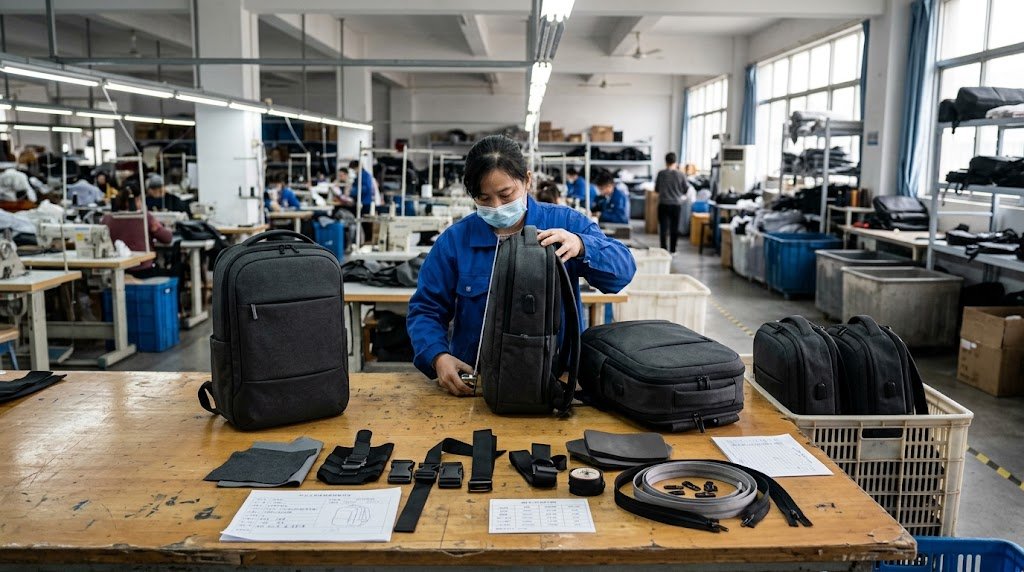
Confused by the terms "cooler bag1" and "thermal bag"? This confusion can lead to sourcing the wrong product for your brand. This guide will clarify everything for you.
A cooler bag is designed specifically to keep items cold, using thick insulation. A thermal bag2 is more versatile, designed to maintain the temperature of both hot and cold contents. While similar, their primary purpose and construction differ, making them suited for different uses.
As a brand owner like Emily, you know that details matter. Sourcing the right product isn’t just about looks; it’s about function and meeting your customers’ expectations. A picnic bag has very different requirements from a food delivery bag.
Understanding the technical differences between a cooler bag and a thermal bag is the first step to creating a product that your customers will love and trust. In my years in the bag industry, I’ve seen how this knowledge can make or break a product line. Let’s dive into the specifics so you can make an informed decision for your brand.
[claim claim=”All cooler bags are 100% waterproof.” istrue=”false” explanation=”While many cooler bags have water-resistant liners to prevent leaks from melting ice, not all are fully waterproof. The exterior fabric and zipper construction determine if a bag is truly waterproof.”]
[claim claim=”The color of a cooler bag’s exterior can affect its performance.” istrue=”true” explanation=”Lighter-colored bags reflect more sunlight and absorb less heat than darker-colored bags, which can help keep the contents cooler for a longer period, especially in direct sun.”]
What Is a Cooler Bag? Key Features & How It Works?
Your customers want to enjoy fresh food and cold drinks on their adventures. A flimsy bag that gets warm in an hour is a huge letdown. Let’s explore what makes a cooler bag truly effective.
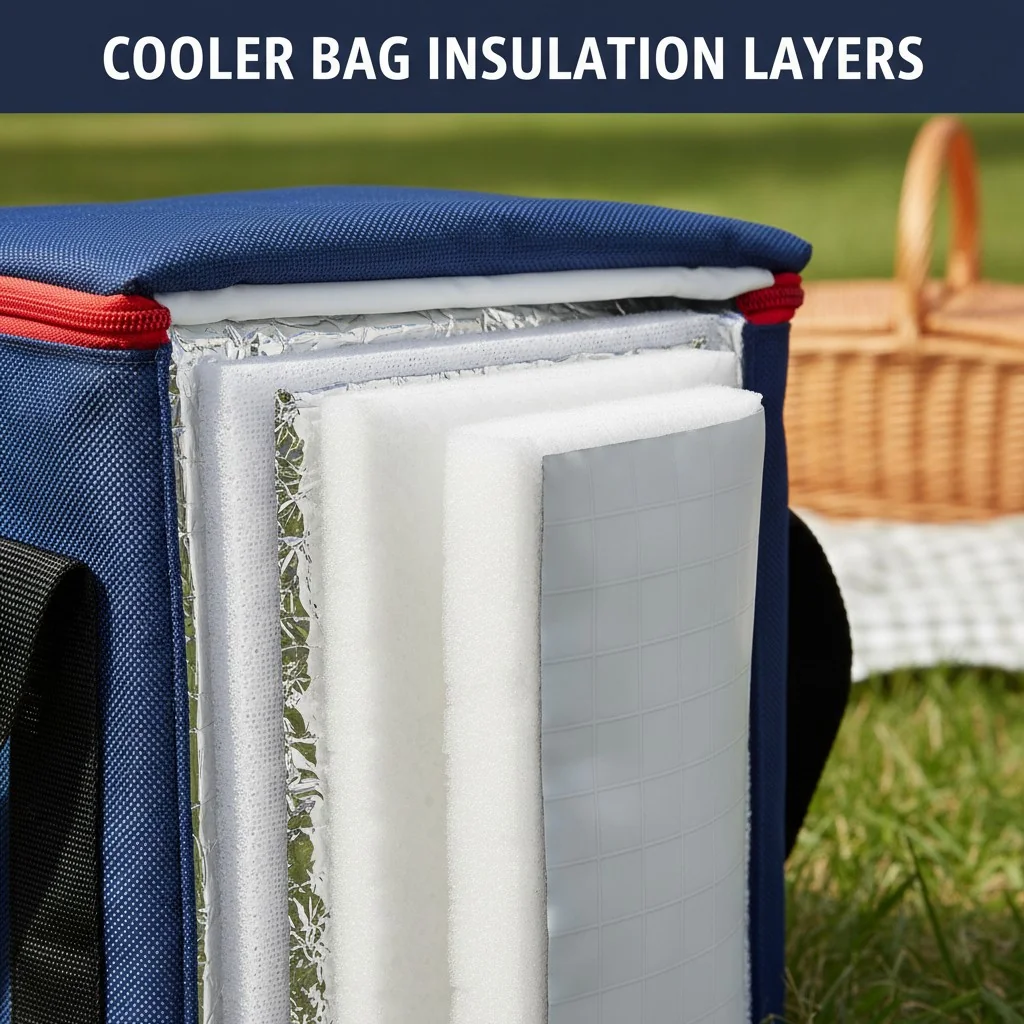
A cooler bag is an insulated container specifically engineered to keep food and drinks cold for extended periods. It works by using multiple layers of insulation3, like thick foam and reflective linings, to slow down heat transfer from the outside environment.

A cooler bag is a fortress against heat. Its main job is to stop warmth from getting in. From my experience working with manufacturers, the magic lies in how we combat the three types of heat transfer4.
How Insulation Works
The core of a cooler bag is its insulation. This isn’t just one material, but a system.
- Conduction: This is heat transfer through direct contact. A thick layer of closed-cell foam5, like PE (Polyethylene) foam, is used to create a barrier. The foam has tiny pockets of trapped air, which is a poor conductor of heat. This slows down the outside warmth from "touching" the inside.
- Convection: This is heat transfer through the movement of air. A well-sealed lid and zipper are critical here. They prevent warm air from circulating into the bag and cold air from escaping.
- Radiation: This is heat transfer through electromagnetic waves, like the heat you feel from the sun. Many high-quality cooler bags include a reflective inner lining, often made of aluminum foil or PEVA. This shiny surface reflects heat radiation away from the contents.
When you add ice or gel packs, they absorb any heat that does get in, keeping everything chilled. For example, a test we ran showed a bag with 8mm PE foam and a PEVA lining kept its contents below 5°C for over 4 hours, even in a 30°C room.
[claim claim=”Leaving empty space in a cooler bag helps it stay cold longer.” istrue=”false” explanation=”Empty air space allows for convection and warms up faster. It’s better to fill the cooler bag as much as possible with contents or extra ice packs to minimize air.”]
[claim claim=”Closed-cell foam is a better insulator than open-cell foam for cooler bags.” istrue=”true” explanation=”Closed-cell foam’s cells are not interconnected, preventing moisture and air from passing through. This makes it more rigid, water-resistant, and a superior insulator against heat conduction.”]
What Exactly Is a Thermal Bag?
You want to offer a versatile bag for daily use, from hot lunches to cold groceries. Choosing a bag that only does one thing well limits your market. Discover the power of a true thermal bag.
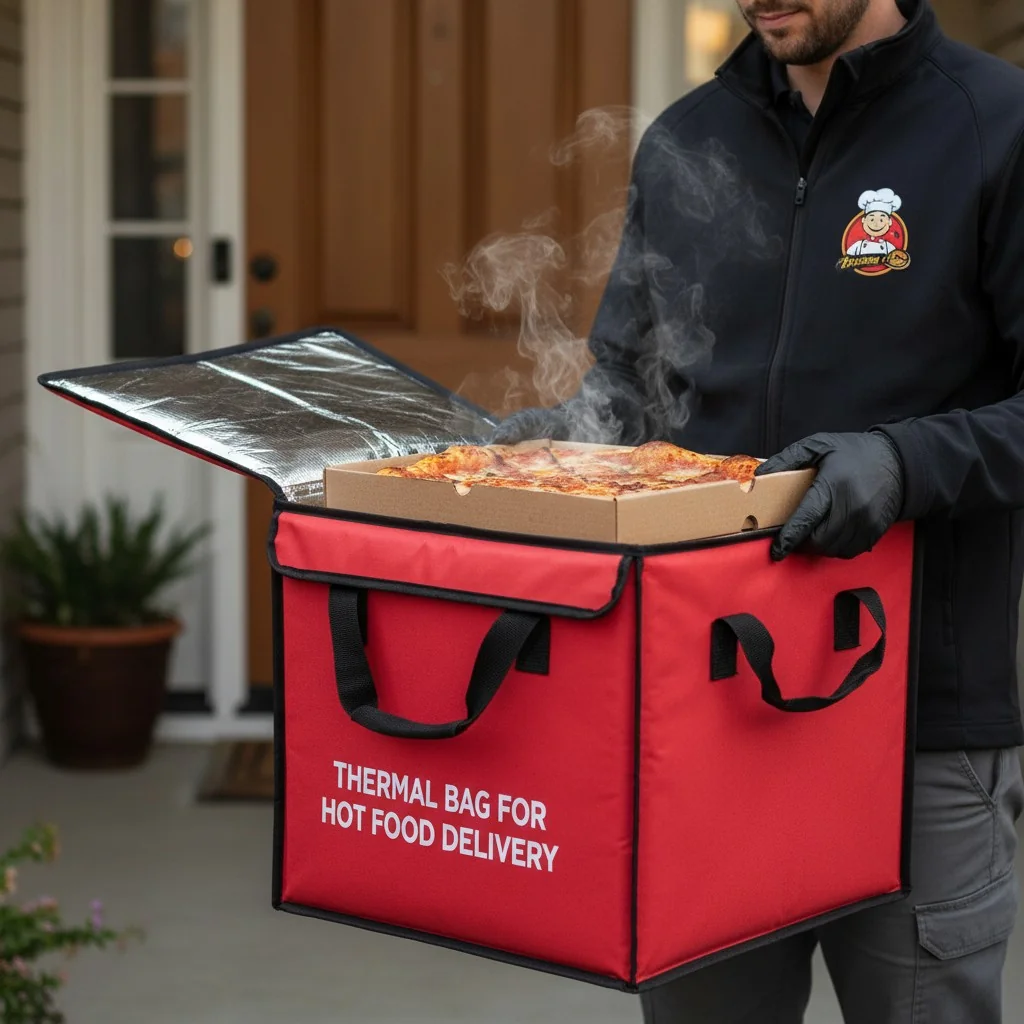
A thermal bag, often called an insulated bag, is designed to maintain the temperature of its contents, whether hot or cold. Its versatile insulation makes it perfect for food delivery, carrying hot dishes to a potluck, or keeping a packed lunch at the right temperature until noon.
The term "thermal" simply refers to heat. Unlike a cooler bag, which is optimized for cold, a thermal bag is a temperature-maintenance generalist. It’s designed to keep hot things hot and cold things cold, making it incredibly versatile for everyday life. I’ve helped many brands develop these for lunch lines and grocery shopping accessories.
Materials and Versatility
The construction is similar to a cooler bag but often with a different balance.
- Insulation: The foam insulation might be slightly thinner than in a heavy-duty cooler, balancing performance with flexibility and lower weight. The goal is to slow heat from escaping (for hot food) or entering (for cold food).
- Lining: The interior lining is crucial. It’s usually a food-grade, easy-to-clean material like PEVA or aluminum foil. This lining not only helps with insulation but also ensures the bag is safe for direct contact with food.
- Use Cases: Think about the bags used by food delivery services—those are classic thermal bags. They need to keep a pizza hot on a 20-minute ride. Or consider a potluck carrier designed to transport a hot casserole. Even a simple insulated lunch bag that keeps a sandwich cool and a soup container warm is a type of thermal bag. Their strength is short-to-medium term temperature maintenance6 for a wide range of items.
[claim claim=”Thermal bags can keep food hot indefinitely.” istrue=”false” explanation=”Thermal bags only slow down the process of heat loss; they do not generate heat. Food will eventually cool down to the ambient temperature. Their effectiveness is usually measured in hours, not days.”]
[claim claim=”A thermal bag can be used to keep items frozen.” istrue=”true” explanation=”While not as effective as a dedicated freezer or high-end cooler, a good thermal bag, especially when used with gel packs, can keep items frozen for a few hours by slowing down the thawing process.”]
Cooler Bag vs Thermal Bag: Are They the Same? What Are the Differences?
Using the terms "cooler" and "thermal" interchangeably in your product descriptions is a common mistake. This can confuse customers and lead to returns. Let’s set the record straight with a clear comparison.
No, they are not exactly the same, though they share the principle of insulation. Cooler bags are specialists, optimized for maximum cold retention with thicker insulation. Thermal bags are generalists, built for the versatility of keeping things either hot or cold.
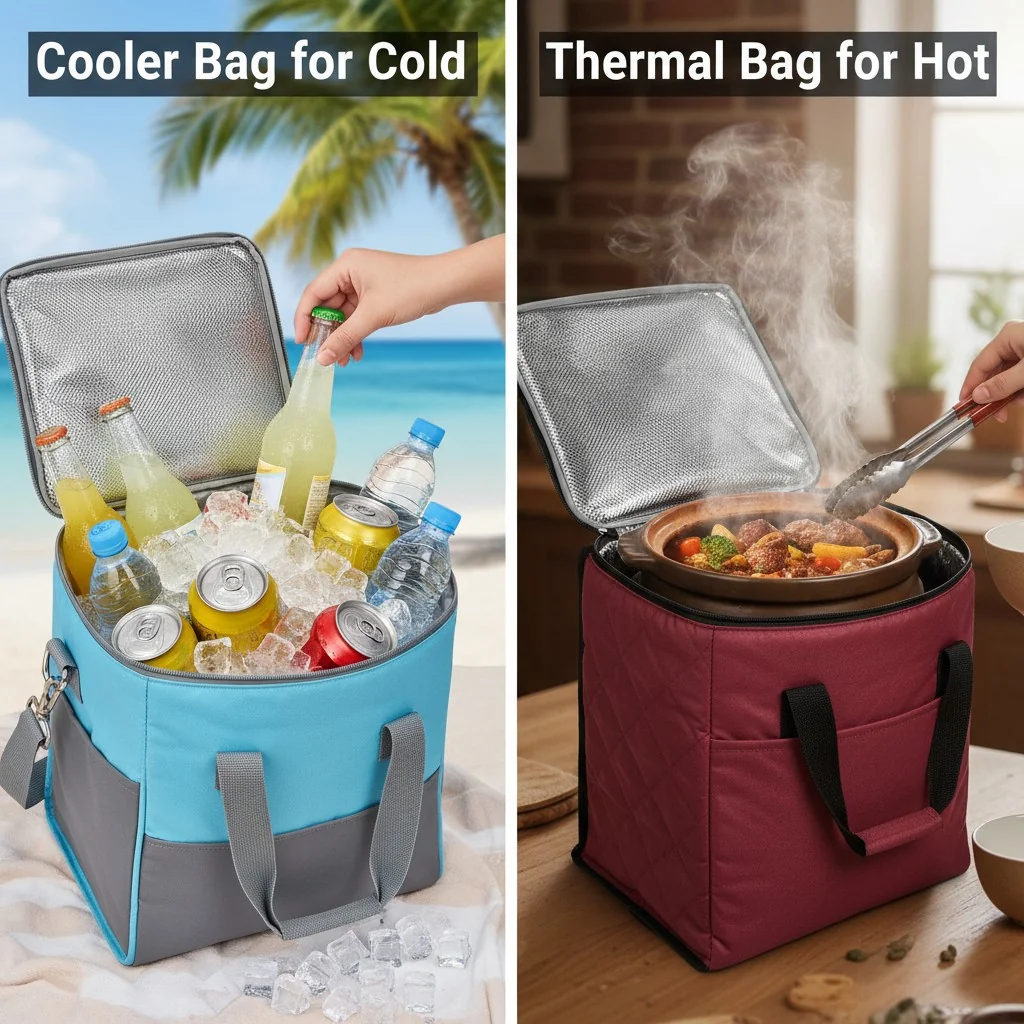
When I consult with brand owners like you, Emily, this is one of the most important distinctions we discuss. The choice impacts material sourcing, cost, and the story you tell your customers. A customer buying a "cooler" for a weekend camping trip will be disappointed if it only stays cold for four hours. Likewise, someone who wants a lightweight bag for their hot lunch doesn’t need a bulky, 20mm-thick cooler.
Here is a simple breakdown I use to help my clients:
Side-by-Side Comparison
| Feature | Cooler Bag | Thermal Bag |
|---|---|---|
| Primary Purpose | Keep contents cold for a long time. | Maintain temperature (hot or cold) for a shorter time. |
| Insulation | Thicker, high-density foam (e.g., 8-20mm PE foam). | Thinner, more flexible foam (e.g., 3-6mm PE foam). |
| Temperature Range | Optimized for cold (approx. 0-15°C). | Versatile for both hot and cold (approx. 0-70°C). |
| Best Use-Cases | Picnics, beach days, camping, tailgating. | Daily lunch, grocery shopping, food delivery, potlucks. |
| Structure | Often more rigid, boxy shape to maximize cold retention. | Often softer, more flexible, and collapsible for easy storage. |
Understanding this table is key to developing your product line. Are you targeting the outdoor adventurer or the daily commuter? The answer will guide your design and manufacturing choices.
[claim claim=”You can use a cooler bag for hot food.” istrue=”true” explanation=”Yes, a cooler bag’s insulation will also work to keep hot food warm by slowing heat loss. However, its thick structure might be overkill, and some linings may not be designed for very high temperatures.”]
[claim claim=”Thermal bags and cooler bags use completely different types of insulation.” istrue=”false” explanation=”Both bag types use similar insulating materials, primarily closed-cell foam and reflective liners. The main difference is the thickness, density, and combination of these materials, not the fundamental type.”]
How long will a cooler bag stay cold?
"Stays cold all day" is a great marketing claim, but what does it really mean? Misleading your customers about performance is a quick way to get bad reviews. Let’s look at the real factors.
The cooling duration of a cooler bag varies widely, from 2-4 hours for a basic lunch cooler to over 24 hours for a premium, hard-sided model. Performance depends on insulation quality, ambient temperature, and the use of ice packs.
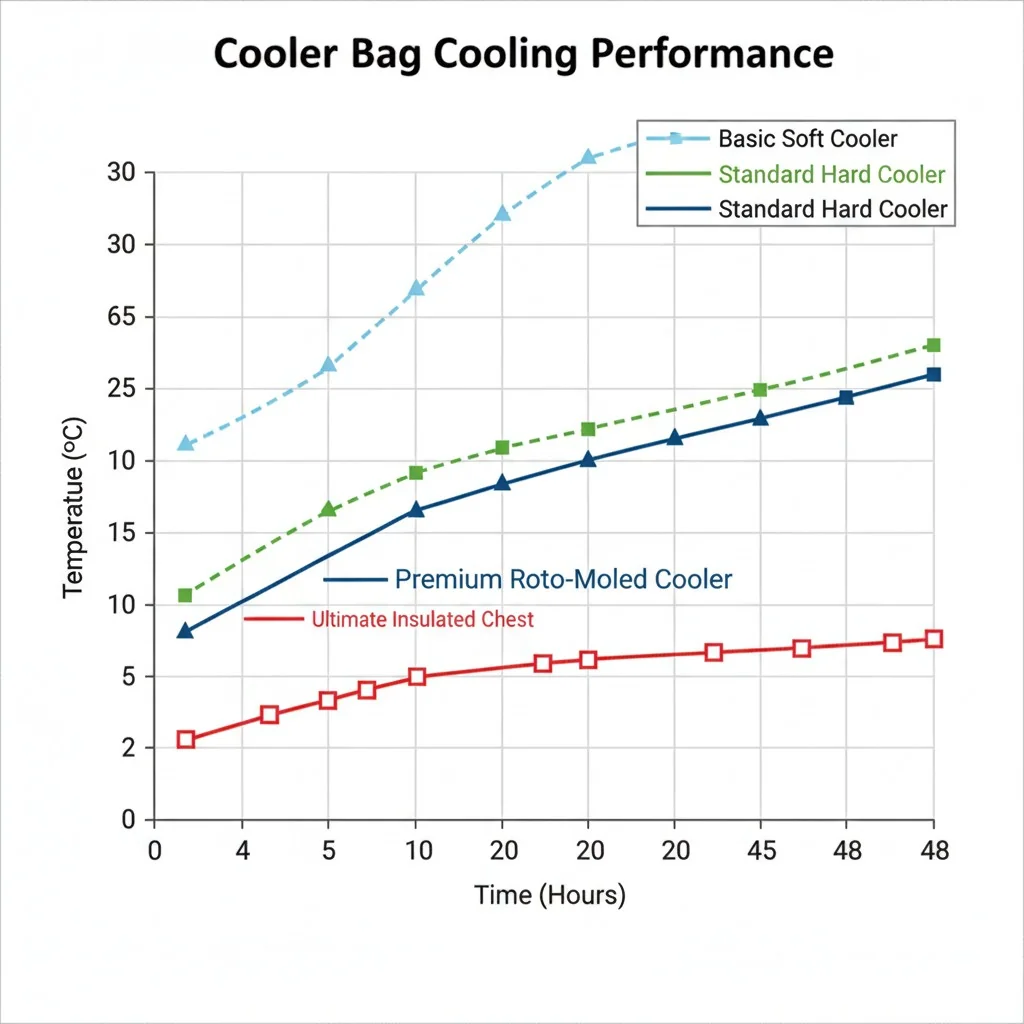
In my work, I’ve seen countless tests and real-world results. There’s no single answer, but there are key variables you, as a brand owner, must understand. When you’re writing product specifications for your manufacturer, these are the details that will define your bag’s quality.
Factors Influencing Cooling Time
- Insulation Quality and Thickness: This is the number one factor. A simple bag with 3mm foam might give you 2-3 hours. A mid-range bag with 8mm foam and a reflective liner, like the one I mentioned earlier, can push that to 4-6 hours. High-performance soft coolers with 15-20mm of dense, closed-cell foam can last 12-24 hours under the right conditions.
- Ice-to-Content Ratio: A common rule of thumb is a 2:1 ratio of contents to ice. Using high-quality gel packs or block ice, which melts slower than cubed ice, also extends the time.
- Ambient Temperature: A cooler bag sitting in a 35°C car will not perform as well as one in a 20°C air-conditioned room. The greater the temperature difference, the faster heat will try to enter the bag.
- pre-chilling7: Starting with a pre-chilled bag and already-cold contents makes a huge difference. The ice packs don’t have to work to cool everything down first; they only have to maintain the temperature.
[claim claim=”A full cooler bag stays colder than a half-empty one.” istrue=”true” explanation=”Air is the enemy of cold retention. A full cooler has less air space, so there’s less air to warm up and circulate, helping the contents stay cold for longer.”]
[claim claim=”Putting a hot item in a cooler bag will damage the insulation.” istrue=”false” explanation=”While not its intended use, placing a hot item in a cooler bag won’t typically damage the foam insulation itself. However, very high temperatures could potentially damage or warp a thin plastic or PEVA liner over time.”]
How to Choose the Right Bag for Your Needs?
Sourcing the perfect insulated bag for your brand feels overwhelming. Making the wrong choice can lead to excess inventory and a damaged brand reputation. Let’s walk through the key criteria to choose wisely.
To choose the right bag, first define your customer’s primary use. Then, evaluate the necessary duration of temperature control8, size, portability, material durability, zipper quality, and how easy it is to clean for long-term satisfaction.

When I work with a brand owner like Emily, we don’t start by looking at bag samples. We start by talking about her customer. Who are they, and what problem is this bag solving for them? Answering that question makes the technical choices much easier.
Key Sourcing Criteria
- Temperature & Duration: Is this for a 2-hour grocery run (a simple thermal bag will do) or a day at the beach (a robust cooler bag is needed)? Do you need to accommodate hot food, cold food, or both?
- Capacity & Portability: How much does it need to hold? A 6-can cooler is very different from a 48-can party cooler. Consider straps, handles, and overall weight. A heavy bag is useless if the customer can’t carry it.
- Materials & Durability: The exterior fabric needs to match the use case. A 600D polyester is great for a promotional bag, but a rugged TPU-coated fabric is better for an outdoor adventure brand. The liner must be food-safe, puncture-resistant, and easy to clean. I always recommend leak-proof liners.
- Sealing Mechanism: A standard zipper will leak air. For high-performance coolers, look for waterproof zippers9 and gasket-sealed lids. This is a detail that separates premium products from average ones.
- Ease of Cleaning: A bag that holds food will get dirty. A smooth, antimicrobial liner that can be easily wiped down is a major selling point and ensures the bag has a long, useful life.
[claim claim=”A waterproof zipper is essential for all high-performance cooler bags.” istrue=”true” explanation=”High-performance coolers are designed to hold melting ice for long periods. A waterproof zipper is critical for preventing leaks and also creates a superior airtight seal, which significantly improves thermal performance.”]
[claim claim=”The exterior material of a cooler bag has no impact on its performance, only its looks.” istrue=”false” explanation=”The exterior material contributes to durability and can affect performance. For example, a TPU or PVC coated fabric is waterproof and more airtight than a simple canvas, adding another layer of protection against the elements.”]
What Are Some Practical Tips For Using, Maintaining, and Maximizing Performance?
Even the best-designed bag can underperform if used incorrectly. This can lead to unhappy customers and negative reviews that are out of your control. Share these simple tips to ensure a great user experience.
To get the most out of your bag, always pre-chill or pre-heat it. Use quality ice or gel packs, fill empty space, and keep the bag closed and out of direct sun. After use, clean and dry it completely.
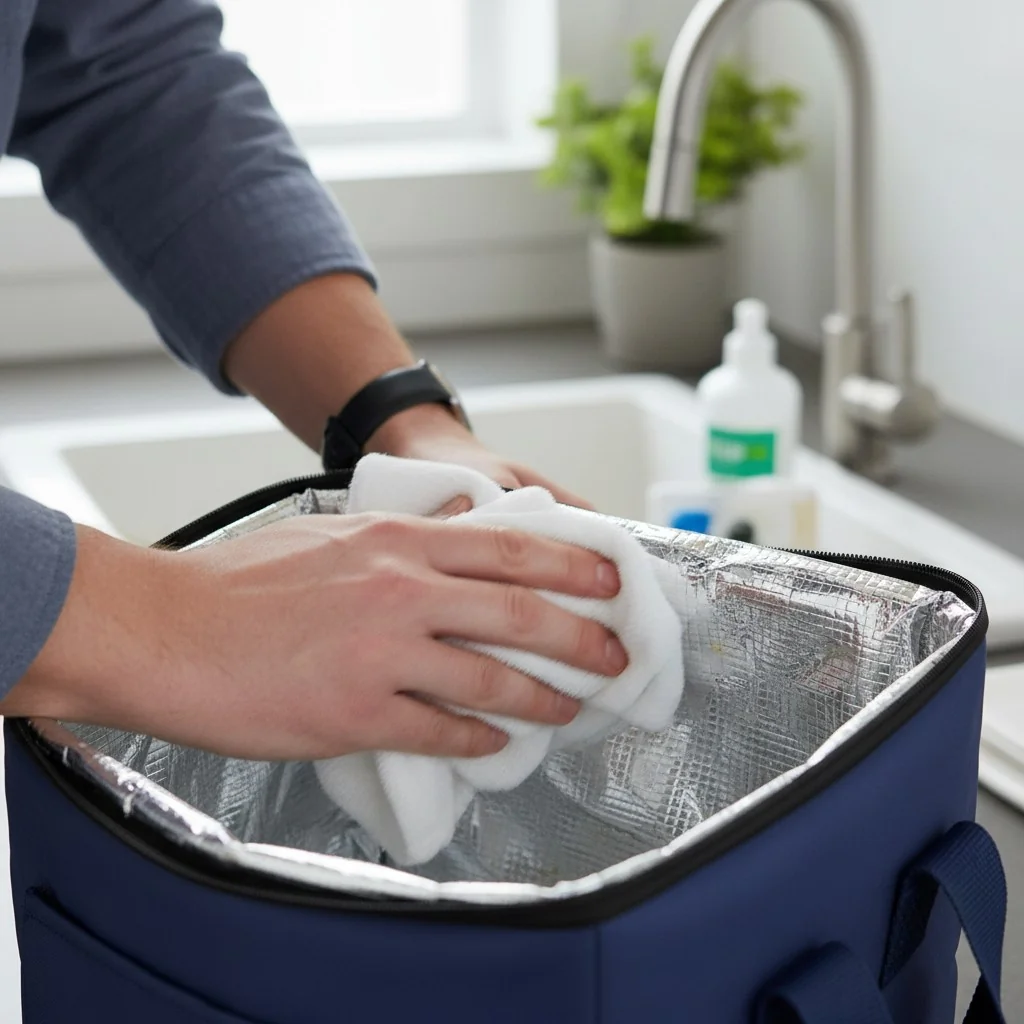
As a manufacturer and brand consultant, I believe a product’s journey doesn’t end at the sale. Educating your customer on proper use and care builds brand loyalty. These are the tips I always share with my clients to pass on to their customers. It shows you care about their experience.
Maximizing Performance and Longevity
- Pre-Condition Your Bag: Before packing, put some ice packs or a hot water bottle inside for 30 minutes to get the insulation to the right temperature. Always start with cold/hot contents.
- Pack it Right: Place ice packs at the bottom and top. Fill any empty space with towels or extra snacks to push out air. A full bag stays cold or hot much longer.
- Keep it Closed: Every time you open the bag, you exchange the air. Open it as little as possible.
- Avoid Direct Sun: The sun’s radiant heat is powerful. Keep your bag in the shade, under a blanket, or in the car’s trunk whenever possible.
Maintenance and Storage
- Clean After Every Use: Wipe the interior with mild soap and water. For tough odors, a solution of water and baking soda works wonders.
- Dry Thoroughly: This is critical. Leave the bag open to air dry completely before zipping it up for storage. This prevents mold and mildew, which can ruin the liner.
- Store Properly: Store it in a cool, dry place. Over time, the insulation foam can get compressed, especially if heavy items are stored on top of it, which will reduce its effectiveness. The liner is often the first part to degrade, so proper cleaning is key to a long life.
[claim claim=”Storing a cooler bag with the zipper closed is the best way to maintain it.” istrue=”false” explanation=”It’s best to store a cooler or thermal bag with the zipper slightly open after it’s completely dry. This allows for air circulation and prevents any trapped moisture from creating musty odors or mildew.”]
[claim claim=”You can wash a soft cooler bag in the washing machine.” istrue=”true” explanation=”Some smaller, fabric-based lunch bags can be machine washed on a gentle cycle. However, for most larger or more structured cooler bags, this is not recommended as it can damage the foam insulation and waterproof linings. Always check the manufacturer’s care label.”]
Common Questions (FAQ)
Is a cooler bag the same as an insulated bag?
Not exactly. "Insulated bag" is a general term, and a cooler bag is a specific type of insulated bag. All cooler bags are insulated, but not all insulated bags are heavy-duty coolers. A thermal lunch bag is insulated, but it’s not a "cooler bag" in the traditional sense.
Can I use a thermal bag for hot food?
Yes, absolutely. That is one of the key features of a thermal bag. Its purpose is to maintain temperature, so it works just as well for keeping soups, casseroles, and other dishes hot as it does for keeping drinks cold.
How long can a cooler bag keep items cold?
It depends entirely on the bag’s quality. A basic lunch cooler might last 2-4 hours. A mid-range soft cooler can last 6-12 hours, while high-performance, premium coolers can keep ice for 24 hours or more under ideal conditions.
What materials make a good cooler/thermal bag?
The best bags use a combination of materials: a durable outer fabric (like polyester, nylon, or TPU), a thick layer of closed-cell foam insulation (like PE foam), and a waterproof, food-grade inner liner (like PEVA or welded TPU).
Are thermal bags more expensive than cooler bags?
Generally, no. High-performance cooler bags are typically more expensive than standard thermal bags because they use much thicker, higher-density insulation and more robust construction (like waterproof zippers) to achieve long-term cold retention.
How do I keep a cooler bag or thermal bag clean and odor-free?
After each use, empty the bag and wipe the interior with a cloth and mild, soapy water. For stubborn odors, use a mixture of baking soda and water. Most importantly, always let it air dry completely with the lid open before storing it.
Conclusion
Understanding the difference between cooler and thermal bags empowers you to source the right product. This knowledge helps you meet customer needs, build a stronger brand, and grow with confidence.
References
-
Explore the mechanics of cooler bags to understand their unique features and benefits. ↩
-
Learn about thermal bags and their versatility for maintaining temperature for various items. ↩
-
Understanding insulation is key to choosing the right bag for temperature control. ↩
-
Discover the science behind heat transfer to appreciate how cooler bags maintain cold. ↩
-
Learn about the materials that make cooler bags effective at insulation. ↩
-
Find out how thermal bags keep food hot or cold, enhancing their usability. ↩
-
Understand the importance of pre-chilling for maximizing the effectiveness of cooler bags. ↩
-
Gain insights into the factors that affect how well insulated bags perform. ↩
-
Explore how waterproof zippers enhance the performance and durability of cooler bags. ↩