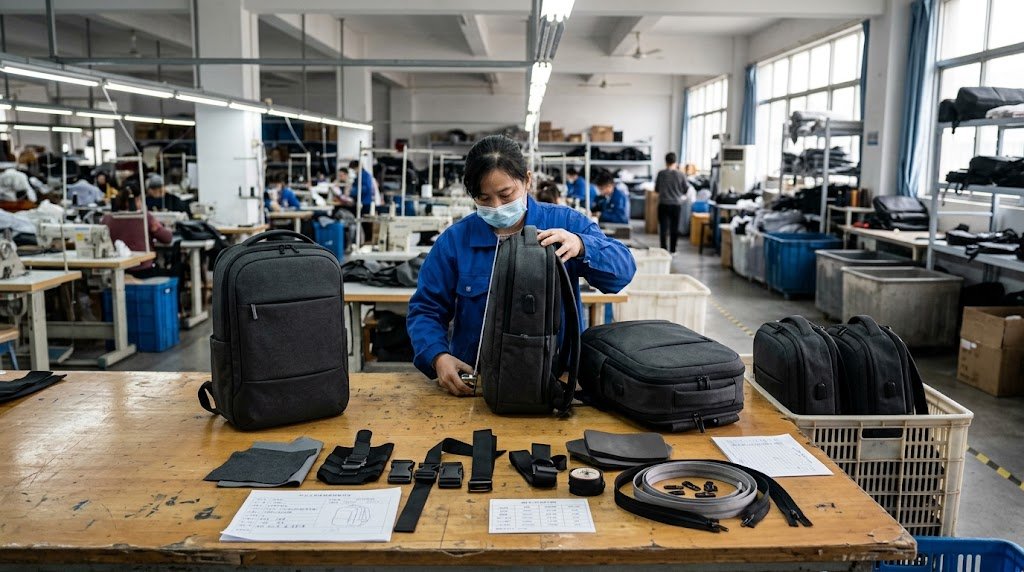
I’m sitting in my office overlooking the cutting floor where we just finished a 5,000-unit run for a European tech brand. I see too many "experts" online defining laptop backpacks like they’re reading from a 1990s textbook. If you’re a B2B buyer, you don’t need a dictionary definition; you need to know why one bag protects a $2,000 MacBook and the other is just a glorified standard backpack.
A laptop backpack is a purpose-built carrying solution featuring a dedicated, padded compartment—often with a suspended "false bottom1"—engineered to isolate and protect electronic devices from impact, moisture, and pressure while organizing accessories.
For professional buyers, the distinction lies in three non-negotiable structural elements: a ‘false bottom’ suspension system to prevent floor impact, high-density closed-cell foam (EVA or PE) for shock absorption, and structured organization for tech accessories.
If you are a daily commuter, you need comfort. If you are a B2B buyer, you need to understand why this is the highest ROI corporate gift you can buy. Let’s break down the specs.
What Defines a "Real" Laptop Backpack?

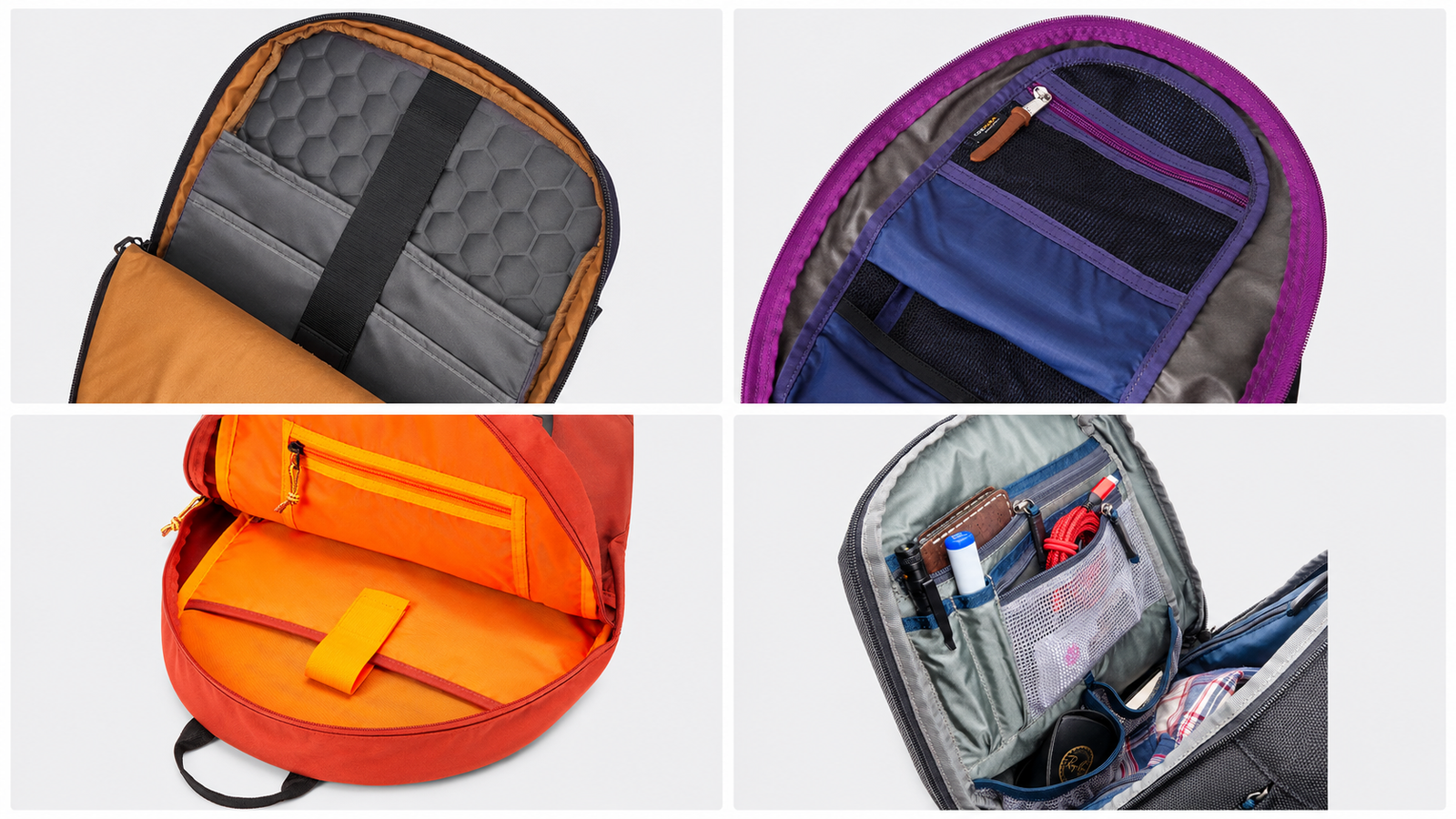
A true laptop backpack distinguishes itself through a reinforced "tech zone" separate from the main cargo area, utilizing high-density foam, and specialized tech-organization panels that prevent hardware movement during transit.
The secret sauce isn’t just padding; it’s suspension. In our factory, we refuse to manufacture laptop bags without a "False Bottom"—a construction technique where the laptop pocket stops 1-2 inches above the bag’s floor. Without this, every time you set your bag down, your laptop hits the ground.
What are the non-negotiable structural components?
- False Bottom (Suspended Sleeve): Keeps the device off the floor, Min 1-2 inches from base.
- High-Density Padding2: We prefer EVA or Cross-linked PE foam over "EPE" (standard PE) and cheap open-cell sponge.
- Tech Organization: Dedicated loops for chargers and mice to prevent scratching the laptop lid.
- S-Curve Straps: Contoured to fit the human torso, distributing weight away from the neck.
- Air-Flow Back Panel: "Sandwich mesh" to create ventilation channels.
- Bartack Stitching: Reinforced stitching at stress points (straps/handles) to handle the weight of heavy tech.
Actionable Tip: Open your tech pack. If the laptop sleeve spec says "single layer lining," reject it. Demand "5mm PE Foam padding" minimum.
Which Laptop Backpack Material Actually Survive Daily Abuse?
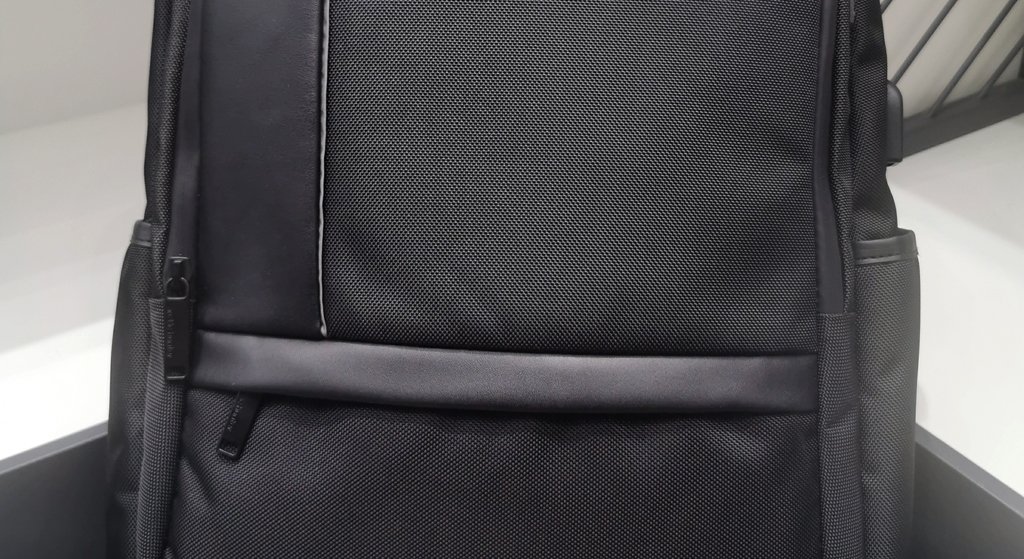
Materials are where factories cut corners to save pennies.
For professional laptop backpacks, Ballistic Nylon3 (1680D) and Cordura® are the industry standards for abrasion resistance, while high-density Polyester (600D+) offers a budget-friendly alternative for lighter use.
Is "Waterproof" a Scam?
True waterproofing requires welded seams and rubberized TPU fabric, which is overkill for daily commutes. Look for DWR (Durable Water Repellent) coating combined with reverse coil zippers for sufficient weather resistance.
Laptop backpck material comparison table
| Material | Durability (Martindale Test) | Cost | Best Use Case | Factory Manager’s Take |
|---|---|---|---|---|
| 1680D Ballistic Nylon | Extreme (>20,000 Cycles) | $$$ | Premium Business & Travel | The "Tank." Heavy and slick. Ink peels off easily, so only use Embroidery or Metal for logos. |
| Cordura® Nylon (1000D) | Very High (Tear Resistant) | $$$$ | Military & Outdoor Tech | The "Upsell." The "Premium Upsell." If your client has a high budget, specify this. The branded "Cordura" hangtag alone justifies a higher retail price, but attracts dust/hair like a magnet. |
| 600D Polyester | Moderate (~8,000 Cycles) | $ | Staff Gifts & Event Swag | The "Budget King." Standard choice. Pro tip: Ask for TPE backing (instead of PVC/PU)to make the fabric feel thicker and more expensive than it actually is. |
| Canvas (Cotton) | Low (Scuffs easily) | $$ | Lifestyle & Fashion | High Maintenance. Looks cool but soaks up water. Must use Waxed Canvas or it’s useless for electronics. |
What Foam Padding Material Actually Works? (PE vs. EVA)
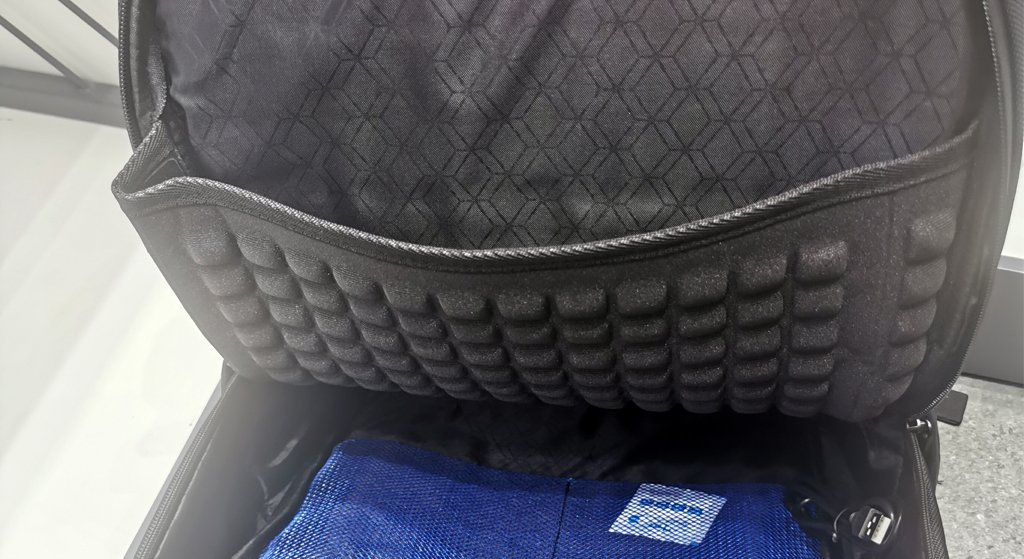
EVA (Ethylene-Vinyl Acetate)4 is the gold standard for professional durability due to its toughness and shock dispersion.while standard PE (Polyethylene) foam is the budget-friendly alternative that degrades over time.
Most factories try to sell you "EPE" (Standard PE) because it is 60% cheaper. It is essentially compressed bubble wrap. It works for shipping protection, but in a backpack, it flattens into a useless sheet within 3 months. You need to demand Tier 2 (XPE) or Tier 1 (EVA).
However, protection isn’t just about the hit; it’s about the scratch. That’s why we laminate these foams with Plush Fleece (High pile) or Lycra (Velvet-touch) linings. The foam stops the crack; the velvet stops the scratch.
Laptop padding material breakdown
| Tier 3: EPE (Avoid) | Tier 2: XPE (Good) | Tier 1: EVA (Best) | |
|---|---|---|---|
| Real World Analogy | Styrofoam / Bubble Wrap (Crunchy & Weak) | Yoga Mat (Firm & Smooth) | Running Shoe Sole (Bouncy & Rubber-like) |
| The "Pinch Test" | Bubbles pop or crunch. Leaves a dent. | Resists your fingers. Feels dense. | Feels rubbery. Snaps back instantly. |
| Lifespan | 3-6 Months (Flattens out) | 3-5 Years (Retains shape) | 10+ Years (Indestructible) |
Factory insider tip: why we don’t use PU sponge for laptop sleeves?
Never approve a sample that uses PU Sponge (often called "High-Density Sponge" by suppliers) for the laptop sleeve. Here is why:
-
The "Bottoming Out" Failure: PU sponge feels soft to the hand, which feels "nice" in a showroom. But under the high-velocity impact of a drop, it compresses instantly to 1mm thickness, transferring 100% of the shock to the laptop hardware.
-
The "Thumb Test": Squeeze the padding between your thumb and index finger. If you can easily feel your fingers touching with no resistance, it is PU. Reject it. A protective laptop bag must offer resistance when squeezed.
How do inner lining materials prevent surface scratches?
We laminate foam with specific soft fabrics like Plush or Lycra to prevent surface scratches, creating a balance between hard impact safety and soft touch.
| Lining Material | Tactile Feel | Primary Function |
|---|---|---|
| Plush / Fleece | Soft, Fuzzy, Warm | High-friction hold; prevents micro-scratches on aluminum shells. |
| Lycra / Velvet | Smooth, Sleek, Cool | Low-friction slide; premium feel that resists abrasion. |
| Standard 210D | Synthetic, Crisp | Basic coverage; functional but offers zero scratch protection. |
How to Measure Your Laptop for the Perfect Backpack Fit?
Most returns happen because buyers trust the "screen size" label. A 17-inch gaming rig is twice as thick as a 17-inch MacBook Air, creating fit issues.
To guarantee a secure fit, ignore the diagonal screen size. Instead, measure your laptop’s physical Chassis Length (Horizontal), Width (Vertical), and Depth (Thickness) and compare these to the bag’s specific ‘Laptop Pocket Dimensions’.
Why is the "Depth" (Thickness) measurement critical for all bag types?
Thickness determines if the retention strap can close (in main compartment sleeves) or if the zipper will burst (in independent laptop compartment). Ignoring depth leads to fit failure.
- For Independent Laptop Compartments: A thick laptop (2.5cm+) in a slim pocket forces the zipper teeth outward, causing mechanical failure (bursting).
- For Main Compartment Sleeves: Excessive thickness "eats up" the vertical slack. If the laptop is too thick, the Velcro safety strap won’t reach to secure it, leaving your device bouncing loose.
- The Rule: Always add your laptop’s thickness to its width when comparing against flat sleeve measurements.
What are the standard dimension guidelines?
Use this factory reference chart to match actual laptop chassis sizes to the correct backpack volume, ensuring a ‘snug but safe’ fit for your device.
| Laptop Class (Inch) | Recommended Bag Dimensions (HxWxD) | Max Chassis Width |
|---|---|---|
| 11 – 13" | 17" x 12" x 8" | < 32 cm |
| 14 – 15" | 18" x 13" x 9" | < 36 cm |
| 16 – 17" | 19" x 14" x 10" | < 40 cm |
| 18"+ | 20" x 15" x 11" | < 44 cm |
Are Anti-Theft Features and USB Ports Actually Useful?
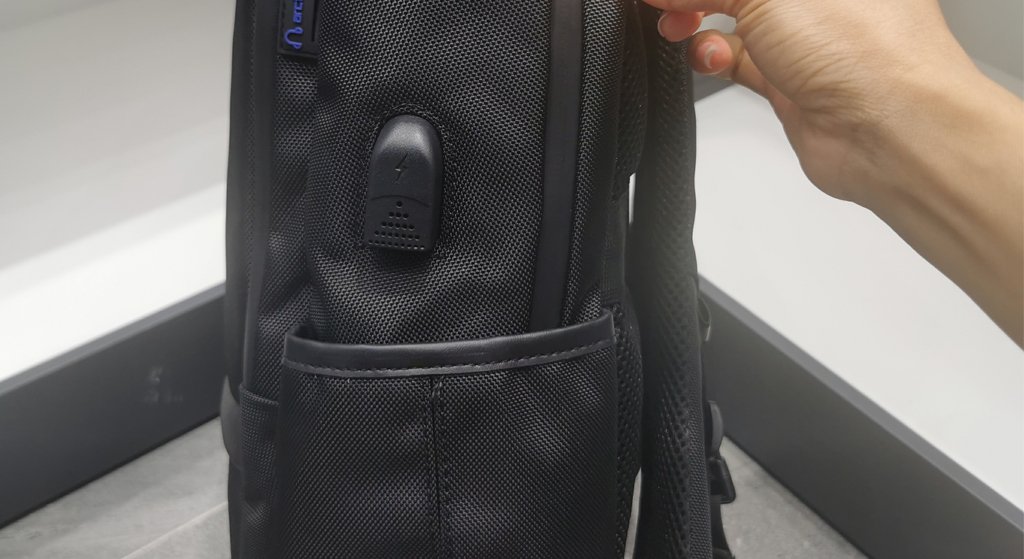
Security features like hidden zippers located against the back panel provide real protection, but external USB ports are often critical failure points unless they utilize high-grade, corrosion-resistant removable cables.
True anti-theft isn’t about a combination lock; it is structural design. Hidden zippers prevent access while worn. Conversely, fixed USB ports often corrode in humid climates or break due to cable tension.
We rejected a batch of 2,000 units last year because the cheap USB housing rusted after just 72 hours in our salt-spray testing chamber, rendering the feature useless.
Which tech features are essential vs. gimmicks?
| Feature | Verdict | Factory Insight |
|---|---|---|
| Hidden Zippers | Essential | Best theft deterrent; impossible to open while worn. |
| RFID Pocket | Useful | Great for B2B travel bags; blocks passport skimming. |
| USB Port | Risky | Only accept if the internal cable is removable/washable. |
| Headphone Jack | Obsolete | Do not pay extra for this; it’s a water leak point. |
Action Tip:
When checking a sample, plug a cable into the USB port and wiggle it hard. If the plastic housing moves or feels loose, reject it—it will push inside the lining within a week.
Why Laptop Backpacks Are the Perfect Corporate Asset?
A high-quality branded laptop backpack serves as a "walking billboard," generating thousands of visual impressions in airports and offices, while simultaneously boosting employee satisfaction and protecting company hardware.
I always tell my procurement clients: You aren’t buying bags; you are buying brand real estate. A cheap t-shirt gets worn to sleep; a premium backpack travels to client meetings, conferences, and international flights. It signals that your company values quality.
Data from the Advertising Specialty Institute (ASI) suggests that a branded bag generates more impressions over its lifecycle (approx 5,700) than almost any other promotional item.
How to choose the right customization[^5]for your brand?
- Embroidery: Classic, textured, and permanent. Best for logos on Ballistic Nylon. It screams "Premium."
- Screen Printing: Good for complex colors but can crack over time. Better for Polyester bags.
- Rubber/Metal Patch: The modern, subtle approach. We sew a custom mold onto the bag. Very high perceived value.
Customization ROI Table
| Method | Durability | Perceived Value | Cost |
|---|---|---|---|
| Embroidery | Permanent | High | Medium |
| Screen Print | 1-2 Years | Medium | Low |
| Rubber Badge | Permanent | Very High | Medium |
Action Tip:
For employee onboarding kits, choose a subtle Tone-on-Tone Embroidery (e.g., black thread on a black bag). It looks retail-grade, and employees are 3x more likely to use it outside of work.

Buying Guide: How to Choose the Right One?
The selection process depends entirely on the end-user: Individuals should prioritize ergonomics and personal style, while B2B buyers must focus on Minimum Order Quantities (MOQ), lead times, and pre-production sample verification.
I have seen individual buyers return bags because "the shade of grey was off," and I’ve seen B2B buyers panic because they didn’t account for the 35-day manufacturing lead time.
For Individuals (B2C)
- Check the Fit: Measure your laptop including the bezel. A "15-inch" bag might not fit a gaming 15.6-inch laptop.
- Comfort is King: Look for "air-flow" back panels. If you commute, your back needs to breathe.
For Business Buyers (B2B/Wholesale)
- MOQ Reality: Custom colors usually require 500-1,000 units (fabric mill minimums). Stock colors can often be done for 100 units.
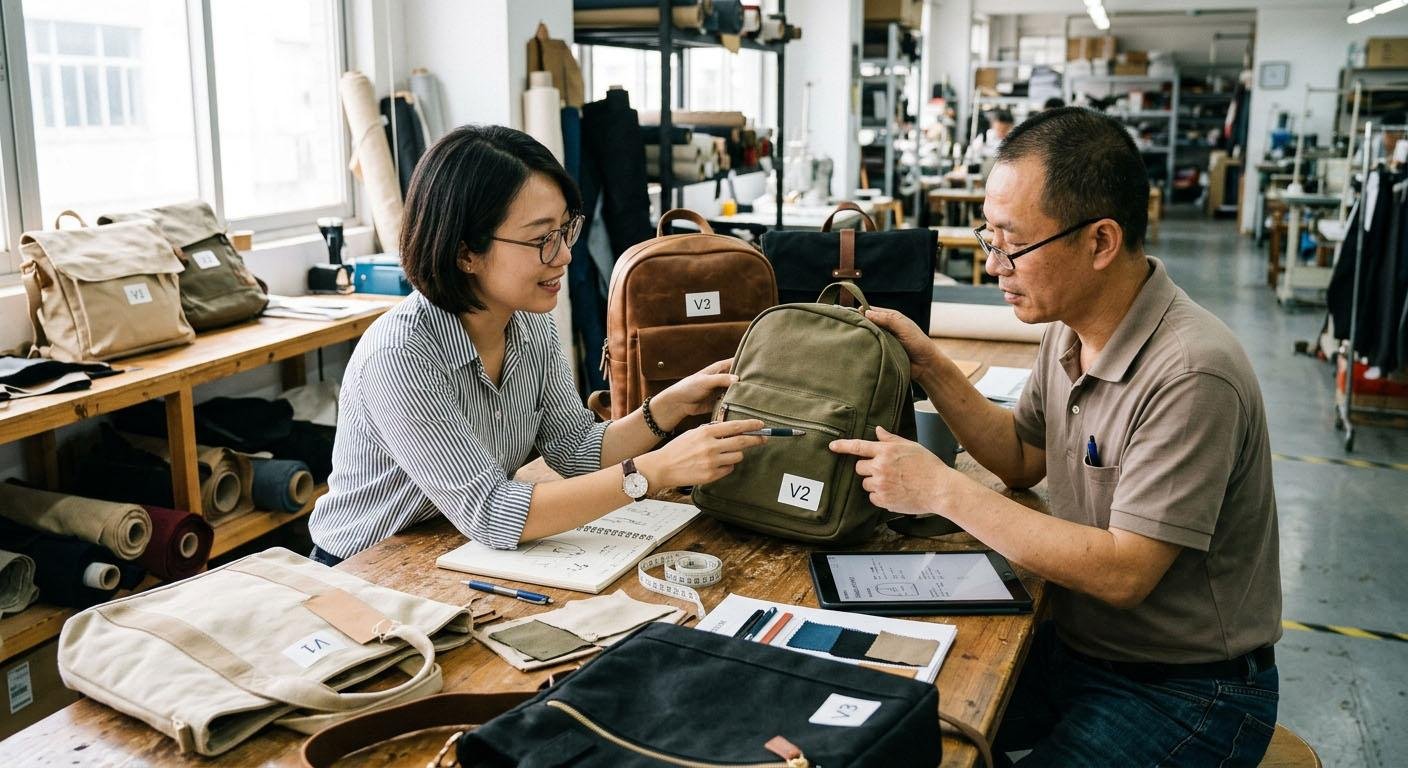
- Sample First: Never place a bulk order without a physical "Pre-Production Sample" (PPS) in hand. Photos lie; texture doesn’t.
Checklist for Buyers
- Does the laptop compartment have a false bottom?
- Is the fabric water-resistant (PU backed)?
- B2B: Have I confirmed the logo size and placement on a physical sample?
- B2B: Is the lead time (usually 30-45 days) aligned with my event?
Action Tip:
If you are a business buyer, always ask for "DDP" (Delivered Duty Paid) pricing. It saves you from dealing with customs headaches and surprise port fees.
Conclusion
Whether you are protecting a $2,000 MacBook or equipping a 500-person workforce, a laptop backpack is an investment in asset protection. Don’t settle for a gym bag with a thin divider. Look for the "false bottom," demand high-density foam, and choose materials that last.
- Need 500+ for your company? Contact our factory team for a custom quote, free design mockup, and material swatches.
Frequently Asked Questions (Deep Dive)
1. Can a 15.6-inch laptop fit in a 15-inch backpack?
It depends on the bezel. Modern 15.6" laptops (like the Dell XPS) often have smaller footprints than older models. Always check the chassis dimensions (Length x Width) against the bag’s internal pocket specs, not just the screen diagonal.
2. Is "Anti-Theft" a real feature or a gimmick?
Real anti-theft is about structure. Look for "hidden zippers" (against the back panel) and cut-resistant fabric. Simple combination locks on cheap zippers are gimmicks; a thief will just slash the bag. Hidden access points are the real deal.
3. What is the difference between PU and PVC backing?
This is a huge factory secret. PVC is cheaper and waterproof but contains toxic phthalates and cracks in winter. PU (Polyurethane) is more expensive, flexible, eco-friendlier, and lasts longer. Always ask for PU if you care about quality.
4. How do I clean a laptop backpack without ruining it?
Never machine wash it. The agitation breaks the internal foam and peels the waterproof coating. Spot clean with mild soap and a soft brush, then air dry.
5. Why are factory lead times so long for custom bags?
We aren’t just sewing; we are dyeing fabric, molding hardware, and sourcing zippers. The actual sewing takes 10 days, but the materials supply chain takes 20-30 days. If a factory promises custom bags in 10 days, they are likely giving you old stock, not new production.
Footnotes
-
Understanding the ‘False Bottom’ is crucial for protecting your laptop from impact, ensuring it stays safe during transport. ↩
-
High-Density Padding is essential for shock absorption, making it vital for anyone looking to protect their tech gear. ↩
-
Ballistic Nylon is known for its durability and abrasion resistance, making it a top choice for high-quality laptop backpacks. ↩
-
EVA is the gold standard for padding due to its toughness and shock dispersion, essential for protecting your devices. ↩