


Struggling to find a bag that’s both stylish and practical? The messenger bag is a great option, but choosing the right one for your brand can be tricky.
A messenger bag is a versatile, single-strap bag worn over the shoulder or across the body. It offers easy access to your belongings, making it a favorite for urban commuters1, students, and professionals who value both function and style in their daily carry.
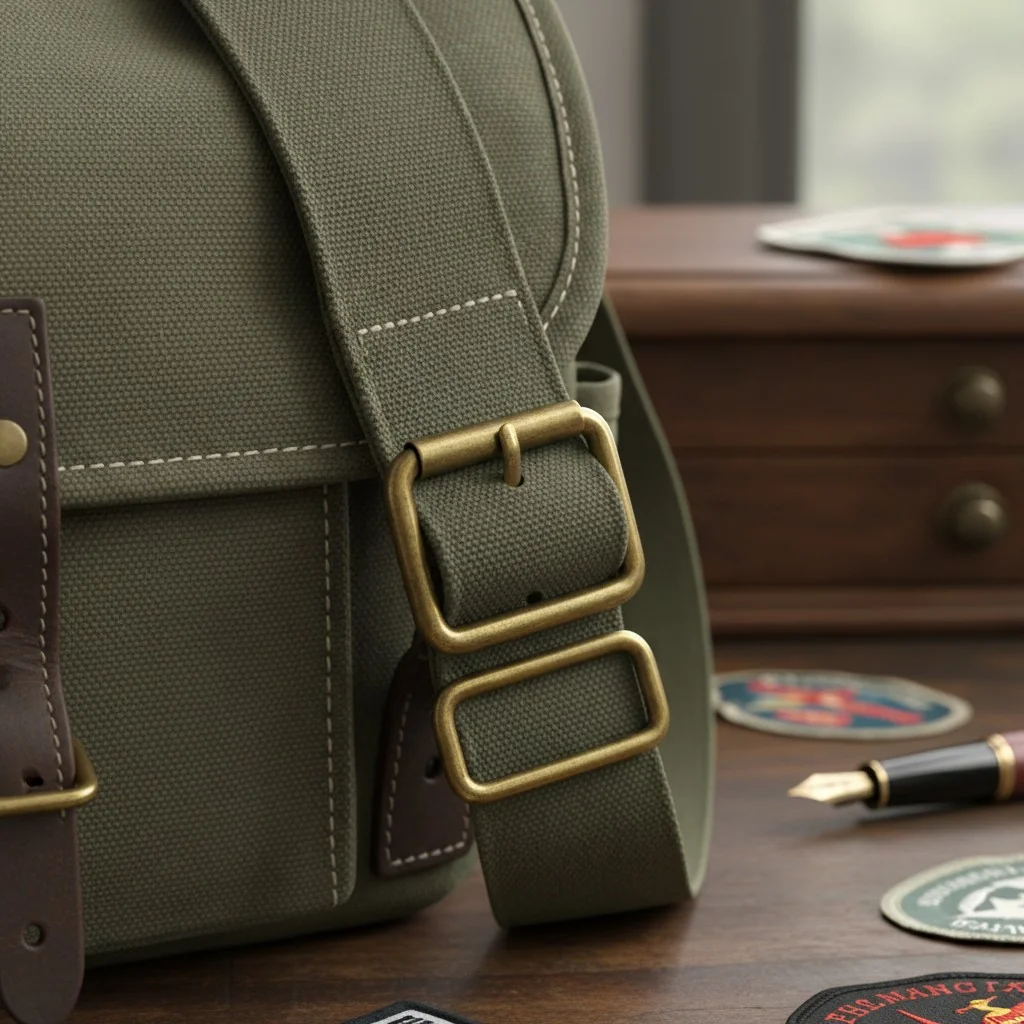
As a brand owner, understanding this classic bag is key. In my years working with brands, I’ve seen how small details can make a huge difference in a product’s success. Let’s explore what makes a messenger bag a timeless choice and how you can create the perfect one for your brand. This guide will walk you through everything you need to know.
[claim claim=”The first modern messenger bag was designed in the 1950s for telephone linemen.” istrue=”true” explanation=”The De Martini Globe Canvas Company created the first modern messenger bag in the 1950s for telephone linemen to carry their tools, featuring a single strap and durable canvas.”]
[claim claim=”All messenger bags are waterproof.” istrue=”false” explanation=”While many messenger bags designed for cyclists are made from waterproof materials like tarpaulin, many fashion-oriented bags made from canvas or leather are only water-resistant, not fully waterproof.”]
What Is a Messenger Bag?
Struggling to define what makes a messenger bag unique? Its history is key. Understanding its origins helps you see its modern appeal and design potential for your brand.
A messenger bag is defined by its single long strap, worn across the body or over the shoulder. It was originally made for couriers, so it’s designed for quick access to contents without taking the bag off. This core feature remains its biggest selling point.

From Couriers to Commuters
The messenger bag we know today has its roots with bike messengers in big cities like New York during the 1980s and 90s. These messengers needed a bag that was tough, could hold a lot of documents, and allowed them to grab things quickly without stopping. The single-strap, cross-body design was perfect. It stayed secure on their backs while they navigated traffic and could be swung to the front in an instant. This history is why durability and function2 are so central to the messenger bag’s identity. Over time, people outside the courier world saw how practical these bags were. Students, professionals, and travelers started using them, and the bag transitioned from a piece of work gear into a mainstream fashion accessory.
The Core Design Philosophy
The original purpose of the messenger bag still shapes its design today. The core philosophy is all about easy access and mobility. Unlike a backpack, you don’t have to take it off to get your wallet, phone, or laptop. This makes it ideal for anyone moving through crowded urban environments, whether on a subway or a busy street. As a brand owner like Emily, you can tap into this by designing bags that honor this philosophy. Think about adding a quick-access pocket3 on the back panel or using a magnetic closure under the main flap for even faster entry. This focus on practical, on-the-go use is what keeps the messenger bag relevant.
[claim claim=”Messenger bags are named after the Pony Express mail carriers of the American West.” istrue=”false” explanation=”While Pony Express riders used satchels, the term ‘messenger bag’ is more directly linked to modern-day urban bike messengers and couriers from the 20th century.”]
[claim claim=”The cross-body design helps distribute weight more evenly than a tote bag.” istrue=”true” explanation=”Wearing a bag across the body engages the core and spreads the load across the back and shoulder, reducing strain on one side of the body compared to a single-shoulder tote bag.”]
What Are the Key Features of a Messenger Bag?
Not all messenger bags are the same. Knowing the key features helps you design a product that truly meets your customers’ needs and stands out from the competition.
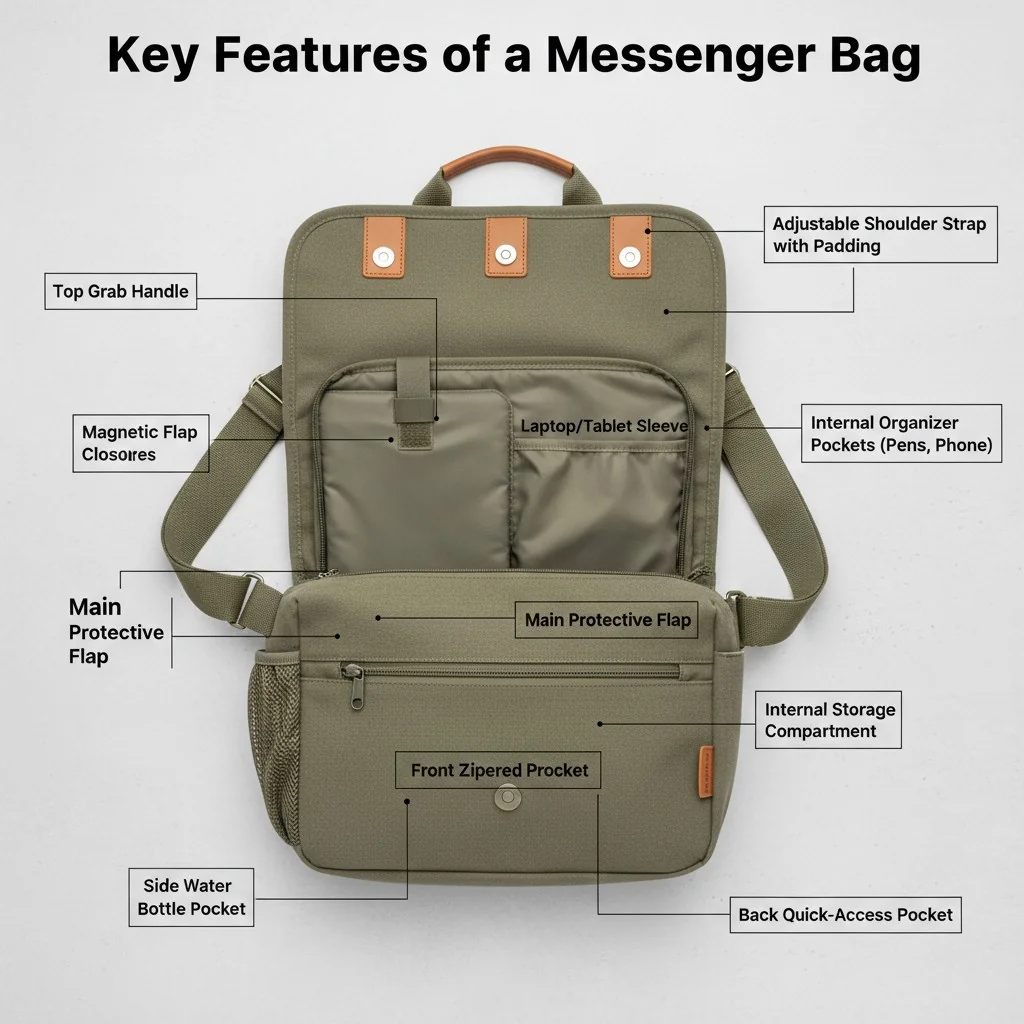
The most important features are a long, adjustable strap for cross-body wear, a large main compartment, and a secure flap closure. Modern bags also add padded laptop sleeves4, organizer pockets, and durable, high-quality hardware for today’s user.
The Strap, Compartments, and Hardware
When I work with brand owners, I always emphasize that the details make the bag. For a messenger bag, three areas are critical: the strap, the compartments, and the hardware. The strap needs to be comfortable and strong. A wider, padded strap is great for heavier loads, while a simple webbing strap works for a lighter, more casual bag. The ability to easily adjust its length is a must-have.
Inside, organization is everything. A basic messenger bag might just have one big open space. But today’s customers expect more. A dedicated, padded laptop sleeve is almost standard now. I’ve seen brands succeed by adding smart pockets for phones, chargers, pens, and water bottles. This is where you can really cater to a specific user, like a digital nomad or a student.
Finally, the closure and hardware define the bag’s quality and security. Traditional buckles look great and are very secure, but magnetic snaps or even high-quality velcro can offer quicker access. The zippers, D-rings, and adjusters should feel solid. Using cheap hardware is one of the fastest ways to make a good design feel poor-quality.
| Feature | Traditional Design | Modern Adaptation |
|---|---|---|
| Strap | Simple, unpadded webbing | Padded, wider, quick-adjust buckles |
| Compartments | One large main compartment | Padded laptop sleeve, multiple organizer pockets |
| Closure | Two-buckle flap | Magnetic snaps, velcro, quick-release buckles |
| Material | Heavy-duty canvas or vinyl | Leather, RPET, nylon, water-resistant fabrics |
[claim claim=”The flap on a messenger bag is only for style.” istrue=”false” explanation=”The flap is a primary functional feature, designed to protect the bag’s contents from rain and theft while allowing for quick access.”]
[claim claim=”Most messenger bags are designed to be ambidextrous.” istrue=”true” explanation=”The symmetrical design and adjustable strap on most messenger bags allow them to be worn comfortably over either the left or right shoulder.”]
What Are the Different Types of Messenger Bags?
Offering just one style can feel limiting. Messenger bags come in many forms. Each one can attract a different customer and help define your brand’s unique identity.
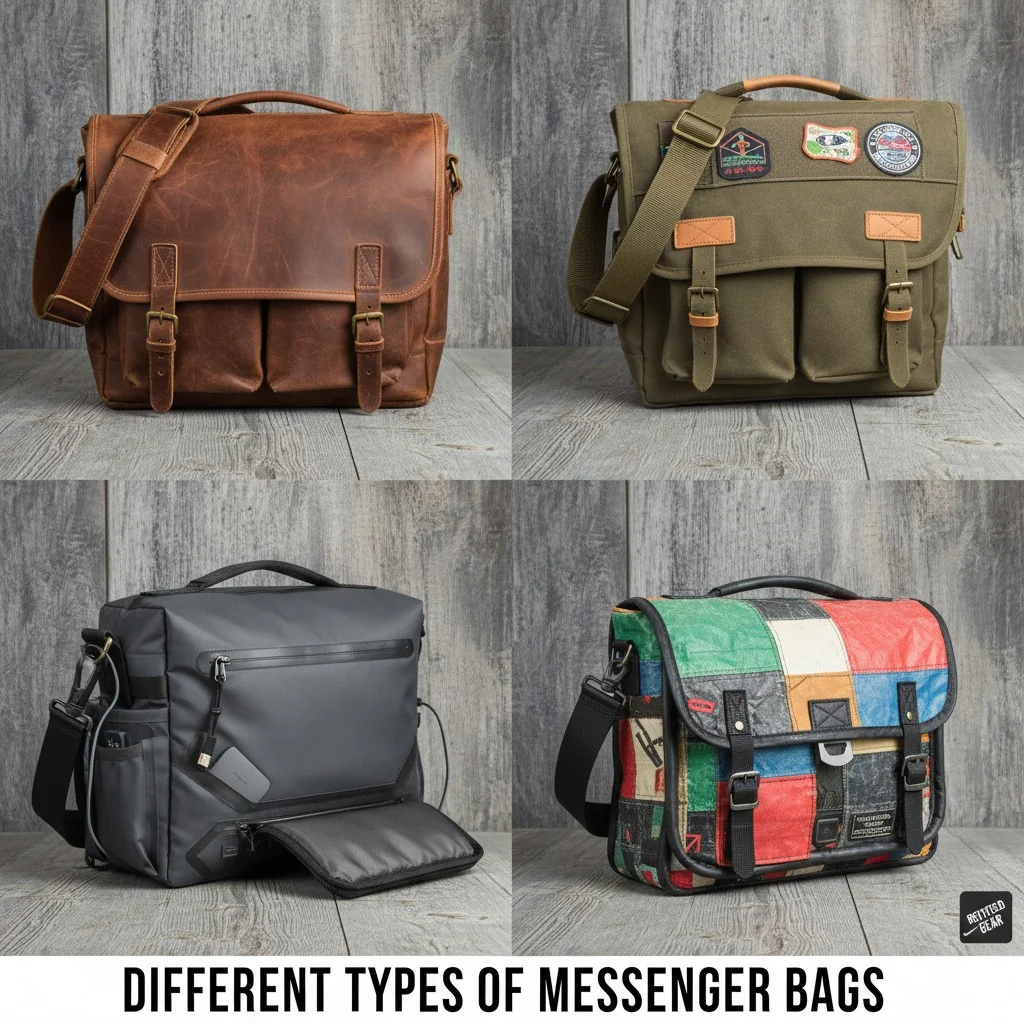
Messenger bags are often categorized by material and purpose. You’ll find professional leather bags, casual canvas versions, rugged waterproof bags for cyclists, and eco-friendly options made from recycled materials. Each type serves a different lifestyle and market segment.
Matching Material to Market
The material of a messenger bag says a lot about who it’s for. As a brand owner, this is one of your most important choices. It’s where fashion truly meets function.
The Professional Leather Messenger
A sleek messenger bag made from full-grain or vegan leather is perfect for the professional market. It has a minimalist, sophisticated look that pairs well with business attire. These bags often have a more structured shape and subtle hardware. They signal quality and are a great alternative to a traditional briefcase.
The Everyday Canvas Messenger
Canvas is a classic choice. It’s durable, lightweight, and has a relaxed, casual feel. This makes it ideal for students, artists, and anyone with a more laid-back style. Canvas also takes color well, so it offers a lot of room for creative branding and design.
The Sustainable Messenger
For a brand owner like Emily, who is keen on sustainability, this is a huge opportunity. Consumers are actively looking for eco-friendly products5. I’ve helped many partners source materials like RPET (made from recycled plastic bottles), organic cotton, and innovative plant-based leathers. Offering a sustainable messenger bag isn’t just good for the planet; it’s a powerful marketing story that can set your brand apart. It shows your customers you share their values.
[claim claim=”Canvas messenger bags are not durable.” istrue=”false” explanation=”Canvas, especially heavy-duty waxed canvas, is an extremely durable material known for its resistance to tearing and abrasion, which is why it was used in early messenger and military bags.”]
[claim claim=”RPET fabric is made from recycled plastic bottles.” istrue=”true” explanation=”RPET (Recycled Polyethylene Terephthalate) is a fabric made by melting down post-consumer plastic bottles and spinning the material into polyester fiber, reducing waste and energy consumption.”]
How Do You Wear a Messenger Bag Correctly?
An improperly worn bag can cause discomfort and look awkward. Teaching your customers how to wear it correctly adds value and improves their experience with your product.
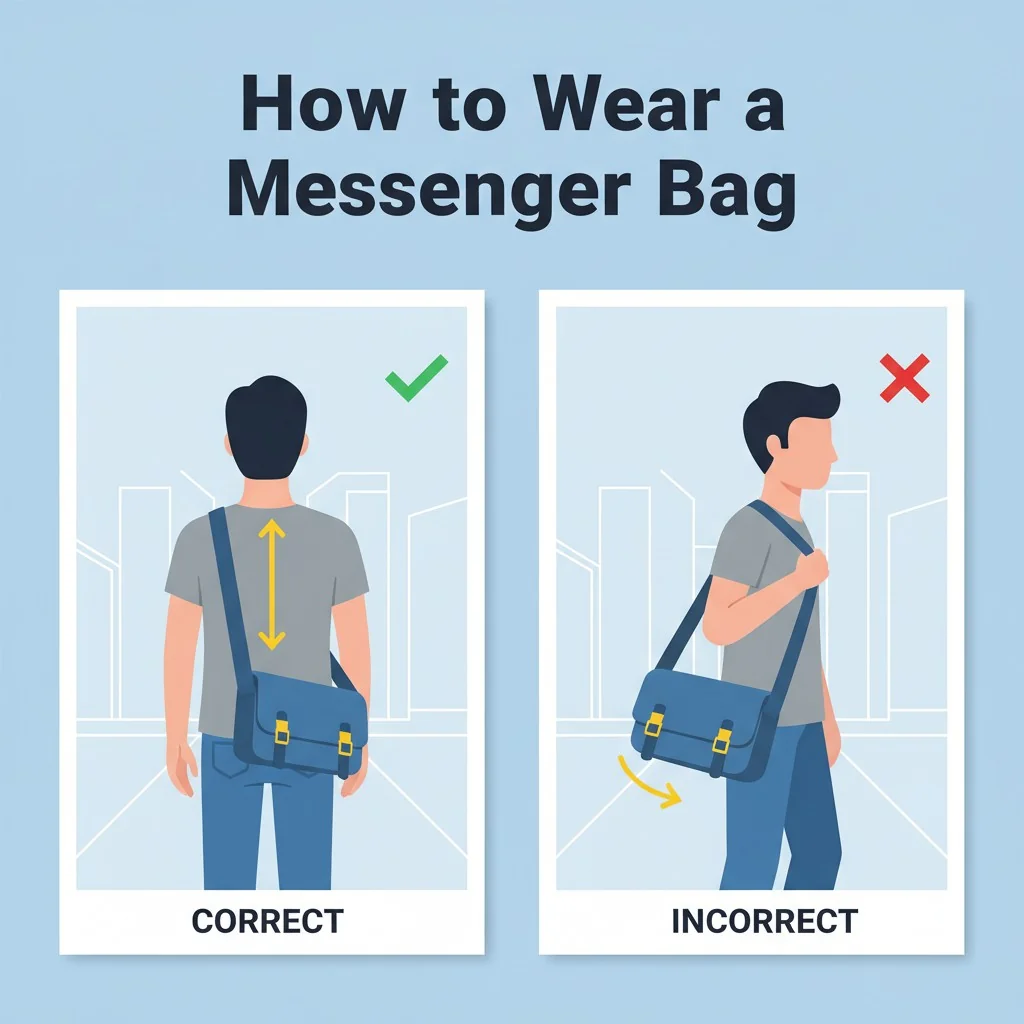
For the best comfort and security, wear the strap across your body so the bag rests on your lower back. This position distributes weight well and lets you easily swing the bag to your front for quick access.
The Classic Cross-Body Method
The best way to wear a messenger bag is the way it was intended: with the strap across your chest. The bag itself should rest against your lower back. This keeps it stable and stops it from bouncing around when you walk. For cyclists or people who are more active, the bag can be worn higher up on the back for a snugger, more secure fit. The beauty of this style is that you can grab the strap and swing the bag around to your front to access your things without ever taking it off. This is its key functional advantage.
Adjusting for the Perfect Fit
The secret to comfort is in the strap adjustment. The bag shouldn’t hang too low; a good rule of thumb is that the top of the bag should be around your waist or hip level. If it’s too low, it will swing and be clumsy. If it’s too high, it can be uncomfortable and hard to access. I always advise brands to use high-quality, smooth strap adjusters. It’s a small detail that makes a big difference in daily use. While some people carry it on one shoulder like a tote, this is best for very light loads over short distances, as it can cause shoulder strain.
[claim claim=”Wearing a heavy messenger bag on one shoulder can lead to muscle imbalance.” istrue=”true” explanation=”Consistently carrying a heavy load on one shoulder forces the muscles on that side to work harder, which can lead to posture problems, muscle strain, and pain over time.”]
[claim claim=”Messenger bags should always be worn very loosely.” istrue=”false” explanation=”A messenger bag should be worn snugly enough that it doesn’t swing or bounce while you walk, but loose enough that you can easily pull it to the front of your body.”]
Messenger Bag vs. Backpack: Which Should You Choose?
Your customers often face this choice: messenger or backpack? Understanding the pros and cons of each helps you position your products effectively and guide their purchasing decisions.
Choose a messenger bag for superior style, quick access in crowded areas, and lighter loads. A backpack is better for carrying heavy items, long commutes, and for anyone who prioritizes ergonomic comfort over fast access.
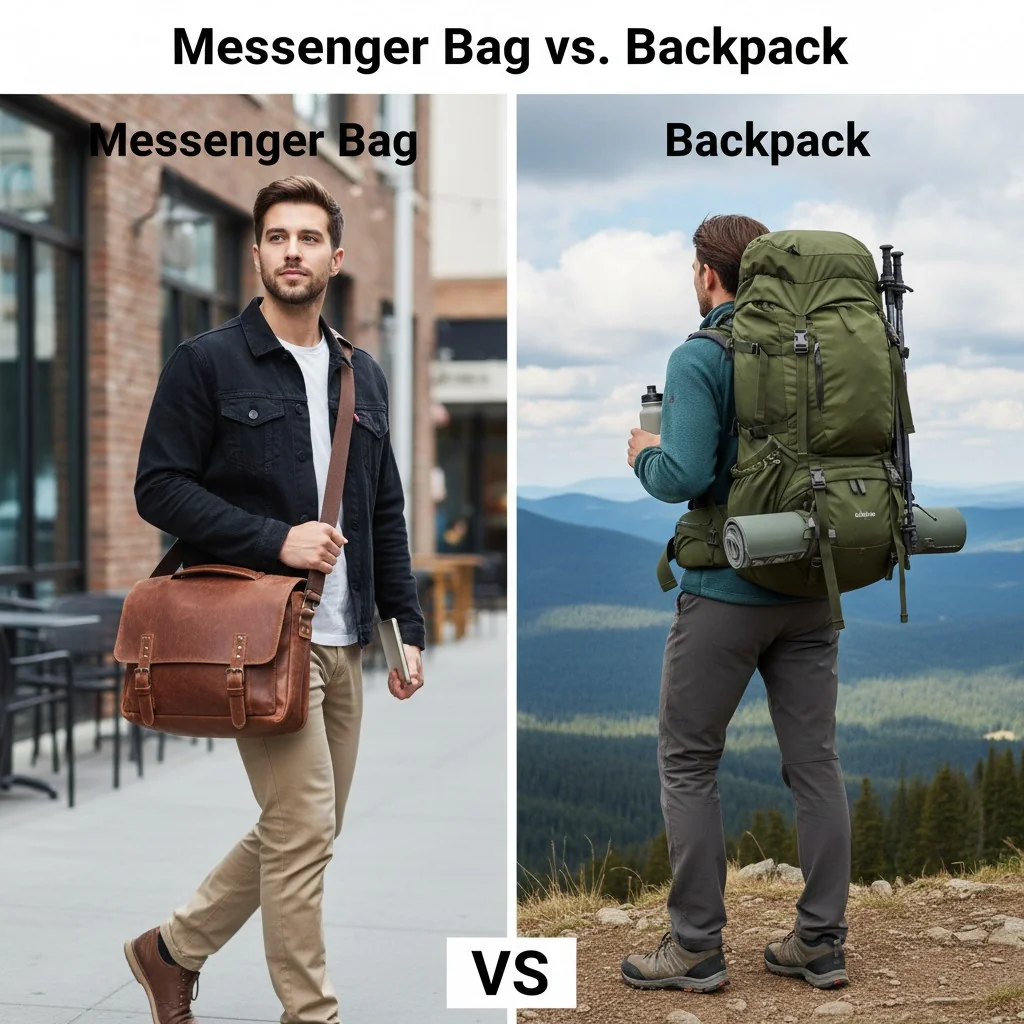
A Battle of Access vs. Comfort
In my experience, the choice between a messenger bag and a backpack comes down to a simple trade-off: quick access versus ergonomic comfort. A messenger bag is the clear winner for access. On a crowded train or in a busy cafe, you can get your laptop or wallet out in seconds. This makes it the champion for urban commuters. It also tends to have a slimmer profile and looks more professional or stylish in many settings compared to a bulky backpack.
A backpack, however, is unbeatable for comfort, especially with heavy loads. It distributes weight evenly across two shoulders, which is much better for your back over long periods. If your customer is a student carrying heavy textbooks or someone who walks a long way to work, a backpack is often the more practical choice. As a brand, you don’t have to pick a side. Many successful brands, like the ones I partner with, offer both. The key is to market each one to the right audience and use case.
| Feature | Messenger Bag | Backpack |
|---|---|---|
| Access | Excellent (swing to front) | Poor (must be removed) |
| Comfort | Good for light loads | Excellent for heavy loads |
| Capacity | Moderate | High |
| Style | Often seen as more professional/stylish | Generally more casual |
[claim claim=”Backpacks are a relatively new invention compared to messenger bags.” istrue=”false” explanation=”While the modern messenger bag gained popularity in the 20th century, backpacks have ancient origins, with early forms used for thousands of years to carry heavy loads over long distances.”]
[claim claim=”Messenger bags are better for navigating crowded spaces.” istrue=”true” explanation=”The slim profile and ability to keep the bag in front of the body make messenger bags less likely to bump into people or get snagged in a crowd compared to a backpack.”]
How Do You Choose the Right Messenger Bag for Your Needs?
Sourcing the perfect bag for your brand can feel overwhelming. A clear checklist helps you focus on the details that will make your product a bestseller.
When choosing a messenger bag for your brand, first define your target customer. Then, select materials, features, and a price point that align with their needs. Focus on quality construction6, as durability is a key selling point.
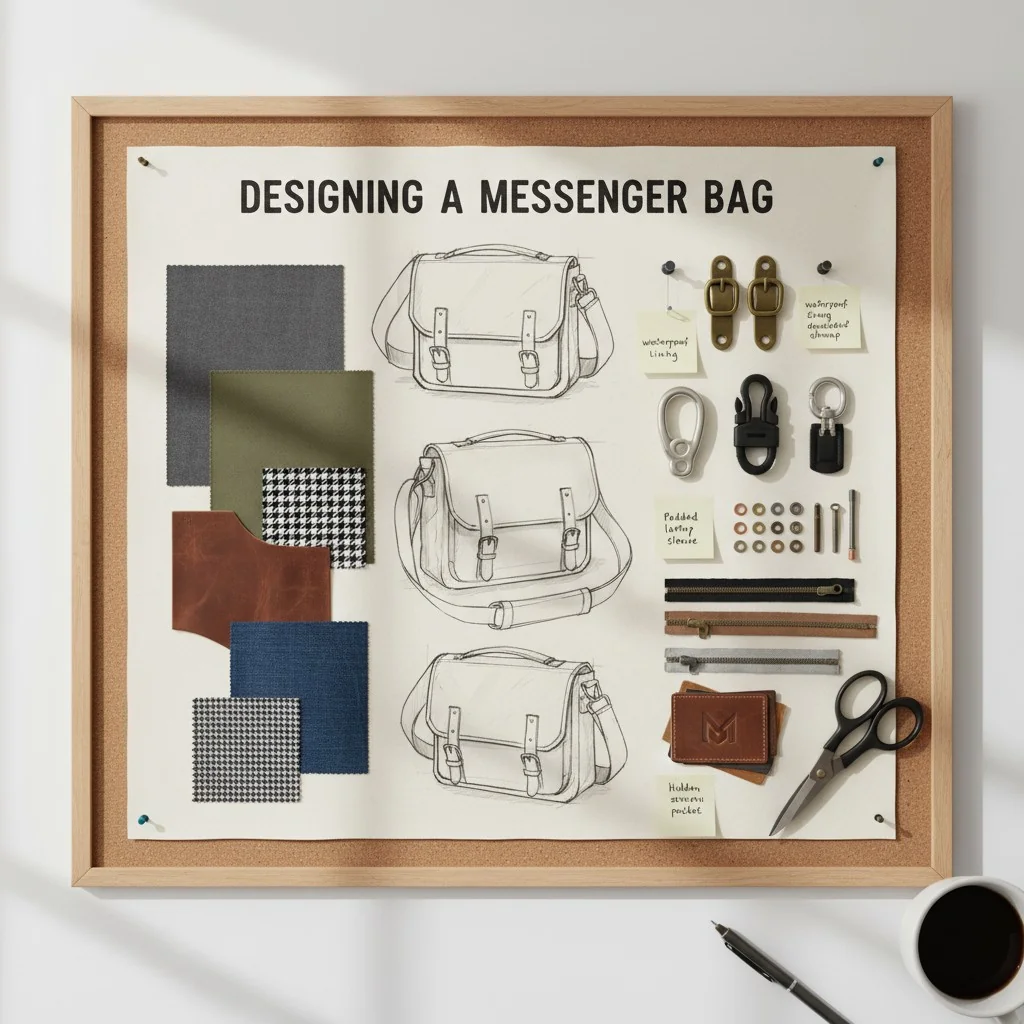
A Guide for Brand Owners
For a brand owner like Emily, choosing the right messenger bag to manufacture is a strategic decision. It’s not just about finding a bag; it’s about creating a product that fits your brand and resonates with your customers. Here is the process I walk my partners through.
Step 1: Define Your Customer
Who are you selling to? A college student needs a durable, affordable canvas bag with room for a laptop and books. A corporate professional needs a sleek leather bag that looks sharp in a boardroom. A cyclist needs a waterproof bag with reflective details. Be specific.
Step 2: Select Materials with Purpose
Your material choice should reflect your customer and your brand’s price point. Leather or high-quality vegan leather says "premium." Canvas or nylon says "casual and durable." Using sustainable materials7 like RPET says "eco-conscious." This choice is a core part of your brand’s story.
Step 3: Focus on Quality Construction
This is non-negotiable. I always tell my clients to check the stitching, especially at stress points like where the strap connects to the bag. Look for reinforced stitching. Test the zippers and feel the hardware. Quality hardware not only lasts longer but also gives the bag a premium feel. This is where a good manufacturing partner makes all the difference.
[claim claim=”The quality of a bag’s zipper is not important.” istrue=”false” explanation=”Zippers are one of the most frequently used components of a bag and a common point of failure. High-quality zippers from brands like YKK ensure durability and smooth operation.”]
[claim claim=”Reinforced stitching at stress points significantly increases a bag’s lifespan.” istrue=”true” explanation=”Adding extra stitches, like bar tacks, at points where straps and handles are attached to the bag’s body prevents tearing and dramatically improves the bag’s overall durability.”]
Why Are Messenger Bags Still Relevant Today?
In a market full of trends, you might wonder if the messenger bag is still a safe bet. Its ability to constantly adapt keeps it a modern essential.
Messenger bags stay relevant by blending timeless style with modern needs8. They have evolved to include tech-friendly features and sustainable materials, securing their place as a practical and fashionable choice for urban living and professional settings.
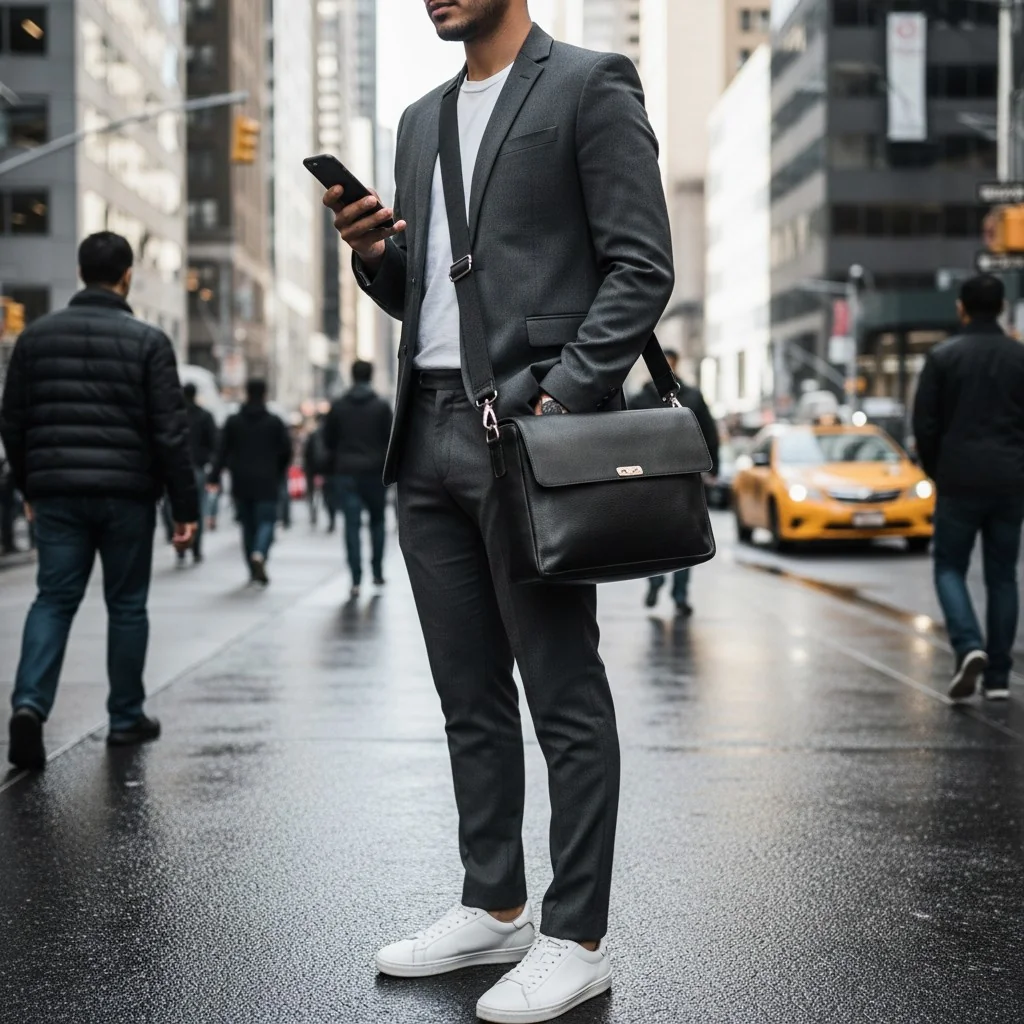
Evolving for the Modern Consumer
The messenger bag has survived for so long because it changes with the times. It’s a perfect example of how a classic design can adapt to new needs. When I first started in this industry, messenger bags were simple and rugged. Now, they are so much more.
The biggest evolution has been for technology. Almost every messenger bag I help design now has a padded compartment for a laptop or tablet. This is a direct response to how we live and work today. The rise of digital nomads and flexible work schedules has made a tech-friendly bag essential.
Another key factor is the growing demand for sustainability. Consumers want to know where their products come from. By offering messenger bags made from recycled or eco-friendly materials, brands can connect with a powerful and growing market segment. The messenger bag’s simple form is a perfect canvas for these new, innovative materials. It holds a strong niche because it perfectly balances style, quick access, and adaptability, making it a smart choice for any modern bag brand.
[claim claim=”The demand for sustainable and eco-friendly bags is decreasing.” istrue=”false” explanation=”Market research consistently shows a growing consumer demand for sustainable products, with many willing to pay more for items made from recycled materials or by brands with ethical practices.”]
[claim claim=”The messenger bag’s design is well-suited for integrating tech-specific features.” istrue=”true” explanation=”The wide, rectangular shape of a messenger bag is ideal for adding padded sleeves for laptops and tablets, while the flap provides protection for sensitive electronics.”]
Conclusion
The messenger bag is more than just an accessory; it’s a versatile tool. Understanding its features and evolution helps you create a product that truly serves modern consumers.
References
-
Learn about the essential features urban commuters need in a messenger bag for their daily travels. ↩
-
Understand why durability and function are key selling points for messenger bags in today’s market. ↩
-
Learn how quick-access pockets improve convenience and usability in messenger bags. ↩
-
Discover how padded laptop sleeves enhance the protection of your devices in messenger bags. ↩
-
Find out how eco-friendly products are influencing consumer choices and brand strategies in the bag market. ↩
-
Discover how quality construction impacts the longevity and performance of messenger bags. ↩
-
Explore the innovative sustainable materials that are shaping the future of messenger bags. ↩
-
Learn about the adaptations of messenger bags to fit the lifestyle and demands of today’s consumers. ↩






