


Most buyers come to us with a size in mind, not a use case. That single gap has caused more failed samples than any other mistake we see.
A mini backpack is used for daily carry, short travel, and light outdoor or lifestyle use. It typically holds 15–20 liters and measures 30–40 cm in height. The specific use case — not just the size — determines the right fabric, structure, and hardware for the bag.
We have been manufacturing bags in Fujian, China for over 11 years. In that time, we have worked through a lot of sampling rounds for mini backpacks with overseas brands, importers, and private-label sellers.
The pattern we see most often: a buyer treats a mini backpack as a generic "small bag," submits a loose brief, and gets a sample back that doesn’t work for their actual product. This article breaks down the real use cases for a mini backpack and what each one means for your sourcing spec.
Is a Mini Backpack Good for Daily Use?
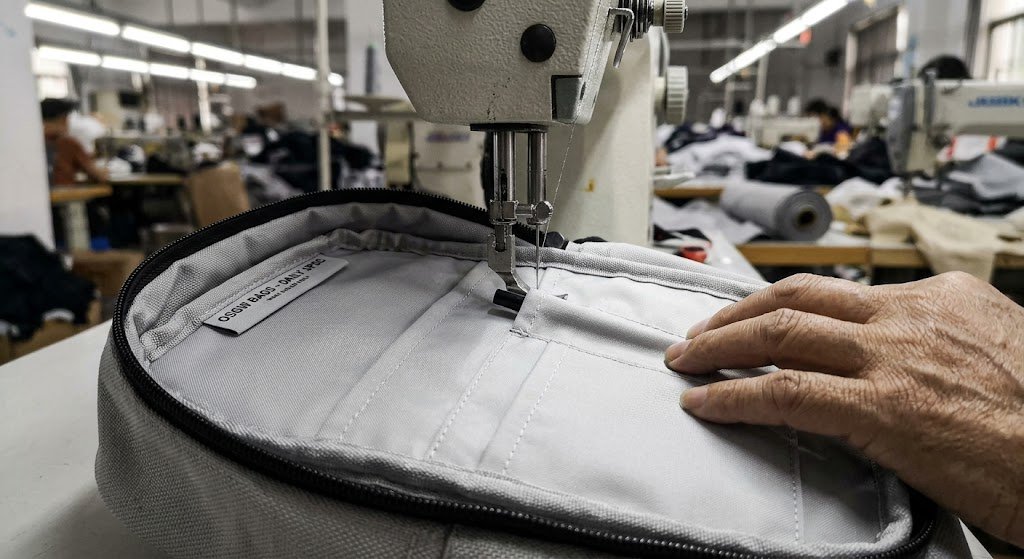
Most people picture a daily-carry bag when they hear "mini backpack" — but daily use isn’t one requirement, it’s a cluster of small structural decisions that add up fast.
For daily use, a mini backpack needs a lightly padded back panel, organized interior pockets, and a fabric that holds its shape through repeated wear. These are not premium features — they are the baseline for a functional daily-carry product.
Daily-use mini backpacks are the most common type we produce for wholesale and private-label buyers, carried to work, school, or around the city for a few hours at a time. If you’re still narrowing down dimensions for your own SKU, our guide on what size backpack is best for daily use covers the sizing logic in more detail.
What Structure Does a Daily-Carry Mini Need?
- Back panel: a foam-padded panel with a basic mesh layer — flat, unpadded panels look fine in photos but feel unfinished to the end user
- Interior layout: at minimum, one front slip pocket + one interior divider or key clip
- What to avoid: a single open main compartment — it reads as an unfinished build to most buyers’ end customers
- Cost impact: none of the above adds meaningful cost over a bare-bones build
What Material Works Best for Daily Carry?
| Material | Weight | Durability | Best For |
|---|---|---|---|
| 600D Polyester | Light | Moderate | Value-tier daily, promo giveaways |
| 900D Oxford | Medium | Good | Mid-tier daily, school bags |
| Canvas | Medium | Moderate | Lifestyle / fashion positioning |
- 600D polyester is the default for value and mid-value daily-use minis — light, printable, holds up to normal wear
- 900D Oxford steps up hand feel and abrasion resistance for a slightly more premium daily-carry position, without a large cost jump
- Canvas is chosen for look, not structural performance — it belongs on lifestyle-positioned SKUs, not heavy-use ones
See our full 600D vs 900D polyester comparison for a deeper breakdown of hand feel, cost, and print quality.
Can You Use a Mini Backpack for Travel?
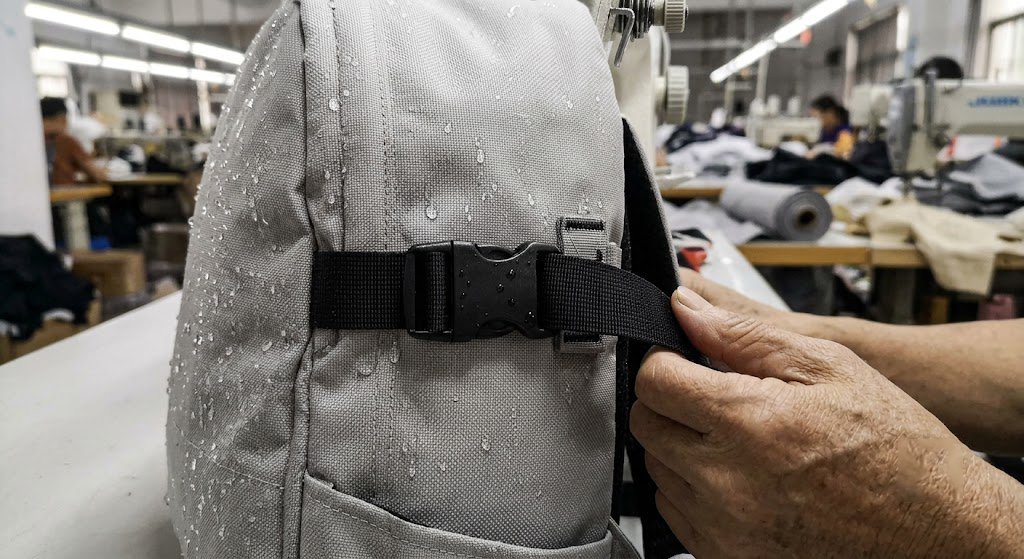
Short-answer: yes, but only if the bag is built for it. A mini backpack designed for travel has a different spec than one designed for daily carry, even if the silhouette looks identical from the outside.
A mini backpack for travel should include water-resistant fabric, compression or grab straps, and reinforced stress points at the strap attachments. These features handle transit conditions — overhead bins, airport floors, weather — that a daily-use mini isn’t built for.
Travel puts different stress on a bag than daily carry: it gets tossed, compressed, and exposed to weather. On a mini, those forces concentrate into a much smaller panel area than on a full-size travel pack, which is why a daily-carry spec can’t simply be relabeled "for travel.
Travel Mini Backpack Spec Comparison
| Feature | Daily-Use Mini | Travel Mini |
|---|---|---|
| Back Panel | Light foam pad | Padded + structured |
| Fabric Finish | Uncoated or light coating | PU-coated or DWR treated |
| Strap Attachment | Standard bartack | Reinforced bartack + webbing backing |
| Compression Straps | Rarely needed | Recommended |
| Side Handles | Optional | Useful for overhead bin grab |
What Makes a Travel Mini Different at the Structure Level?
- Strap attachment: if bartacking and webbing anchors aren’t reinforced, the attachment point can fail earlier than on a full-size pack under the same relative load — this is one of the most common structural errors we catch in early sampling. We test against the sewn-seam strength benchmarks in ASTM D1683/D1683M, the standard method for evaluating failure in sewn seams of woven fabrics.
- Fabric finish: 600D plain polyester with no coating isn’t adequate for travel; we move buyers to a 600D or 900D polyester with a PU or DWR coating, verified against the AATCC 22 water repellency spray test.
- Compression straps: a small addition that lets the bag’s profile tighten when partially full — useful when moving through a busy transit space.
Factory Secret: When we get a "travel mini" tech pack, the first thing we check is whether the strap bartack call-out was copied from a daily-carry spec. If it wasn’t upgraded, we flag it before cutting — it’s the single most common reason travel-mini samples fail strap-pull testing.
Is a Mini Backpack Harder to Manufacture Than a Full-Size Pack?
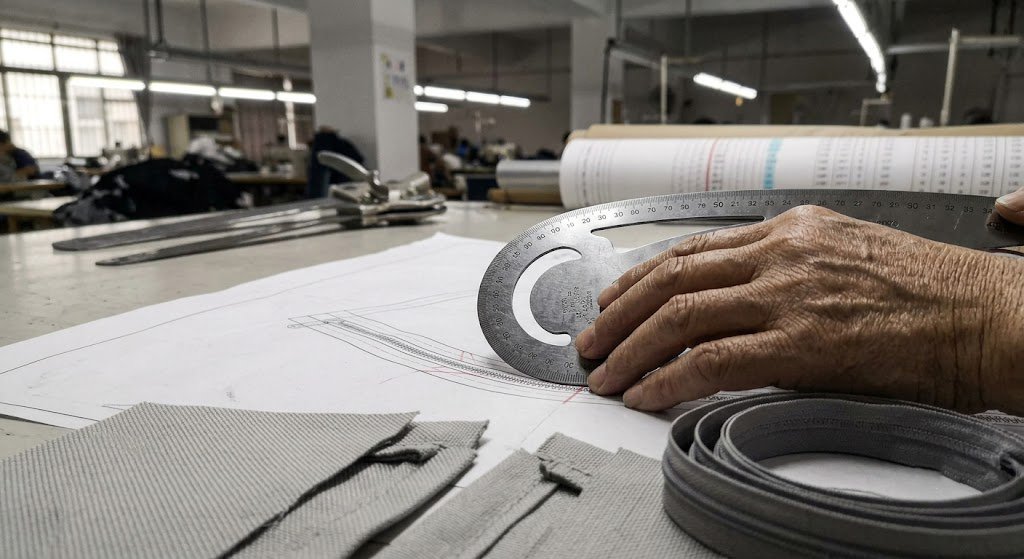
This question comes up often, and most buyers assume the answer is no. Smaller bag, simpler build. That assumption leads to undercosted sampling budgets and surprised buyers.
Mini backpacks are not simpler to manufacture than full-size packs. The reduced dimensions create tighter tolerances on zipper radius, strap attachment zones, and pocket depth — all of which require precise pattern work and experienced sewing.
In our production floor, sampling errors actually come up more often on mini backpacks than on standard full-size packs. We see it most when a buyer hands us a tech pack that’s simply a scaled-down version of a larger bag’s pattern — the functional requirements stay the same, but the frame they have to fit into shrinks, and the margin for error shrinks right along with it.
Three Manufacturing Challenges Specific to Mini Backpacks
- Zipper radius tolerance — the main zipper on a mini often runs a tighter curve than on a larger bag. If the tape isn’t cut and sewn to that curve correctly, you get puckering, drag, or early wear at the curve point. This needs a pattern maker experienced with smaller radii, not a straight scale-down.
- Strap attachment on a compressed frame — the shoulder-strap attachment zone is physically smaller, so load-bearing stitching and webbing backing must be placed carefully to avoid weak points. This is usually the first issue we flag when a tech pack is a scaled-down full-size template.
- Usable pocket depth — buyers often list the same pocket configuration as a full-size bag (front zip, side mesh, interior organizer) without adjusting for reduced body depth. Built to spec as given, the pockets are technically present but nearly unusable. Depth minimums need to be recalculated per pocket type for mini proportions.
What This Means for Your Sampling Brief
| Risk Area | What Goes Wrong | What to Specify Instead |
|---|---|---|
| Zipper path | Puckering, early wear | Specify curved-path zipper allowance |
| Strap attachment | Premature delamination or tearing | Request reinforced bartack call-out in tech pack |
| Pocket layout | Unusable shallow pockets | Define minimum pocket depth per compartment |
| Scale-down template | Wrong proportions overall | Start from a mini-specific base pattern |
If you’re submitting a tech pack for a mini backpack, build it specifically for mini dimensions — don’t derive it from a full-size template with the measurements reduced.
Not sure if your tech pack is mini-ready? Send us your spec and we’ll flag the zipper, strap, and pocket-depth issues before they turn into a failed sample. Get a free tech pack review →
What Size Is a Mini Backpack, Really?
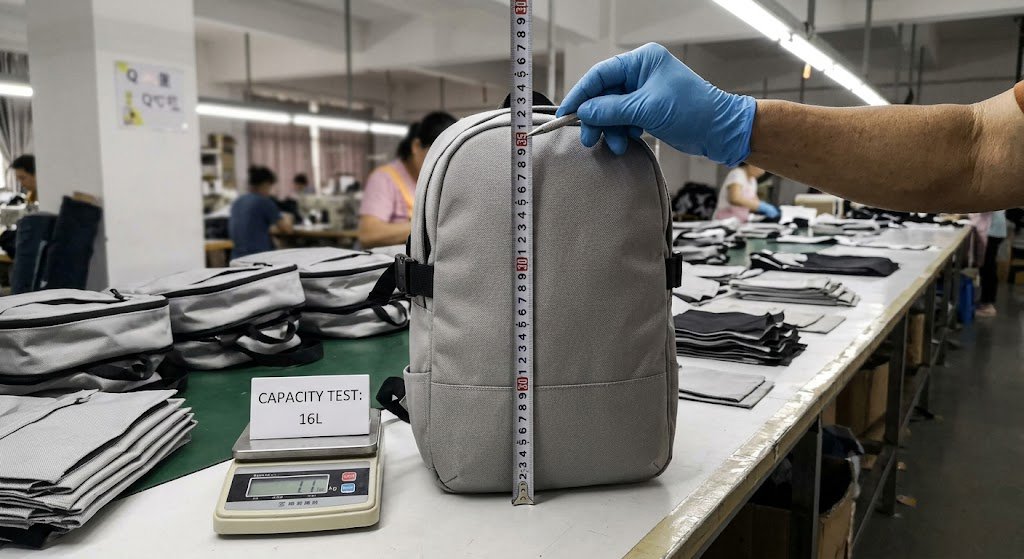
The term "mini backpack" is used loosely in product listings, and that creates real planning problems for B2B buyers setting up new SKUs or writing Amazon listings.
Mini backpacks generally fall in the 15–20 liter capacity range, with a height of approximately 30–40 cm. These are widely referenced benchmarks, not rigid industry standards — actual dimensions vary by brand and end-use category.
The term "mini backpack" gets used loosely in product listings, which creates real planning problems at the SKU-setup stage. A buyer calls something a "mini backpack" internally, but when we ask for dimensions, the bag they actually mean is either a standard daypack (closer to 20–25L) or a micro bag (under 10L) — both real products, but not what most end users search for under "mini backpack."
Mini Backpack Size Reference Table
| Label | Approximate Capacity | Approximate Height | Common Use |
|---|---|---|---|
| Micro bag | Under 10L | Under 25 cm | Fashion / minimalist carry |
| Mini backpack | 15–20L | 30–40 cm | Daily use, light travel, school |
| Small daypack | 20–25L | 40–45 cm | Full-day carry, commute |
How Size Affects Use Case Positioning
- 15L sits at the small end of the range — best for fashion/lifestyle positioning: a few essentials, a water bottle, a light jacket. Not the choice for a full workday or multi-stop travel day.
- 18–20L is the more functional end — fits a 13" laptop in many configurations, holds a change of clothes for a day trip, and works for a short travel day without feeling cramped. Most of our clients targeting general daily-carry or light-travel audiences land here.
Factory Secret: We never quote a "mini backpack" off the label alone. Every quote request gets an L × W × H confirmation first — it’s the fastest way to catch a daypack-sized brief before it turns into an oversized sample.
These ranges are reference values based on common market positioning, not a formal industry standard. For sourcing purposes, always define your dimensions directly rather than relying on a size label.
What Should You Take Away Before You Brief a Factory?
A mini backpack’s use case — daily carry, travel, or lifestyle — drives every spec decision: material, structure, pocket layout, and hardware. Getting the use case right before you brief a factory is the only way to avoid wasted sampling rounds.
- Define the use case first, size second — "mini" alone doesn’t tell a factory what to build
- Match fabric to use case, not just budget — 600D for value daily, 900D for mid-tier, coated fabric for travel
- Specify strap and zipper details for mini proportions — don’t scale down a full-size tech pack
- Confirm target-market certifications (CPSIA, REACH) before fabric and hardware are locked
Ready to Build Your Own Mini Backpack?
We’ll turn your use case — daily, travel, or lifestyle — into a mini-specific spec sheet before any fabric is cut, so your first sample is built right the first time.
Tell us the use case, target market, and rough MOQ, and we’ll come back with a fabric, structure, and pricing recommendation matched to it — not a generic quote copied from a full-size backpack template.
Request a Custom Mini Backpack Quote →
Free spec consultation · No design fee for standard customization · Response within 24 hours







