Updated September 2026 | Reviewed from a backpack manufacturing perspective
A mold fee is a charge for creating a custom production tool used to make a particular component or shape. In bag manufacturing, it may cover tooling for a logo patch, zipper puller, buckle or shaped EVA panel. It is usually separate from the bag’s unit price and sample fee.
“Mould fee” is the British-English spelling of the same term. Suppliers may also use “mold charge” or the broader term “tooling fee.” Ask what physical tool and work the charge includes.
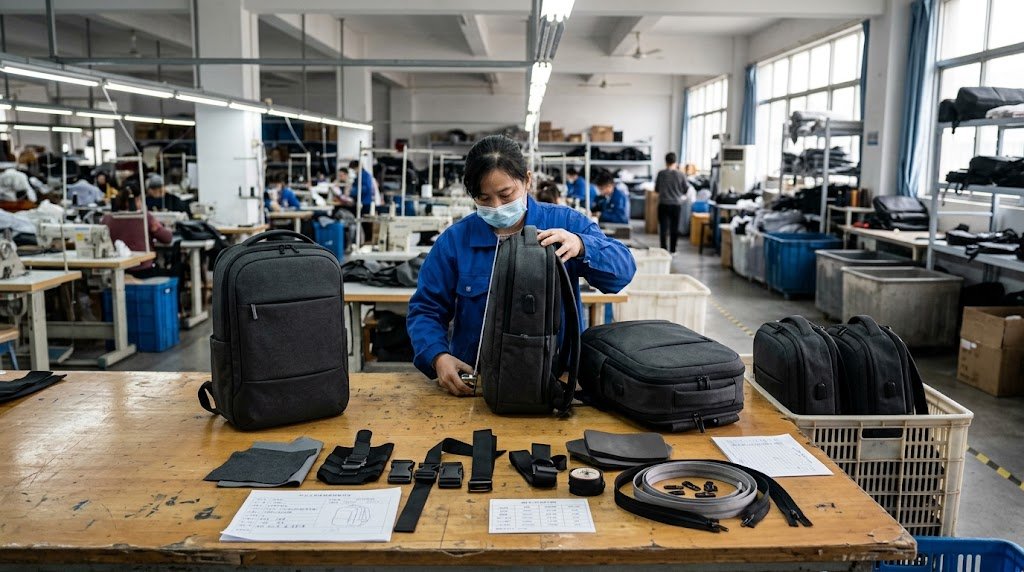
Not every custom bag needs a new mold. A sewn backpack or duffel can have custom dimensions, pockets, fabric combinations and branding while using existing hardware. New tooling becomes relevant when a selected feature cannot be made with the available tools and processes.
Which Bag Parts Actually Require a Custom Mold Fee?
You do not always have to pay. Knowing what actually needs tooling saves you serious cash.
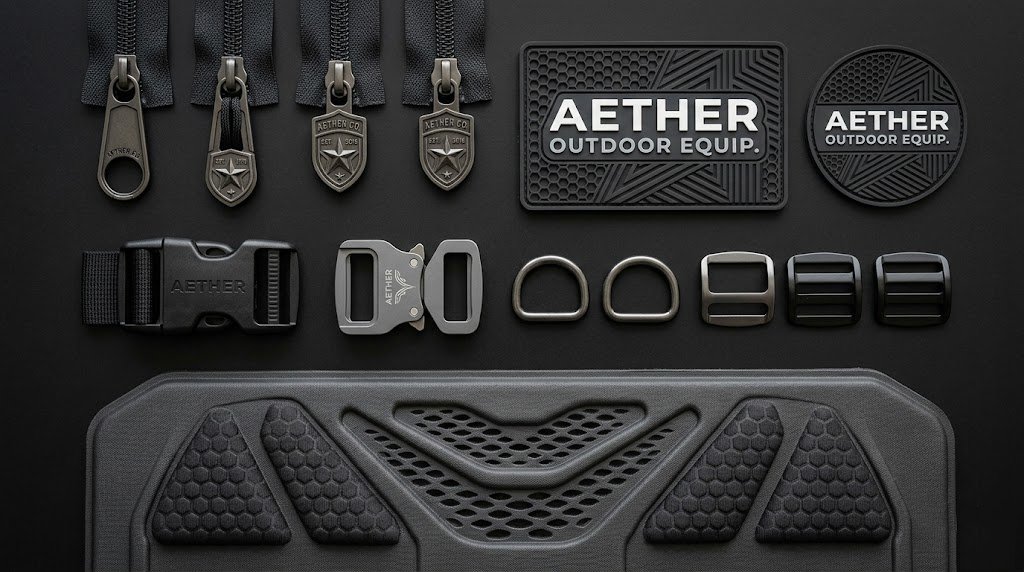
You must pay a custom mold fee for any non-standard component that cannot be sourced from existing open markets. This includes branded zipper pullers,custom-shaped buckles, injected rubber logo patches, 3D thermoformed EVA back panels.Standard webbing, basic zippers, and generic metal buckles never require any upfront mold fees.
What Hardware Needs Die-Casting Molds?
Zinc alloy hardware featuring your logo or a totally unique structural shape requires custom die-casting. This includes bespoke pullers and snap hooks.
- Branded zipper pullers
- Custom shape D-rings or snap hooks
- 3D embossed metal logo plates
What Soft Parts Need Forming or Molding Tools?
| Component | When tooling may be needed | What to confirm |
|---|---|---|
| PVC or silicone logo patch | A custom outline or raised/recessed design | Finished size, thickness, detail, material and attachment method |
| Plastic buckle or clasp | A new component geometry | Mating parts, webbing fit, material and functional requirements |
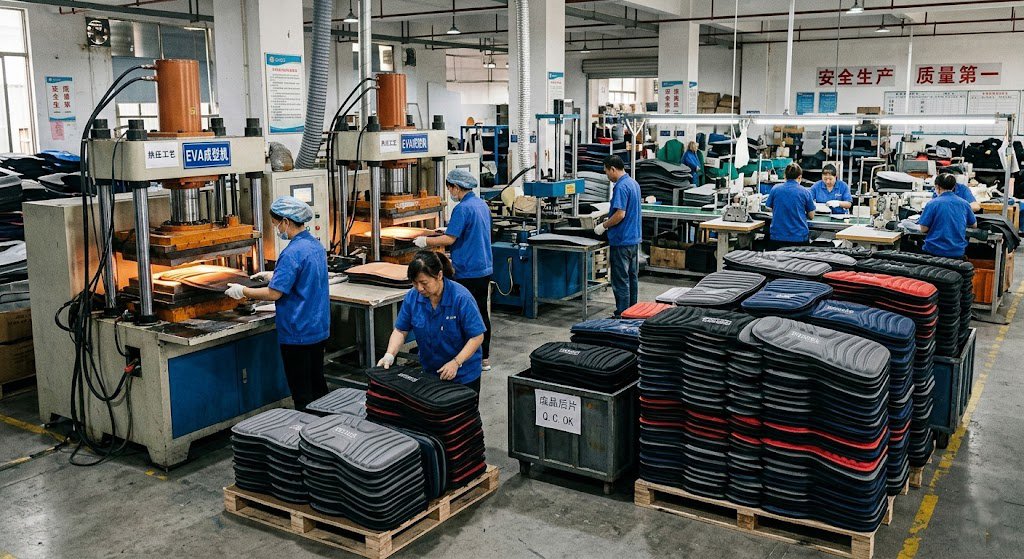
| Shaped EVA back panel | A formed three-dimensional profile | Panel dimensions, foam specification, fabric covering and fit with the bag |
| Molded or formed shell | A custom rigid shape | Material, forming process, mating components and trimming requirements |
PVC and silicone patches are not necessarily made by the same process. The supplier should identify the proposed method rather than describing every soft logo as an injection-molded part.
Ask for existing components or tooling options first. Check that the size, function and appearance meet the brief, and whether their use is shared or exclusive.
Is a Mold Fee the Same as a Sample or Setup Fee?
| Quotation item | What it pays for |
|---|---|
| Mold or die fee | A physical tool for molding, forming, stamping or another specified operation |
| Sample fee | Materials, labor and agreed development work for a sample bag |
| Printing setup fee | Preparation such as screens or plates, depending on the printing process |
| Embroidery digitizing fee | Preparing the stitch program for the artwork |
| Unit price | Producing each bag or component to the agreed specification |
A cutting die, printing screen and injection mold are different tools. Suppliers sometimes translate several setup charges as “mold fee,” so request an itemized explanation rather than judging the charge by its name alone.
For branding alternatives, see our guide to choosing a logo method for custom bags.
How Much Should You Really Pay for Bag Tooling?
There is no reliable standard price that covers a small logo tool, a custom buckle mold and a large formed panel. Compare quotations for the same component and tooling scope.
Tooling costs vary with part size, geometry, mold construction, cavity count and finish requirements. Protolabs’ injection-mold cost guide explains how complexity and additional features affect tooling work. Those principles help explain plastic-component quotations; they are not a price list for bag logos or EVA panels.
What Should a Hardware Tooling Quote Include?
Ask the supplier to identify:
- The component and drawing revision being quoted
- Whether the charge covers a complete tool, an insert or a modification
- Which mating parts or tool sets are included
- Trial parts and the scope of included corrections
- Tooling lead time and the separate component-production lead time
- The component unit price and minimum quantity
- Ownership, storage and repeat-order conditions
For example, a buckle may have two mating parts. Confirm whether the quotation covers both. A low fee for one tool is not directly comparable with a quotation covering the complete assembly.
Why Can EVA Panels and Shells Cost More?
Larger formed parts can require larger tools and additional work to achieve the intended profile and surface. Their fit with the rest of the bag also matters.
For an EVA back panel, confirm the finished shape and its relationship to the backpack before authorizing the tool. Changes to the panel footprint or attachment arrangement can affect both tooling and sewing patterns.
Avoid comparing these projects by tooling price alone. Include trial parts, fit checks and the work needed to reach an approved component.
How Does Order Quantity Affect the Cost per Bag?
A fixed tooling charge can be spread across the quantity using that tool:
Tooling allocation per bag = tooling fee ÷ number of bags using the tooling.
For illustration only, assume one tool costs $300, remains usable and supports the same component specification:
| Bags using the tool | Tooling allocation per bag |
|---|---|
| 500 | $0.60 |
| 1,000 | $0.30 |
| 2,000 | $0.15 |
These are arithmetic examples, not Osgoodway quotations. They exclude component production, maintenance and any later tooling changes. Allocating the fee across more bags does not mean the supplier refunds it.
When Exactly Do You Pay the Mold Fee During Production?
Payment is commonly requested before the supplier starts the agreed tooling work. The timing depends on what the sample must demonstrate and on the quotation’s payment milestones.
A practical sequence is:
- Review the bag design and identify which components need tooling.
- Confirm the component artwork or drawing, size, material and attachment.
- Approve the tooling scope, cost and payment terms.
- Make trial components and check their appearance, dimensions and function.
- Confirm their fit on the bag before approving bulk production.
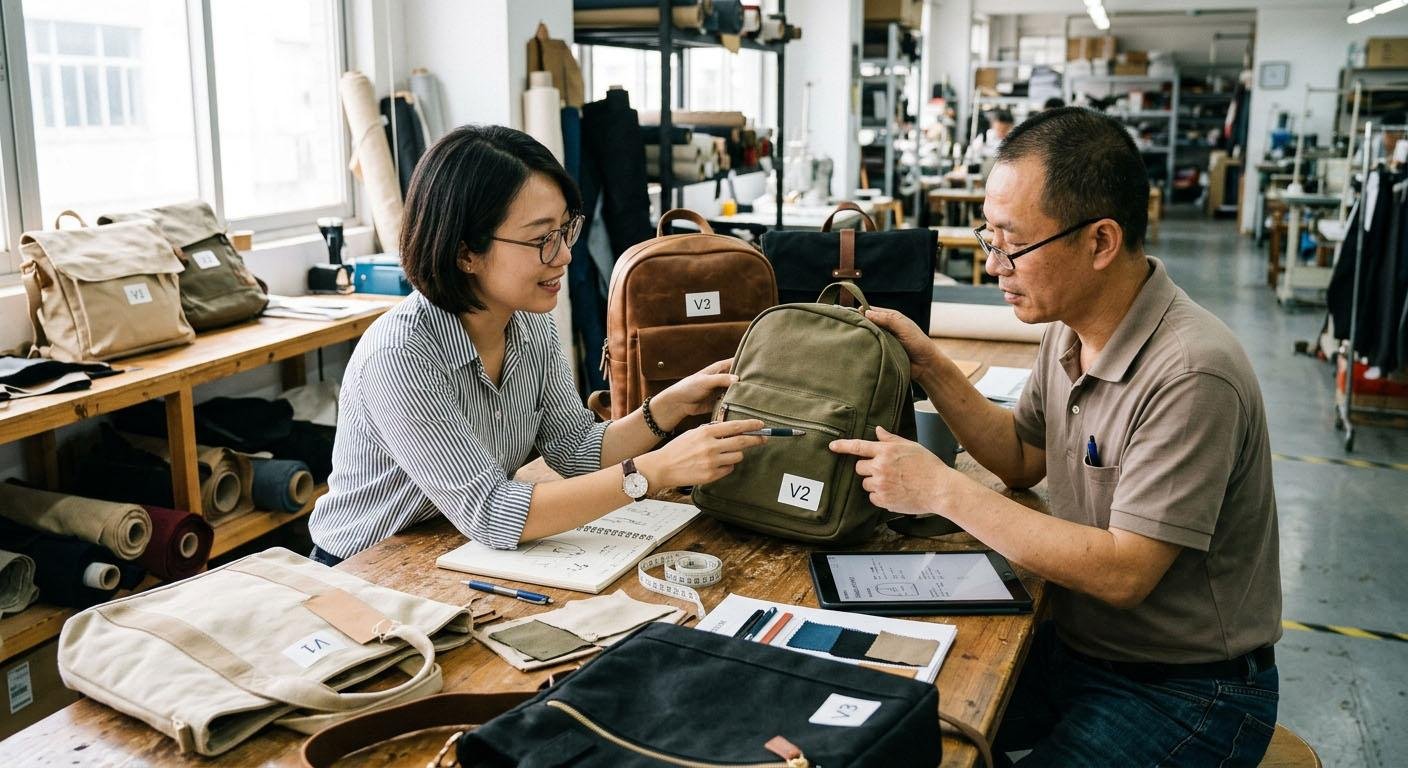
A first bag sample may use stock hardware to check its size, compartments and construction before custom hardware is made. That can avoid committing to a tool while the bag design is still changing.
However, a stock or mock-up part does not validate the final custom component. The production version still needs approval. Prototype tooling and production tooling can also be separate stages, so not every tooling charge must occur before the first bag sample.
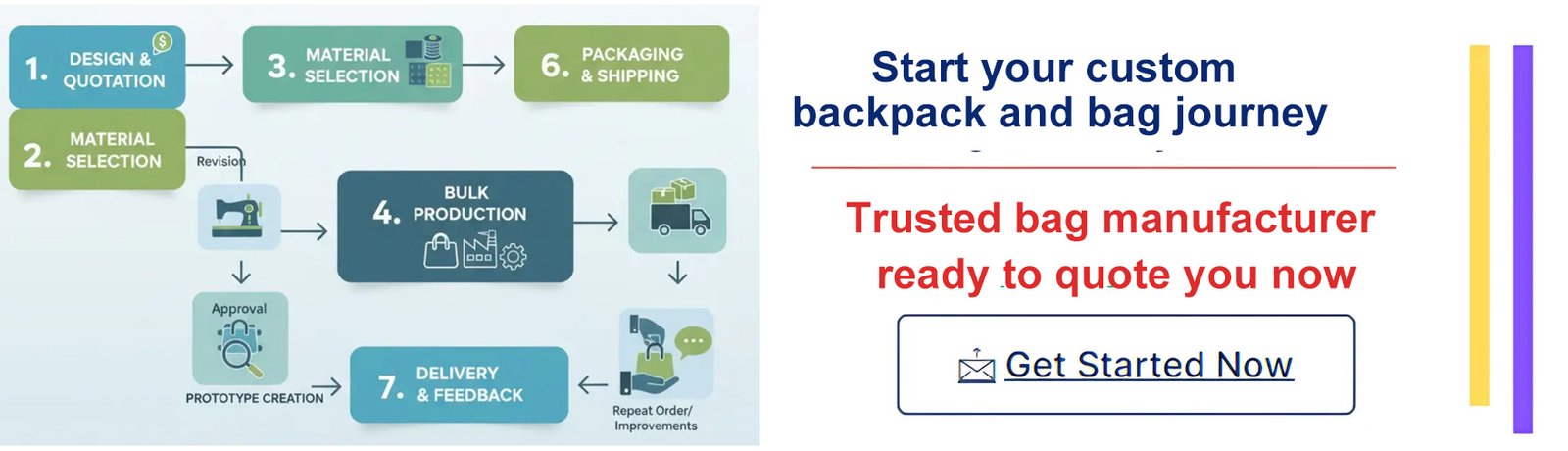
For brands planning a custom bag project, understanding tooling requirements is only one part of the process. Our OEM & ODM bag manufacturing services cover product development, sampling and bulk production planning.
Can You Ask for a Mold Fee Refund?
Yes, you can ask whether a refund or order credit is available. It is a negotiated commercial term, not an automatic entitlement at a standard MOQ.
If a credit is offered, confirm the eligible product, quantity threshold, deadline and whether multiple orders can count toward it. State when and how the credit is applied.
Keep sample-fee refunds separate from tooling-fee refunds. A promise to refund sampling does not establish that custom hardware tooling is also refundable.
What Happens If You Cancel the Order After Tooling Starts?
Ask for the cancellation terms before authorizing work. The amount payable or refundable may depend on the work completed and the agreement.
Also confirm what happens to completed tools, trial parts and approved files. Cancellation, physical tool ownership and the right to use a design are separate matters.
Do You Own the Mold After Paying the Factory?
Do not assume that paying an invoice automatically settles every ownership and usage question. Record the arrangement in writing.
Commercial tooling models differ. For example, Protolabs describes different ownership and maintenance arrangements across its molding service options. Your bag-component supplier’s terms need to be checked separately.
| Issue | What to clarify before payment |
|---|---|
| Physical ownership | Who owns the tool, and when ownership takes effect |
| Location | Whether it is held by the bag factory or a component subcontractor |
| Permitted use | Whether it may be used for other buyers |
| Identification | Tool reference, component revision and supporting records |
| Maintenance | Responsibility for normal wear, damage and replacement |
| Storage | Retention period, charges and notice before disposal |
| Transfer | Release conditions, documentation and transport arrangements |
Paying for a tool and receiving exclusive design rights are not interchangeable concepts. If exclusivity matters, state which component, artwork or design the restriction covers.
What Happens If You Move Production to Another Factory?
Confirm release arrangements and technical compatibility before relying on a future transfer. The receiving supplier may need different equipment, mounting arrangements or process settings.
A transferred tool may require inspection, trials or adaptation before it can produce acceptable parts. Obtain a feasibility assessment rather than assuming it will be ready to use on arrival.
How Can You Avoid or Reduce Bag Mold Fees?
At Osgoodway, you do not need custom tooling for every feature. Spend on a unique component when it contributes enough to the product’s function or identity to justify the cost.
You can eliminate mold fees by sourcing open-market hardware, utilizing laser engraving instead of die-casting, and standardizing custom parts across your entire bag collection.
How Do Existing Parts and Laser Engraving Save Money?
Existing buckles, zipper pullers and logo-plate blanks can avoid the need for a new component mold. Where suitable, engraving a stock blank can add branding without creating a custom cast shape.
However, avoiding a new mold does not mean all customization is free. Artwork preparation, engraving, finishing, printing setup or minimum component quantities may still affect the quotation.
Ask for two options: the preferred custom component and a suitable existing alternative. Compare appearance, function, unit price and lead time as well as the initial tooling charge.
How Does Component Standardization Reduce Mold Fees?
Using one approved component across several bag styles can reduce the number of separate tools needed.
| Production strategy | Potential tooling implication |
|---|---|
| Three styles with three different custom pullers | Separate tooling may be required for each design |
| Three styles sharing one compatible custom puller | One approved design may serve the collection |
Confirm compatibility first. Puller attachment, grip, dimensions and intended use must work across the selected styles.
Standardization can also simplify reordering, but it does not remove component MOQs or guarantee the same tool will remain serviceable indefinitely.
Deep FAQ: Factory Floor Truths About Mold Fees
1. If the mold breaks during production, do I pay again?
Absolutely not. If we’re running your order and the mold cracks, that’s on us. A reputable factory maintains the mold for its "lifespan" (usually 2-5 years). If you haven’t ordered in 3 years, we might scrap it to save warehouse space, so keep your production active.
2. Why did my factory charge me a mold fee for a basic silk-screen print?
That’s not a mold fee; that’s a screen setup fee (usually $30-$50). If they called it a "mold fee," they are either using a poor English translation or trying to inflate the invoice. Call them out on it.
3. Do I have to pay a new mold fee if I just want to change the color of my rubber patch?
A: No! The physical aluminum cavity is exactly the same. We just inject a different Pantone color silicone into it. There is zero extra tooling cost.
4. Why do I have to pay the mold fee before seeing a sample?
Textbooks say it’s to "secure the contract." The reality? We physically cannot make your custom zipper puller without first cutting the steel mold. If you reject the sample, the factory eats the cost of the steel block. We won’t take that risk.
5. Will minor design tweaks require a completely new mold fee?
Usually, yes. Molds are made by removing metal, not adding it. If you want a logo slightly larger, we have to mill an entirely new steel block. Get your tech pack 100% locked before approving tooling.
Final Verdict
Confirm what tool is being made, why it is needed, what the price includes and how it will be handled on repeat orders. A separate tooling charge can be reasonable, but its scope should be clear enough to compare and approve.
For a planned custom bag order, send Osgoodway your bag specifications and component references, including artwork or drawings, dimensions, materials, quantity per color, target FOB price and delivery requirement. These details help assess whether the project needs new tooling or can use existing components.