


I’m writing this while sitting in our sample room, surrounded by 200+ different bag prototypes and the smell of fresh PU-coated Cordura1. I’ve seen countless brands fail because they marketed a light-duty bookbag as a rucksack, only to face massive return rates when the shoulder straps snapped under real load.
A rucksack is a durable, high-volume, heavy-duty backpack, often featuring a top-loading design2 secured with a drawstring and a flap cover, made of rugged materials, and built for hiking or military use.
Here is the no-nonsense breakdown of what a rucksack actually is, from the guy who builds them.
What Is the Technical Definition of A Rucksack?
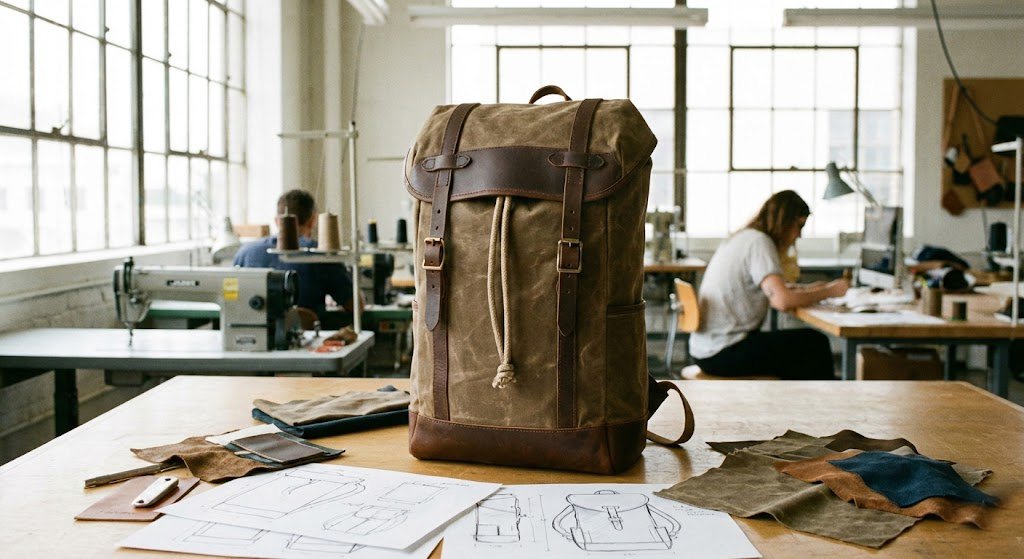
A rucksack is a large-volume, rugged pack distinguished by a top-loading "chimney" main compartment secured with a drawstring and a flap cover, rather than a zipper.
This isn’t just semantics; it’s structural integrity. We construct rucksacks using a cylindrical pattern that allows you to overstuff the bag vertically. The lack of a main zipper means there is no mechanical point of failure when the bag is under extreme tension.
Factory Reality: In our lab testing, a standard #10 coil zipper can blow out at roughly 280 lbs of outward pressure. A properly reinforced eyelet-and-cord lock system on a rucksack withstands over 500 lbs before the fabric itself rips.
rucksack features vs. standard backpacks
- Access: Top-entry only (sometimes with side zip access) vs. Clamshell/Panel.
- Closure: Drawstring & Buckle vs. Zipper slider.
- Pockets: Sewn-on exterior tunnels vs. Flush internal dividers.
- Purpose: Long-haul/Field Operations vs. Commute/Organization.
Action: If you are designing for "survival" or heavy hauling, delete the main zipper from your spec sheet. Go top-loading.
What Is the Technical Difference Between A Rucksack and A Backpack?
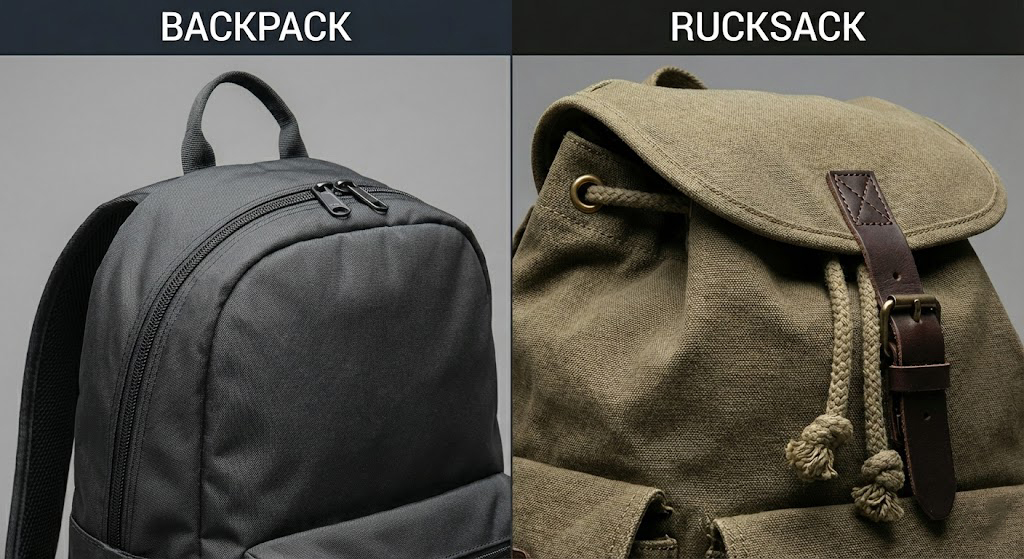
Most brands use the terms interchangeably for SEO. But structurally, they are different beasts.
Rucksacks rely on tension straps and gravity for closure, creating a "bucket" effect, while backpacks rely on mechanical teeth (zippers) to hold the bag’s shape and contents.
Is it a rucksack or just a fancy daypack?
| Feature | Standard Backpack | Professional Rucksack |
|---|---|---|
| Access | Front/Panel Zipper | Top-Loading / Cinch |
| Closure | Zippers (Subject to failure) | Drawstring + Buckled Flap3 |
| Weight Distribution | Shoulders only (usually) | Internal Frame + Hip Belt |
| Durability | 300D – 600D Polyester | 500D – 1000D Nylon/Cordura |
Why is the top-loading design superior?
Top-loading designs allow users to "overstuff" the pack vertically without stressing a zipper track. This maximizes volume efficiency for bulky, irregular gear.
- Variable Capacity: The extension collar (snow skirt) lets you add 10L of volume instantly when needed.
- Compression Power: You can stomp gear down and cinch it tight to prevent load shifting, which would burst a zipper.
- Field Repairability: If a buckle breaks, you can tie the flap shut; if a main zipper breaks, the bag is useless.
Action: If your client is in the tactical or outdoor niche, always spec for a rucksack. The lack of a main zipper means fewer returns for "blown-out" seams.
Deep read: Rucksack vs Backpack: The Real Difference Explained by a Manufacturer
Why Does the "Flap and Cinch" Closure Eefine A Real Rucksack?
For most commuters, a zipper is easy. But for a pro, a zipper is a liability.
A rucksack’s flap is a structural rain shield. By using a drawstring under a heavy-duty lid, you create a tiered defense against water and debris that a simple zipper track can never match.
Why we ditched the "cheap" plastic toggles?
We found that standard ABS plastic toggles shatter at -10°C, so we switched to nylon-reinforced hardware for all our B2B rucksack orders.
- Waterproofing: The flap overhangs the body by at least 2 inches to shed rain.
- Volume Expansion: You can "overstuff" a cinch-top; you can’t overstuff a zipper without breaking it.
- Ease of Repair: A snapped buckle is fixed in seconds; a broken zipper means the bag is trash.
How do we test flap security?
We load the pack with 25kg and perform a "drop test" from 1.5 meters, 50 times. If the flap shifts or the cinch loosens more than 1cm, the design fails.
Why Do We Use Drawstrings Instead of Zippers?
Drawstrings are used because they are field-repairable and virtually fail-proof in dirty environments (sand, mud, snow). If a cord snaps, you tie a knot. If a zipper coil busts, the bag is dead.
From a manufacturing standpoint, zippers are the single most expensive component to replace and the #1 reason for warranty returns. A rucksack uses a simple "cinch" mechanism. Sand kills zippers; it does nothing to a paracord drawstring4.
Data from our Returns Dept:
- Tactical Bags with Main Zippers: 1.8% Return Rate (Zipper failure).
- Top-Load Rucksacks (Drawstring): 0.2% Return Rate (Stitching failure).
*Why drawstrings win in the field?
- Silence: No "zzzzzip" noise in hunting/tactical scenarios.
- Compression: You can crank a drawstring tighter than a zipper allows.
- Longevity: A nylon cord lasts 10+ years; a zipper slider wears out in 3.
What Materials Make A "Real" Rucksack?
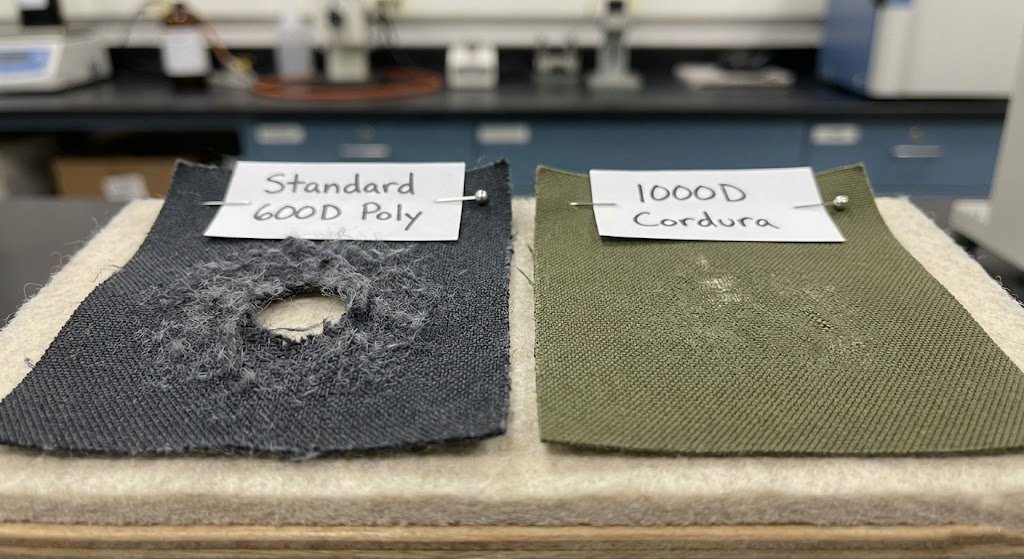
1000D Cordura Nylon or heavy-weight Waxed Canvas5 (18oz+) are the industry gold standards. These fabrics provide the abrasion resistance and tensile strength required for true rucking.
We don’t use standard polyester here. Under the friction of "rucking" (walking with weight), cheap polyester melts or pills. A true rucksack needs fabric that can be dragged across concrete.
Lab test tesults (taber abrasion):
- 1000D Cordura: ~3,000 cycles to failure.
- Waxed Canvas: ~1,500 cycles (but develops patina).
- 600D Polyester (Standard Backpack): ~800 cycles to failure.
Which specific fabric should you choose?
- Tactical (Best Performance): 500D or 1000D Nylon. High strength-to-weight ratio with a Polyurethane (PU) back coating6.
- Vintage/Heritage (Best Aesthetics): Waxed Cotton Canvas. Extremely heavy, naturally water-resistant, develops a patina, but expensive.
- Budget (Avoid): 600D Polyester/Oxford. Fine for promotional giveaways, absolutely useless for serious rucking or field use.
Action: If you want the "Vintage Rucksack" look with canvas, expect the sample to weigh 30% more. Warn your logistics team about the shipping weight increase.

Is A Rucksack Actually Better for Your Back?
Yes, for loads over 30 lbs. Rucksacks typically sit higher on the back and utilize a rigid frame sheet or hip belt to transfer weight from the shoulders to the hips and legs.
It’s simple physics. Standard backpacks hang off your shoulders (traps). A proper rucksack, especially those designed for the sport of "Rucking," locks the weight high and tight against the spine.
The "Rucking" Trend:
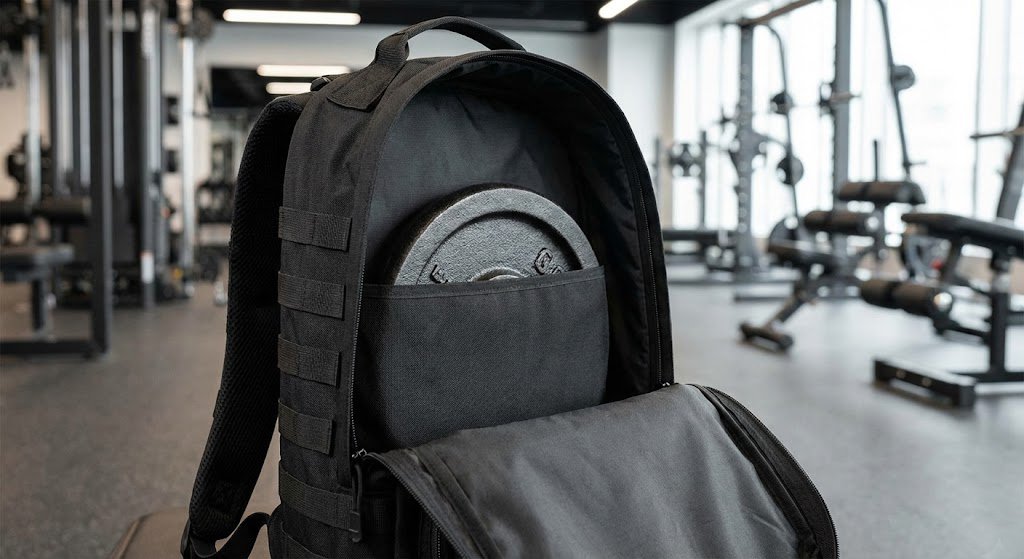
We are seeing a 200% increase in orders for bags with "plate carriers" (sleeves for weight plates). This is a specific type of rucksack designed for fitness, as seen in the image below showing a weight plate in a dedicated compartment in a gym setting.
What makes a rucksack ergonomic for heavy loads?
Proper rucksacks utilize a rigid frame sheet and hip belt to mechanically transfer 60-80% of the payload weight from the weaker shoulders to the stronger legs.
- Load Lifters: Straps at the top of the harness that pull the weight in at a 45-degree angle, preventing the bag from peeling you backward.
- Dual-Density Foam: We use firm Closed-Cell foam (EVA) that doesn’t collapse under pressure, unlike the soft sponge foam in cheap backpacks.
- Sternum Straps: Critical for pulling shoulder straps inward to prevent them from cutting off circulation to the axillary nerves in your armpits.
How does the suspension differ from a daypack?
While daypacks rely on soft back panels that collapse under weight, rucksacks use internal HDPE sheets or aluminum stays to lock the load high against the spine.
| Feature | Standard Daypack | Proper Rucksack |
|---|---|---|
| Back Panel | Soft Mesh / Open Cell Foam | Rigid HDPE Plastic Sheet |
| Weight Limit | Max 15-20 lbs | 50+ lbs (Comfortably) |
| Strap Foam | Single Layer (Collapses) | Dual Density (Resists Crush) |
| Hip Belt | Webbing Only (Stability) | Padded/Conical (Weight Transfer) |
What Are the "Red Flags" in Rucksack Manufacturing?
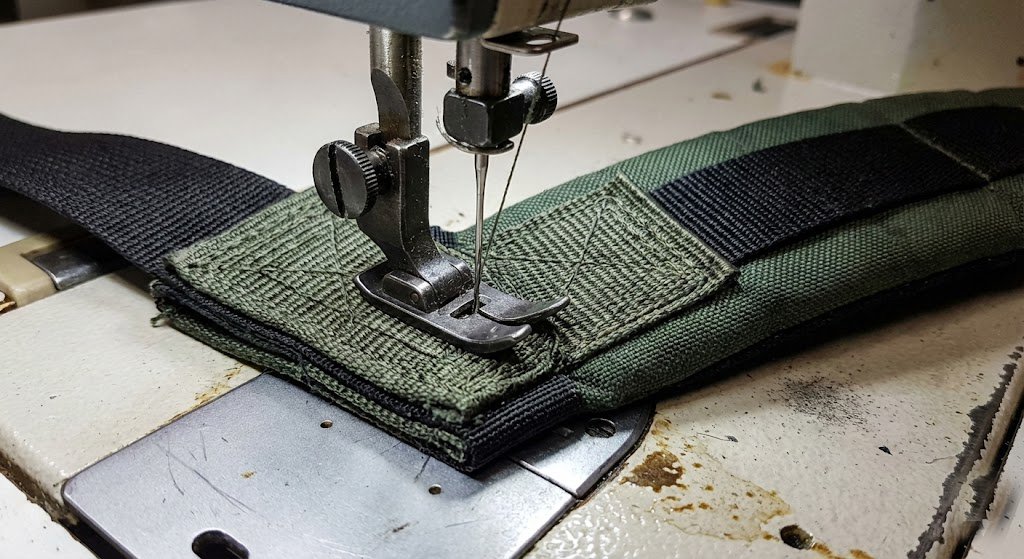
The biggest red flag is "Single-Stitching" at the load-bearing points of the shoulder straps. In our factory, we use a "Box-X" stitch7 reinforced with 210D nylon bonded thread to ensure the strap never rips out.
If you see a factory using standard cotton thread on a rucksack, run. Cotton rots. Nylon lasts. We’ve seen "military-style" bags from competitors fall apart because they used cheap T-27 thread instead of the heavy-duty T-70.
How to spot a "fake" rucksack?
- The "Pseudo-Flap": It has a flap but uses a zipper underneath. That’s a backpack in a costume.
- Thin Webbing: If the shoulder webbing is under 1.5mm thick, it will slip through the buckles.
- No Bar-tacks: Look for those tiny, dense zig-zag stitches at stress points. If they aren’t there, the bag will fail.
Actionable Tip: Pull the shoulder strap as hard as you can. If you see the stitch holes enlarging, the stitch density is too low or the thread is too thin.
**FAQ: The Stuff Clients Always Ask Me
1. Can I use a Rucksack for daily commuting?
You can, but you’ll hate it. Rucksacks are "black holes." To get the laptop charger at the bottom, you have to dump everything else out. For office use, get a panel-loading backpack.
2. Why is it called a "Rucksack"?
It’s German. Rücken means "Back" and Sack means "Bag." It was the standard term for military packs in WWII. We still use the term to imply "Military Grade" or "Vintage Style" in marketing.
3. Are Rucksacks 100% waterproof?
No bag with seams is 100% waterproof unless it’s RF-welded TPU. But a rucksack with a storm flap is significantly more "weather-resistant" than a zipped bag. Rain hits the flap and slides off; it doesn’t soak into the zipper teeth.
4. What is the difference between a Knapsack and a Rucksack?
"Knapsack" is an archaic word, usually referring to smaller, canvas, non-framed bags from the early 20th century. In the industry, we rarely use "Knapsack" unless we are making a retro hipster product.
5. Why are Rucksacks often more expensive?
Labor and parts. A rucksack has a lid, buckles, drawstrings, usually a frame, and more complex "Box-X" stitching. A backpack is basically two panels and a zipper. More parts = more sewing time = higher FOB.
6. Is a Rucksack only for the military?
No. That’s 1990s thinking. In 2026, the "Tactical Urban" trend is massive. It’s for anyone who hates buying a new bag every two years.
7. Is a rucksack better than a backpack?
"Better" is for amateurs. It’s about application. For a 15-inch laptop and a latte, get a backpack. For carrying 40lbs of gear through a forest or a 2-week B2B supply chain haul, the rucksack wins on durability and ergonomics every time.
Bottom Line
If you want convenience and organization, buy a Backpack.
If you want durability, volume, and the ability to carry heavy loads without failure, buy a Rucksack.
Ready to build a rucksack that doesn’t fall apart?
Stop guessing on specs. If you’re looking for a manufacturing partner who knows the difference between a "fashion bag" and a "workhorse," reach out. Let’s look at your tech pack together.
Would you like me to review your current bag specifications or provide a quote for a custom rucksack prototype?CONTACT OSGOODWAY TODAY!

References
-
Learn why polyurethane coatings are essential for rugged, water-resistant outdoor fabric performance.. ↩
-
Learn how top-loading designs enhance accessibility and functionality in backpacks. ↩
-
Discover popular rucksacks with a drawstring and a flap cover. ↩
-
Details the high tensile strength and history of Type III nylon parachute cord. ↩
-
Explores the history and weather-resistant properties of paraffin-impregnated cotton fabrics. ↩
-
Describes how PU application creates a waterproof barrier on synthetic fabrics. ↩
-
Discovering the significance of Box-X stitching can help you identify quality rucksacks that won’t fail under pressure. ↩






