


Worried about your laptop and valuables getting stolen on the go? That fear can ruin a commute or a great trip. An anti-theft backpack1 offers a simple solution for peace of mind.
An anti-theft laptop backpack is a bag with built-in security features like lockable zippers2, slash-resistant fabric, and hidden pockets. Yes, they really work against opportunistic thieves in crowded places by making it much harder and slower to steal your things, encouraging them to move on.
As a bag manufacturer, I’ve seen countless brands like yours, Emily, looking for ways to offer customers real value and security. It’s not just about looks; it’s about function. But with so many "anti-theft" claims out there, it’s easy to get confused. What features actually matter, and which ones are just marketing fluff?
Let’s break it down together. I’ll walk you through what these bags are, how they work, and what you, as a brand owner, should focus on. This will help you design and source products that your customers will trust and love.
[claim claim=”Most pickpocketing incidents are crimes of opportunity.” istrue=”true” explanation=”Police departments and travel safety experts consistently report that pickpockets look for easy, quick targets and are deterred by any added difficulty or time.”]
[claim claim=”All anti-theft bags are completely slash-proof.” istrue=”false” explanation=”Most anti-theft bags use slash-resistant materials, which can deter a quick cut from a knife, but they are not impervious to a determined effort with heavy-duty tools.”]
What Exactly Is an Anti-Theft Laptop Backpack?
You see the term "anti-theft" everywhere, but what does it mean? It’s confusing when every bag seems to have it. You risk choosing the wrong features for your customers. Let’s clarify what makes a backpack truly anti-theft.
An anti-theft laptop backpack is a tech bag that adds layers of physical security to a standard padded pack. Its goal is to slow down or stop opportunistic thieves. Key features include lockable zippers, slash-resistant body panels, hidden pockets3, and anchor straps to secure the bag.
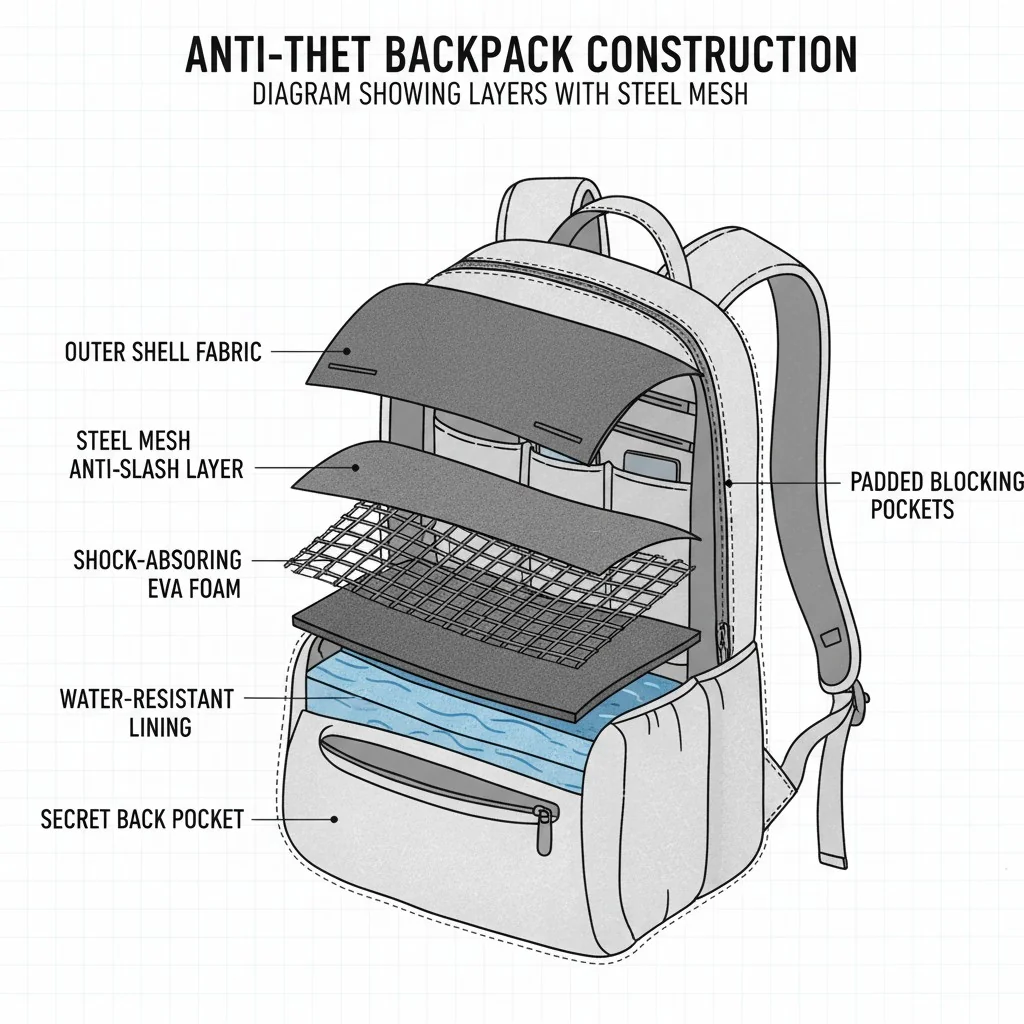
When I work with brand owners, I always emphasize that it’s about creating obstacles. A thief wants to be quick and unnoticed. If your bag makes that difficult, they’ll likely give up and look for an easier target. It’s not about making the bag an impenetrable safe, but about making it a much harder target than the bag on the person next to you. Let’s look at the core components.
Core Security Features
An anti-theft bag is a system of features working together. Here are the main ones you’ll encounter:
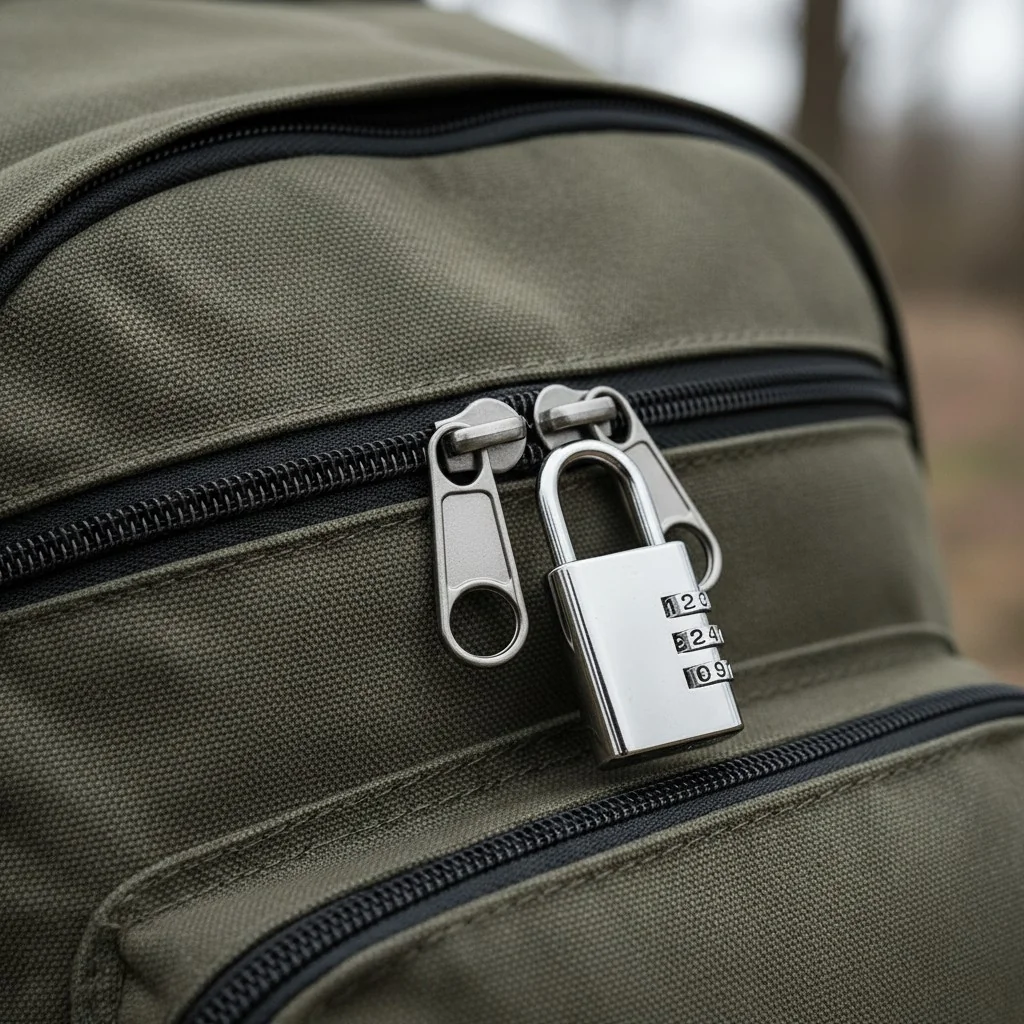
- Lockable Zippers: These have zipper pulls that can be locked together or to a fixed clip on the bag. This simple feature stops a thief from quickly unzipping a compartment in a crowd. Some even have self-locking mechanisms.
- slash-resistant materials4: The bag’s body and straps are often reinforced with a lightweight steel mesh (like Pacsafe’s eXomesh) or high-density, cut-proof fabric. This prevents a "slash-and-grab" attack where a thief cuts the bag or strap to get what’s inside.
- Hidden Pockets: These are pockets placed in non-obvious locations, most commonly on the back panel against your body. They are perfect for storing a passport, wallet, or phone, keeping them completely out of sight and reach.
- anchor straps5: This is often a detachable strap or a built-in steel cable that lets you lock your bag to a fixed object, like a table leg or a chair. It’s designed to prevent someone from grabbing your entire bag when you set it down for a moment.
[claim claim=”Anti-theft bags are a 21st-century invention.” istrue=”false” explanation=”While modern features are new, the concept of secure bags has existed for centuries. Travelers have long used money belts and reinforced pouches to protect valuables.”]
[claim claim=”The primary goal of anti-theft features is deterrence.” istrue=”true” explanation=”Security experts agree that visible and functional security measures make a target less attractive to opportunistic criminals, who prefer to act quickly and without complications.”]
Do Anti-Theft Backpacks Actually Prevent Theft?
You might be skeptical. Do these special features really stop a determined thief? It’s a valid concern, especially when you’re investing in a product line. You don’t want to sell a gimmick. The truth is, it depends on the type of theft.
Yes, anti-theft backpacks are highly effective against quick, low-effort theft. Police guidance often highlights that pickpockets rely on distraction and speed in crowded areas. Features that add time and hassle, like locked zippers or hidden pockets, disrupt their method and reduce their chance of success.
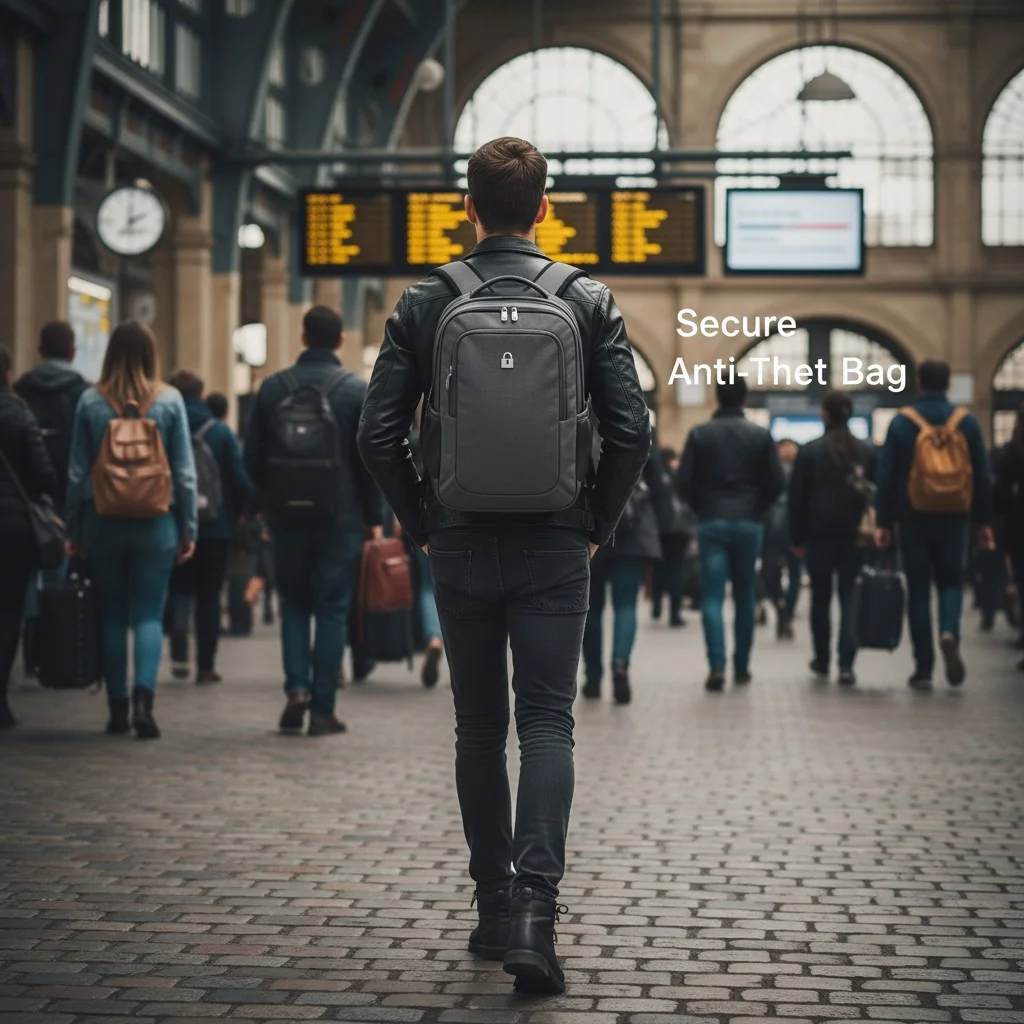
Think of it from the thief’s perspective. They have seconds to act. If they try to unzip a bag and find the zipper is locked, they won’t stop to figure it out; they’ll just move to the next person. I had a client who traveled through Europe for a month. He told me he saw someone try to get into his bag on the Paris Metro.
The thief fumbled with the locked zipper for a second, got frustrated, and melted back into the crowd. The bag did its job perfectly. It didn’t need to be a vault; it just needed to be more difficult than a standard backpack. However, it’s important to be realistic. These bags won’t stop a forceful mugging or someone stealing your whole bag if you leave it unattended and unanchored. They are designed to defeat stealth, not force.
[claim claim=”Anti-theft bags make you a target for thieves.” istrue=”false” explanation=”Thieves look for easy targets, not difficult ones. A bag with visible security features signals that it will be more trouble than it’s worth, causing most opportunistic thieves to look elsewhere.”]
[claim claim=”Hands-on tests by tech and travel outlets confirm the deterrent effect of anti-theft features.” istrue=”true” explanation=”Multiple independent reviews have shown that features like locking zippers, anchor straps, and slash-resistant fabrics significantly increase the time and effort required to access a bag’s contents.”]
Which Features Protect Against Which Threats?
You’re designing a bag and need to decide which features to include. How do you know which ones offer the best protection for your customers? You don’t want to add cost with features that don’t solve a real problem. A simple matrix can help.
A feature-to-threat matrix6 helps you match specific security components to the real-world risks your customers face. This ensures you’re building a bag with purposeful features, like lockable zips for crowded subways or an anchor strap for café stops.
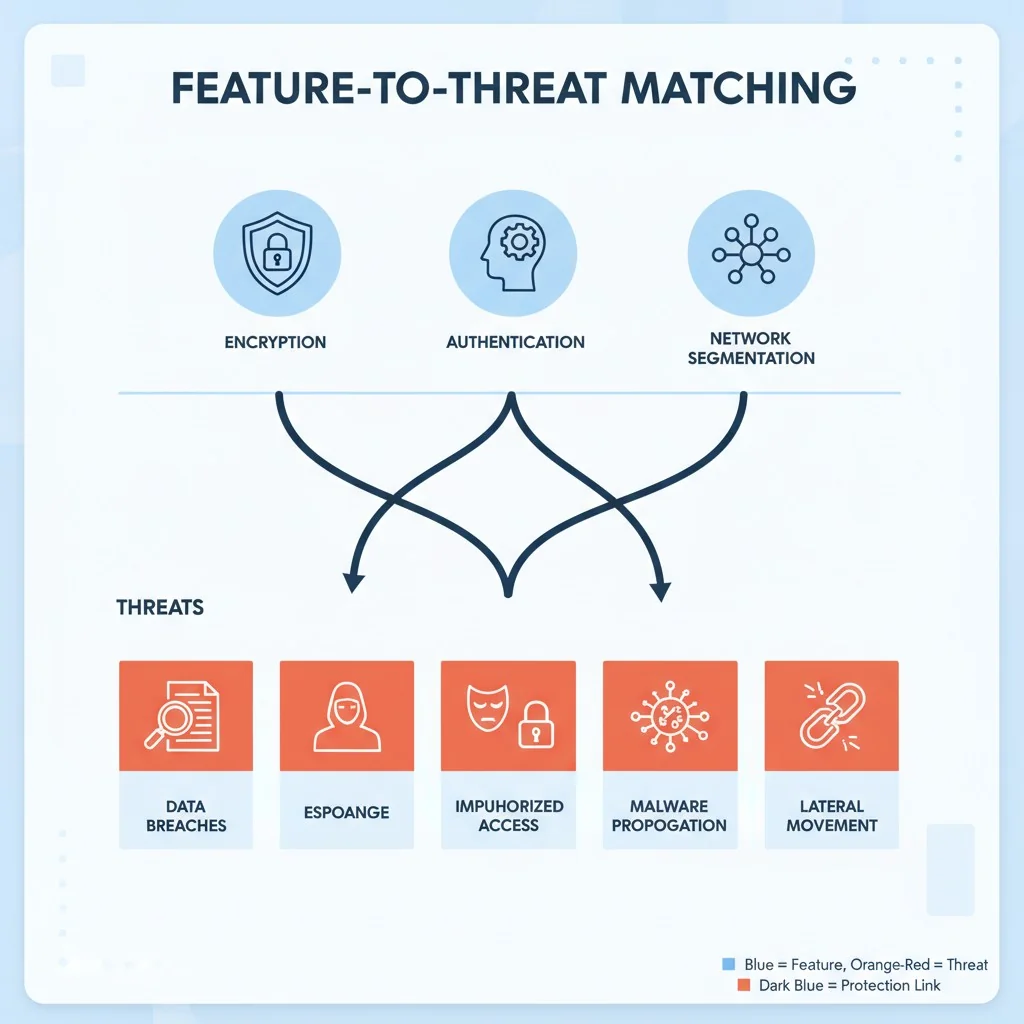
I use this kind of thinking all the time when consulting with brands. We map the customer’s lifestyle to the bag’s features. For example, if you’re targeting urban commuters7, zipper security is non-negotiable. If your audience is digital nomads who work in cafes, an anchor strap is a must-have. This approach helps you create a product that truly serves a need. Here’s a simple table to guide your design and marketing decisions.
Feature-to-Threat Matrix
| Feature (What to Spec) | Deters/Slows | Where It Helps Most | Proof/Source |
|---|---|---|---|
| Lockable/Self-Locking Zips / Zip Clips | Casual unzips while you’re distracted | Metro queues, shoulder-to-shoulder crowds | Police travel safety guides |
| Puncture-Resistant Zipper Coils (e.g., YKK RCW) | “Pen-through-zipper” pry attacks | Packed trains, tourist zones | Zipper manufacturer specs |
| Slash-Resistant Panels/Straps (Steel Mesh) | Knife/cutter slashes to open a seam or strap | Busy streets, café lines | Product testing videos |
| Hidden/Back-Panel Pocket | Quick grab of wallet/phone | Transit, standing crowds | User reviews, travel blogs |
| Anchor Strap/Cable | Lift-and-go when bag is set down | Cafés, stations, airport lounges | Pacsafe – Official North America Store |
| RFID-Blocking Sleeve/Pocket | Remote card skimming (rare) | Airports, conferences | See next section |
[claim claim=”All anti-theft features are equally important.” istrue=”false” explanation=”The importance of a feature depends on the user’s environment and behavior. For example, an anchor strap is critical for someone who works in cafes, but less so for someone who never sets their bag down in public.”]
[claim claim=”Puncture-resistant zippers prevent a common and silent method of entry.” istrue=”true” explanation=”The ‘pen trick,’ where a sharp object is used to split a zipper, is a known technique. Puncture-resistant zippers with dual coil construction are specifically designed to prevent this.”]
Are RFID-Blocking Pockets a Must-Have or Just Hype?
You’ve seen "RFID-blocking" advertised on wallets and bags. It sounds high-tech and important, but is it a feature your customers really need? You worry about adding unnecessary costs. Let’s look at the facts.
RFID-blocking pockets8 are generally not necessary for most people. The actual risk of someone stealing your card information with a remote scanner is extremely low. You’re better off focusing your product budget on physical security features that prevent the much more common threat of physical theft.
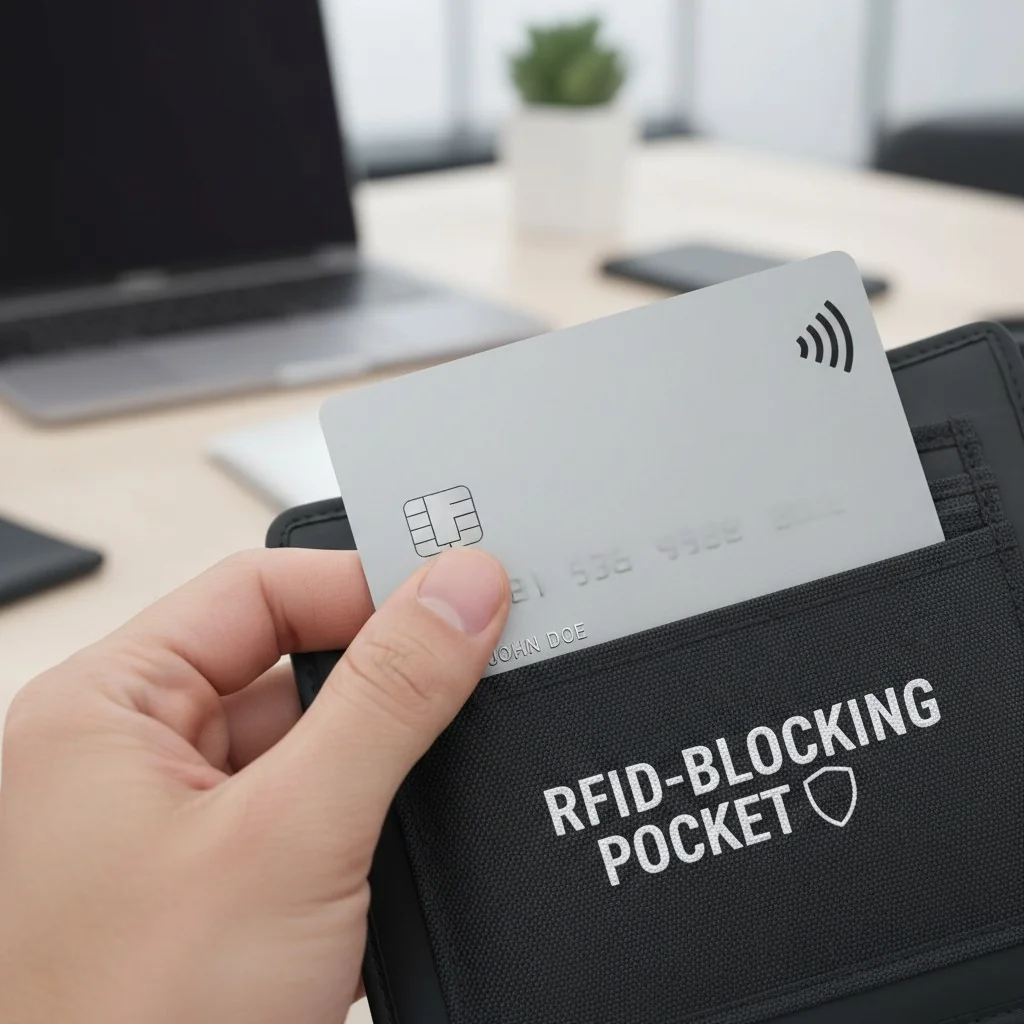
Let’s be practical. Financial regulators and consumer organizations report that fraud from contactless payments is tiny. For example, in the UK, it’s about 1.3 pence for every £100 spent. Most financial losses come from lost or physically stolen cards, not from mysterious digital scans in a crowd. Plus, most credit card companies offer robust fraud protection and will reimburse you for unauthorized charges.
When I advise brands like yours, Emily, I often suggest that unless you’re targeting a very specific niche (like high-security government contractors), the money for RFID material is better spent on a better lock or more durable, slash-resistant fabric. It provides more real-world value and protection for the average user.
[claim claim=”RFID skimming is a widespread and growing crime.” istrue=”false” explanation=”Security experts and financial institutions report that RFID skimming is technically difficult, offers a low payoff for criminals, and is extremely rare compared to other forms of payment fraud.”]
[claim claim=”Focusing on physical theft prevention offers a better return on investment for security.” istrue=”true” explanation=”The vast majority of theft targeting travelers and commuters is physical. Therefore, features that prevent physical access (locks, slash-guards) provide more practical security than features that block a rare digital threat.”]
How Can You Make the Most of Your Anti-Theft Bag?
Owning an anti-theft bag gives a great sense of security. But what if your customers don’t use the features correctly? A bag is only as good as the habits of the person using it. You need to educate them.
To use an anti-theft bag properly, you must actively use its features. Always lock the zippers in crowds, place valuables in the hidden back pocket, and anchor the bag whenever you set it down. Your own awareness is the most important feature of all.
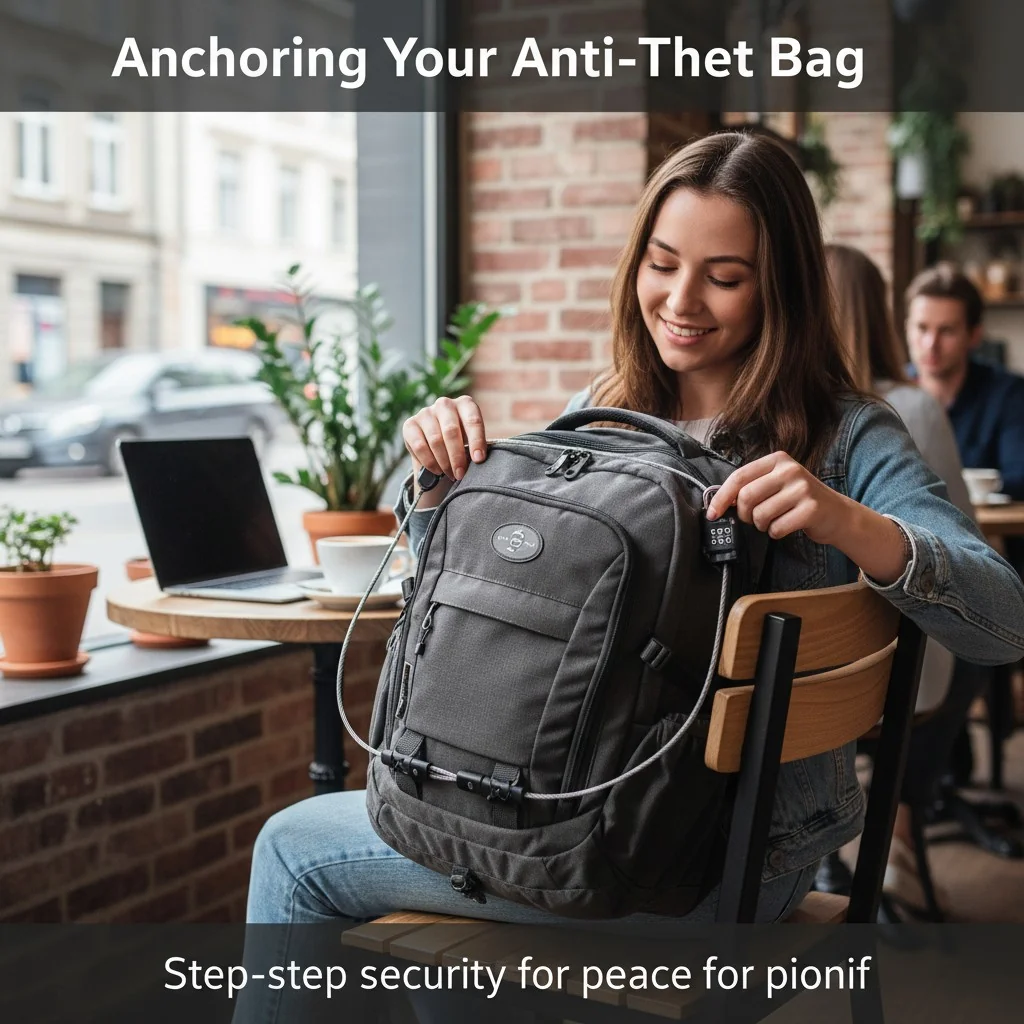
When you market your bags, it’s a great idea to include a small guide or video showing these best practices. It builds trust and helps your customers get the full value of their purchase. I always tell my partners to think beyond the sale and help the customer integrate the product into their life. Here are the simple habits to teach.
Simple Habits for Maximum Security
- Lock It in Crowds: The moment you step onto a crowded bus, train, or into a busy market, take a second to clip your zippers shut. This is the number one habit that will deter a pickpocket.
- Use the Hidden Pocket: Your most important items—passport, primary credit card, phone—should live in the pocket that rests against your back. There is no way for someone to access it without you feeling it.
- Anchor When Seated: At a café, airport lounge, or train station? Don’t just put your bag on the floor or the seat next to you. Use the anchor strap to secure it to your chair or the table leg. This stops the classic "grab-and-run" theft.
- Stay Alert: An anti-theft bag is a tool, not a force field. The best defense is still paying attention to your surroundings, especially in known tourist hotspots. In very dense crowds, I sometimes move my pack to my front.
[claim claim=”An anti-theft bag’s features are passive and work automatically.” istrue=”false” explanation=”Most key features, such as locking zippers and anchor straps, require the user to actively engage them to be effective. They are not passive security measures.”]
[claim claim=”Wearing a backpack on your front in dense crowds significantly reduces theft risk.” istrue=”true” explanation=”This common travel tip is recommended by security professionals because it keeps your bag and all its access points within your direct line of sight and control.”]
Are Anti-Theft Bags "TSA-Approved"?
You’re browsing supplier sites and see bags labeled "TSA-Approved." It sounds official and adds a layer of legitimacy. But is this a real designation? You don’t want to mislead your customers with incorrect marketing claims.
No, the Transportation Security Administration (TSA) does not approve or endorse any consumer bags. The term "TSA-approved" on a backpack is a marketing phrase, not an official certification. The only hardware the TSA officially "recognizes" are specific luggage locks for checked bags.
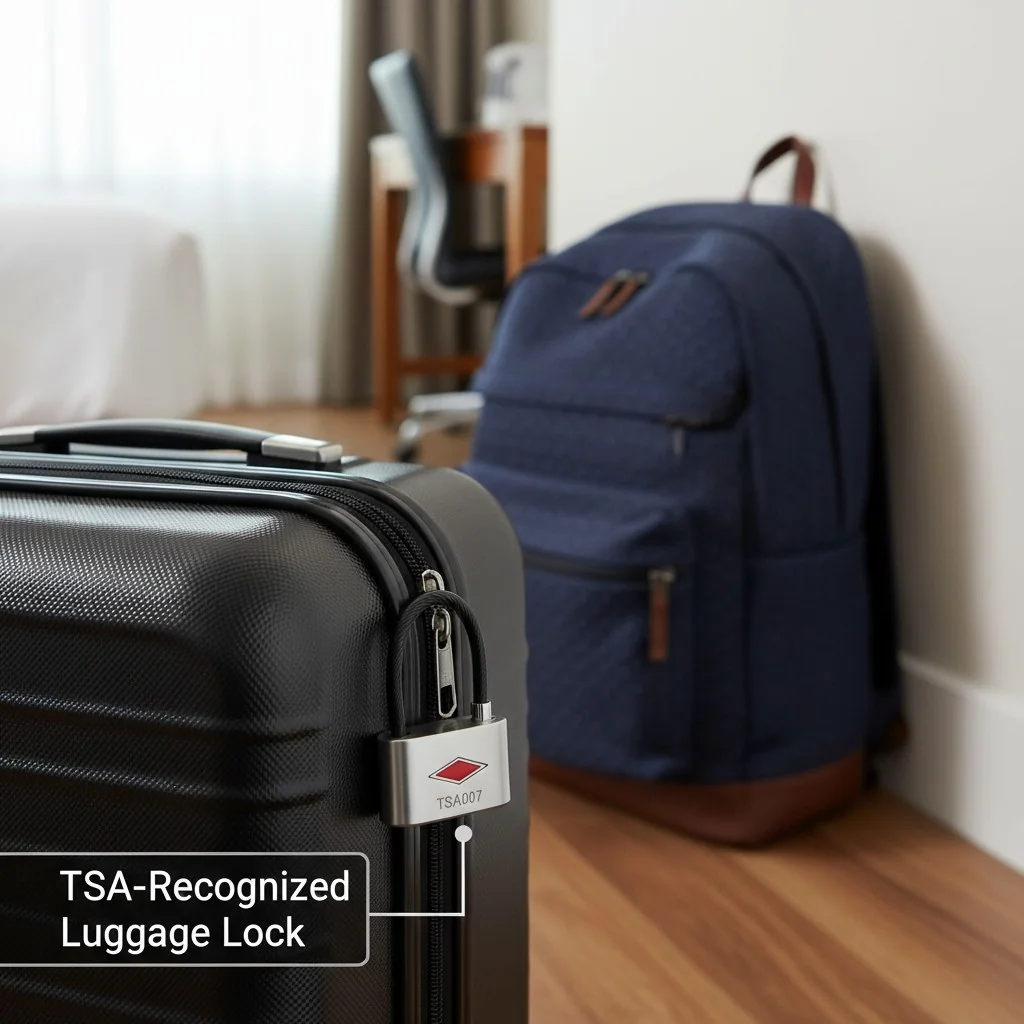
This is a crucial point for you as a brand owner, Emily. Using terms like "TSA-Approved" can be misleading. The only "TSA-recognized" items are certain locks that their officers can open with a master key during checked baggage inspections. This doesn’t apply to carry-on backpacks. For your marketing, it’s much more accurate and honest to say something like "Checkpoint-Friendly Design" if the bag has a lay-flat laptop compartment.
Also, remember to inform customers about the screening process. In standard security lanes, laptops must be removed. For travelers with TSA PreCheck, laptops can typically stay inside the bag. Being clear about these details builds trust and positions your brand as a knowledgeable authority.
[claim claim=”The TSA endorses specific brands of anti-theft backpacks.” istrue=”false” explanation=”The TSA’s official website and policies state that it does not endorse any specific brand or type of travel equipment, including backpacks.”]
[claim claim=”TSA PreCheck allows travelers to keep laptops in their bags during screening.” istrue=”true” explanation=”This is one of the main benefits of the TSA PreCheck program, designed to expedite the security process for pre-screened, low-risk travelers.”]
What Are the Limitations of an Anti-Theft Bag?
It’s easy to think an anti-theft bag is an invincible shield for your belongings. But what happens if a customer’s bag is stolen anyway? Managing expectations is key to customer satisfaction and brand reputation.
An anti-theft bag is not foolproof. It cannot prevent a forceful robbery where a thief confronts you directly, nor can it stop the theft of an entire unattended bag that isn’t anchored down. Its purpose is to deter stealthy, opportunistic theft.
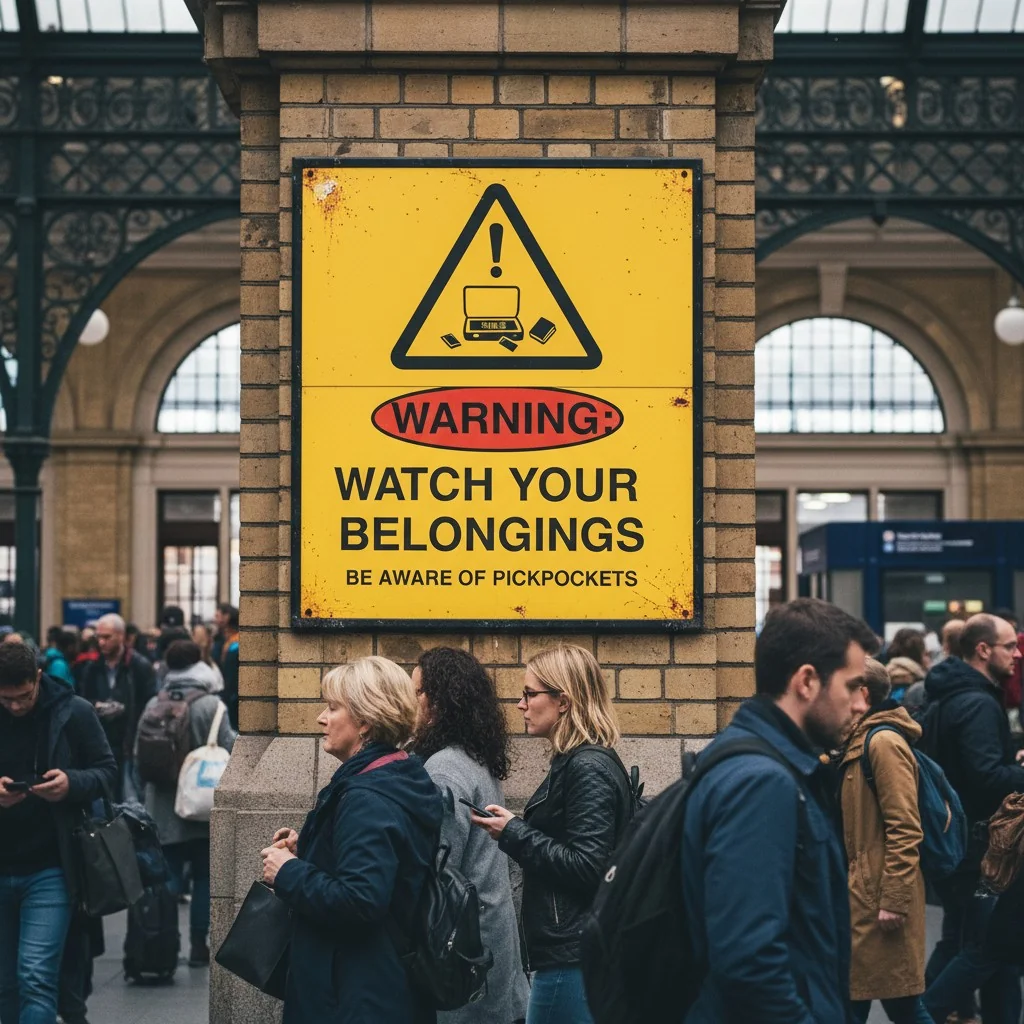
When I work on a new bag design, we always discuss the "what if" scenarios. It’s important to be honest about what a product can and cannot do. An anti-theft bag is a powerful deterrent, but it’s not magic. Here are the two main situations where it has limits.
1. Forceful Robbery
If a thief uses intimidation or force (a mugging), no bag feature is going to stop them. In these situations, personal safety is the priority, and one should comply with the thief’s demands. The bag is designed to stop someone from stealing from you, not taking the whole bag from you by force.
2. Unattended Theft
If you leave your bag on a bench to take a photo and walk 20 feet away, an anti-theft bag is just as vulnerable to being stolen as any other bag. This is where the anchor strap becomes critical. If the bag is not physically secured to a fixed object, a thief can simply pick it up and walk away. The bag’s security features are for when it’s on your person or anchored nearby.
[claim claim=”Anti-theft bags are designed to resist violent attacks.” istrue=”false” explanation=”Their design focuses on preventing stealth and opportunistic theft like pickpocketing and slashing, not forceful robbery.”]
[claim claim=”The single biggest risk of bag theft is leaving it unattended.” istrue=”true” explanation=”Law enforcement and travel security experts consistently cite leaving bags unattended as the most common way they are stolen in public places like airports, cafes, and parks.”]
Should You Choose an Anti-Theft or a Regular Backpack?
Now for the big question for your customers: is an anti-theft bag worth the extra cost? They’re weighing security against simplicity and price. As a brand, you need to know who to target.
Choose an anti-theft backpack if you frequently travel, commute on public transit, or spend time in crowded urban areas. A regular backpack is sufficient for low-risk environments like driving to a suburban office. The choice depends on lifestyle and risk exposure.
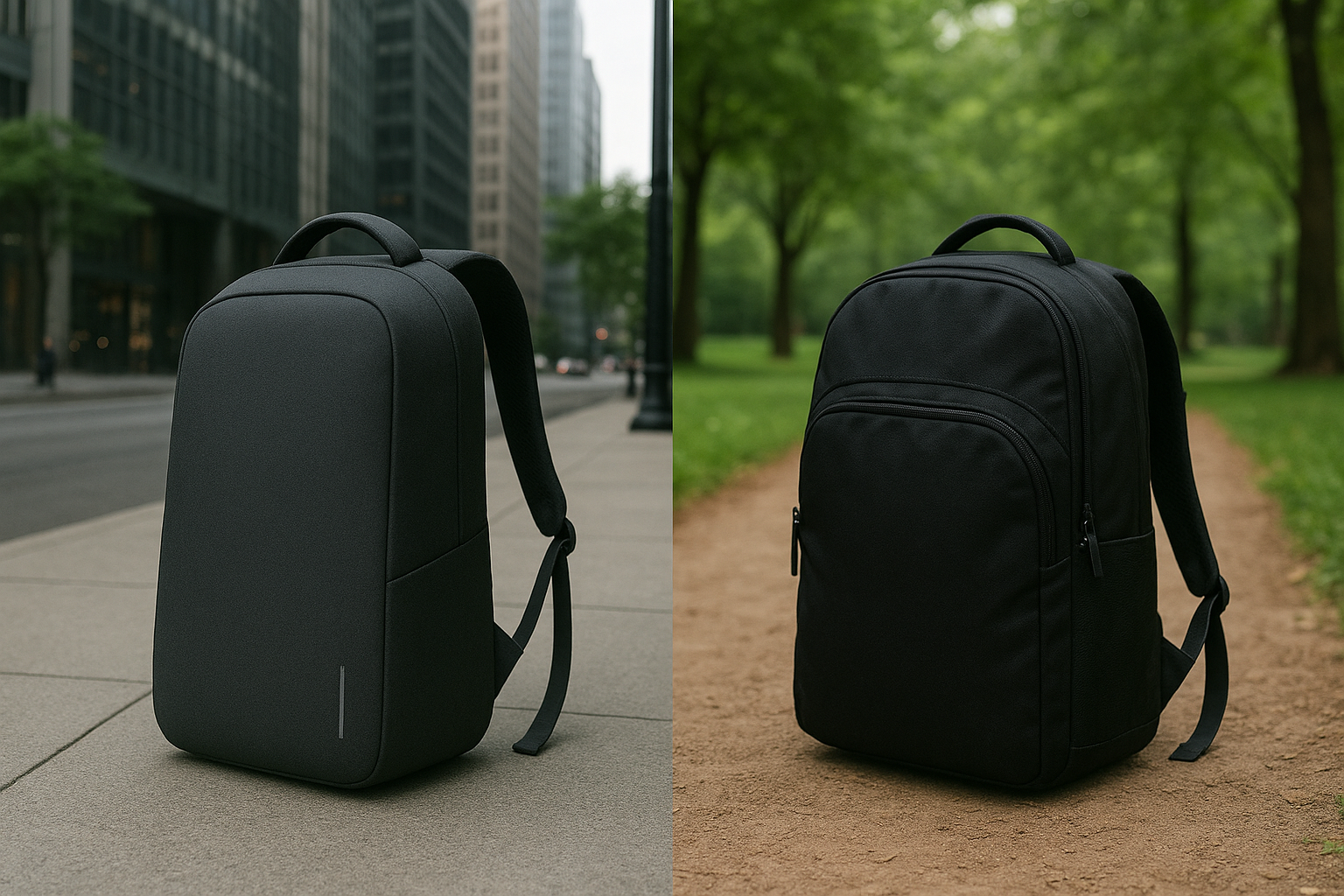
This is a conversation I have with brand owners all the time. Who is your ideal customer? Understanding their daily life is key to designing the right product. Let’s break down the decision so you can better position your bags.
When to Choose an Anti-Theft Backpack:
This is the right choice for the "high-risk" user. This includes:
- Urban Commuters: People who take crowded buses or subways daily.
- International Travelers: Anyone navigating busy airports, train stations, and tourist sites.
- Students & Digital Nomads: Individuals who often work or study in public spaces like libraries and cafes.
When a Regular Backpack is Enough:
For the "low-risk" user, the extra features might be overkill. This includes:
- Drivers: People who primarily commute by car from a secure home to a secure office.
- Suburban Dwellers: Those who don’t spend much time in dense, crowded public areas.
The main trade-offs are cost, weight, and a slight learning curve. Anti-theft bags are typically more expensive and can be slightly heavier due to the added materials like steel mesh. But for the right customer, the peace of mind is well worth it.
[claim claim=”Anti-theft backpacks are significantly heavier than regular backpacks.” istrue=”false” explanation=”While they can be slightly heavier due to features like steel mesh, modern materials have made the weight difference minimal and often unnoticeable in daily use.”]
[claim claim=”The primary benefit of an anti-theft bag is peace of mind.” istrue=”true” explanation=”Beyond the physical protection, many users report that the main value is the reduced stress and worry about their belongings, allowing them to better enjoy their travels or commute.”]
Conclusion
Anti-theft bags are a smart investment for deterring opportunistic theft in busy places. They work best when you use their features correctly and remain aware of your surroundings.
References
-
Explore how anti-theft backpacks can enhance your security while traveling or commuting. ↩
-
Learn about the effectiveness of lockable zippers in preventing theft. ↩
-
Find out how hidden pockets can keep your valuables safe from thieves. ↩
-
Discover the technology behind slash-resistant materials and their role in security. ↩
-
Understand the importance of anchor straps in securing your bag in public spaces. ↩
-
Learn how a feature-to-threat matrix can help design effective anti-theft bags. ↩
-
Explore the specific needs of urban commuters when choosing an anti-theft bag. ↩
-
Investigate the relevance of RFID-blocking technology in everyday security. ↩






