


You’ve seen the Tumi Alpha series. You know they charge $500+ for a backpack. You’re asking yourself: is it just branding, or is the material actually that different from the 600D Polyester we use on standard corporate orders?
Ballistic nylon is a high-tenacity, thick synthetic fabric characterized by a 2×2 or 2×3 basketweave1, originally developed by DuPont for WWII flak jackets. it offers extreme abrasion and tear resistance, making it the gold standard for premium, high-durability luggage and backpacks.
If you are sourcing for a brand that competes with Tumi or Samsonite, you need to know that not all "ballistic" fabrics are created equal. In fact, most of what’s on the market today is a cheap imitation. Here is the reality of what happens inside the mill.
What Exactly Makes A Fabric "Ballistic"?
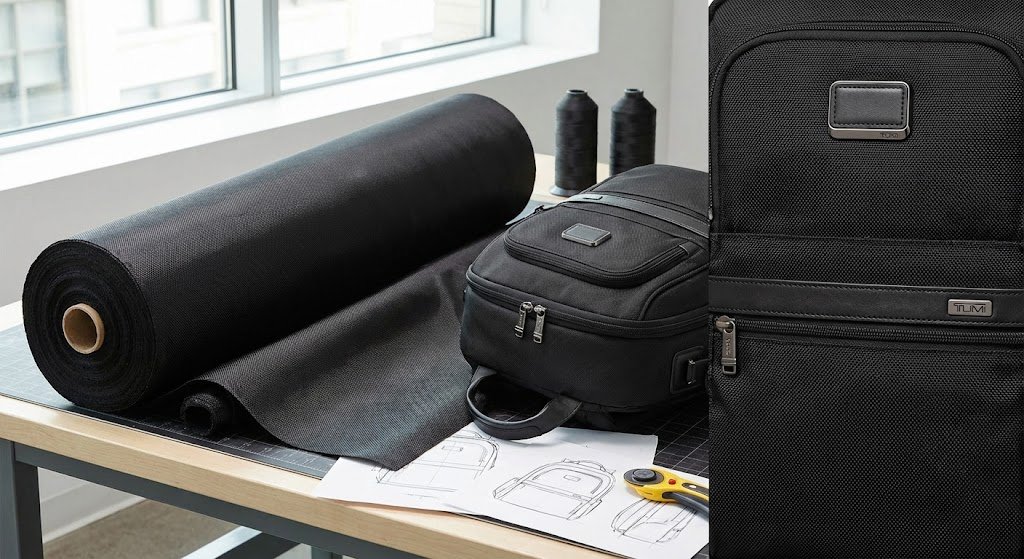
True Ballistic Nylon is defined by its 2×2 or 2×3 basketweave using high-tenacity filament yarns, specifically Nylon 6.62, which provides massive structural integrity under tension.
While standard weaves are 1×1 (one thread over, one thread under), the basketweave bunches multiple yarns together. This allows the fabric to "give" slightly under impact without the individual fibers snapping, absorbing the energy that would shred a regular 600D fabric.
In our lab, we use the ISO 12947-2 Martindale test. True 1050D Ballistic Nylon typically survives over 50,000 cycles, whereas the "ballistic-look" polyester used in budget bags starts pilling at 8,000.
How do you spot the real deal?
- The "Sheen": Real Nylon 6.6 has a subtle, oily luster. If it looks "flat" or chalky, it’s likely polyester.
- The Surface: It should feel slightly slick. This low friction is why Tumi bags don’t get "scruffy" when sliding in overhead bins.
- The Weight: 1050D Ballistic is heavy. A square yard weighs roughly 12-14 ounces.
Action Tip: Always ask your supplier for a "Fiber Content Lab Report." If it says "100% Polyester," it is NOT Ballistic Nylon, regardless of how the weave looks.
What Distinguishes Ballistic Nylon From Standard Nylon?
Most buyers assume all nylon is the same. In our factory, we know that the weave and chemical grade change everything.
Ballistic Nylon stands out due to its 2×2 basketweave and high-tenacity Nylon 6.6 filaments, offering vastly superior tear resistance compared to 1×1 plain-weave standard nylon.
Why does the weave pattern matter for durability?
Standard nylon uses a simple 1×1 weave that is prone to "runs," while ballistic’s basketweave bunches yarns to absorb impact and stop punctures from spreading.
- 2×2 Basketweave: Doubled yarns create a heavy-duty, tactical texture that handles extreme stress.
- Tear Propagation: The complex weave structure stops small nicks from turning into catastrophic bag failures.
- Surface Friction: Smooth filaments provide a professional sheen that won’t pill or damage delicate clothing.
How do the material specs compare in real-world testing?
In our lab tests, 1050D Ballistic Nylon3 withstands triple the abrasion cycles of standard 420D nylon, making it the only choice for high-stress bag components.
| Metric | Standard Nylon (Plain Weave) | Ballistic Nylon (Basketweave) |
|---|---|---|
| Weave Pattern | 1×1 Plain Weave | 2×2 Basket Weave (Square) |
| Yarn Tenacity | Regular Nylon 6 | High-Tenacity Nylon 6.6 |
| Common Denier | 70D, 210D, 420D | 840D, 1050D, 1260D |
| Texture | Rough, fuzzy, matte | Slick, smooth, semi-gloss |
| Tear Strength | Low (Tends to "unravel") | Exceptional (Resists fraying) |
| Martindale Test | 10,000 – 15,000 cycles | 50,000+ cycles |
| Primary Strength | Abrasion Resistance (Anti-Rub) | Tear Resistance (Anti-Rip) |
| Primary Use | Lining or lightweight shells | Structural panels and heavy bases |
| Best For | Military/Outdoor Gear | Premium Luggage |
Actionable Tip: When sourcing, always ask for a physical swatch. If the surface is rough or fuzzy like canvas, it is not Ballistic Nylon, no matter what the supplier says. It’s likely standard textured Nylon.
Is Ballistic Nylon Actually Bulletproof?
No, Ballistic Nylon is not bulletproof against modern firearms. While it was originally engineered by DuPont for airmen’s flak jackets to stop low-velocity shrapnel, it cannot stop a 9mm bullet or high-velocity rounds.
The "Ballistic" name is a historical legacy, not a safety rating. Modern body armor uses Kevlar or Dyneema, which are entirely different chemical structures (aramids). If I lined a backpack with 10 layers of Ballistic Nylon, a bullet would still pass through. It is designed to stop your bag from ripping when it gets caught on a conveyor belt, not to stop a projectile.
Factory Material Impact Test Results:
| Material | Stops Shrapnel? | Stops Bullets? | Main Usage Today |
|---|---|---|---|
| Ballistic Nylon | Historically Yes | NO | Premium Luggage, Tool Belts |
| Kevlar | Yes | Yes | Body Armor, Safety Gear |
| Regular Polyester | No | No | School bags, Promo items |
Actionable Tip: Never market a backpack as "Bulletproof" just because it uses Ballistic Nylon. That is a lawsuit waiting to happen. Market it as "Industrial Grade" or "Impact Resistant."
1050D vs. 1680D Ballistic Nylon: Which is better?
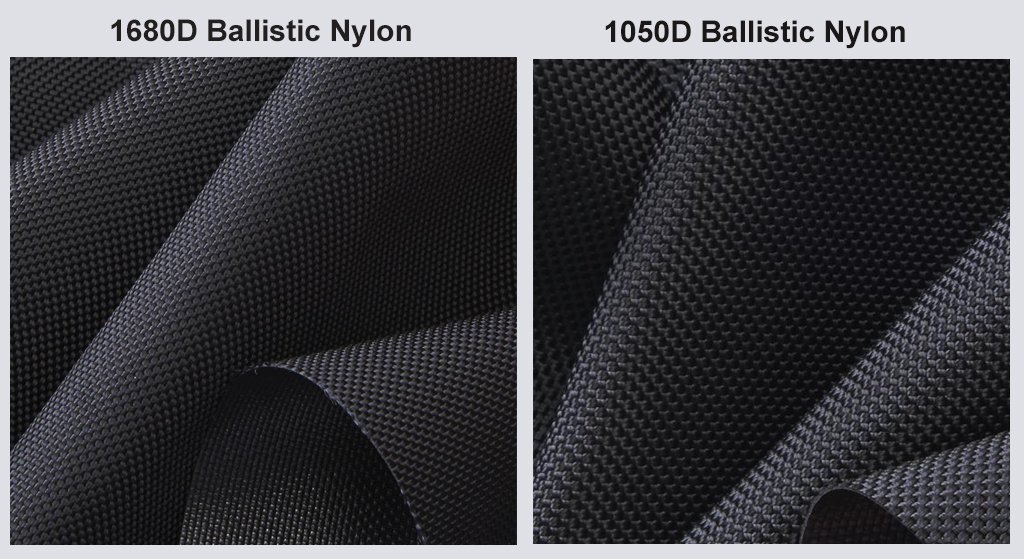
Most clients assume 1680D is "better" because the number is higher. This is the biggest trap in the industry.
1050D Ballistic Nylon is the superior, genuine high-performance fabric used by top brands like Tumi; 1680D is often a cheaper, coarser imitation manufactured in Asia.
Why is 1680D considered a "fake spec"?
1680D was engineered to mimic the look of 1050D using larger, singular yarns. It fuzzes quickly and lacks the abrasion resistance of the tighter 1050D weave.
- 1050D: Uses dual-ply high-tenacity Nylon 6.6 yarns for maximum density.
- 1680D: Uses a single, thick yarn (often Polyester) to create a chunky look.
- Aging: 1050D stays smooth for years; 1680D "pills" like an old sweater.
How do they compare in factory performance?
If you want luxury durability, choose 1050D. If you want a rugged look on a budget, 1680D is a valid cost-saving option for non-critical promo gear.
| Feature | 1050D (The Real Deal) | 1680D (The Generic) |
|---|---|---|
| Yarn Type | High Tenacity Nylon 6.6 | Often Polyester or Nylon 6 |
| Cost | $$$ (Expensive) | $ (Budget Friendly) |
| Appearance | Refined, tight weave | Chunky, large weave |
| Aging | Stays smooth | Fuzzes/Pills over time |
Actionable Tip: If you are building a luxury travel brand, pay the premium for 1050D Nylon 6.6. If you are making a $40 laptop bag for a corporate gift, use 1680D Polyester—it looks tough but saves you 40% on material costs.
Why Does Tumi Use Ballistic Nylon Instead of Cordura?
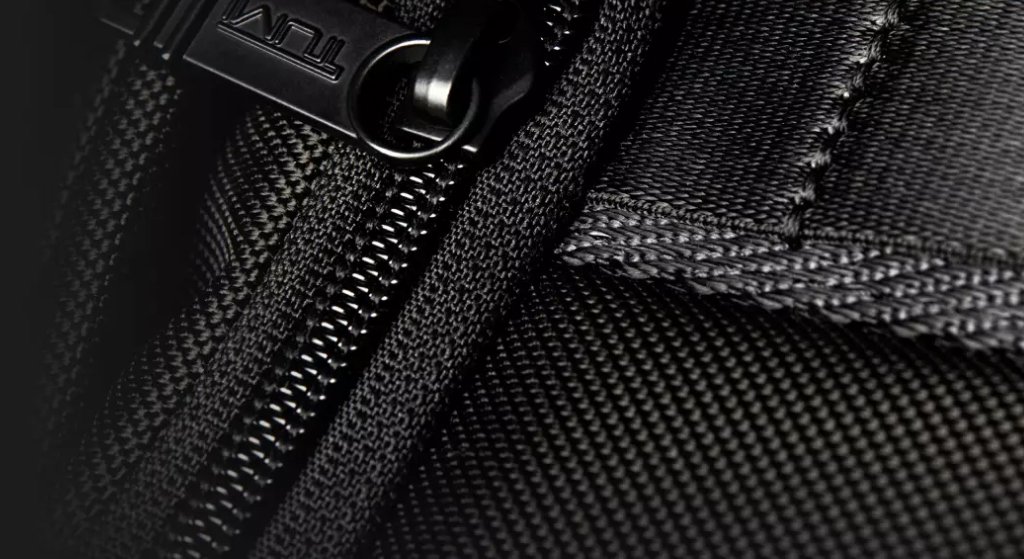
Buyers often ask why luxury business travel brands like Tumi ignore Cordura, despite its reputation for high abrasion specs.
Tumi uses a proprietary FXT Ballistic Nylon which prioritizes a "cleaner" professional look and higher slickness (low friction) compared to the rougher, fuzzy texture of traditional Cordura4.
What is the functional advantage for business travelers?
Ballistic Nylon minimizes friction against clothing and conveyors. Its smooth finish does not pill expensive wool suits like abrasive Cordura does.
- Suit Protection: Cordura acts like sandpaper against fine fabrics; Ballistic glides over them.
- Lint Rejection: The textured weave of Cordura grabs dust and lint like Velcro; Ballistic stays clean.
- Deflection: The slick finish helps bags slide out of baggage chutes rather than catching and tearing.
How do the technical specs dictate the use case?
Cordura wins in raw abrasion (rubbing), but Ballistic Nylon wins in tear strength and sleek presentation, making it the superior choice for urban luggage.
| Feature | Ballistic Nylon (Tumi Choice) | Cordura® (Military Choice) |
|---|---|---|
| Primary Defense | High Tear Strength (Impact) | High Abrasion (Rubbing) |
| Visual Finish | Semi-Gloss & Professional | Matte & Rugged/Tactical |
| Dyeability | Mostly Black (Hard to dye) | Excellent (Camo/Colors) |
How Do We Verify "Real" Ballistic Nylon in Our Factory?
You cannot trust a spec sheet from a middleman. I’ve seen suppliers label recycled PET as "Ballistic" just to close a deal. We use a three-step verification process before we even cut the first roll.
Authentic Ballistic Nylon must be Nylon 6.6. We verify this via a "burn test" and a chemical solubility test to ensure it isn’t cheap polyester or low-grade Nylon 6 masquerading as high-end material.
The 3-second Factory "Touch" Test?
- The Temperature: Real Nylon feels cooler to the touch than polyester.
- The "Snap": When you fold a piece of 1050D, it should "snap" back. If it holds the crease like a piece of paper, the coating or the fiber is low quality.
- The Smell: During a burn test, Nylon 6.6 smells like celery or boiled wool. Polyester smells like sweet chemicals or burnt plastic.
Performance metrics we demand from the mill?
| Metric | Factory Standard for Premium Grade |
|---|---|
| Tensile Strength | > 3500 N (Warp) |
| Color Fastness | Grade 4.5 (Min) after 50 hours UV |
| PU Coating | 3-Pass Backing (Waterproofness > 1500mm) |

Is the High Cost of Ballistic Nylon Actually Worth It?
Yes, if the goal is a 10-year lifespan. While the fabric cost is 2x to 3x higher than polyester, the "cost-per-year" for the end-user is significantly lower due to nearly zero warranty claims on fabric failure.
We had a client switch from 1680D Polyester to 1050D Ballistic Nylon for their technician tool bags. Their return rate due to "bottom punctures" dropped from 4% to 0.2% in the first year. They saved more on shipping replacements than they spent on the better fabric.
When should you NOT use it?
- Ultra-lightweight gear: It’s too heavy. Use Robic Nylon5 instead.
- Fashion-only bags: If the bag is meant to be replaced next season, the durability is wasted.
- Promotional Giveaways: Real Ballistic will eat your entire budget.
Action Tip: If your retail price point is under $150, using 1050D Ballistic Nylon is financial suicide. Use a 1260D "Ballistic-style" Nylon 6 to get 80% of the performance at 60% of the cost.
Deep FAQ: The Insider’s Perspective
1. Is Ballistic Nylon waterproof?
No fabric is "waterproof" by itself. The weave is tight, but water will eventually seep through the gaps. The water resistance comes from the PU (Polyurethane) coating on the back and the DWR (Durable Water Repellent) finish on the front. We always recommend a 3-pass PU coating for premium bags.
2. Why is it so hard to find Ballistic Nylon in bright colors?
High-tenacity Nylon 6.6 is incredibly difficult to dye. The fibers are so dense they resist pigment. That’s why you mostly see it in Black, Navy, and Charcoal. If a supplier offers you "Neon Pink Ballistic Nylon," be very suspicious of the tenacity rating.
3. Does it scratch easily?
It is highly resistant to "scuffing" (the fuzzy look), but because the filaments are smooth, a sharp metal object can leave a visible "track" or silver mark. It’s tough, but it’s not armor plate.
4. Can it be recycled?
Yes, but Recycled Ballistic Nylon (RPET) often loses about 10-15% of its tensile strength. If you need GRS-certified recycled fabric, you’ll usually have to increase the denier to maintain the same strength.
5. Why is Tumi’s Ballistic Nylon different from others?
Marketing. Tumi’s "FXT" is basically a high-spec Ballistic Nylon with a specific heat-treatment and a proprietary coating. It’s excellent, but a top-tier mill can produce 95% of that quality for your brand if you know which yarns to specify.
Conclusion: Is it worth the investment?
If you are selling a backpack purely on price (under $50 retail), forget Ballistic Nylon. It eats up your margin.
But if you are targeting the business traveler or the "Buy It For Life" crowd, 1050D Ballistic Nylon is the only choice. It signals quality the moment the customer touches it. Just make sure you specify the right Denier and listen to your factory when we tell you how to stitch it.
Ready to develop a premium travel line? Don’t guess on the specs. Send me your Tech Pack today and let’s verify if Ballistic Nylon fits your target price point.

Footnotes
-
Discover how the basketweave structure contributes to the strength and impact resistance of fabrics. ↩
-
Learn about Nylon 6.6, a high-tenacity material that enhances the strength and durability of fabrics like Ballistic nylon. ↩
-
Find out why 1050D Ballistic Nylon is preferred for high-performance applications due to its exceptional durability. ↩
-
The official brand site for Cordura fabrics, detailing their high-performance abrasion specifications and military heritage. ↩
-
Technical details on Hyosung’s lightweight, high-tenacity nylon alternative designed specifically for lightweight outdoor gear. ↩






