


Struggling to find a bag material that’s durable, stylish, and cost-effective? A poor choice can hurt your brand. Canvas offers the perfect blend of all three qualities.
Canvas is a heavy-duty, plain-woven fabric, usually made from cotton or linen. Its tight weave makes it incredibly strong and resistant to wear. This durability1 makes it a top choice for manufacturing bags that need to last, from everyday totes to rugged backpacks.
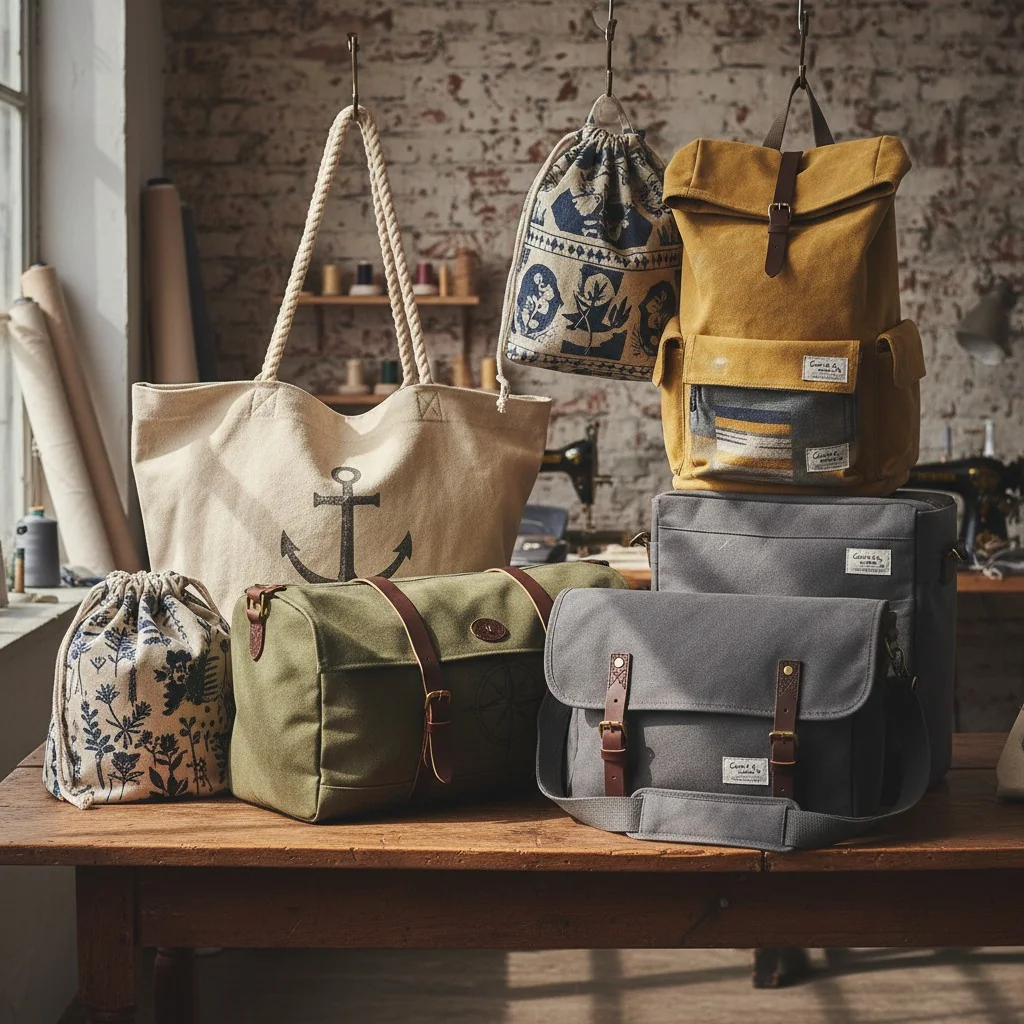
When I first started in the bag industry, I saw canvas everywhere. I quickly learned it wasn’t just one type of fabric. There’s a whole world of canvas out there, each with its own strengths. For brand owners like Madison, understanding these differences is key to creating the perfect product. Let’s break down what makes canvas so special and explore its many forms.
[claim claim=”Canvas made from natural fibers like cotton is biodegradable.” istrue=”true” explanation=”Natural fibers decompose over time, reducing environmental impact compared to synthetic materials like polyester or nylon which can persist for centuries.”]
[claim claim=”All canvas is completely waterproof right from the start.” istrue=”false” explanation=”Standard canvas is water-resistant, not waterproof. It needs a special treatment, like waxing, to become fully waterproof.”]
What is Canvas Fabric? And Why is Canvas Ideal for Bag Manufacturing?
Unsure what canvas really is? This uncertainty can lead to costly material mistakes. Let’s clear it up and see why it’s a top choice for bag manufacturing.
Canvas is a plain-weave fabric known for its extreme durability. It’s ideal for bags because its strong, tightly woven fibers resist tearing and heavy use. This makes it perfect for products that need to be reliable and long-lasting, from tote bags to travel duffels.
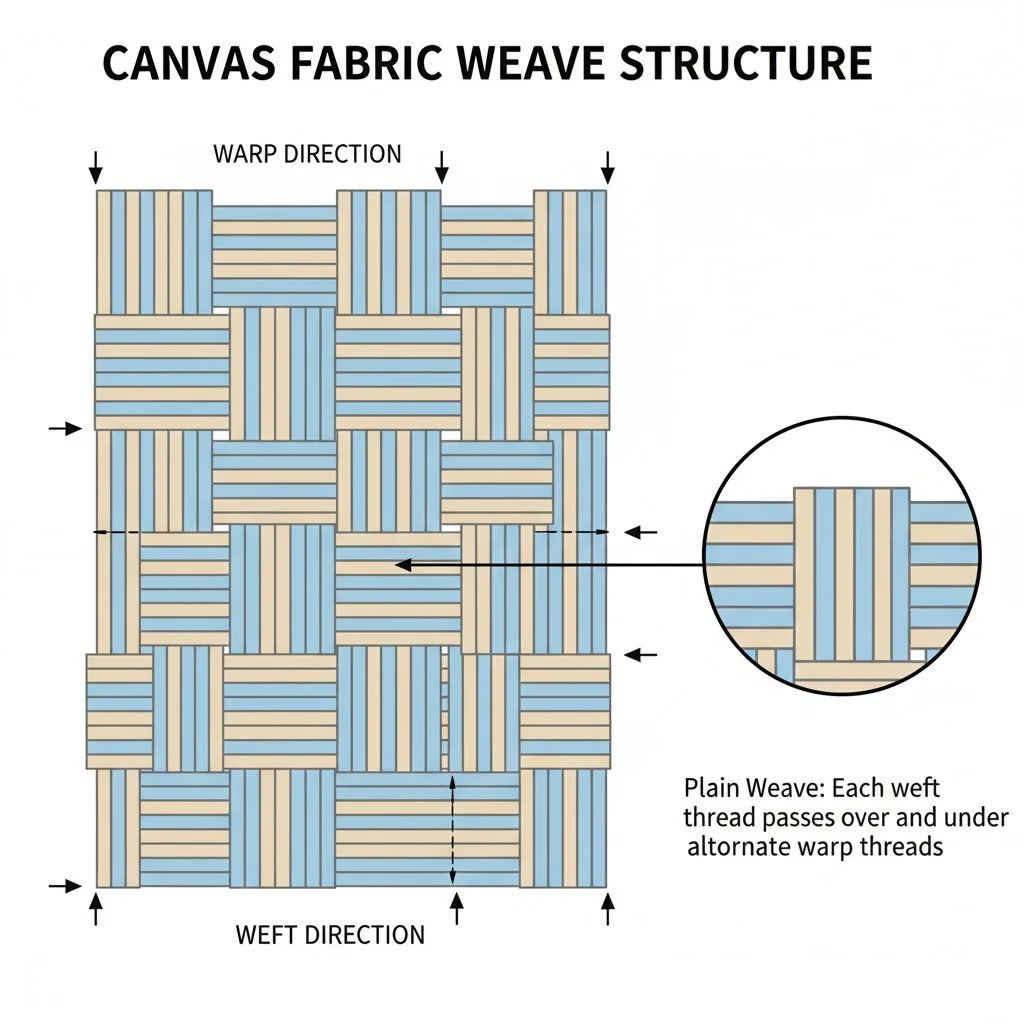
At its core, canvas is defined by its weave. It uses a simple "plain weave," where the warp and weft threads cross over and under each other one at a time. This creates a very strong, interlocking grid structure. Historically, this strength made it the material of choice for everything from ship sails to artist canvases. Today, that same durability is why we love it for bags.
From Raw Fiber to Finished Bag
The journey starts with fibers, usually cotton. The fibers are spun into thick threads, which are then woven tightly together. The weight of the canvas is measured in ounces per square yard—the higher the number, the heavier and more durable the fabric. For bags, this means you can choose a weight that perfectly matches the product’s intended use. A lightweight tote might use 8 oz canvas, while a heavy-duty tool bag could require 18 oz or more.
The Perfect Match for Manufacturing
So, why is it so ideal? It’s a combination of factors. Its strength means bags can handle heavy loads without tearing. It holds its shape well, giving structure to backpacks and duffels. And from a manufacturing standpoint, it’s a dream to work with. It cuts cleanly, sews easily, and readily accepts dyes and prints, which is crucial for brand owners like you who need custom designs.
[claim claim=”Canvas is a plain-woven fabric.” istrue=”true” explanation=”The simple over-under pattern of the plain weave is what gives canvas its characteristic strength and durability.”]
[claim claim=”Canvas is a relatively new material invented in the 20th century.” istrue=”false” explanation=”The word ‘canvas’ derives from ‘cannabis’ (hemp), which was used for centuries to make sailcloth. Its use dates back to ancient times.”]
What are the Key Properties of Canvas for Bags?
Beyond strength, what makes canvas a superior choice for bags? Ignoring its other features means you’re missing key marketing angles. Let’s dive into its most important properties.
The key properties of canvas for bags are its exceptional durability, natural texture, and high potential for customization. It’s also breathable when made from natural fibers and can be treated for water resistance2, making it incredibly versatile for different styles and uses.
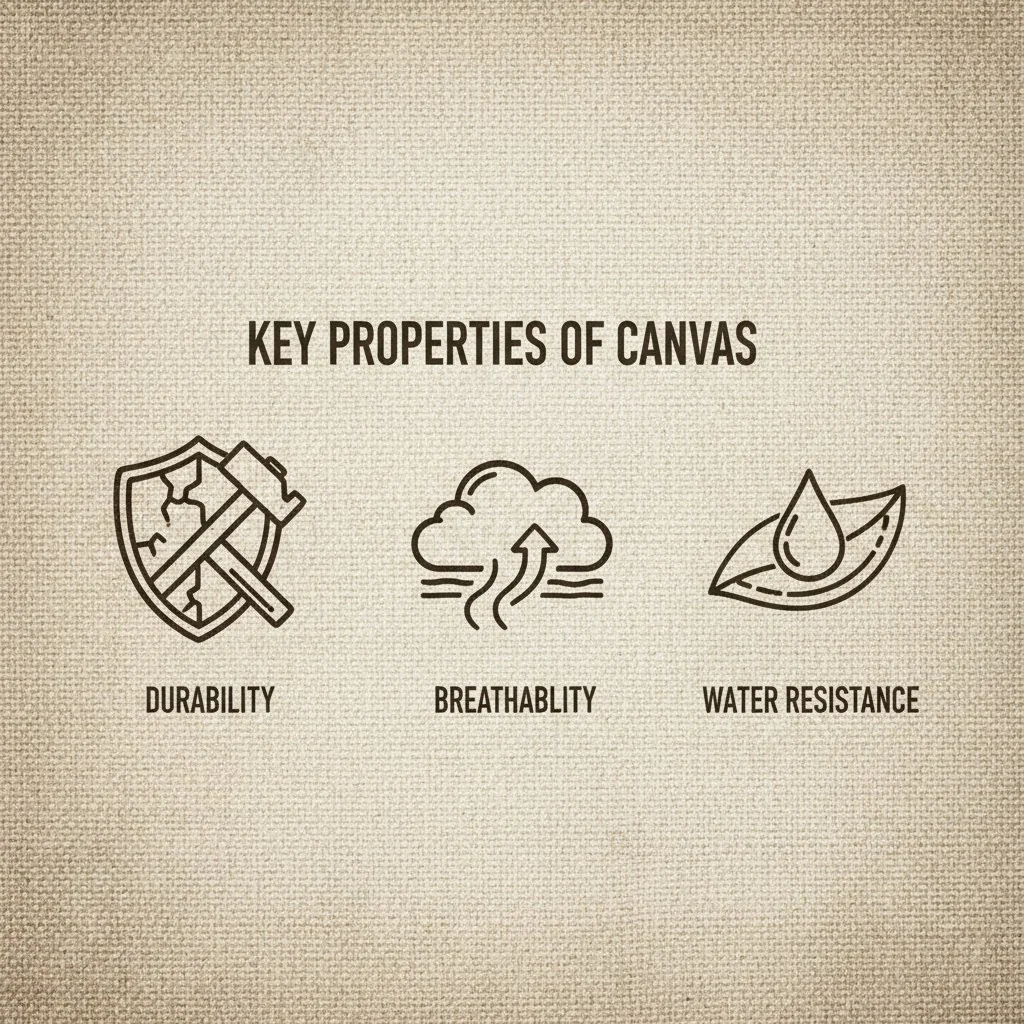
When I work with clients like Madison, we don’t just talk about a material being "good." We break down exactly why it’s good for her specific needs. Canvas has a fantastic set of properties that make it a consistent winner. It’s not just about being tough; it’s about the complete package it offers a brand. Let’s look at these properties in a more structured way.
Core Attributes for Bag Design
Each property serves a purpose, whether it’s for the end-user’s experience or for your business’s bottom line. Understanding these helps you design a better product and market it more effectively. For example, highlighting the eco-friendly aspect can attract a whole segment of conscious consumers.
| Property | Benefit for Bag Manufacturing |
|---|---|
| Durability | Resists wear and tear, leading to fewer returns and higher customer satisfaction. |
| customizability3 | Excellent surface for printing logos and designs, perfect for branding. |
| Aesthetic Appeal | Offers a timeless, natural look that works for many styles, from rustic to modern. |
| Cost-Effectiveness | More affordable than leather, allowing for better profit margins or competitive pricing. |
| breathability4 | Prevents musty odors in bags that carry gym clothes or food. |
| Water Resistance | Can be treated (e.g., waxed) to protect contents from rain, expanding its use cases. |
[claim claim=”Canvas fabric is highly customizable and accepts dyes and prints well.” istrue=”true” explanation=”The texture and composition of canvas make it an excellent surface for various printing and dyeing techniques, which is ideal for branding.”]
[claim claim=”Canvas is naturally lightweight, similar to nylon.” istrue=”false” explanation=”Canvas is a heavy-duty fabric and is generally heavier than synthetic materials like nylon or polyester, which is a trade-off for its durability.”]

How Durable Is Canvas and What Affects Its Strength?
Canvas is known for its durability, making it an excellent choice for bags, tents, and outdoor gear. However, not all canvas is the same—several factors affect its strength and overall performance.
Canvas is durable depending on factors like weave (plain is sturdy, twill is flexible), weight (heavier canvas is more durable), and treatments (waxed or waterproofed for extra strength and water resistance).
Here’s a breakdown of what makes canvas so durable and the key elements that contribute to its strength.
Factors That Affect Canvas Durability
| Factor | Impact on Durability |
|---|---|
| Canvas Weave | The weave pattern affects strength. Plain weave is sturdy but stiff, while twill weave is more flexible and tear-resistant. |
| Canvas Weight (GSM or OZ) | Heavier canvas (14-24 oz) is more durable, ideal for heavy-duty bags. Lighter canvas (6-10 oz) is softer but less durable. |
| Canvas Treatments (Waxing, Waterproofing) | Treatments like waxing or waterproof coatings enhance water resistance and overall strength, making canvas more durable. |
1. Canvas Weave
The way canvas is woven plays a significant role in its strength. The two main types of canvas weave are plain weave and twill weave.
-
Plain Weave:
This basic weave is strong and durable but can be stiffer and less flexible. It’s often used for heavy-duty items like tool bags, tarps, and tents. -
Twill Weave:
Twill weave has a diagonal pattern, making it more flexible and resistant to tearing. It’s softer than plain weave canvas and is commonly used for bags and backpacks.
Key Takeaway:
- Plain weave canvas is sturdier and ideal for heavy-duty items.
- Twill weave canvas is more flexible and tear-resistant, making it great for bags.
2. Canvas Weight (GSM or OZ)
The weight of canvas fabric directly affects its durability. It is commonly measured in oz per yard or GSM.
| Weight | Description | Common Uses | Durability |
|---|---|---|---|
| Lightweight (6-10 oz) | Soft, flexible, easy to handle. | Totes, wallets, casual bags. | Less durable; prone to wear over time. |
| Medium Weight (10-14 oz) | Balanced strength and flexibility. | Everyday bags, backpacks, small luggage. | Good durability for daily use and moderate wear. |
| Heavyweight (14-24 oz) | Thick, strong, and durable. | Duffel bags, tool bags, military gear. | Very durable; handles heavy loads and tough conditions. |
Key Takeaway:
- Heavyweight canvas is the most durable, perfect for rough conditions.
- Lightweight canvas is flexible but not as long-lasting.
3. Canvas Treatments (Waxing, Waterproofing, and Coatings)
Canvas can undergo treatments to improve its durability, particularly in outdoor or heavy-duty uses.
-
Waxed Canvas:
Waxed canvas is treated with wax to make it water-resistant and more durable. The wax protects the fabric from moisture, mildew, and abrasion, making it ideal for outdoor bags and gear. -
Waterproof Coatings:
Waterproof coatings like polyurethane or acrylic enhance canvas’s resistance to rain and moisture, ensuring items inside the bag stay dry. -
UV Protection:
UV coatings protect canvas from the sun, preventing fading and fabric breakdown over time.
Key Takeaway:
- Waxed and waterproof canvas is perfect for outdoor use, offering water resistance and enhanced durability.
- UV-protected canvas helps prolong the fabric’s life in sunny environments.
How Many Different Types of Canvas Fabric Are Used in Bags?
Think all canvas is the same? This misconception can limit your product’s potential. Choosing the wrong type can ruin a great design. Let’s explore the different canvas options.
There are several types of canvas used in bags, each with unique qualities. Key varieties include cotton canvas5, Polyester Canvas, Blends, Waxed Canvas for water resistance, and Duck Canvas, which is a more tightly woven and durable version. The choice depends on the desired look, function, and price.
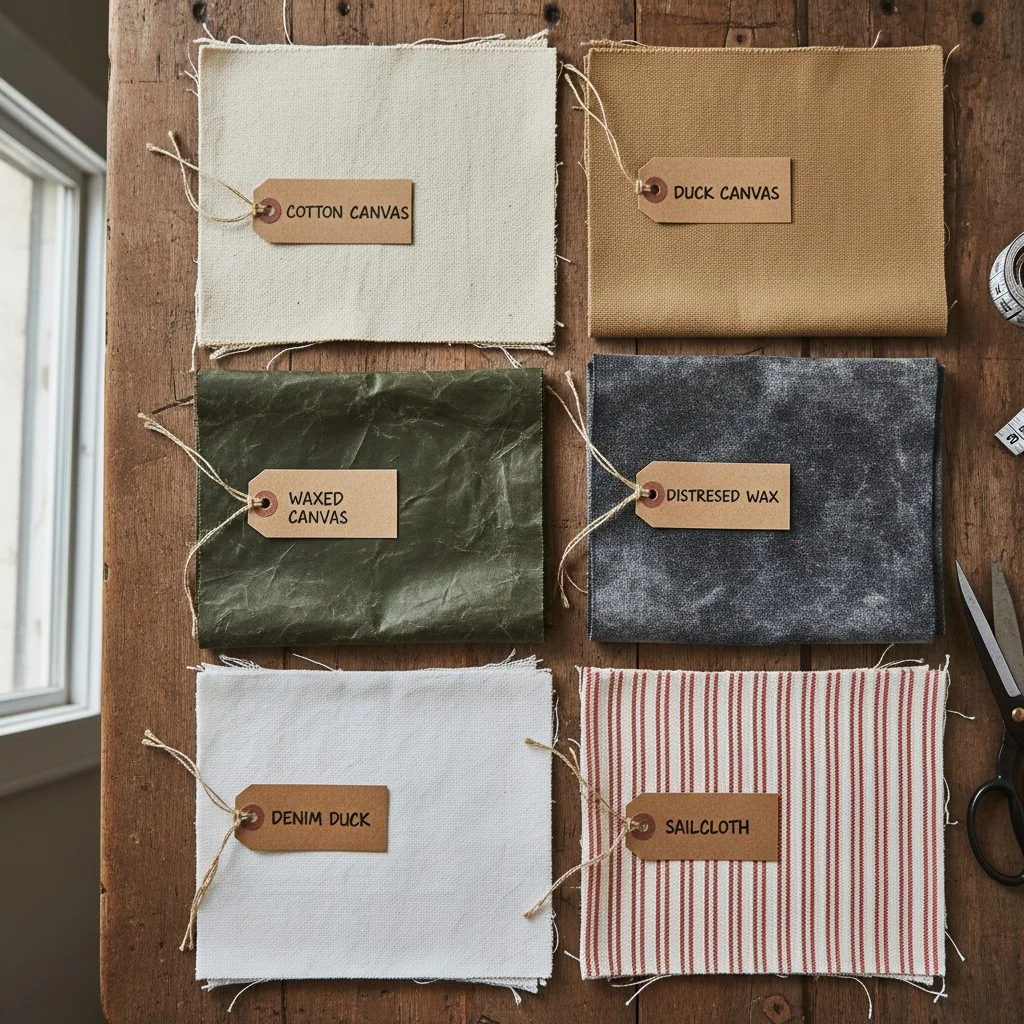
One of the most exciting parts of my job is helping brands navigate material choices. When it comes to canvas, the options can be surprising. It’s not a one-size-fits-all situation. The type of canvas you choose will directly impact your bag’s performance, feel, and even its story. For instance, choosing organic canvas6 can be a powerful part of your brand’s commitment to sustainability.
A Comparative Guide to Canvas Types
To make it easier, I’ve put together a table that breaks down the most common types I see used in bag manufacturing. Think of this as your cheat sheet for your next design meeting.
| Canvas Type | Key Characteristics | Best For |
|---|---|---|
| Cotton Canvas | Soft, breathable, eco-friendly. The classic choice. | Totes, backpacks, everyday bags. |
| duck canvas7 | Tightly woven cotton, smoother and more durable than plain canvas. | Heavy-duty work bags, durable duffels. |
| waxed canvas8 | Cotton canvas treated with wax. Water-resistant, develops a unique patina. | Outdoor gear, messenger bags, dopp kits. |
| polyester canvas9 | Synthetic, water-resistant, fade-resistant, very durable. | Outdoor backpacks, bags needing vibrant, long-lasting color. |
| Linen Canvas | Made from flax fibers. Strong, absorbent, and has a distinct texture. | High-end fashion totes, luxury accessory bags. |
| Organic Canvas | Made from organically grown cotton. Sustainable and chemical-free. | Eco-conscious brands, baby bags, food-safe totes. |
[claim claim=”Duck canvas is a type of cotton canvas with a tighter, smoother weave.” istrue=”true” explanation=”The term ‘duck’ comes from the Dutch word ‘doek’ for cloth. It refers to a specific, very tight plain weave that makes it stronger than standard canvas.”]
[claim claim=”Waxed canvas and polyester canvas have the same level of breathability.” istrue=”false” explanation=”Waxed canvas (treated cotton) is less breathable due to the wax coating, and polyester canvas (a synthetic) is not breathable at all, unlike natural, untreated cotton canvas.”]
What are the Applications of Canvas Fabric in Bag Manufacturing?
Is canvas right for your bag concept? You might be underestimating its versatility. Let’s explore the many types of bags that are perfectly made from canvas.
Canvas is used across a huge range of bags due to its versatility. Common applications include everyday tote bags, rugged backpacks, stylish messenger bags, durable duffel bags, and specialized items like tool bags and promotional totes. Its strength and customizability make it suitable for almost any style.
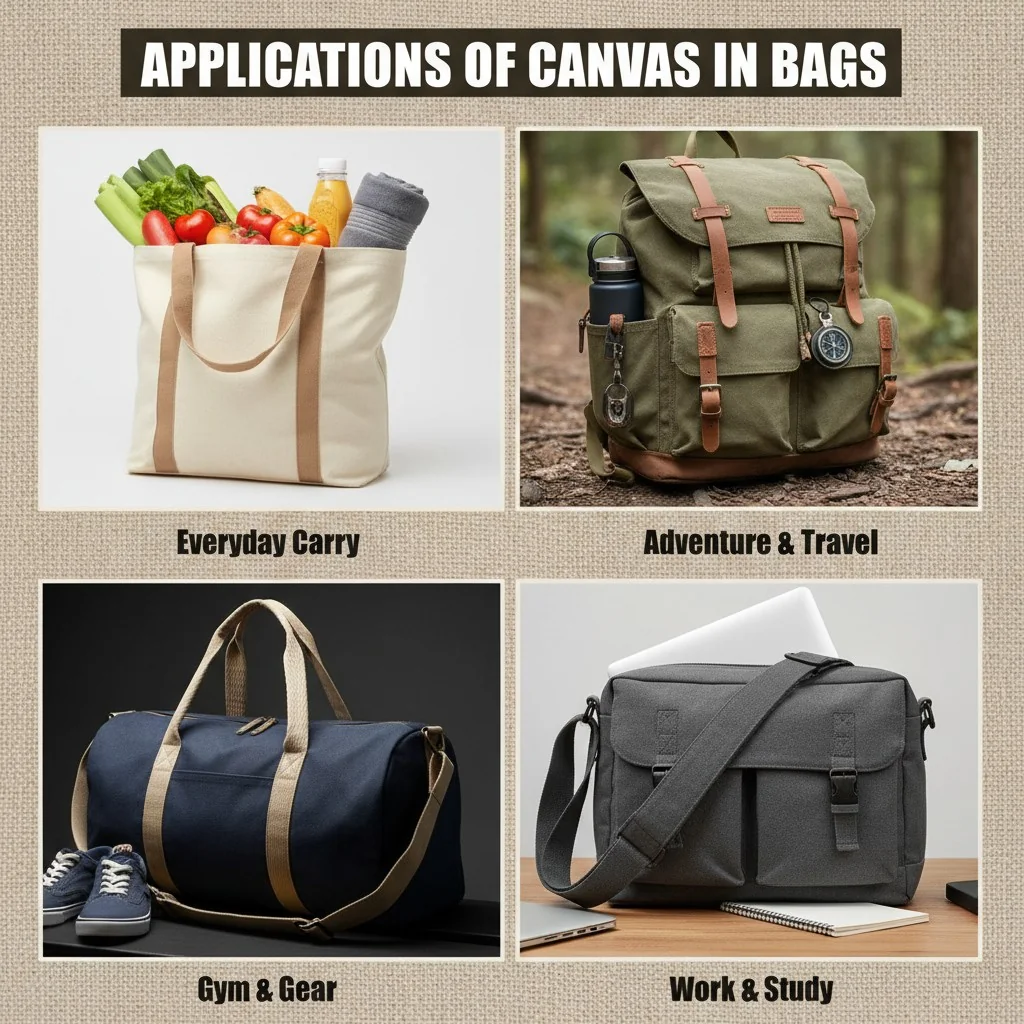
In my years of working with manufacturers, I’ve seen canvas used in more ways than I can count. Its adaptability is its superpower. A brand might come to me for a simple promotional tote, and after we discuss the options, they leave with a plan for a full line of canvas travel gear. It’s all about matching the right type of canvas to the right application.
Everyday Essentials
For daily use, nothing beats a classic canvas tote bag. They are strong enough to carry groceries, books, or a laptop. Plus, they are a fantastic blank slate for logos and creative designs, making them a favorite for brands and promotional events. Similarly, canvas backpacks are popular for their durability and timeless style, perfect for students and commuters.
- Canvas Tote Bags:
Canvas tote bags are a classic everyday essential, strong enough to carry groceries, books, or a laptop. They also serve as a fantastic blank canvas for logos and creative designs, making them a favorite for brands and promotional events. With the rise in sustainability awareness, canvas tote bags have become an eco-friendly alternative to plastic bags, appealing to those looking for a more environmentally conscious option. - Canvas Backpacks:
Canvas backpacks are popular for their durability and timeless style, making them ideal for students and commuters. These backpacks not only serve practical purposes but also offer a classic and stylish design. Known for their resilience, they are perfect for everyday use and are designed to withstand the wear and tear of daily commuting. - Canvas Duffel Bag:
Canvas duffel bags are perfect for those who need a reliable, spacious, and durable bag for travel, sports, or gym use. Their large, cylindrical design allows for easy packing of bulky items, and their sturdy canvas construction can handle the demands of heavy use.
Niche and Specialty Bags
Canvas also excels in more specialized roles. Heavy-duty duck canvas is ideal for tool bags because it resists punctures and abrasion. Waxed canvas is the go-to for outdoor-focused products like messenger bags and dopp kits, where protection from the elements is key. Even in corporate gifting, simple canvas drawstring bags or portfolios offer a high-quality, sustainable alternative to plastic. The possibilities are truly endless.
- Duck Canvas Tool Bags
Duck canvas is a heavy-duty fabric known for its resistance to punctures and abrasions, making it perfect for tool bags. These bags are built to withstand tough conditions and are often used in construction, mechanical, or outdoor work environments where durability is key. - Waxed Canvas Outdoor Bags:
Waxed canvas is the go-to fabric for outdoor-focused products. It provides excellent protection from the elements, making it ideal for bags used in hiking, camping, and other outdoor activities. The waxed finish gives the fabric a water-resistant quality, ensuring that your gear stays dry even in wet conditions. - Messenger Bags:
Messenger bags made from canvas are a staple for casual and work use. These bags are known for their practicality and stylish appearance, often used by cyclists, students, and professionals. The spacious interior allows for easy access to items like laptops, notebooks, and documents, while the durable canvas material ensures long-lasting use. - Dopp Kits:
Canvas dopp kits are a travel essential for toiletries. Often made from waxed canvas for added durability and water resistance, these bags are ideal for keeping personal care items organized during trips. Their compact design makes them easy to carry in luggage or backpacks. - Canvas Drawstring Bags:
These simple yet stylish bags are perfect for carrying smaller items. Whether used for gym gear, casual outings, or as an eco-friendly promotional item, canvas drawstring bags are a sustainable alternative to plastic. Their lightweight design and practicality make them a popular choice for both individuals and brands.
[claim claim=”Canvas is a popular material for promotional tote bags due to its cost-effectiveness and printability.” istrue=”true” explanation=”Brands often choose canvas for promotional items because it provides a durable, reusable product that effectively showcases a logo at a reasonable cost.”]
[claim claim=”Canvas is only suitable for casual, unstructured bags.” istrue=”false” explanation=”While great for totes, heavier weights of canvas and proper construction techniques allow it to be used for structured bags like backpacks, briefcases, and duffels.”]

Canvas vs. Other Materials: Why Choose Canvas for Bags?
Leather is luxurious and nylon is lightweight. So why pick canvas? Choosing the wrong material can be a costly mistake. Let’s compare them to see canvas’s unique advantages.
Choose canvas for its unique balance of durability, style, and affordability. Unlike leather, it’s more cost-effective and lighter. Compared to synthetics like nylon, it offers a more natural aesthetic, better breathability, and a more sustainable profile, making it a versatile and valuable choice.
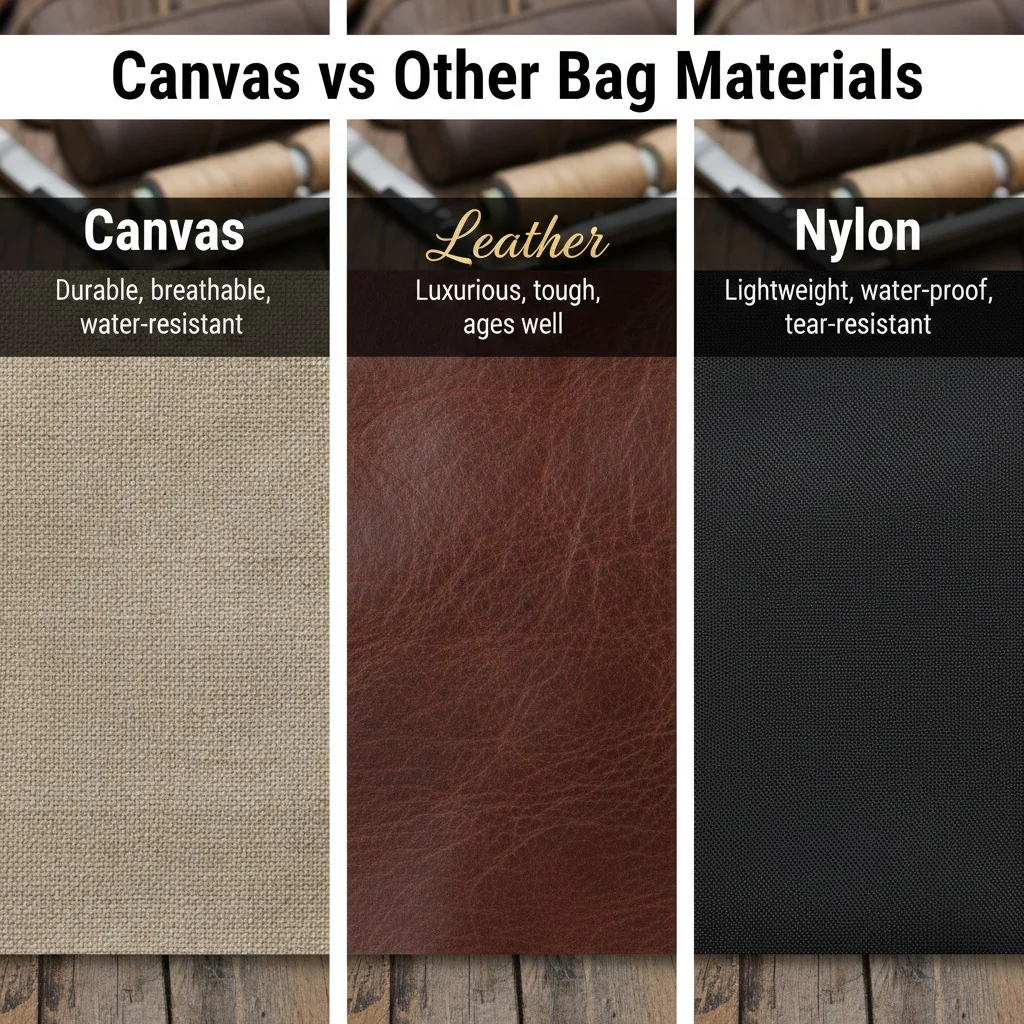
This is a conversation I have almost daily with brand owners. The "best" material is always relative to your brand’s identity, target customer, and price point. Canvas often hits a sweet spot that other materials can’t. It bridges the gap between the premium feel of natural materials and the practical performance of synthetics.
Canvas vs. The Competition
Let’s put canvas head-to-head with two other popular bag materials: leather and nylon/polyester. This comparison helps clarify exactly when and why you should opt for canvas. For an e-commerce seller like Madison, this balance is everything.
| Feature | Canvas | Leather | Nylon/Polyester |
|---|---|---|---|
| Durability | Very High | Very High | High |
| Cost | Moderate | High | Low to Moderate |
| Aesthetic | Natural, classic, versatile | Premium, luxurious | Modern, technical, sporty |
| Weight | Medium to Heavy | Heavy | Very Light |
| Sustainability | High (if natural fibers) | Varies (tanning process) | Low (petroleum-based) |
| Customization | Excellent for printing | Good for embossing, limited printing | Good for printing |
As you can see, canvas provides a durable, stylish, and customizable option without the high cost and weight of leather. It also offers a more sustainable and natural feel than synthetic fabrics.
[claim claim=”Canvas is generally more affordable than genuine leather.” istrue=”true” explanation=”The raw materials and processing for canvas are less expensive than those for tanning and finishing high-quality leather, making it a more cost-effective choice.”]
[claim claim=”Canvas is lighter than nylon.” istrue=”false” explanation=”Nylon is a synthetic polymer known for being extremely lightweight, while canvas, typically made from cotton, is a heavier and denser fabric.”]
What are the Advantages and Disadvantages of Canvas in Bags?
Is canvas a flawless material for bags? Ignoring its downsides can lead to problems. Let’s look at both the pros and cons for a clear, honest perspective.
The main advantages of canvas are its durability, affordability, and classic style. It’s also eco-friendly and easy to customize. The disadvantages include its weight compared to synthetics, its tendency to absorb moisture if untreated, and the potential for wrinkling or fading over time.
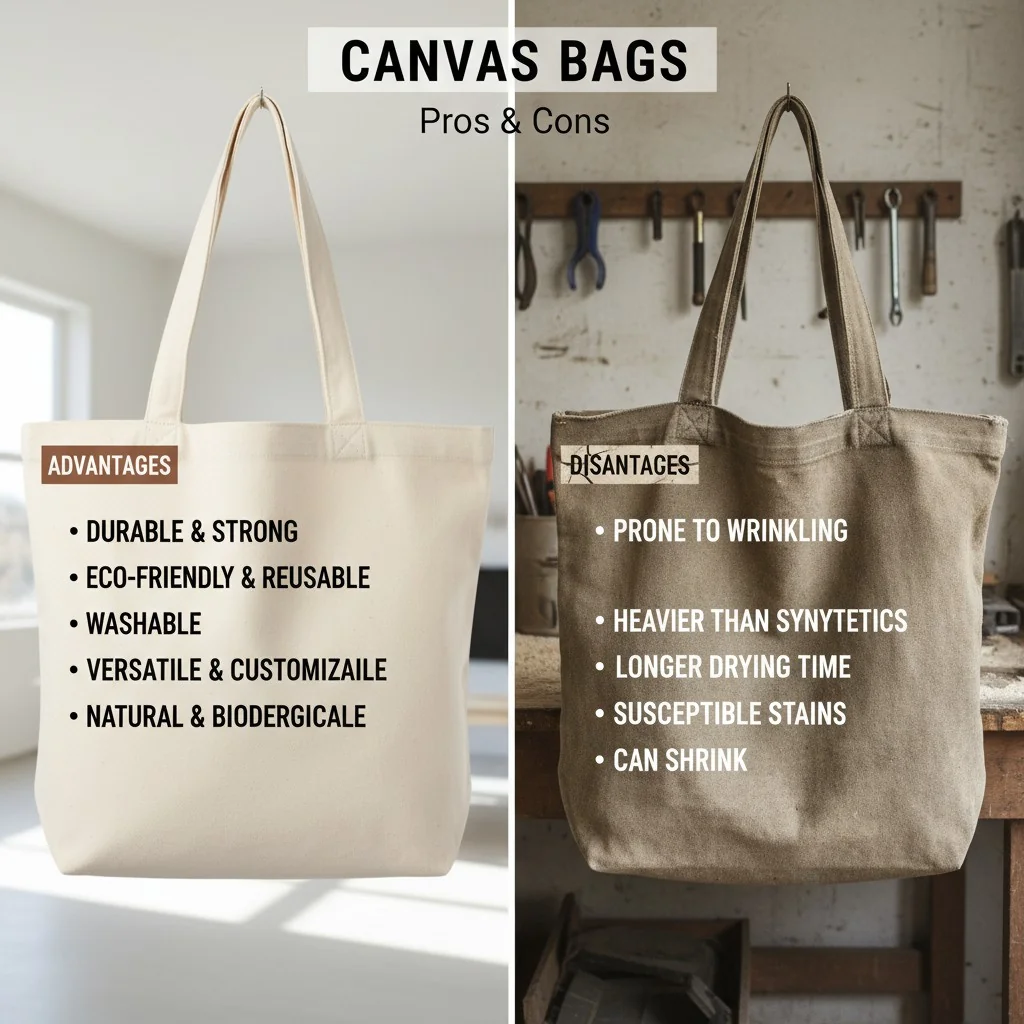
I believe in being completely transparent with my partners. Every material has its strengths and weaknesses, and being aware of them is the key to good design and managing customer expectations. Canvas is an amazing material, but it’s not the right choice for every single project. Acknowledging its disadvantages is just as important as celebrating its advantages.
Weighing Your Options
Here’s a straightforward breakdown to help you decide if canvas aligns with your product goals.
Advantages of Canvas:
- Tough and Durable: It’s built to last and can handle rough treatment, which means happy customers.
- Cost-Effective: It delivers a high-quality feel without the premium price tag of leather, protecting your margins.
- Timeless Style: The natural texture has an enduring appeal that doesn’t go out of fashion.
- Print-Friendly: It’s a perfect canvas (literally!) for your brand’s logo and creative designs.
- Sustainable Option: Natural canvas is biodegradable and a great story for eco-conscious brands.
Disadvantages of Canvas:
- Weight: It is heavier than nylon or polyester, which can be a factor for ultralight travel or sports bags.
- Water Absorption: Untreated canvas will soak up water, so it needs a coating for weather-resistant applications.
- Can Wrinkle: Lighter-weight canvas can wrinkle, which might affect the look of more structured designs.
- Potential to Stain: Being an absorbent natural fiber, it can be more prone to staining than non-porous synthetics.
[claim claim=”Untreated canvas can absorb moisture.” istrue=”true” explanation=”As a natural fiber, cotton canvas is absorbent. This is why treatments like waxing are used to make it water-resistant for outdoor use.”]
[claim claim=”Canvas never fades or changes color.” istrue=”false” explanation=”Like many dyed natural fabrics, especially cotton, canvas can fade over time with prolonged exposure to direct sunlight.”]
Conclusion
Canvas is a durable, versatile, and stylish material. Understanding its types, properties, and trade-offs helps you create exceptional bags that your customers will love for years to come.
References
-
Durability is a key factor in bag manufacturing, ensuring longevity and customer satisfaction. ↩
-
Understanding water resistance treatments can help you choose the right canvas for outdoor or weather-sensitive applications. ↩
-
Customizability allows brands to create unique designs, making canvas bags a popular choice for promotional items. ↩
-
Breathability prevents odors and enhances comfort, making it essential for bags carrying clothes or food. ↩
-
Cotton canvas is eco-friendly and versatile, making it a preferred choice for many bag designs. ↩
-
Organic canvas is sustainable and chemical-free, appealing to eco-conscious consumers. ↩
-
Duck canvas offers superior durability, ideal for heavy-duty bags and tools. ↩
-
Waxed canvas provides water resistance and a unique aesthetic, perfect for outdoor gear. ↩
-
Polyester canvas is durable and water-resistant, making it suitable for vibrant, long-lasting designs. ↩






