


Tired of lugging around a bulky bag for just your wallet and keys? It’s heavy, inconvenient, and doesn’t always match your look. A small backpack is the perfect solution.
A small backpack’s main purpose is to provide a compact, lightweight, and stylish way to carry your daily essentials1. It offers the hands-free convenience of a backpack without the bulk, making it ideal for short trips, city exploring, and minimalist lifestyles.
As someone who has spent years in the bag industry, I’ve seen trends come and go. But the small backpack has proven to be a lasting staple. For brand owners like you, understanding its core appeal is key to designing a product that customers will genuinely love and use every day. It’s not just about shrinking a regular backpack; it’s about rethinking functionality for a more focused purpose.
Let’s break down what makes these compact bags so essential and how you can tap into their potential for your own brand.
[claim claim=”The small backpack trend was heavily influenced by 90s fashion nostalgia.” istrue=”true” explanation=”Many fashion historians and trend reports link the resurgence of mini backpacks in the 2010s and 2020s to a broader revival of 1990s fashion trends.”]
[claim claim=”All small backpacks can fit a standard water bottle.” istrue=”false” explanation=”This is false. While many designs include a water bottle pocket, the most compact or fashion-focused mini backpacks may not have the space or a dedicated holder for one.”]
What Exactly Defines a Small Backpack?
The term "small backpack" can feel a bit vague when you’re trying to source a new product. This ambiguity can make it hard to design or order the right bag for your target market. Let’s get specific and define its key characteristics.
A small backpack is a compact and lightweight2 bag, typically with a capacity between 10 and 24 liters. It’s designed specifically for carrying daily essentials, prioritizing portability, comfort, and style over the massive storage capacity of its larger counterparts.
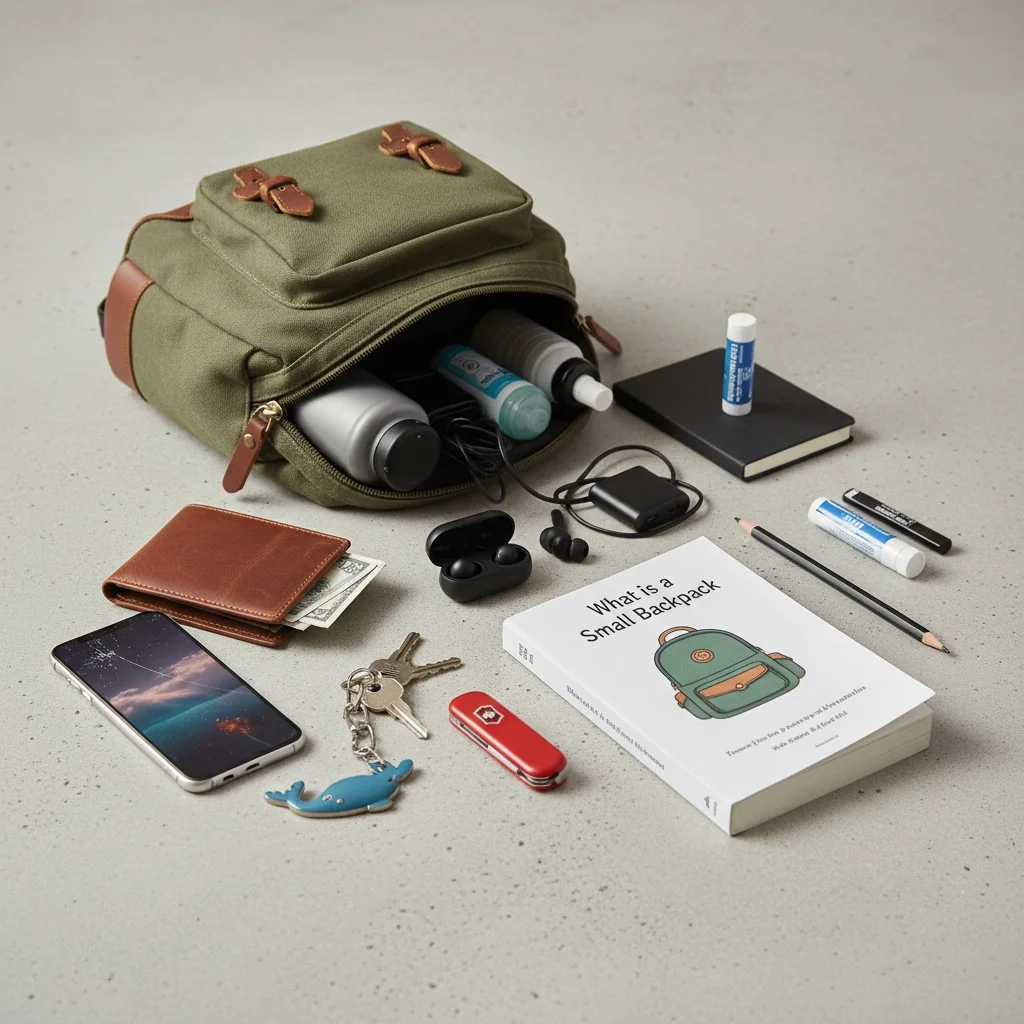
When I work with brands, I always emphasize that the design of a small backpack should be intentional. It’s not just a scaled-down version of a hiking pack. It’s a category all its own, built on a philosophy of carrying only what you need. This minimalist approach is what makes it so appealing to modern consumers who value efficiency and style.
Core Characteristics
The defining features go beyond just size.
- Lightweight Materials: They often use materials like nylon, canvas, vegan leather, or polyester to keep the bag itself from adding unnecessary weight.
- Simplified Organization: While they have pockets, the organization is usually straightforward—a main compartment, a front pocket, and maybe an internal sleeve.
- fashion-forward design3: Aesthetics are crucial. These bags often act as an accessory, completing an outfit rather than just serving a utilitarian purpose.
The ‘Why’ Behind the Design
The purpose of this design is to free the user. It frees them from the shoulder pain of a heavy tote and the inconvenience of a bulky pack. It’s for the person who is heading to a coffee shop, exploring a new city for a day, or going to a concert. They need their hands free and their essentials secure, and that’s exactly the problem a small backpack solves.
[claim claim=”The first modern zippered backpack was invented in 1938 by Gerry Cunningham.” istrue=”true” explanation=”Gerry Cunningham, an outdoor enthusiast, created the first zippered backpack to make it easier to access contents while climbing.”]
[claim claim=”Small backpacks are only for women.” istrue=”false” explanation=”This is false. Many brands offer unisex or men’s specific small backpacks, often called daypacks or sling bags, that are popular for commuting and daily use.”]
What Are the Most Popular Styles of Small Backpacks?
Choosing a style for your brand’s next product can feel overwhelming. If you pick a style that doesn’t resonate with your audience, you could be left with a lot of unsold inventory. Let’s explore the most popular and commercially successful styles to help you decide.
The most popular styles include the classic mini backpack, the versatile convertible bag that can be worn as a crossbody, the sleek minimalist design, and the sporty sling. Each one appeals to a different customer aesthetic and serves a slightly different function.
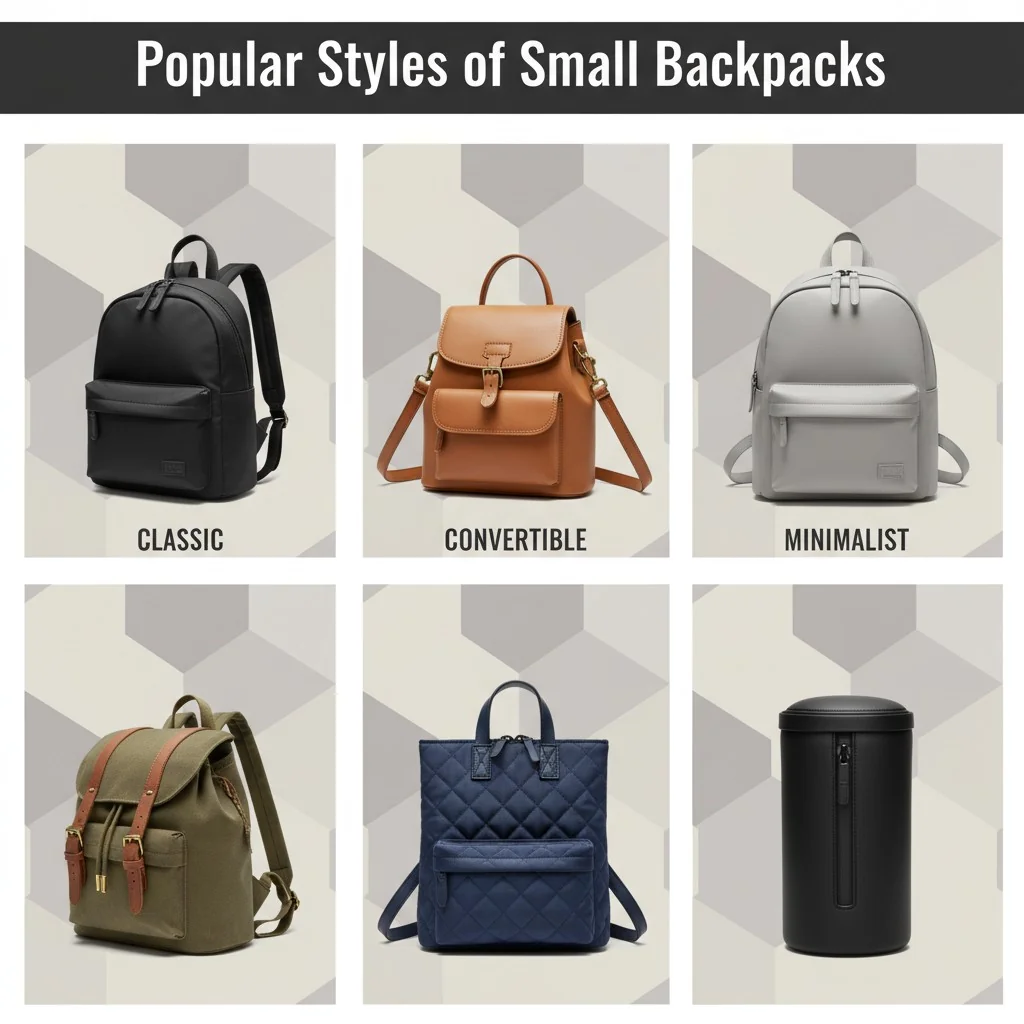
I remember working with a client who wanted to break into the urban commuter market. We debated between a classic mini and a convertible style. After analyzing her target customer, we realized the flexibility of a convertible bag—switching from a backpack on the subway to a crossbody in a crowded market—was a huge selling point. It became her bestseller. Understanding these nuances is everything.
A Look at Top Styles
| Style | Description | Target Customer | Common Materials |
|---|---|---|---|
| The Mini Classic | A shrunken version of a traditional school backpack. | Young, trend-focused, casual. | Canvas, Nylon, Corduroy |
| The Convertible | Features adjustable straps to be worn as a backpack, crossbody, or shoulder bag. | Practical, versatile, urban professional. | Vegan Leather, Premium Nylon |
| The Minimalist | Sleek, often monochromatic, with hidden seams and minimal hardware. | Design-conscious, professional, sophisticated. | Leather, Suede, Water-resistant fabrics |
| The Sling Pack | A single-strap bag worn across the chest or back. | Active, on-the-go, tech-focused. | Ripstop Nylon, Polyester |
Each of these styles offers a unique opportunity. The key is to align the style with your brand identity and the life your customer leads.
[claim claim=”Convertible bags are a growing segment in the accessories market.” istrue=”true” explanation=”Market research from various sources indicates a rising consumer demand for versatile and multi-functional accessories, including convertible backpacks.”]
[claim claim=”Sling packs and backpacks offer the same level of ergonomic support.” istrue=”false” explanation=”This is false. A two-strap backpack distributes weight more evenly across the back and shoulders, which is ergonomically superior to a single-strap sling pack for carrying heavier loads or for extended periods.”]
How Big is a Small Backpack, Really?
"Small" is a subjective word that can cause major confusion with suppliers. Ordering a production run of bags only to find they are smaller or larger than you envisioned is a costly mistake. Let’s define the dimensions and capacity of a small backpack clearly.
A small backpack typically has a capacity ranging from 10 to 24 liters. This size is intentionally designed to hold essentials like a wallet, phone, keys, a small tablet or e-reader, a water bottle, and a light snack or sweater.
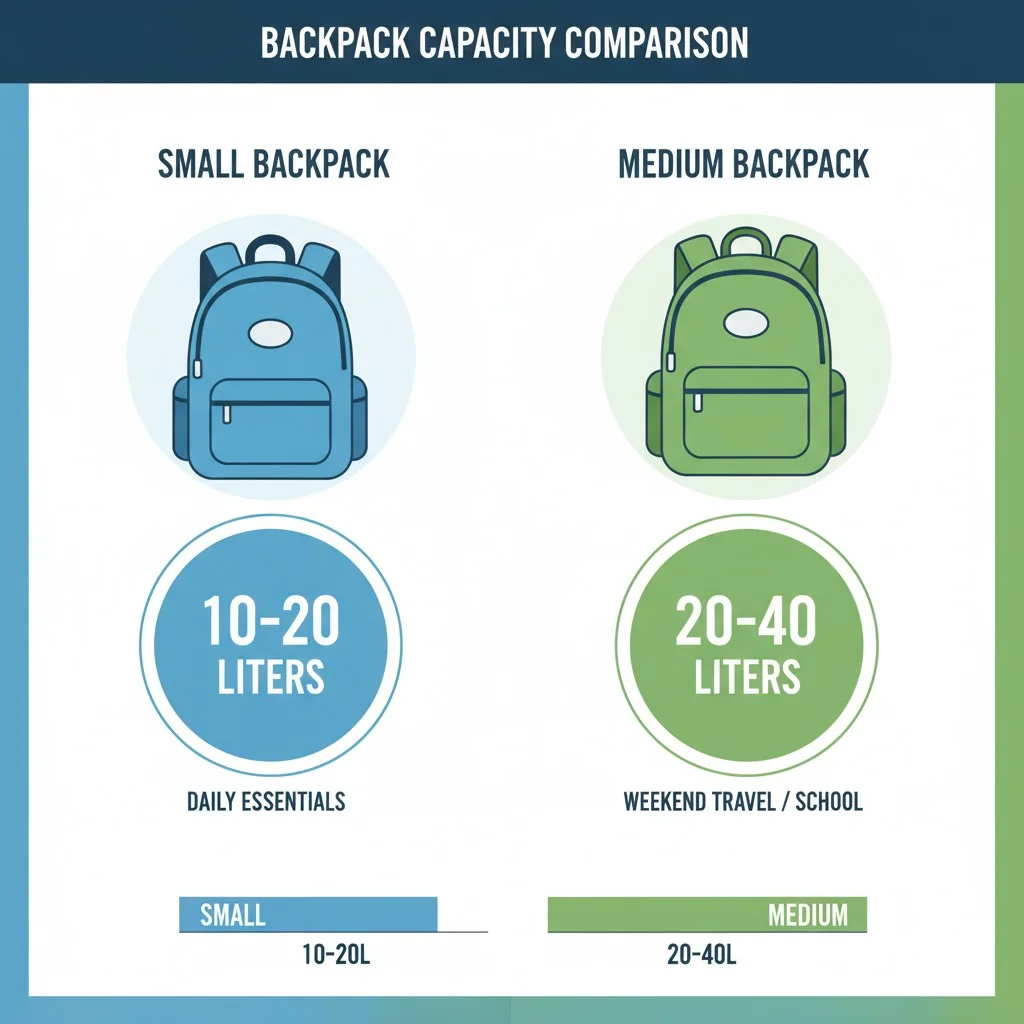
When I’m guiding a brand owner through a tech pack, the "capacity in liters" is one of the most important specs we define. It’s the universal language for bag volume. To give you a clearer picture, a standard school backpack is often 25-35 liters. So, a small backpack is significantly more compact. Below is a chart I often share with my clients to help them visualize the different size categories.
Backpack Size and Liters Chart
| Backpack Size and Liters Chart | Liters | Cubic Inches |
|---|---|---|
| Daypack or Small Backpack | 15 – 24 Liters | 915 – 1465 cu inches |
| Medium Backpack | 24 – 35 Liters | 1465 – 2135 cu inches |
| Large Backpack | 30 – 45 Liters | 1830 – 2746 cu inches |
What Fits Inside?
To make this even more practical, think about it in terms of items.
- A 15-Liter Pack: Perfect for the absolute essentials. It can comfortably fit a small tablet (like an iPad Mini), a wallet, phone, keys, and maybe a foldable umbrella or a very light jacket.
- A 24-Liter Pack: This offers more flexibility. It can hold everything the 15-liter can, plus a standard-size tablet or a small laptop (up to 13 inches), a book, and a water bottle in a side pocket. It’s the upper limit of "small" and borders on a medium daypack.
[claim claim=”A liter is a unit of volume equal to 1,000 cubic centimeters.” istrue=”true” explanation=”This is the standard scientific and metric definition of a liter, which is used globally to measure the capacity of containers, including backpacks.”]
[claim claim=”A 20-liter backpack is always approved as a ‘personal item’ on all airlines.” istrue=”false” explanation=”This is false. While a 20L backpack often fits, ‘personal item’ size restrictions vary significantly by airline. Some budget airlines have very strict dimensions that even a small backpack might exceed.”]
Which Occasions are Small Backpacks Best Suited For?
You need to show your customers why they need your product in their lives. Without clear and relatable use cases, your marketing messages can fall flat and fail to connect. So, let’s pinpoint the key occasions where a small backpack is the perfect choice.
Small backpacks are best suited for daily commutes, weekend outings, city exploration, concerts, and festivals. They are ideal for any activity where you need to carry your essentials but want to remain hands-free, comfortable, and unburdened by a larger bag.
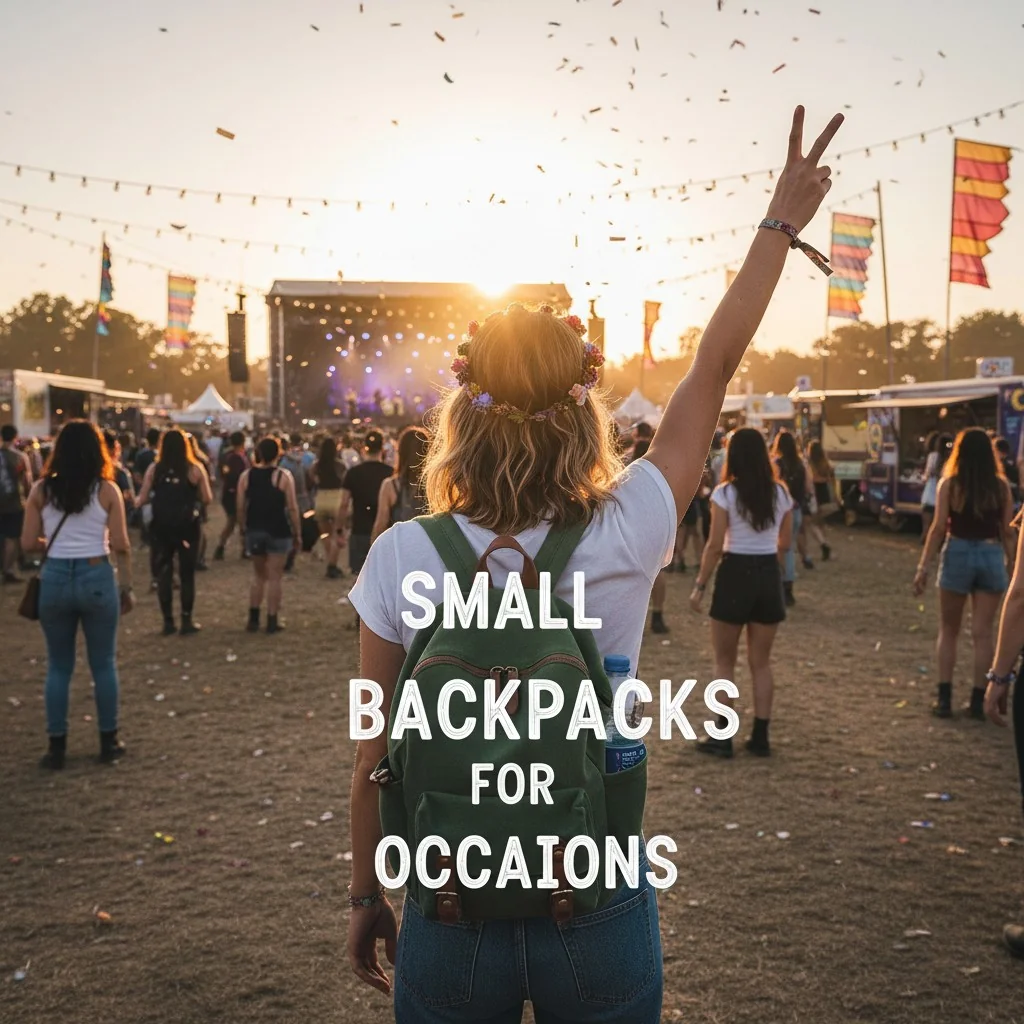
Thinking about these occasions is crucial when you’re in the design phase. For example, if you’re targeting the festival-goer, you might want to use water-resistant materials4 and include a hidden security pocket. If you’re targeting the daily commuter, a padded sleeve for a tablet becomes a must-have feature. I always advise my clients to build a "customer story" for each bag they design.
Key Use Cases for Marketing
The Daily Commute
For those who travel light to work, a small backpack is perfect. It holds a tablet, notebook, wallet, and lunch without the bulk of a traditional laptop bag. It’s also easier to navigate crowded trains and buses with a compact pack.
The Weekend Explorer
Whether it’s a trip to the farmer’s market, a walk in the park, or a day of shopping, a small backpack holds all the necessities. It keeps hands free for carrying shopping bags or holding a coffee.
The Travel Companion
A small backpack is the ideal "personal item" for a flight. It fits perfectly under the seat in front of you and holds everything you need for the plane: a book, headphones, snacks, and travel documents. It then doubles as a great daypack for exploring your destination.
[claim claim=”Many music festivals and stadiums now have bag size restrictions that favor small backpacks.” istrue=”true” explanation=”In recent years, for security reasons, many large venues have implemented clear bag policies or strict size limits, making small, compact backpacks one of the few compliant options.”]
[claim claim=”Small backpacks are not suitable for carrying any electronics.” istrue=”false” explanation=”This is false. Many small backpacks are specifically designed with padded sleeves and compartments to safely carry small electronics like tablets, e-readers, and even 13-inch laptops.”]
How Do Small Backpacks Enhance Functionality?
A small bag can sometimes seem limited in its usefulness. A potential customer might worry that it’s not practical enough for their needs, choosing a larger bag just in case. However, smart design features can pack a surprising amount of functionality into a small space.
Small backpacks enhance functionality with thoughtful features like multiple compartments, hidden security pockets5, dedicated water bottle holders, and padded tech sleeves. These elements help organize essentials efficiently and add value that goes far beyond simply carrying items from one place to another.
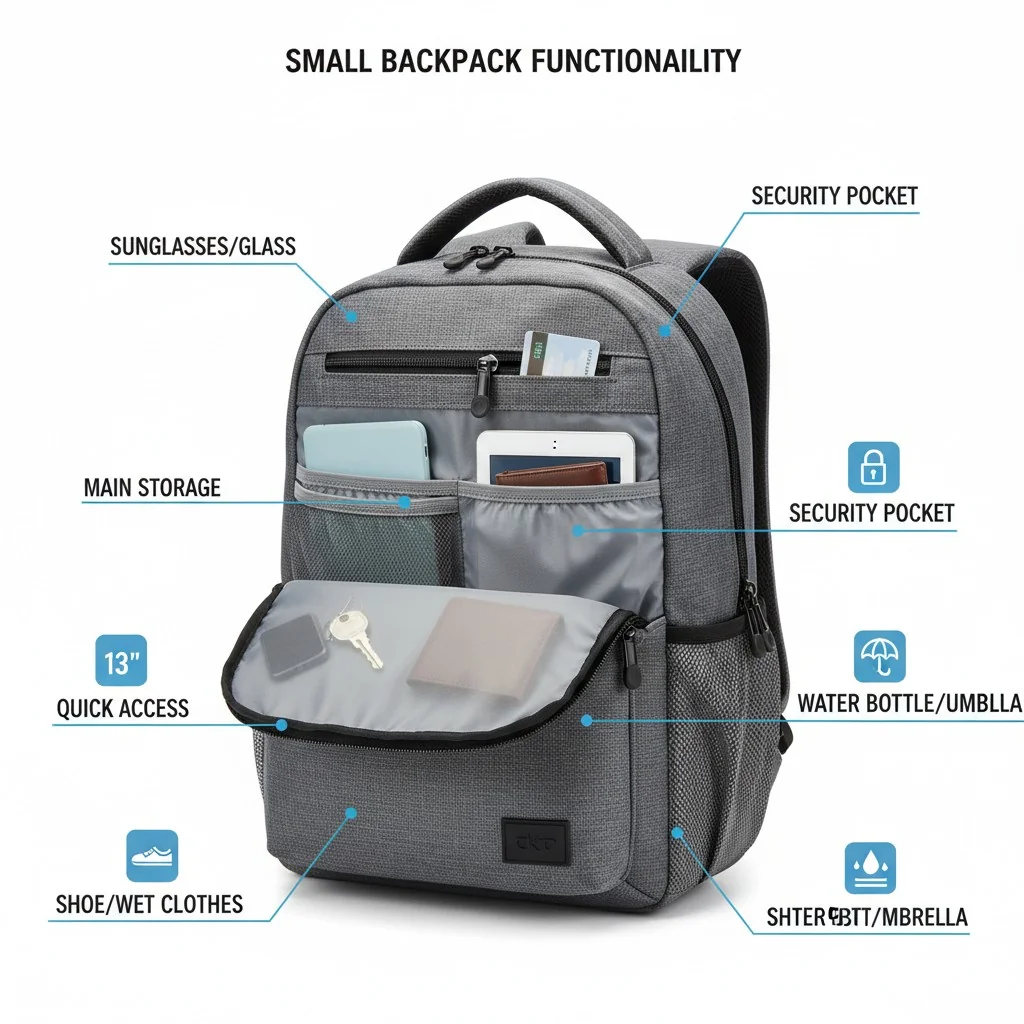
This is where manufacturing expertise really comes into play. As a designer or brand owner, you can have great ideas, but you need a partner who can execute them well. When we at Osgoodway develop a new bag, we focus on maximizing every inch. We ask questions like: "Where would a user put their keys for quick access?" or "How can we add a security pocket that’s both accessible and discreet?"
Smart Features to Consider
Internal Organization
Don’t just offer an empty sack. Even in a small bag, people want organization.
- Zippered Pockets: For securing loose items like coins or lip balm.
- Slip Pockets: For easy access to a phone or transit card.
- Key Leash: A simple but incredibly useful feature that prevents keys from getting lost at the bottom of the bag.
External Features
Functionality isn’t just on the inside.
- Hidden Back Pocket: A pocket that sits against the wearer’s back is perfect for storing a passport or wallet securely.
- Expandable Water Bottle Holder: A side pocket that can stretch to fit a water bottle but lays flat when not in use maintains a sleek profile.
- Durable Hardware: High-quality zippers and clasps not only last longer but also add to the premium feel of the bag.
[claim claim=”RFID-blocking pockets can prevent theft of credit card information.” istrue=”true” explanation=”RFID-blocking materials contain a layer of carbon fiber or aluminum that creates a Faraday cage, blocking the electromagnetic signals needed for unauthorized scanning of RFID-chipped cards.”]
[claim claim=”All small backpacks are made from eco-friendly materials.” istrue=”false” explanation=”This is false. While many brands are moving towards sustainable materials like recycled polyester (rPET) or organic cotton, a large number of backpacks are still made from virgin nylon and polyester.”]
How Do Small Backpacks Compare to Other Small Bags?
Your customers have other choices, like tote bags, crossbody bags, and fanny packs. To sell your product effectively, you need to understand and articulate its unique selling proposition. Let’s compare the small backpack head-to-head with its main competitors.
Compared to totes or crossbody bags, small backpacks offer superior ergonomic comfort6 by distributing weight evenly across both shoulders. This makes them the best choice for carrying items for more than a few minutes, preventing neck and shoulder strain.
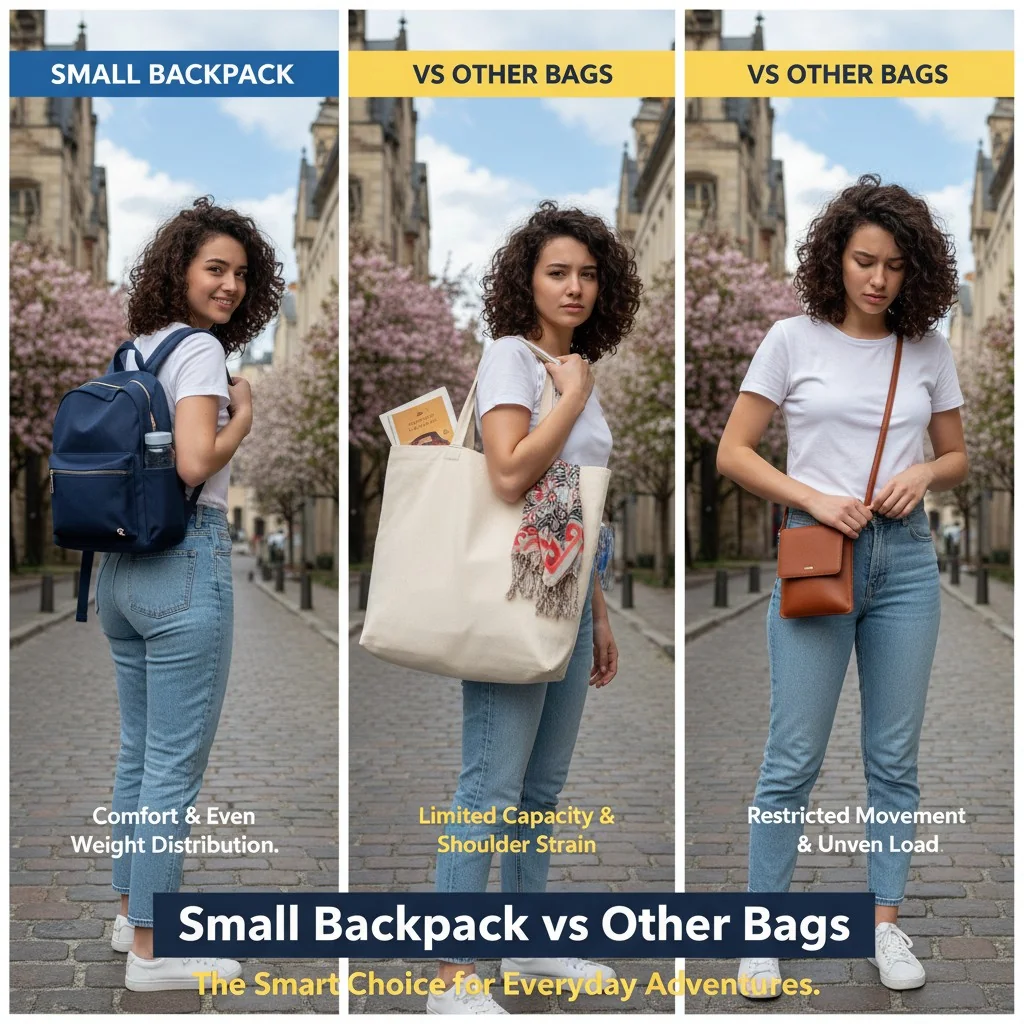
I often see people struggling with a heavy tote bag slung over one shoulder, causing them to hunch over. It’s a common problem that a small backpack solves beautifully. While a crossbody offers hands-free convenience, it still places all the weight on one shoulder. The two-strap design of a backpack is its biggest functional advantage. For brand owners, highlighting this health and comfort benefit in your marketing can be a powerful differentiator.
Head-to-Head Comparison
| Feature | Small Backpack | Tote Bag | Crossbody Bag |
|---|---|---|---|
| Ergonomics | Excellent (weight is evenly distributed) | Poor (all weight on one shoulder) | Fair (weight on one shoulder/hip) |
| Security | Good (zippered and close to the body) | Poor (often open-top, easy for pickpockets) | Good (worn on the front, easy to watch) |
| Hands-Free | Excellent (both hands are completely free) | Poor (often needs one hand to stabilize) | Excellent (both hands are free) |
| Capacity | Good (structured to hold more items neatly) | Good (can hold a lot, but unorganized) | Limited (best for minimal items) |
While a tote might be great for throwing things in for a short trip to the beach, and a crossbody is perfect for a night out with just a phone and wallet, the small backpack is the undisputed winner for all-day comfort and versatile carrying.
[claim claim=”Carrying a heavy bag on one shoulder can lead to long-term posture problems.” istrue=”true” explanation=”Chiropractors and physical therapists widely agree that asymmetrical loads, like those from a heavy tote or messenger bag, can cause muscle imbalances, shoulder and neck pain, and poor posture over time.”]
[claim claim=”Tote bags are more secure than backpacks.” istrue=”false” explanation=”This is generally false. Most tote bags have an open top, making them far less secure than a zippered backpack, which can also be worn on the front in crowded areas for added security.”]
What Brands Make Good Small Backpacks?
It’s hard to know who your real competitors are in a crowded market. Without being aware of what successful brands are doing, your designs might feel dated or miss a key feature. Let’s look at some of the brands that are leading the small backpack market.
Iconic brands like Fjällräven with its Kånken, Herschel Supply Co. with its City Mid-Volume, and Dagne Dover with its Dakota backpack are leaders in this space. They succeed by masterfully combining distinct design, practical functionality, and a powerful brand story.
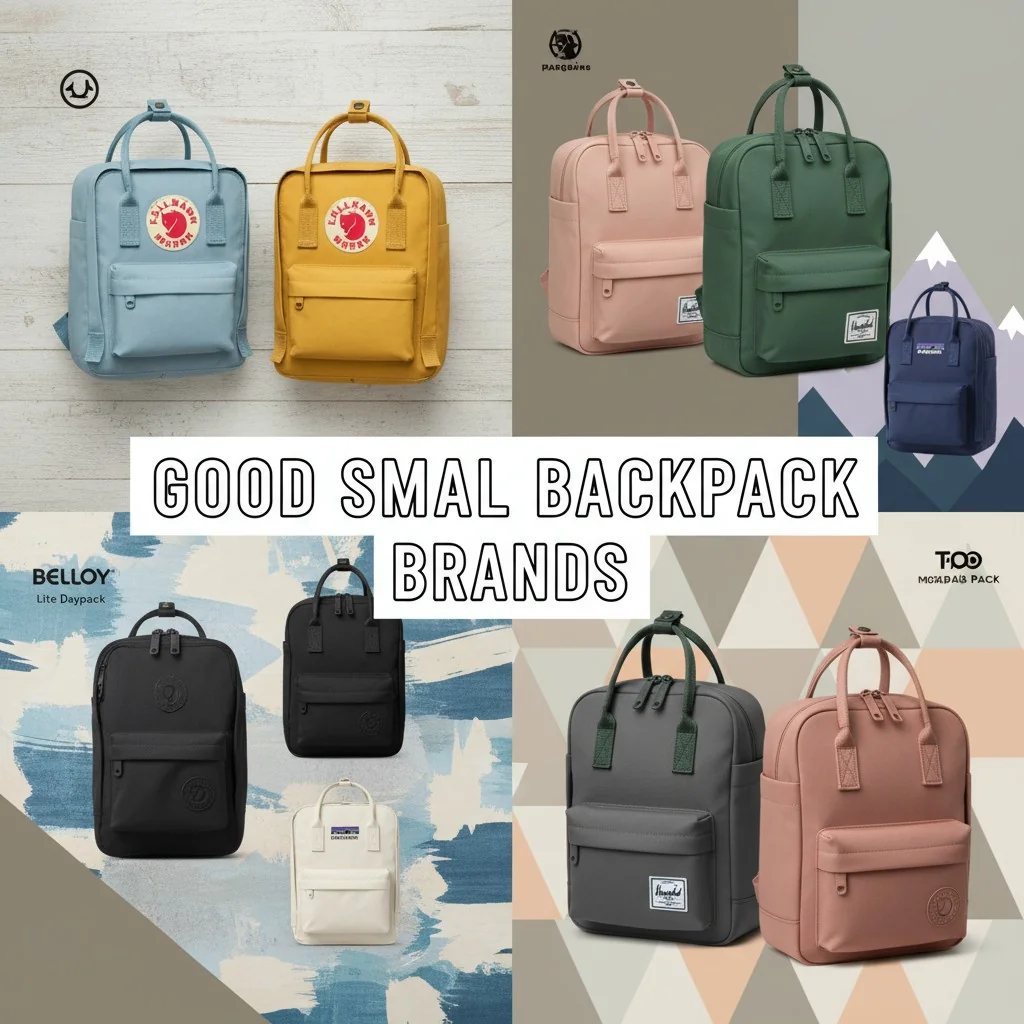
As a manufacturer, I’ve had a behind-the-scenes look at what makes these brands tick. It’s never just one thing. It’s the specific fabric they choose, the custom color palette they develop each season, and the way their marketing connects with a specific lifestyle. Studying them isn’t about copying; it’s about understanding the formula for success so you can create your own.
What You Can Learn from the Leaders
Fjällräven Kånken: The Icon
- What they do well: They created a simple, recognizable silhouette that became a cultural icon. Their use of durable Vinylon F fabric and a huge range of colors makes it a collector’s item.
- Takeaway for your brand: A unique, consistent design can be more powerful than chasing trends. Don’t be afraid to be different.
Herschel Supply Co.: The Modern Classic
- What they do well: Herschel took a vintage mountaineering aesthetic and made it modern and accessible. Their signature striped liner and leather details are instantly recognizable.
- Takeaway for your brand: Branding the inside of your bag can be just as important as the outside. Small details create a premium experience.
Dagne Dover: The Tech-Savvy Professional
- What they do well: They use modern, high-performance materials like neoprene and focus on organization for the modern professional. Their bags have a place for everything, from a laptop to a water bottle.
- Takeaway for your brand: Solve a specific problem for a specific audience. Functionality and organization are huge selling points.
[claim claim=”The Fjällräven Kånken was originally designed in 1978 for Swedish schoolchildren.” istrue=”true” explanation=”The Kånken was created by Åke Nordin to prevent back problems among schoolchildren, a common issue at the time due to the bags they were using.”]
[claim claim=”Herschel Supply Co. is a historic brand founded in the early 1900s.” istrue=”false” explanation=”This is a common misconception due to their branding. Herschel Supply Co. was actually founded in 2009 by brothers Jamie and Lyndon Cormack.”]
Conclusion
In short, a small backpack is a stylish, comfortable, and practical staple. Understanding its core purpose and potential allows you to design a product that your customers will truly love.
References
-
Explore options that perfectly fit your daily essentials while keeping you stylish. ↩
-
Discover how compact and lightweight backpacks enhance convenience and style for daily use. ↩
-
Stay updated on the latest trends that combine style and functionality in backpack design. ↩
-
Learn about materials that keep your belongings safe and dry in various conditions. ↩
-
Explore the importance of security features in backpacks for safe and organized storage. ↩
-
Understand the ergonomic advantages of small backpacks for better comfort during use. ↩






