


Struggling to stay hydrated on long trails or rides? Fumbling with water bottles breaks your rhythm and slows you down. A hydration backpack is the simple solution for convenient, on-the-go hydration.
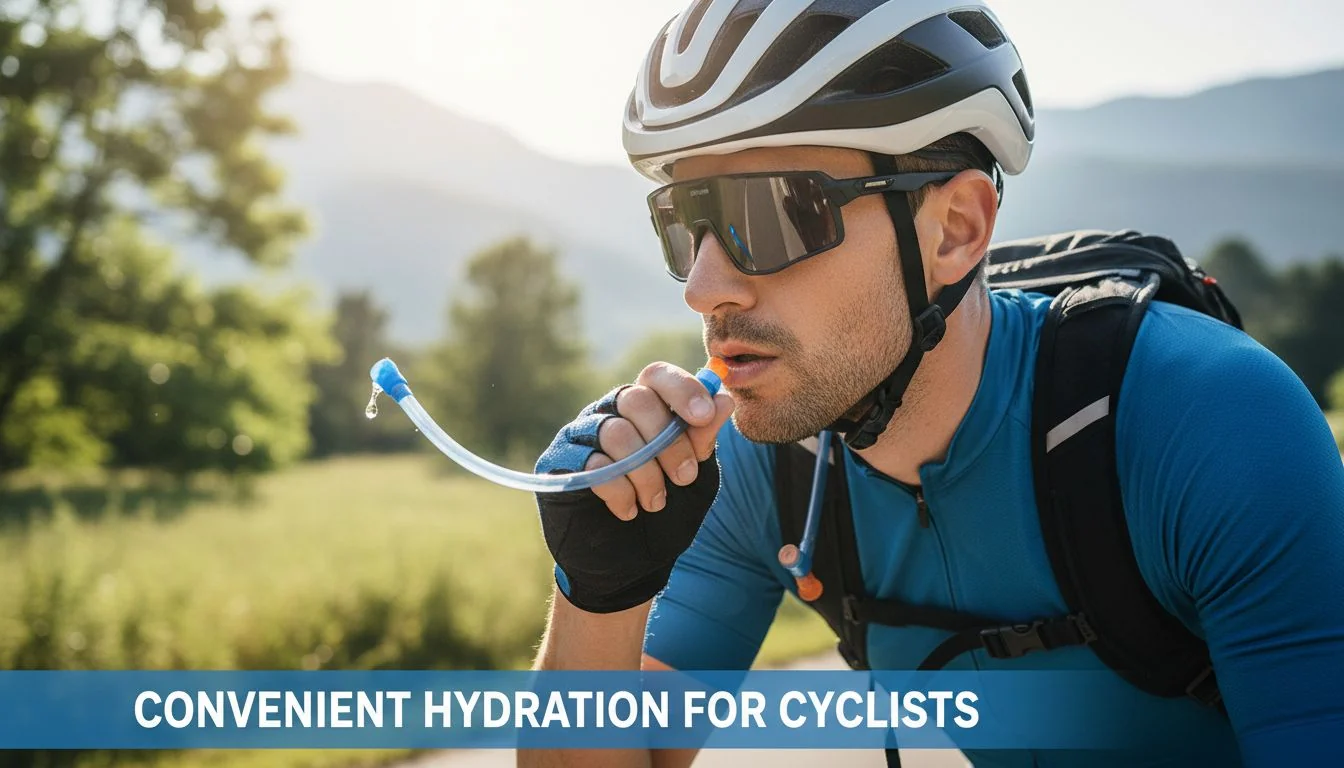
Hydration backpacks1 are essential for hiking and cycling because they allow for continuous hydration without interrupting your activity. They help prevent dehydration and heat-related illnesses, which improves your endurance and performance. These packs are tailored to the specific needs of cyclists and hikers.
When I first got into the bag manufacturing industry, I saw hydration packs as just backpacks with a water pouch. But after working with brands that supply serious athletes, I quickly learned they are a piece of high-performance2 equipment.
They are designed with so much intention, from the way they distribute weight to the materials used. If you’re a product manager like Olivia, understanding these details is key to developing a line that your customers will love. Let’s dive into what makes these bags so indispensable.
[claim claim=”Drinking water can improve athletic performance by up to 25%.” istrue=”false” explanation=”While hydration is critical for performance, a specific figure like 25% is an oversimplification and not universally supported by scientific studies. The effect varies greatly depending on the individual, activity, and level of dehydration.”]
[claim claim=”Losing as little as 2% of your body weight in fluid can negatively impact physical performance.” istrue=”true” explanation=”Scientific consensus shows that even mild dehydration, defined as a 2% loss of body mass through sweat, can lead to a noticeable decrease in endurance, power, and cognitive function.”]
Why Is Hydration So Important for Hiking and Cycling?
Feeling your energy drain halfway through a hike? That fatigue and dizziness might be more than just exertion. It could be dehydration3, which can ruin your day and even be dangerous.
Staying hydrated is crucial for maintaining energy, enhancing endurance, and preventing heat-related illnesses4. Dehydration causes fatigue and cramps, which hurts your performance and safety. A hydration pack ensures you have easy access to water, so you can drink continuously without stopping.
I remember a hike I did years ago before I really understood this. I brought a single water bottle and thought it was enough. An hour in, I was sluggish, my head started to ache, and every step felt like a chore. That experience taught me a valuable lesson about how your body functions during exercise. It’s not just about quenching thirst; it’s about fueling your body’s systems.
The Science of Sweat
When you hike or cycle, your body sweats to cool down. That sweat is mostly water, and you need to replace it. If you don’t, your blood volume decreases, making your heart work harder to pump blood to your muscles. This is what leads to that feeling of fatigue and reduced performance. It’s a simple input-output system. What you lose in sweat, you must put back in with water.
Performance and Safety Impact
Dehydration doesn’t just make you tired; it directly impacts your physical and mental abilities. For a product manager like Olivia, communicating these safety benefits is a powerful selling point.
| Dehydration Level (% Body Weight Loss) | Physical & Mental Effects |
|---|---|
| 1-2% | Thirst, impaired endurance, reduced aerobic performance. |
| 3-4% | Increased fatigue, dizziness, muscle cramps, reduced focus. |
| 5-6% | Headache, irritability, significant decline in performance. |
| >7% | Severe risk of heat exhaustion or heat stroke. |
[claim claim=”You should only drink water when you feel thirsty.” istrue=”false” explanation=”Thirst is an indicator that you are already beginning to dehydrate. For optimal performance and safety during exercise, it’s recommended to drink water at regular intervals, before you feel thirsty.”]
[claim claim=”Electrolytes lost in sweat, such as sodium and potassium, are also important to replace during long periods of exercise.” istrue=”true” explanation=”Water is essential, but during prolonged or intense activity, replacing electrolytes is also crucial for maintaining fluid balance and preventing muscle cramps.”]
How Does a Hydration Backpack Improve Your Hiking or Cycling Experience?
Tired of stopping your ride just to grab your water bottle? It’s clumsy, breaks your momentum, and you might even drop it. A hydration pack offers a much smoother experience.
Hydration backpacks provide hands-free hydration, letting you drink while on the move. This prevents interruptions, making it easier to maintain your pace. The built-in water reservoir5 and drinking tube offer quick, convenient access to water that is far more efficient than bottles.
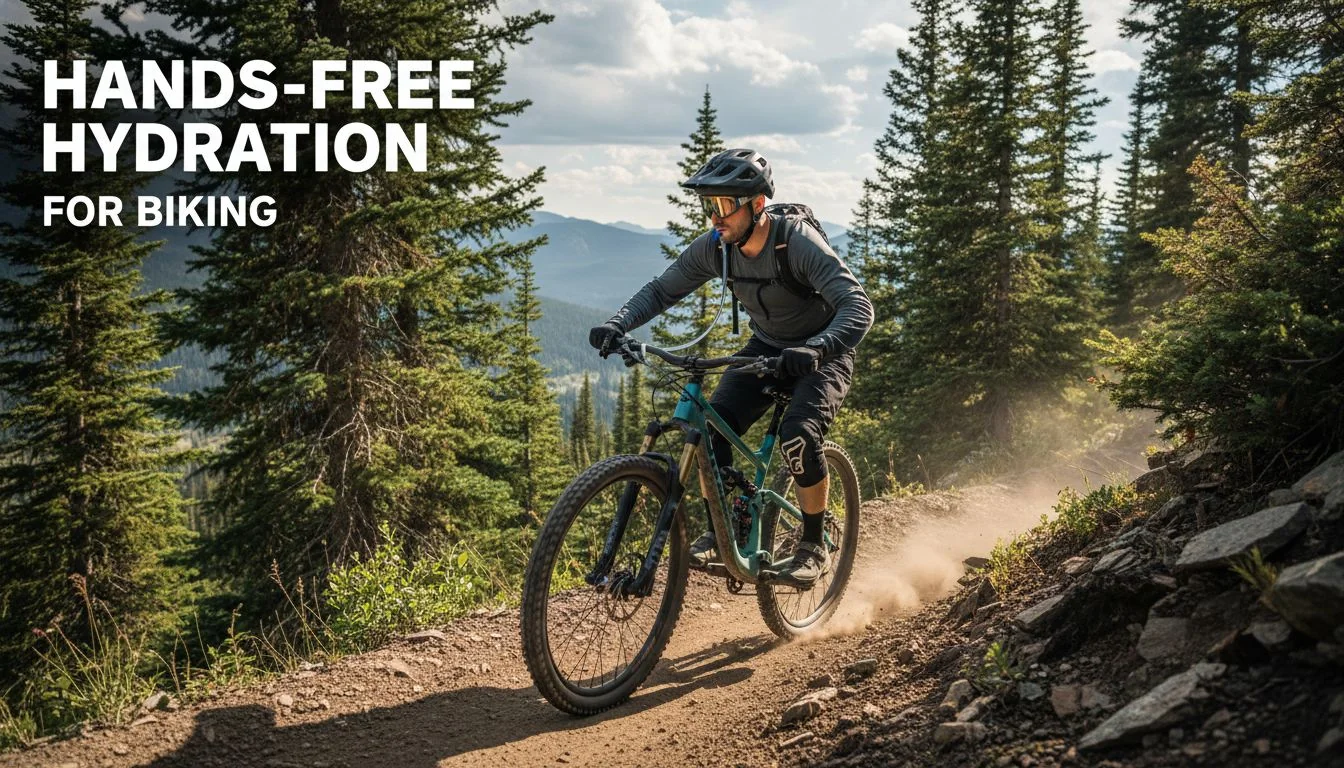
I’ve worked with cycling brands that are obsessed with efficiency. For them, every second counts. They explained to me that reaching for a bottle not only breaks your aerodynamic profile but also requires you to take a hand off the handlebars, which can be unsafe on tricky terrain. Seeing their riders seamlessly sip from a tube while navigating a technical descent really showed me the practical advantage. It’s about maintaining flow and focus.
Uninterrupted Momentum
The biggest benefit is the ability to drink without stopping or even slowing down.
- For Cyclists: You can keep both hands on the handlebars, maintaining control and stability, especially on uneven ground or in a group.
- For Hikers: You can sip while walking, even when using trekking poles. No need to stop, take off your pack, and dig for a bottle.
Better Balance and Comfort
Water bottles in side pockets can create an uneven load. A hydration reservoir, or bladder, sits flat against your back.
| Feature | Hydration Pack | Water Bottles |
|---|---|---|
| Access | Instant, hands-free via a drinking tube. | Requires stopping or one-handed maneuvering. |
| Weight Distribution | Centered and stable against the back. | Often unbalanced in side pockets. |
| Capacity | Typically 1.5-3 liters in one reservoir. | Limited by the number and size of bottles. |
| Efficiency | Encourages frequent, small sips. | Encourages less frequent, larger gulps. |
This improved balance means more comfort over long distances and less strain on your shoulders and back.
[claim claim=”Hydration packs are much heavier than carrying water bottles.” istrue=”false” explanation=”When comparing equal volumes of water, the weight is very similar. A 2-liter reservoir weighs about the same as two 1-liter water bottles, and the pack itself is often very lightweight.”]
[claim claim=”The design of a hydration pack encourages you to drink more water than you would with bottles.” istrue=”true” explanation=”The ease of access and convenience of a drinking tube lead most users to sip more frequently, resulting in better overall hydration compared to the effort of retrieving a water bottle.”]
What Are the Key Features to Look for in a Hydration Backpack?
Choosing a hydration pack can feel overwhelming with all the options. If you pick the wrong one, you could end up with a leaky, uncomfortable bag. Knowing the key features is essential.
When choosing a pack, consider the water reservoir capacity (1.5 to 3 liters), adjustable straps6 for comfort, and a breathable back panel. Also look for lightweight materials and extra storage. A good pack should be easy to refill and clean, with a durable, leak-proof design.
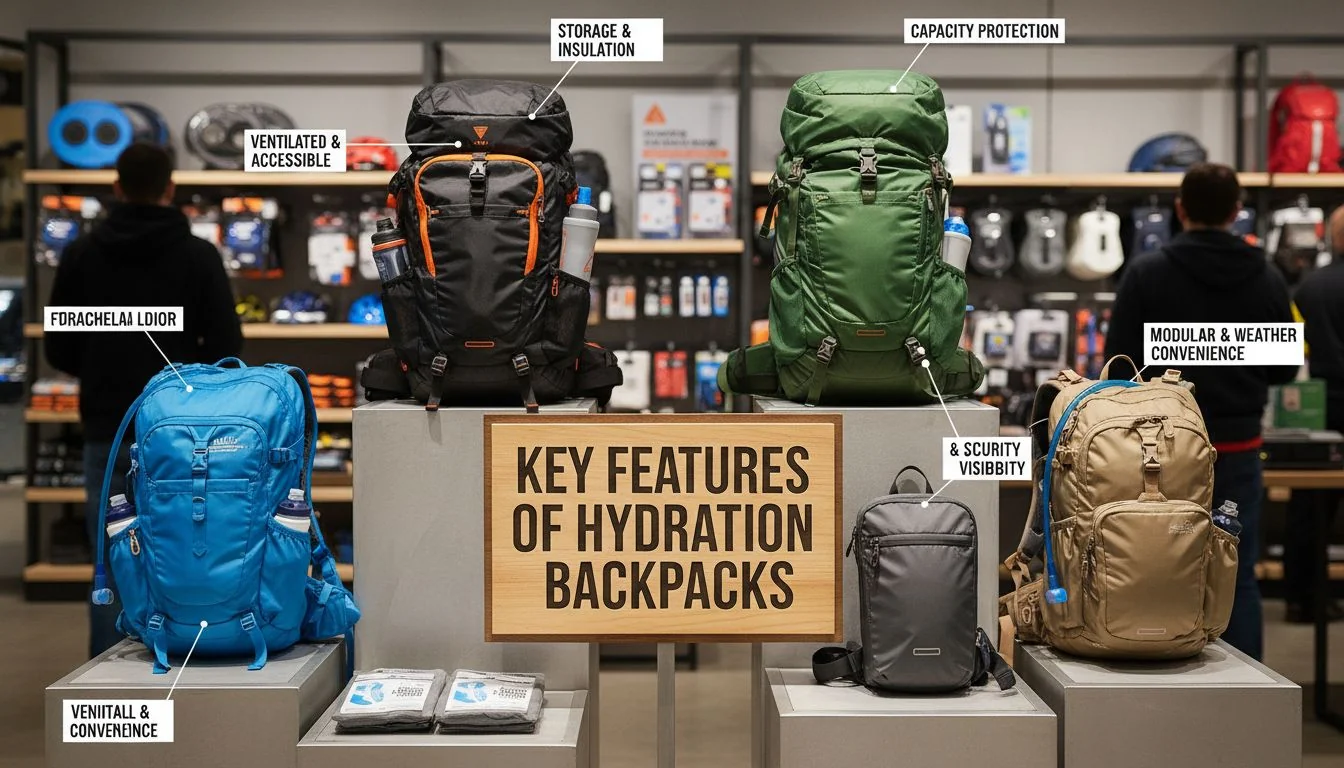
As someone who helps brands like Olivia’s design bags, I focus on the user experience. A pack might look great, but if the straps dig in or the bladder is a pain to clean, customers won’t use it. We spend a lot of time prototyping features like bite valves, hose clips, and back panel ventilation. These small details make a huge difference in comfort and usability on the trail.
The Core Components: Reservoir and Pack
Think of a hydration system in two parts: the water bladder and the bag that carries it. Both need to be right for you.
- The Reservoir (Bladder): This is the heart of the pack. Look for a wide mouth opening for easy cleaning and filling. A quick-disconnect tube is also a great feature, as it lets you refill the bladder without having to unthread the hose from the pack straps.
- The Pack Itself: This is about fit and function. The straps should be fully adjustable to fit your torso, and a sternum strap and hip belt are crucial for stability, especially on larger packs.

Feature Breakdown for Your Needs
Here’s a table to help you decide what matters most for your activity. This also helps answer the question of what size you need.
| Feature | What to Look For | Why It Matters |
|---|---|---|
| Reservoir Size | 1.5-2L for short trips (<3 hrs). 3L for all-day adventures. | Ensures you have enough water without carrying unnecessary weight. |
| Fit & Straps | Adjustable shoulder, sternum, and hip straps. | Distributes weight evenly and prevents the pack from bouncing around. |
| Back Panel | Mesh or channels for ventilation. | Reduces sweat and keeps you cooler and more comfortable. |
| Material | Lightweight, durable, and water-resistant fabrics like ripstop nylon. | The pack needs to withstand outdoor conditions without adding extra bulk. |
| Extra Storage | Pockets for keys, phone, snacks, and loops for trekking poles or a helmet. | Carries all your essentials in an organized way. |
[claim claim=”All hydration reservoirs are made from the same plastic material.” istrue=”false” explanation=”Reservoirs are made from various materials, most commonly TPU (thermoplastic polyurethane) or PEVA (polyethylene vinyl acetate). High-quality reservoirs are BPA-free, PVC-free, and have an antimicrobial treatment to prevent mold and bacteria growth.”]
[claim claim=”You can put sports drinks or juice in a hydration reservoir.” istrue=”true” explanation=”You can, but it’s crucial to clean the reservoir and tube thoroughly immediately after use to prevent sugar buildup, which can lead to mold and bacteria growth.”]
How Do Hydration Packs for Hiking and Cycling Differ?
You might think you can use any hydration pack for any sport. But using a bulky hiking pack on a bike ride will feel awkward and slow you down. Choosing a pack designed for your activity is key.
Hiking packs are generally larger with more storage for gear. Cycling packs are smaller and more streamlined to reduce wind resistance. They also often include features like reflective strips for road safety.
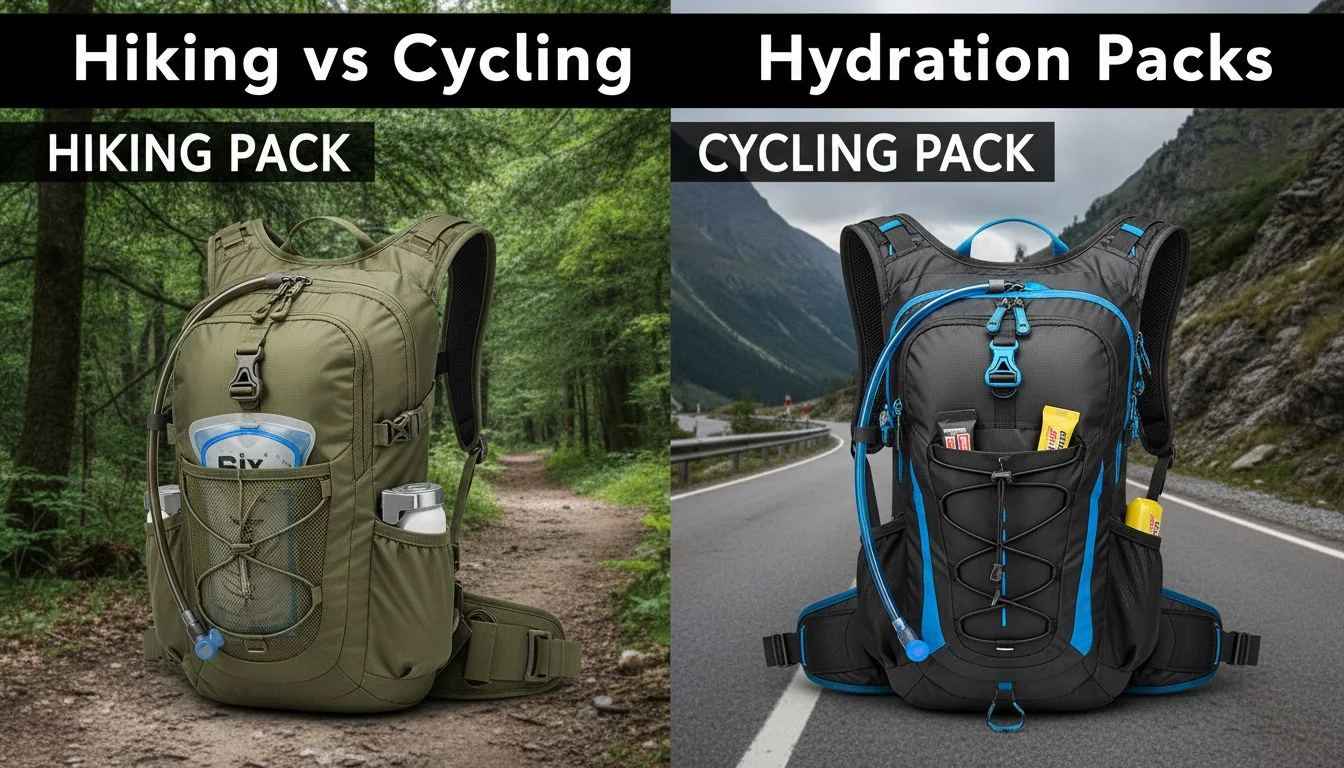
I once worked with a client who wanted to create a single "do-it-all" hydration pack. We made several prototypes, but we quickly realized that the features that make a great hiking pack are compromises for a cyclist, and vice-versa. A hiker needs room for a rain jacket and lunch, while a cyclist needs aerodynamics and a low profile. We ended up developing two separate, specialized lines, and both were far more successful than a single hybrid model would have been.
Hiking Hydration Packs 🥾
Hiking packs are essentially daypacks with an integrated hydration system, designed to carry weight comfortably for long hours of walking.
-
Shape and Fit: They are taller and broader, resembling a traditional backpack. The design includes a structured, padded back panel and a supportive hip belt. This is crucial for transferring the weight of gear and water from your shoulders to your hips, preventing fatigue.
-
Storage Capacity: Hiking packs have a much larger gear capacity, typically ranging from 10 to 35+ liters. This extra space is necessary for carrying the "10 essentials," such as extra layers of clothing, a first-aid kit, food, and a map. They often feature multiple external pockets, compression straps, and loops for trekking poles.
-
Best For: Carrying significant gear and water comfortably over long distances on foot.
Cycling Hydration Packs 🚴
Cycling packs prioritize a lightweight, aerodynamic, and stable fit that won’t interfere with pedaling or movement on the bike.
-
Shape and Fit: They are shorter, slimmer, and more compact to reduce wind drag. They are designed to sit securely on your back while in a hunched-forward riding position. They typically use only a simple webbing waist strap or no hip belt at all, as a bulky one would interfere with pedaling.
-
Storage Capacity: Gear capacity is minimal, usually between 5 and 15 liters. The focus is on carrying essentials for a ride, and many packs feature specific tool organizer pockets for a multi-tool, tire levers, a pump, and a spare tube.
-
Best For: A secure, bounce-free fit and carrying only the necessary tools and water for a ride.
| Feature | Hiking Hydration Pack | Cycling Hydration Pack |
|---|---|---|
| Profile | Taller and wider, with more volume | Narrow, low-profile, and aerodynamic |
| Capacity | Larger (10-35+ Liters) | Smaller (5-15 Liters) |
| Features | Trekking pole loops, rain cover, larger pockets | Helmet carry loops, reflective details, tool pouch |
| Hip Belt | Padded and supportive | Minimal or none |
| Designed For | Upright walking posture | Forward-leaning riding posture |
[claim claim=”A cycling hydration pack is not suitable for hiking.” istrue=”false” explanation=”While not ideal for long hikes requiring lots of gear, a cycling pack can work perfectly well for short, fast-and-light hikes where you only need water and a few small essentials.”]
[claim claim=”Hiking packs have better ventilation than cycling packs.” istrue=”true” explanation=”Generally, hiking packs prioritize ventilation with suspended mesh back panels or deep air channels, as hikers often move slower and generate more heat on their back than cyclists, who benefit from airflow while riding.”]
Can Hydration Backpacks Prevent Heat Stroke or Dehydration During Intense Activities?
Exercising in the heat is a serious risk. Pushing yourself too hard without enough water can lead to heat stroke, a medical emergency. A hydration pack is a critical piece of safety gear7.
Yes, hydration backpacks are an excellent tool for preventing heat-related illnesses. By allowing you to hydrate continuously, they help regulate body temperature and replace fluids lost through sweat. This significantly reduces the risk of dehydration and heat stroke.
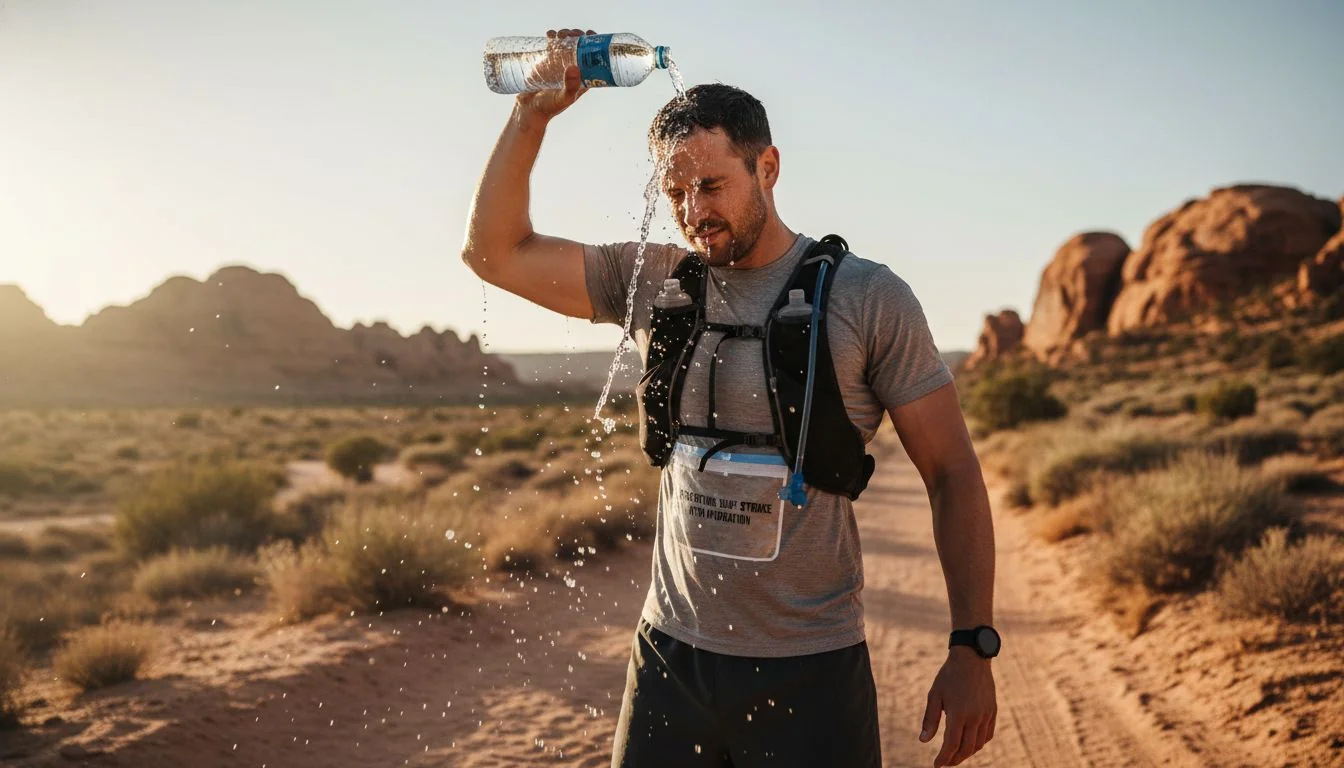
This is the feature I am most passionate about when designing bags. It’s not just about performance; it’s about keeping people safe. I’ve heard stories from emergency responders about rescuing hikers who were severely dehydrated. In almost every case, they either didn’t bring enough water or found it too inconvenient to drink what they had. The simple act of having a tube right by your mouth encourages the small, frequent sips that can make all the difference.
The Role of Consistent Sipping
Heat stroke doesn’t happen suddenly. It’s the end result of progressive dehydration and overheating. The convenience of a hydration pack fights this process from the very beginning.
- Proactive Hydration: Instead of waiting until you’re thirsty (a sign you’re already dehydrated), the easy access encourages you to drink small amounts constantly.
- Maintaining Blood Volume: Consistent fluid intake keeps your blood volume stable, allowing your cardiovascular system to function efficiently and deliver oxygen to your muscles.
Regulating Core Temperature
Your body’s primary cooling mechanism is sweating. For sweat to work, you need to have enough water in your system to produce it.
| Problem | How a Hydration Pack Helps | Outcome |
|---|---|---|
| Body heats up during exercise. | You sweat to cool down, losing body fluid. | Core temperature begins to rise if fluid is not replaced. |
| Accessing a water bottle is a hassle. | You drink less often than you should. | Dehydration begins, reducing your ability to sweat effectively. |
| Solution: Hydration Pack | Easy access encourages constant, small sips. | Fluid levels are maintained, sweating is efficient, body stays cool. |
By ensuring your body’s cooling system has the fuel it needs, a hydration pack is one of your best defenses against overheating.
[claim claim=”Drinking cold water is the best way to prevent heat stroke.” istrue=”false” explanation=”While cold water can help lower core temperature slightly, the volume and consistency of fluid intake are far more important than the temperature of the water for preventing dehydration and heat stroke.”]
[claim claim=”A hydration pack can completely eliminate the risk of heat stroke.” istrue=”false” explanation=”A hydration pack is a powerful tool for prevention, but it does not eliminate the risk. Factors like acclimatization, intensity, weather conditions, and personal health also play a major role. It’s still crucial to listen to your body.”]

What Are the Different Types of Hydration Backpacks for Different Activities?
You’re not just a hiker or a cyclist; maybe you’re a trail runner or a skier, too. Using the wrong pack for these sports can be inefficient and uncomfortable. Luckily, there’s a specialized pack for almost everything.
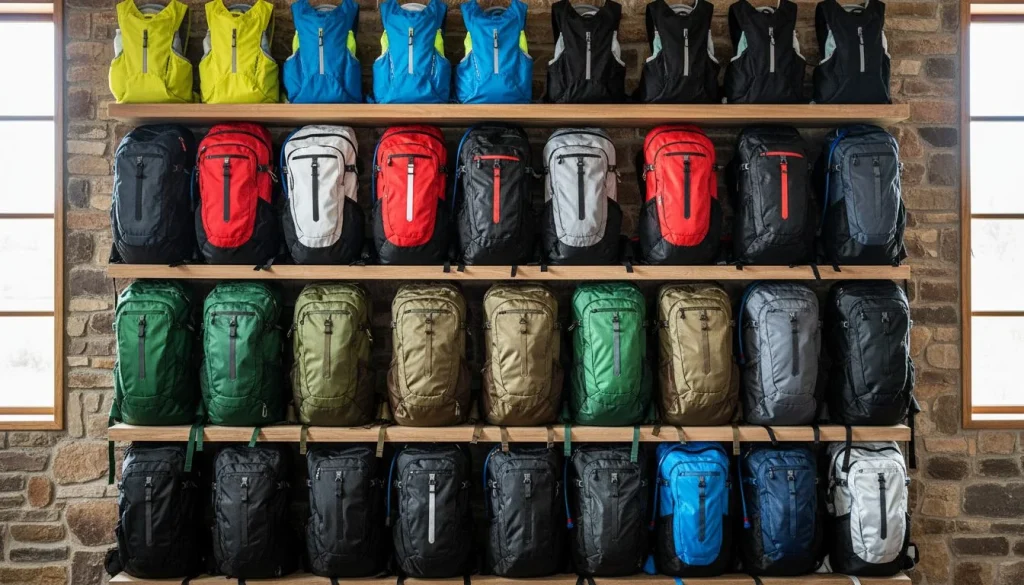
Hydration backpacks are specifically designed to match the demands of different activities, focusing on capacity, fit, and features. The main types are running vests, cycling packs, hiking daypacks, winter sports packs.
Running Vests and Packs 🏃♀️
Running hydration packs are designed to be as lightweight and minimalist as possible, prioritizing a bounce-free fit.
- Design: These are often worn like a vest, sitting high on the back to distribute weight evenly across the chest and shoulders, minimizing movement. They offer a snug, body-hugging fit.
- Capacity: They typically have the smallest water capacity (1 to 2 liters) and minimal storage space, usually just enough for a phone, keys, and a few energy gels in front-accessible pockets.
- Best For: Trail running, marathons, and any high-impact activity where stability and low weight are critical.
Cycling Packs 🚴
Cycling-specific hydration packs are built for comfort in a forward-leaning riding position and prioritize aerodynamics.
- Design: They feature a low-profile, slim shape to reduce wind drag. The back panel is often designed with enhanced ventilation channels to combat sweat, and the shoulder straps are cut to avoid restricting movement when reaching for handlebars.
- Capacity: Water capacity is typically 1.5 to 3 liters. Storage is streamlined, often with built-in tool organization for essentials like a multi-tool, pump, and spare tube.
- Best For: Mountain biking, gravel riding, and long-distance road cycling.
Hiking Daypacks 🥾
These are the most versatile all-rounders, balancing significant water and gear capacity with comfort for long hours on the trail.
- Design: Hiking hydration packs look more like traditional daypacks. They often feature a structured or padded back panel and a supportive hip belt to transfer weight from the shoulders to the hips, which is crucial for carrying heavier loads comfortably.
- Capacity: They offer the largest water capacities (2 to 3+ liters) and significant gear storage (10 to 35 liters or more) for extra layers, food, a first-aid kit, and trekking poles.
- Best For: Half-day or full-day hikes, backpacking, and general outdoor use where you need to carry more than just the essentials.
Winter Sports Packs 🏂
Designed for skiing and snowboarding, these packs have special features to function in cold and snowy conditions.
- Design: They include an insulated sleeve for the drinking tube and often a bite valve cover to prevent freezing. The materials are more robust and water-resistant to handle snow. They also feature straps and loops designed to carry skis or a snowboard.
- Capacity: Water and gear capacity are similar to hiking packs, but with a focus on storing safety gear like an avalanche shovel and probe.
- Best For: Skiing, snowboarding, and snowshoeing.
Quick Comparison Table
| Pack Type | Water Capacity | Gear Capacity | Key Feature | Best Activity |
|---|---|---|---|---|
| Running Vest | 1-2 Liters | 0-5 Liters | Bounce-free, vest-like fit | Trail Running |
| Cycling Pack | 1.5-3 Liters | 5-15 Liters | Aerodynamic, tool organization | Mountain Biking |
| Hiking Daypack | 2-3+ Liters | 10-35+ Liters | Hip belt support, high capacity | Day Hiking |
| Winter Pack | 2-3 Liters | 15-30 Liters | Insulated tube, ski/board carry | Skiing/Snowboarding |
[claim claim=”Running vests can’t carry as much water as a backpack.” istrue=”false” explanation=”Many running vests are designed to carry a 1.5-2L reservoir in the back, in addition to front pockets for soft flasks, giving them a total capacity that is comparable to many small hydration backpacks.”]
[claim claim=”Insulated hydration packs will keep water from freezing in any temperature.” istrue=”false” explanation=”Insulation helps significantly, but in extreme cold, water can still freeze, especially in the exposed bite valve and tube. Blowing the water back into the reservoir after drinking can help prevent this.”]
Conclusion
A hydration backpack is more than just a bag; it’s essential gear. It boosts performance, ensures safety, and makes your favorite activities more enjoyable. Choose the right one for your adventure.
References
-
Explore how hydration backpacks enhance performance and safety during hiking and cycling. ↩
-
Discover the connection between hydration and improved athletic performance. ↩
-
Understanding dehydration’s impact can help you stay safe and perform better during activities. ↩
-
Learn how proper hydration can protect you from serious health risks while exercising. ↩
-
Find out the key features of a water reservoir that enhance usability and convenience. ↩
-
Learn how adjustable straps improve comfort and fit for outdoor activities. ↩
-
Learn how hydration packs can be critical for safety in extreme conditions. ↩






