Last Updated: July 24, 2026
Many The North Face backpacks are made from recycled nylon or recycled polyester, often using ripstop constructions for added tear resistance. Exact specifications vary by model and colorway: materials may include 210D recycled nylon ripstop, 300D heathered recycled polyester, or 600D recycled polyester, usually combined with a non-PFC DWR finish and reinforced bottom panels.
The North Face does not use one universal fabric across every backpack. A lightweight daypack, commuter backpack, and technical hiking pack each require a different balance of weight, abrasion resistance, structure, water resistance, and cost.
From a backpack factory perspective, the material name is only the starting point.
We also evaluate the fabric denier, weave structure, coating, backing, bottom reinforcement, lining, padding, zipper system, stitching, and stress-point construction. These details explain why two backpacks made from “recycled polyester” can perform very differently in daily use.
What Materials Are Used in Popular The North Face Backpack Models?
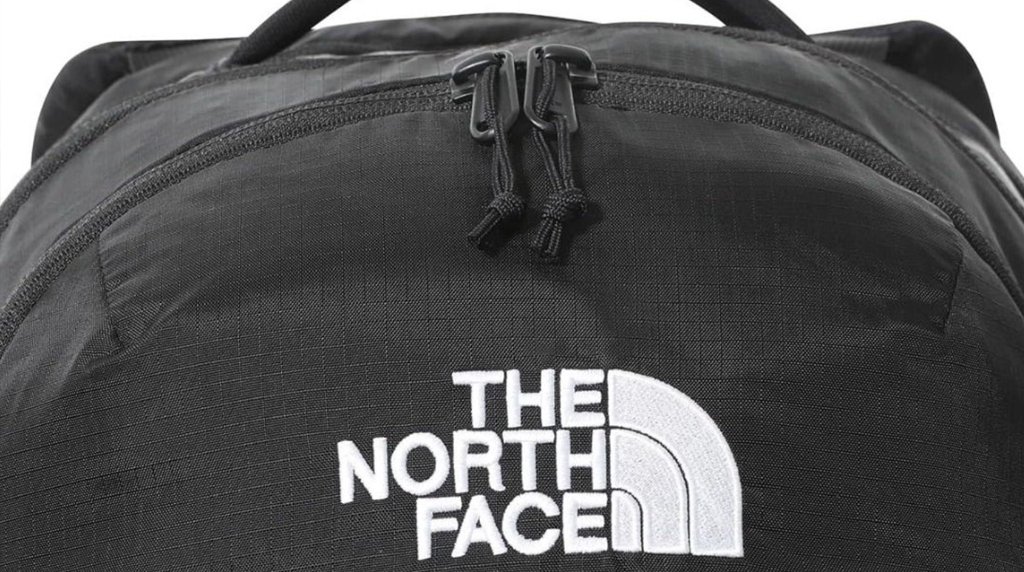
The North Face does not use one universal backpack fabric. Popular models use materials such as 210D recycled nylon ripstop, 300D heathered recycled polyester, and 600D recycled polyester depending on the model, colorway, and wear area. For example, specifications listed on the official Borealis Backpack product page show different fabric constructions across versions. These fabrics are commonly finished with a non-PFC DWR treatment for everyday water resistance.
The material specification can change even within the same backpack model. A solid color, heathered color, and printed version may use different fabrics because each design requires a different balance of appearance, weight, structure, abrasion resistance, and print performance.
Popular Model Material Breakdown
| Backpack Model | Main Material | Other Material Options | Factory Observation |
|---|---|---|---|
| Borealis 28L | Solid colors: 210D recycled nylon ripstop | Heather: 300D heathered recycled polyester ripstop canvas; Print: 600D recycled polyester | The fabric changes by colorway rather than following one universal specification |
| Recon 30L | Solid colors: 210D recycled nylon ripstop | Heather: 300D heathered recycled polyester ripstop | Lighter ripstop fabric supports daily commuting while maintaining tear resistance |
| Jester 28L | Solid and print styles: 600D recycled polyester | Heather: 300D heathered recycled polyester | Polyester provides a practical balance of structure, durability, color options, and cost |
| Borealis Patch 28L | Body: 210D recycled nylon ripstop with PU coating | Boot: 600D recycled polyester with 1500 mm PU coating; Liner: 200D recycled polyester with PU coating | Different areas use different materials according to wear, moisture exposure, and structural requirements |
What These Specifications Tell Backpack Buyers
From a factory perspective, these specifications reveal a zone-based material strategy:
- Main body: Lighter recycled nylon or polyester helps control the backpack’s overall weight.
- Printed and heathered panels: Polyester offers stable color, texture, and print performance.
- Bottom or boot panel: Heavier or more strongly coated fabric provides extra protection in a high-wear area.
- Interior lining: A lighter fabric can reduce unnecessary weight while keeping the inside finished and protected.
- Surface finish: Non-PFC DWR helps water bead off the outer surface, while a PU coating can provide additional moisture resistance and fabric stability.
The “D” in 210D, 300D, and 600D stands for denier, a measurement related to yarn weight. A higher denier often indicates a heavier and more substantial fabric, but it does not automatically mean the finished backpack is better. Yarn quality, weave structure, coating, stitching, and panel placement also affect performance.
For private label backpack buyers, the practical lesson is clear: do not specify only “nylon backpack” or “polyester backpack” in a tech pack. Define the fabric by area, including the main body, bottom panel, lining, coating, and water-repellent finish.
Why Does The North Face Use Recycled Nylon and Recycled Polyester?
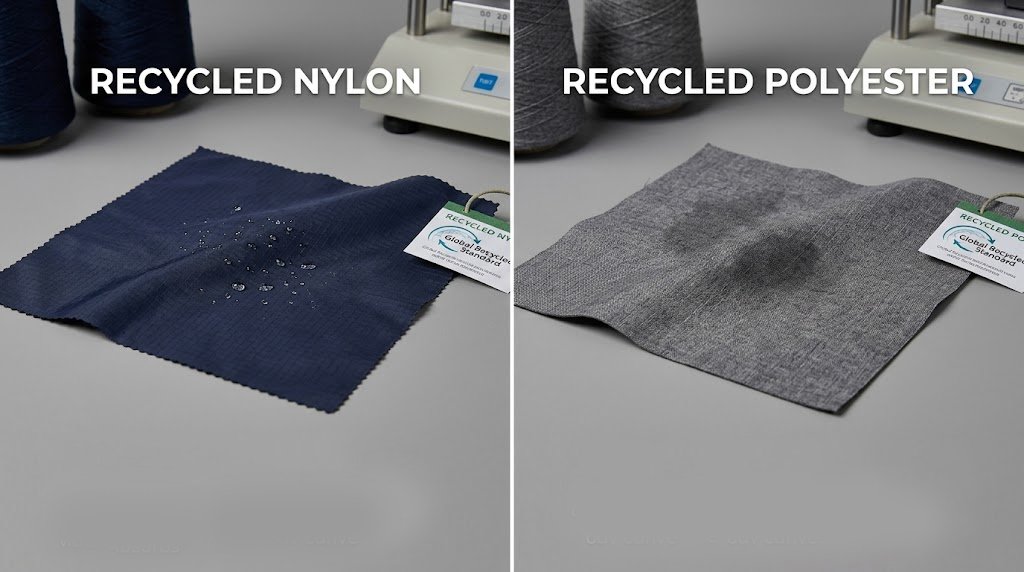
The North Face uses recycled nylon and recycled polyester to reduce its reliance on virgin raw materials while meeting different backpack requirements. According to The North Face’s official sustainability materials information, recycled materials are an important part of its product development strategy. Recycled nylon ripstop is commonly used for lightweight shell panels, while recycled polyester is often selected for structured, heathered, printed, or higher-denier backpack panels.
The word “recycled” does not describe one fixed level of performance. A recycled fabric can still vary greatly in denier, yarn quality, weave, coating, backing, colorfastness, and abrasion resistance.
This is why The North Face selects materials according to the backpack model, colorway, and panel function rather than using one recycled fabric across every product.
Recycled Nylon vs. Recycled Polyester
| Comparison | Recycled Nylon | Recycled Polyester |
|---|---|---|
| Typical use | Lightweight ripstop bodies | Structured, printed, heathered, or reinforced panels |
| Hand feel | Softer and lighter | Firmer and more structured |
| Color and printing | Suitable for solid technical fabrics | Strong color consistency and print performance |
| Cost | Usually higher | Usually easier to control |
| Factory use | Lightweight and technical packs | School, commuter, and mass-market backpacks |
The comparison should not be treated as an absolute rule. A 600D polyester fabric will naturally feel different from a 210D nylon ripstop, but that difference comes from the complete specification—not simply from “nylon versus polyester.”
Does Recycled Fabric Make a Backpack Less Durable?
Not necessarily.
Recycled content alone does not determine whether a backpack is durable. The finished performance also depends on:
- yarn quality
- fabric denier
- ripstop or plain-weave construction
- PU or TPU coating
- DWR treatment
- seam strength
- reinforcement placement
- abrasion and tear testing
- production consistency
A well-specified recycled fabric can be suitable for demanding daily use. However, buyers should not assume that every recycled fabric automatically performs the same as its virgin-material equivalent. The exact specification and test results still need to be confirmed.
Factory takeaway: Do not select a fabric only because it is labeled “recycled.” Choose recycled nylon or recycled polyester according to the backpack’s weight target, panel function, appearance, cost, certification requirements, and expected durability.
What Specialized Technical Materials Are Used in North Face’s Most Demanding Packs?
Selected The North Face technical backpacks use advanced materials such as Spectra®-reinforced nylon, TPU-coated nylon, and Dyneema® Composite Hybrid. These materials are not used across every backpack; they are placed selectively where technical packs need a stronger strength-to-weight ratio, better abrasion resistance, or additional moisture protection.
Technical backpacks require a different material strategy from school bags and commuter packs. The goal is not simply to use a thicker fabric. Designers must reduce unnecessary weight while reinforcing the panels exposed to heavy loads, rock contact, snow, and wet ground.
Technical Material Examples
| The North Face Model | Material Construction | Why It Is Used |
|---|---|---|
| Summit Series Advanced Mountain Kit 55L | 100D nylon with Spectra® ripstop, TPU coating, and non-PFC DWR on the body (official product specification) | Combines a lightweight body fabric with reinforcement and moisture protection |
| Summit Series Advanced Mountain Kit 55L | Dyneema® Composite Hybrid 3.2 on the top lid and roll-top | Reduces weight while strengthening exposed upper panels |
| Phantom 50 | 210D recycled nylon with Spectra® ripstop and non-PFC DWR on the body | Balances recycled content, tear resistance, and low pack weight |
| Phantom 50 | 210D nylon ripstop with TPU coating on the bottom boot | Adds protection where the pack contacts wet snow, rock, and rough ground |
Spectra® Ripstop
Spectra® is used as a reinforcing fiber within selected nylon ripstop fabrics. Instead of making the entire pack from a heavy fabric, reinforcing yarns help improve tear resistance while keeping the main body relatively lightweight.
This is especially useful in alpine packs, where reducing weight matters but the backpack must still carry climbing equipment, skis, ropes, and other technical gear.
TPU-Coated Nylon
A TPU coating adds a flexible moisture barrier to the fabric. The North Face uses this construction on selected technical-pack body fabrics and bottom panels.
From a factory perspective, TPU coating is most valuable in areas exposed to wet ground, snow, repeated abrasion, or equipment contact. It is usually more efficient to apply this protection selectively rather than increasing the weight and cost of every panel.
Dyneema® Composite Hybrid
Selected Summit Series packs use Dyneema® Composite Hybrid in areas such as the top lid and roll-top. This type of lightweight laminate is suitable for premium technical packs where low weight and weather protection are higher priorities than conventional school-bag cost targets.
For private label backpack buyers, these materials should only be selected when the product requirements justify their higher sourcing cost and more demanding production process.
Factory Takeaway
The North Face’s technical packs demonstrate a zone-based material strategy:
- lightweight reinforced nylon for the main body
- TPU-coated fabric for wet or high-contact areas
- premium lightweight laminates for selected upper panels
- heavier reinforcement only where it provides a measurable benefit
For most school, commuter, and casual backpacks, recycled nylon or polyester remains more practical. Advanced materials such as Spectra® and Dyneema® make sense when lower weight, technical durability, and weather exposure are central to the product’s purpose.
How Are North Face Backpacks Made Water-Resistant?
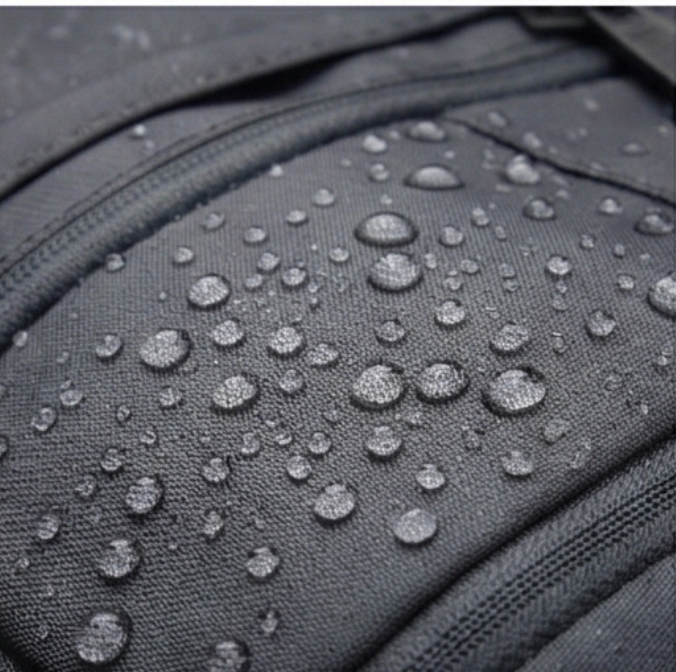
Most The North Face backpacks are water-resistant rather than fully waterproof. Many models use a non-PFC DWR finish to help light rain and splashes bead up and roll off the shell, while selected backpacks add PU- or TPU-coated panels for extra moisture protection. However, water can still enter through standard seams, zippers, and openings during prolonged or heavy rain.
The easiest way to understand backpack water resistance is to separate it into three layers: the surface treatment, the fabric coating, and the finished-bag construction.
1. Non-PFC DWR Helps Water Bead Off the Surface
DWR stands for Durable Water Repellent. According to The North Face’s explanation of DWR technology, it is a surface treatment designed to help water bead up and roll off the outer fabric rather than immediately absorbing into the material.
On backpacks such as the Borealis, the recycled nylon or polyester shell is treated with a non-PFC DWR finish. This is useful for:
- light rain
- accidental splashes
- short daily commutes
- damp outdoor conditions
DWR is the first line of protection, but it does not seal stitch holes, zipper teeth, or openings. It should therefore be described as water-repellent or water-resistant—not as proof that the entire backpack is waterproof.
2. PU or TPU Coatings Add a Stronger Fabric Barrier
Selected The North Face backpacks use PU- or TPU-coated fabric in areas that need more moisture protection.
For example, the Borealis Patch uses:
- 210D recycled nylon ripstop with PU coating and non-PFC DWR on the body
- 600D recycled polyester with a 1500 mm PU coating on the bottom boot
- 200D recycled polyester with PU coating for the lining
This is a good example of zone-based protection. The bottom receives a stronger coating because it is more likely to contact wet floors, damp ground, or snow.
The 1500 mm figure describes the water resistance of that coated fabric panel. It does not mean the complete backpack has a 1500 mm waterproof rating.
3. The Finished Construction Determines Whether Water Gets Inside
Even a coated fabric can leak when the finished backpack uses:
- standard stitched seams
- unsealed needle holes
- regular zipper teeth
- exposed zipper openings
- embroidered logo areas
- unprotected compartment openings
A truly waterproof backpack normally requires additional construction methods, such as seam taping, seam sealing, waterproof zippers, welded panels, or a roll-top closure.
That is why most everyday The North Face backpacks should be considered water-resistant rather than fully waterproof.
What Private Label Backpack Buyers Should Confirm
Before using a water-resistance claim, ask the factory:
- Is the specification for the fabric or the finished backpack?
- Which panels have PU or TPU coating?
- What is the coating’s water-pressure rating?
- Are the seams taped or left as standard stitched seams?
- Are the zippers standard, covered, or water-resistant?
- Has the finished backpack passed a spray or rain test?
- What wording can safely be used on the product page?
Factory takeaway: If only the shell fabric has DWR or PU coating, “water-resistant” is usually the more accurate claim. Use “waterproof” only when the finished backpack construction and testing support it.
What Materials Are Used for Comfort and Structure in The North Face FlexVent™ System?
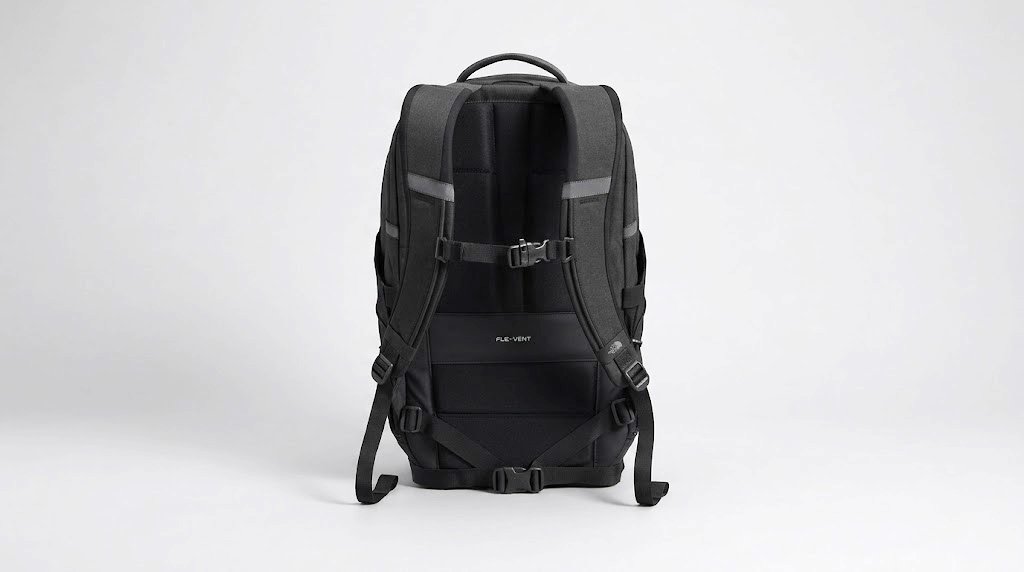
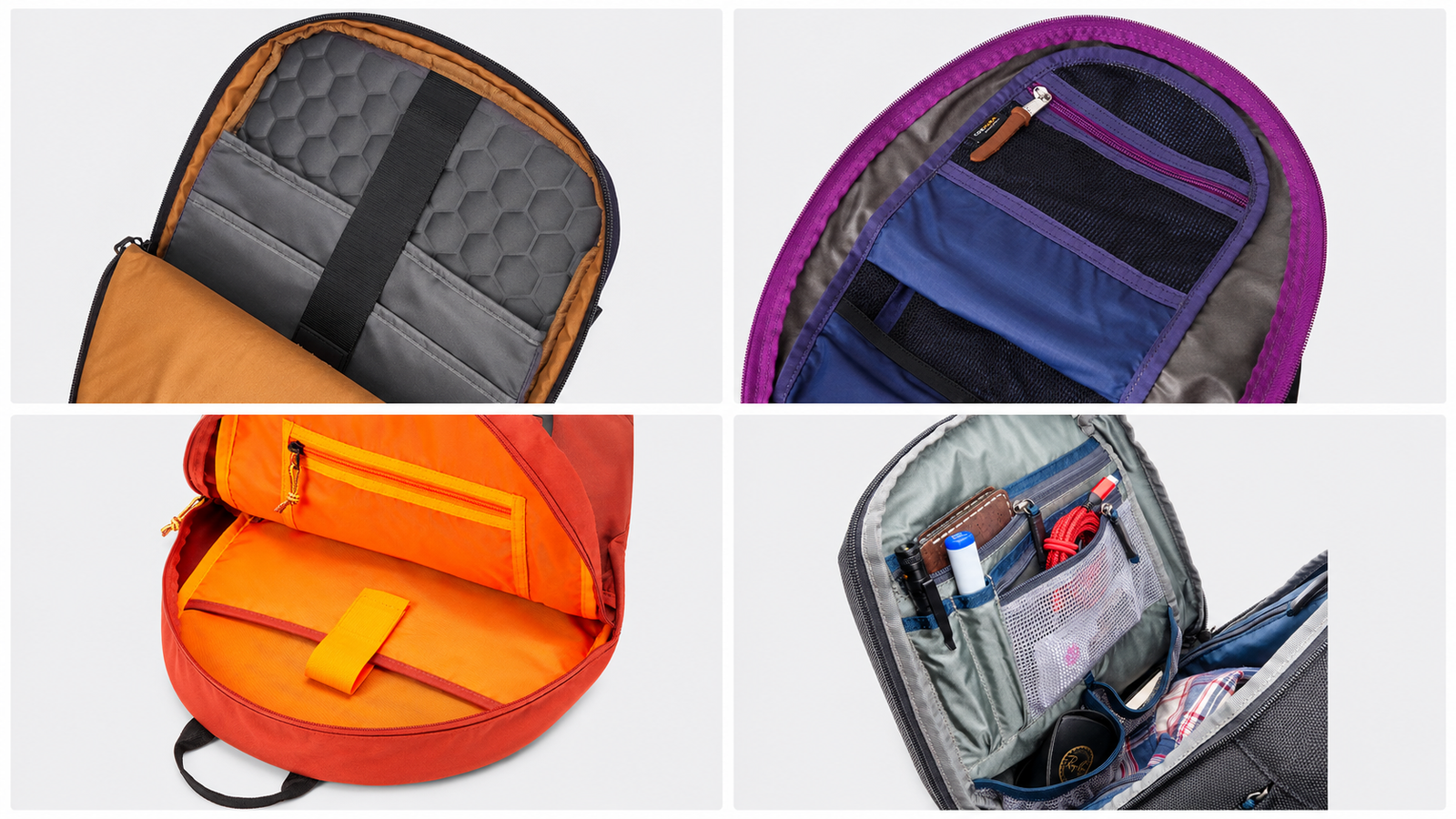
The North Face FlexVent™ suspension system combines articulated or custom-molded shoulder straps, a padded and rounded back panel, comfortable stitch lines, breathable lumbar support, and soft-touch lining fabric. These components work together to improve cushioning, ventilation, load stability, and everyday carrying comfort.
FlexVent™ is not one specific fabric or one piece of foam. It is a complete backpack suspension system used in models such as the Borealis, Recon, Jester, Surge, and Router.
The exact construction varies by backpack model and intended user. Some models use articulated shoulder straps and a rounded back panel, while others describe a flexible yoke made with custom injection-molded shoulder straps, a padded back panel, and a highly breathable lumbar panel.
How the FlexVent™ System Works
1. Articulated Shoulder Straps
Articulated straps are shaped to follow the natural position of the shoulders rather than hanging as two flat pieces of padding.
This helps the straps sit more securely against the body and distribute pressure across a larger area. Women-specific FlexVent™ versions adjust the strap shape and suspension geometry for a different fit.
2. Padded and Rounded Back Panel
The padded back panel cushions the load and prevents hard objects inside the backpack from pressing directly against the user’s back.
Its rounded shape and stitch-line layout also help the backpack maintain a more stable contact area instead of feeling like a flat, rigid board.
3. Breathable Lumbar Area
A breathable lumbar panel helps reduce heat and moisture buildup where the lower section of the backpack contacts the body.
From a factory perspective, comfort depends not only on adding more padding. The surface fabric, airflow channels, panel shape, foam recovery, and stitching pattern must work together.
4. Sternum and Waist Straps
Selected The North Face backpacks also include a sternum strap, removable waist belt, or both.
These components help stabilize the backpack during walking and reduce side-to-side movement. On larger technical packs, a structured hip belt can also transfer part of the load away from the shoulders.
What The North Face Publishes—and What It Does Not
The North Face publicly describes the visible FlexVent™ construction, including molded or articulated shoulder straps, padded back panels, lumbar ventilation, stitch lines, and soft-touch fabric.
However, the exact foam chemistry, density, thickness, internal support sheet, and reinforcement materials are not consistently listed for every model. It is therefore safer not to assume that all FlexVent™ backpacks use the same EVA foam, PE sheet, or metal frame.
Factory Takeaway for Private Label Backpack Buyers
When developing a similar ergonomic backpack, specify the performance of each component rather than writing only “padded back panel” in the tech pack.
Buyers should confirm:
- shoulder strap shape and width
- padding thickness and density
- foam recovery after compression
- back-panel airflow channels
- lumbar-panel construction
- surface mesh or lining fabric
- sternum-strap position
- waist-belt structure
- finished-bag load and comfort testing
A thick-looking strap is not automatically comfortable. If the foam collapses quickly, the strap shape is incorrect, or the back panel traps heat, the backpack may still become uncomfortable during daily use.
What Hardware Does The North Face Use to Ensure Durability in Its Backpacks?
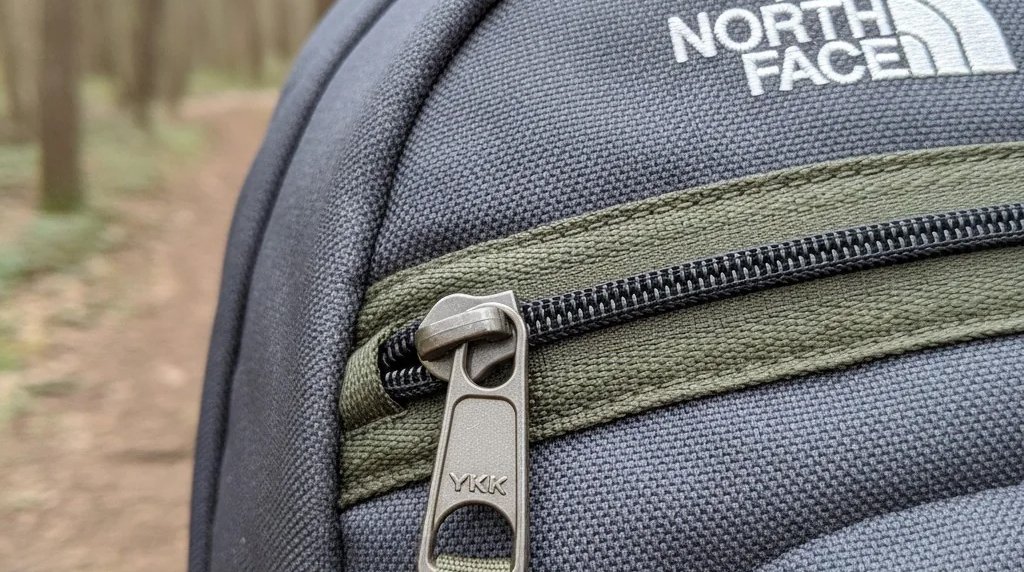
Selected The North Face backpacks use YKK® zippers together with whistle buckles, compression clips, webbing straps, bungee systems, zipper pulls, and reinforced grab handles. Hardware specifications vary by model, production season, and market, so buyers should check the exact product specification rather than assume every backpack uses identical components.
Hardware may occupy only a small part of a backpack’s material cost, but it has a major effect on daily usability. A broken zipper, cracked buckle, slipping adjuster, or weak handle can make an otherwise durable backpack difficult to use.
Official product specifications show that YKK® zippers are used on several popular The North Face models, including selected versions of the Borealis, Recon, Router, and Borealis Mini. These backpacks may also combine the zipper system with compression straps, whistle buckles, bungee cords, daisy-chain webbing, and padded grab handles.
Examples of Hardware Used on Popular Models
| Backpack Model | Listed Hardware Features | Factory Function |
|---|---|---|
| Borealis | U-pull YKK® zippers, whistle buckle, compression straps, bungee system | Improves access, load control, and external storage |
| Recon | YKK® zippers, whistle buckle, removable waist belt, daisy-chain webbing | Supports organization and stabilizes the backpack during movement |
| Router | YKK® zippers, whistle buckle, side and bottom compression, padded grab handles | Handles larger capacity and repeated travel use |
| Borealis Mini | YKK® zippers, front bungee system, zipper pulls, grab handle | Provides easy access and organization in a smaller format |
Hardware Is a System, Not Just a Zipper Brand
Specifying YKK® can support product reliability, but the zipper logo alone does not guarantee that the entire backpack will perform well.
The finished zipper system also depends on:
- zipper size and chain type
- slider and puller strength
- zipper tape quality
- sewing alignment
- opening shape
- corner radius
- seam allowance
- stress reinforcement
- repeated opening-and-closing performance
A good zipper can still feel rough or fail early if it is sewn into a tight curve, installed unevenly, or paired with weak fabric around the opening.
The same principle applies to buckles and adjusters. Their performance depends on the plastic material, mold quality, webbing compatibility, locking strength, temperature resistance, and repeated-use testing.
Fast Hardware Check for Private Label Buyers
When reviewing a backpack sample, check these points:
- Open and close every zipper repeatedly.
- Pull the zipper around corners and curved openings.
- Apply tension to buckles and strap adjusters.
- Check whether the webbing slips after adjustment.
- Lift the loaded backpack by each grab handle.
- Inspect stitching around zipper ends and hardware attachment points.
- Confirm whether replacement components will remain available during bulk production.
Factory takeaway: Do not specify only “YKK zipper” in a tech pack. Define the zipper size, chain type, slider, puller, tape, opening construction, buckle type, webbing width, and required testing standard.

What Can Private Label Backpack Brands Learn From The North Face’s Material Strategy?
The main lesson is not to copy one The North Face backpack specification. Private label brands should select fabrics, coatings, padding, hardware, and reinforcement according to the target user, carrying load, weather exposure, retail price, and expected product lifespan.
The North Face’s backpack range shows that one material cannot solve every product requirement. Lightweight commuter packs, school backpacks, hiking packs, and technical climbing packs need different combinations of fabric weight, abrasion resistance, structure, comfort, and water protection.
Material selection is only one part of backpack development. For buyers who want to understand the production side behind branded backpacks, read our guide: Where Are The North Face Backpacks Manufactured?
Quick Material Planning Guide
| Product Type | Suggested Material Direction | Construction Priority |
|---|---|---|
| Affordable school backpack | 300D–600D recycled polyester | Reinforced shoulder straps, reliable zippers, durable bottom panel |
| Lightweight commuter backpack | 210D recycled nylon ripstop | Low weight, laptop protection, breathable back panel |
| Premium outdoor-style backpack | High-tenacity nylon or reinforced ripstop | Abrasion resistance, coated bottom, stronger hardware |
| Technical climbing backpack | Reinforced technical fabric or lightweight laminate | Zone-based reinforcement, low weight, moisture protection |
| Eco-focused retail collection | Verified recycled nylon or recycled polyester | Certification, traceability, color consistency, coating performance |
Define Materials by Backpack Area
A professional backpack specification should not list only one general fabric. Each area should be selected according to its function:
- Main body: balances weight, structure, appearance, and cost.
- Bottom panel: needs stronger abrasion and moisture resistance.
- Lining: protects the interior without adding unnecessary weight.
- Shoulder straps: require suitable foam density, shape, and reinforcement.
- Back panel: needs cushioning, airflow, and shape recovery.
- Zipper areas: require stable fabric, clean sewing, and reinforced ends.
- High-stress points: need bartacks, extra layers, or stronger seam construction.
Five Details Buyers Should Put in a Tech Pack
-
Main and secondary fabrics
Include material type, denier, fabric weight, weave, recycled content, and color. -
Coating and water-resistance requirements
Define PU or TPU coating, DWR finish, and the required test standard. -
Padding and suspension construction
Specify foam thickness, density, strap shape, back-panel structure, and ventilation. -
Zippers, buckles, and webbing
Confirm sizes, materials, suppliers, widths, pull strength, and color requirements. -
Reinforcement and testing
Identify bartack locations, bottom reinforcement, seam strength, load tests, and inspection standards.
Avoid Overengineering the Backpack
Using the most expensive material in every panel does not automatically produce a better product. It may increase weight and cost without creating a clear benefit for the customer.
For example, a school backpack may perform well with recycled 600D polyester when the zipper, shoulder straps, bottom panel, and stitching are properly controlled. Spectra®-reinforced or laminated technical fabrics are more suitable when lightweight strength and severe outdoor exposure are genuine product requirements.
Factory takeaway: Build the material specification around the backpack’s real use. Define each panel and component by function instead of requesting only a “nylon backpack” or “recycled polyester backpack.”
Final Words
The North Face backpack range shows that durable products are not built around one “best” material. Performance comes from matching recycled nylon, recycled polyester, technical fabrics, coatings, padding, hardware, and reinforcement to the function of each backpack area.
For private label brands, the practical lesson is to choose materials according to the target user, carrying load, weather exposure, retail price, and expected lifespan. A well-designed 600D polyester school backpack may be more suitable than an expensive technical fabric, while a lightweight hiking or climbing pack may require reinforced ripstop, coated panels, and more advanced suspension construction.
Planning a Custom Backpack Collection?
At Osgoodway, we help brands turn material ideas into production-ready backpack specifications. Our team can support fabric comparison, panel-based material planning, prototype development, hardware selection, and bulk-production quality control.
Tell us your target market, expected order quantity, price range, and performance requirements. We will help you identify a practical material and construction solution for your custom backpack project.
Discuss Your Backpack Project With Osgoodway