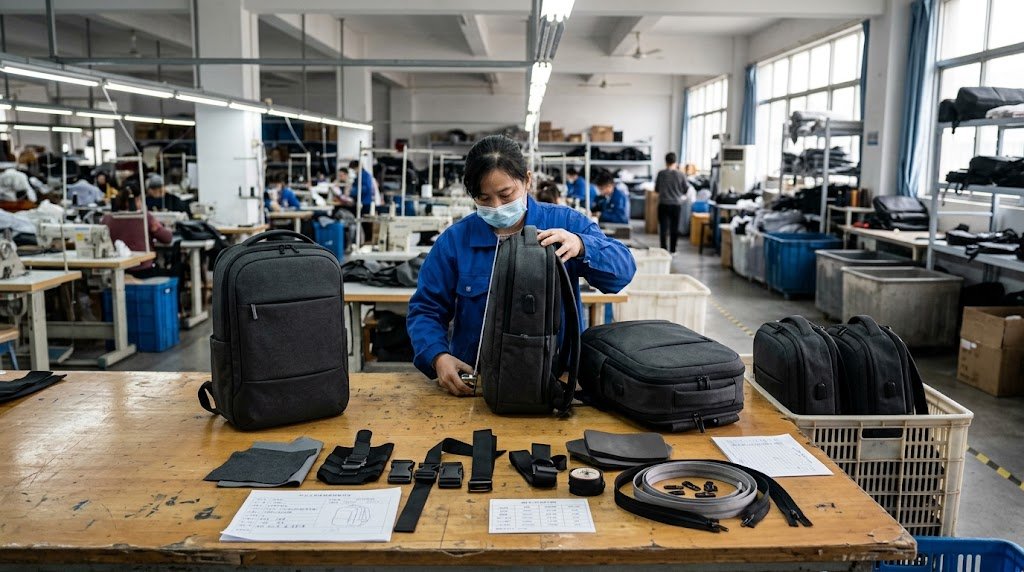
Choosing the wrong backpack can weigh you down. It turns a dream trip into a struggle with a bag that’s too heavy, too bulky, or too small for your needs.
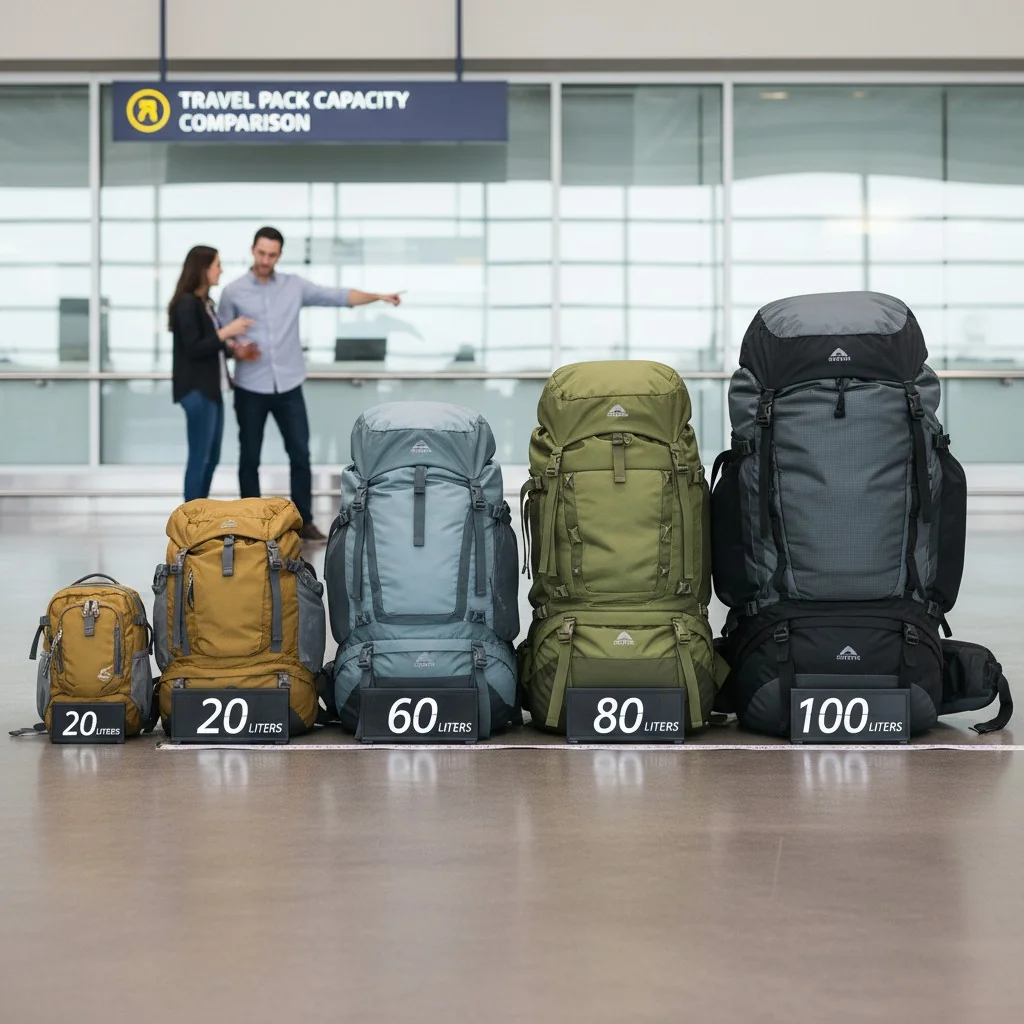
For most travel, the best backpack size is 35–45 liters1. This range is large enough for a week’s worth of essentials, yet compact enough to meet most airline carry-on requirements and remain comfortable to carry throughout your journey.
Finding that perfect backpack can feel like a huge task, but it’s one of the most important decisions you’ll make before a trip. As a bag designer and manufacturer, I’ve seen firsthand how the right size and features can completely change the travel experience. It’s not just about cramming things in; it’s about mobility, comfort, and peace of mind. Let’s break down everything you need to know to help your customers find their perfect travel companion, or to design a standout product for your own brand.
[claim claim=”All 45-liter backpacks meet airline carry-on dimension rules.” istrue=”false” explanation=”Capacity in liters measures volume, not dimensions. A tall, thin 45L bag might fit, while a short, wide one might not. Always check the bag’s specific dimensions (in inches or cm) against the airline’s rules.”]
What backpack size works for most travelers?
Staring at a wall of backpacks with different "liter" sizes is confusing. You worry that picking the wrong one will leave you either with a half-empty bag or forcing zippers shut.
For the majority of travelers, a 35–45 liter backpack is the ultimate sweet spot. It provides enough space for about a week of clothing and essentials while staying light enough to carry comfortably. This size is the versatile hero of the travel world.
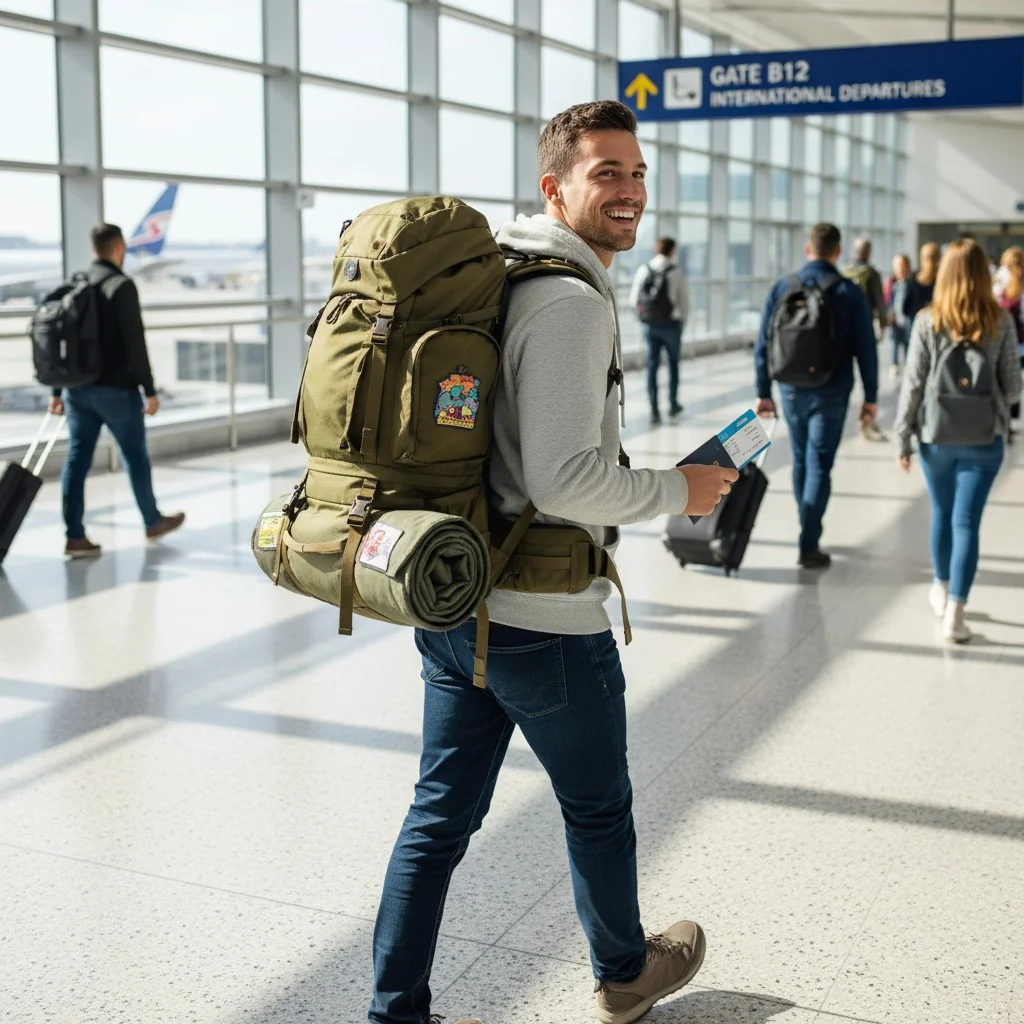
When I work with brands like yours, Emily, we often start the conversation right here. The 40-liter mark is a commercial sweet spot because it appeals to the widest range of travelers, from weekend adventurers to one-bag minimalists on longer trips. It hits the perfect balance between capacity and convenience. Understanding these general guidelines is the first step to designing a product line that meets real-world demand.
A Guide to Backpack Capacity
| Trip Length | Recommended Capacity | Best For |
|---|---|---|
| Weekend (2-4 days) | 25–35 Liters | Quick getaways, minimalist packing2 |
| One Week (5-8 days) | 35–45 Liters | The most versatile option, carry-on friendly |
| Two Weeks+ | 45–55+ Liters | Long-term travel, trips requiring gear |
For the true minimalist who can travel for weeks with just a few items, a 30–40 liter bag is often the goal. The lighter you pack, the more freedom you have.
[claim claim=”A 35-liter backpack is generally considered too small for a week-long trip.” istrue=”false” explanation=”With smart packing techniques like using packing cubes and rolling clothes, a 35-liter backpack is often sufficient for a week-long trip, especially for minimalists or those traveling to warm climates.”]
How do airline carry-on rules affect backpack size?
There’s no worse travel anxiety than watching the gate agent eye your backpack. You worry it’s too big and you’ll face surprise fees to check it at the last minute.
Most airlines cap carry-on luggage at around 22 x 14 x 9 inches (56 x 36 x 23 cm). A backpack in the 40–45 liter range is typically the largest you can go while still complying. However, always check the specific airline’s rules before you travel.
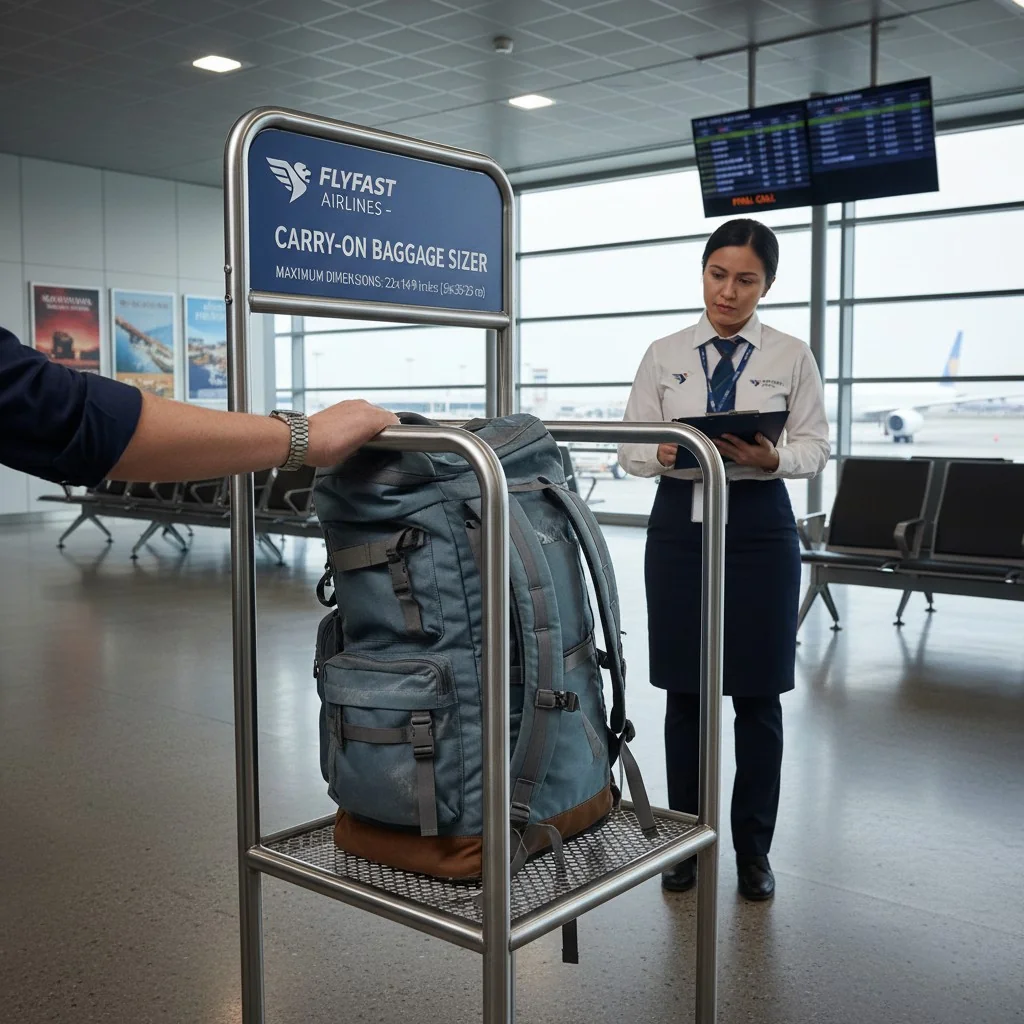
It’s crucial to understand that liters measure volume, not shape. I’ve seen brands mis-market their bags, leading to frustrated customers. A 45-liter bag can be tall and slim, easily fitting in an overhead bin, or it can be short and bulky, failing the sizer test. As a brand owner, advertising your backpack as "carry-on compliant" is a powerful selling point. To do this responsibly, you must design to those specific dimensions, not just the liter capacity. I always advise my partners to list the exact dimensions in inches and centimeters on their product pages to build trust and manage customer expectations. This transparency prevents negative reviews and returns.
[claim claim=”Airlines are more lenient with backpack carry-on sizes than with rolling suitcases.” istrue=”true” explanation=”Soft-sided backpacks without a rigid frame can often be compressed to fit into sizers, even if they are slightly over the official dimensions. Gate agents are sometimes more flexible with backpacks than with hard-shell roller bags.”]
How do trip length and travel style change the capacity you need?
Using a massive hiking pack for a city weekend is overkill. Trying to stuff a week’s worth of clothes into a daypack is impossible. The right bag depends entirely on the journey.
Your travel style is the biggest factor. A quick weekend trip might only need a 25–35L bag. A standard one-week vacation fits perfectly in a 35–45L. Longer trips or those requiring bulky gear may push you toward a 50L+ bag that needs to be checked.
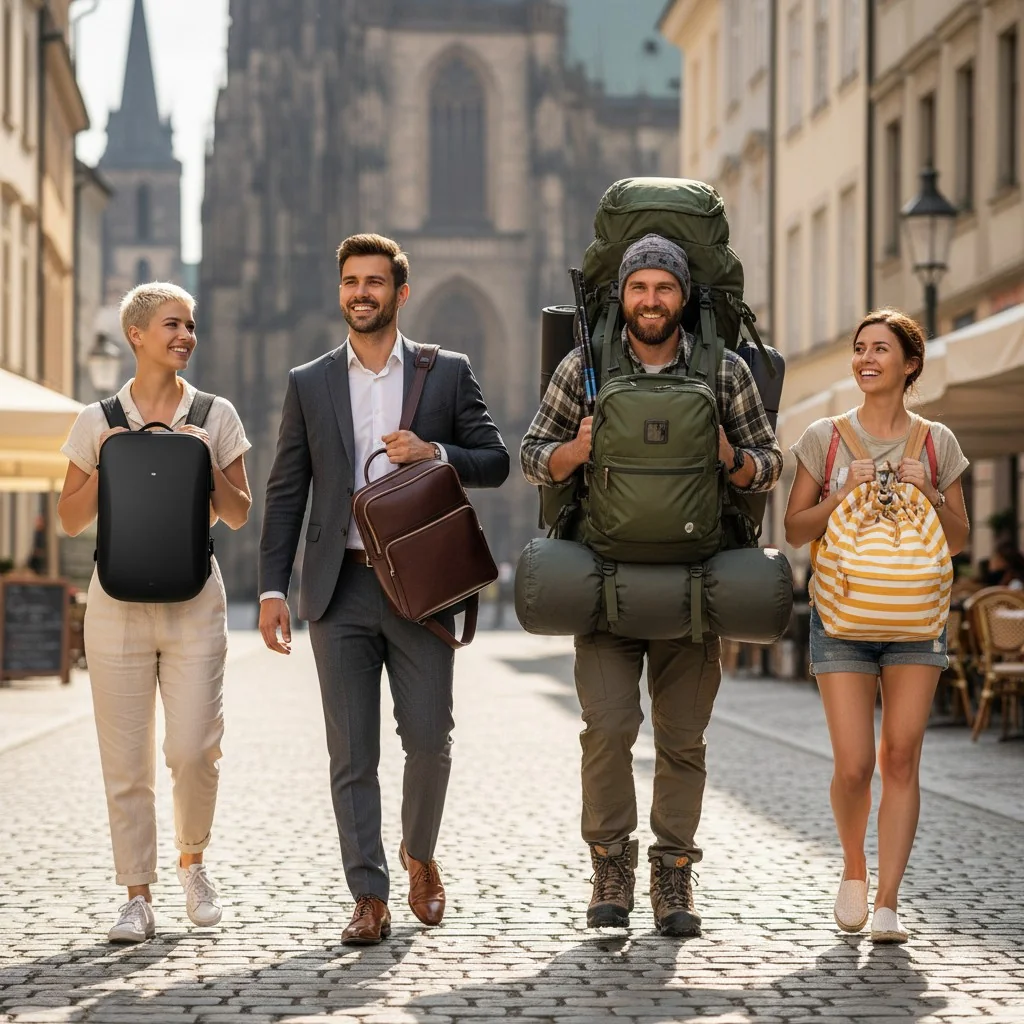
When developing a product line, think about the different customer personas you’re serving. It’s not just about one "perfect" bag, but a collection that serves different needs.
Matching the Bag to the Traveler
- The Minimalist: This traveler prides themselves on one-bag travel. They need a 30–40L bag with smart organization to live out of for weeks. They value efficiency and mobility above all else.
- The Business Traveler: They also prefer a 30–40L bag but with specific needs: a padded and easily accessible laptop sleeve, sleek aesthetics, and compartments for documents and chargers.
- The Adventurer: This person is packing for changing climates or bringing special gear like hiking boots, a helmet, or camera equipment. They’ll need a larger 45–55L+ pack and will likely check their bag.
- The Weekender: For short 2-4 day trips, a 25–35L bag is perfect. It’s small, light, and never needs to be checked.
Understanding these styles helps you create bags with features that solve real problems for specific groups.
[claim claim=”You need a different backpack for every type of trip.” istrue=”false” explanation=”A versatile 40-45L backpack can handle a wide range of trips, from a long weekend to a multi-week journey if you pack efficiently. It’s often better to own one great, versatile bag than multiple mediocre ones.”]
What type of backpack is best for travelling?
You’ve probably used a school backpack with one big compartment. You have to dump everything out just to find the one thing you need at the bottom. That design just doesn’t work for travel.
The best travel backpacks are front-loading, also known as clamshell or suitcase-style. They unzip all the way around, allowing the main compartment to open flat like a suitcase. This gives you full visibility and access to all your gear without disrupting your careful packing.
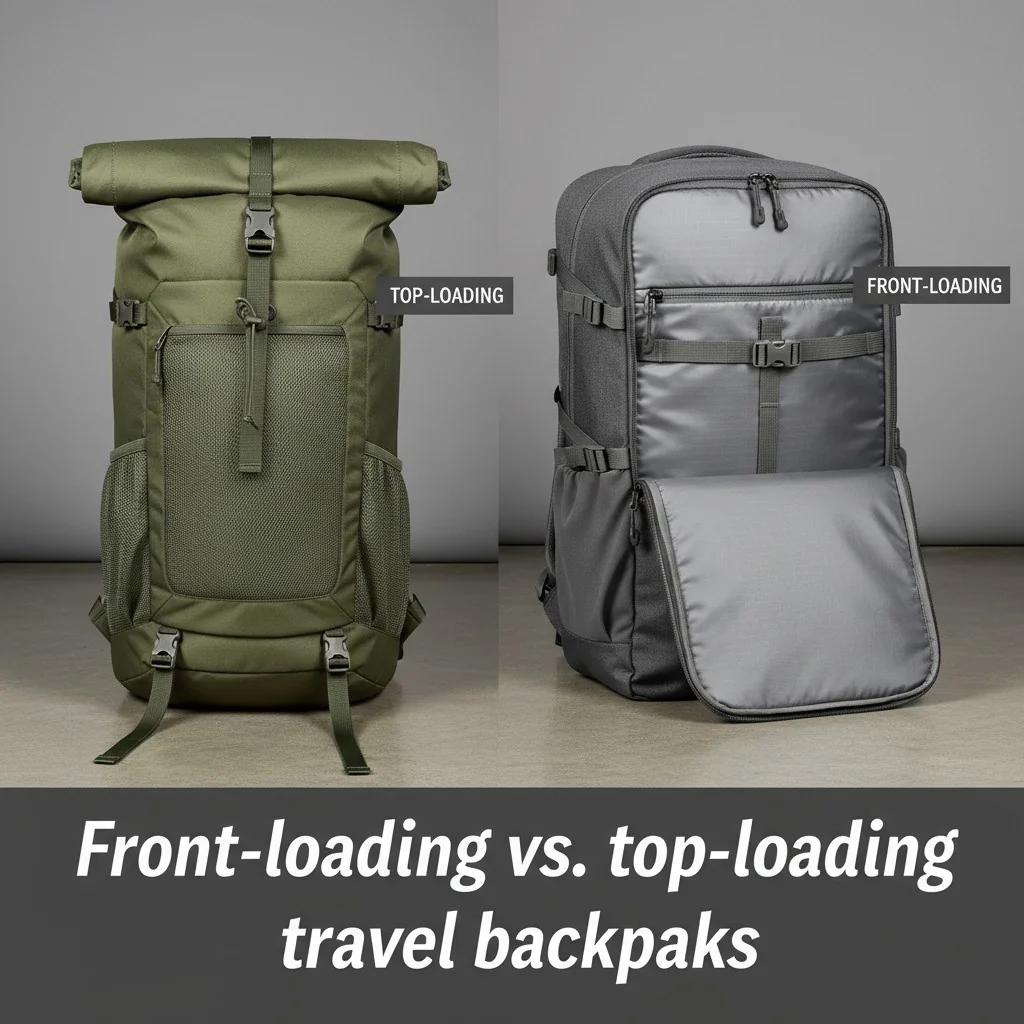
In my experience, this is one of the biggest differentiators between a true travel pack and a simple backpack.
Top-Loading vs. Front-Loading
- Top-Loading Backpacks: These are common for hiking. They have a drawstring closure at the top. They are great for stuffing with gear, but terrible for organization and accessing items at the bottom. It creates a "black hole" effect where everything gets lost.
- Front-Loading (Clamshell) Backpacks: These are designed for the modern traveler. Opening like a suitcase makes packing and unpacking incredibly simple. You can use packing cubes3 to organize everything neatly, and you can grab your jacket from the middle of the bag without pulling everything else out first.
For any travel brand, offering a clamshell-style backpack is a must. It’s a feature that, once a customer experiences it, they will never go back. It’s a simple design choice that dramatically improves the user experience.
[claim claim=”Hiking backpacks are the best choice for long-term travel.” istrue=”false” explanation=”While durable, hiking backpacks are typically top-loading, making them inconvenient for accessing clothes in urban or hostel environments. Front-loading travel backpacks are far more practical for most long-term travelers.”]
What features matter most in a travel backpack?
You’re looking at a bag’s product page and see a long list of features. Load lifters, daisy chains, admin panels… it’s easy to get lost in the technical jargon and marketing hype.
Focus on the features that provide real-world comfort, security, and convenience. A comfortable harness system (padded straps and a hip belt), smart organization, lockable zippers, and durable fabric are the non-negotiables. These are the things that truly matter on a long travel day.
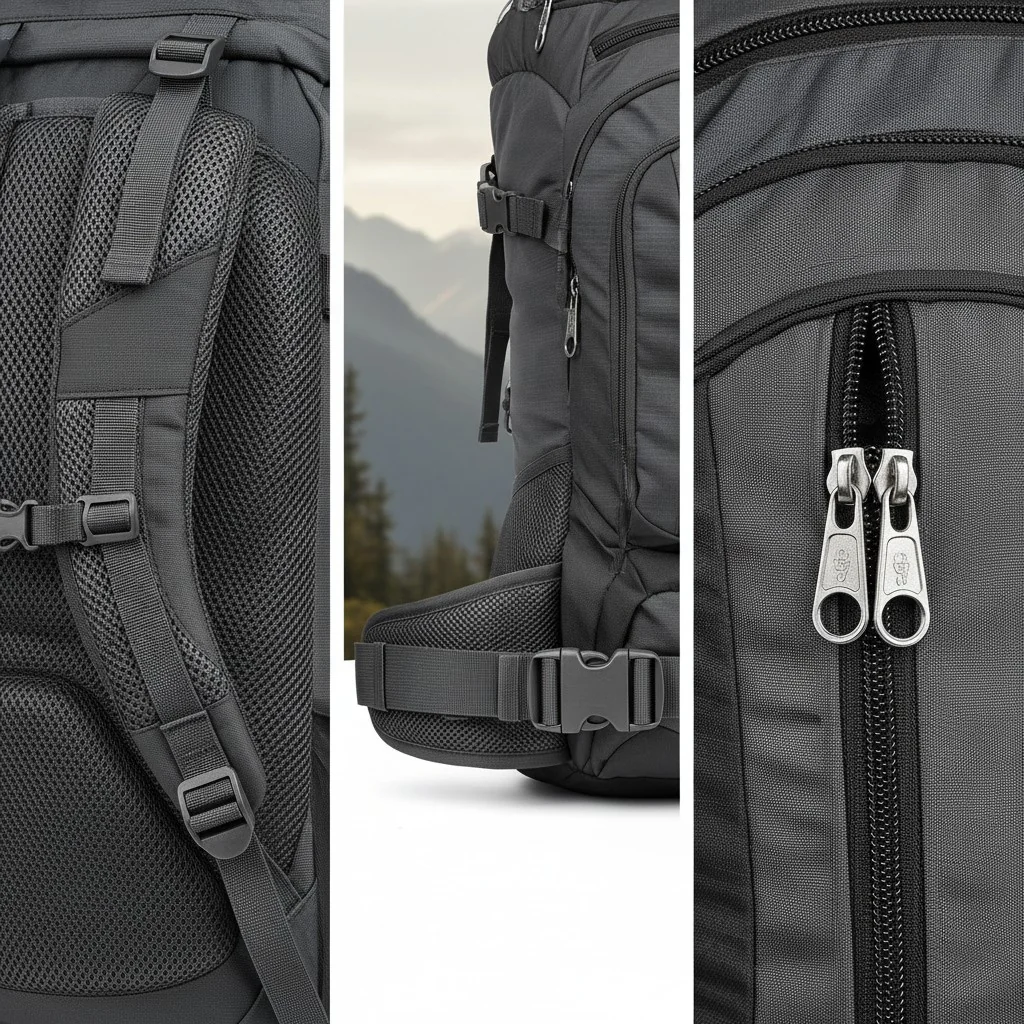
When I’m consulting with a brand on a new design, I tell them to think of features as solutions to problems. Don’t just add a pocket; add a pocket that solves a specific need.
The Must-Have Feature Checklist
- padded shoulder straps4 & Hip Belt: This is critical for comfort. A good hip belt transfers up to 80% of the bag’s weight from your shoulders to your hips, which are much better at carrying heavy loads. For any bag over 30L, a hip belt is essential.
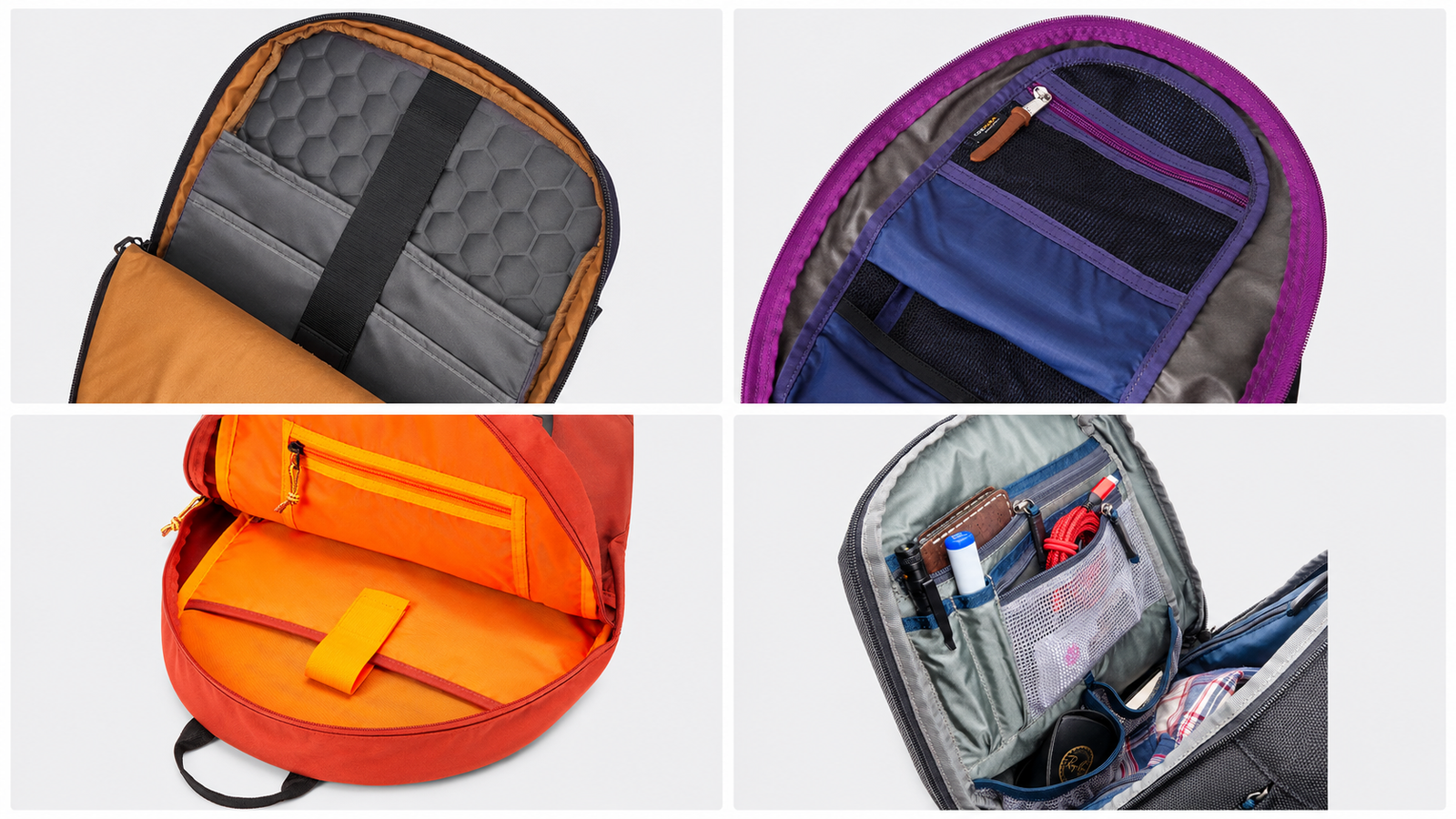
- Multiple Compartments & Laptop Sleeve: Good organization saves time and stress. A dedicated, padded laptop sleeve protects your tech, while separate compartments for clothes, toiletries, and electronics keep things tidy.
- Lockable Zippers: A simple but crucial security feature. The main compartment zippers should have interlocking loops that allow you to use a small padlock, giving you peace of mind in hostels or on public transport.
- water-resistant fabric5: Your bag doesn’t need to be fully waterproof, but it should be made from a durable, water-resistant material (like coated nylon or polyester) to protect your belongings from a sudden downpour.
- compression straps6: These external straps help you cinch down the bag, making it more compact and stable. They also help reduce stress on the zippers.
[claim claim=”A hip belt is only necessary for large hiking backpacks over 60 liters.” istrue=”false” explanation=”A hip belt provides significant comfort and weight distribution for any backpack over 30-35 liters. It shifts the load from the shoulders to the hips, preventing back and shoulder strain during long travel days.”]
How do I test if a backpack is the right size and fit for me?
A backpack can seem perfect in photos, but the real test is how it feels on your back. A poor fit can lead to back pain, chafing, and a miserable travel experience.
To test a backpack properly, you need to simulate real-world use. Load it with 15-20 pounds (7-9 kg) of weight, put it on correctly, and wear it for at least 10-15 minutes. Walk around, bend over, and see how it feels.
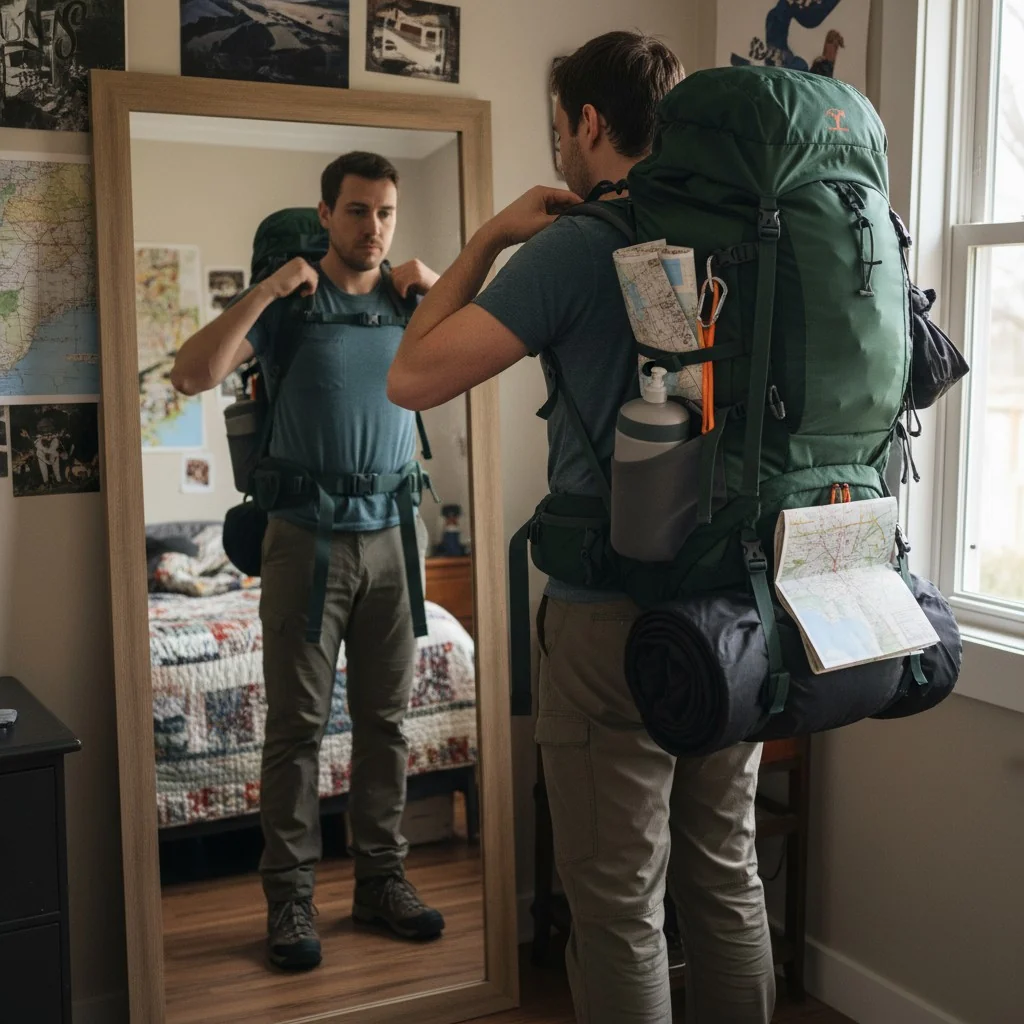
This is a piece of advice I always give to my friends, and it’s something you can share with your customers. A "try before you buy" or a generous return policy can be a huge advantage for an online brand, as it allows customers to perform this crucial test at home.
The 3-Step Fit Test
- Load It Up: Don’t test an empty bag. Use towels, books, or water bottles to simulate the weight of your actual travel gear. A full bag sits and feels completely different from an empty one.
- Put It On Correctly: Loosen all the straps first. Buckle the hip belt so it rests on top of your hip bones (not your waist). Next, tighten the shoulder straps so the bag sits snugly against your back. Finally, tighten the smaller "load lifter" straps (if present) to pull the top of the bag closer to your shoulders.
- Move Around: Walk around your house for 10-15 minutes. Bend down as if to tie your shoes. Reach up as if grabbing something from a shelf. Does the bag shift excessively? Do you feel any uncomfortable pinching or pressure points on your shoulders or lower back? Can you easily access the water bottle pocket? This simple test will tell you more than any online review.
[claim claim=”The most important factor for backpack comfort is thick shoulder padding.” istrue=”false” explanation=”While shoulder padding is important, the most critical factor for comfort with a heavy load is a well-designed hip belt that effectively transfers weight from the shoulders to the hips.”]
Optional: Capacity Quick Reference Sheet
| Capacity (Liters) | Trip Duration | Carry-On Status | Ideal Use Case |
|---|---|---|---|
| 20–30 L | 1–3 Days | Almost Always | Personal Item / Minimalist Weekend |
| 30–40 L | 3–7 Days | Usually | The "One-Bag" Travel Sweet Spot |
| 40–45 L | 5–14 Days | Borderline / Max Size | Versatile Travel / Light Packer |
| 45–55 L | 2+ Weeks | Checked Baggage | Long-Term Travel / Gear-Heavy Trips |
| 55+ L | Months | Checked Baggage | Backpacking / Adventure Travel |
Optional: Packing Tips by Capacity
-
For a 30L Backpack (Weekend Trip):
- 1 pair of pants
- 3 tops
- 1 sweater or light jacket
- 3 pairs of socks/underwear
- Minimal toiletries
- Small electronics (phone, charger, e-reader)
- Pro Tip: Wear your bulkiest shoes and jacket on the plane.
-
For a 40L Backpack (One-Week Trip):
- 2 pairs of pants/shorts
- 5-6 tops
- 1 mid-layer fleece or sweater
- 1 rain jacket
- 6 pairs of socks/underwear
- Travel-size toiletries
- Packing cube for clothes
- Laptop/tablet and chargers
- Pro Tip: Use packing cubes to compartmentalize outfits and save space.
-
For a 50L Backpack (Two-Week+ Trip):
- Everything from the 40L list, plus:
- An extra pair of shoes (e.g., sandals or dress shoes)
- More clothing variety for different climates
- Specialized gear (camera cube, hiking poles, etc.)
- A small daypack packed inside for excursions
- Pro Tip: Plan to do laundry once to avoid overpacking clothes.
FAQ Section
Q1: Is a 50-liter backpack too big for carry-on?
Yes, in almost all cases. While a few airlines might have generous policies, a 50L backpack will exceed the standard dimension limits (around 22 x 14 x 9 inches) for most major airlines. A bag of this size is designed to be checked.
Q2: What is the main difference between a travel backpack and a hiking backpack?
The main difference is access. Travel backpacks are typically front-loading (clamshell), opening like a suitcase for easy access to organized contents. Hiking backpacks are top-loading, designed as a single large tube to carry gear for the trail, which is less practical for city or hostel travel.
Q3: Do I really need a hip belt on my travel backpack?
If your backpack is over 30-35 liters, yes. A good hip belt is the most important feature for carrying weight comfortably. It transfers the load from your fragile shoulders to your strong hip and leg muscles, preventing back pain and making it possible to carry the bag for extended periods.
Conclusion
Choosing the right backpack, typically a 35-45L model, and focusing on key features like a hip belt and clamshell opening, ensures your bag is a helpful partner on your journey.
References
-
This size range is ideal for a week’s worth of essentials and meets airline carry-on requirements. ↩
-
Minimalist packing techniques can enhance mobility and reduce stress during trips. ↩
-
Packing cubes maximize space and keep items organized, making packing and unpacking easier. ↩
-
Padded straps enhance comfort and support, especially for heavier loads during travel. ↩
-
Water-resistant materials protect belongings from unexpected weather, ensuring peace of mind. ↩
-
Compression straps help stabilize the load and reduce stress on zippers, enhancing durability. ↩