Last Updated: July 22, 2026
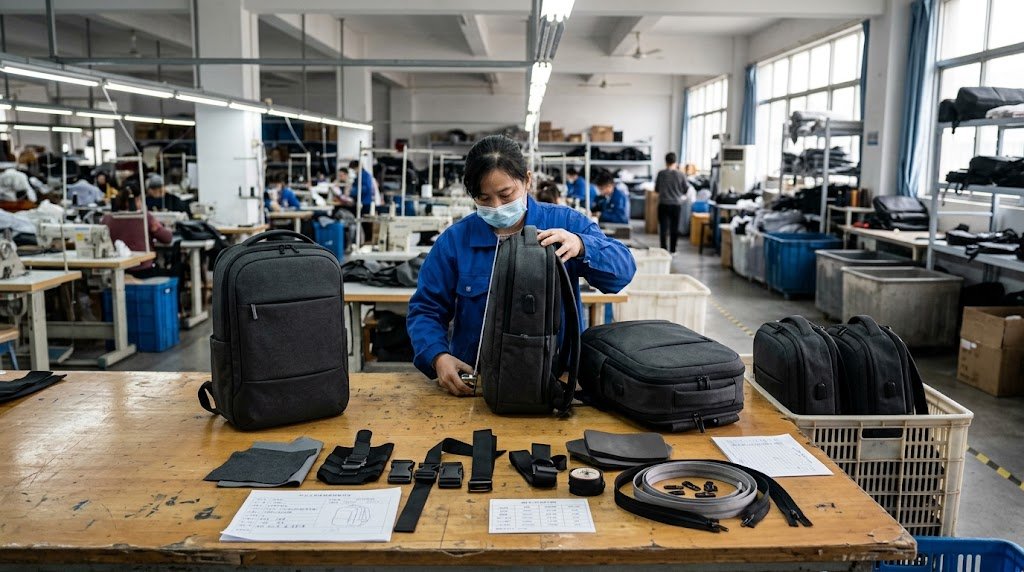
As a professional backpack manufacturer, I often get asked about where big brands produce their bags. It’s a common question for brand owners trying to understand the industry.
TUMI is a great example of how modern premium luggage brands operate. Although many consumers associate high-end products with a specific country of origin, TUMI’s success comes from selecting specialized manufacturing partners based on technical capability, material expertise, and production requirements.
TUMI bags are primarily manufactured across China, Vietnam, Thailand, and the Dominican Republic.These locations are chosen not simply because of cost advantages, but because they provide the specialized skills and industrial infrastructure required for technical luxury products.
In this article, we will explore TUMI’s global manufacturing network and the supply chain lessons that brands can apply when developing their own premium backpacks.
Why Does Tumi Choose These Manufacturing Locations?

TUMI’s manufacturing strategy is different from traditional luxury brands. Instead of focusing only on country-of-origin marketing, the company selects production locations based on technical capability, material expertise, and supply chain efficiency.
While Tumi has its own specialized hubs, understanding the broader landscape of where most backpacks are manufactured today—including the shifting roles of China, Vietnam, and India—is essential for any brand owner planning their 2026 sourcing strategy.
Tumi splits its production based on material physics. China and Thailand serve as the high-tech hubs for hard-shell luggage (Aluminum/Polycarbonate) and precision hardware, while the Dominican Republic specializes in the heavy-duty assembly of soft-sided ballistic nylon bags for the American market.
Tumi Factory Location Guide:
| Product Type | Primary Location | The Engineering Reason (Why?) |
|---|---|---|
| Hard Shell Luggage(19 Degree Aluminum, V3, Latitude) | China / Thailand | Precision Engineering. Requires advanced injection molding and metal die-casting machines found in Asia’s tech hubs. |
| Soft Shell Bags(Alpha 3 Collection, Ballistic Nylon) | Dominican Republic | Heavy-Duty Assembly. Workforce is specialized in stitching Tumi’s ultra-thick FXT Nylon; close proximity to the US for fast restocking. |
| Travel Accessories(Wallets, Kits, Electronic Accessories) | Vietnam / China | Intricate Detail. These regions excel in "high-mix" manufacturing for small, complex leather and fabric goods. |
From TUMI’s supply chain strategy, one important lesson is clear: the best manufacturing location is not always the cheapest option.
Premium bag production requires a combination of specialized material knowledge, skilled sewing capabilities, reliable hardware suppliers, quality control systems, and efficient logistics networks.
For brands developing their own backpacks, evaluating the complete manufacturing ecosystem is often more important than focusing only on unit cost.
How Did the 2025-2026 Tariff Wave Affect Tumi’s Manufacturing?
In the face of the stringent 2025 tariffs on Chinese imports, Tumi and its parent company, Samsonite, have demonstrated exceptional resilience:
- The Data: Q3 earnings reports show a stable 59.6% gross margin, with Tumi’s North American sales actually growing by 3.3%.
- The Solution: Capacity Diversification. By accelerating the shift to Southeast Asian hubs like Vietnam, they have pivoted "Made in China" production to primarily serve non-U.S. markets.
- The Takeaway: Brand owners must prioritize cross-border supply chain flexibility to survive shifting trade policies.
Does Manufacturing in China Affect TUMI’s Quality?
No. In the world of "Technical Luxury," Chinese manufacturing often represents the global gold standard.
Tumi partners with these facilities not for cheap labor, but to access high-tech supply chains capable of industrial precision. You are paying for advanced engineering that simply cannot be achieved in traditional hand-stitching workshops.
Why Tumi’s Asian Production is Elite:
- Automotive-Grade Tech: Tumi factories utilize multi-million dollar injection molds to create patented parts like the X-Brace 45® handle, operating under clean-room standards similar to car assembly plants.
- Micron Tolerances: Features like the Omega Closure System® (zippers designed to break away safely) require molding precision that manual labor cannot replicate.
- Advanced Metallurgy: The 19 Degree Aluminum collection relies on specialized die-casting and anodizing facilities in Asia that rival those used for luxury electronics.

Why Is the "Alpha" Collection Made in the Dominican Republic?
This location is Tumi’s strategic hub for heavy textiles. The classic Alpha 3 collection is assembled here because the workforce has mastered Tumi’s proprietary FXT Ballistic Nylon®. This fabric is notoriously thick and abrasive, requiring specialized heavy-duty machinery and experienced operators that standard garment factories simply do not possess.
The Dominican Republic Specialization:
- Heavy-Duty Mastery: Operators are specifically trained to stitch multiple layers of ballistic nylon without seam puckering or needle breakage.
- Speed: Proximity to the US allows for rapid restocking of best-selling items in days, not weeks.
- Rigorous Standards: Long-term partnerships ensure these factories consistently pass Tumi’s brutal "Tumbler Test" for durability.
For brands developing premium backpacks, this highlights an important sourcing principle: specialized production capabilities often matter more than simply choosing the lowest-cost manufacturing location.
My Factory Verdict: Tumi doesn’t choose these locations for "cheap labor"—if they wanted cheap, they would go to Bangladesh or Ethiopia. They choose China, Thailand, and the DR for Industrial Capability.
Why Doesn’t TUMI Manufacture Its Bags in the USA?
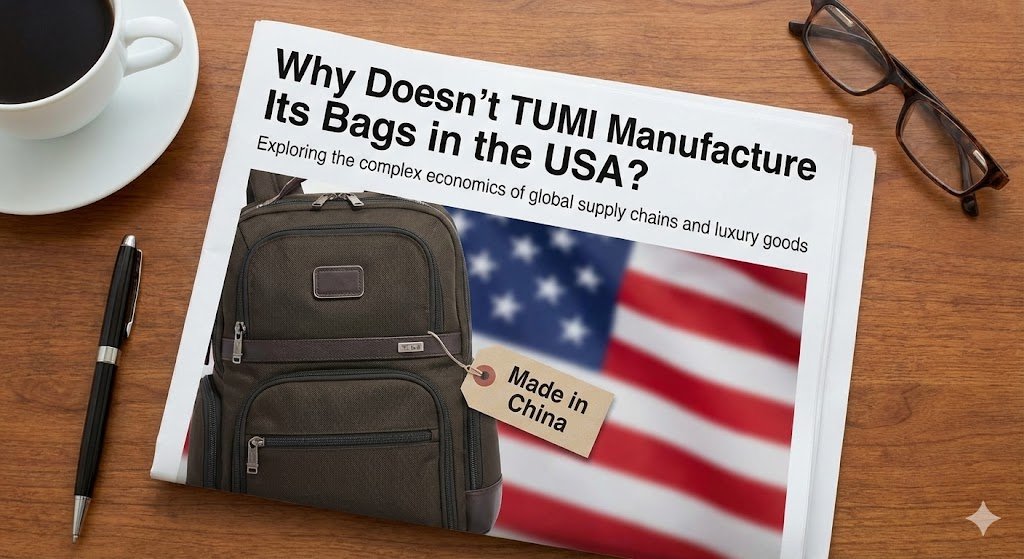
Many people ask why premium American brands don’t manufacture at home. It seems like a simple way to guarantee quality. But the reality of global business is much more complex.
Tumi does not manufacture its bags in the USA primarily due to significantly higher labor and operational costs. Producing bags with the same materials and quality standards in the US would dramatically increase the final price, potentially pushing them out of their target market’s reach.
From my experience helping brands scale, the "Made in USA" label comes with a hefty price tag that not every business model can support. For a global brand like Tumi, the existing manufacturing ecosystem in Asia provides a level of scale, skill, and efficiency that is currently very difficult and costly to replicate in the United States for this specific product category.
Key Reasons:
-
Cost: Manufacturing in the USA would be much more expensive due to higher labor costs, facility expenses, and regulatory requirements.
-
Business Strategy: After being acquired by Samsonite in 2016, Tumi’s manufacturing strategy became part of Samsonite’s larger global supply chain, which is centered in Asia.
-
Profit Margins: Manufacturing in the USA would force Tumi to either significantly raise prices or accept lower profit margins.
-
Brand Focus: The "Made in the USA" label is no longer central to Tumi’s brand. They focus on global sourcing, technical innovation, and design, which are more easily executed at scale from their Asian manufacturing hubs.
The Real Cost Breakdown: US vs. Asia Manufacturing
To give brand owners a concrete understanding, here is a simplified comparison based on my experience quoting similar heavy-duty nylon bags:
| Cost Factor | Manufacturing in China/SE Asia | Estimated US Equivalent |
|---|---|---|
| Skilled Labor (per bag) | $8–$15 | $45–$80 |
| Material Sourcing Lead Time | 1–2 weeks (domestic supply chain) | 4–8 weeks (import from Asia) |
| Tooling & Mold Access | On-site at partner factories | Custom-order from overseas |
| Minimum Viable Factory Setup | Existing infrastructure | $5M+ capital investment |
The numbers speak for themselves. It’s not a quality issue — it’s an ecosystem issue. The machinery, trained operators, material suppliers, and hardware vendors are all clustered in specific Asian manufacturing zones. Moving one part of that chain to the US doesn’t work unless the entire chain moves.
What Materials Are Used in Tumi Bags and Where Are They Sourced?
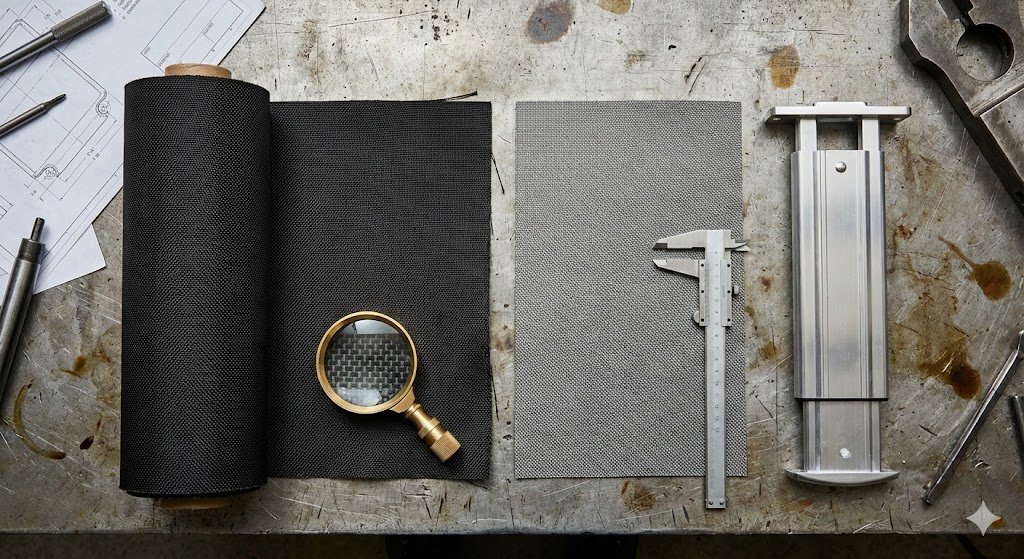
When you touch the surface of a Tumi bag, you are not just feeling fabric; you are feeling a patented defense system. Tumi justifies its price point by sourcing raw materials that are often reserved for military or automotive applications, rather than standard consumer luggage.
Tumi primarily utilizes three distinct, high-performance materials: FXT® ballistic nylon (a proprietary woven fabric exclusive to the brand), Tegris® (a thermoplastic composite used in NASCAR safety gear), and Aircraft-Grade Aluminum. While the bags are assembled in Asia or the Dominican Republic, the high-tech raw materials are often sourced from specialized Tier-1 suppliers in the USA, Taiwan, and Japan to ensure molecular consistency.
If you’re interested in a deep dive into fabric options for your own brand, our guide to the top 11 fabrics for bag manufacturing covers everything from budget polyester to military-grade Cordura.
What Makes FXT Ballistic Nylon® Different From Regular Nylon?
It is all about the weave and the coating. Standard ballistic nylon is just strong fabric; FXT® is a "fusion" material.
Most high-end backpacks use standard 1050D or 1680D nylon. Tumi takes this a step further with their proprietary FXT (Fusion X-Tra) technology.If you’re evaluating nylon types for your own products, our comparison of the best nylon fabrics for high-quality backpacks will help you understand where FXT sits in the hierarchy.
As a textile expert, I can tell you the difference: they twist the individual fibers tightly before weaving them and then apply a special coating that essentially "fuses" the fabric surface. This creates a material that is virtually abrasion-proof.
The FXT® Advantage:
- Twisted Yarn: Increases the tensile strength significantly compared to flat yarns used by competitors.
- Fusion Coating: Prevents the fabric from fraying or "fuzzing" over time, even after years of being dragged under airline seats.
- Water Resistance: The tight weave combined with the coating makes it naturally water-repellent without needing heavy chemical sprays.
FXT® vs. Open-Market Ballistic Nylon: A Factory Comparison
This is the question brand owners really want answered: Can I get close to FXT quality without paying for Tumi’s patent?
| Property | Tumi FXT® Ballistic Nylon | Premium 1680D Double-Strand Ballistic Nylon (Open Market) |
|---|---|---|
| Yarn Type | Proprietary twisted high-tenacity Nylon 6.6 | Standard high-tenacity Nylon 6.6 |
| Weave | Proprietary 2×2 basketweave with heat fusion | Standard 2×2 basketweave |
| Abrasion Resistance (Taber Cycles) | ~3,000+ (estimated) | ~2,500+ |
| Coating | Proprietary fusion coating | PU or PVC backing (customizable) |
| Feel | Stiff, slick, "premium" hand-feel | Stiff, slightly rougher texture |
| Availability | Exclusive to Tumi | Available to any brand via certified mills |
| Cost per Yard | N/A (proprietary) | $8–$14 (depending on mill and finish) |
My honest assessment: A top-tier 1680D double-strand ballistic nylon from a certified Taiwanese or Chinese mill gets you roughly 90-95% of FXT’s performance. The remaining 5-10% is Tumi’s proprietary coating and yarn treatment — which they’ve spent millions developing. For most brand owners, the open-market alternative is more than sufficient to create a premium product.
Why Use Tegris® Instead of Polycarbonate?
Tegris® is lighter, tougher, and sourced directly from the USA (Milliken & Company). It is Tumi’s "Secret Weapon" against cracking.
While Samsonite and Rimowa use Polycarbonate, Tumi’s Tegra-Lite collection uses Tegris®, a polypropylene thermoplastic composite. This material was originally designed for use in lifesaving armor and NASCAR race car splitters. It is woven like a fabric but pressed into a hard shell.
Material Sourcing & Performance Table:
| Material Name | Primary Source | Why Tumi Uses It (The Factory Logic) |
|---|---|---|
| FXT Ballistic Nylon® | Taiwan / Asia | Abrasion King. It offers the highest resistance to tearing and friction of any soft fabric on the market. |
| Tegris® Composite | USA (Milliken) | Impact Absorption. Unlike plastic that cracks, Tegris has a woven structure that absorbs impact and flexes. |
| Aircraft Aluminum | China / Global | Aesthetics & Rigidity. Used in the 19 Degree line for its ability to be die-cast into complex, fluid shapes. |
| Recycled Nylon | Global (Post-Industrial) | Sustainability. Used in newer collections; repurposed from factory waste but re-engineered to meet Tumi durability specs. |
How Does Tumi Ensure High Quality in Its Manufacturing Process?
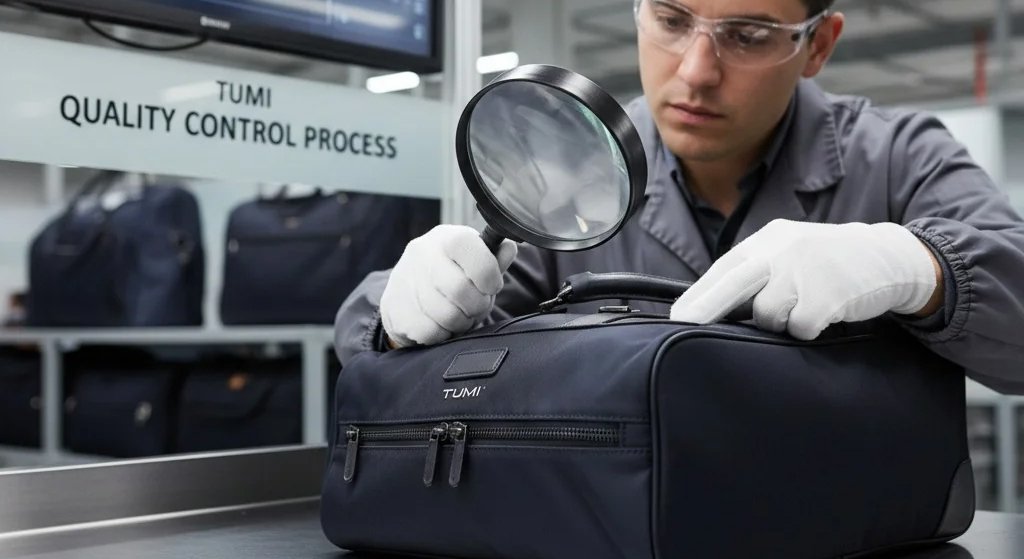
With production spread across the globe, how does Tumi stop quality from slipping? This is a huge concern for any brand owner, including my clients. The answer is a relentless focus on control.
Tumi maintains high quality through a rigorous system of over 30 different tests and strict on-site supervision. They use their own patented components, pre-approve all materials, and have dedicated quality control teams that oversee every stage of production, ensuring every bag meets their standards.
I always tell brand owners that you can’t just send a design to a factory and hope for the best. You have to be involved. Tumi embodies this principle. They don’t just outsource manufacturing; they manage it actively. Their process proves that "where" a bag is made is less important than "how" it’s made.
The "Torture" Checklist
Before a design even goes into production, Tumi prototypes are put through a battery of tests designed to simulate years of use and abuse. These include:
- Tumble Test: The bag is loaded and tumbled in a large machine to check for overall durability.
- Handle Jerk Test: The telescopic handle is yanked upward with force thousands of times to ensure the locking mechanism (X-Brace 45®) doesn’t shear off.
- Zipper Pull Test: Zippers are opened and closed thousands of times to ensure they won’t fail.
- Mileage Test: Wheels are run on a treadmill with bumps and sandpaper for miles to ensure the bearings don’t seize or melt.
- The Drop Test: Fully packed bags are dropped on their corners from various heights to test the structural integrity of the polycarbonate or aluminum shells.
This commitment to testing ensures that the final product is built to last.
How Tumi’s QC Compares to Standard Factory QC (AQL Levels)
Most factories use an AQL (Acceptable Quality Level) system. Here’s how Tumi’s approach differs:
| QC Metric | Standard Factory (AQL 2.5) | Tumi-Level QC | Osgoodway Standard |
|---|---|---|---|
| Inspection Points | 8–12 checkpoints | 30+ checkpoints | 20+ checkpoints |
| Defect Tolerance | 2.5% major defect rate | Near-zero tolerance | <1.5% major defect rate |
| Material Pre-Inspection | Spot-check on arrival | 100% incoming material verification | Batch-level testing + spot-check |
| On-Site QC Personnel | Factory’s own team | Tumi’s dedicated team + third-party auditors | In-house QC team at every production stage |
| Stress Testing | Basic pull tests | Proprietary "torture" battery (30+ tests) | Standardized pull, tumble, and zipper cycle tests |
Key takeaway for brand owners: You don’t need Tumi’s $10M testing lab to achieve excellent quality. What you need is a factory partner that understands multi-point inspection and is willing to enforce your standards, not just their own. Understanding the potential common quality issues in backpack production is the first step toward building a reliable quality control process.
If you are evaluating a manufacturing partner for your own backpack line, TUMI’s approach provides a useful benchmark: material control, production oversight, and consistent quality systems matter more than simply choosing the lowest-cost supplier.
On-the-Ground Oversight
Tumi doesn’t rely on the factory’s internal QC alone. They have their own employees or trusted third-party agents on-site at their manufacturing locations.
These teams are responsible for inspecting materials as they arrive, monitoring the production line, and conducting final checks before the products are shipped. This direct oversight is crucial for catching potential issues early and enforcing Tumi’s standards consistently, no matter the country. It’s a practice I strongly recommend for any brand serious about quality.
Is Tumi Manufacturing Sustainable and Eco-Friendly?
In today’s market, brand owners like you know that customers care about sustainability. So, how does a big brand like Tumi handle it? It’s a journey of progress, not perfection.
Tumi is actively incorporating sustainability by using recycled materials in many of its products and designing for extreme durability. Their focus on creating long-lasting bags that can be repaired is a core part of their strategy to reduce overall consumption and waste.
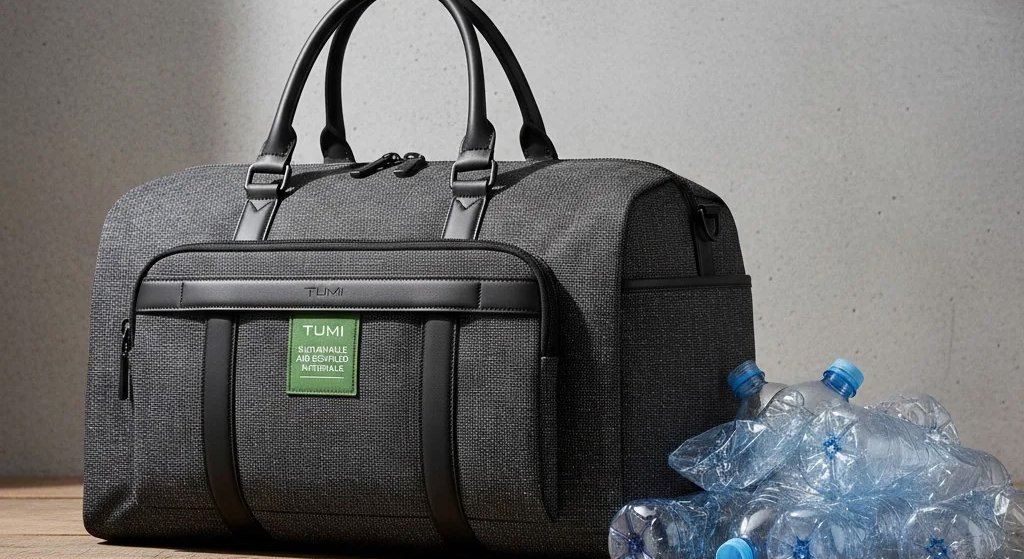
For any brand, sustainability can feel like a huge challenge. What I’ve learned is that it’s about taking meaningful steps. Tumi’s approach provides a great example. They are integrating eco-friendly materials while leaning into their core strength: making products that don’t need to be replaced often.
Integrating Recycled Materials
Tumi has made significant strides with its collections featuring recycled materials.
For example, some bags use fabric made from post-consumer recycled plastic bottles (rPET) and post-industrial recycled nylon. This helps divert waste from landfills and reduces the need for virgin petroleum-based materials.
Durability as the Ultimate Green Feature
I firmly believe the most sustainable product is the one you keep for a lifetime. Tumi’s entire brand ethos is built on durability. By engineering bags that withstand years of travel, they are inherently fighting against the throwaway culture of fast fashion. This "buy it once, buy it well" philosophy is a powerful form of environmental responsibility.
Repair, Don’t Replace
Tumi also offers a robust repair service. If a zipper breaks or a wheel wears out, you can often get it fixed instead of buying a new bag. This extends the product’s lifecycle and keeps it out of the landfill.
Offering a repair program is a fantastic way for any brand to build customer loyalty and demonstrate a genuine commitment to sustainability.
The Sustainability Spec Sheet for Brand Owners
If you’re building a brand that wants to mirror Tumi’s sustainability approach, here are the concrete specifications to request from your factory:
- Recycled Shell Fabric: Specify GRS (Global Recycled Standard) certified rPET or recycled Nylon 6.6. Don’t just take the factory’s word for it; you must learn how to verify and track GRS Transaction Certificates to ensure your recycled materials are 100% authentic and compliant for export.
- Bluesign® Approved Coatings: Ensures the PU/PVC backing on your fabric meets chemical safety standards.
- Reduced Packaging: Ask your factory to use recycled cardboard and eliminate single-use plastic poly bags (replace with compostable alternatives).
- Durability Engineering: The single most impactful sustainability decision is making a bag that lasts 5+ years instead of 2. Specify bar-tack stitching at stress points, YKK zippers (not generic), and reinforced bottom panels.
At Osgoodway, we now stock GRS-certified recycled fabrics and can advise clients on the most cost-effective way to build sustainability into their product line without sacrificing durability.
Why Is Tumi So Expensive?
You see the price tag on a Tumi bag and it’s easy to wonder, "Is it really worth it?" The high price isn’t just for the logo; it’s a reflection of everything that goes into it.
Tumi is expensive because of its significant investment in premium, durable materials, extensive research and development, patented innovations, and a rigorous 30-stage quality control process. The price also covers a global warranty and a high level of customer service.
When I help clients price their products, we have to account for every detail. Tumi’s pricing is a masterclass in communicating value. They aren’t selling a simple bag; they’re selling a high-performance travel tool backed by years of innovation and a promise of quality. Let’s look at where the money goes.
The High Cost of High-Performance Materials
As we discussed, materials like FXT® ballistic nylon and Tegris® are not cheap commodities. They are specialized, high-tech materials that cost significantly more to produce than standard polyester or nylon. The same goes for the top-grain leathers and custom-designed hardware. The foundation of the bag is expensive, and that’s reflected in the final price.
Paying for Innovation
Tumi holds over 125 patents for its designs and engineering. This includes everything from their telescoping handle systems to their easy-access laptop compartments and the TUMI Tracer® product recovery program. This level of research and development is a major business expense. You are paying for the clever features that make the bag more functional and durable.
The Price of Confidence
Finally, the price includes the cost of Tumi’s rigorous quality control and global warranty. The extensive testing, on-site inspectors, and the promise to repair or replace a faulty product all have associated costs. Essentially, the high price is a fee for the confidence that your bag will perform when you need it most and that the company will stand behind it.
| Cost Factor | What It Covers | Impact on Price |
|---|---|---|
| Premium Materials | FXT® Nylon, Tegris®, Leather | Significant |
| R&D and Patents | Innovative features, unique designs | Significant |
| Quality Control | 30+ tests, on-site inspectors | Moderate |
| Warranty & Service | Global repair network, customer support | Moderate |
| Brand & Retail Markup | Flagship stores, celebrity ambassadors, marketing | Significant |
| Tariff & Logistics | Import duties, multi-country supply chain management | Moderate (increasing) |
An In-Depth Look at Quality and Materials to explain why is Tumi so expensive
The "Tumi Tax" — What You’re Actually Paying For (A Manufacturer’s Honest Breakdown)
Based on my analysis of Tumi’s Alpha 3 Compact Laptop Brief (retails ~$575), here’s an estimated cost-of-goods breakdown:
| Component | Estimated % of Retail Price |
|---|---|
| Raw materials (FXT Nylon, hardware, lining, leather trim) | ~12-15% |
| Manufacturing labor & overhead | ~8-10% |
| QC, testing, and compliance | ~3-5% |
| R&D amortization and patent licensing | ~5-8% |
| Logistics, tariffs, and duties | ~5-8% |
| Warranty reserve and repair network | ~3-5% |
| Brand marketing, retail, and distribution | ~25-35% |
| Corporate margin | ~20-25% |
This is why, when clients ask me "Can you make a bag just as good as Tumi for less?", my answer is nuanced: Yes, I can match 90-95% of the engineering quality. But the remaining cost gap is brand equity, patent royalties, and retail distribution — things that have nothing to do with the physical bag.
How to Spot a Fake Tumi (The Factory Inspection Method)
Because Tumi bags retain their value so well (often reselling for 60-70% of retail price), they are a prime target for counterfeiters. As a manufacturer, identifying a fake Tumi is easier than spotting a fake Louis Vuitton because Tumi relies on specific industrial hardware, not just leather stamps.
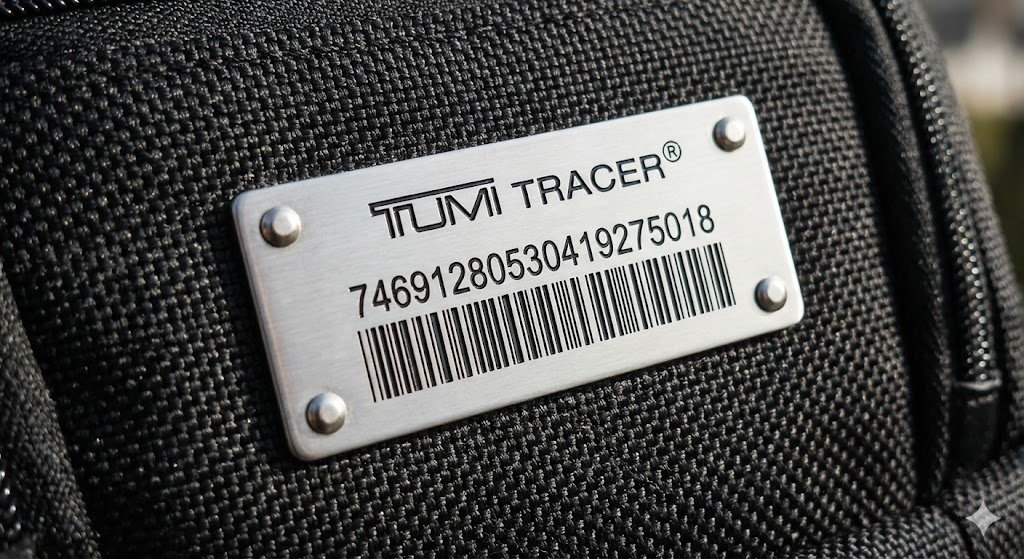
The ultimate litmus test is the Tumi Tracer®. Every authentic bag has a unique 20-digit barcode permanently attached to it.
However, if you are buying secondhand and can’t run the number immediately, you must rely on the "Touch Test." Authentic Tumi ballistic nylon is abrasive and stiff; fakes almost always feel smooth and slippery because they use cheaper, single-ply nylon.
The Tumi Tracer® Test (The Database Check)
This is the only 100% foolproof method.
Inside every main compartment (or on the side of the luggage), you will find a metal plate with a unique 20-digit numerical code.
- The Test: Go to the official Tumi website or call their customer service. Register or verify that number.
- The Result: If the system rejects the number or says it is already registered to another product, it is a fake. Counterfeiters often print the same number on thousands of fake bags. If you see a number ending in "…1234" on eBay, run away.
The "Real vs. Fake" Inspection Checklist
Don’t just look at the logo; look at the screws and the fabric grain.
| Inspection Point | ✅ Real Tumi (Technical Standard) | ❌ Fake / Counterfeit |
|---|---|---|
| Ballistic Nylon Feel | Rough & Stiff. Feels like heavy canvas. Rubbing a fingernail across it makes a loud "zipping" sound. | Smooth & Shiny. Feels like a gym bag. Slippery and often looks "glossy." |
| The Screws | Custom Flat/Torx. Tumi uses specialized flat-head or distinct screws on handle bezels. | Generic Phillips. Standard "+" head screws from any hardware store. |
| The Monogram Patch | Clean Leather. Genuine leather, stitched perfectly flush with the bag. | Plastic/Vinyl. Feels rubbery, often glued on with messy stitching. |
| Zipper Hardware | Solid Metal. Pull tabs feel heavy and cold. "TUMI" logo is deeply engraved. | Hollow/Light. Pulls feel like light plastic painted silver. Logo is faint/laser-etched. |
| Stitch Density | 10-12 SPI (stitches per inch). Uniform, no loose threads. | 6-8 SPI. Uneven spacing, visible thread tails. |
| Interior Lining | Smooth, branded lining with Tumi pattern. Feels substantial. | Cheap polyester lining, often with chemical smell. May have misspellings. |
Why Counterfeiters Can’t Replicate Tumi’s "Feel"
From a manufacturing perspective, the reason fakes always feel "off" comes down to three things counterfeiters won’t invest in:
- Yarn Quality: Real ballistic nylon uses high-tenacity Nylon 6.6 filament yarn. Fakes use Nylon 6 or even polyester — which is chemically different and feels smoother/lighter.
- Weave Tension: Authentic basketweave is woven under high tension, creating that signature "stiff board" feel. Counterfeit mills use lower tension (faster production, lower cost), resulting in a floppy, limp fabric.
- Post-Treatment: Tumi’s fusion coating adds a specific surface slickness. Fakes skip this step entirely or use a cheap spray-on coating that wears off after a few weeks.
This is why I tell brand owners: if you want a product that "feels" premium, invest in the fabric treatment, not just the fabric itself. The coating and finishing process is often where the perceived quality gap between a $50 bag and a $500 bag actually lives.
How Brands Can Build Premium Backpacks Using TUMI-Level Standards? (The B2B Reality)
I often receive inquiries from entrepreneurs who send me a picture of an Alpha 3 backpack and say: "I want to manufacture this exact bag with my logo."
You can’t—and you shouldn’t try. Tumi protects its empire with over 100 patents, particularly on the Omega Closure System® and the specific weave of FXT Ballistic Nylon®. Trying to clone Tumi is a legal minefield. However, you can build a brand that rivals Tumi’s quality by focusing on "Technical Luxury" manufacturing standards using non-proprietary, high-grade materials.
How We Can Help You Reach "Technical Luxury"?
We don’t copy Tumi; we match their Engineering Standard.
At Osgoodway, we help clients build "Tumi-Level" products by sourcing the highest-grade publicly available materials and using heavy-duty construction techniques.
Your "Technical Luxury" Toolkit:
- The Alternative Fabric: Instead of FXT, we specify 1680D Double-Strand Ballistic Nylon. It offers 95% of the abrasion resistance and that signature "stiff" premium feel.
- The Hardware: We use YKK RC (Racquet Coil) zippers. These are the toughest zippers available on the open market, designed specifically for luggage to resist abrasion—just like the best brands use.If you’re weighing the pros and cons of premium hardware versus budget-friendly alternatives, our deep dive into YKK vs. SBS zippers will help you decide which is right for your brand’s price point.
- The Construction: We use Bar-Tack Stitching (dense zig-zag reinforcement) at every stress point. This is the "hidden quality" that ensures a strap never rips off, even when the bag is overloaded.
The Osgoodway "Technical Luxury" Process: From Concept to Container
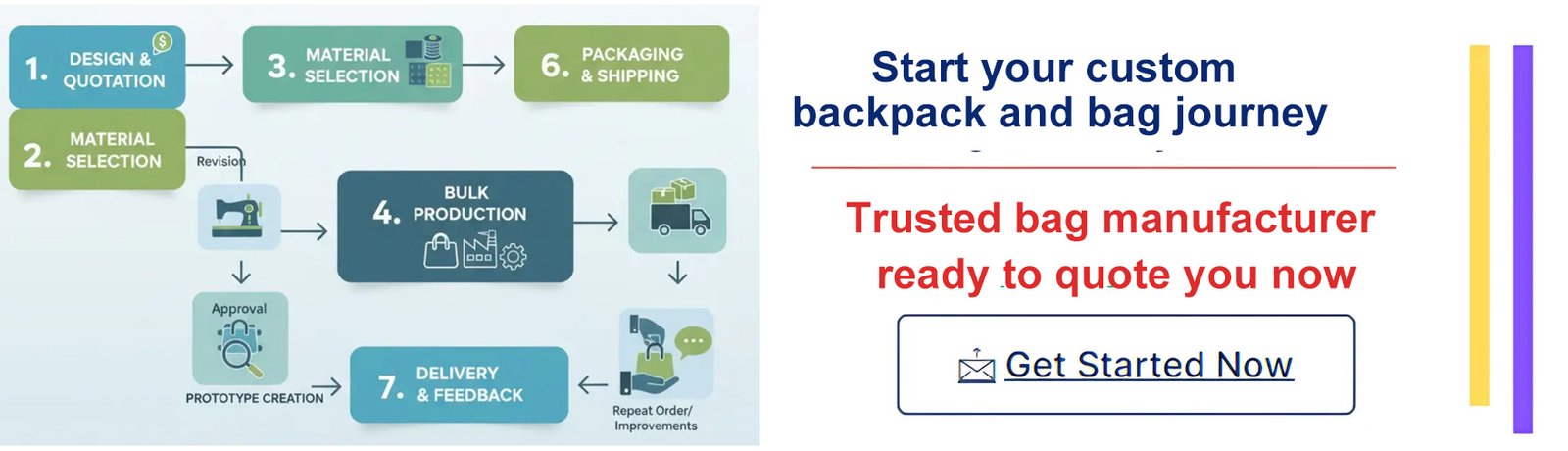
Here’s what the journey looks like when you partner with us to create a premium bag line:
Step 1: Spec Review & Material Consultation (Week 1-2)
You send us your design concept, reference photos, or tech pack. Our team reviews it and recommends the optimal fabric, hardware, and construction methods — pulling from 15+ years of experience manufacturing for brands across the US, Europe, and Asia.
Step 2: Sample Development (Week 3-5)
We produce a physical sample (or multiple iterations) using the exact materials that will go into production. You inspect, test, and approve before a single production unit is cut.
Step 3: Pre-Production QC (Week 6)
All raw materials are inspected and tested before they enter the cutting room. Fabric weight, color fastness, zipper pull strength, and hardware finish are all verified against the approved sample.
Step 4: Production with In-Line Inspection (Week 7-10)
Our QC team inspects at three stages: after cutting, during assembly, and during final packaging. We can also accommodate third-party inspectors at your request.
Step 5: Final Audit & Shipping (Week 11-12)
A comprehensive final inspection (AQL 1.5 or stricter per your requirement) is conducted. Products are packed, palletized, and shipped — with full documentation.
My Advice: Don’t chase the brand name. Chase the spec sheet. If you are ready to build a backpack that is engineered, not just sewn, contact us at Osgoodway. Let’s discuss how to bring industrial precision to your design.
Frequently Asked Questions
Is Tumi Made in China?
Yes, a significant portion of Tumi’s product line is manufactured in China — particularly hard-shell luggage from the 19 Degree collection, travel accessories, and some hardware components. Tumi’s Chinese manufacturing partners operate at a level comparable to automotive-grade precision, using advanced injection molding and die-casting equipment.
Are Tumi Bags Worth the Money?
For frequent business travelers (100,000+ miles per year), Tumi bags often provide better long-term value than replacing cheaper alternatives every 1-2 years. The bags are engineered to last a decade or more, and Tumi’s repair service extends their lifespan further. For occasional travelers, there are excellent alternatives using similar materials at 40-60% of the cost.
Where Was Tumi Originally Made?
Tumi was founded in 1975 by Charlie Clifford, who began by importing leather bags from South American artisans. The company later shifted to manufacturing in the United States — notably at a facility in Vidalia, Georgia, which handled ballistic nylon production for years. After the 2016 Samsonite acquisition, production was consolidated into Samsonite’s global Asian supply chain.
Does Tumi Have a Lifetime Warranty?
No. Tumi offers a limited warranty — typically 5 years for luggage and bags, and 2 years for smaller accessories like wallets. The first 12 months include comprehensive "worry-free" coverage for damage from normal wear, airline handling, and transit issues. After that, repairs are still available but may involve a processing fee.
Can I Get a Custom Bag Made with the Same Quality as Tumi?
Yes — but not with Tumi’s exact proprietary materials (like FXT® Ballistic Nylon), which are exclusive to the brand. However, you can achieve 90-95% of Tumi’s engineering quality using premium open-market materials like 1680D ballistic nylon, YKK RC zippers, and bar-tack reinforced construction. At Osgoodway, we specialize in helping brand owners develop products at this "Technical Luxury" standard. Contact us for a free consultation.