You pull your expensive hiking backpack out of storage for the season, unzip the main compartment, and are hit with the sour smell of vomit. Worse, the inside is sticky, shedding a snowfall of flakes all over your gear. Your backpack’s waterproof coating is peeling.
This deterioration is called hydrolysis—an irreversible chemical breakdown of the Polyurethane (PU) coating caused by prolonged exposure to humidity and heat during storage. It is not a user defect, but rather a fundamental chemical lifespan limit of standard PU materials.
At Osgoodway, we manufacture thousands of technical outdoor packs every year. We see this issue constantly when brands try to cut costs with cheaper materials. Here is the material science behind why your bag is peeling, and how we engineer our B2B bags to prevent it.
The Chemistry of a Peeling Backpack: What Exactly Is PU Coating Hydrolysis?
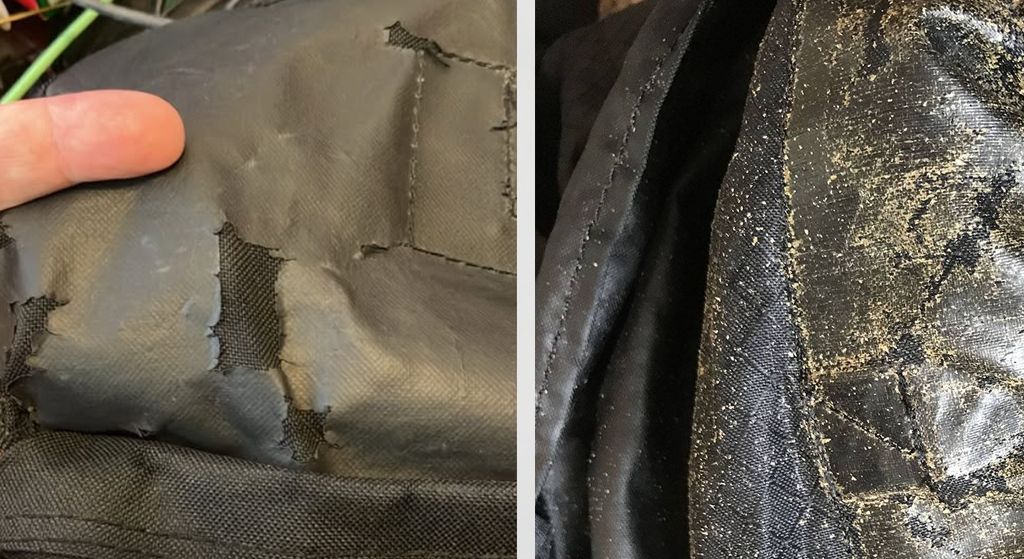
PU coating hydrolysis is a chemical reaction where water molecules permanently break the polymer chains in a polyurethane coating. Triggered by trapped moisture and high humidity, it degrades the flexible waterproof film into a fragile, peeling crust that flakes off your backpack lining.
What Are the Stages of PU Degradation?
The breakdown happens in three distinct phases, transitioning from a slight tactile change to complete mechanical failure of the fabric’s waterproof barrier.
- Phase 1 – Tackiness: The inner fabric suddenly feels sticky to the touch.
- Phase 2 – The "Vomit" Smell: Broken ester bonds release butyric acid, smelling intensely like sour milk or vomit.
- Phase 3 – Flaking: Flakes detach like snow, contaminating your gear.
Factory Secret: Never store a damp bag in a plastic tub. We always pack bags with silica gel packets before shipping FOB to prevent premature container hydrolysis.*
Why Do Premium Brands Still Use Flaking PU Coatings?
Price tag does not grant immunity to chemistry. Even high-end brands utilizing lightweight silnylon or standard 210D Nylon with a traditional PU backing will inevitably face this degradation after 3 to 5 years.
Brands stick with traditional polyester-based PU coatings because they are incredibly cheap, easy to apply, and pass initial waterproof tests flawlessly. They also meet strict flammability standards required for outdoor gear sold in certain regions, unlike some advanced materials.
How Does Cost Drive the PU Choice?
A standard PU coating costs pennies per yard, while polyether PU or siliconized options can triple the fabric cost, destroying retail margins.
- Cost Efficiency: Regular PU adds just $0.30 to $0.50 per yard to the base nylon.
- Seam Sealing: Standard PU accepts heat-taped seams effortlessly on the factory line.
- Planned Obsolescence: Most brands engineer for a 3-5 year lifespan, right when hydrolysis peaks.
What Happened When We Switched to Cheaper Linings?
A European buyer once forced us to downgrade to a 1000mm generic PU to save $0.45 per bag. The return rate skyrocketed to 18% within two years.
| Coating Type | Cost per Yard | Hydrolysis Resistance | Factory Defect Rate |
|---|---|---|---|
| Generic Polyester PU | $0.40 | Low (2-3 years) | 12% |
| Premium Polyether PU | $1.20 | High (7+ years) | 1.5% |
| Silicone (Silnylon) | $2.50+ | Excellent | <1% |

How Can We Repair a Flaking Backpack Lining?
Once your bag’s coating starts flaking off, ignoring it will not work. Flaking will soon clog your zippers and ruin your gear.
To repair flaking backpack lining, you must aggressively scrub away the degraded PU layer using a stiff brush and isopropyl alcohol, then paint on a fresh urethane sealant.
What Tools Do You Need to Strip the Bag?
Technically, if you don’t need the waterproofing, just peel or stiff brush the layer off.
You need harsh solvents to break down the sticky residue without melting the underlying nylon weave. Avoid bleach or heavy detergents entirely.
- Isopropyl rubbing alcohol (90%+ concentration).
- A stiff bristle brush or a heavy-duty Scotch-Brite pad.
- Mild dish soap for the final rinse.
How Do We Apply the New Waterproof Layer?
After stripping the fabric bare, you must replace the barrier. At the factory, we use heavy industrial rollers, but at home, you need a liquid sealant.
- Buy a specialized tent sealant like Gear Aid Seam Grip TF or use a shoe or outdoor fabric waterproofing spray.
- Pitch the fabric taut so it does not wrinkle while drying.
- coat it inside and out and let it cure for 24 hours.
Can You Just Wash the Flakes Away?
- No. Machine washing a hydrolyzing bag will embed the sticky flakes deep into the mesh back panel.
- Detergents rapidly accelerate the chemical breakdown of whatever PU is left.
- The agitation will likely tear the weakened fabric along the seam lines.
PU vs. TPU: How Factory Material Choices Dictate Lifespan
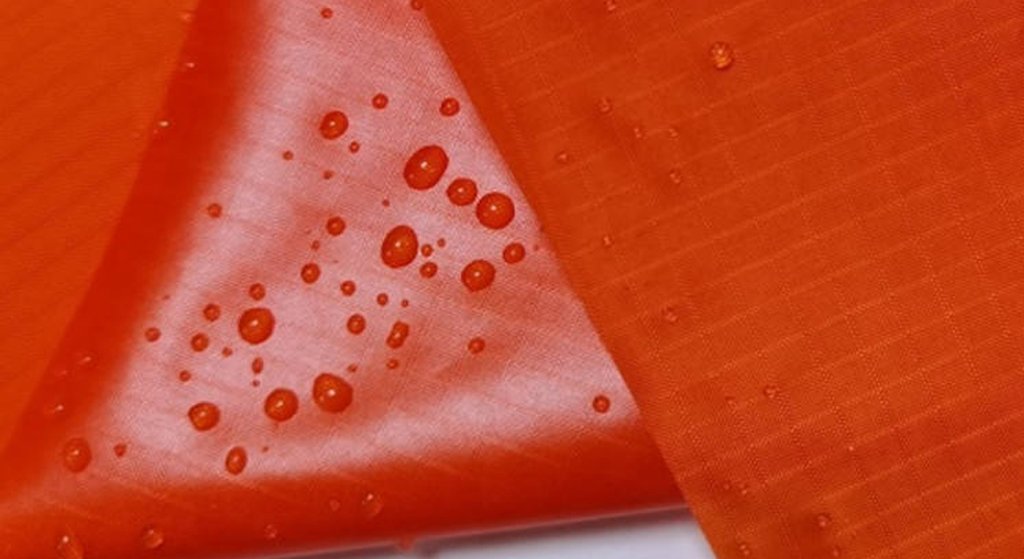
When brand procurement teams approach us to manufacture their lines, the coating conversation is the most critical step in mitigating customer returns. The choice between PU and TPU dictates the pack’s lifespan.
Comparing TPU vs PU coating, TPU (Thermoplastic Polyurethane) wins decisively. TPU is extruded as a solid film and laminated to the fabric, making it vastly more durable, flexible in extreme cold, and highly resistant to the hydrolysis that destroys standard PU liquid coatings.
Standard PU (Polyurethane)
Standard ester-based PU is cheap, flexible, and extremely easy to apply to woven fabrics. However, its chemical structure is inherently highly susceptible to moisture breakdown. It is a cost-effective solution for short-lifespan fashion bags, but a severe liability for serious outdoor gear.
Ether-Based TPU (Thermoplastic Polyurethane)
Ether-based TPU offers vastly superior performance. Unlike standard ester-based PU, ether-based TPU resists water degradation because its molecular ether bonds are fundamentally stable in the presence of H2O. It costs more upfront but drastically extends the product’s usable life.
| Coating Type | Hydrolysis Resistance | Cost Impact | Average Lifespan |
|---|---|---|---|
| Standard Ester PU | Low | Low (Cheap) | 2-5 Years |
| Polyether TPU | High | Medium to High | 10+ Years |
| Silicone (Silnylon) | Very High | High | 10+ Years |
Why Should Brands Switch to TPU Now?
Transitioning to TPU drastically cuts warranty claims and appeals to high-end B2B buyers demanding extreme longevity and better environmental compliance.
- Zero Flaking: TPU does not chemically degrade or flake off like liquid PU.
- Eco-Friendly: TPU production emits far fewer VOCs (Volatile Organic Compounds).
- Welding: TPU can be high-frequency (HF) welded for 100% waterproof, stitch-less seams.
For a broader sourcing comparison covering waterproofing, hydrolysis resistance, cost and production methods, see our full guide to TPU vs PU coating for bags.
Factory Secret: Ask your supplier for "Polyether TPU" instead of Polyester TPU. It costs 15% more but is practically immune to moisture rot in humid climates.
Deep FAQ: The Ugly Truth About Backpack Hydrolysis
Can I just spray DWR or silicone spray over the peeling lining?
Garbage advice. DWR is strictly for the exterior face fabric. Spraying it inside over rotting PU is like painting over wet rust. It won’t adhere, and you’ll just create a greasy, chemical mess. You must strip the dead PU completely bare first.
Why did my vintage 90s backpack never peel, but my modern $300 pack did in three years?
Environmental regulations changed the chemistry. 90s bags used harsh, toxic solvents (like MEK) in their PU that lasted forever but poisoned the water table. Today’s REACH-compliant, eco-friendly PU hydrolyzes significantly faster. It’s the hidden price of a greener supply chain.
Will washing my backpack in cold water stop it from smelling?
Washing machines are PU assassins. The mechanical agitation combined with detergent rips the weakened polymers right off the nylon backing. We’ve tested this: a hydrolyzing bag loses 100% of its waterproof rating after one wash cycle. Spot clean only.
Can I reverse hydrolysis once the inside feels sticky?
Chemical cleavage is terminal. Once the ester bonds break, no amount of silica will reverse the reaction. You can’t cure it; you can only strip the dead layer and rebuild it.
Doesn’t a brand’s "Lifetime Warranty" cover this peeling?
Read the fine print. 90% of major outdoor brands legally classify PU hydrolysis as "normal wear and tear" or "improper storage," explicitly voiding your claim.
Final Verdict & Next Steps
The outdoor gear industry accepts PU hydrolysis as an unavoidable reality. I don’t.
Upgrading a backpack from standard polyester PU to hydrolysis-resistant TPU lamination adds less than $1.50 to the FOB price, yet it wipes out 80% of long-term warranty claims. Stop letting cheap materials kill your inventory and ruin your customer retention.
If you are developing a new outdoor or tactical bag line and need a manufacturing partner who actually understands material science, let’s talk. Send your Tech Pack to our team, and we’ll engineer a sample that survives the real world.