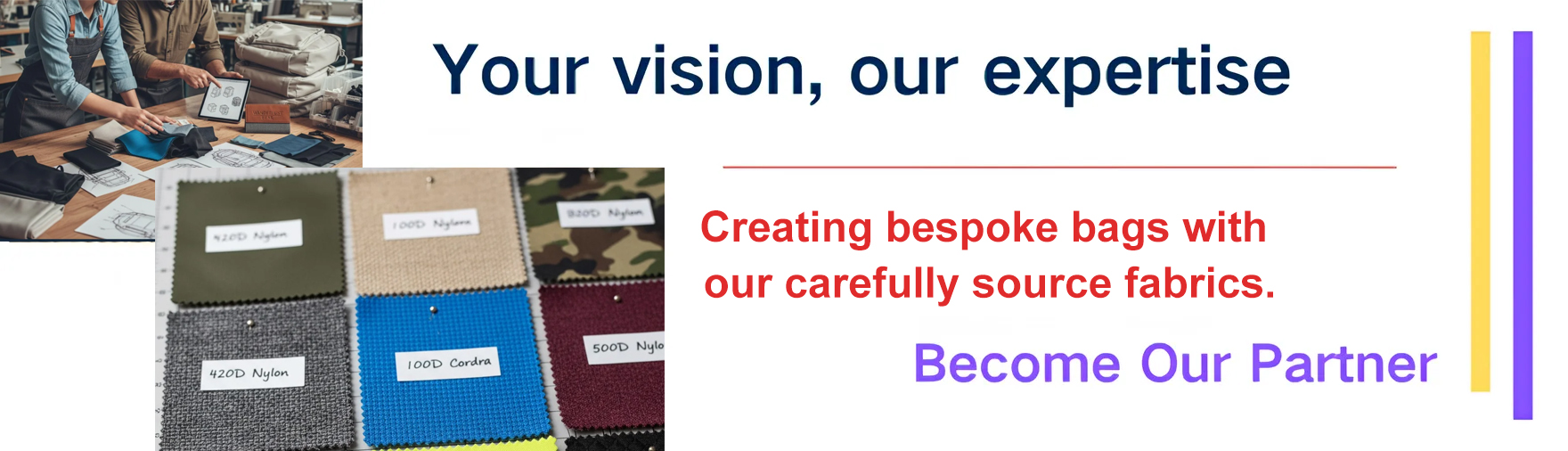
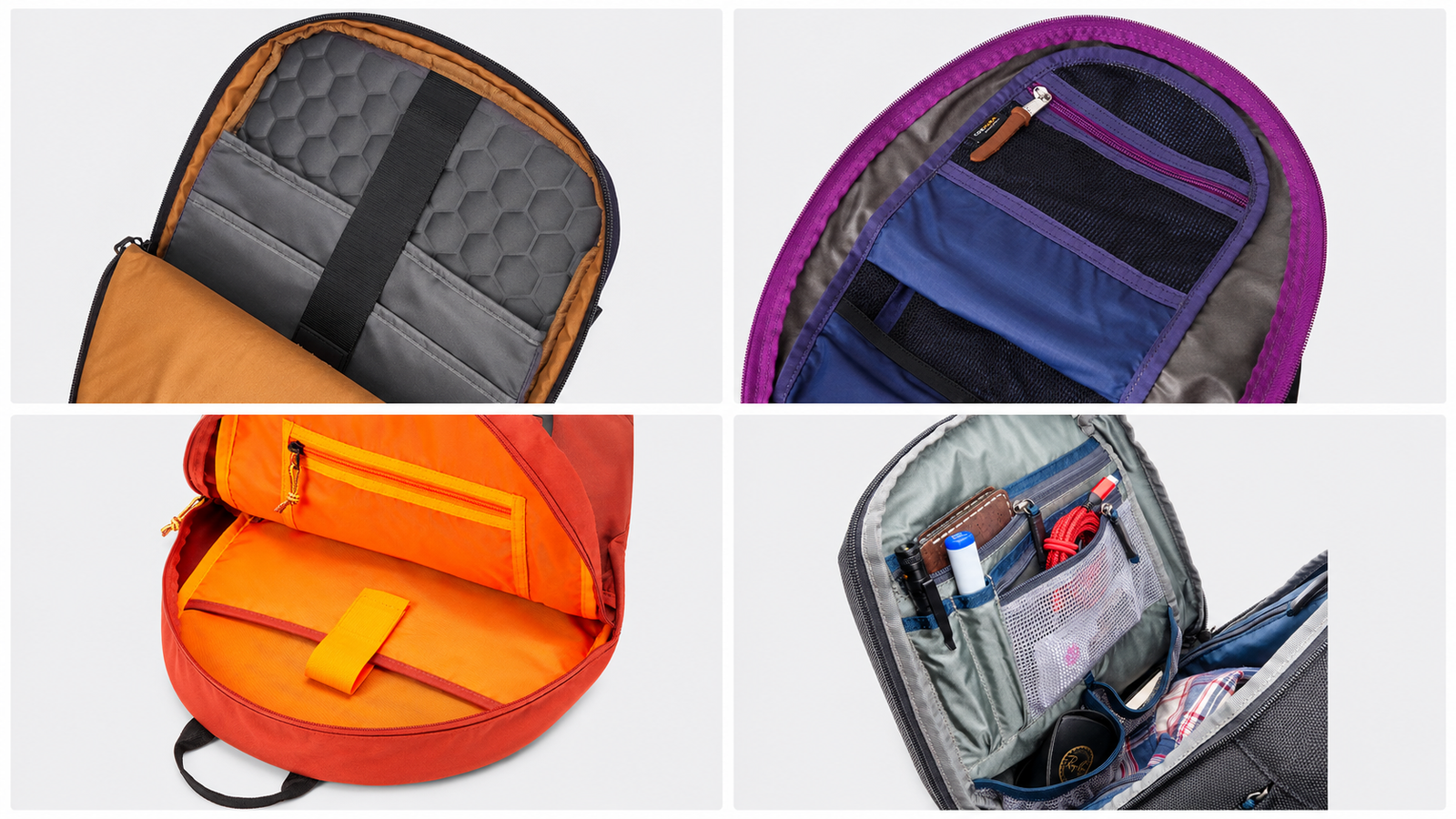
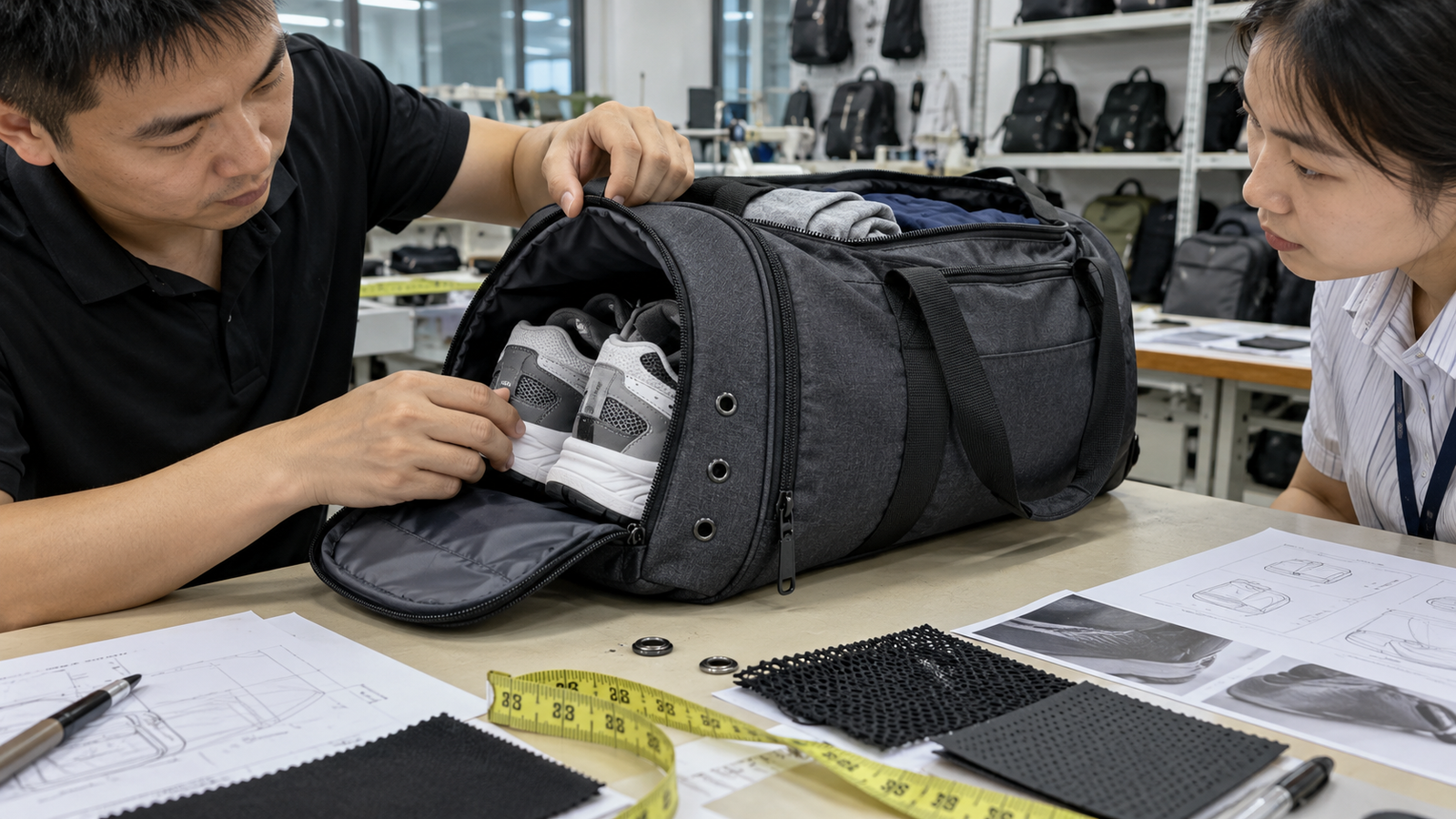
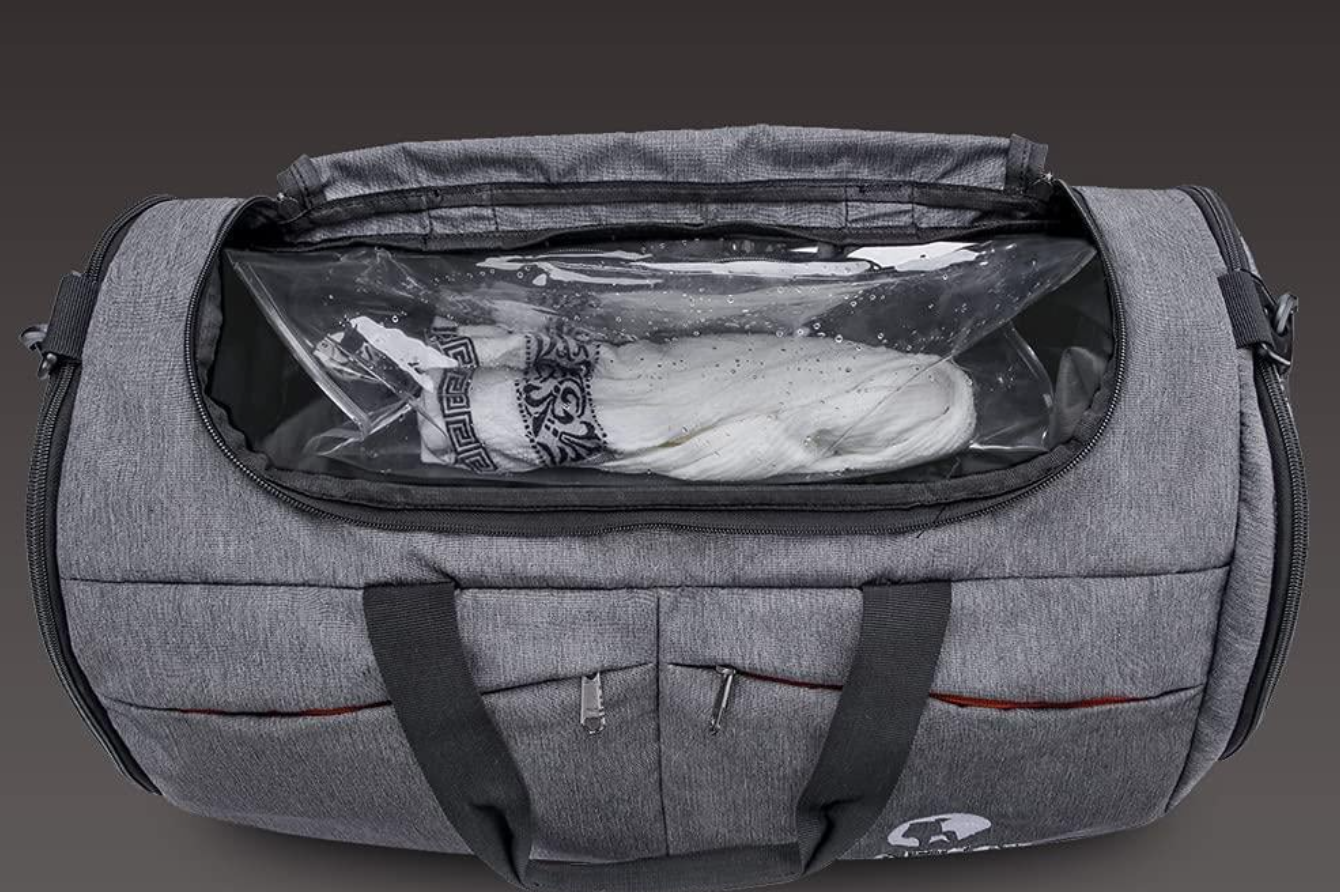
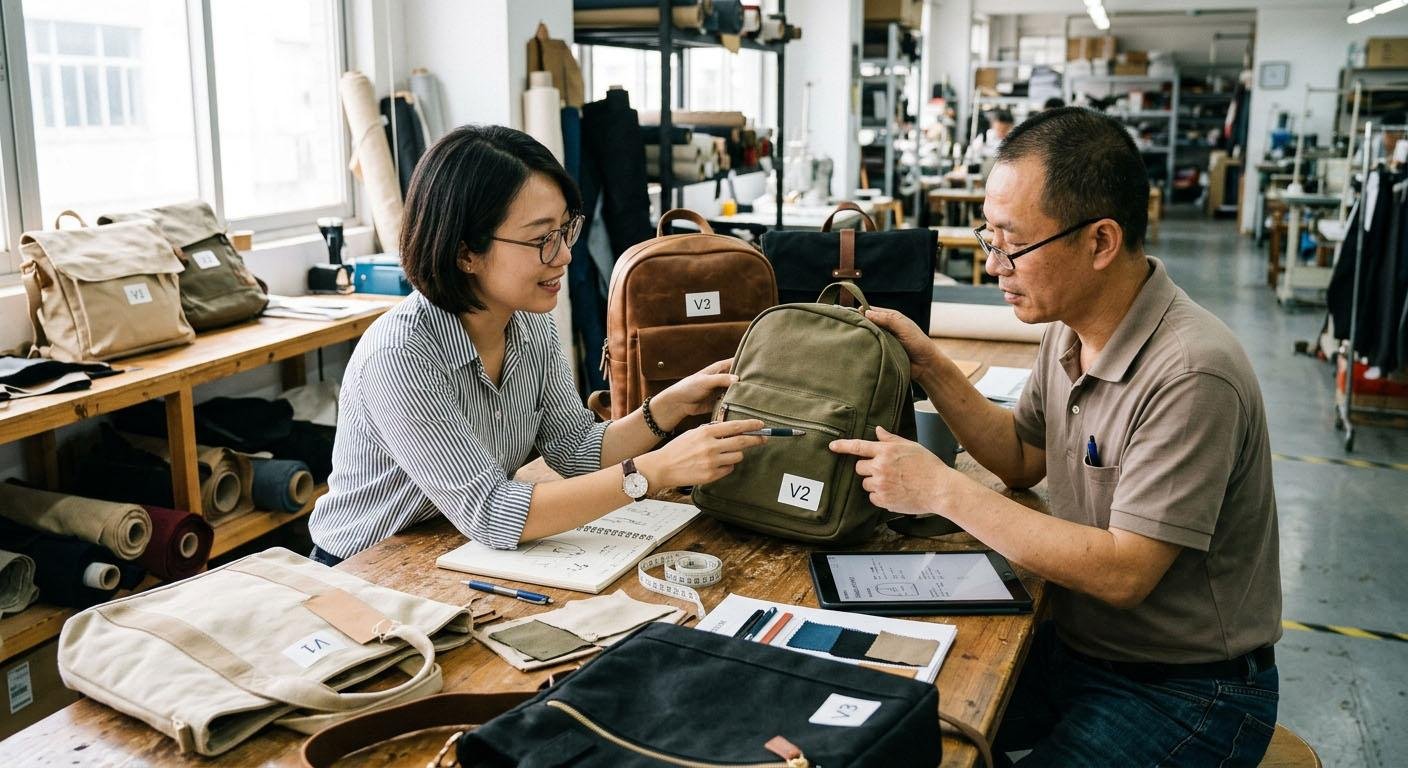
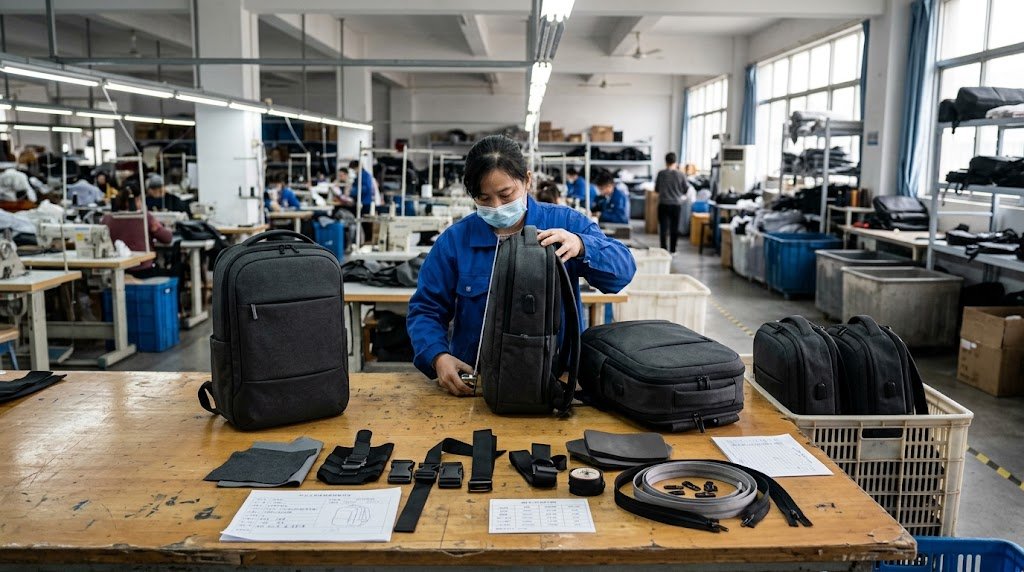
Choosing the right duffel bag fabric is not simply a matter of selecting polyester, nylon, or canvas. For a brand developing a new collection, the material must work with the intended use, product design, target cost, and production quantity.
A fabric may look suitable in a swatch book but behave differently once it is sewn into a finished bag. It can affect how the bag holds its shape, how much it weighs, how its seams perform, and whether the approved color can be reproduced consistently during bulk production.
At Osgoodway, we approach fabric selection as part of product development rather than an isolated purchasing decision. Before recommending materials, we consider the bag’s intended use, construction, expected performance, target FOB price, and order quantity.
The most practical approach is to shortlist two or three suitable fabrics, compare their performance and sourcing conditions, and evaluate them through samples before confirming the final specification.
This guide focuses on making those decisions for gym, outdoor, travel, streetwear, and promotional duffel bags.
If you first need to understand the differences between individual materials, see our 8 Duffel Bag Materials Comparison Guide.
How Should Brands Choose Duffel Bag Fabric?
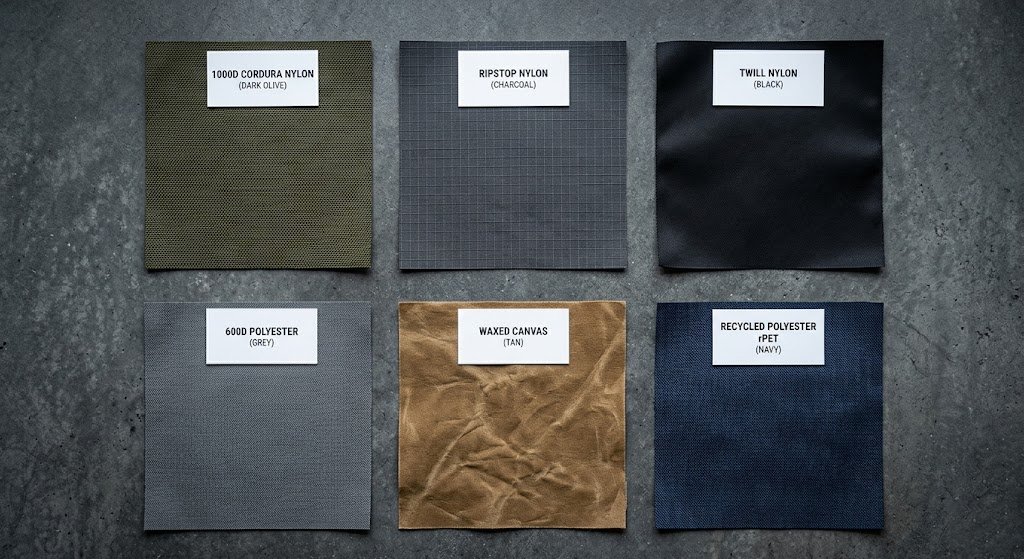
Before selecting a fabric, a brand should answer five practical questions:
- Who will use the bag, and how? A gym bag used several times a week has different requirements from a packable travel duffel or a heavy-duty equipment bag.
- Which performance requirements matter most? These may include abrasion resistance, water resistance, low weight, structural support, or ease of cleaning.
- What is the target FOB price? Material cost must be considered alongside construction, lining, zippers, accessories, packaging, and production volume.
- What is the planned order quantity? Standard stocked fabrics generally offer more flexibility than specially dyed or custom-developed materials.
- Are there specific compliance or certification requirements? These should be confirmed before fabric sourcing, especially for recycled materials or special chemical finishes.
The answers help narrow the options before sampling begins.
Duffel Bag Fabric Selection Matrix by Market
| Market / Product Type | Fabric Options to Consider | Main Priorities | What Buyers Should Check |
|---|---|---|---|
| Gym and fitness | 600D–900D polyester, nylon, rPET | Durability, cost, cleaning, organization | Coating, lining, bottom reinforcement, wet compartments |
| Outdoor and equipment | High-tenacity nylon, CORDURA® fabrics, coated tarpaulin | Abrasion, load resistance, weather protection | Material tests, seams, strap attachments, closures |
| Packable travel | Lightweight nylon or polyester, ripstop constructions | Low weight, flexibility, packability | Fabric strength, packed size, reinforcement |
| Streetwear and fashion | Twill nylon, matte polyester, canvas, PU-coated fabrics | Texture, drape, appearance, color | Hand feel, color matching, shape retention |
| Weekend and lifestyle | Canvas, waxed canvas, nylon, rPET | Appearance, comfort, useful capacity | Weight, bottom construction, lining, durability |
| Corporate and promotional | Standard polyester, selected rPET fabrics | Cost control, branding, repeatability | Printing, color availability, MOQ, production consistency |
These are starting points, not fixed specifications. Different fabrics can be suitable for the same market when the design and performance requirements differ.
Which Fabric Is Right for Outdoor and Heavy-Duty Duffel Bags?
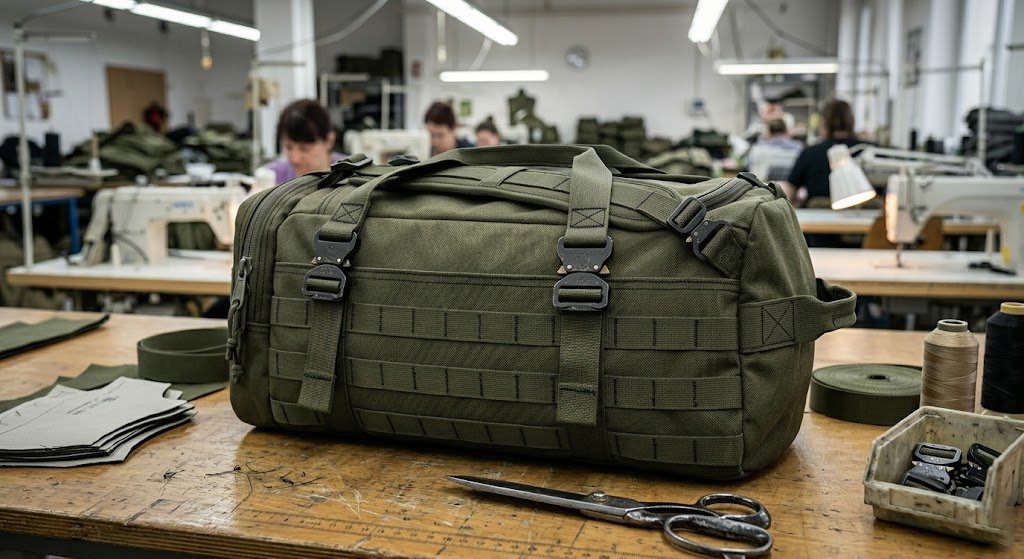
Outdoor and equipment duffel bags often experience more contact with rough surfaces, repeated lifting, and heavier loads than everyday gym bags.
For these products, we look beyond the main fabric’s denier and consider the complete construction.
Choose Materials According to the Main Performance Requirement
For abrasion resistance:
High-tenacity nylon, suitable CORDURA® fabrics, and other densely constructed textiles may be considered.
The selection should be based on the actual fabric specification and relevant test results, not simply a higher denier number.
For water protection:
PU-coated fabrics, PVC tarpaulin, and TPU-laminated fabrics offer different levels of water resistance and flexibility.
A coated fabric may resist water penetration while the finished bag still allows water to enter through seams, zippers, or openings.
For load-bearing performance:
Strap attachments, handles, seams, and the bottom construction can be as important as the outer fabric.
A stronger shell material will not compensate for weak attachment points.
CORDURA® vs. TPU-Laminated Fabric: Which Should You Choose?
| Decision Factor | CORDURA® Fabric | TPU-Laminated Fabric |
|---|---|---|
| Primary consideration | Textile durability and abrasion performance | Water-resistant or waterproof construction |
| Fabric construction | Varies by product and specification | Textile base with TPU film or coating |
| Flexibility | Depends on construction and finish | Depends on base fabric and laminate |
| Water protection | May require coating or finishing | Film provides a water barrier; finished bag still needs suitable construction |
| Typical applications | Travel, outdoor, tactical and equipment bags | Water-resistant outdoor bags, boating and dry-bag applications |
| Sourcing concern | Genuine branded material and specification verification | Lamination quality and seam compatibility |
These materials are not direct substitutes in every design. The choice depends on whether abrasion resistance, water protection, flexibility, or a combination of these is most important.
Do You Need a Waterproof or Water-Resistant Duffel?
This should be decided before the fabric specification is finalized.
For a travel or outdoor lifestyle bag exposed to occasional rain, a suitable coated fabric may provide sufficient protection.
For a product advertised as waterproof, the design may require a more comprehensive solution involving the shell material, seams, closures, and appropriate finished-product testing.
ISO 811:2018 provides a hydrostatic pressure test method for evaluating fabric resistance to water penetration. However, a fabric test result does not establish the waterproof performance of an assembled bag.
Our recommendation: Define the expected exposure to water first. Do not specify a more expensive waterproof construction unless the product requirements justify it.
What Fabric Should Streetwear and Fashion Duffel Brands Choose?
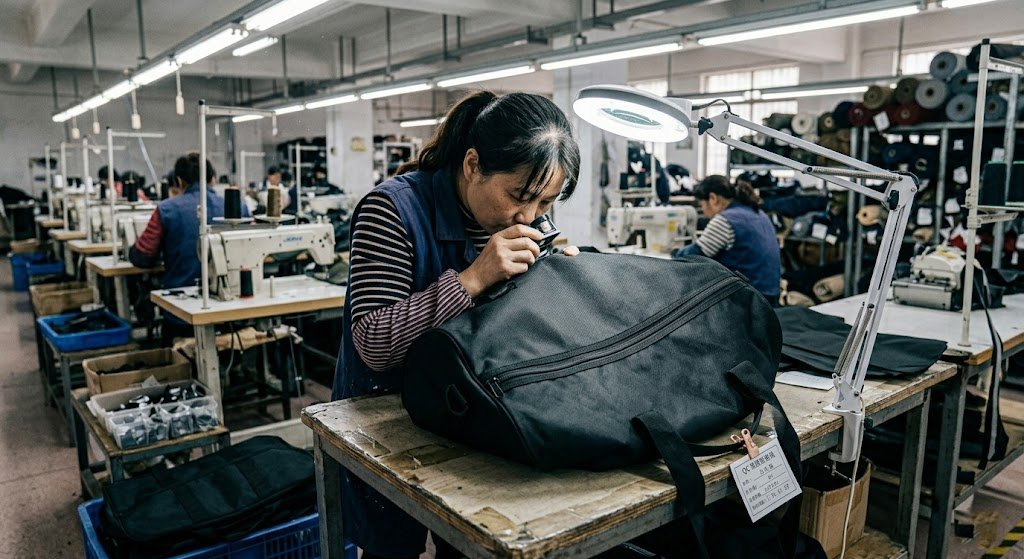
For streetwear and fashion duffel bags, appearance and hand feel often influence material selection as much as durability.
Two fabrics with similar technical specifications may create very different finished products.
A smooth, matte nylon can produce a softer appearance, while a more structured polyester or coated fabric may help the bag maintain a defined silhouette.
Consider Texture, Drape, and Shape Retention
Depending on the design, possible materials include:
- High-density twill nylon for a smooth surface and flexible drape.
- Matte-finish polyester for a cost-conscious fashion collection.
- Canvas for a textured, structured appearance.
- PU-coated fabrics for particular surface effects.
- Recycled polyester when recycled content is part of the product specification.
Nylon is not automatically better than polyester for fashion bags. Both are available in different constructions and finishes.
We recommend comparing actual swatches under the same lighting conditions and evaluating the material after it has been sewn into the intended shape.
Color Matching Is a Production Decision
A common development challenge is achieving a consistent appearance across the main fabric, lining, webbing, zipper tape, and binding.
Even when materials are matched to the same Pantone reference, the final shades may look different because of fiber type, surface texture, coating, and dyeing processes.
Before bulk production, buyers should confirm:
- The approved color reference or lab dip.
- Whether the selected fabric is a stock color or requires custom dyeing.
- The acceptable shade variation between different components.
- Whether more than one dye lot will be required.
- The procedure for approving production fabric before cutting.
Approving the main fabric alone is not always enough. Visible accessories should also be reviewed against the approved sample.
Why Material Feel Matters During Sampling
A fabric that looks attractive as a flat swatch may behave differently once the bag is assembled.
For example, a soft fabric may work well for a relaxed weekender but may not provide enough support for a structured duffel with large side panels.
In such cases, the solution may involve adjusting the lining, backing, piping, or internal reinforcement rather than replacing the main fabric entirely.
Which Fabric Is Best for Gym and Fitness Duffel Bags?
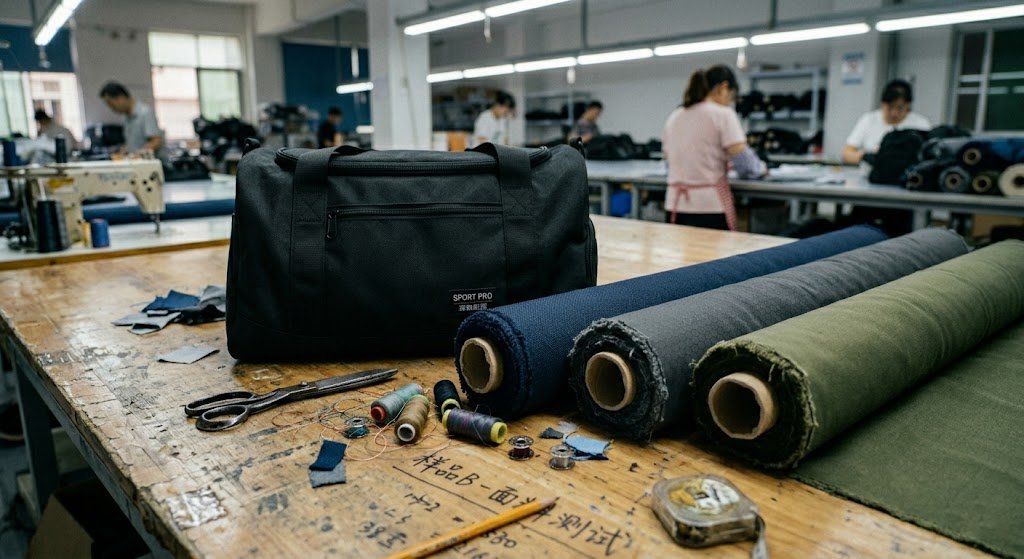
For many everyday gym and fitness duffel bags, 600D polyester is a practical starting option because it balances cost, durability, material availability, and ease of production.
However, the correct specification depends on the bag’s size, construction, expected load, and additional features.
A lightweight fitness bag and a large team equipment duffel should not automatically use the same material.
A Practical Gym Bag Material Combination
| Bag Component | Possible Material or Construction | Main Consideration |
|---|---|---|
| Main body | 600D polyester with suitable backing or coating | Cost, durability and appearance |
| Lining | 210D polyester or another approved lining | Strength, hand feel and cleaning requirements |
| Bottom | Reinforced polyester panel or suitable structural backing | Abrasion and shape retention |
| Wet compartment | Suitable coated lining or waterproof-compatible material | Moisture containment and seam construction |
| Shoe compartment | Polyester lining with an appropriate ventilation design | Odor management and cleaning |
| Handles | Reinforced webbing and attachment construction | Repeated lifting and carrying |
These are possible development choices rather than mandatory specifications.
The Main Fabric Is Only Part of the Durability Equation
During development, we pay particular attention to areas that experience repeated pulling or concentrated loads:
- Shoulder strap and handle attachment points.
- Zipper openings and end stops.
- Bottom corners.
- Seams around external compartments.
- Internal dividers or partitions carrying additional weight.
If these areas are not designed properly, choosing a stronger fabric alone may not solve the problem.
What About Wet Clothes and Shoe Compartments?
For gym bags, moisture management often requires a separate construction solution rather than a different outer shell fabric.
A wet compartment may use a coated lining or a suitable waterproof-compatible material, while a shoe compartment may benefit from ventilation features such as mesh, eyelets, or perforated panels.
However, ventilation and water containment have different purposes. Their placement should be determined by the actual compartment design.
For brands developing gym bags, we recommend testing the wet and shoe compartments separately during sampling rather than assuming the main shell fabric determines their performance.
What Fabric Works Best for Travel, Lifestyle, and Promotional Duffel Bags?
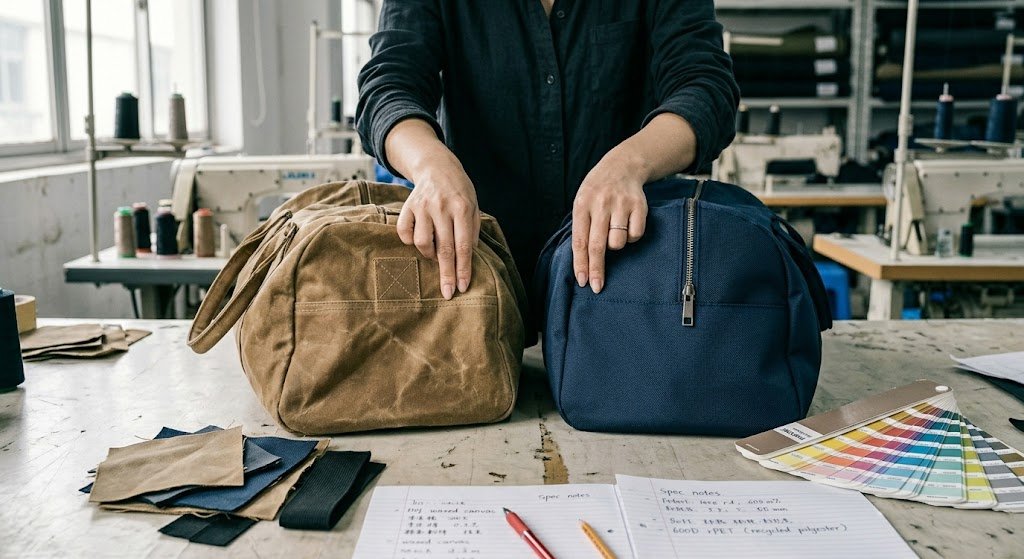
Travel and lifestyle duffel bags cover a wide range of products, from lightweight weekend bags to structured premium travel collections.
The correct material depends on the appearance, size, weight, and carrying experience the brand wants to achieve.
For Weekend and Lifestyle Bags
Canvas and waxed canvas can provide a distinctive appearance, while nylon and polyester offer additional choices in weight, texture, and surface finish.
When using canvas, buyers should consider how the finished bag will behave when partly filled.
If the bag needs to maintain a defined shape, the design may require a reinforced base, suitable piping, or other structural support.
For a softer weekender, a more flexible construction may be preferable.
For Lightweight Travel Bags
Lightweight polyester or nylon may be suitable when packability is a priority.
However, lowering the fabric weight should not mean ignoring the bag’s handles, seams, and bottom construction.
The intended carrying load should be reviewed before choosing a lighter material.
For Corporate and Promotional Bags
Material selection is often influenced by the target cost, logo method, color availability, and repeat-order requirements.
A standard polyester fabric may provide a practical solution, but brands should still confirm how the selected material behaves during printing or embroidery.
A fabric that meets the target cost is not necessarily suitable for every decoration method.
How Does Fabric Choice Affect Duffel Bag Manufacturing Cost?
Fabric is only one part of a duffel bag quotation.
The final FOB price also depends on the amount of material used, bag construction, accessories, labor, packaging, and production quantity.
Five Factors That Influence Material-Related Cost
1. Fabric specification
Two materials described as 600D polyester can have different prices because of yarn quality, weave construction, weight, coating, and finishing.
2. Fabric consumption
A larger bag generally requires more fabric, but shape and panel design also affect consumption.
Fabric width, pattern layout, cutting loss, and usable material area should be considered during costing.
3. Reinforcement
A reinforced bottom, padded handles, internal panels, or additional backing materials increase material usage and may add sewing operations.
4. Custom colors and special materials
Custom dyeing, special coatings, or branded fabrics may involve minimum material orders that are not justified by a small finished-bag quantity.
5. Order quantity and construction complexity
Production efficiency, material purchasing conditions, and the number of operations can affect the final cost.
How Should Buyers Compare Two Fabric Quotations?
If two factories quote different prices for what appears to be the same duffel bag, buyers should first confirm that the specifications are comparable.
Check the main fabric, lining, coating, fabric weight, reinforcement, zipper quality, webbing, dimensions, and packaging.
A lower quotation may reflect a different material construction rather than a more competitive price for the same product.
For this reason, we prefer to review a reference sample or sufficiently detailed technical specifications before confirming a final bulk price.
A quotation based only on product images should be treated as preliminary.
How Does Duffel Bag Fabric Affect MOQ and Sampling?
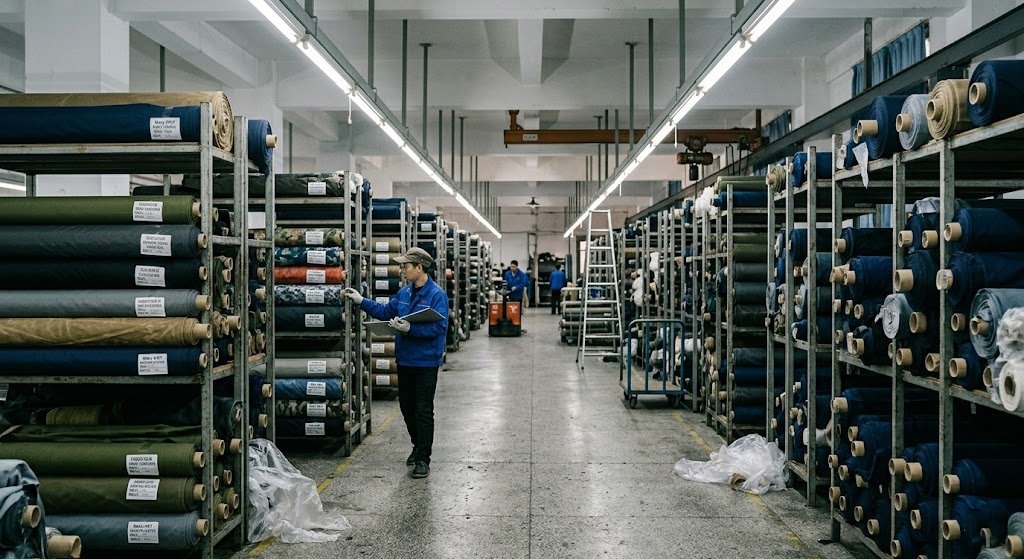
Material availability is an important consideration, especially for new brands developing their first collection.
A fabric may be technically suitable but commercially impractical if its minimum production quantity is much higher than the planned bag order.
Osgoodway’s Standard MOQ Policy
For custom bag production, our general MOQ is 500 pieces per style.
Some simpler designs may be considered from approximately 300 pieces, depending on the construction and materials.
For mixed-color orders, feasibility depends on the selected fabric, available stock colors, and the color requirements.
MOQ Considerations by Fabric Type
| Fabric Requirement | What Buyers Should Expect |
|---|---|
| Standard polyester in available colors | Generally more flexible for standard production quantities |
| Stock-color nylon | Feasibility depends on the selected fabric specification and available quantity |
| Custom-dyed polyester or nylon | Minimum dye-lot requirements may apply |
| Genuine CORDURA® fabrics | Availability and supplier minimums must be confirmed |
| Waxed canvas | Stock, finish, color and material minimums must be checked |
| Recycled polyester (rPET) | Stock greige availability, recycled content and color requirements affect MOQ |
| TPU or specialty laminated fabric | Material sourcing and minimum production quantities depend on specification |
A finished-bag MOQ and a fabric mill’s MOQ are not the same thing.
For example, a bag factory may accept a particular quantity of finished bags, but the requested fabric color or construction may require a larger purchase from the material supplier.
That extra requirement can affect the finished-bag MOQ, material cost, or available color options.
Why Recycled Fabric MOQ Can Be Complicated
For recycled polyester, one important factor is whether the supplier has suitable recycled greige fabric available.
If the required greige fabric is in stock, custom dyeing may be possible subject to the supplier’s dye-lot requirements.
If it is not available, the mill may need to produce the greige fabric first. For some specially developed recycled constructions, this can involve substantial minimum production quantities.
The issue is therefore not necessarily the selected color. It may be the availability of the underlying recycled fabric construction.
Before confirming a recycled material, buyers should check:
- Whether suitable recycled greige fabric is available.
- The required recycled content percentage.
- Color and coating requirements.
- Minimum order quantities for the selected specification.
- Whether the necessary certification documents can be provided.
If the required fabric cannot be sourced economically at the planned quantity, an alternative recycled construction or a conventional material may need to be evaluated.
How Long Does Duffel Bag Sampling Take?
At Osgoodway, sample development for standard bag designs generally takes approximately 1.5–2 weeks, once the necessary design details and materials are confirmed.
More complex constructions or special material development may require additional time.
If custom fabric dyeing, special lamination, or other material development is required, the fabric preparation schedule should be confirmed separately.
Bulk production lead times are quoted based on the finalized specifications, material availability, and production schedule.
Our recommendation: Confirm material feasibility before starting detailed sampling. This helps avoid developing a product around a fabric that cannot be sourced within the planned quantity or timeline.
Do Different Export Markets Require Different Duffel Bag Fabrics?
The destination market can affect material selection, but requirements should be based on applicable regulations, customer specifications, and product claims rather than broad assumptions about a country.
For example, a European retailer may request particular chemical compliance documentation or recycled-content certification, while an outdoor equipment brand may focus on specific fabric performance tests.
These requirements should be clarified before approving materials.
REACH and Chemical Compliance
For products intended for the EU market, buyers should consider applicable restrictions under REACH.
The relevant requirements depend on the materials, substances, and intended product.
A general claim that a fabric is compliant should be supported by appropriate documentation or testing where required.
OEKO-TEX® STANDARD 100
OEKO-TEX® STANDARD 100 addresses harmful substances in textile products.
If a buyer requires this certification, the scope and validity of the material certificate should be checked.
The use of a certified fabric does not automatically establish that every component or the entire finished bag is certified.
GRS and Recycled Material Claims
For recycled fabrics, the Global Recycled Standard (GRS) and Recycled Claim Standard (RCS) provide recognized frameworks for verifying recycled material content and chain of custody.
Buyers should confirm the applicable certification scope and whether the necessary transaction documentation can be provided for the order.
A supplier’s general sustainability statement should not replace material-specific documentation.
PFAS-Free Finishes and Other Requirements
Some buyers request PFAS-free water-repellent finishes or other specific chemical requirements.
These should be confirmed with the material supplier and supported by appropriate declarations or testing based on the buyer’s specification.
At Osgoodway, we can review available material options, including recycled fabrics and finishes with specified chemical requirements. The applicable documents and feasibility should be confirmed for each project rather than assumed for all materials.
What Should Buyers Check Before Approving Duffel Bag Fabric Samples?
Material approval should cover both the fabric itself and its performance in the finished construction.
We recommend reviewing the following items before bulk production.
1. Main Fabric Specification
Confirm the fiber content, denier or fabric weight, weave construction, coating, backing, and approved color.
The supplier should identify the material clearly enough for repeat orders.
2. Appearance and Hand Feel
Check whether the selected fabric produces the intended shape, texture, flexibility, and surface appearance.
A material swatch should not be the only basis for approving a structured bag.
3. Performance Requirements
Determine whether the project requires abrasion, tear strength, colorfastness, or water resistance testing.
Select appropriate test methods according to the actual fabric construction and intended use.
4. Component Compatibility
Review the main fabric alongside the lining, webbing, zipper tape, binding, and other visible accessories.
Pay attention to color consistency, material thickness, and how different components behave during sewing.
5. Finished Bag Construction
Inspect the reinforced bottom, seams, handles, shoulder strap attachments, zipper openings, and internal compartments.
If the product includes a wet compartment or other functional feature, evaluate that construction separately.
6. Bulk Material Availability
Confirm stock status, color availability, material MOQ, and any special production requirements.
For repeat orders, also consider whether the same specification can be sourced consistently.
7. Approved Reference Sample
Before bulk cutting, confirm which physical sample, color swatch, and material specification will serve as the approved production reference.
Changes made after approval should be documented and reviewed.
A Practical Duffel Bag Fabric Selection Process
For brands starting a new development project, we recommend the following sequence:
| Step | Action | Expected Outcome |
|---|---|---|
| 1 | Define intended use and target market | Clear performance priorities |
| 2 | Share reference images, drawings, or samples | Initial material shortlist |
| 3 | Compare two or three suitable fabric options | Understanding of cost and performance trade-offs |
| 4 | Check MOQ, color availability and compliance requirements | Confirmation of sourcing feasibility |
| 5 | Develop and review the sample | Evaluation of appearance, structure and function |
| 6 | Approve the final fabric and construction | Clear reference for bulk production |
The goal is not to select the strongest or most expensive fabric.
It is to choose a material that meets the product’s requirements, works with the construction, and can be sourced consistently at a commercially practical quantity.
Frequently Asked Questions About Choosing Duffel Bag Fabric
1. What is the best fabric for a gym duffel bag?
600D polyester is a practical starting point for many everyday gym duffel bags because it balances cost, durability, and material availability. However, the final specification should also consider the lining, bottom reinforcement, wet compartments, and expected carrying load.
2. Should I choose polyester or nylon for a travel duffel?
Polyester is often suitable when cost, color availability, and everyday performance are priorities. Nylon may be considered when a particular strength-to-weight ratio, abrasion performance, or hand feel is required.
Compare actual fabric specifications and samples rather than relying only on fiber names.
3. Is a higher denier fabric always better?
No. Denier indicates yarn linear density, not the complete fabric’s quality.
Weave density, yarn type, finishing, backing, and construction also affect performance. A suitable lower-denier fabric may be preferable when weight and flexibility matter.
4. Can I order a custom-colored fabric for 500 duffel bags?
Possibly, but it depends on the selected material and the supplier’s minimum dye-lot requirement.
Some standard fabrics have available stock colors, while custom-dyed or specially developed fabrics may require a larger material quantity.
We recommend confirming material availability before approving the color and quotation.
5. How do I choose between standard polyester and recycled polyester?
Start with the required fabric construction, performance, target cost, and recycled-content requirements.
If recycled polyester is specified, check the available greige fabric, color options, MOQ, certification scope, and supporting documents.
Recycled polyester should be selected based on both product requirements and sourcing feasibility.
6. Does a waterproof fabric make the finished duffel bag waterproof?
Not automatically.
A coated or laminated fabric may resist water penetration, but seams, zippers, closures, and other openings can affect the finished bag’s performance.
If waterproofing is a key product claim, the complete construction and suitable testing requirements should be established during development.
7. What information should I send to a bag manufacturer for a fabric recommendation?
It is helpful to provide the intended use, dimensions, reference images or drawings, target FOB price, estimated order quantity, preferred colors, and any required certifications or performance standards.
If you already have a physical sample or technical pack, it can make the initial material review more accurate.
Choosing the Right Fabric Starts Before Sampling
The right duffel bag fabric is one that suits the intended product, meets the required performance level, and can be sourced within the brand’s budget and production plan.
For gym bags, that may mean a practical polyester construction with suitable reinforcement. For outdoor equipment, it may involve abrasion-resistant fabrics or additional water protection. For fashion and lifestyle collections, texture, appearance, and shape retention may be equally important.
At Osgoodway, we support brands with OEM/ODM bag development, including fabric selection, material sourcing, sample development, and bulk production.
If you are planning a new duffel bag collection, send us your reference sample, drawings, intended use, target price, and estimated quantity. We can help review suitable materials and identify any sourcing or construction issues before sampling begins.
Explore our Custom Duffel & Gym Bag Manufacturing Services.
Contact Osgoodway to Discuss Your Duffel Bag Project.