Updated September 2026 | Reviewed from a backpack manufacturing perspective
A clear backpack can look perfectly good on the sample table and still disappoint in daily use. Weaknesses often appear at folded corners, shoulder-strap attachments or zipper openings under load. When comparing factory quotes, check what material and construction the price includes.
A clear PVC backpack’s lifespan depends on its construction and use—not just the thickness of the plastic. Occasional light carrying places different demands on a bag than daily books, tools or repeated outdoor use. A reliable estimate needs evidence for the specific product under comparable conditions.
For brands and bulk buyers, this guide explains what causes premature failure, when thicker PVC is worth the cost and what to check before approving production. It focuses on clear flexible PVC sheet rather than PVC-coated polyester fabric.
What Is the Realistic Lifespan of A Clear PVC Backpack?

A realistic lifespan estimate must match the backpack’s carrying load, frequency of use and exposure conditions. Light scratches alone may not justify replacement, while spreading cracks or tearing at loaded attachments can end its useful life. Thickness by itself cannot establish how many months or years the bag will last.
Useful life can end in two ways: the backpack may lose its acceptable appearance, or it may stop carrying its contents reliably. These do not always happen together.
| Condition | What it means |
|---|---|
| Light scratches | Often mainly cosmetic if visibility and structure remain acceptable |
| Cloudiness or discoloration | May reduce appearance or visibility without proving a loss of strength |
| Cracks along folds or corners | Can spread as the panel bends or carries load |
| Enlarged holes or tears beside stitching | Indicate a connection that needs attention |
| Damage at shoulder straps or handles | Affects the carrying structure |
| Failed zipper or adjuster | Can make the backpack unusable while its clear panels remain intact |
For buyers specifying a school, workplace or promotional backpack, define the intended service conditions first.
| Intended use | Main durability concern | What to evaluate |
|---|---|---|
| Occasional events and light contents | Packing creases, appearance and basic closure operation | Unpacked condition and representative carrying checks |
| Daily books or work essentials | Repeated loading of seams, straps, corners and zippers | Loaded construction and repeated handling |
| Outdoor or cold-weather use | Material flexibility and damage during bending | The selected sheet and assembled bag under relevant conditions |
A request to last through a school year is a useful development target. It becomes a supported product claim only when evidence matches the specification and expected use.
If a supplier gives a lifespan estimate, ask what it is based on: field experience with the same construction, a warranty policy, or a test result. These are different forms of information and should not be treated as interchangeable.
Why Do Clear PVC Backpacks Crack?

Flexible PVC is a formulated material. Its behavior depends on the formulation, sheet production, exposure and the stresses created by the backpack’s construction.
Eastman’s information on plasticizers for flexible PVC explains their role in tailoring material performance. For purchasing, this means sheets of equal thickness should not be assumed to perform identically.
Cold and Repeated Bending
Some flexible PVC formulations become noticeably stiffer in cold conditions. Bending or impacting a stiff panel can increase the risk of damage at creases, corners and sewing holes.
There is no single temperature at which every clear PVC backpack becomes brittle.
If cold-weather use matters, request the proposed material’s test method, conditioning temperature, thickness and result. Then evaluate the assembled bag: a sheet test does not reproduce every stress at a sewn corner or loaded strap attachment.
For an existing bag, allow cold, stiff panels to return to room temperature before unfolding them. Do not use concentrated heat to force the material soft.
Heat, Sunlight and Surface Changes
Heat and sunlight can contribute to changes in flexible PVC over time. Depending on the formulation and exposure, the material may discolor, change surface feel or lose flexibility.
Yellowing alone does not identify the cause or establish how much strength remains. Inspect the location and type of change:
- Across an exposed panel
- Along a repeated fold
- Near printing or contact with another material
- Beside stitching or a loaded attachment
Broad deterioration and a local seam tear require different investigations. Record how the backpack was used and stored before deciding that a thicker sheet will solve the problem.
Does Thicker PVC Last Longer?

Thicker PVC can improve resistance to punctures and tearing when the formulation and construction are comparable. However, a thicker sheet will not correct weak strap attachments or poorly positioned stitching. Choose thickness by comparing the completed backpack’s durability, flexibility and weight under its intended load.
0.3mm vs. 0.5mm PVC
These thicknesses are useful sample options to compare, not universal quality grades. The following trade-offs assume the same PVC formulation and backpack design.
| Consideration | 0.3mm PVC | 0.5mm PVC |
|---|---|---|
| Material weight | Lower sheet weight | More sheet weight for the same panel area |
| Flexibility | Generally easier to fold and shape | Generally stiffer, especially at folded edges |
| Panel damage resistance | Less material to resist a puncture or developing tear | Can provide greater resistance, subject to verification |
| Sewing and assembly | Thinner stacks at joined edges | More bulk at corners, binding and attachments |
| Typical bag applications | Clear cosmetic pouches, lightweight event totes and occasional-use backpacks | Clear school or work backpacks and structured clear totes where greater panel resistance is needed |
| Cost | Lower material consumption by weight | Higher material consumption; assembly and packing may also change |
These applications are starting points for sampling, not performance ratings. Confirm the material formulation, carrying load and finished construction before selecting either thickness.
For equal area and density, 0.5mm sheet contains approximately 67% more material by weight than 0.3mm sheet. This affects the clear panels—not the entire backpack—and does not translate into a proportional increase in service life.
When Is Extra Thickness Worth Paying For?
Extra thickness is worth evaluating when the sample shows damage to the panels themselves, such as punctures or tears from representative contents and handling.
If failure starts at a shoulder strap or stitch line, inspect the attachment first. Inadequate backing, insufficient edge distance or closely spaced holes may remain weak points even after the sheet is made thicker.
For occasional light use, a thinner construction may meet the brief with less weight and cost. For daily carrying, compare thicker material alongside improvements to the base, corners and loaded attachments. Approve the combination that performs adequately without making the backpack unnecessarily heavy or difficult to open.
What Should Buyers Check on the Sample?
Compare samples with the same dimensions, contents and evaluation method:
- Measure sheet thickness at several agreed locations.
- Check whether loaded seams develop enlarged holes or beginning tears.
- Open and close the zippers with the intended contents inside.
- Examine corner bulk and flexibility around the opening.
- Review folds and surface marks after unpacking.
Record the selected material grade, thickness tolerance and construction together. Approving “0.5mm PVC” alone leaves too much of the backpack’s durability unspecified.
How Does Construction Affect Clear Backpack Durability?

A clear backpack can fail at its seams or attachments while most of the PVC remains intact. Stitch spacing, needle size, seam allowance and reinforcement affect how the connection carries load. Closely spaced or repeated needle holes can create a weak path for tearing.
Evaluate the complete seam using the proposed PVC and supporting materials. Adding stitches or binding does not automatically make a connection stronger.
Seams and Binding
Binding can protect edges and form part of a supported seam, but neat binding is not proof of a strong connection.
Check:
- Whether the stitch line is too close to the cut edge
- Whether holes enlarge under load
- Whether the sheet tears beside intact binding
- Whether corners contain sharp folds or excessive bulk
- Whether re-sewing has left additional holes in a stressed area
There is no universal stitch count or thread size for every clear backpack. Approve the actual seam using the proposed sheet and supporting materials.
At sampling, a seam can look tidy but behave poorly when loaded. After a carrying test, inspect both sides of the connection for early damage.
Shoulder Straps, Handles and Zippers
Shoulder straps and handles transfer force into the bag body. Their overlap, backing and attachment layout should distribute that force through an adequate area.
A strong webbing strap does not help if it pulls out of the clear panel. Check the complete connection, including the material immediately around the reinforcement.
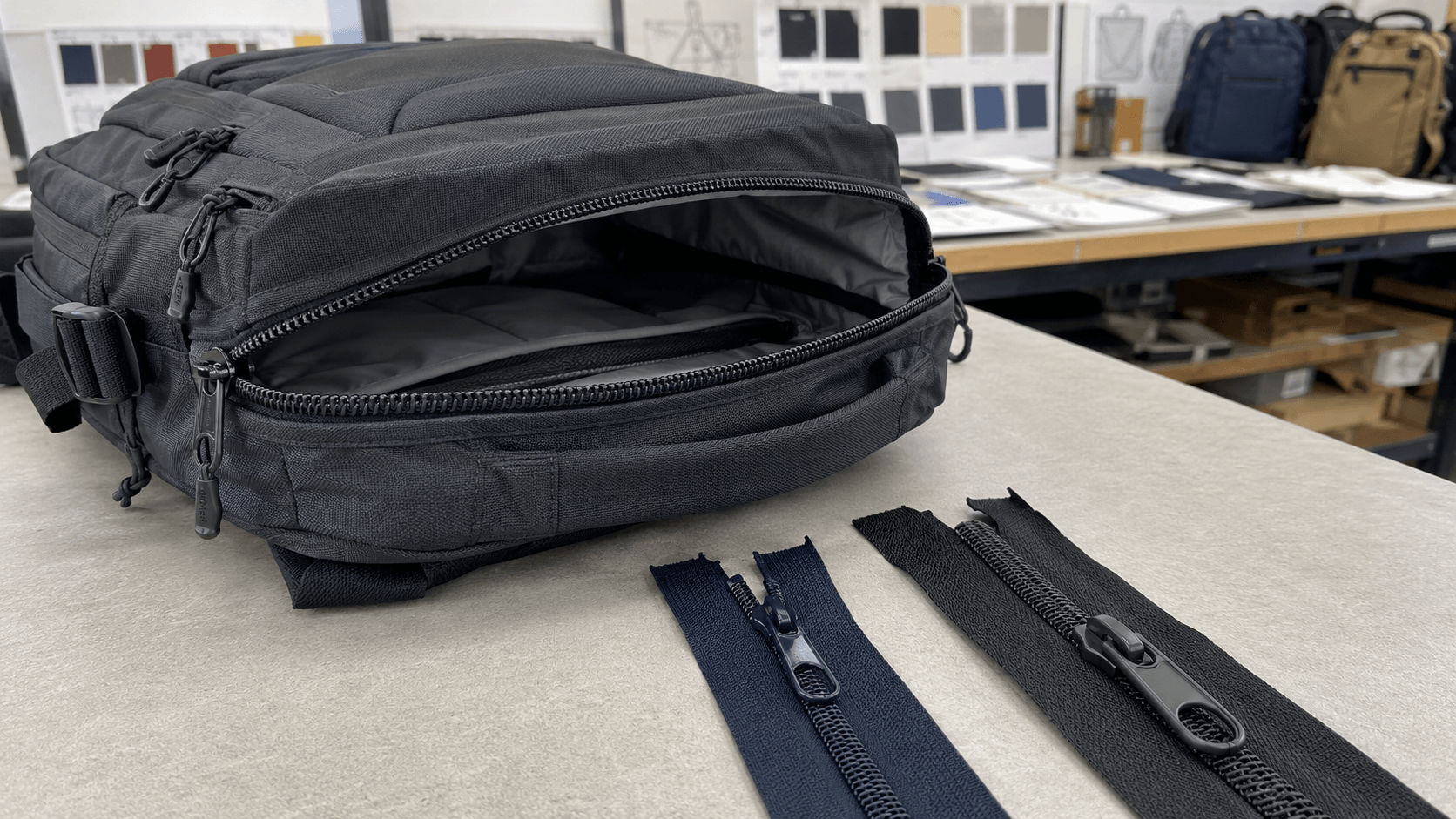
Evaluate zippers with representative contents inside. An overfilled compartment can place sustained tension on the opening and adjacent PVC. Improving the opening size or panel shape may be more effective than changing the zipper alone.
Folding and Packing
Packing can create stress before the backpack reaches its user.
A tightly compressed fold may leave a pronounced crease across a panel or attachment. Hardware pressed against clear surfaces can also affect the unpacked appearance.
Compare the proposed packing method with an approved reference. Check:
- Fold locations and compression
- Surface contact with buckles and zipper pulls
- Crease recovery after unpacking
- Appearance after representative storage and handling
Reducing carton volume is worthwhile only when the product arrives in an acceptable condition. Include packing in sample approval rather than leaving it until the order is ready to ship.
How Can You Help a Clear PVC Backpack Last Longer?
Care can reduce avoidable damage, but it cannot restore material that has broadly deteriorated.
- Follow the product’s carrying limits and care instructions.
- Keep sharp or abrasive items inside suitable cases.
- Avoid forcing zippers closed over packed contents.
- Lift the bag by its intended handle or straps.
- Avoid prolonged storage in direct sunlight or against heat sources.
- Store the bag without heavy objects pressing sharp folds into it.
For cleaning, follow the manufacturer’s instructions. If permitted, use a soft cloth with mild soap and water, checking an inconspicuous area first. Avoid abrasive pads and unapproved cleaners or solvents.
Let the backpack dry before storage. Do not repeatedly fold it at a developing crack.
If damage appears at a shoulder strap or handle, reduce use and have the connection assessed. A cosmetic mark and a tear in a carrying attachment should not receive the same response.
Is TPU a Better Alternative to Prevent Cracking?

A suitable thermoplastic polyurethane (TPU) grade can help reduce cracking when the selected PVC becomes too stiff or fails under repeated bending. The benefit depends on the material grade and finished construction; TPU does not guarantee a crack-free or non-yellowing backpack.
When Can TPU Last Longer Than PVC?
TPU is worth evaluating when the clear panels are the main source of failure.
- Repeated bending: Better flex-fatigue performance may help at corners and openings that bend frequently.
- Cold-weather handling: A grade that retains flexibility at the intended temperature may reduce damage during folding or impact.
- Appearance retention: Check clarity, surface marking and color stability separately. A sheet can remain flexible while its appearance deteriorates.
If the backpack fails first at an unsupported strap attachment or a poorly constructed seam, correct that connection before upgrading the entire clear shell.
Compare assembled PVC and TPU samples under the same load, temperature and bending conditions. The added cost is easier to justify when TPU addresses a demonstrated weakness relevant to the intended use.
Changing sheet material may also require adjustments to sewing, printing, assembly or packing. Include these effects in the quotation and sample approval rather than treating TPU as a direct material substitution.
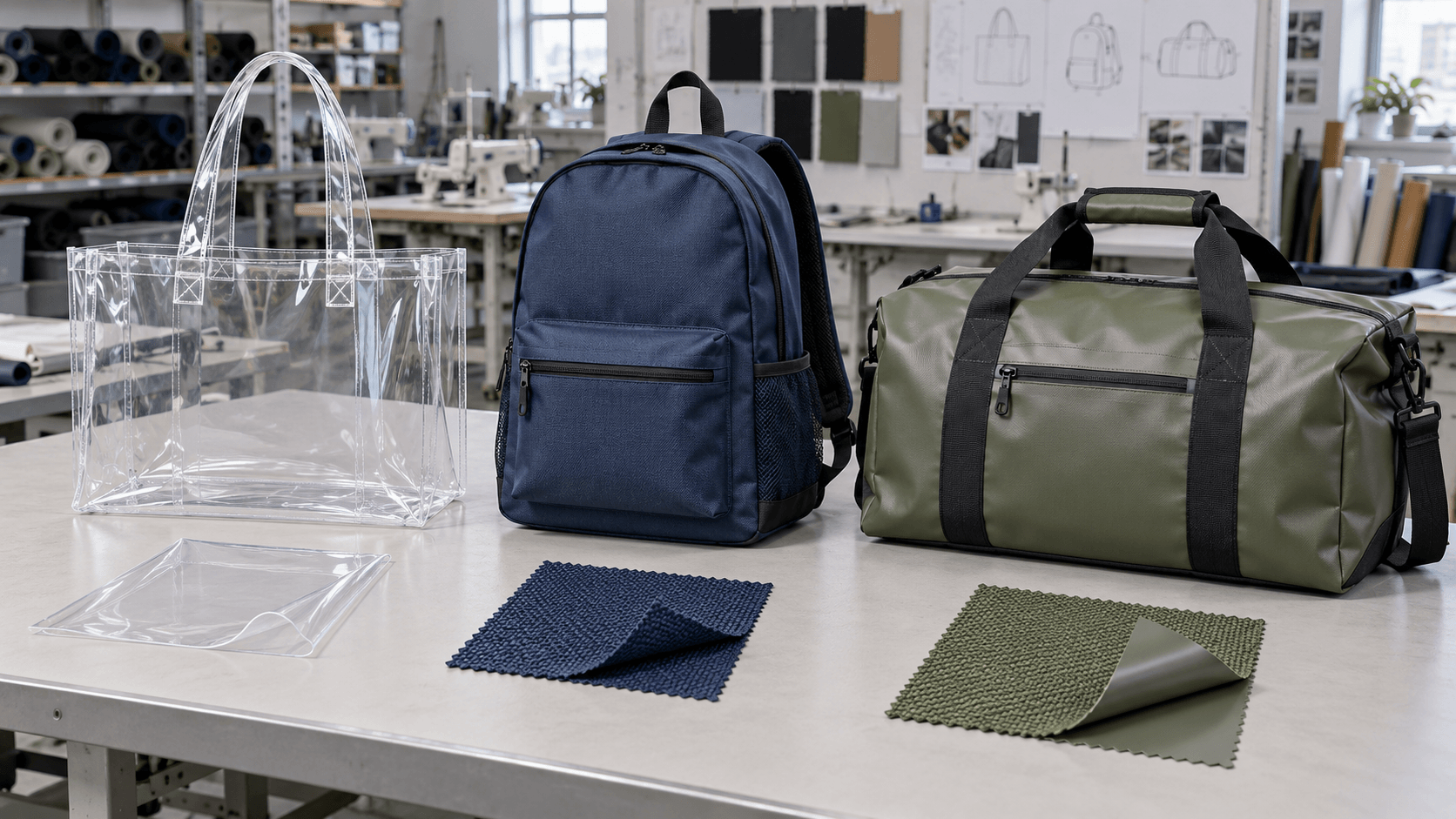
If transparency is optional, the choice becomes broader than PVC versus TPU. Our PVC vs polyester bag material guide explains the differences between clear PVC sheet, woven polyester and PVC-coated polyester for different product requirements.
What Should Buyers Verify Before a Bulk Order?
A useful durability specification connects the material, construction and expected use.
| Requirement | What to record or approve |
|---|---|
| Clear sheet | Supplier reference, grade, thickness and tolerance |
| Appearance | Clarity, tint, surface finish and acceptable marks |
| Construction | Seams, reinforcement, binding and attachment layout |
| Carrying performance | Load, evaluation method and acceptance criteria |
| Environmental performance | Relevant temperature or exposure conditions |
| Closures | Loaded zipper operation and adjustment reliability |
| Packing | Fold arrangement, protection and unpacked condition |
| Production reference | Approved sample, material list and revision status |
An efficient evaluation starts with the likely failure point. If the concern is strap tearing, check the attachment and surrounding panel. If the concern is cold cracking, assess the proposed sheet and vulnerable assembled areas under agreed conditions.
Laboratory cycles or exposure hours should not be translated directly into years of use without a validated relationship. Testing can compare options and verify requirements without establishing a calendar lifespan.
Inspect samples after evaluation for enlarged holes, beginning cracks, distorted attachments and changes in closure operation.
If the price is reduced through a material or trim change, update the specification and repeat the affected checks. A different PVC formulation, binding or thread can change performance while looking similar.
For repeat orders, retain a clear production reference and control substitutions. Material compliance documents and durability evidence address different questions; one should not be treated as proof of the other.
Can You Repair a Cracked Clear PVC Backpack?
A small, isolated puncture in otherwise flexible material may be repairable with a compatible method. That does not establish that the backpack has recovered its original carrying performance.
Replacement is generally more dependable when:
- Cracks are spreading across several areas
- Panels remain stiff or brittle at room temperature
- A shoulder-strap or handle attachment is tearing
- Damage returns beside an earlier repair
For a bulk quality issue, retain representative failed samples and record the load, use conditions and damage location. This helps determine whether the correction belongs in the material, connection, panel shape or packing method.
Discuss a Clear Backpack Project with Osgoodway
For a custom clear backpack intended for bulk production, send Osgoodway your drawings or reference sample, planned contents, expected carrying load, order quantity and target market.
Include your appearance requirements, relevant temperature conditions and any previous failure points. These details help focus the review on material and construction choices that matter to the product.
Send your clear backpack project details for a review of the proposed specification, sample requirements and bulk-production scope.