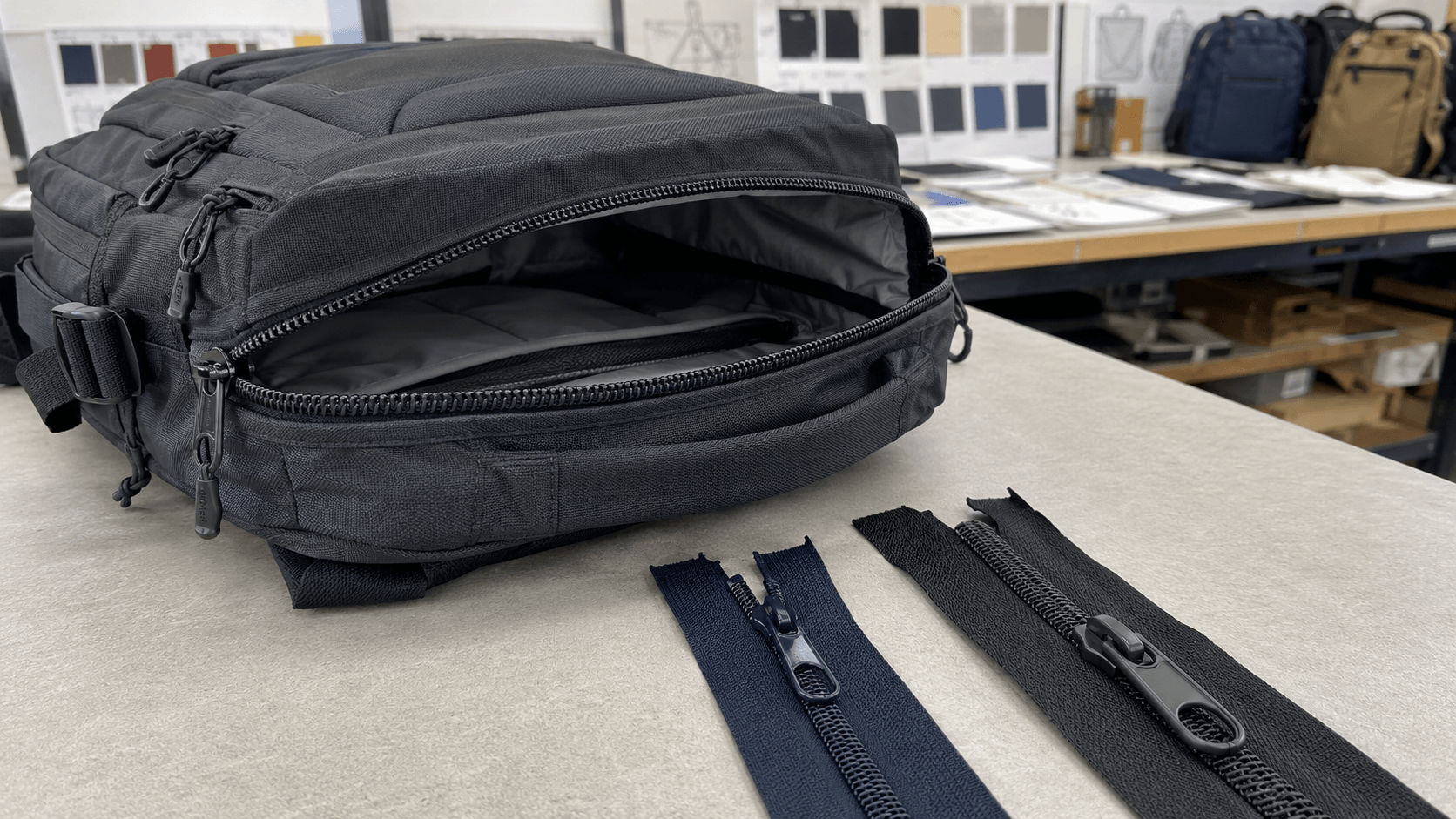
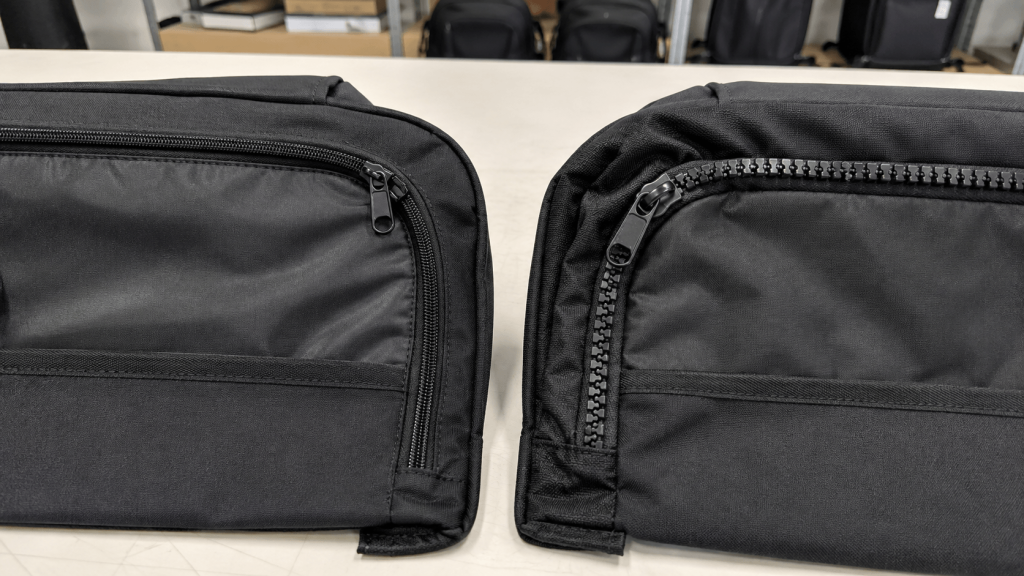
A #10 zipper is larger and generally better suited to heavy-duty openings, but it is not automatically better than a #5 zipper for every bag.
For many daypacks, school backpacks, laptop bags, and secondary pockets, a #5 zipper offers the right balance of strength, flexibility, weight, and cost. A #10 zipper becomes more useful when the opening carries higher loads, the bag is frequently overpacked, or the product is designed for travel, luggage, tools, or other heavy-duty applications.
The most common sourcing mistake is choosing zipper size by appearance alone.
The better question is: Where does the zipper sit on the bag, what load will it carry, what type of zipper is being used, and how is the opening constructed?
A zipper should be selected as part of the bag structure—not as an isolated hardware upgrade.
What Does #5 vs #10 Zipper Size Actually Mean?
The number does not refer to zipper length.
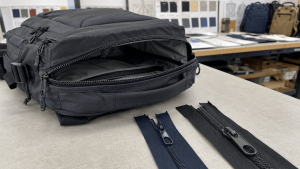
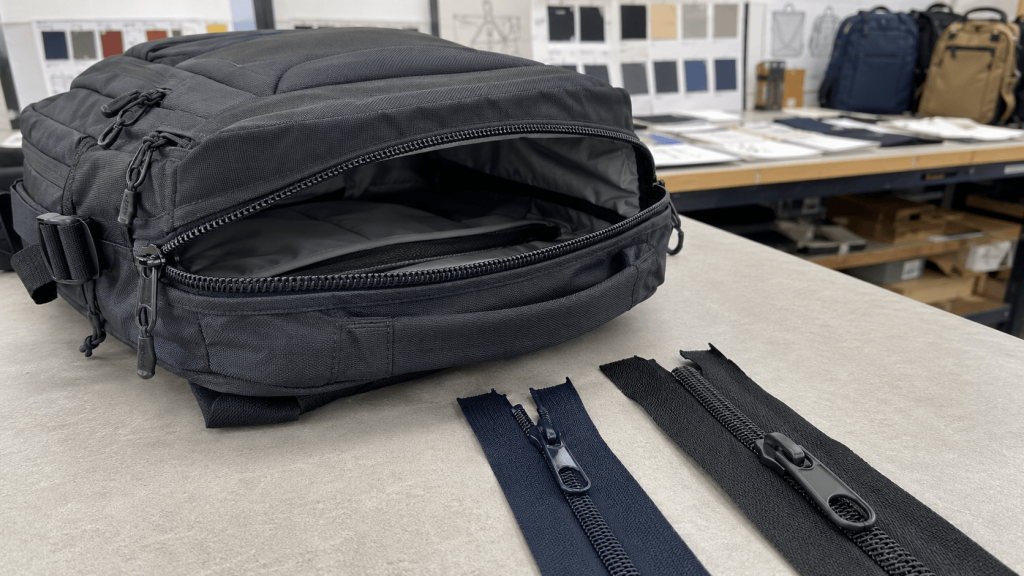
A #5 zipper is not 5 inches long, and a #10 zipper is not 10 inches long. According to YKK, zipper size refers to the chain width, with larger numbers representing a wider chain. In bag development, however, #5 and #10 should still be treated as nominal size classes because exact dimensions can vary by zipper type, series, and manufacturer.
5 vs #10 Zipper at a Glance
| Zipper Size | General Positioning | Common Bag Applications |
|---|---|---|
| #3 | Small / lightweight | Internal pockets, small pouches |
| #5 | Medium / versatile | Daypacks, school backpacks, laptop bags, front pockets |
| #8 | Larger | Travel backpacks, duffle bags, larger main openings |
| #10 | Extra-large | Luggage, tool bags, equipment bags, heavy-duty openings |
These are practical starting points rather than fixed industry rules.
The correct zipper size also depends on:
- Zipper type
- Manufacturer and series
- Expected load
- Opening length
- Corner radius
- Sewing construction
- Fabric support
- Required water resistance
Zipper Size Is Not Zipper Length
A 20 cm zipper and a 90 cm zipper can both use a #5 chain.
What changes is the finished zipper length, not the zipper gauge.
This distinction matters because zipper size alone does not tell us how difficult the opening will be to manufacture.
A long, curved #5 zipper can sometimes be more demanding than a short, straight #10 zipper.
Zipper Type and Size Should Be Specified Together
“#5 zipper” is still an incomplete specification.
The same size can exist in different constructions, including:
- Nylon coil
- Reverse coil
- Molded plastic
- Metal
- Water-resistant coated zipper
So instead of writing:#5 zipper, a better RFQ specification would be:#5 reverse coil zipper, or:#10 molded plastic zipper
Always specify zipper type and size together.
A #5 coil zipper and a #5 molded zipper may have very different flexibility, appearance, opening feel, and application even though they share the same nominal size.
Is a #10 Zipper Really Stronger Than a #5?
Usually, a #10 zipper is larger and better suited to heavier-duty applications.
But #10 does not mean “twice as strong” as #5.
Zipper size is not a strength rating. Actual performance also depends on the zipper construction, tape, slider, sewing method, and how the bag loads the zipper.
Manufacturing consistency also varies between zipper suppliers. If you are deciding which brand to specify, our YKK vs. SBS zipper comparison explains the differences in cost, performance and suitable applications.
This is also why zipper strength is tested as several separate properties rather than one single number. ASTM D2061, for example, includes tests for chain and element strength, stop holding strength, slider-lock strength, and slider-pull resistance.
Zipper Gauge Is Not a Strength Rating
A larger chain can handle heavier applications, but zipper strength comes from the whole system.
| Factor | Why It Matters |
|---|---|
| Zipper type | Coil, molded plastic and metal behave differently |
| Element design | Changes chain engagement and durability |
| Zipper tape | Transfers load into the bag fabric |
| Slider fit | Affects how well the chain closes and stays engaged |
| Stops | Help control end-point failure |
| Sewing | Weak stitching can fail before the zipper chain |
| Fabric support | Thin or unsupported fabric can become the weakest point |
So A #10 zipper is larger than a #5, but “10 vs 5” does not mean twice the strength.
Coil vs. Molded vs. Metal Changes the Comparison
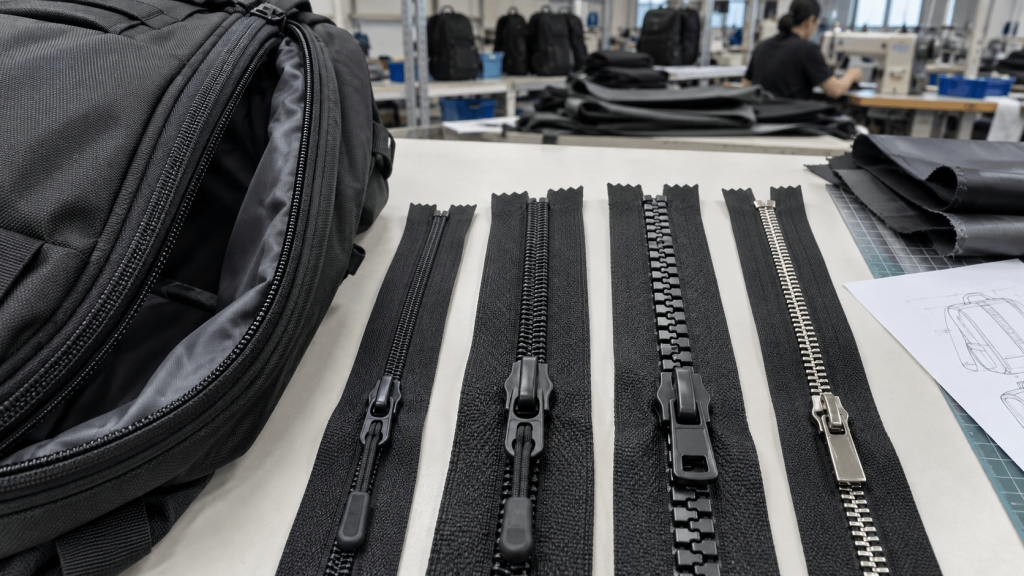
Comparing only the zipper number is incomplete.
For example:
- #5 coil — lighter and more flexible
- #10 coil — larger but still relatively flexible
- #10 molded plastic — chunkier in appearance and generally less flexible than coil
- Metal zipper — different appearance, weight, movement, and failure behavior again
For a curved backpack opening, a flexible coil zipper may sometimes be more practical than a much larger molded zipper.
For a straight heavy-duty opening, a larger molded construction may be more suitable.
The useful comparison is therefore:
Zipper Type + Zipper Size + Opening Design
not zipper gauge alone.
When Is #5 Better, and When Does a Bag Need a #10 Zipper?
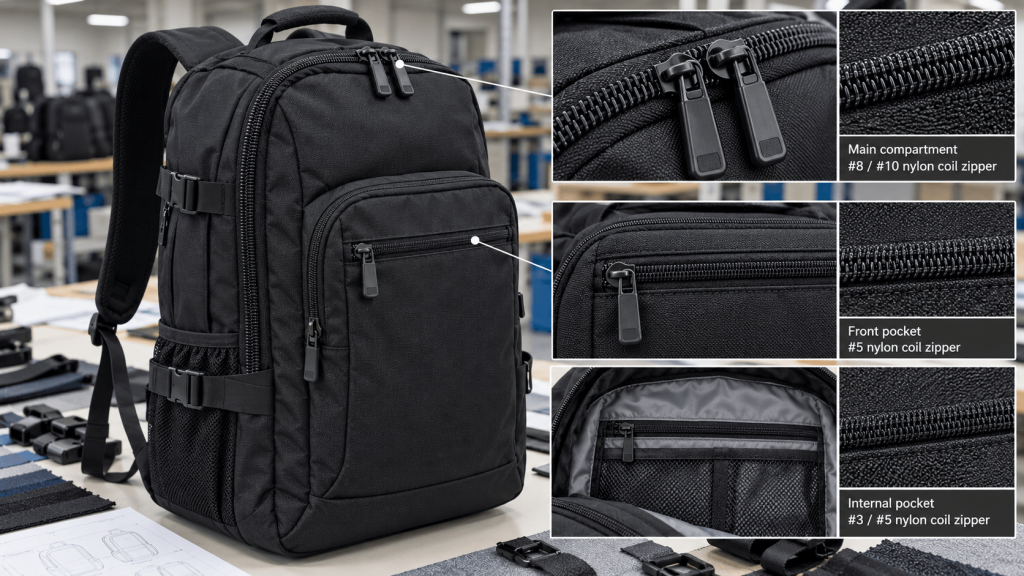
For most bags, the answer is not “use one zipper size everywhere.”
Different zipper locations carry different loads, so the better approach is to choose the gauge by load zone and opening function.
Typical Applications
| Bag Area / Product | Common Starting Point | Why |
|---|---|---|
| Small accessory pocket | #3 / #5 | Light load, small opening |
| Front pocket | #5 | Good balance of weight and flexibility |
| School / laptop backpack main opening | #5 | Usually sufficient for moderate daily loads |
| Travel backpack main compartment | #8 / #10 | Higher load and greater risk of overpacking |
| Large clamshell opening | #8 / #10 | Longer opening and higher crosswise stress |
| Tool / equipment bag | #10 | Better suited to heavy-duty use |
A #5 zipper is therefore not a small zipper in normal backpack development.
For many:
- Daypacks
- School backpacks
- Laptop bags
- Casual backpacks
- Front compartments
a #5 zipper can be completely appropriate.
Choose Zipper Size by Load Zone
Consider a travel backpack:
- Main compartment: #8 or #10
- Front pocket: #5
- Small internal pocket: #3 or #5
Using #10 on every opening would add cost, weight, stiffness, and visual bulk without giving the user much practical benefit.
The main compartment is different because packed clothing, shoes, or equipment can push the bag outward and place much higher load on the zipper.
Choose zipper size by load zone—not by using one zipper size everywhere on the bag.
A 20L laptop backpack and a 45L travel backpack may therefore need very different main-zipper specifications even though both products are called “backpacks.
Why Zipper Load and Opening Design Matter?
Zipper size is only part of the decision.
A bag zipper also has to deal with load direction, opening length, and corner geometry. In some cases, these factors matter more than simply changing from #5 to #10.
Overpacking Pulls the Zipper Sideways
When a backpack or travel bag is packed too full, the zipper is often pulled apart from both sides:
← ZIPPER →
This crosswise force is very different from simply pulling the slider.
This load direction is also reflected in zipper crosswise-strength testing, where an engaged zipper chain is pulled outward from both sides.
The load passes through:
- Zipper elements
- Zipper tape
- Sewing seam
- Shell fabric
- Reinforcement around the opening
So a zipper can fail even when the slider itself is working normally.
A bag zipper often fails because the packed bag is pulling the chain apart sideways—not because the user pulled the slider too hard.
Curves and Zipper Length Change the Requirement
A 15 cm straight pocket zipper and a 90 cm clamshell zipper can both be #5.
But they are not equally demanding to manufacture.
Long openings increase the chance of:
- Fabric distortion
- Sewing misalignment
- Slider drag
- Tape wrinkling
- Length tolerance problems
Curves create another challenge.
The tighter the corner radius, the more zipper flexibility matters.
| Opening Design | Main Concern |
|---|---|
| Short straight zipper | Usually easy to control |
| Long straight zipper | Alignment and length tolerance |
| U-shaped opening | Slider movement around corners |
| Tight-radius corner | Flexibility and tape wrinkling |
| Large clamshell opening | Length + curves + crosswise load |
This is why Larger is not always smoother.
A heavy #10 molded zipper may feel too stiff around a tight backpack corner, while a more flexible coil zipper may operate more smoothly.
The tighter the zipper curve, the more we care about chain flexibility—not only chain strength.
A long curved #5 opening can sometimes be more difficult to engineer than a short straight #10 opening.
Zipper Ends Can Become Stress Points
The ends of a zipper opening are another area buyers often overlook.
Repeated pulling can concentrate force around:
- Zipper stops
- End tabs
- Stitching
- Shell fabric
- Local reinforcement
This matters especially on U-shaped backpack openings, two-way zippers, duffle bags, and frequently used main compartments.
Depending on the design, we may reinforce these areas with:
- Additional stitching
- Bartacks
- Stronger end tabs
- Local reinforcement
- Protective zipper-end structures
The goal is not simply to strengthen the zipper chain.
It is to prevent repeated pulling force from damaging the surrounding fabric and seam.
Why a Larger Zipper Changes the Whole Bag Construction?
Changing a main zipper from #5 to #10 is not always a simple component swap.
A larger zipper can affect the seam, reinforcement, pattern, opening shape, weight, and finished appearance of the bag.
A Strong Zipper Still Needs a Strong Seam
The zipper chain is only one part of the load path:
Packed contents → shell fabric → zipper seam → zipper tape → chain → opposite tape → shell fabric
If the surrounding fabric or seam is weak, upgrading the zipper may simply move the failure point somewhere else.
For example, a #10 zipper sewn into:
- Lightweight shell fabric
- Narrow seam allowance
- Weak stitching
- No reinforcement
does not automatically create a heavy-duty opening.
A heavy-duty zipper sewn into a weak seam does not create a heavy-duty bag.
Changing #5 to #10 May Require Pattern Changes
A larger zipper may require changes to more than the zipper order.
| Area | Possible Change |
|---|---|
| Zipper seam width | May need more sewing space |
| Gusset | Opening dimensions may change |
| Binding / piping | Position may need adjustment |
| Visible zipper width | Changes product proportion |
| Corner radius | May need more room |
| Finished opening | Can change after larger chain is installed |
This is especially important for:
- Structured backpacks
- Clamshell travel bags
- Luggage
- Technical equipment bags
Changing zipper gauge late in development may require a pattern adjustment—not just a different zipper purchase.
For this reason, changing from #5 to #10 after a sample has already been approved may require another sample confirmation.
Bigger Zippers Also Add Cost, Weight and Bulk
Upgrading to #10 affects more than zipper-chain price.
It may also involve:
- Larger sliders
- Larger pullers
- More sewing space
- Additional reinforcement
- Pattern modifications
- Higher finished weight
- More visual bulk
For a heavy-duty main opening, these changes may be worthwhile.
For every small pocket on a high-volume backpack, they may simply add unnecessary cost.
Upgrade the zipper where the load requires it—not everywhere just to make the bag look stronger.
What We Confirm on the Sample Before Bulk Production
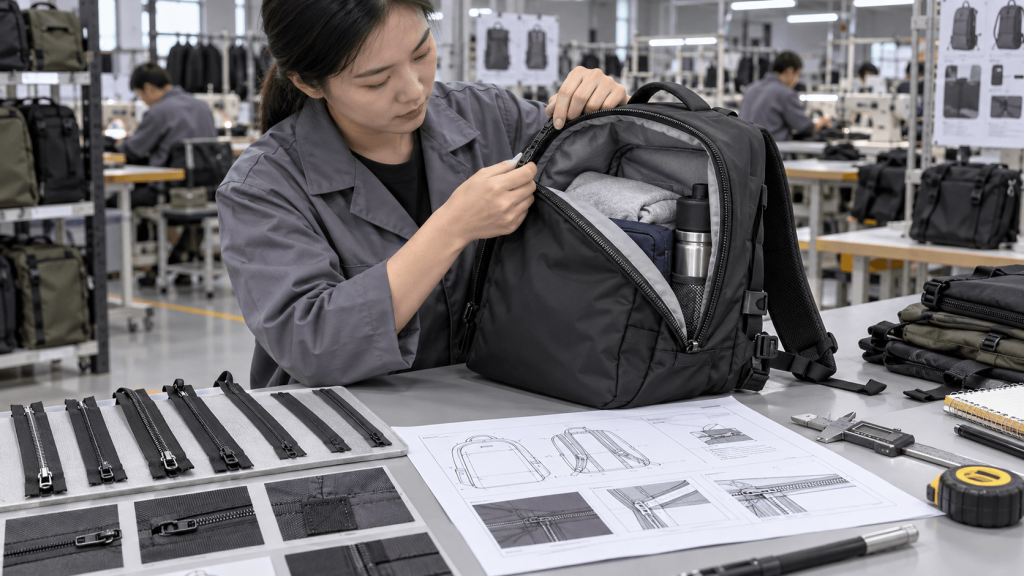
Once the zipper size and construction are selected, the approved sample should confirm more than the zipper appearance.
For a main backpack opening, we normally pay attention to:
- Slider movement through straight sections and corners
- Zipper tape wrinkling or distortion
- Seam support around the opening
- Stress around zipper ends
- Alignment of two-way sliders
- Whether the packed bag creates excessive crosswise tension
A zipper that looks strong on an empty sample can behave very differently once the bag is fully loaded.
The approved sample should confirm the complete opening construction—not just the zipper number.
Zippers are only one of the areas we check before bulk production; our guide to common backpack production quality issues covers other construction problems buyers should watch for during sampling and inspection.
What Should Buyers Specify When Choosing a Bag Zipper?
“#5 zipper” or “#10 zipper” is not a complete factory specification.
For sourcing, we need to know the size, zipper type, slider setup, puller, installation, and required performance.
Slider, Puller and Double Slider Are Different Things
These terms are often mixed together in RFQs.
| Component | What It Actually Means |
|---|---|
| Zipper chain | The teeth / coil and tape |
| Slider | The part that opens and closes the chain |
| Puller | The tab attached to the slider |
| Double slider | Two sliders on the same zipper chain |
A large rubber or metal puller may make the zipper look more heavy-duty, but it does not change the zipper gauge.
A large puller attached to a #5 slider does not make the zipper a #10 zipper.
And two sliders mainly improve access and opening convenience.
Two sliders do not turn a #5 chain into the equivalent of a #10 chain.
Water-Resistant Does Not Mean Larger
A #10 zipper is not automatically more waterproof than a #5.
For example, YKK explicitly describes its AquaGuard® coil zipper as water resistant, not waterproof or watertight. This is a good reminder that zipper gauge and water protection are two separate specifications.
Water resistance depends on more than gauge:
- Zipper construction
- Coating or sealing
- End treatment
- Stitching
- Seam design
- Installation
So if weather protection matters, specify it separately from zipper size.
Quick RFQ Checklist
A more useful zipper specification might look like:
#5 reverse coil zipper, two sliders, custom rubber puller, water-resistant coating, black tape
or:
#10 molded zipper, single slider, standard metal puller, main compartment use
When sending an RFQ, try to confirm:
- Zipper size
- Zipper type
- Zipper location
- Single or double slider
- Puller type
- Water-resistant requirement
- Expected load
- Opening shape
- Any branding requirement
The more complete the zipper specification is, the easier it is for the factory to quote and develop the bag correctly.
If one supplier quotes a #5 coil zipper and another assumes a #10 molded zipper, the two quotations are not based on the same product—even if both factories write “heavy-duty zipper” on the quotation.
For price comparison, zipper specifications need to be comparable before the quotations are comparable.
If you are preparing a complete sourcing document, our guide to bag tech packs explains how to turn component requirements like these into a production-ready specification.
Frequently Asked Questions
Is a #8 zipper a good middle option between #5 and #10?
Yes. For some travel backpacks, duffle bags, and larger main compartments, #8 can be a practical middle option when #5 feels too light for the intended application but #10 adds unnecessary bulk.
The final choice should still depend on zipper type, opening geometry, expected load, fabric support, and surrounding construction—not the gauge alone.
What zipper size is commonly used for backpack main compartments?
There is no single size used for every backpack.
For many daypacks, school backpacks, and laptop bags, #5 is a practical starting point. Larger travel backpacks, clamshell openings, luggage-style backpacks, and equipment bags may justify #8 or #10 because the zipper sees more load or is more likely to be stressed by overpacking.
Can a #5 slider be used on a #10 zipper chain?
Normally, no.
The slider needs to match the zipper-chain size, element type, and compatible zipper series. A slider designed for a #5 coil chain should not simply be installed on a #10 molded or #10 coil chain.
For production, the chain and slider should be specified as a compatible system, rather than sourced as unrelated components.
Does zipper brand matter as much as zipper size?
It can matter.
Two zippers with the same nominal size may still differ in slider fit, tape quality, element consistency, coating, operating feel, and production tolerance.
For projects where zipper performance is critical, we normally consider the manufacturer, series, size, type, slider, and approved sample together rather than relying only on “#5” or “#10.”
Should zipper tape width be specified in a bag tech pack?
For many standard bag projects, the zipper type, size, color, slider, puller, and approved sample may be enough.
But tape width becomes more important when the design has tight seam allowances, visible zipper exposure, water-resistant construction, binding, piping, or structured openings.
If the exact zipper installation affects the pattern, adding the tape or sewing dimensions to the tech pack can help avoid interpretation differences during sampling.
Final Words
A #10 zipper is larger, but larger does not automatically mean better.
For bag development, the better decision path is:
Bag Type → Zipper Location → Expected Load → Opening Geometry → Zipper Type → Surrounding Construction
A #5 zipper can be completely appropriate for many backpacks, while #8 or #10 may make more sense for heavily loaded travel, luggage, tool, or equipment openings.
The most important point is simple:
A heavy-duty zipper sewn into a weak seam does not create a heavy-duty bag.
If you already have a tech pack, reference sample, or product concept, you do not need to decide the zipper gauge first. Contact Osgoodway Today with the bag dimensions, zipper locations, expected use, opening design, and any zipper-brand requirements you already have. We can review the complete opening construction before recommending the most practical specification.