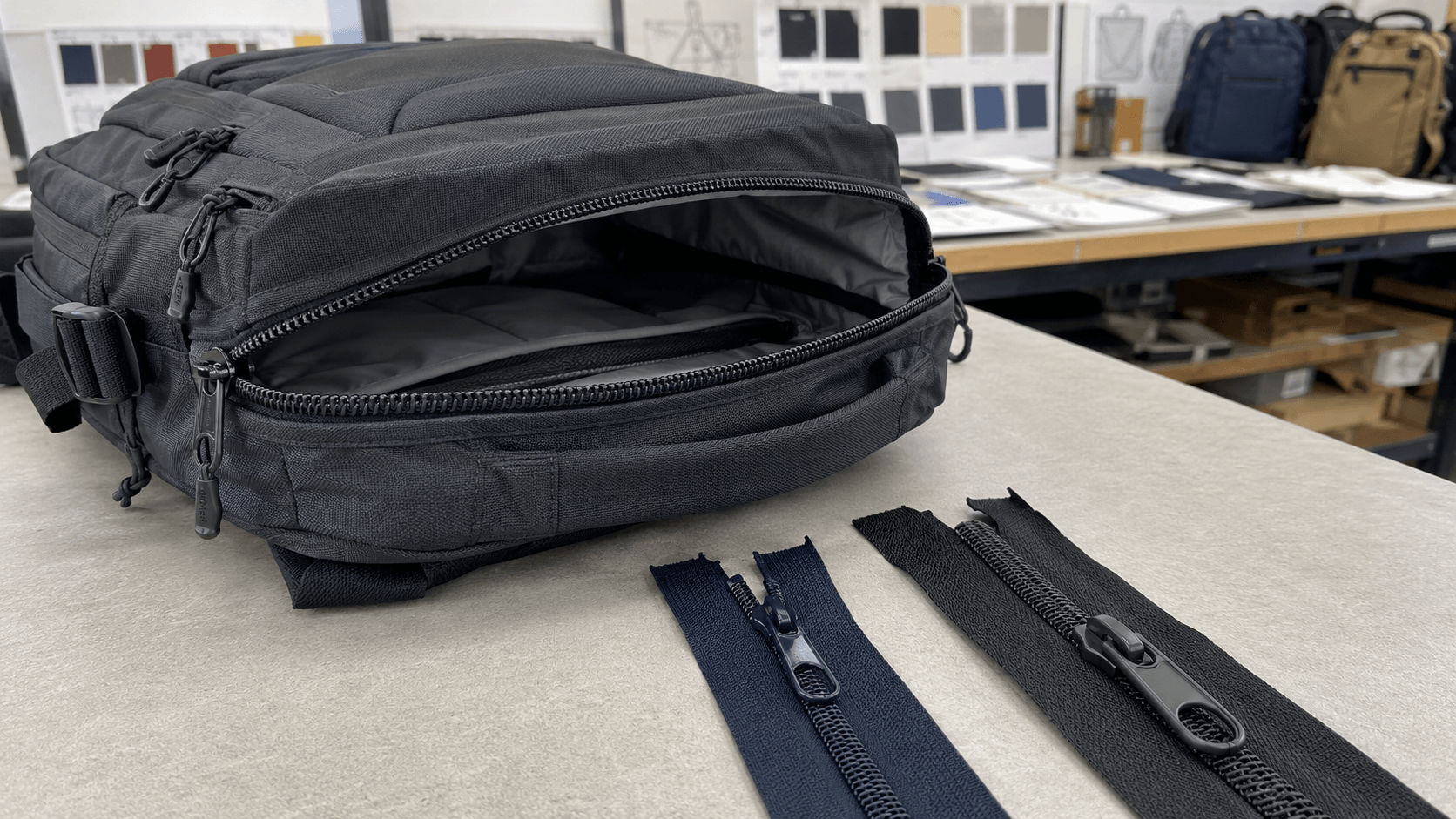
A broken zipper is a dead bag. In my 12 years on the factory floor at Osgoodway, I’ve seen more brands go bankrupt over a $0.50 "saving" on hardware than almost any other manufacturing mistake. You spend months on the design, source the best 1000D Cordura, and then the puller snaps in the customer’s hand. That’s not a "cost saving"; it’s a brand-killing nightmare.
Yes, the price difference between YKK and SBS zippers is worth it if you are selling premium bags over $100. For promotional items or bags under $50, SBS offers 90% of the durability at half the cost. Your choice depends entirely on your retail price point and warranty terms.
In our factory, we have seen startups burn cash on YKK when they didn’t need to, and we have watched established brands ruin their reputation over a $0.30 SBS substitution. Textbook advice says "always buy the best," but I spend my days on the assembly floor, and the reality of production is far more nuanced. Let’s break down what actually happens on our sewing lines.
What is the Real Cost Difference on the Assembly Line?
On average, a standard #5 YKK nylon zipper costs $0.60 to $0.80 per yard, while the equivalent SBS zipper costs $0.25 to $0.35. For a standard backpack requiring 1.5 yards of zipper, switching from YKK to SBS saves roughly $0.60 per unit on your total BOM cost.
In our factory, we run cycle tests using a 5kg lateral pull. YKK consistently passes 10,000 cycles, while SBS hits about 8,500.
How Do Material Costs Impact Your Final Margin?
| Zipper Brand | Cost per Yard | Total Bag Cost (1.5 Yds) | Cost per 10,000 Units |
|---|---|---|---|
| YKK (#5 Nylon) | $0.70 | $1.05 | $10,500 |
| SBS (#5 Nylon) | $0.30 | $0.45 | $4,500 |
| Difference | -$0.40 | -$0.60 | -$6,000 |
Don’t just look at the zipper tape cost. YKK custom sliders have higher MOQs and tooling fees. We always warn clients before they commit.
Why is the Price of YKK 2-3x Higher Than SBS?

The price gap stems from YKK’s integrated production model and proprietary alloys. While SBS is a formidable competitor in the mass market, YKK manufactures its own brass, polyester, and even the machinery used to make the zippers, ensuring a failure rate of less than 0.01% in high-stress scenarios.
In our material lab, we’ve run cycle tests on both. A standard YKK #5 RC (Racquet Coil) zipper often exceeds 10,000 cycles without "tape fraying," whereas budget-tier SBS zippers start showing teeth misalignment around 4,000 cycles.
However, as a bag factory, I always tell my clients that a premium zipper is useless if the surrounding construction is weak. Zippers are just one piece of the puzzle; to understand the full picture, you should look into our Manufacturer Secrets: What Are the Hidden Parts That Make a Backpack High-Quality? where we dive into the internal reinforcements that truly define a "pro-grade" bag.
Is it just the brand name you are paying for?
- Self-Lubricating Tech: YKK pullers are designed to get smoother as they age.
- Color Consistency: If you order "Navy 580" today and again in 2027, the shade will be identical. SBS has improved, but batch-to-batch variance still haunts us in large-scale B2B orders.
- Resale Value: For "EDC" (Everyday Carry) brands, having the YKK logo on the puller is a verified trust signal that justifies a 20% higher MSRP.
Do SBS Zippers Actually Fail Faster Than YKK?

I’ll be blunt: SBS doesn’t "break" instantly, but it "tires" faster. If you are manufacturing a tote bag that holds a laptop and a water bottle, SBS is perfectly adequate. However, for a 40L travel pack that gets stuffed to the gills, the lateral tension will eventually cause SBS teeth to "pop" or the slider to lose its grip.
SBS zippers do not fail significantly faster than YKK under normal daily use. The failure rate difference is less than 1.5% in our quality control logs. However, under extreme lateral tension or freezing conditions, YKK’s structural integrity remains vastly superior.
What Causes Zipper Blowouts on the Production Line?
Most zipper failures aren’t material defects; they are sewing errors. If our machinists use the wrong stitch density, even a premium YKK chain will derail.
- Needle size mismatch for thick nylon tape.
- Incorrect sewing margin on sharp corner curves.
- Operator fatigue during high-season Q4 production rushes.
What Do Our Lab Stress Tests Reveal?
We subjected both brands to a rigorous 96-hour salt spray test. The data below shows how the electroplated sliders hold up against coastal salt corrosion.
| Test Metric | YKK Standard | SBS Standard | Factory Verdict |
|---|---|---|---|
| Salt Spray (96h) | Zero Oxidation | Mild Pitting | YKK wins for marine bags |
| Cross-wise Pull | 800 Newtons | 710 Newtons | Both exceed daily needs |
| Slide Smoothness | Grade A | Grade B+ | YKK feels slightly richer |
How Do Custom Pullers Affect Lead Times?
A custom logo puller elevates your brand, but it completely changes the production timeline for your entire bag order.
Custom YKK pullers add 4 to 6 weeks to your lead time due to strict in-house scheduling. SBS is much faster, delivering custom molds in just 15 to 20 days.
Why Does YKK Take So Long for Customization?
YKK operates on a global allocation system. Your small batch order waits in the same queue as Nike and North Face, making their timeline rigid and very slow.
- Centralized mold creation facilities.
- Strict internal alloy safety testing protocols.
- Non-negotiable global production queues.
Can You Speed Up the Zipper Production Process?
We frequently bypass delays by sourcing generic unbranded sliders from YKK and attaching custom rubber pullers made by our local trusted sub-contractors.
- Use stock black or silver generic sliders.
- Attach silicone molded pullers via heat press.
- Use paracord knot pulls for an outdoor aesthetic.
Which Zipper Brand Should You Specify in Your Tech Pack?
Specify YKK for bags retailing over $100, tactical gear, or anything requiring a lifetime warranty. Specify SBS for promotional bags, fast-fashion items, or retail bags under $60 where margin is tight and the expected product lifespan is typically under three years.
Brand and zipper size are separate decisions. After choosing YKK or SBS, use our guide to choosing between #5 and #10 zippers for bags and backpacks to select the right gauge for each opening.
A German buyer once tried to save $0.50 by swapping YKK for SBS on a heavy tool bag. Six months later, 15% were returned due to busted teeth. To avoid this, learn how to document specs properly in our guide on how to create a perfect tech pack.
What is the ROI on Upgrading Your Zippers?
| Bag Category | Recommended Zipper | Est. Retail Price | Expected Lifespan |
|---|---|---|---|
| Tactical/Outdoor | YKK (#8 or #10) | $150+ | 5-10 Years |
| Urban Commuter | YKK (#5) | $80 – $150 | 3-5 Years |
| Gym Duffels | SBS (#5) | $30 – $60 | 1-3 Years |
| Promo Giveaways | SBS (#3) | Under $20 | Under 1 Year |
Never leave the zipper brand blank in your specs. If you do, lazy sub-contractors will sneak in no-name junk zippers to pad their own factory margins.
Can You Mix YKK and SBS in the Same Bag to Save Costs Without Killing Your Brand?

Yes, this is a common industry "hack." Use YKK for the main compartment and load-bearing openings where failure is catastrophic. Use SBS for internal mesh pockets, rain cover pouches, or hidden security pockets that see 90% less action. This can reduce your total hardware bill by 25%.
We actually recommend a hybrid approach for mid-tier brands. It balances perceived quality with aggressive cost control.
Where to spend vs. where to save?
Never compromise on external load-bearing entry points. Only substitute with SBS in areas hidden from the end-user or where structural stress is minimal.
| Zipper Location | Tension Level | Recommended Zipper Brand |
|---|---|---|
| Main Compartment / Laptop Compartment | High (Overstuffed) | YKK |
| Front Quick-Access Pocket | Medium | YKK or SBS |
| Internal Mesh Pocket | Low | SBS |
| Hidden Security Pocket | Very Low | SBS |
How Does This Hybrid Strategy Impact Production?
Managing two separate zipper suppliers complicates our inventory logistics. We require slightly higher MOQs to offset the headache of sorting dual BOM setups.
- Increases warehouse material sorting time.
- Requires dual color-matching lab dip approvals.
- Demands stricter QC on the final sewing floor.
Expert Action Tip: If you decide to mix brands, ensure the "puller" design is customized to look identical. Your customer won’t check the brand on the side of the slider, but they will notice if the puller shapes don’t match.
People Also Ask (Deep FAQ)
1. Is YKK really the only "Premium" option?
No. Riri (Swiss) is actually more "premium" and expensive than YKK, used by brands like Louis Vuitton. However, for B2B performance bags, YKK is the gold standard for price-to-performance.
2. Can I get SBS with a "YKK feel"
You can request "High-Polished" sliders from SBS. They are better than their standard line but still won’t match the lateral "burst strength" of YKK.
3. Why do some YKK zippers feel "stiff" at first?
That’s the "Racquet Coil" design. It’s built tight to prevent sand and grit from entering the teeth. It "breaks in" after about 50 pulls.
4. Does YKK offer eco-friendly options?
Yes, the "Natulon" line is made from recycled PET. SBS also has an eco-line, but YKK’s GRS (Global Recycled Standard) certification is much easier to pass through US/EU customs.
5. If I use YKK, will my lead times be longer?
Yes. YKK factories are often backed up. While we can get SBS in 2 weeks, YKK can take 6–10 weeks. Plan your production cycle accordingly!
Final Verdict: Which should you choose?
If you are building a brand that prides itself on "Lifetime Warranty," using anything other than YKK is a lie to your customers. If you are doing a 10,000-unit run for a corporate giveaway or a fast-fashion trend that will be in a landfill in 12 months, SBS is the smarter financial move.
At our factory, we don’t just "sew bags"; we engineer longevity. If you’re tired of "zipper drama" and want a partner who knows exactly where to put the value, let’s talk.
Ready to build a bag that doesn’t fail? Contact our product development team today for a full bill-of-materials (BOM) audit and a quote that balances cost with real-world durability.