Neoprene can be a useful bag material because it feels soft, padded, flexible, and water-resistant. But those advantages do not automatically make it the right choice for every backpack, travel bag, or daily carry product.
The main disadvantages of neoprene for bags include higher finished weight, limited breathability, possible odor, surface wear from friction or compression, and more demanding sewing and lamination control. These issues do not make neoprene a bad material, but they can create product and sourcing risks when the use case is wrong.
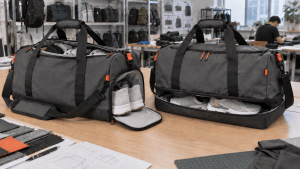
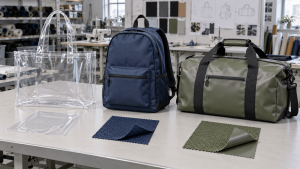
The mistake is judging neoprene from the fabric swatch alone. In sampling, we look at what happens after it becomes a finished bag—larger panels, laminated layers, seams, printing, webbing, hardware, and packing can change the weight, appearance, and production difficulty considerably.
Where Neoprene Works — And Where The Problems Begin?
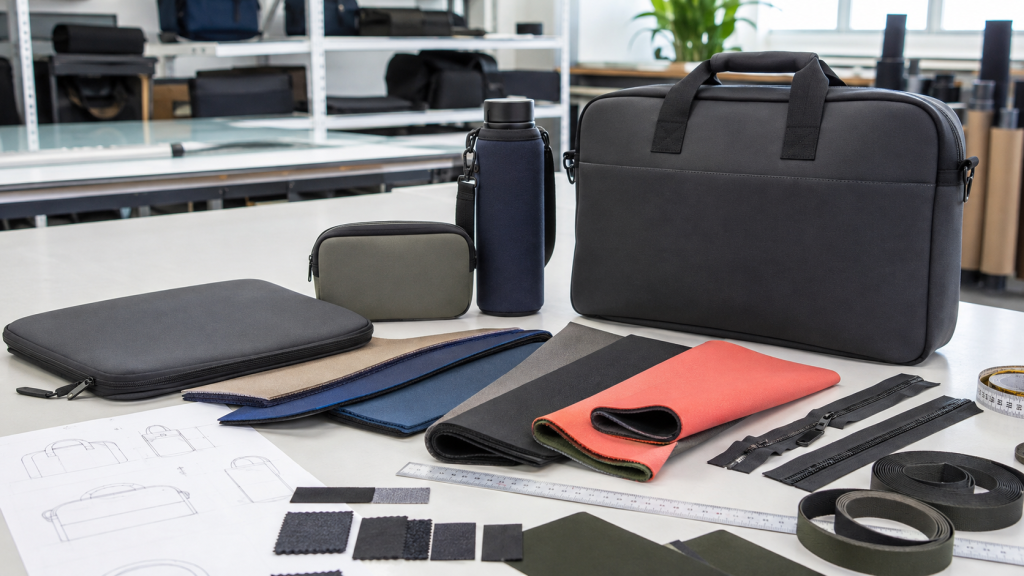
Neoprene works best when its softness, stretch, and cushioning solve a specific product need. Problems usually start when buyers use it as the main fabric simply because it looks premium or feels protective, while expecting the finished bag to stay lightweight, breathable, highly abrasion-resistant, and low-cost at the same time.
Why Buyers Like Neoprene In The First Place
We usually see buyers consider neoprene for a few clear reasons:
- Soft, padded hand feel
- Flexible structure
- Built-in cushioning
- Clean, modern appearance
- A surface that feels more water-resistant than many basic fabrics
These strengths work particularly well for certain products, but become disadvantages when buyers expect neoprene to behave like a lightweight woven bag fabric.
Good Use Cases vs Riskier Use Cases
For smaller protective products, neoprene can be a very practical choice.
| Bag Application | Our Factory View | Main Reason |
|---|---|---|
| Laptop sleeve | Good fit | Soft structure and cushioning are useful |
| Bottle sleeve | Good fit | Stretch and local protection suit the product |
| Small accessory pouch | Usually suitable | Limited size keeps weight under control |
| Padded side or bottom panel | Useful | Protection is added only where needed |
| Daily shoulder bag | Depends on design | Finished weight and carrying comfort matter more |
| Travel duffle | Needs evaluation | Large neoprene panels can add weight quickly |
| Heavy-duty outdoor backpack | Usually not our first choice | Long carry, abrasion, and structural demands are higher |
The key point is simple:
Neoprene is a use-case material, not a universal bag fabric.
If the material solves a real function, it can work very well. If it is selected mainly because the swatch feels soft and premium, we usually stop and review the full product specification before sampling.
For performance-focused backpacks where weight and abrasion resistance matter more, buyers can also comparethe nylon fabrics commonly used in higher-performance backpack construction.
5 Disadvantages Of Neoprene Fabric Buyers Often Underestimate
The main risks with neoprene are not always obvious from a small sample swatch. Once the material is used across a full bag, buyers may notice more weight, less breathability, odor concerns, surface changes, and higher production cost than expected.
1. Finished Bags Can Become Heavier Than Expected
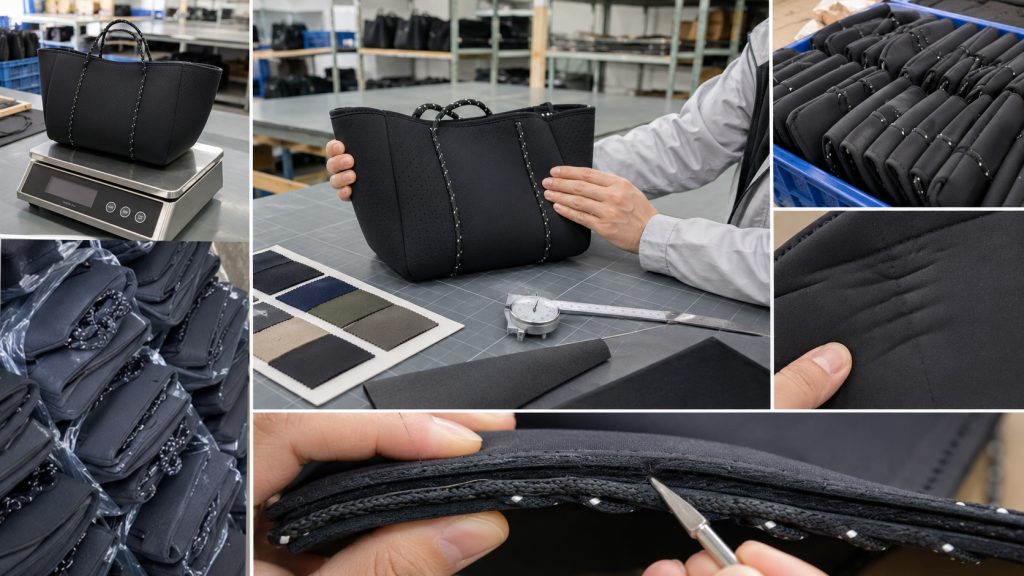
A small neoprene swatch does not feel especially heavy.
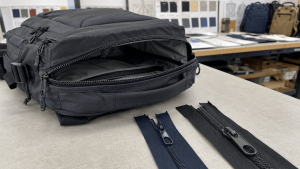
But large panels, laminated layers, zippers, webbing, lining, and hardware add up quickly.
This matters when the product is marketed as lightweight or designed for long-duration carrying.
For travel bags and backpacks, finished weight should be checked during sampling—not estimated from the fabric alone.
When fabric weight needs to be specified objectively, ASTM D3776/D3776M provides recognized methods for measuring fabric mass per unit area.
2. Breathability Is Limited
Neoprene is not the material we normally choose when airflow is a priority.
Large panels can feel warm or stuffy when they sit close to the body for long periods.
For a laptop sleeve, this may not matter much.
For a backpack back panel or long-carry shoulder bag, it matters much more.
3. Odor Can Become A Buyer Complaint
Some neoprene constructions can have a noticeable smell when they are new, especially after lamination or tight packing.
For bulk orders, we pay attention to:
- Material source
- Lamination process
- Packing condition
- Ventilation time before shipment
Workmanship can help manage the issue, but it should not be treated as something a factory can always remove completely without clear material and testing requirements.
4. Friction, Folding And Compression Can Change The Appearance
Neoprene looks clean and smooth when freshly sampled.
After repeated rubbing, folding, compression, or long packing periods, the surface may show marks, creases, edge wear, or shape changes.
This matters especially for products sold online, where customers expect the delivered bag to look close to the product photos.
5. The Total Cost Can Be Higher Than Buyers Expect
The cost issue is not only the raw neoprene price.
Depending on the construction, the factory may also need to consider:
- Lamination
- Edge finishing
- Cutting efficiency
- Printing method
- Sewing difficulty
- Extra QC attention
That is why we compare neoprene by finished product cost, not fabric price alone.
A material can look affordable at the swatch stage and still push the final bag above the buyer’s target cost.
Material price is only one part of the final quotation. Our backpack manufacturing cost breakdown explains how fabric, hardware, labor, decoration, packaging, and order quantity combine in the finished cost.
Why Neoprene Needs More Care In Sampling And Mass Production?
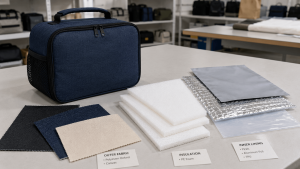
A buyer may write only “neoprene” on a tech pack, but that still leaves several production questions unanswered. Thickness, surface fabric, lamination, stretch, and edge finishing can all change the final result.
For bag production, neoprene should be approved as a complete material construction rather than by name alone. Two neoprene materials can look similar in a swatch but behave very differently once they are cut, printed, laminated, sewn, compressed, and repeated in bulk production.
Neoprene Is Usually A Material System
Before sampling, we normally need to confirm more than “use neoprene”:
- Foam thickness
- Laminated surface fabric
- Stretch level
- Hand feel
- Backing or lining construction
These details affect weight, seam thickness, appearance, and how easily the material can be handled during sewing.
Small Construction Details Show Up Fast
Neoprene becomes more difficult when several layers meet at one point.
During sampling, we watch:
- Cut edges
- Seam bulk
- Lamination
- Binding or edge finishing
- Printing result
- Thickness consistency
- Shape after compression
A simple-looking seam on the drawing can become bulky or uneven once the actual material thickness is involved.
A Good Sample Does Not Guarantee A Stable Bulk Order
One sample maker can spend extra time correcting a single piece.
A production line cannot rely on that.
For bulk orders, we care more about whether the same thickness, edge finish, printing effect, and sewing appearance can be repeated across the entire order.
With neoprene, repeatability matters more than one perfect sample.
Neoprene vs Polyester vs Nylon: How We Choose By Use Case
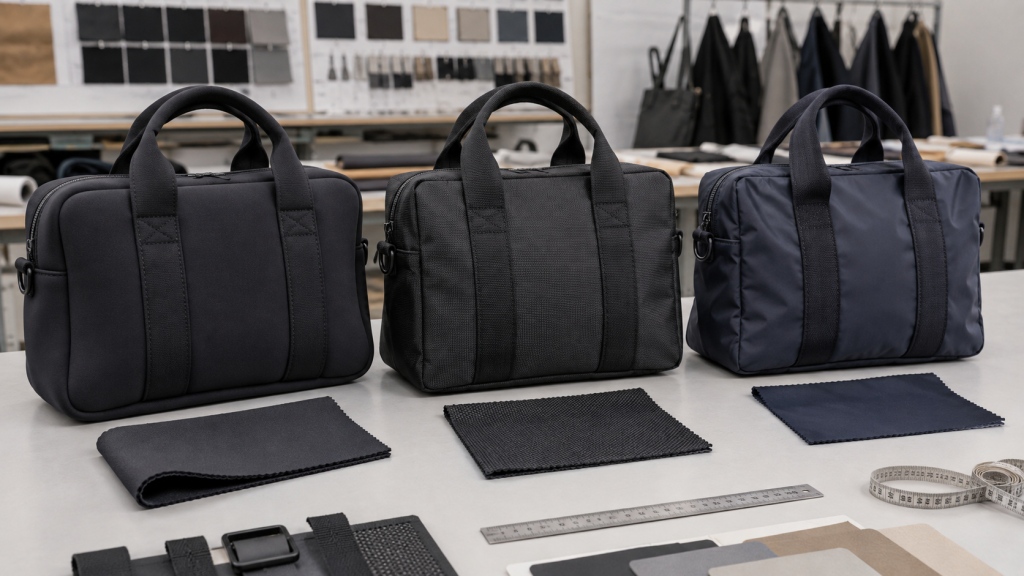
We do not compare these materials by asking which one is “best.”
We ask what the bag is supposed to do.
| Buyer Priority | Neoprene | Polyester | Nylon |
|---|---|---|---|
| Built-in cushioning | Strong | Usually needs added padding | Usually needs added padding |
| Lightweight construction | Less suitable for large panels | Often practical | Often practical |
| Soft, stretchy hand feel | Strong | Limited | Limited |
| Long-duration carrying | Needs careful evaluation | Common choice | Common choice |
| Abrasion-focused use | Depends heavily on construction | Many suitable options | Many suitable options |
| Cost-sensitive bulk orders | Can become expensive | Often easier to control | Depends on fabric grade |
| Structured backpacks | Usually not our first main fabric | Common | Common |
Neoprene is not automatically worse than polyester or nylon. It simply solves a different problem. If cushioning, softness, or stretch is important, neoprene may be the better choice. If lightweight construction, abrasion resistance, or aggressive cost control matters more, we usually compare woven alternatives before sampling.
For buyers comparing a wider range of options, our guide to 12 common backpack materials and their pros and cons explains how different fabrics affect weight, durability, water resistance, and cost.
Sometimes We Use Neoprene Only Where It Adds Value
Using neoprene does not have to mean making the whole bag from neoprene.
For some projects, we use it only for:
- Protective side panels
- Bottle holders
- Laptop compartments
- Handle padding
- Local impact protection
This can keep the useful cushioning while avoiding unnecessary weight across the whole bag.
The Product Promise Should Decide The Material
If a buyer wants a soft protective sleeve, neoprene makes sense.
If the brief says:
“ultralight outdoor backpack”
or:
“high-abrasion travel bag at the lowest possible cost”
I would not approve neoprene as the main fabric without comparing other constructions first.
The material should support the product promise—not fight against it.
What Buyers Should Confirm Before Requesting A Neoprene Bag Sample?
By the time we reach sampling, the biggest material decision should already be clear: why neoprene is being used in the product.
If the answer is only “because it looks premium,” that is not enough.
The Questions We Want Answered First
Before quoting or sampling, we normally confirm:
- What is the actual product use?
- Will neoprene be the main body material or only a local padded section?
- What finished weight is acceptable?
- How long will the bag normally be carried?
- What surface appearance and hand feel does the buyer expect?
- What printing or decoration method is required?
- What is the target cost and order quantity?
- Are there specific odor, chemical, or testing requirements for the destination market?
For EU-bound products, chemical compliance should be reviewed separately. Under REACH, substances on the ECHA Candidate List can create communication and, under certain conditions, notification obligations when they are present in finished articles.
These answers affect the material construction before the first sample is made.
Three Product Promises That Make Us Recheck Neoprene
If the product brief contains any of these claims, we usually compare alternative constructions first:
- Ultralight
- Heavy-duty outdoor use
- Lowest possible cost
Neoprene can still be part of the design, but using it as the main fabric may work against those goals.
Sometimes the better solution is not removing neoprene completely. It is using it only where its cushioning or flexibility adds value.
The right question is not “Can this bag be made in neoprene?” It is “Does neoprene help this product deliver what the buyer plans to sell?”
Frequently Asked Questions
Is neoprene a good material for bags?
Yes, when the product needs softness, stretch, or built-in cushioning. We usually consider neoprene for sleeves, bottle holders, protective panels, and small functional bags rather than treating it as the default fabric for every backpack or travel bag.
Are neoprene bags heavy?
They can be heavier than buyers expect, especially when large neoprene panels are combined with lining, webbing, zippers, and hardware. Finished bag weight should be checked during sampling rather than judged from a small fabric swatch.
Does neoprene have an odor?
Some neoprene constructions may have a noticeable odor when new, particularly after lamination or tight packing. Material sourcing, lamination, ventilation, and packing conditions can help manage it, but odor requirements should be agreed before bulk production.
Is neoprene suitable for outdoor backpacks?
It can be useful for selected padded or protective areas, but it is usually not our first choice as the main fabric for heavy-duty or long-duration outdoor backpacks. Weight, breathability, abrasion requirements, and structure should be reviewed first.
Is neoprene better than nylon or polyester for bags?
Not universally. Neoprene is stronger when softness, stretch, and cushioning matter. Polyester or nylon may make more sense when the priority is lightweight construction, abrasion resistance, structure, or tighter cost control.
Final Words
Neoprene is not a bad bag material. It simply has limits that need to match the product.
For protective sleeves, bottle holders, soft pouches, or local padding, those limits may not matter much. For larger travel bags, outdoor backpacks, or products built around lightweight and low-cost positioning, they can become real sourcing risks.
The important part is evaluating neoprene as part of the finished bag—not as an isolated fabric sample.
If you are considering neoprene for a custom bag project, explore our OEM/ODM custom bag development service or send us your intended use, size, quantity, and target price. We can help compare the material and construction options before sampling.