Last Updated: April 13, 2026
Choosing the wrong backpack material can lead to customer returns and damage your brand. This guide will help you select the perfect fabric for your products and market.
Backpacks are commonly made from Nylon, Polyester, Cordura, ballistic nylon, ripstop fabric, canvas, leather and waterproof laminated fabrics. The right choice depends on your target market and desired balance of durability, weight, water resistance, and cost. This decision directly impacts your product’s quality and customer satisfaction.
I remember working with a new brand owner who had a fantastic backpack design. But they chose a material based only on price. The bags looked great initially, but customers soon complained about straps tearing and fabric fading. It was a tough lesson on how a single choice can make or break a product launch. Your material isn’t just a component; it’s the foundation of your brand’s promise to your customer. Let’s dive into the details so you can avoid these pitfalls and choose with confidence.
Why Trust This Guide?
Every material below has been cut, sewn, and shipped from our factory floor in Quanzhou, Fujian. This is not a research summary — every price, MOQ, and sourcing tip in the Sourcing Note" boxes comes from real quotes I’ve negotiated with mill partners over the past 15 years across these client segments:
- Polyester / RPET — used in ~45% of our backpack production (school, promotional, lifestyle)
- Nylon (420D–1680D) — used in ~30% of our production (commuter, travel, premium)
- Cordura® / Ballistic Nylon — used in ~10% of our production (tactical, premium outdoor)
- Canvas / Waxed Canvas — used in ~8% of our production (heritage, lifestyle)
- Leather / PU Leather — used in ~5% of our production (luxury, fashion)
- TPU / Specialty — used in ~2% of our production (waterproof, technical)
Why Choosing the Right Backpack Material Matters?

Your backpack design is perfect, but the wrong fabric choice could ruin it. This leads to unhappy customers, negative reviews, and costly returns, hurting your brand’s reputation.
Choosing the right material is crucial because it defines the backpack’s Durability, weight, weather resistance, and overall cost. This alignment ensures your product meets customer expectations, whether they are daily commuters, outdoor adventurers, or fashion-conscious students, ultimately protecting your brand’s integrity.
When you’re building a brand, every detail communicates your values to the customer. The fabric of your backpack is one of the most tangible details they will experience. It’s what they touch every day, what protects their belongings, and what they rely on to last. Let’s break down why this choice is so fundamental.
Durability and Customer Trust
A backpack that falls apart after a few months is a broken promise. Materials like Ballistic Nylon or Cordura® are known for their toughness and build long-term trust. A durable bag leads to happy customers who leave positive reviews and become repeat buyers.
Weight and User Comfort
The material’s weight directly affects how comfortable the backpack is to carry. For a travel or hiking backpack, lightweight materials like Ripstop Nylon are essential. For a simple school bag, a standard Polyester might be perfectly fine. You have to think about how your customer will use the bag every day.
Weather Resistance and Functionality
Will your customers be caught in the rain on their way to work? Or do they need a bag that can handle a downpour on the trail? Materials with a PU or TPU coating offer water resistance, protecting electronics and other valuables. This functional benefit can be a major selling point.
💡The 4 Hidden Cost Factors Beyond Material Price
Most brand owners only compare fabric price per yard. The real total cost includes:
| Hidden Cost | Why It Matters | Typical Impact |
|---|---|---|
| Coating thickness (mm) | Determines water resistance — and price | +5–20% on fabric cost |
| Yarn type (Nylon 6 vs 6,6) | Same denier, very different strength | +15–30% on premium variants |
| MOQ requirements | Authorized fabrics (Cordura®) have high MOQs | Locks up cash flow |
| Print compatibility | Sublimation only works on polyester | Can force material switch |
What Are the 12 Most Common Materials Used in Backpacks?

The world of fabrics can feel overwhelming with so many technical names. You hear terms like Cordura®, Ripstop, and RPET, but what do they actually mean for your product?
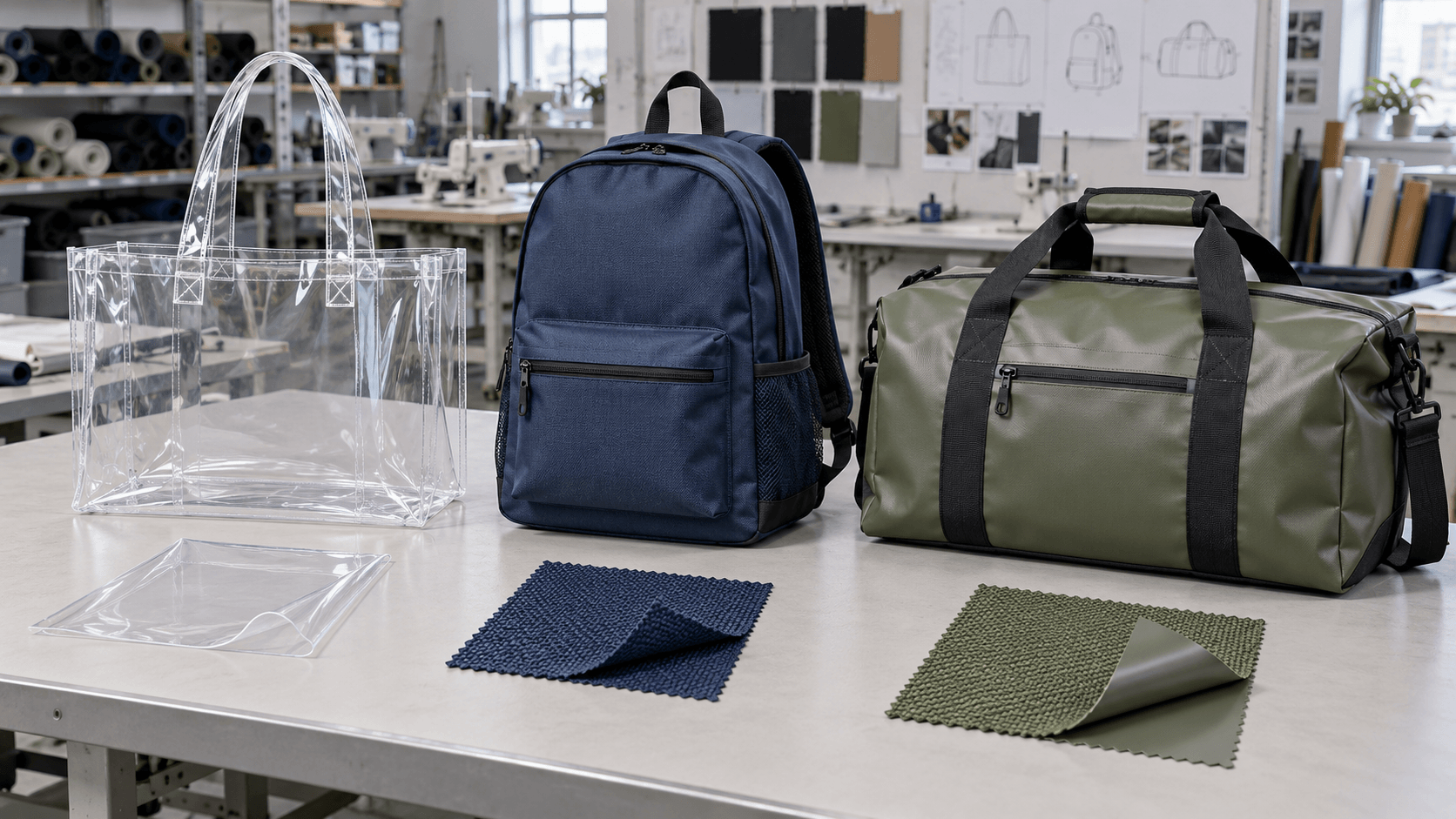
The 12 most common backpack materials are Nylon, Polyester, Cotton Canvas, Duck Canvas, Cordura®, Ballistic Nylon, Ripstop Nylon, PU Leather, Genuine Leather, Recycled PET (RPET), TPU-coated fabrics, and Mesh. Each one offers a unique mix of durability, aesthetics, and cost for different applications.
Getting familiar with these materials is the first step to becoming an expert in your field. Think of this as your fabric library. Having this knowledge allows you to have more productive conversations with manufacturers and make smarter decisions for your brand. Here is a quick introduction to the key players you’ll encounter.
- Nylon: A versatile synthetic known for its strength and light weight.
- Polyester: A cost-effective synthetic, great for vibrant prints and UV resistance.
- Cotton Canvas: A traditional, natural fabric with a classic look and feel.
- Duck Canvas: A more tightly woven and durable version of cotton canvas.
- Cordura®: A brand of high-performance nylon known for extreme durability.
- Ballistic Nylon: A thick, tough nylon originally developed for military use.
- Ripstop Nylon: A lightweight nylon with a special grid pattern to prevent tears.
- PU (Polyurethane) Leather: A synthetic leather that offers a vegan alternative with a consistent finish.
- Genuine Leather: A premium, natural material prized for its durability and classic style.
- Recycled PET (RPET): An eco-friendly fabric made from recycled plastic bottles.
- TPU-Coated Fabrics: Fabrics laminated with Thermoplastic Polyurethane for high water resistance.
- Mesh: A breathable, lightweight fabric used for back panels, straps, and pockets.
Can We Compare All Backpack Materials in a Simple Pros & Cons Table?

Trying to remember the pros and cons of 12 different materials is difficult. You need a quick reference guide you can pull up during a design meeting or when talking to suppliers.
Yes, a comprehensive table is the best way to compare all backpack materials at a glance. This format allows you to quickly assess each fabric’s pros, cons, ideal use, and important B2B notes like cost and sourcing difficulty, making it a powerful decision-making tool.
I created this table for my clients because I know how valuable it is to have all the key information in one place. When you’re trying to balance budget, function, and brand identity, a simple "cheat sheet" like this is a lifesaver. It helps you move from confusion to clarity, fast. Use this as your go-to resource when planning your next collection.
Backpack Material Comparison Guide
| Material | Pros | Cons | Ideal Use | B2B Note (Cost/MOQ) |
|---|---|---|---|---|
| Nylon | Strong, durable, lightweight | Higher cost, weaker UV resistance | Outdoor, travel, premium daily bags | Mid to High Cost / Low MOQ |
| Polyester | Low cost, UV resistant, great for prints | Less durable than nylon, feels less premium | Budget, school, promotional bags | Low Cost / Low MOQ |
| Cotton Canvas | Eco-friendly, classic look, strong | Heavy, absorbs water, can stain | Fashion, lifestyle, heritage bags | Low to Mid Cost / Low MOQ |
| Duck Canvas | Very durable, water-resistant (when waxed) | Very heavy, stiff when new | Workwear, tool bags, rugged totes | Mid Cost / Mid MOQ |
| Cordura® | Extremely abrasion/tear resistant | High cost, can be stiff | Military, high-end outdoor, motorcycle gear | High Cost / Mid to High MOQ |
| Ballistic Nylon | Exceptionally durable, tear-resistant | Heavy, high cost, difficult to dye | Luggage, laptop bags, heavy-duty packs | High Cost / Mid MOQ |
| Ripstop Nylon | Very lightweight, tear-proof | Thin feel, can be noisy (crinkly) | Hiking packs, packable bags, tents | Mid Cost / Mid MOQ |
| PU Leather | Vegan, low cost, consistent finish | Not breathable, can crack over time | Fashion, budget-friendly accessories | Low Cost / Low MOQ |
| Genuine Leather | Ages beautifully, very durable, premium | Heavy, high cost, requires care, not vegan | Luxury, high-end fashion, business bags | Very High Cost / High MOQ |
| Recycled PET (RPET) | Eco-friendly, good for prints | Can have lower durability than virgin polyester | Sustainable brands, corporate gifts, totes | Low to Mid Cost / Mid MOQ |
| TPU-Coated Fabric | Highly waterproof, durable, sleek look | Expensive, adds weight, requires special sealing | Waterproof roll-tops, bike messenger bags | High Cost / High MOQ |
| Mesh | Breathable, lightweight, flexible | Not durable, offers no security/privacy | Back panels, bottle pockets, laundry bags | Very Low Cost / Low MOQ |
What Are the Pros and Cons of Nylon and Polyester?

Nylon versus Polyester is one of the most common decisions you’ll face. Choosing the wrong one can impact your backpack’s durability, appearance, and final cost, creating a mismatch with your market.
Nylon is stronger, more abrasion-resistant, and lighter, but it costs more and can be damaged by UV light. Polyester is less expensive, resists UV fading, and holds color well, but it is generally less durable than a comparable high-grade nylon.
In my early days in the industry, I saw many brands default to polyester just to save a few dollars. Sometimes it worked, but for brands targeting outdoor or travel markets, it often backfired. Customers expect a certain level of performance, and nylon often delivers that better. Let’s put these two popular synthetics head-to-head to see where each one shines.
Direct Comparison: Nylon vs. Polyester
| Feature | Nylon | Polyester |
|---|---|---|
| Durability | Excellent strength and abrasion resistance. | Good, but generally less durable than nylon. |
| Cost | More expensive. | Less expensive, very cost-effective. |
| UV Resistance | Weaker; can fade and weaken with sun exposure. | Excellent; resists fading and sun damage. |
| Water Resistance | Naturally water-resistant, absorbs some water. | Naturally hydrophobic, repels water well. |
| Look & Feel | Often has a softer feel and slight sheen. | Can feel slightly stiffer, holds structure well. |
B2B Takeaway for Brand Owners
For a brand like yours, Emily, the choice is strategic.
- Choose Nylon (especially high-denier or branded versions like Cordura®) if you are creating premium outdoor, travel, or commuter bags where durability is a key selling point. Your customers will pay more for a bag that they know will last.
- Choose Polyester for everyday lifestyle bags, school backpacks, or promotional items where cost is a major factor. Its excellent color retention also makes it perfect for bags with vibrant, all-over prints.
💰 Sourcing Note — Nylon vs Polyester (China FOB, 2026)
| Material | FOB Price/yd | MOQ | Lead Time |
|---|---|---|---|
| 600D Polyester (PU coated) | $0.80–$1.60 | 300 yd | 7–15 days |
| 420D Nylon | $1.20–$1.80 | 500 yd | 7–15 days |
| 600D Ballistic Nylon | $1.80–$2.50 | 500 yd | 10–20 days |
| 1000D Cordura® | $4.50–$7.00 | 1,000 yd | 30–60 days |
For a complete deep-dive on nylon types, see Best Nylon Fabrics for High-Quality Backpacks and Nylon vs. Polyester for Backpacks: Sourcing Guide (2026).
Detailed Profiles for the Other 10 Materials
🌿 Cotton Canvas
A natural woven fabric that hits a sweet spot between heritage aesthetic and reasonable durability. Weight is measured in ounces (oz) — the higher the heavier and more durable.
- Best for: Heritage / vintage backpacks, tote conversions, lifestyle brands targeting eco-conscious consumers
- Avoid for: Hiking, travel where weight matters, anywhere it’ll get rained on heavily
- Real spec: 10oz canvas for daily use, 14oz+ for premium / heavy-duty
- Sourcing: $1.20–$2.80/yd, MOQ 300 yd, color options limited (mostly natural/olive/black/navy)
🦆 Duck Canvas
A heavier, more tightly woven version of cotton canvas. The "duck" name comes from the Dutch word doek (linen cloth), nothing to do with the bird.
- Best for: Workwear backpacks, tool bags, rugged vintage styles
- Avoid for: Lightweight daypacks, travel, anywhere comfort and portability matter
- Real spec: 12–18oz weight is standard for backpack-grade duck canvas
- Sourcing: $1.80–$3.20/yd, MOQ 300–500 yd
⚡ Cordura®
The industry’s gold standard for abrasion resistance — a registered INVISTA brand of high-tenacity nylon 6,6 fabric. Most premium tactical and outdoor brands rely on it.
- Best for: Tactical, military, motorcycle gear, "buy-it-for-life" outdoor brands
- Avoid for: Budget products (kills your margin), brands without Cordura® licensing
- Real spec: 500D, 1000D, and 1680D are most common; 1000D is the workhorse
- Sourcing: $4.50–$7.00/yd, MOQ 1,000+ yd, only authorized mills can sell genuine Cordura®
- Brand licensing alert: Using the Cordura® hangtag without INVISTA registration = trademark infringement, common Amazon delisting cause
🛡️ Ballistic Nylon
Originally developed by DuPont for WWII military flak jackets. Identifiable by its distinctive basketweave pattern and slight sheen.
- Best for: Premium luggage, laptop backpacks, business travel bags
- Avoid for: Lightweight or eco-positioned products, anything that needs vibrant dyeing
- Real spec: 1050D and 1680D are the two industry standards
- Sourcing: $3.00–$4.50/yd for 1680D, MOQ 500 yd
- Production note: The tight weave makes it hard to sew — requires industrial machines and heavy thread (#69 minimum)
🪶 Ripstop Nylon
Engineered with a reinforcing crosshatch pattern that stops tears from spreading. Very lightweight, originally developed for parachutes.
- Best for: Ultralight hiking packs, packable / foldable daypacks, emergency kits
- Avoid for: Bags that need structure or a premium feel (it’s noticeably crinkly)
- Real spec: Common deniers are 70D, 210D, and 420D
- Sourcing: $2.00–$4.00/yd, MOQ 500 yd
🌱 PU Leather (Vegan Leather)
Synthetic leather made by coating a polyester or cotton backing with polyurethane. Sold in rolls (100% yield, unlike real leather).
- Best for: Vegan-positioned brands, fashion-forward bags at mid-tier price points, trim accents on premium bags
- Avoid for: Heavy-duty use (cracks under stress), humid climates (can peel), "luxury" claims
- Real spec: Quality varies wildly — premium PU lasts 3–5 years, cheap PU peels in 6 months
- Sourcing: $2.50–$8.00/yd depending on quality grade, MOQ 300–500 yd
👜 Genuine Leather
A natural material with no synthetic equivalent for true longevity and patina. Quality grades matter enormously here.
- Best for: Luxury / heritage brands, business bags, premium gift market
- Avoid for: Volume-driven brands, vegan positioning, products with tight margins
- Real spec: Full-grain > Top-grain > Split / Corrected grain
- Sourcing: Sold by piece (hide), not yard. Cowhides yield 60–70% usable area due to scars
- Production reality: Requires specialized leather workshops, lead times 45–70 days
♻️ Recycled PET (RPET)
Polyester made from recycled plastic bottles. Performance is now nearly identical to virgin polyester at a small price premium.
- Best for: Sustainability-positioned brands, EU markets (mandatory recycled content rising), corporate gift programs
- Avoid for: Markets that don’t value the eco story (you’re paying premium for nothing)
- Real spec: 300D, 600D, and 900D RPET are widely available
- Sourcing: $1.10–$2.20/yd (only 10–20% above virgin polyester now)
- Critical certifications: GRS (Global Recycled Standard) is the strongest claim; RCS is acceptable; "rPET" without certification is unverifiable
💧 TPU-Coated Fabrics
Fabrics laminated with Thermoplastic Polyurethane — the gold standard for genuinely waterproof bags. Sheets can be welded instead of sewn.
- Best for: Roll-top dry bags, bike messenger bags, premium rain protection
- Avoid for: Soft / casual aesthetic (TPU has a technical look), lightweight products
- Real spec: TPU-laminated nylon is lighter than PVC tarpaulin and more eco-friendly
- Sourcing: $5.00–$10.00/yd, MOQ 500 yd
- Production requirement: Needs RF welding equipment (only some factories have this) for true waterproofing
🕸️ Mesh
Not a primary fabric but essential for back panels, water bottle pockets, and ventilation zones. Comes in various weights and weave patterns.
- Best for: Back panels (reduces sweat), shoulder strap padding covers, bottle pockets, internal organizers
- Avoid for: Primary outer fabric (no privacy, easily snagged)
- Real spec: 3D spacer mesh for premium back panels, standard hex mesh for pockets
- Sourcing: $0.80–$2.50/yd, MOQ 300 yd
Material Decision Matrix — Pick Your Fabric in 30 Seconds
Use this matrix to narrow your shortlist to 1–2 materials. Find your row, then read across.
| Your Brand Priority → | Best 1st Choice | Best 2nd Choice | Avoid |
|---|---|---|---|
| Lowest cost / volume orders | 600D Polyester | 420D Nylon | Cordura®, Genuine Leather |
| Best sustainability story | RPET (GRS certified) | Organic Cotton Canvas | PU Leather, PVC |
| Maximum durability | 1000D Cordura® | 1680D Ballistic Nylon | Mesh, PU Leather |
| Lightest weight | Ripstop Nylon | 420D Nylon | Genuine Leather, Duck Canvas |
| True waterproofing | TPU-laminated | PVC Tarpaulin | Cotton Canvas, untreated nylon |
| Premium / luxury feel | Full-grain Leather | Waxed Cotton Canvas | RPET, Mesh |
| Vibrant all-over prints | 600D Polyester (sublimation) | RPET | Nylon (can’t sublimate), Leather |
| Vegan brand positioning | Quality PU Leather | RPET | Genuine Leather |
| Heritage / vintage look | Cotton Canvas | Waxed Canvas | Ripstop, TPU |
| Tactical / military | 1000D Cordura® | 1680D Ballistic Nylon | Cotton, Leather |
| Office / business | Ballistic Nylon | Quality PU Leather | Mesh, PVC |
| Kids’ / school bags | 600D Polyester | RPET (eco angle) | Leather, Cordura® (overkill) |
Real Brands Using Each Material
Here’s how some well-known brands match material to positioning. Use as inspiration for your own product strategy.
| Material | Notable Brands Using It | Typical Price Tier |
|---|---|---|
| Polyester (600D) | JanSport, Adidas school packs, Herschel Classic | $30–$80 |
| 420D Nylon | Patagonia Refugio, Osprey Daylite | $50–$120 |
| 1000D Cordura® | 5.11 Tactical, Mystery Ranch, GORUCK | $150–$400 |
| Ballistic Nylon | Tumi, Briggs & Riley, Brooks Brothers | $200–$600 |
| Ripstop Nylon | Patagonia Black Hole, Mountain Hardwear | $80–$200 |
| Cotton Canvas | Filson, L.L. Bean Heritage, Topo Designs | $80–$250 |
| Waxed Canvas | Filson, Barbour, Fjällräven Greenland | $200–$500 |
| Genuine Leather | Coach, Frye, Saddleback Leather | $300–$1,500+ |
| PU Leather | Matt & Nat (vegan brand), Stella McCartney | $80–$400 |
| RPET | Patagonia Black Hole (since 2020), Peak Design Eco | $80–$250 |
| TPU Laminated | Ortlieb, Thule, Chrome Industries | $100–$300 |
| Mesh (back panel) | Used by Osprey, Deuter, virtually all hiking brands | All tiers |
How Can Businesses Choose the Right Backpack Material for Their Market?

Knowing the materials is only half the battle. You still have to connect the right fabric to your specific customer, brand identity, and budget to create a successful product.
Businesses should choose a material by first defining their target market and price point. Use a framework: Polyester or RPET for budget lines, Nylon or Cordura® for performance gear, Leather for luxury, and coated fabrics for urban tech bags. This ensures product-market fit.
The most successful brands I’ve worked with are masters at this. They don’t just pick a "good" material; they pick the "right" material for the story they are telling. Your choice should be intentional. Let’s create a simple framework to guide your decision based on the most common market segments.
For the Budget-Conscious Market (e.g., Students, Promotions)
- Primary Choice: Polyester (like 600D) is the king here. It’s affordable, comes in endless colors, and is durable enough for daily use.
- Eco-Friendly Alternative: RPET is a great choice if sustainability is part of your brand message. It costs slightly more than virgin polyester but tells a powerful story.
For the Outdoor & Adventure Seeker (e.g., Hikers, Travelers)
- Primary Choice: Nylon (like 420D) or Ripstop Nylon offers the perfect blend of strength and low weight.
- Premium Choice: Cordura® or other high-performance nylons are for brands that want to compete on extreme durability. This is where you build a reputation for gear that never fails.
For the Luxury & Fashion-Forward Consumer
- Primary Choice: Genuine Leather or high-quality Cotton Canvas (especially waxed canvas) signals premium quality and timeless style. These materials develop a unique patina over time.
- Modern Alternative: PU Leather can work for trend-focused vegan brands, but be sure to source high-quality PU that won’t peel or crack easily.
For the Urban Commuter & Tech Professional
- Primary Choice: Ballistic Nylon or TPU-Coated Fabrics are perfect. They offer a sleek, modern look and provide excellent protection for laptops and electronics against bumps and rain.
Sourcing and MOQ Considerations
Finally, always talk to your manufacturer about Minimum Order Quantities (MOQs).
- Easy to Scale: Standard materials like Polyester and Nylon are widely available with low MOQs.
- Higher MOQs: Advanced fabrics like Cordura®, specific TPU-coated materials, or custom-dyed leather often require larger orders. Plan your budget and inventory accordingly.
Common Material Sourcing Mistakes to Avoid
After 200+ client backpack projects, these are the 6 most expensive material mistakes I see repeated:
-
Picking material based on denier alone. A premium 500D Cordura® outperforms a generic 1000D nylon in real-world abrasion tests. Yarn quality, weave, and coating matter as much as denier.
-
Using "Cordura®" branding without licensing. Some factories source genuine Cordura® fabric but can’t sell you the right to use the Cordura® hangtag. Confirm INVISTA mill authorization in writing before printing tags.
-
Not specifying coating thickness. "PU coated" alone means nothing. Specify hydrostatic head in mm: 600mm = light rain, 1000mm = moderate, 3000mm+ = heavy outdoor use.
-
Confusing Nylon 6 with Nylon 6,6. Same denier, very different performance. Cheap "1000D nylon" quotes are almost always Nylon 6 — genuine high-performance nylon uses Nylon 6,6.
-
Skipping the abrasion test. A $50 Martindale test report from your supplier saves $50,000+ in customer returns. For daily-use bags, target 20,000+ rubs; for tactical, 50,000+.
-
Mismatching material to printing method. Sublimation only works on polyester. If your design needs photographic full-color prints, you cannot use nylon — period.
Frequently Asked Questions
What is the most durable backpack material?
For pure abrasion resistance, 1000D Cordura® and 1680D Ballistic Nylon are the most durable. Both can handle 50,000+ Martindale rubs. Genuine leather (full-grain) is also extremely durable and ages well, but it’s heavier and requires maintenance. For a balance of durability and weight, 600D Ballistic Nylon is the practical winner for most daily-use backpacks.
What is the best waterproof backpack material?
TPU-laminated nylon with RF-welded seams is the only truly waterproof option. PU-coated fabrics are water-resistant (good for rain showers) but will eventually leak through stitched seams. PVC tarpaulin is also fully waterproof but heavier and less eco-friendly than TPU.
Is nylon or polyester better for backpacks?
Nylon is stronger and lighter; polyester is cheaper and holds color better. Choose nylon for premium / outdoor / travel bags where durability is the selling point. Choose polyester for budget / school / promotional bags where cost and color matter most.
What does "600D" mean on a backpack tag?
"600D" refers to the denier of the fabric — a measurement of fiber thickness. Higher denier = thicker fiber = generally more durable. Common deniers: 420D (light daypacks), 600D (everyday bags), 1000D (heavy-duty), 1680D (premium / tactical). However, denier alone doesn’t determine quality — yarn type, weave, and coating matter equally.
What’s the most eco-friendly backpack material?
RPET (recycled polyester) certified under GRS is currently the most accessible eco-friendly material with proven performance. For premium eco positioning, recycled nylon (Econyl®) or organic cotton canvas offer stronger marketing stories at higher cost. Avoid PVC and standard PU leather if sustainability is your brand’s core value.
How do I know if a fabric is genuine Cordura®?
Genuine Cordura® comes with a mill certificate from INVISTA (the brand owner) and the Cordura® trademark on the fabric selvage. If your supplier can’t produce the certificate or connect you to the authorized distributor, assume the fabric is generic high-tenacity nylon being marketed as Cordura®. Using unauthorized Cordura® branding can get your products delisted from Amazon.
What’s the lightest backpack material?
Ripstop nylon at 70D is one of the lightest backpack-grade fabrics, weighing as little as 1.5 oz/yd². For ultralight hiking packs, cuben fiber (Dyneema Composite Fabric) is even lighter but extremely expensive ($60+/yd vs $3 for ripstop nylon).
Can I machine-wash a backpack regardless of material?
No. Polyester and nylon can usually handle gentle machine wash. Cotton canvas can be hand-washed or spot-cleaned. Leather and waxed canvas should never be machine-washed (use leather cleaner / re-waxing wax). Bags with internal frames, foam padding, or PU coatings may delaminate in the wash. When in doubt, spot-clean only.
What backpack material is best for hot, humid climates?
For humid climates, choose materials that resist mold and dry quickly: nylon, polyester, and TPU-coated fabrics are best. Avoid cotton canvas (absorbs moisture, develops mildew), leather (cracks and molds), and untreated natural fibers. Mesh back panels are essential for ventilation.
How much does fabric cost contribute to a backpack’s price?
Fabric typically accounts for 20–35% of a backpack’s factory cost. For a $25 FOB backpack, that’s $5–$9 in fabric. Upgrading from generic 600D polyester to genuine 1000D Cordura® usually adds $4–$8 to factory cost — but enables a 2–3x retail price increase if marketed correctly.
Conclusion
Choosing the right material defines your backpack’s quality, cost, and market fit. Use this guide to make informed decisions and build a successful, trusted brand.
[NEW]👜 Ready to source your custom backpacks?
With 15+ years of experience and 200+ active B2B clients, Osgoodway manufactures backpacks across every material discussed in this guide — from $5 polyester school bags to $20 cordura packs.
👉 Request a free quote and fabric swatch pack

Further Reading on Osgoodway
- Best Nylon Fabrics for High-Quality Backpacks — Deep dive on 420D, 600D, 1000D Cordura®, 1680D ballistic nylon
- Nylon vs. Polyester for Backpacks: Sourcing Guide (2026) — Head-to-head comparison
- 8 Types of Duffle Bag Fabrics: How to Choose? — Sister article for duffle bags
- How to Source Quality Fabrics for Backpack Bags — Sourcing playbook
- Essential Guide to Hiking Backpack Materials — Outdoor-specific applications